12-36 (10-15 min.)
2. $40,000. The total inventory cost of the pulp is the separable cost, that is, the cost
incurred after the split-off point.
3. Inventory cost of grape juice:
Direct materials (grapes) $1,000,000
Pressing cost 130,000
Copyright ©2014 Pearson Education, Inc., Publishing as Prentice Hall.
527
12–37 (30–40 min.)
1. To properly classify a cost, it is necessary to specify the cost object. For example,
power cost is a direct cost if the cost object is the power department but an indirect
Type of Cost Assignment per
Exhibit 12-1
Example from Exhibit 12-21
1. Directly traced cost to
departments
Power cost in power department (power department is the
cost object); $90,000 of direct costs of the maintenance
department (maintenance department is the cost object); parts
and direct labor costs in the assembly department (the cost
object is the assembly department).
2. Indirect costs allocated to
departments
General costs such as occupancy allocated to the
maintenance and the assembly departments.
3. Service department costs
allocated to other service
departments
Power department costs allocated to the maintenance
department.
4. Service department costs
allocated to producing
departments
Power costs allocated to the assembly departments;
maintenance department costs allocated to the assembly
department.
5. Producing department costs
allocated to other producing
departments
Since there is only one producing department, no example
exists.
6. Directly traced costs to
departments that an
organization can also trace
directly to products and services
Parts and direct labor costs in the assembly department.
7. Producing department costs
that an organization allocates to
products or services
All assigned costs of setup and assembly activities, including
assembly supervisor salaries, machine depreciation, power,
maintenance, and occupancy.
8. Directly traced costs to
service departments that an
organization can also trace
directly to customers
In this problem requirement, we assume that Darling does
not determine customer costs.
9. Service department costs
allocated to customers
In this problem requirement, we assume that Darling does
not determine customer costs.
10. Product/service costs
assigned to customers
In this problem requirement, we assume that Darling does
not determine customer costs.
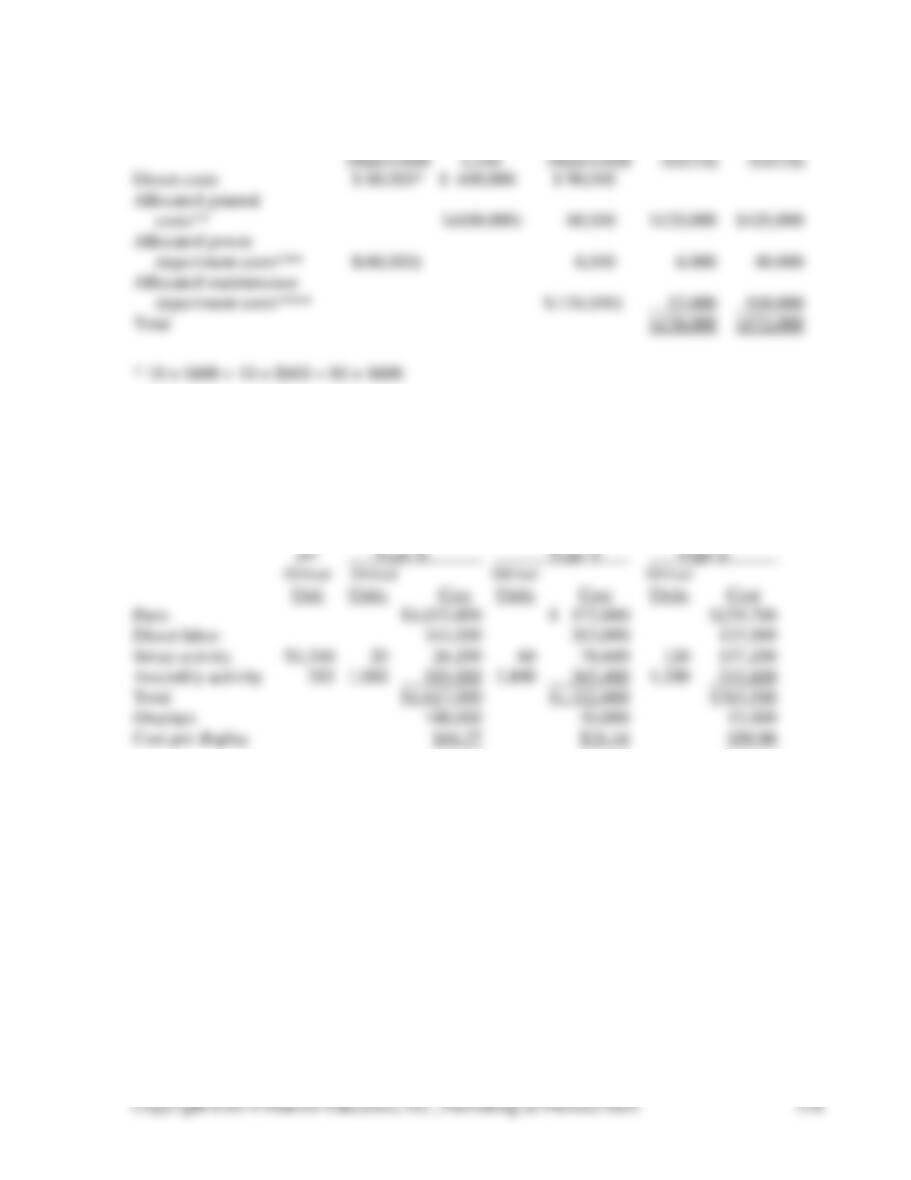
2. The assembly facility uses the step-down method. Power department costs are first
allocated to the maintenance service department and the assembly department before allocating
the maintenance department costs to the two major activities in the assembly department.
3.
Power General Maintenance Setup Assembly
** 10 + 20 + 70 = 100; (10 ÷ 100) × $600,000; etc.
*** 10 + 10 + 80 = 100; (10 ÷ 100) × $60,000; etc.
**** 2,000 + 4,000 = 6,000; (2,000 ÷ 6,000) × $156,000; etc.
4.
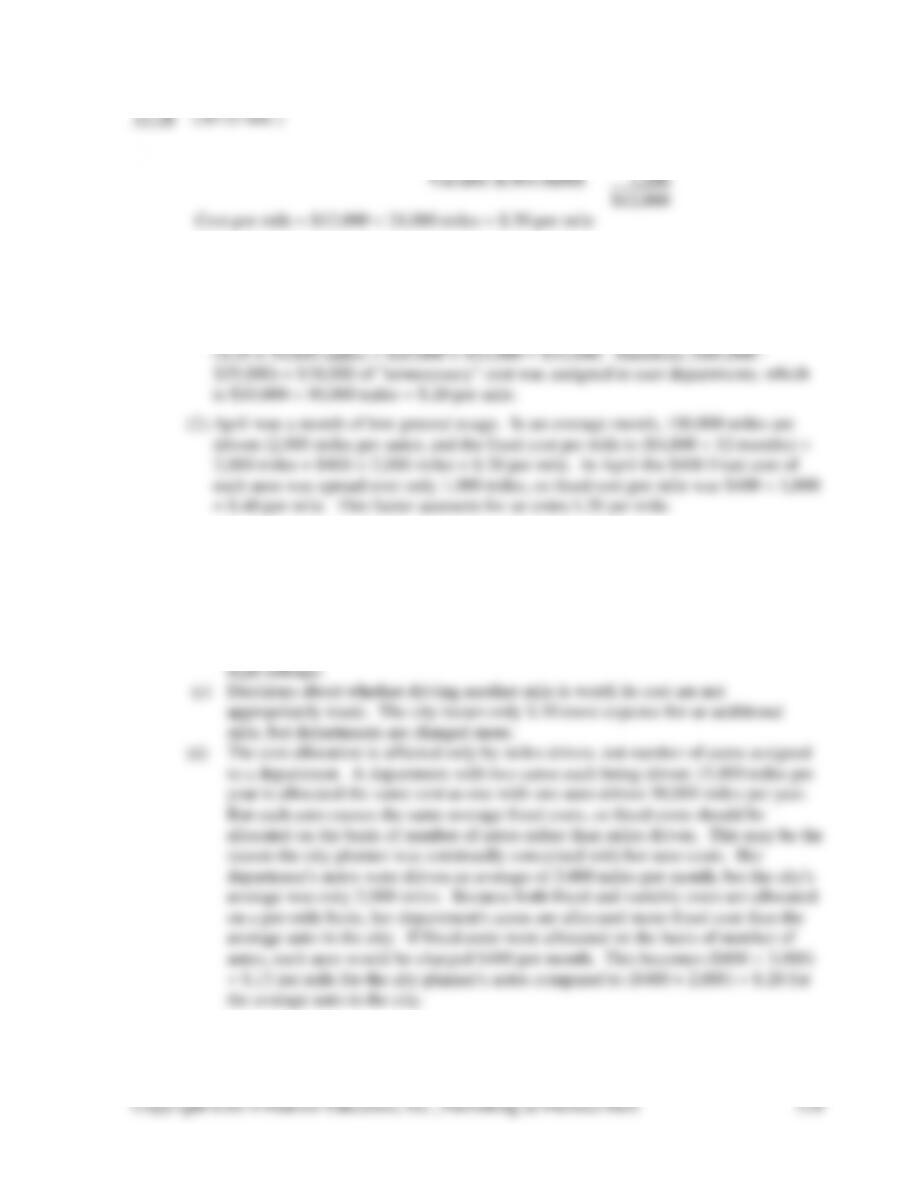
Cost Display Display Display
Copyright ©2014 Pearson Education, Inc., Publishing as Prentice Hall.
529
12-38 (20-25 min.)
1. Annual costs for 24,000 miles: Fixed $ 4,800
2. Two factors caused the April allocation of $.90 per mile to exceed the average of $.50
per mile:
(1) The motor pool’s operating inefficiencies are passed on to the user departments. The
cost of 50,000 miles in April should have been [($4,800 ÷ 12 months) × 50 autos] +
3. Undesirable behavioral effects include:
(a) The total actual motor pool cost is allocated. The manager is not motivated to
control these costs.
(b) Allocated costs are affected by auto usage in other departments. A department is
better off if its auto usage happens to fall in a month when other departments have
4. Two basic principles should be applied:
(a) Allocate budgeted, not actual, costs. Inefficiencies of the motor pool should not be
passed on to user departments.
12-39 (20-30 min.)
1. Actual costs $750,000 + $.80(500,000) = $1,150,000
Rate per thousand ton-miles* $1,125,000 ÷ 500,000 = $2.30
2. Actual costs $750,000 + $.80(400,000) = $1,070,000
Rate per thousand ton-miles $1,070,000 ÷ 400,000 = $2.675
3. Rate per thousand ton-miles $1,250,000 ÷ 500,000 = $2.50
To East 250,000 × $2.50 = $625,000
4. Basic maximum capacity:
360,000 + 240,000 = 600,000 ton miles.
Fixed costs: East West
To East, 36/60 × $750,000 $450,000 –
12-40 (25-30 min.)
There a several ways to organize an analysis that provides product costs. We like to focus first
on determining total activity-cost pools and activity cost per driver unit. Then, an analysis
similar to the one shown in Exhibit 12-8 on page 494 can be used.
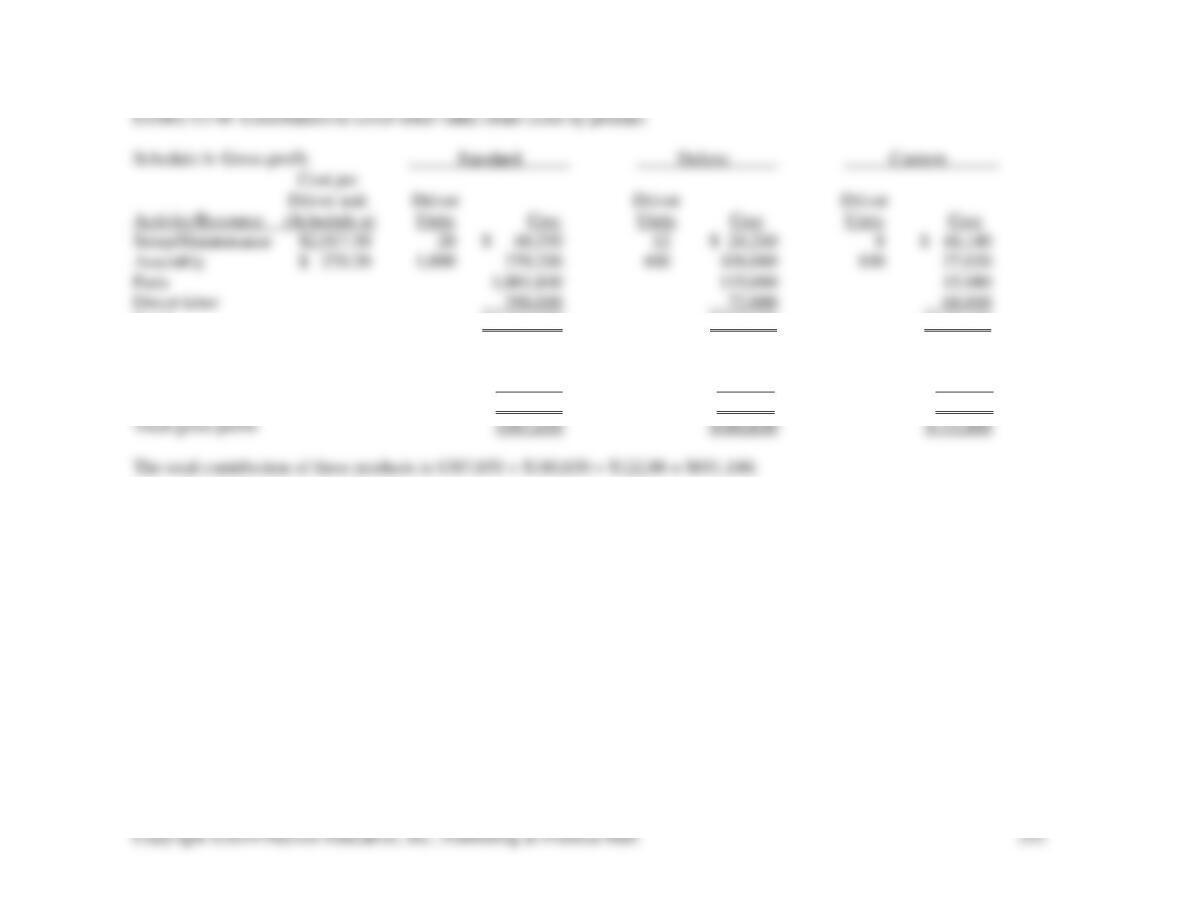
Schedule a: Activity center cost pools
Assembly supervisors $90,000 × 97% $ 87,300
Assembly machines $247,000 × (1,500 ÷ 1,900) 195,000
Facilities management $95,000 × (1,500 ÷ 1,900) 75,000
Power $54,000 × (80 ÷ 90) 48,000
Total assigned cost $405,300
Copyright ©2014 Pearson Education, Inc., Publishing as Prentice Hall.
532
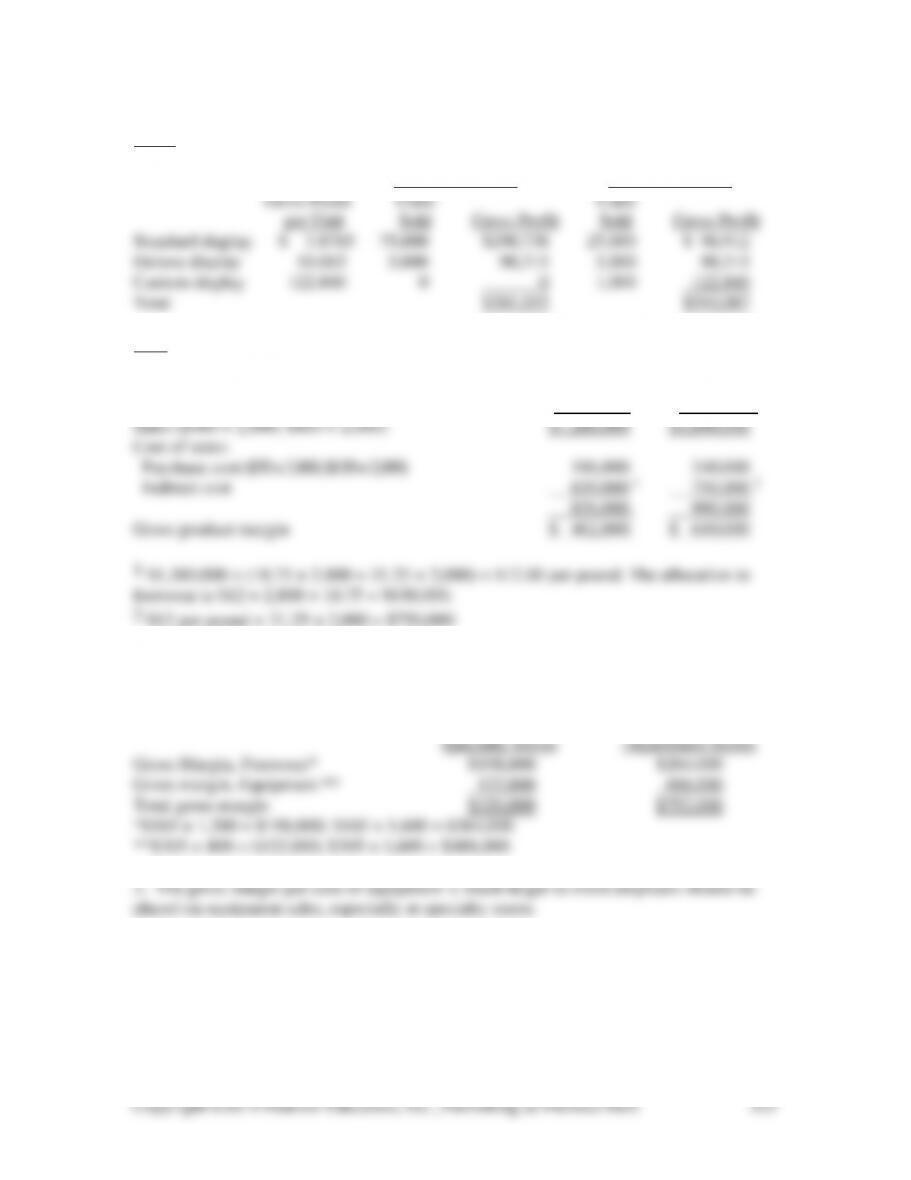
Exhibit 12-40 Contribution to cover other value-chain costs by product
Schedule b: Gross profit Standard Deluxe Custom
Cost per
Driver unit Driver Driver Driver
Activity/Resource (Schedule a) Units Cost Units Cost Units Cost
Setup/Maintenance $2,017.50 20 $ 40,350 12 $ 24,210 8 $ 16,140
Assembly $ 270.20 1,000 270,200 400 108,080 100 27,020
Parts 1,003,800 115,080 15,980
Direct labor 298,000 72,000 68,000
Total $1,612,350 $319,370 $127,140
Units 100,000 10,000 1,000
Cost per display $16.1235 $31.937 $127.14
Selling price 20.0000 50.000 250.00
Unit gross profit $ 3.8765 $18.063 $122.86
12-41 (10-15 min.)
Customer Type 1 Customer Type 2
12–42 (15–20 min.)
1.
Footwear Equipment
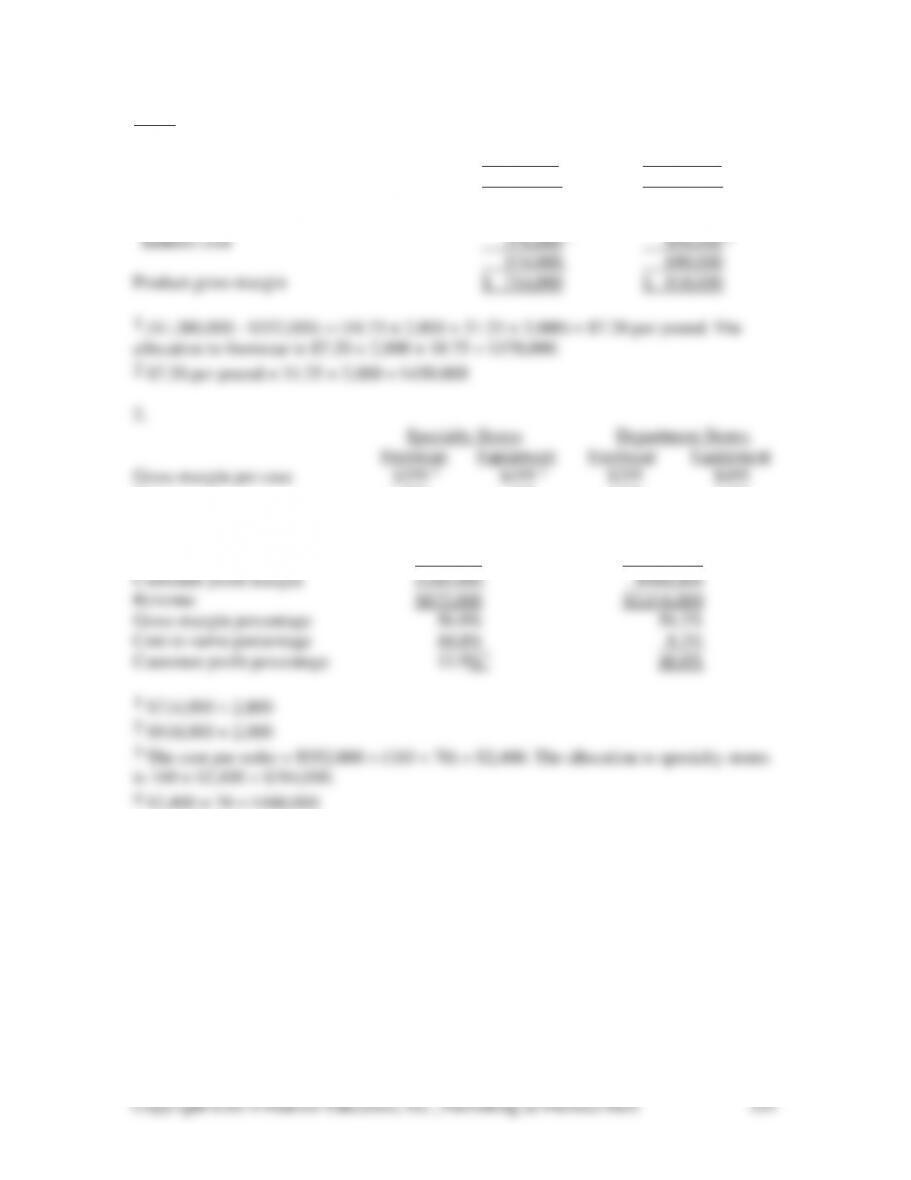
2. Gross margin per case:
Footwear, $462,000 ÷ 2,800 = $165
Equipment, $610,000 ÷ 2,000 = $305
12-43 (25-30 min.)
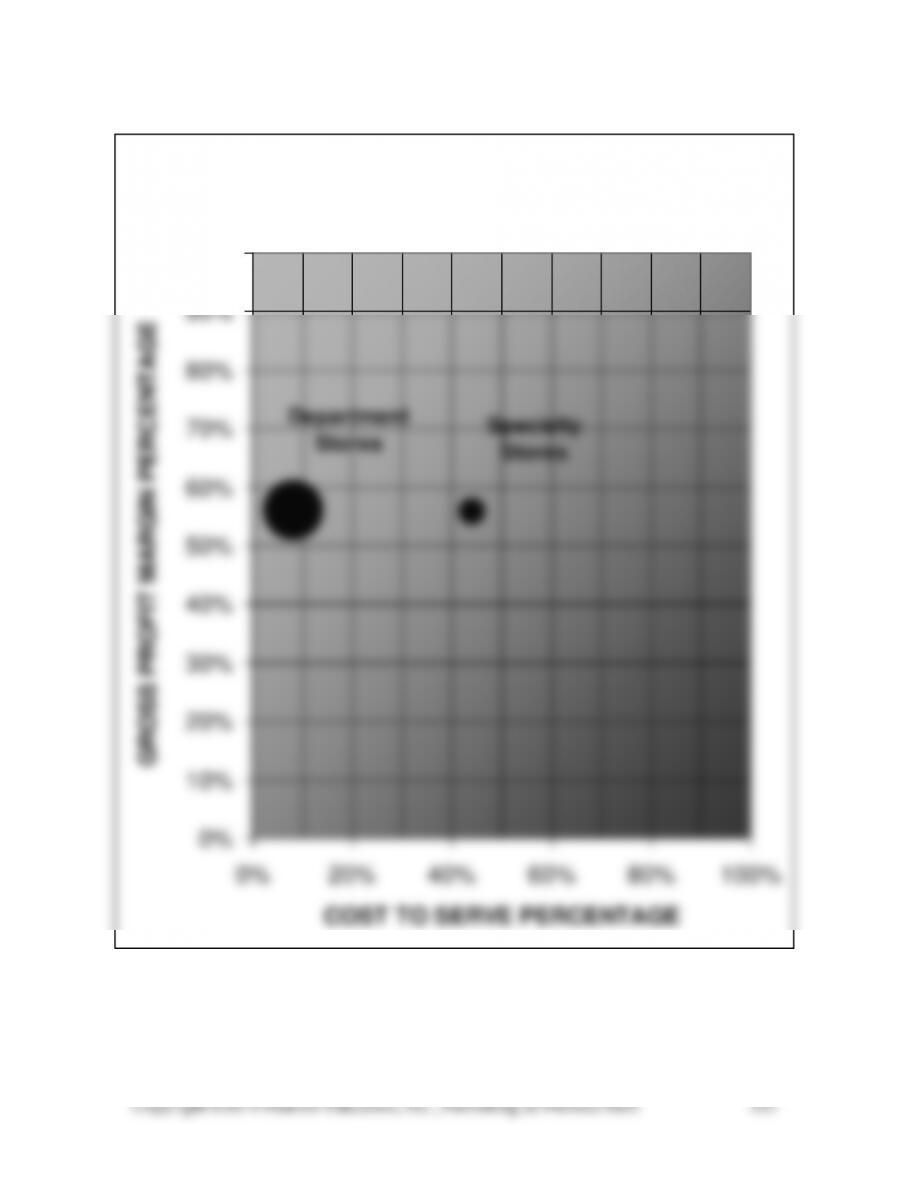
1. Footwear Equipment
Sales ($460 × 2,800; $800 × 2,000) $1,288,000 $1,600,000
Cost of sales
Purchase cost ($70 × 2,800; $120 × 2,000) 196,000 240,000
Cases 1,200 400 1600 1600
Product gross margin $306,000 $182,000 $408,000 $728,000
Customer gross margin $488,000 $1,136,000
Cost to serve 384,000 3 168,000 4
556.0% – 44.0% = 12.0%, which differs from 11.9% due to rounding error.
CUSTOMER PROFITABILITY
Specialty
Stores
Department
Stores
0%
10%
20%
30%
40%
50%
60%
70%
80%
90%
100%
0% 20% 40% 60% 80% 100%
COST TO SERVE PERCENTAGE
GROSS PROFIT MARGIN PERCENTAGE
Exhibit 12-43
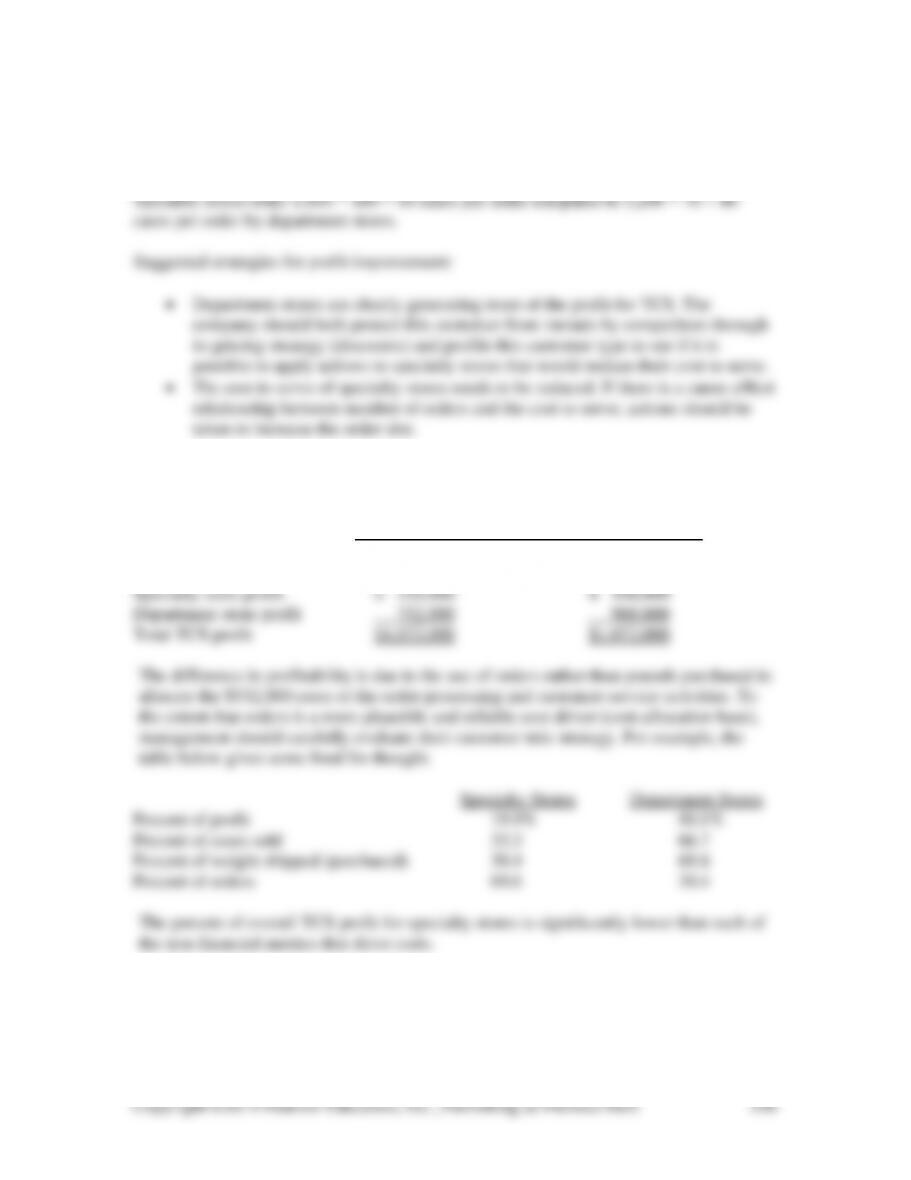
3. Exhibit 12-43 depicts the profitability of both customer types as a function of product
gross margin and the cost to serve. Note that both customers have about the same product
profitability based on the mix of products they purchase. However, the cost to serve is
dramatically different, resulting in significant differences in overall profitability.
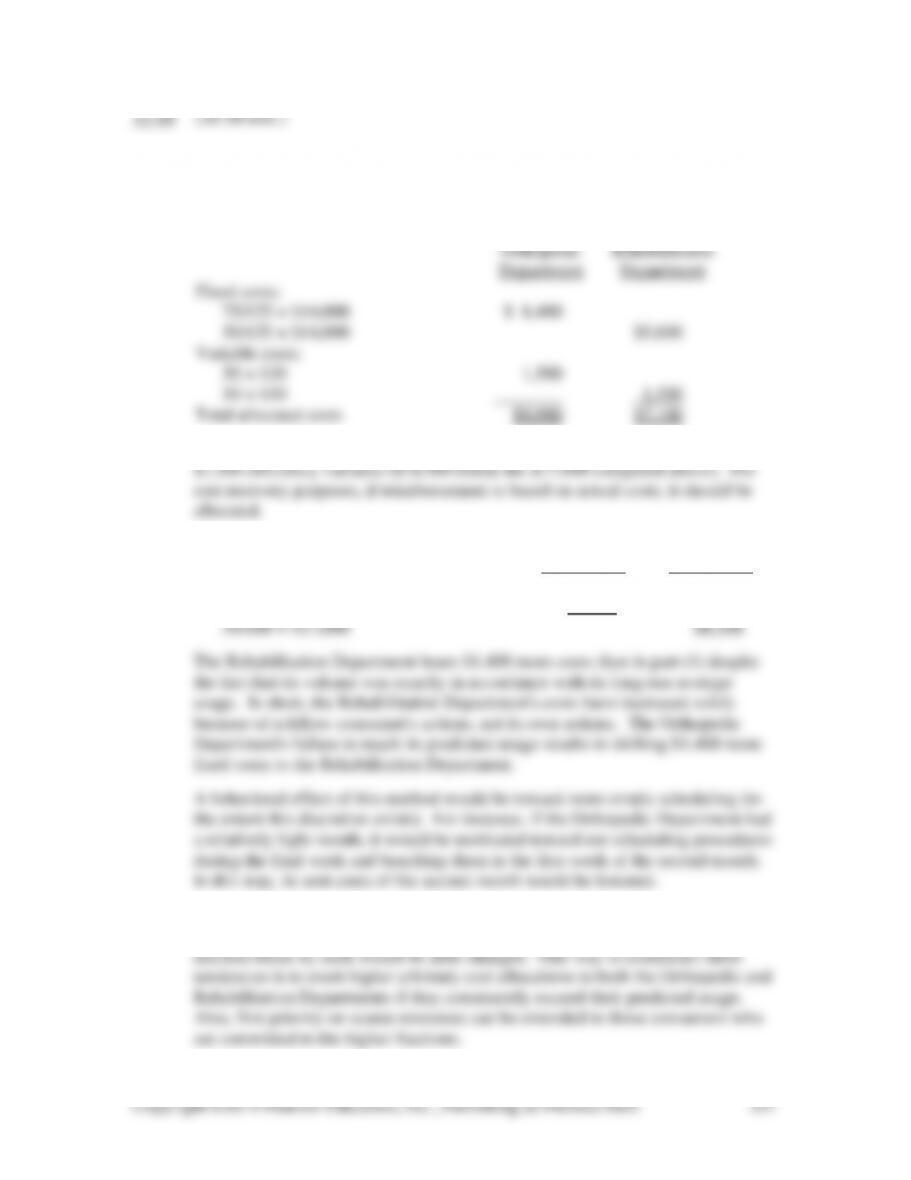
4. A comparison of customer profitability based on the two treatments of the costs to
serve is shown in the table below.
Treatment of Cost to Serve
As Product Cost As Customer Cost
(Problem 12-42) (Problem 12-43)
Copyright ©2014 Pearson Education, Inc., Publishing as Prentice Hall.
537
12-44 (20-30 min.)
1. Basic long-run usage:
75 + 50 = 125 X-rays per month
Total costs incurred:
$14,000 + 100 X-rays ($30) = $17,000
2. For budgetary control and motivation purposes, it is best not to allocate the
3. Orthopedic Rehabilitation
Department Department
Total costs incurred, $17,000:
50/100 × $17,000 $8,500
4. Both the Orthopedic Department and the Rehabilitation Department would be
induced to underestimate usage. Of course, if both play the same game, the final
12-45 (20-30 min.)
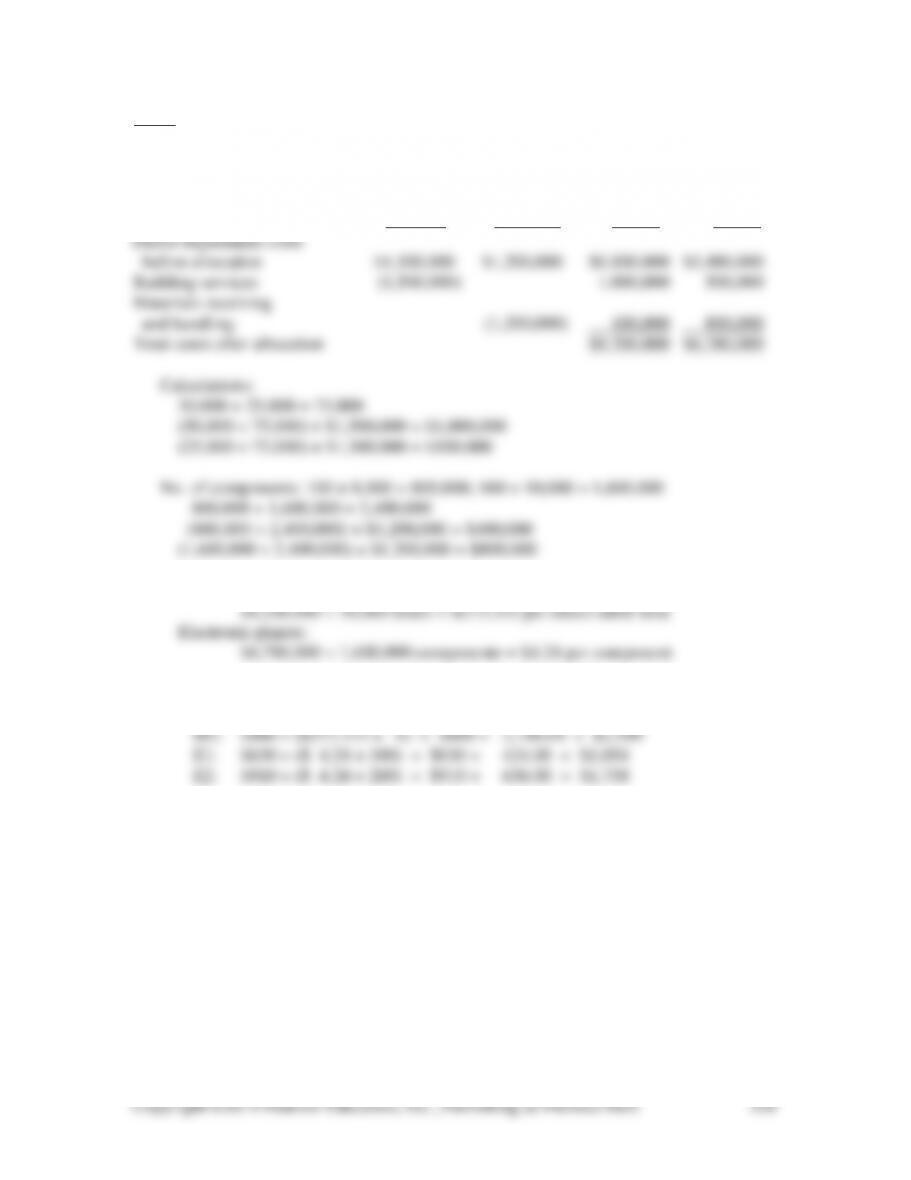
1. Materials
Receiving
Building and Traditional Electronic
Services Handling Pianos Pianos
2. Traditional pianos:
3. Total cost = direct materials cost + manufacturing cost:
M1: $740 + ($273.333 × 3) = $740 + $1,093.32 = $1,560
Copyright ©2014 Pearson Education, Inc., Publishing as Prentice Hall.
539
12-46 (20-30 min.)
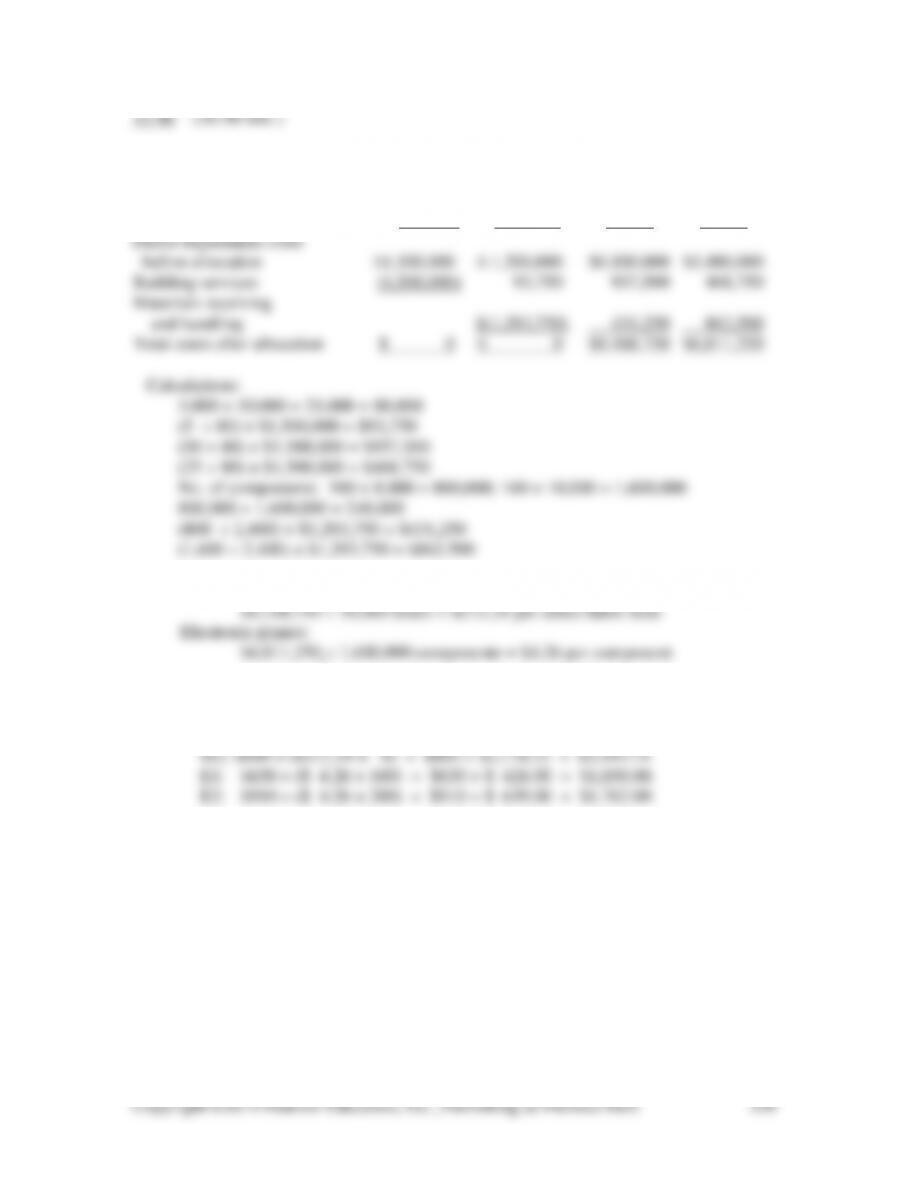
1. Materials
Receiving
Building and Traditional Electronic
Services Handling Pianos Pianos
2. Traditional pianos:
3. Total cost = direct materials cost + manufacturing cost
M1: $740 + ($272.29 × 3) = $740 + $1,089.16 = $1,556.87
12-47 (15-25 min.)
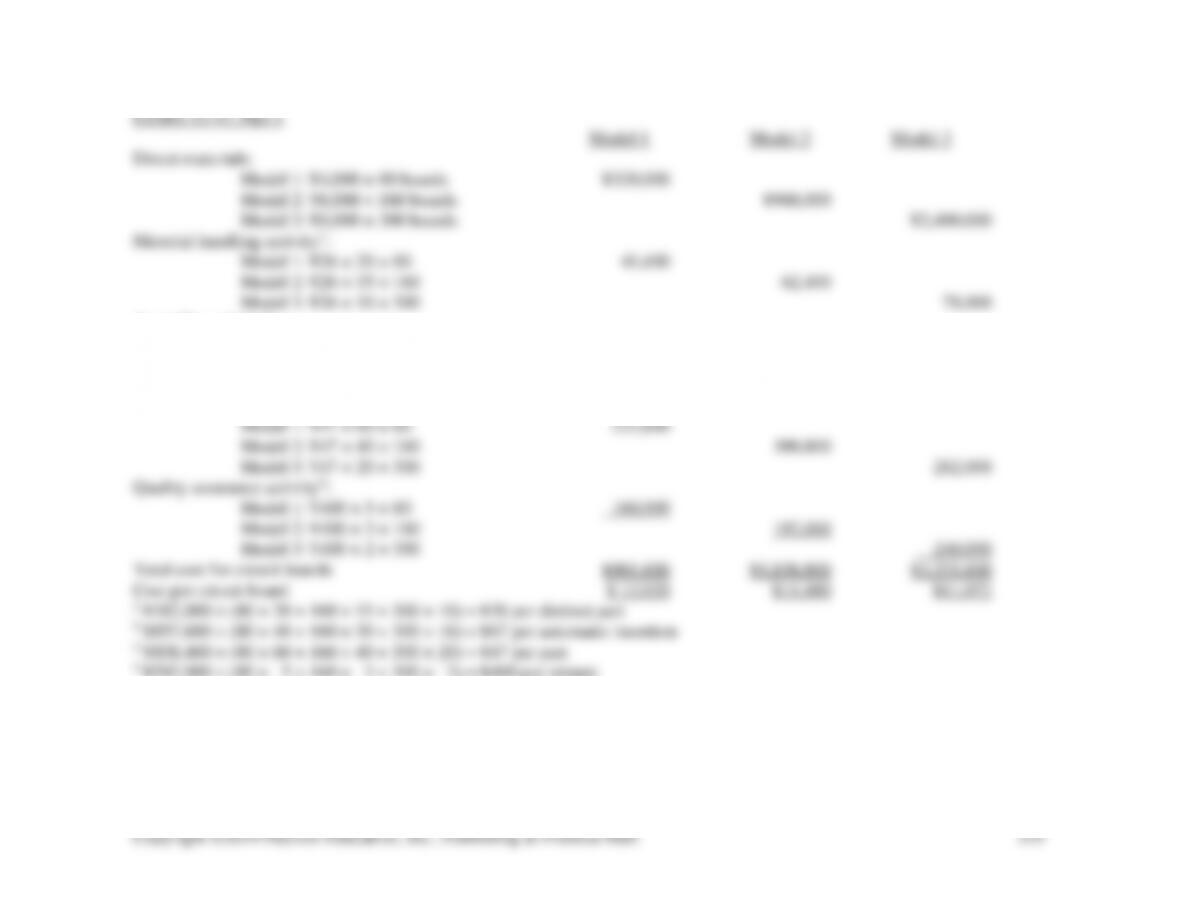
2. See Exhibit 12-47, Part 2. Only the first column is required. However, the other
two columns verify the following discussion.
The cost of the model 1 circuit boards decreases from ¥961,600 to ¥886,921, a decrease
12-48 (25 min.)
1. Recording and record-keeping cost: $20.00 × 500 = $ 10,000
2. Recording and record-keeping cost saving: $20.00 × 300 = $ 6,000
Labor cost saving: No savings; fixed cost * 0
3. Receiving cost per pound: $30,600 80,000 = $.3825
Estimated cost saved from 20,000 pounds = $.3825 × 20,000 = $7,650
The company would have underestimated the savings by $9,750 – $7,650 =
$2,100, and they may have continued to purchase and stock small-sales-level brands that
are actually unprofitable.
Copyright ©2014 Pearson Education, Inc., Publishing as Prentice Hall.
541
Exhibit 12-47, Part 1
Model 1 Model 2 Model 3
Direct materials:
Model 1: ¥4,000 × 80 boards ¥320,000
Model 2: ¥6,000 × 160 boards ¥960,000
Model 3: ¥8,000 × 300 boards ¥2,400,000
Material handling activity1:
Model 1: ¥26 × 20 × 80 41,600
Model 2: ¥26 × 15 × 160 62,400
Model 3: ¥26 × 10 × 300 78,000
Assembly activity2:
Model 1: ¥67 × 40 × 80 214,400
Model 2: ¥67 × 30 × 160 321,600
Model 3: ¥67 × 16 × 300 321,600
Soldering activity3: