Chapter 10 General Equilibrium and Economic Welfare 197
11. Suppose the society used a Rawlsian welfare function: It tries to maximize the well-being of the
worst–off member of the society. What is the welfare function? What allocation maximizes welfare in
this society?
12. Suppose the individual welfare is determined by the formula U = y, where y is individual income.
Does social welfare depend on the allocation of total income?
Answers to Additional Questions and Problems
1. As the demand for newspapers falls, affected product markets might include alternative news sources
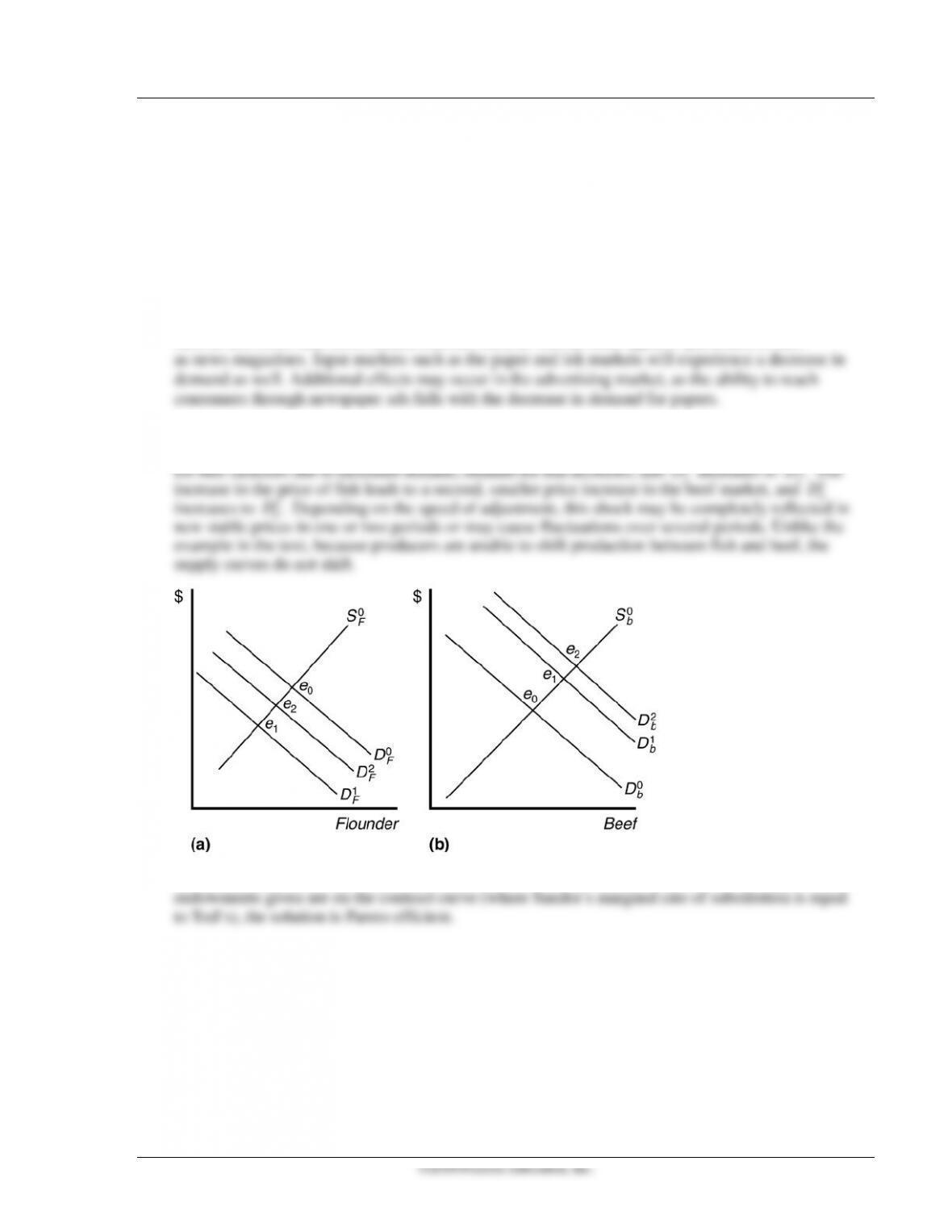
2. If consumers become concerned that the fish population is unsafe to eat, demand falls in the fish
market
0
(
f
D
falls to
1)
f
D
and increases in the substitute market, beef
0
(
b
D
increases to
1
)
b
D
. As the price
1
2.
3. This is true. The Pareto principle does not require that endowments be equitable. As long as the
198 Perloff • Microeconomics: Theory and Applications with Calculus, Third Edition
4. The tax distorts the location decisions of both individuals and businesses. Demand for residential
housing within the city limits is decreased by the imposition of the higher tax for city residents.
Individuals who live outside the city have lower demand for jobs in the city relative to those in the
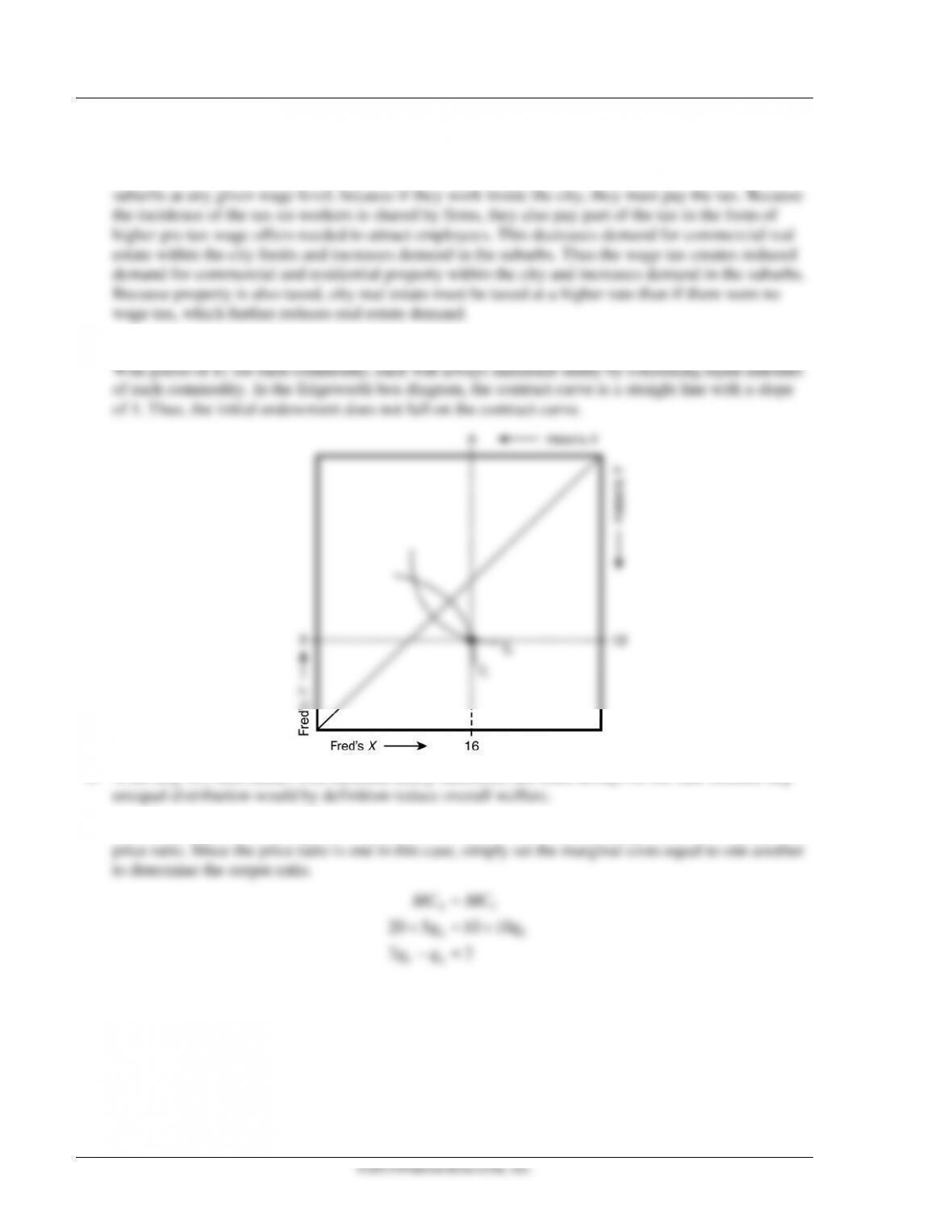
5. Since each has the same utility function, each also has the same marginal rate of substitution, MRS = Y/X.
7. Efficiency requires that the goods be produced such that the ratio of the marginal costs is equal to the
22
−=
XY
YX
qq
200 Perloff • Microeconomics: Theory and Applications with Calculus, Third Edition
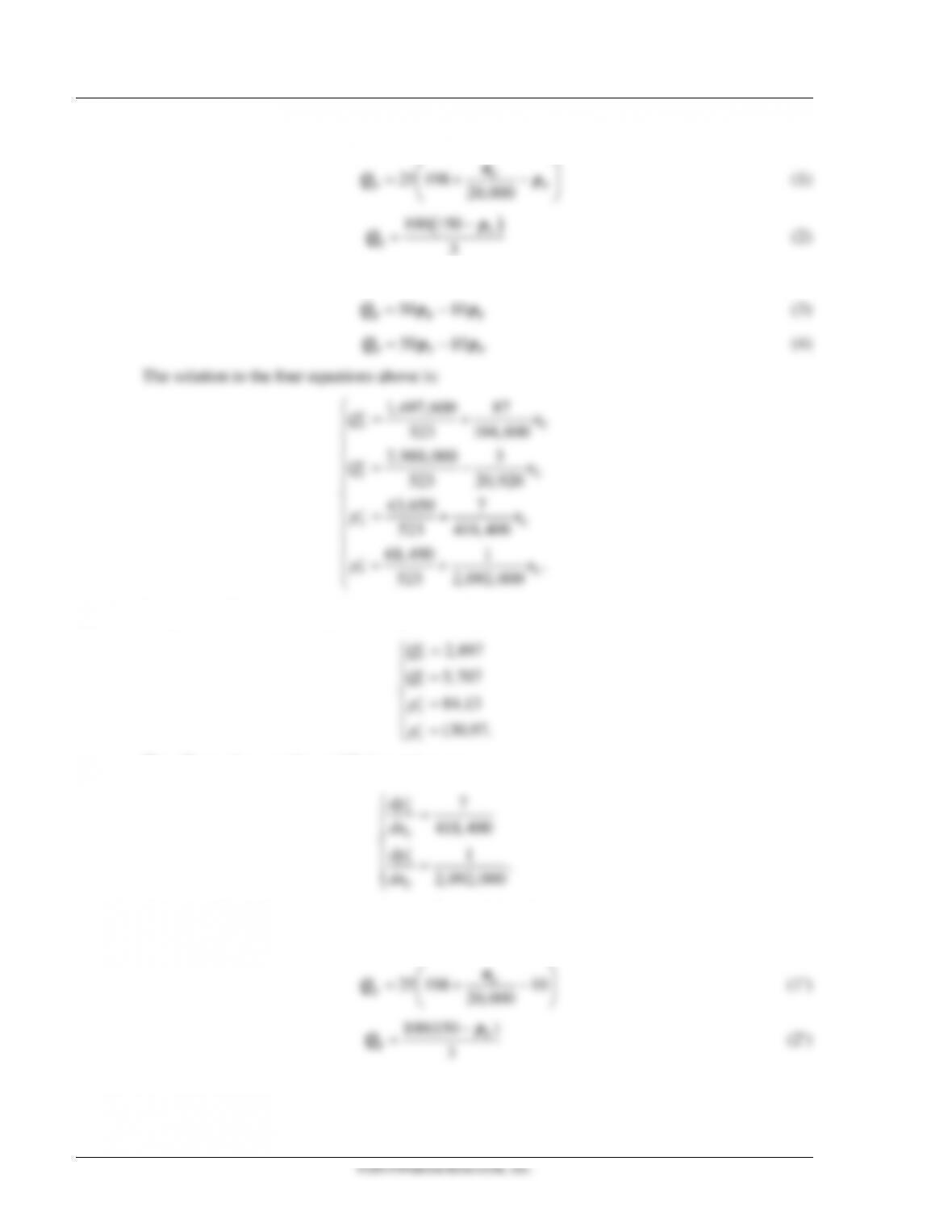
1.3 a. Demand functions:
C
n
3
T
Supply functions:
43,650 7
523 418,400
68,490 1 .
523 2,092,000
FC
TC
pn
pn
∗
∗
= +
= +
If
=40,000,
C
n
then the equilibrium prices and quantities are:
2,897
5,707
84.13
130.97.
F
T
F
T
Q
Q
p
p
∗
∗
∗
∗
=
=
=
=
The effects of
C
n
on the equilibrium prices are:
7
418,400
1.
2,092,000
F
C
T
C
dp
dn
dp
dn
∗
∗
=
=
b. Now
10
F
p=
in the demand equations, and
35
F
p=
in the supply equations.
Demand side:
C
n
3
T
Chapter 10 General Equilibrium and Economic Welfare 201
Supply side:
TT
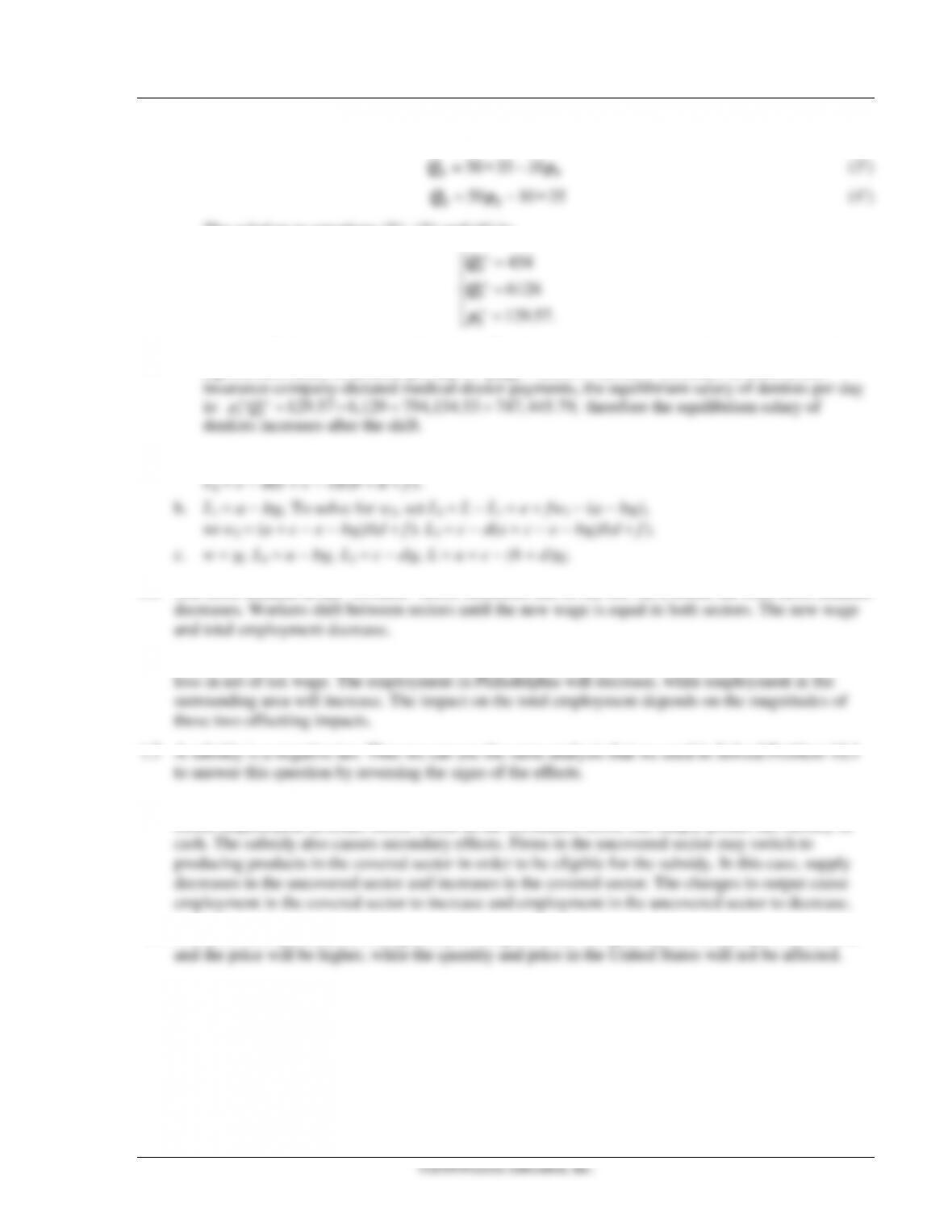
The solution to equations (2′), (3′) and (4′) is:
∗∗
∗∗
∗∗
=
=
=
454
6128
129.57.
F
T
T
Q
Q
p
c. Assume all the revenues go to the salary. Then in the competitive medical checkup market, the
∗∗
202 Perloff • Microeconomics: Theory and Applications with Calculus, Third Edition
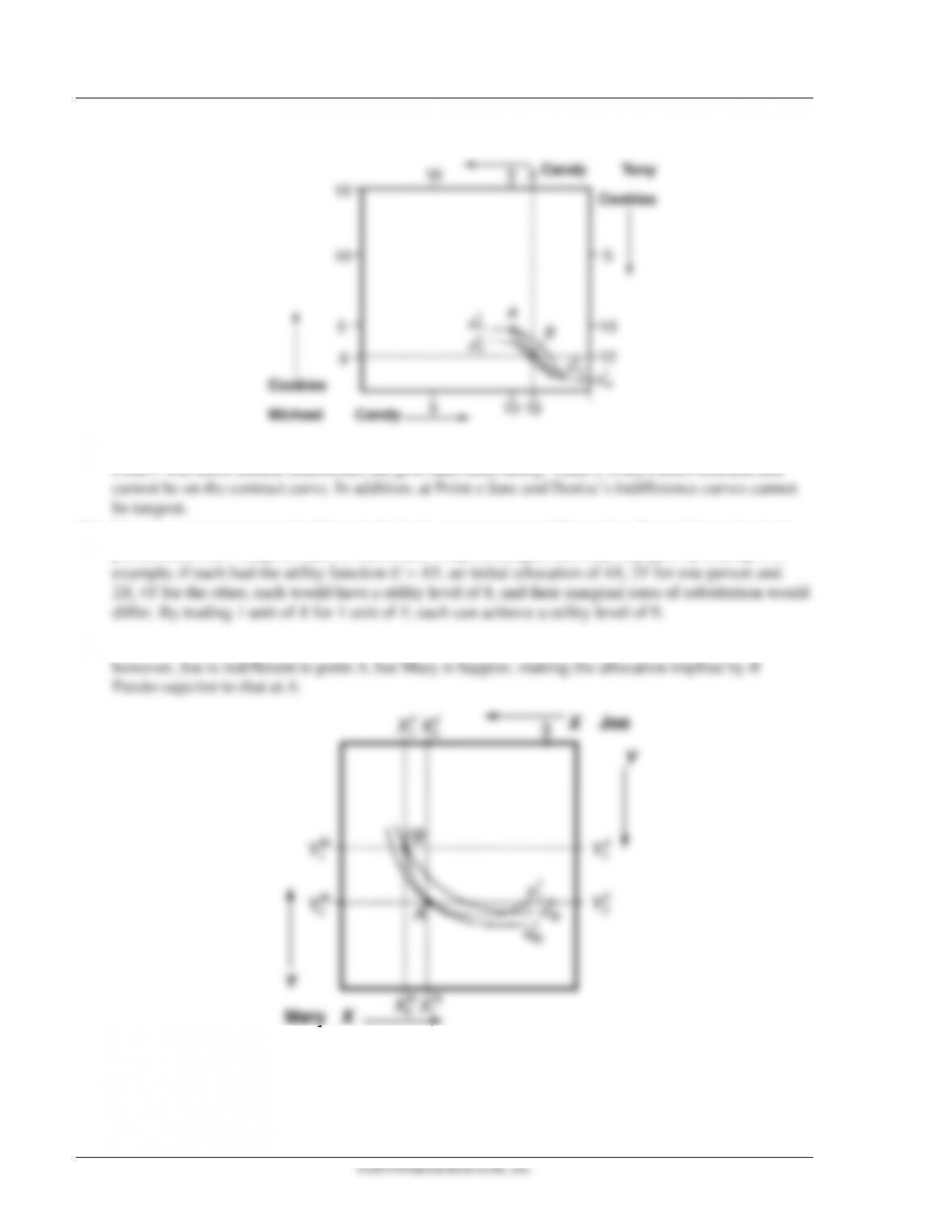
2.1 See the figure below.
2.2 A move from Point e to Point b will leave Jane indifferent, but Denise with more utility. A move to
2.3 Yes, they may want to trade. If two individuals are consuming different bundles and have identical
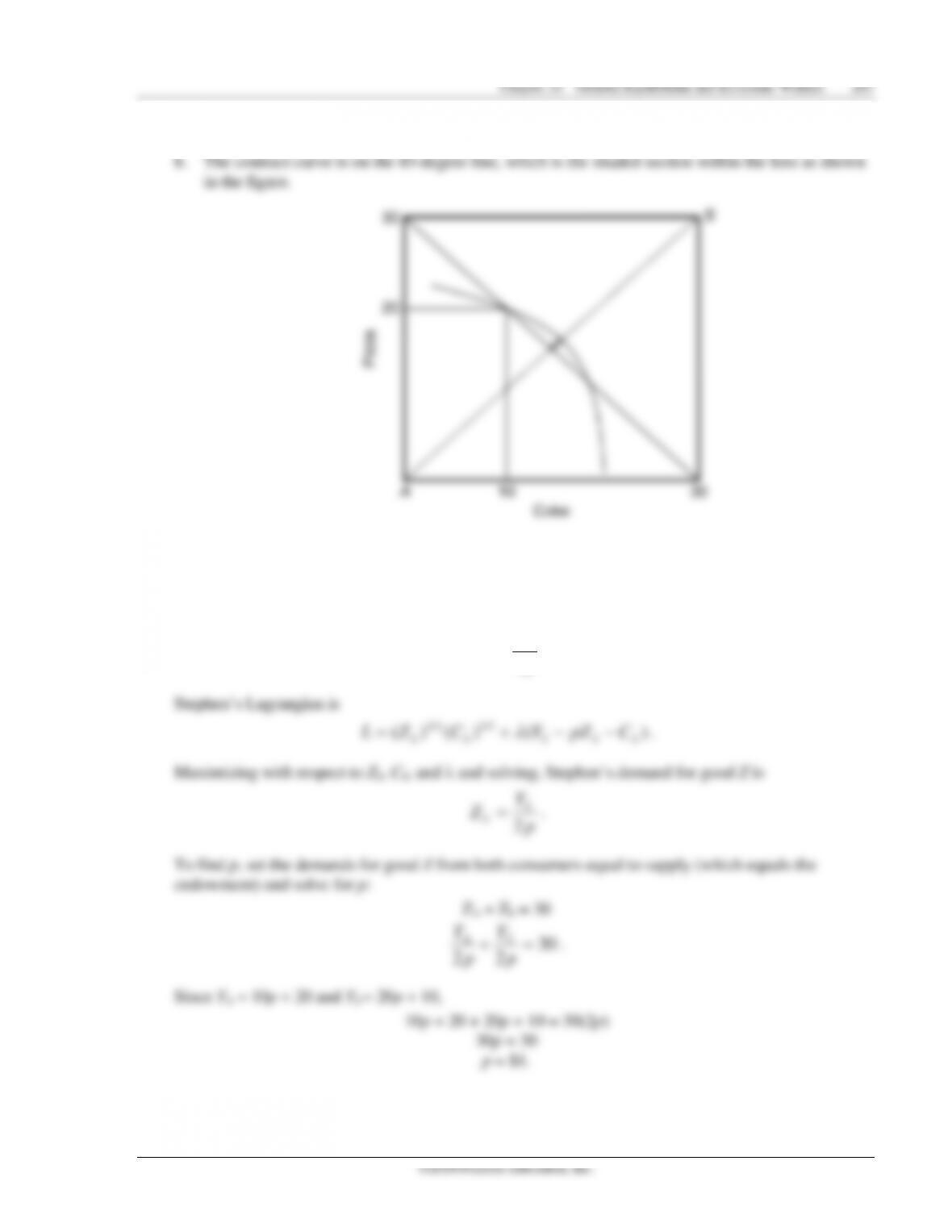
2.4 See the figure below. At point A, the individual’s indifference curves are tangent. At point B,
204 Perloff • Microeconomics: Theory and Applications with Calculus, Third Edition
2.7 The contract curve is where each individual’s MRS are equal to each other. Note that MRSt = −(Ht/Gt)
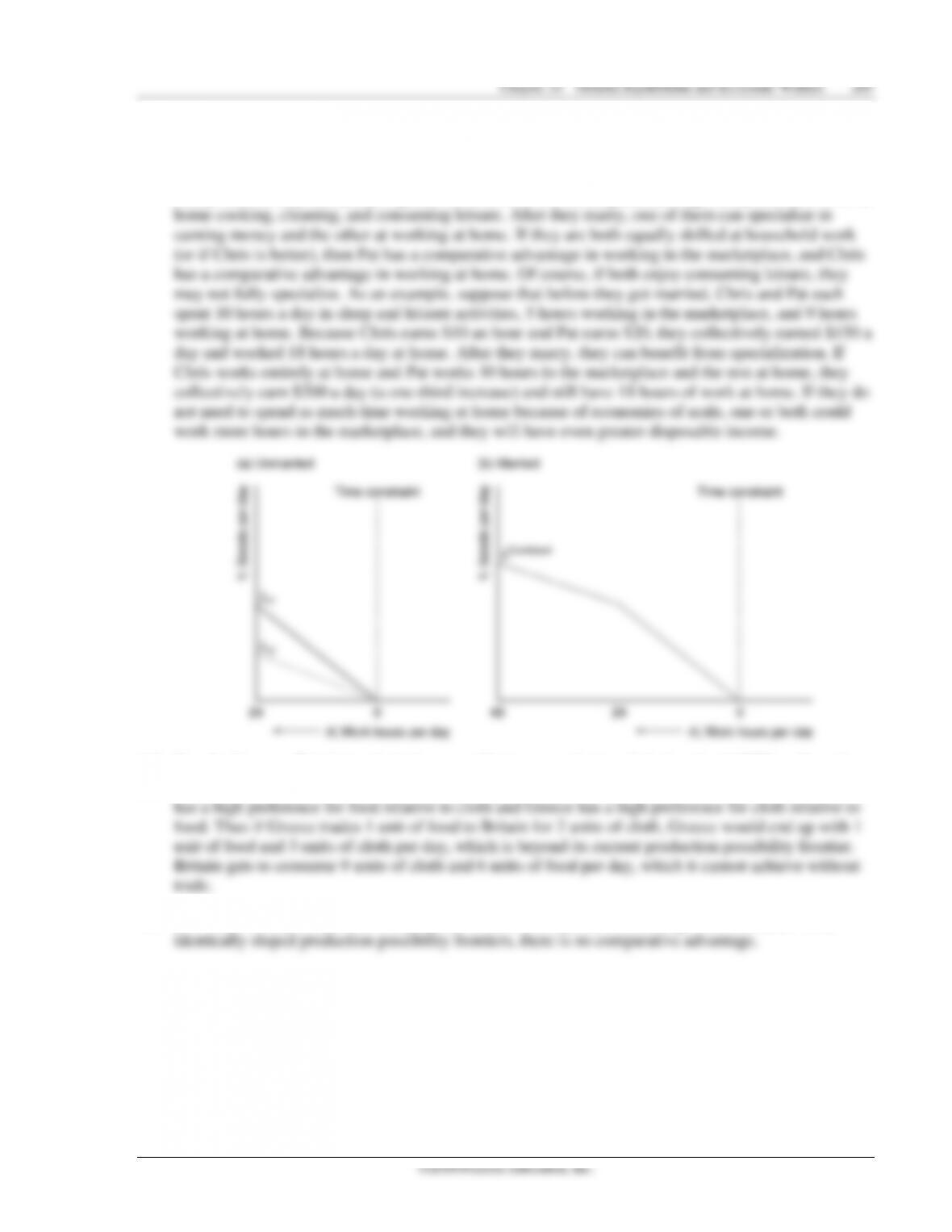
2.8 The demands for each good are found to be Gt = Yt/2P; Ht = Yt/2; Gm = Ym/3P; and Hm = 2/3Ym. To

206 Perloff • Microeconomics: Theory and Applications with Calculus, Third Edition
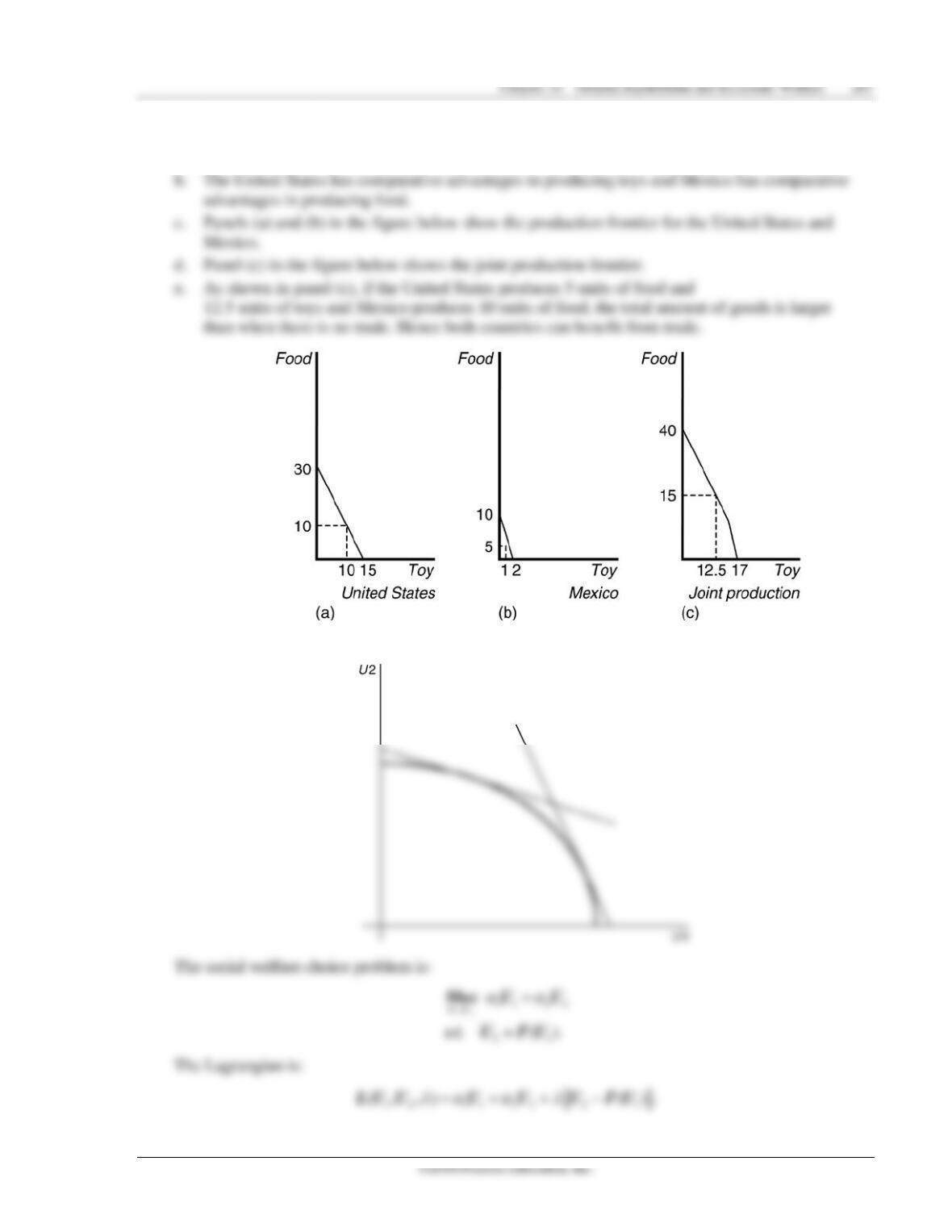
4.5 Jane, Denise, Harvey, Bill, and Helen can produce a total of 23 cords of wood or a total of 23 candy
bars. Among the five, Denise has a comparative advantage producing candy bars and Jane has a

208 Perloff • Microeconomics: Theory and Applications with Calculus, Third Edition
The F.O.C.s are:
11
1
( ) 0 (1)
LFU
U
L
αλ
∂
′
=−=
∂
∂= +=
5.3 In an economy with many individuals but the goal of maximizing the utility of only one, the welfare
6.1 In the consumer market, the price is lower and quantity sold is lower. If the markets are sealed, there
6.2 The price ceiling will create excess demand in the city, which will spill out into the suburbs. As a
6.3 The law simply reduces the number of buyers in the market. Therefore, the quantity sold in New
6.4 The price in the foreign market will be higher, while the quantity sold will be lower. On the other