20-18
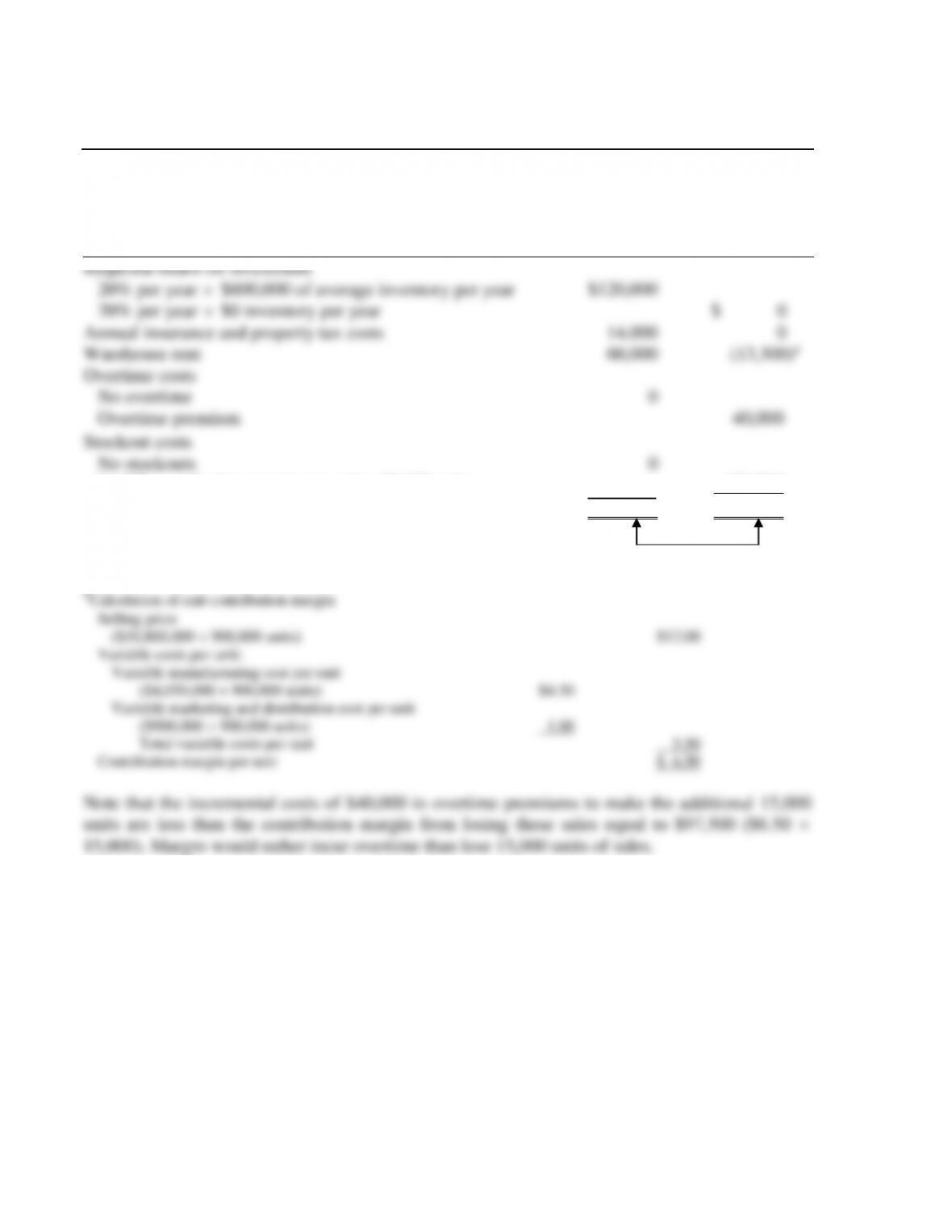
SOLUTION EXHIBIT 20-30
Annual Relevant Costs of Current Purchasing Policy and JIT Purchasing Policy
for Margro Corporation
Relevant
Costs under
Current
Purchasing
Policy
Relevant
Costs under
JIT
Purchasing
Policy
Required return on investment
20% per year
$600,000 of average inventory per year
$120,000
20% per year
$0 inventory per year
$ 0
Annual insurance and property tax costs
14,000
0
Warehouse rent
60,000
(13,500)a
Overtime costs
No overtime
0
Overtime premium
40,000
Stockout costs
No stockouts
0
$6.50b contribution margin per unit
20,000 units
130,000
Total incremental costs
$194,000
$156,500
Difference in favor of JIT purchasing $37,500
a$(13,500) = Warehouse rental revenues, [(75%
12,000)
$1.50].
20-19
20-31 (25 min.) Supply chain effects on total relevant inventory costs.
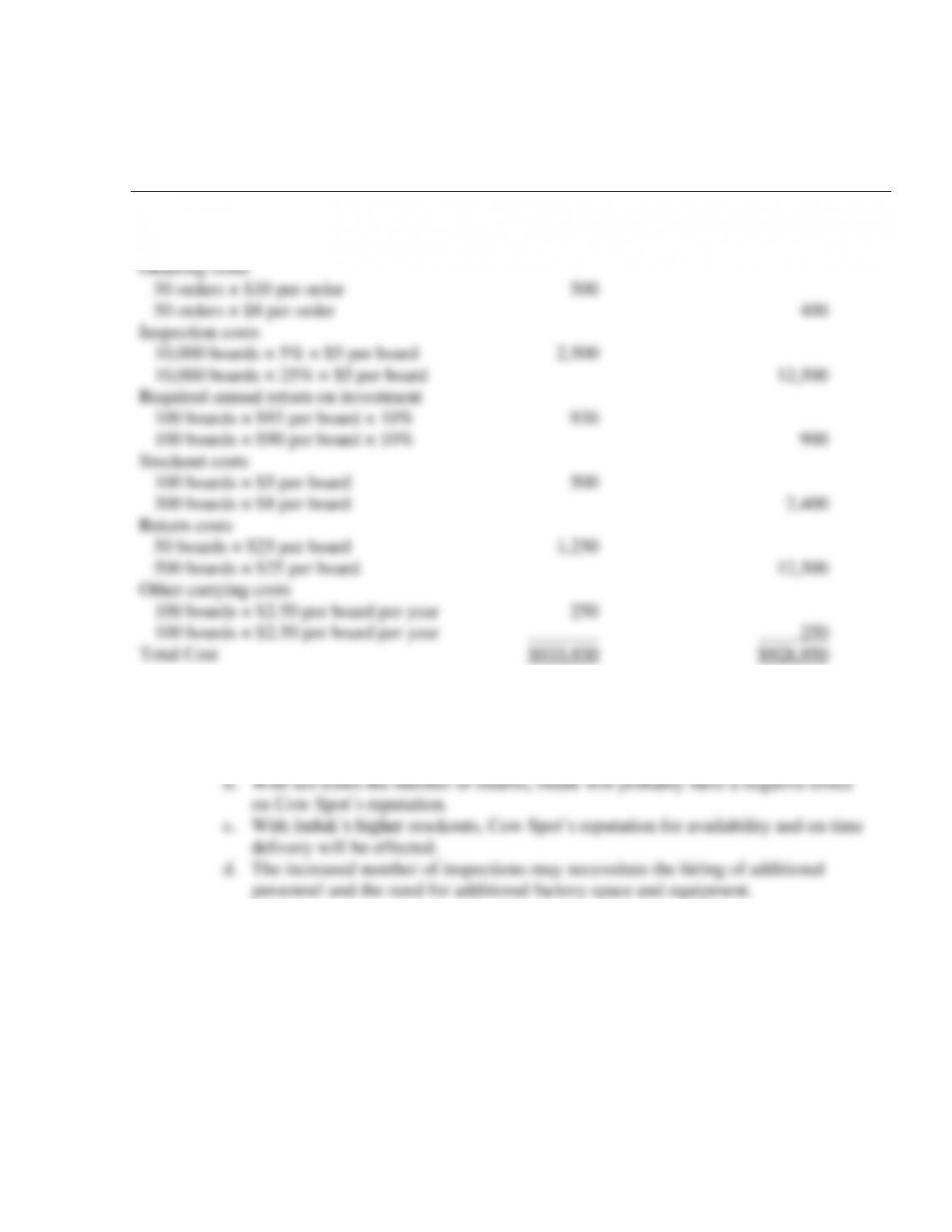
1. The relevant costs of purchasing from Maji and Induk are:
Cost Category
Maji
Induk
Purchase costs
10,000 boards × $93 per board
10,000 boards × $90 per board
$930,000
900,000
Ordering costs
50 orders × $10 per order
50 orders × $8 per order
500
400
Inspection costs
10,000 boards × 5% × $5 per board
10,000 boards × 25% × $5 per board
2,500
12,500
Required annual return on investment
100 boards × $93 per board × 10%
100 boards × $90 per board × 10%
930
900
Stockout costs
100 boards × $5 per board
300 boards × $8 per board
500
2,400
Return costs
50 boards × $25 per board
500 boards × $25 per board
1,250
12,500
Other carrying costs
100 boards × $2.50 per board per year
100 boards × $2.50 per board per year
250
250
Total Cost
$935,930
$928,950
2. While Induk will save Cow Spot $6,980 ($935,930 − $928,950), Cow Spot may still choose
to use Maji for the following reasons:
a. The savings are less than 1% of the total cost of the mother boards.
20-20
20-32 (20 min.) Blackflush costing and JIT production.
1.
(a) Record purchases of
direct materials
Materials and In-Process Inventory Control
Accounts Payable Control
546,000
546,000
(b) Record conversion costs
incurred
Conversion Costs Control
Various Accounts (such as
399,000
Wages Payable Control)
399,000
(c) Record cost of good
finished units completed
Finished Goods Controla
Materials and In-Process
900,000
Inventory Controla
520,000
Conversion Costs Allocateda
380,000
(d) Record cost of finished
goods sold
Cost of Goods Soldb
Finished Goods Control
855,000
855,000
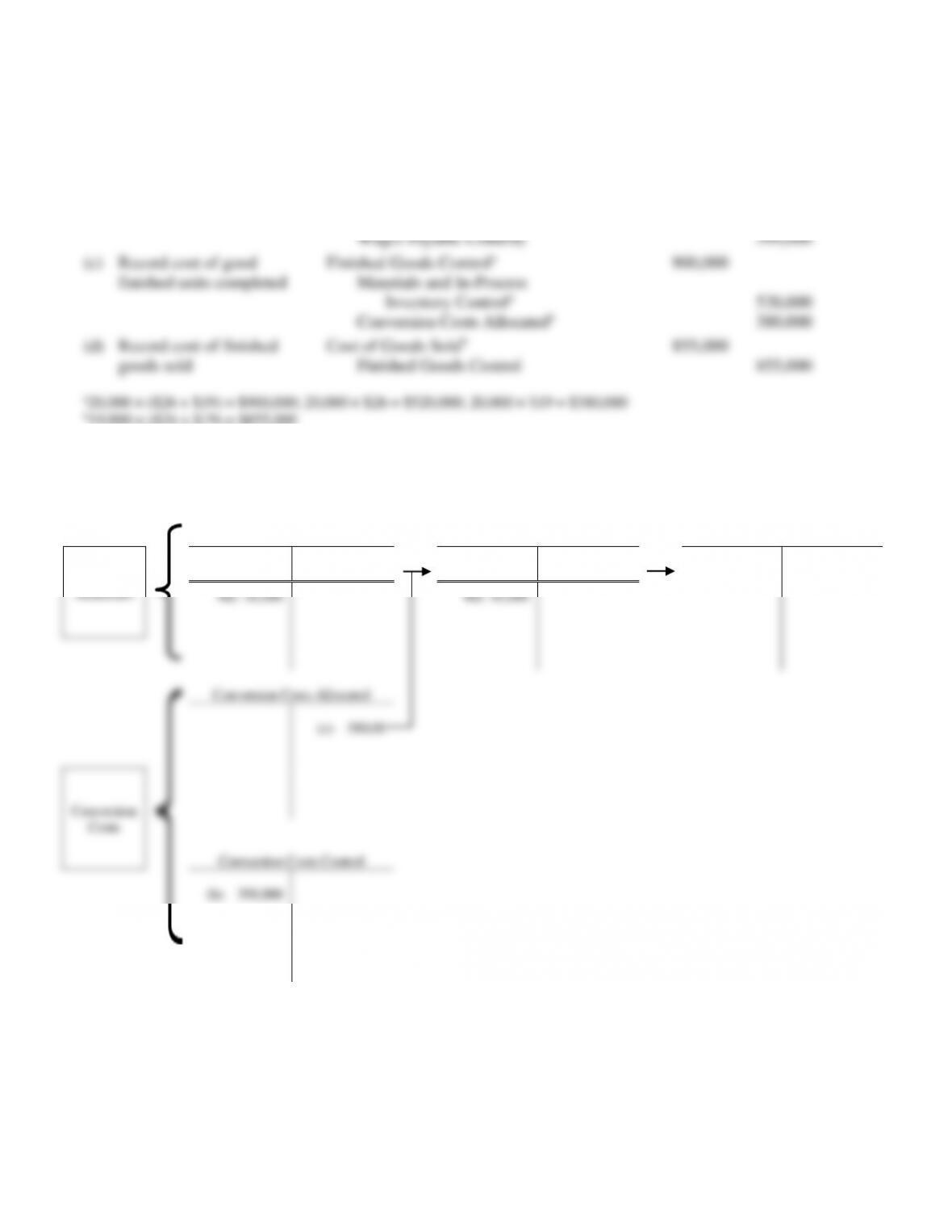
2.
Materials and In-Process
Inventory Control
Finished Goods Control
Cost of Goods Sold
Direct
Materials
(a) 546,000
(c) 520,000
(c) 900,000
(d) 855,000
(d) 855,000
Bal. 26,000
Bal. 45,000
Conversion Costs Allocated
(c) 380,00
Conversion
Costs
Conversion Costs Control
(b) 399,000
20-21
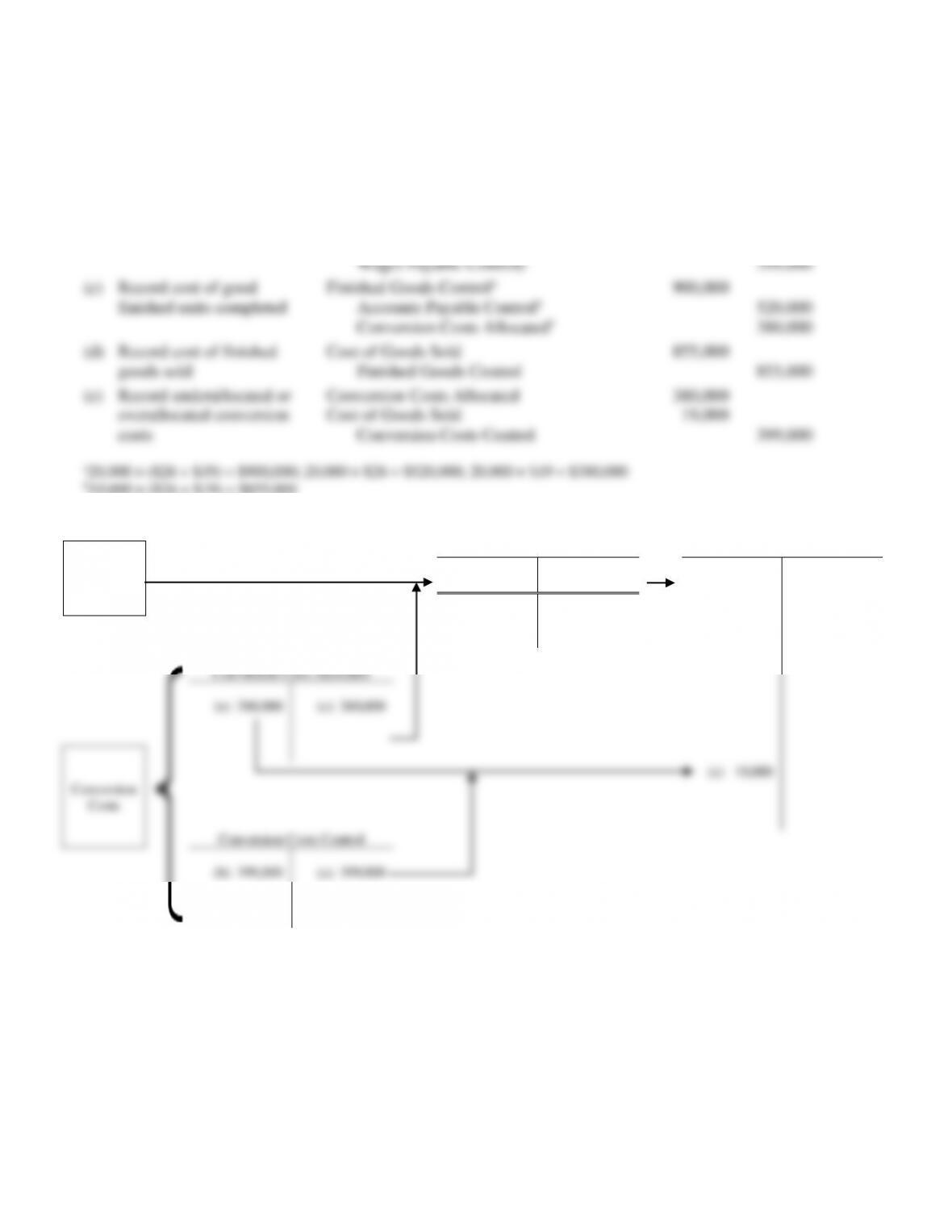
20-33 (20 min.) Backflush, two trigger points, materials purchase and sale
(continuation of 20-32).
1.
(a) Record purchases of
direct materials
Inventory Control
Accounts Payable Control
546,000
546,000
(b) Record conversion costs
incurred
Conversion Costs Control
Various Accounts (such as
399,000
Wages Payable Control)
399,000
(c) Record cost of good
finished units completed
No entry
(d) Record cost of finished
goods sold
Cost of Goods Solda
Inventory Controla
855,000
494,000
Conversion Costs Allocateda
361,000
(e) Record underallocated or
overallocated conversion
costs
Conversion Costs Allocated
Cost of Goods Sold
Conversion Costs Control
361,000
38,000
399,000
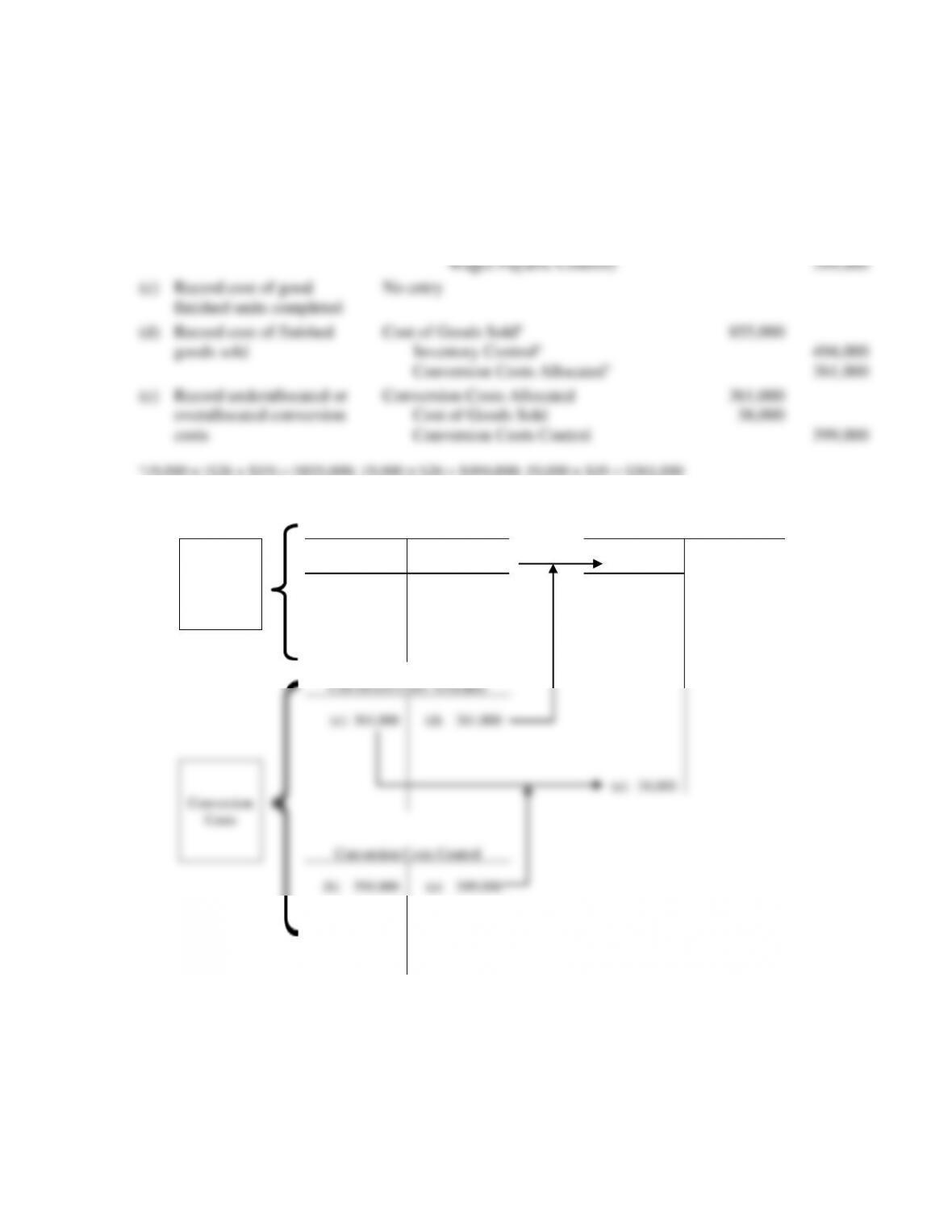
2.
Inventory Control
Cost of Goods Sold
Direct
Materials
(a) 546,000
(d) 494,000
(d) 855,000
Bal. 52,000
Conversion Costs Allocated
(e) 361,000
(d) 361,000
Conversion
Costs
(e) 38,000
Conversion Costs Control
(b) 399,000
(e) 399,000
20-22
20-34 (20 min.) Backflush, two trigger points, completion of production and sale
(continuation of 20-32).
1.
(a) Record purchases of
direct materials
No Entry
(b) Record conversion costs
incurred
Conversion Costs Control
Various Accounts (such as
399,000
Wages Payable Control)
399,000
(c) Record cost of good
finished units completed
Finished Goods Controla
Accounts Payable Controla
900,000
520,000
Conversion Costs Allocateda
380,000
(d) Record cost of finished
goods sold
Cost of Goods Sold
Finished Goods Control
855,000
855,000
(e) Record underallocated or
overallocated conversion
costs
Conversion Costs Allocated
Cost of Goods Sold
Conversion Costs Control
380,000
19,000
399,000
a20,000 × ($26 + $19) = $900,000; 20,000 × $26 = $520,000; 20,000 × $19 = $380,000
b19,000 × ($26 + $19) = $855,000
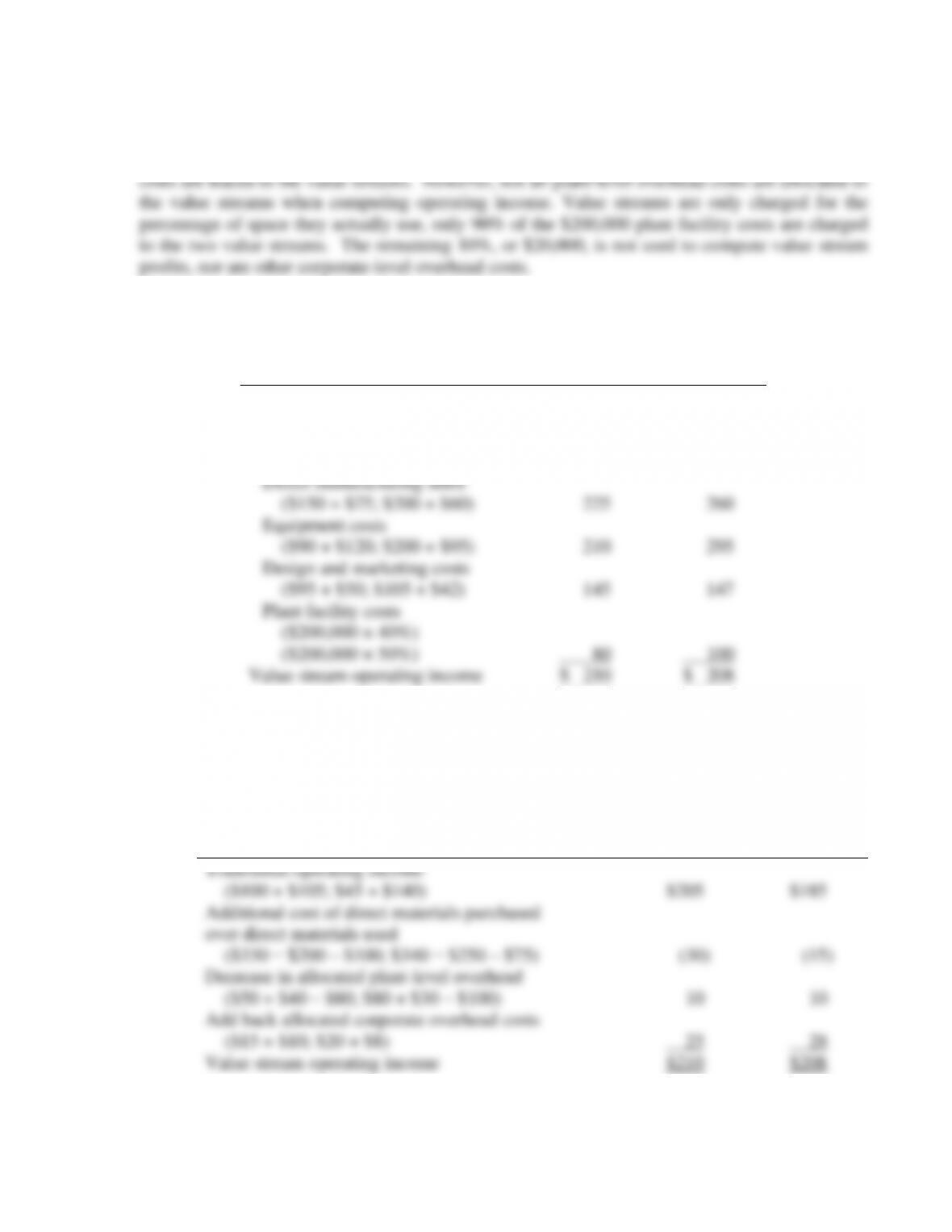
2.
Finished Goods Control
Cost of Goods Sold
Direct
Materials
(c) 900,000
(d) 855,000
(d) 855,000
Bal. 45,000
Conversion Costs Allocated
(e) 380,000
(c) 380,000
Conversion
Costs
(e) 19,000
Conversion Costs Control
(b) 399,000
(e) 399,000
20-23
20-35 (20 min.) Lean accounting.
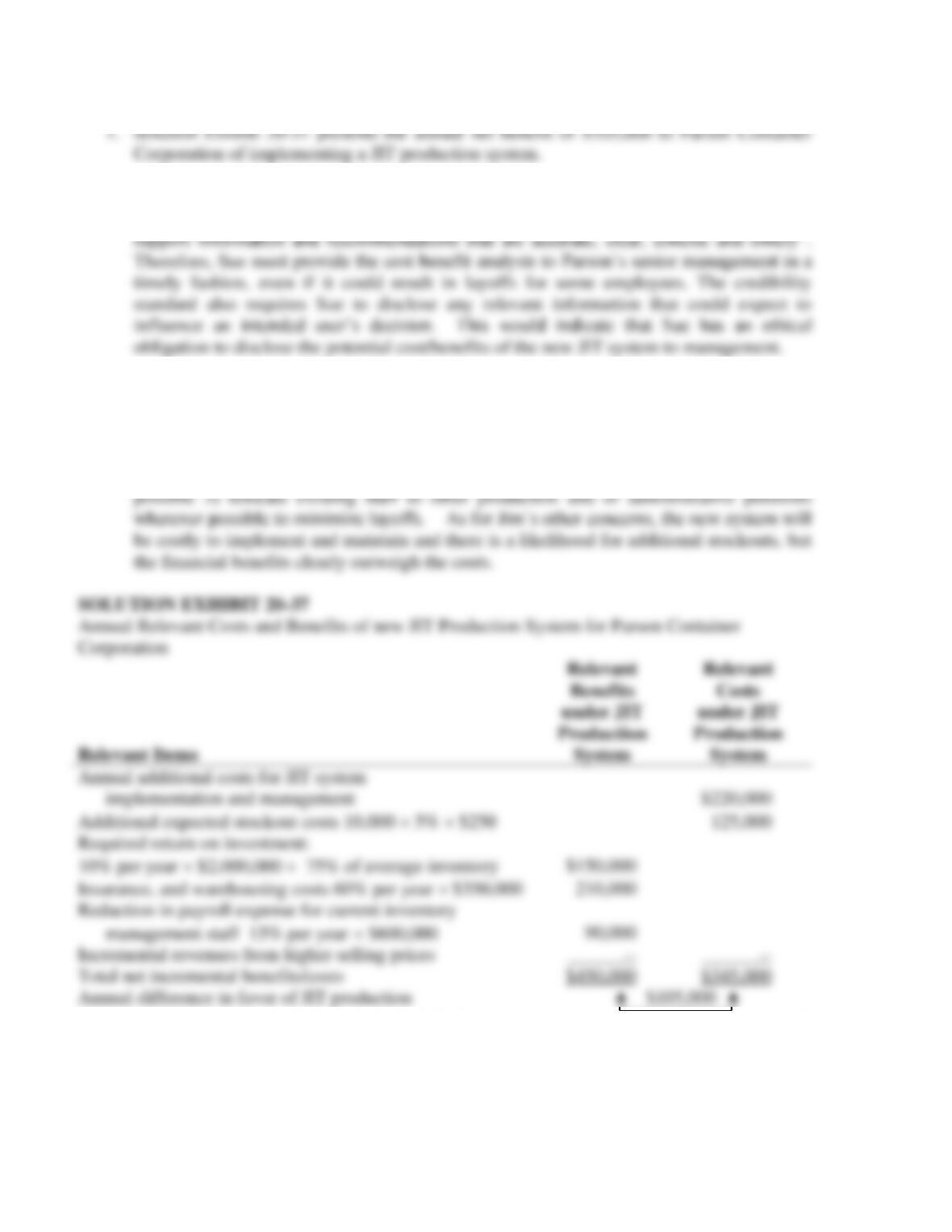
1. The cost object in lean accounting is the value stream, not the individual product. FSD
has identified two distinct value streams: Mechanical Devices and Electronic Devices. All direct
2. Operating income under lean accounting are the following (in thousands of dollars):
Mechanical
Devices
Electronic
Devices
Sales ($700 + $500; $900 + $450)
$1,200
$1,350
Costs
Direct materials purchased
($210 + $120; $250 + $90)
330
340
Direct manufacturing labor
($150 + $75; $200 + $60)
225
260
Equipment costs
($90 + $120; $200 + $95)
210
295
Design and marketing costs
($95 + $50; $105 + $42)
145
147
Plant facility costs
($200,000 × 40%)
($200,000 × 50%)
80
100
Value stream operating income
$ 210
$ 208
In addition to the differences discussed in Requirement 1, FSD’s lean accounting system
accounts for direct materials as expenses in the period the materials are purchased. The
following factors explain the differences between traditional operating income and lean
accounting income for the two value streams (in thousands of dollars):
Mechanical
Devices
Electronic
Devices
Traditional operating income
($100 + $105; $45 + $140)
$205
$185
Additional cost of direct materials purchased
over direct materials used
($330 − $200 – $100; $340 − $250 – $75)
(30)
(15)
Decrease in allocated plant-level overhead
($50 + $40 – $80; $80 + $30 – $100)
10
10
Add back allocated corporate overhead costs
($15 + $10; $20 + $8)
25
28
Value stream operating income
$210
$208
20-24
20-36 (20 min.) JIT production, relevant benefits, relevant costs, ethics.
2. As part of the IMA’s Standards of Ethical Professional Practice, Sue Winston, the
company controller has an obligation under the competence standard to “provide decision
3. It is understandable that Jim Ingram the company’s operations manager would be
concerned about potential layoffs in his department and the resulting morale issues.
However, recommendations could include 1) fully engage the production staff in the
upcoming changes to minimize negative morale issues 2) retrain existing staff to manage
the new JIT production and purchasing system, so as to avoid as many potential layoffs, as