SOLUTIONS TO CHAPTER 3 PROBLEMS
Relevant Costs and Revenues and Estimating
3-1. The $5,000.00 purchase price is a sunk cost and therefore irrelevant to the decision at
hand. The $500.00 storage cost may be a book cost (i.e., may not represent an actual
3-2. Smith needs to know: 1) the costs of alternative places to live, and 2) how much, in
3-3. The merchant could show $16 – $10 = $6 per unit accounting profit from the sale.
However, this is based on recognition of past costs, and not future costs. Actually, the
3-4. (a) The cost of the space would be $4.00 per ft2 per year.
10
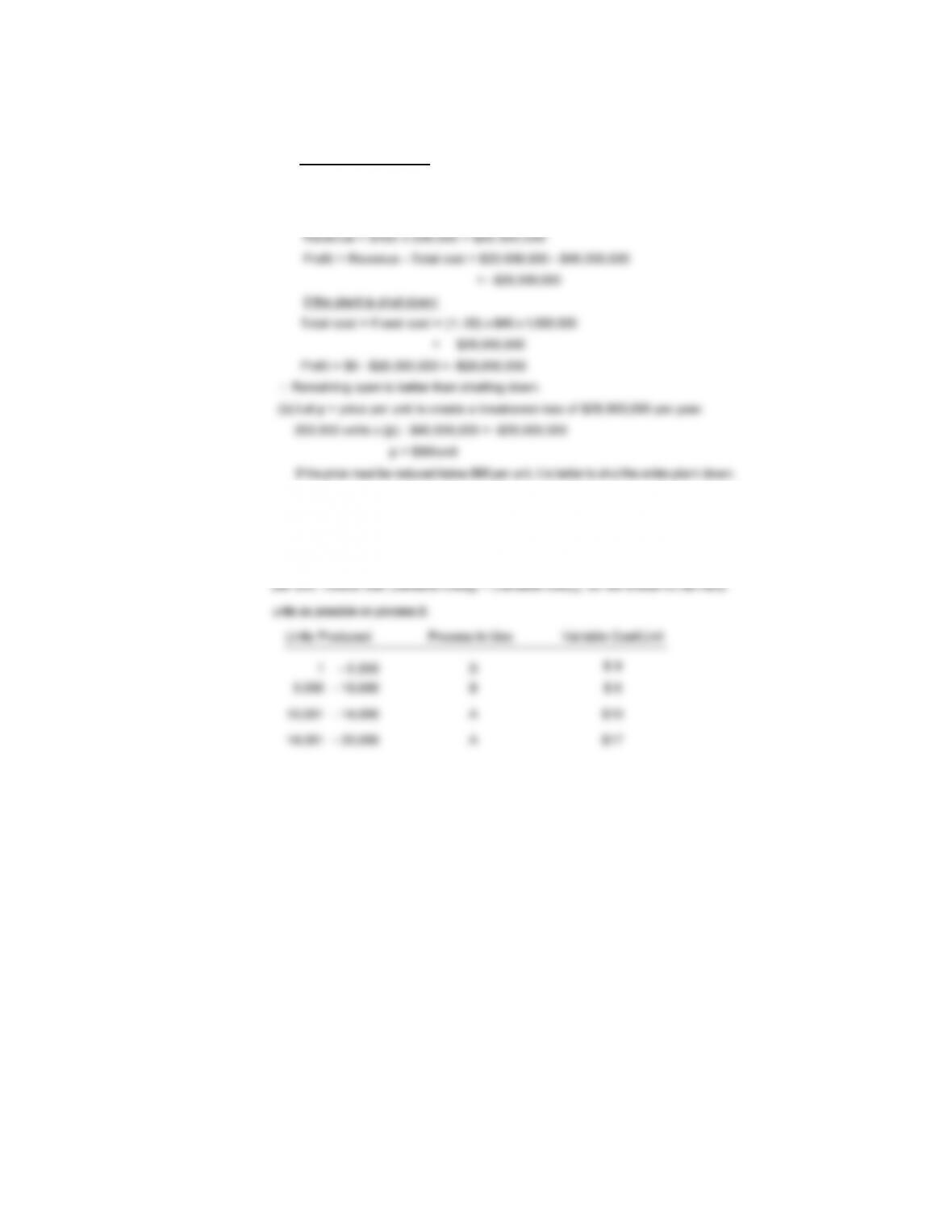
3-5. (a) If the plant remains open:
Total cost = Fixed + Variable
= [(1-.15) x $40 x 1,000,000] + ($60 x 200,000)
= $46,000,000
3-6. The fixed costs of both processes can be assumed constant under normal operating
conditions. Therefore, add production to the process that minimizes variable cost
11
3-7.
3-8.
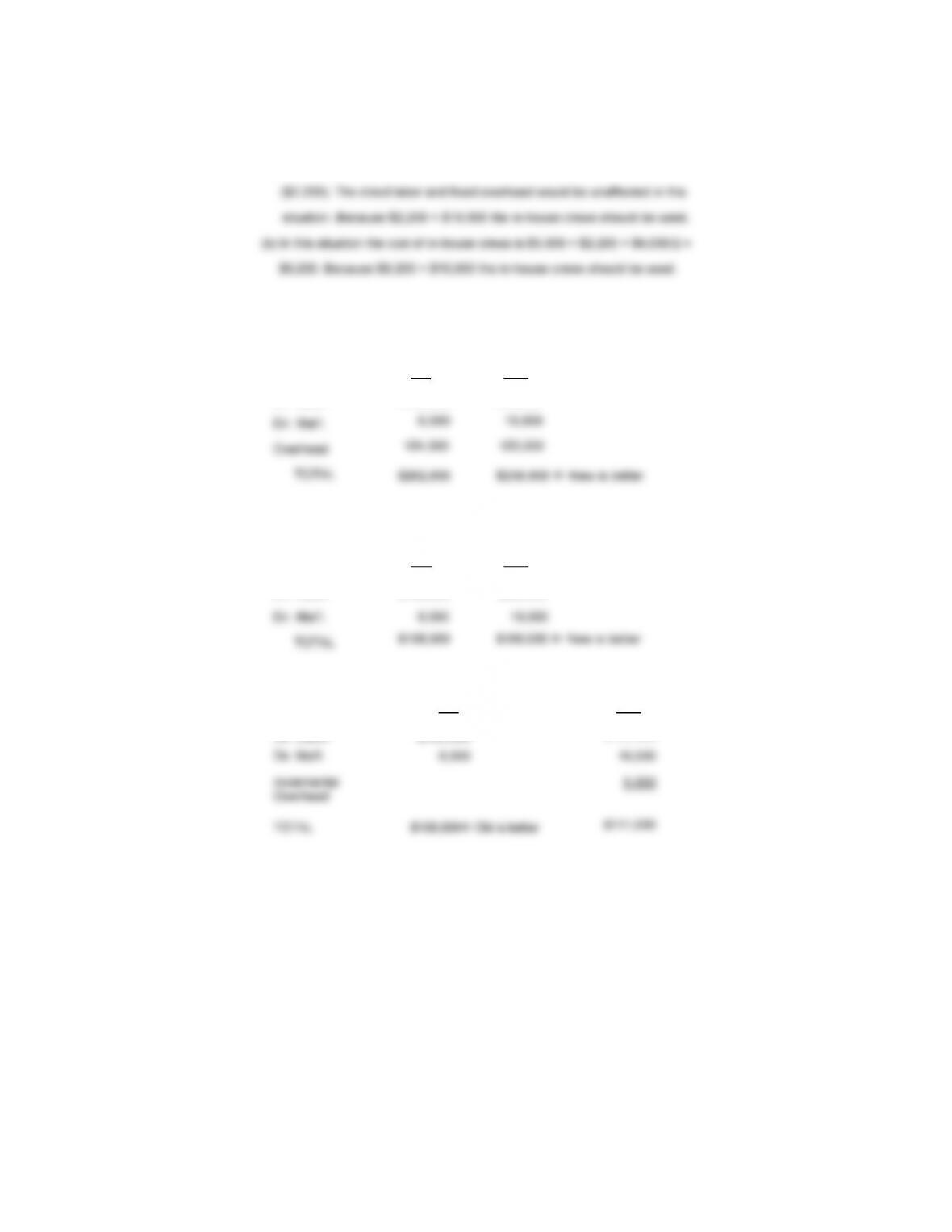
(a) The cost to use in-house crews would be the incremental cost of materials
(a) Overhead costs = $100,000 + 0.5 (Direct Labor+ Direct Material)
Old New
$100,000 $90,000
Dir. Labor
(b) Only Dir. Labor + Dir. Mat’l costs need be considered.
Old New
$100,000 $90,000
Dir. Labor
(c)
Old New
Dir. Labor $100,000 $ 90,000
12
3-9. A book cost is a cost which does not involve a cash payment, such as the value for
asset after depreciation charge for an asset regardless of whether or not that asset
3-10. A postponable cost is a cost which can be delayed for a period of time, but which
3-11. Overhead that is fixed or will remain constant (such as administrative and marketing
3-12. Fixed costs of an automobile include depreciation, finance charges, insurance,
3-13. Develop some more alternatives, which may include:
1. Sell the wrecked car for $2,000 to the wholesaler and spend the $1,000 insurance check as
13
3-13. (continued)
3. Spend the $1,000 insurance check and $1,000 of savings to fix the car, then sell
4. Give the car to a lesser mechanic where they will repair it for $1,100 ($1,000
5. Same as #4 but then sell the car for $4,500 and use this money plus $5,500 of
Assumptions:
1. The less reliable repair shop in options 4 and 5 will not take longer than the
Focus on the differences
1. Alternative 1 varies from all others because the car is not to be repaired at all and
2. Alternative 2 varies from alternative 1 because it allows the old car to be repaired.
Alternative 2 differs from alternatives 4 and 5 since it utilizes a more expensive
14
3-13. (continued)
3. Alternative 3 gains an additional $500 by repairing the car and selling it to buy the
4. Alternative 4 uses the same idea as alternative 2 but involves a less expensive repair
5. Alternative 5 is the same as alternative 4 but gains an additional $500 by selling the
1. Alternative 1 is eliminated because alternative 3 gains the same end result and would also
2. Alternative 2 is a good alternative to consider because it spends the least amount of
3. Alternative 3 is eliminated since alternative 5 also repairs the car but at a lower out of
15
3-13. (continued)
5. Alternative 5 is the alternative accepted because it repairs the car at a lower cost ($500
Make uncertainty explicit_
Among the uncertainties that can be found in the above problem, the following are the most
relevant to the decision. If the original car had been repaired and kept, there is a possibility that
the presently owned car.
3-14. The types of information needed for the economic analysis for each alternative are typified
by the “Cost Factors” listed near the end of section 3.2. Students can exercise a great
16
3–16. A question like (g) can be good as a class demonstration, with the instructor plotting
3-17. i
x = prime interest rate (percent)
5.957
54.45)(7.7225)(1 – 1198.3525
46)(7.7225)(4 – 3410.8
b −==
(b) SSS r yyxxxy
=
17
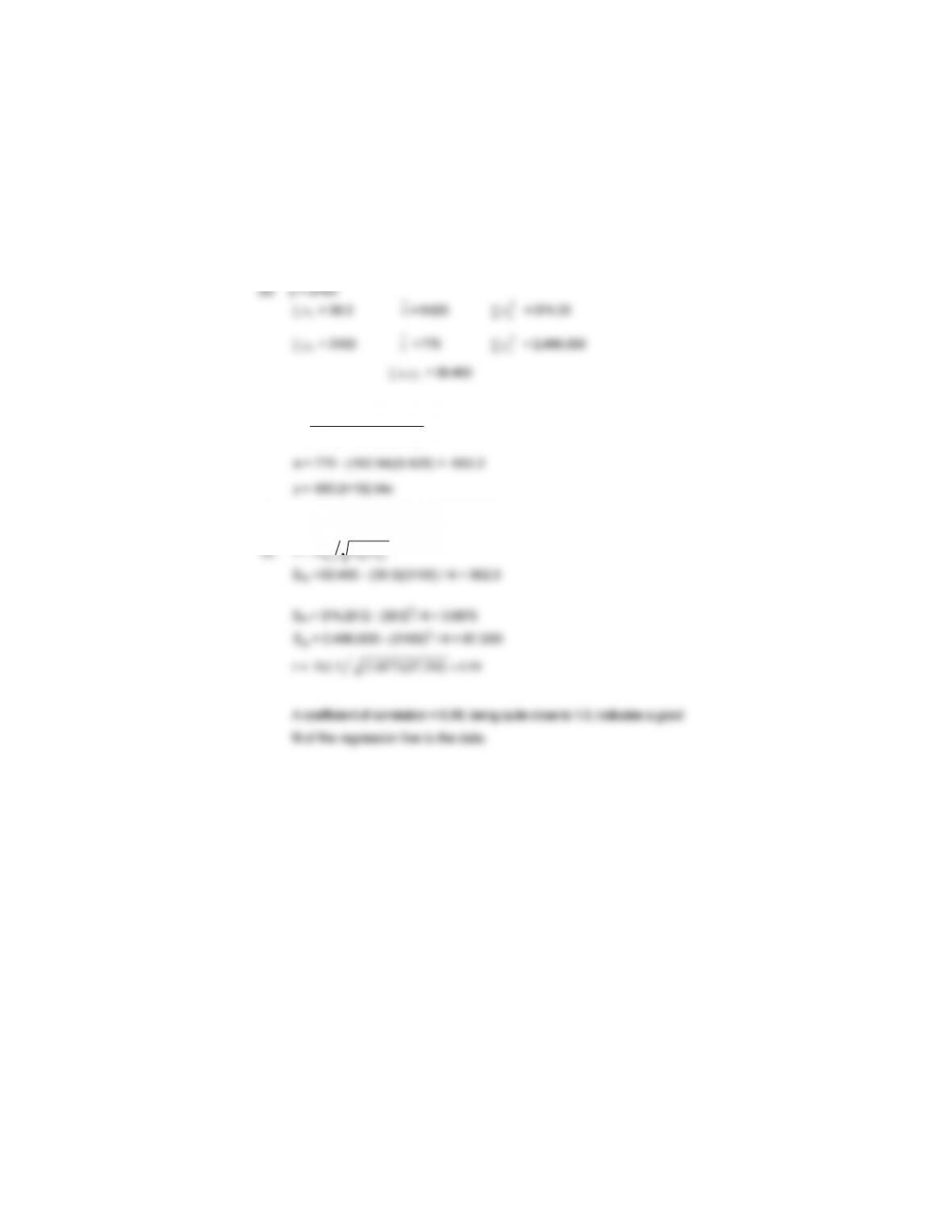
3-18. i
x= production volume (in hundreds of units)
i
y= operating costs (in thousands of dollars, M)
52.541
.5)(9.625)(38 – 374.25
00)(9.625)(31 – 30,400
b ==
(b) y = –693.2 + (152.54)(9.5) = $775.93M
18
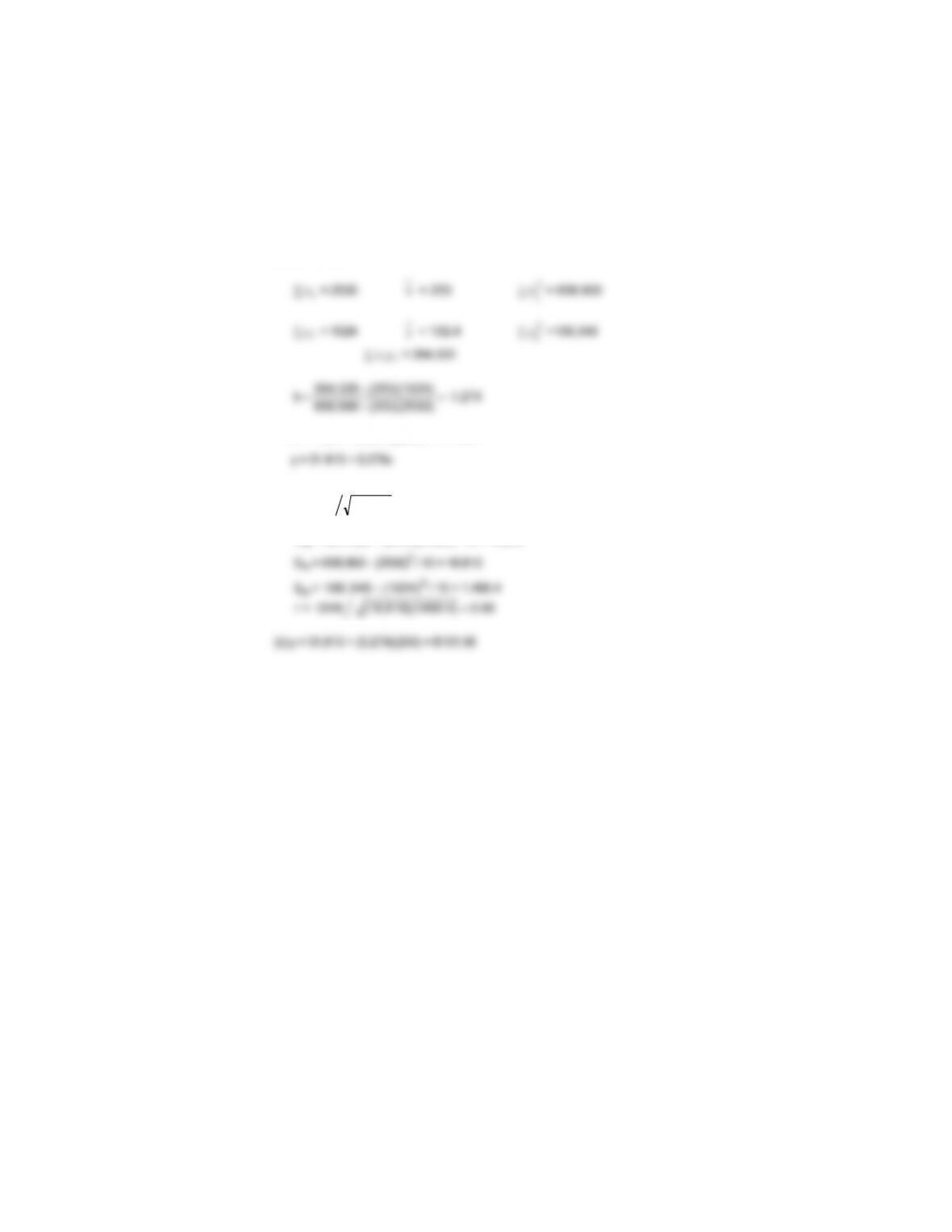
3-19. i
x= weight of order (Ibs)
i
y = packaging and processing costs ($)
(a) y = a+bx
)(253)(2530 – 658,900
a = 102.4 – (0.279)(253) = 31.813
(b) SSS r yyxxxy
=
Sxy = 264,320 – (2530)(1024) / 10 = 5,248
19
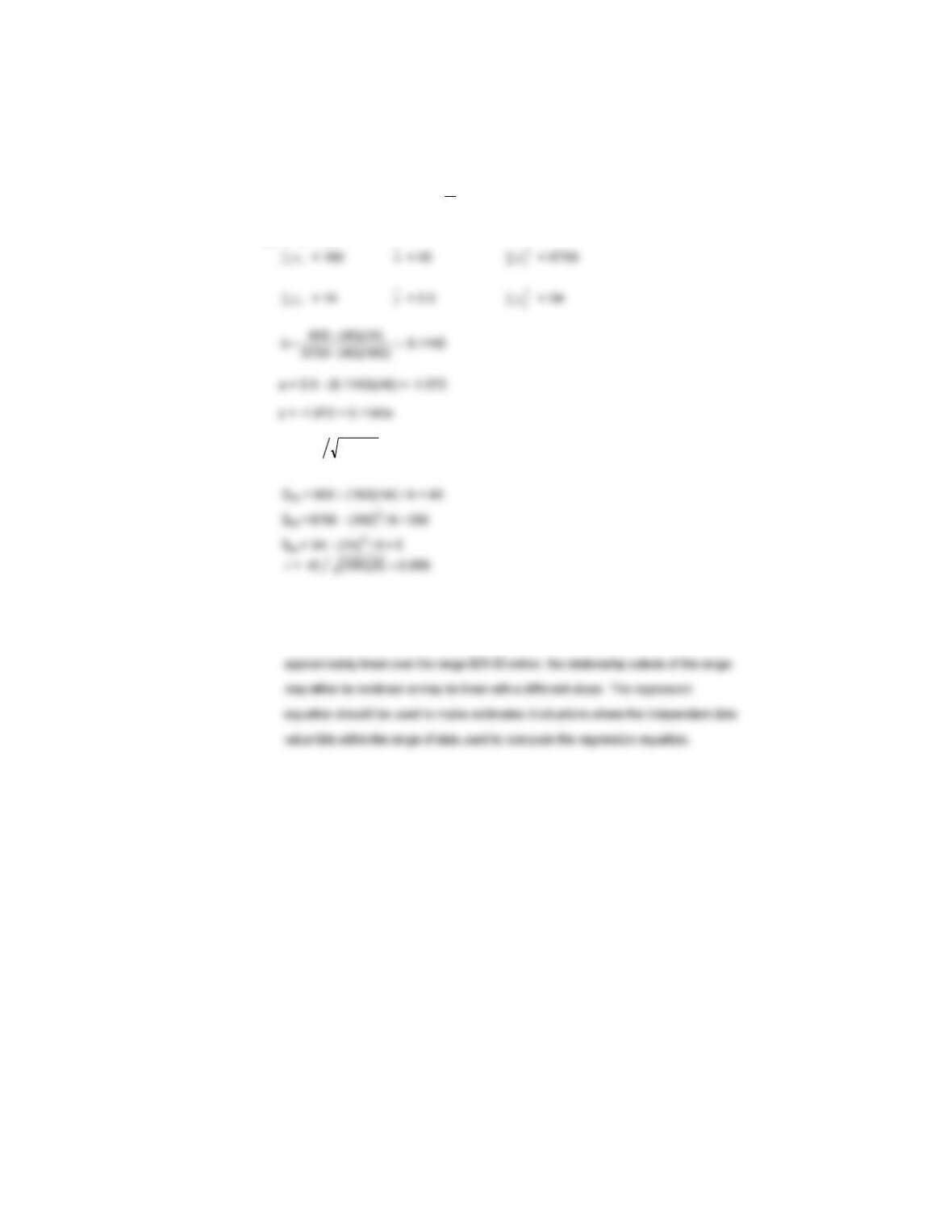
3-20. i
x= construction volume committed (in millions of dollars)
i
y= sales (in millions of dollars, M)
(a) y = a + bx
(b) SSS r yyxxxy
=
(c) y = -1.072 + (0.1143)(70) = $6.93M
(d) Although the relationship between construction volume committed and sales is
20
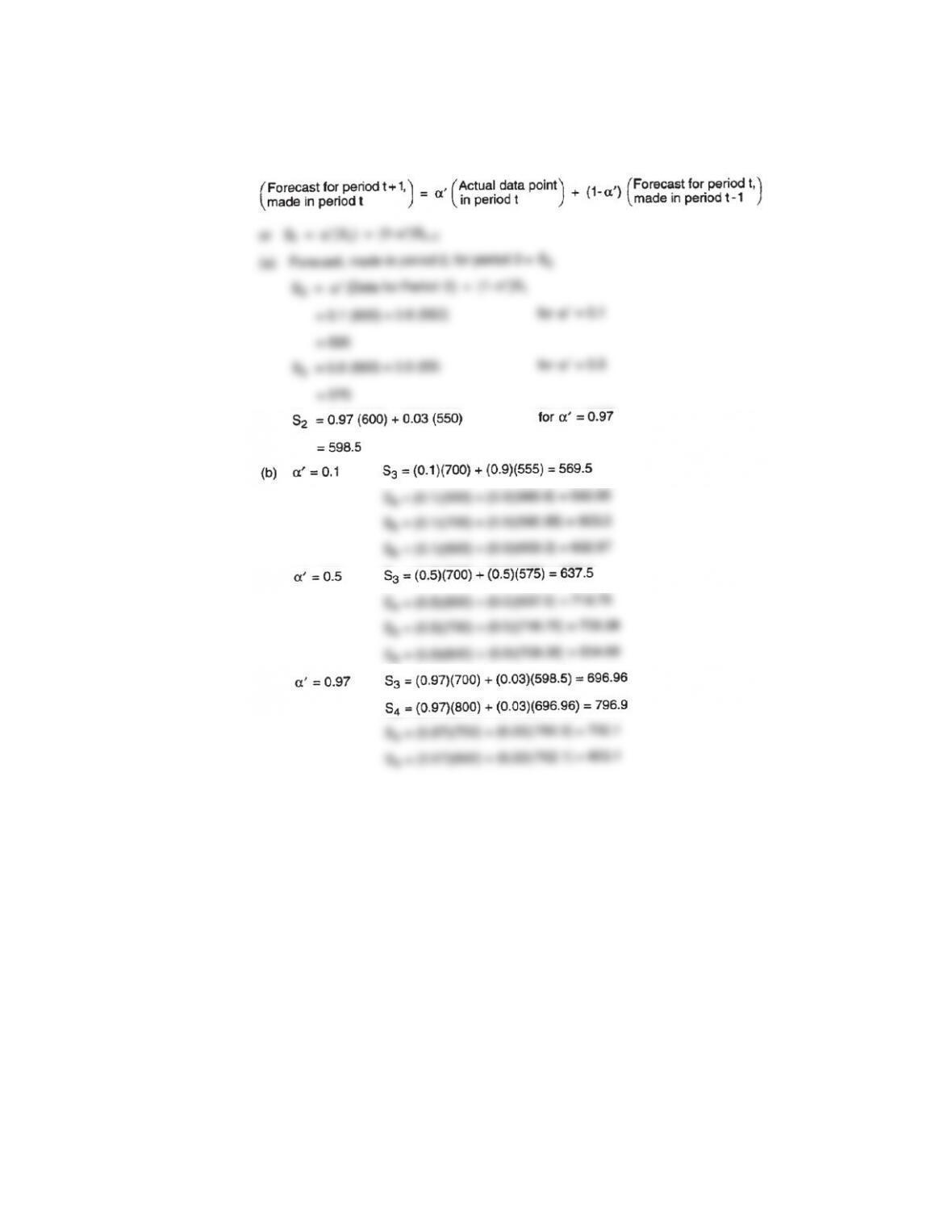
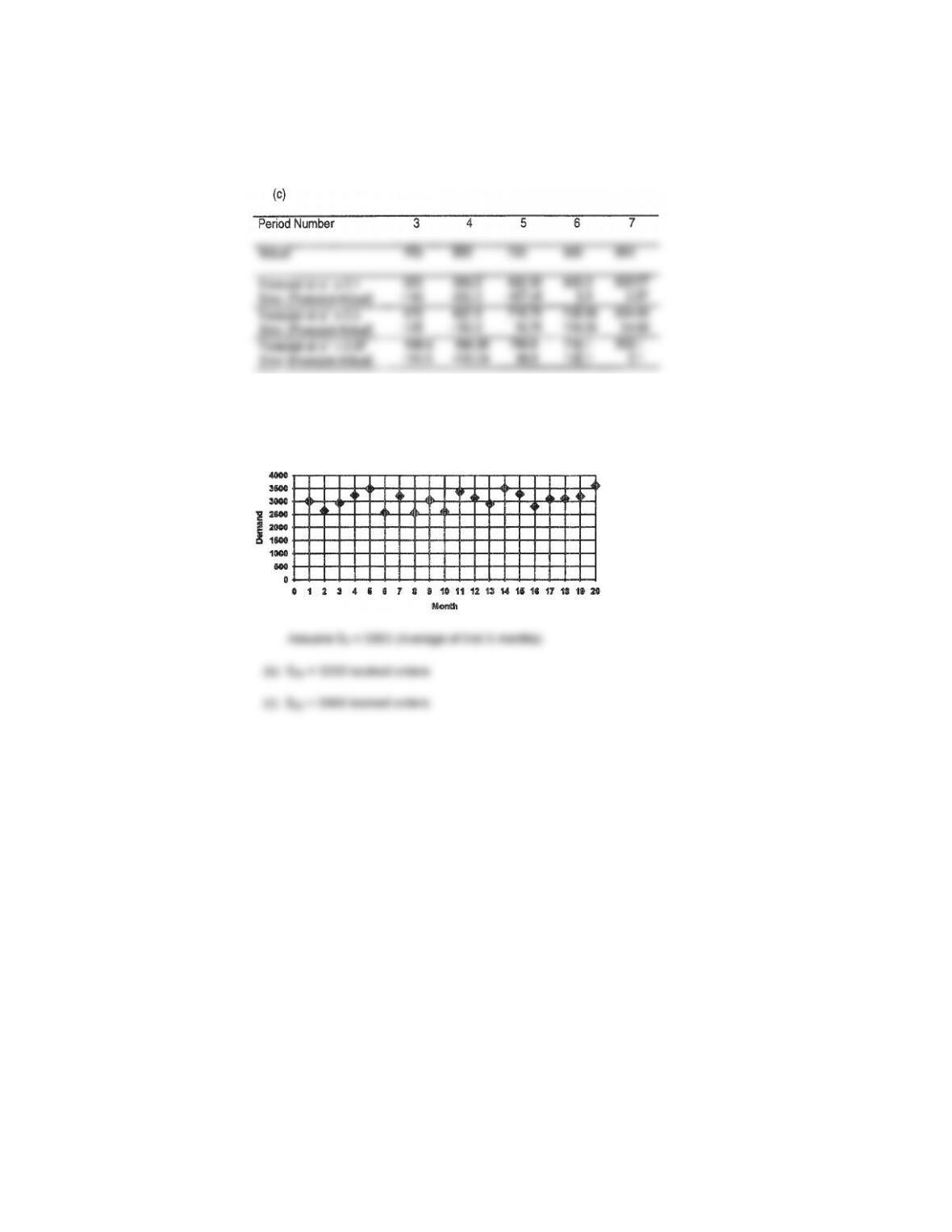
3-21. Use Equation 5-8:
21
3.21. (continued)
3-22. (a)
22
3-23. Advantages: 1) Draws on advice of several experts
4) Convergence to group consensus
Disadvantages: 1) Participants separated — unable to “brainstorm”
3-25.
Old Product New Product Estimated 50% of Market
3-26. Historical data regarding project lead time (time from project conception until
23
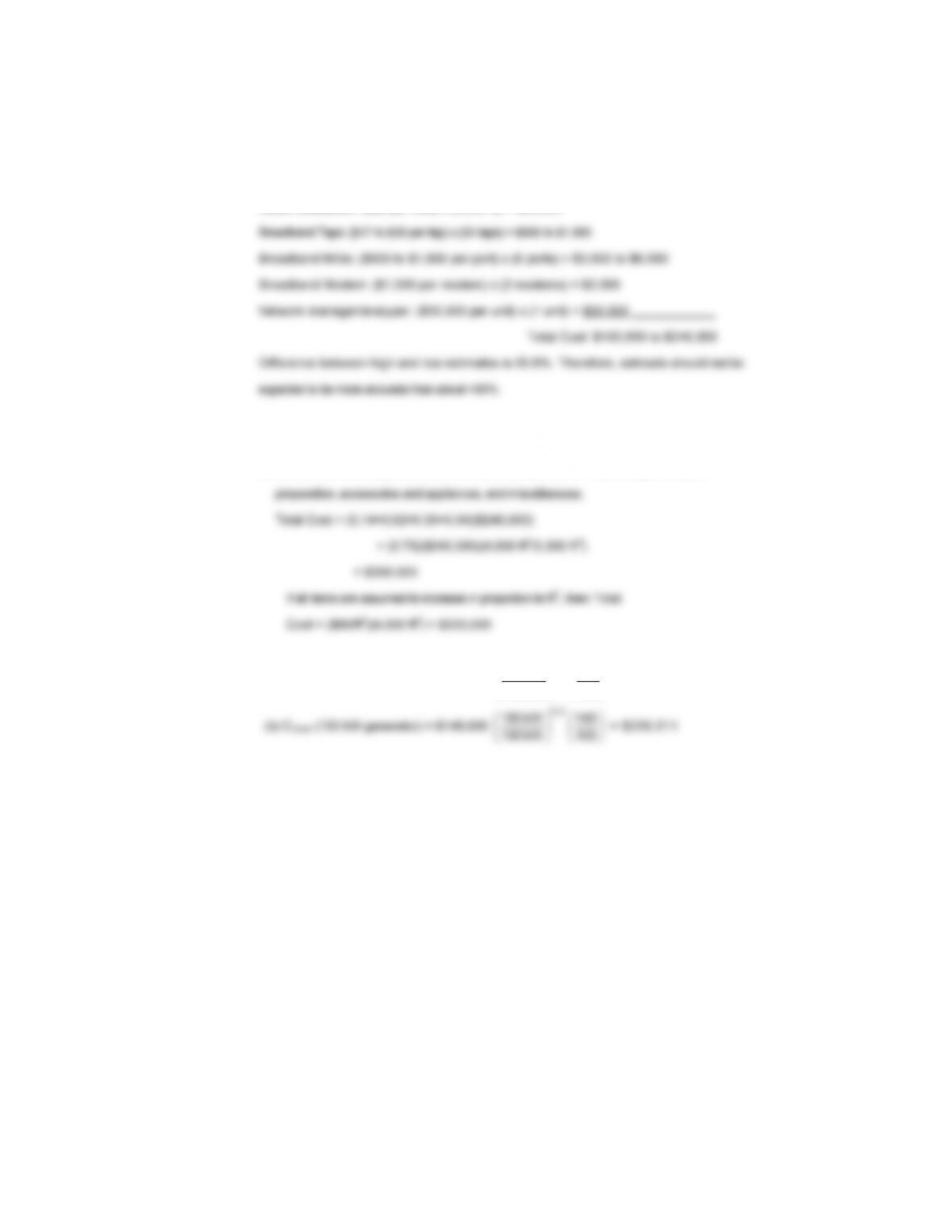
3-27. Intrabuilding connections: ($20 to $50 per foot) x (3,000 ft) = $60,000 to $150,000
Cable installation: ($20 per foot) x (3,000 ft) = $60,000
3-28. (a) Unit cost = $240,000/3,000 ft2 = $80/ft2
(b) Assume the following items do not increase in proportion to ft2: plumbing, foundation
3-29. (a) Cnow (150 kW generator) = $140,000
100
140
kW 100
kW 150 7.0
= $260,327
100
140
kW 100
kW 150 4.0
24
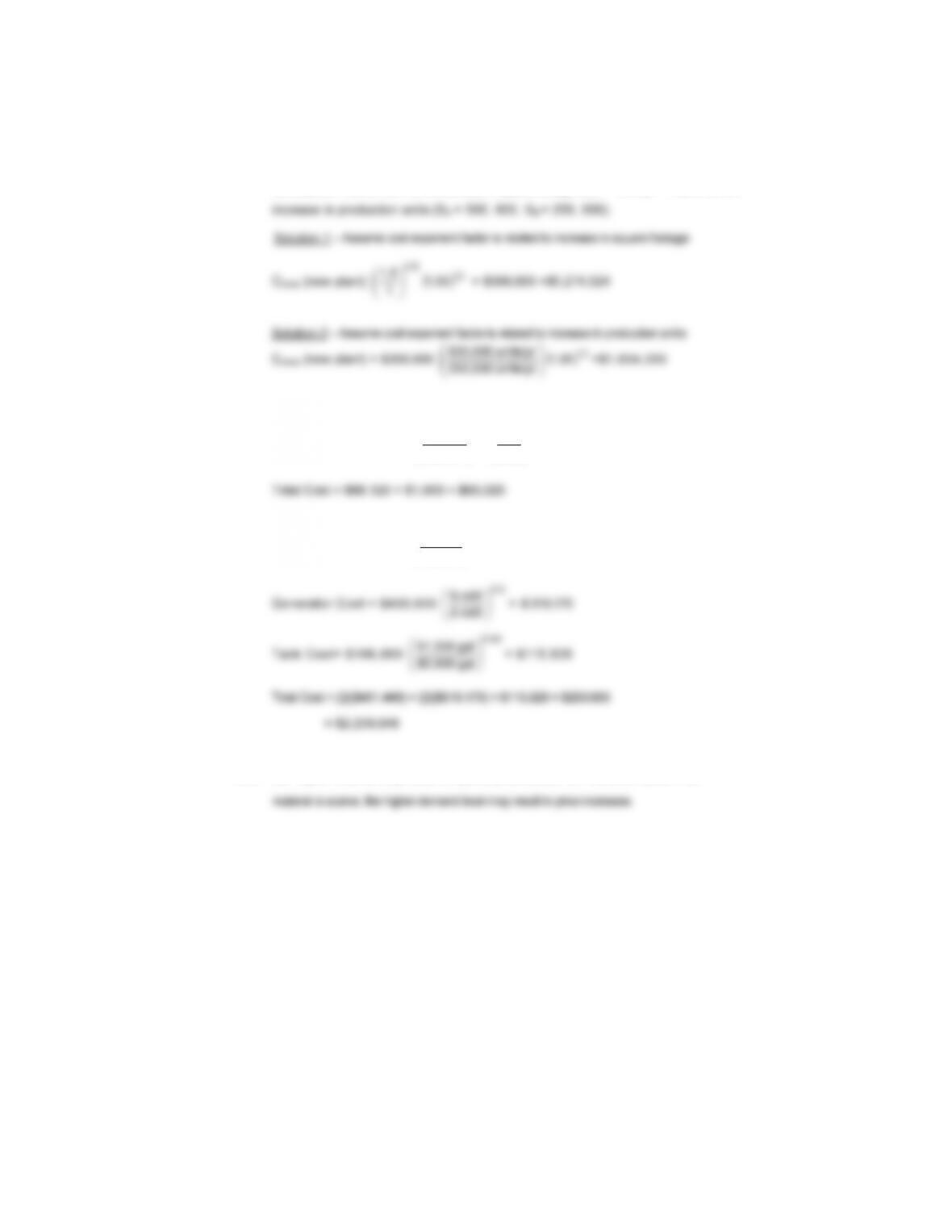
3–30. There are two possible solutions to this problem. The students need to decide whether the stated
cost exponent factor refers to the increase in square footage (SA = 1.5, SB = 1.0) or to the
Cnow (new plant) = $300,000
()
1.05
units/yr 250,000
3-31. Cnow (140 kW) = $32,000
230
350
kW 60
kW 140 7.0
= $88,120
3-32. Boiler Cost = $300,000
8.0
mW 6
mW 10 = $ 451,440
6.0
mW 9 = $ 510,170
3-33. No, higher volume may result in quantity discounts. On the other hand if the
25
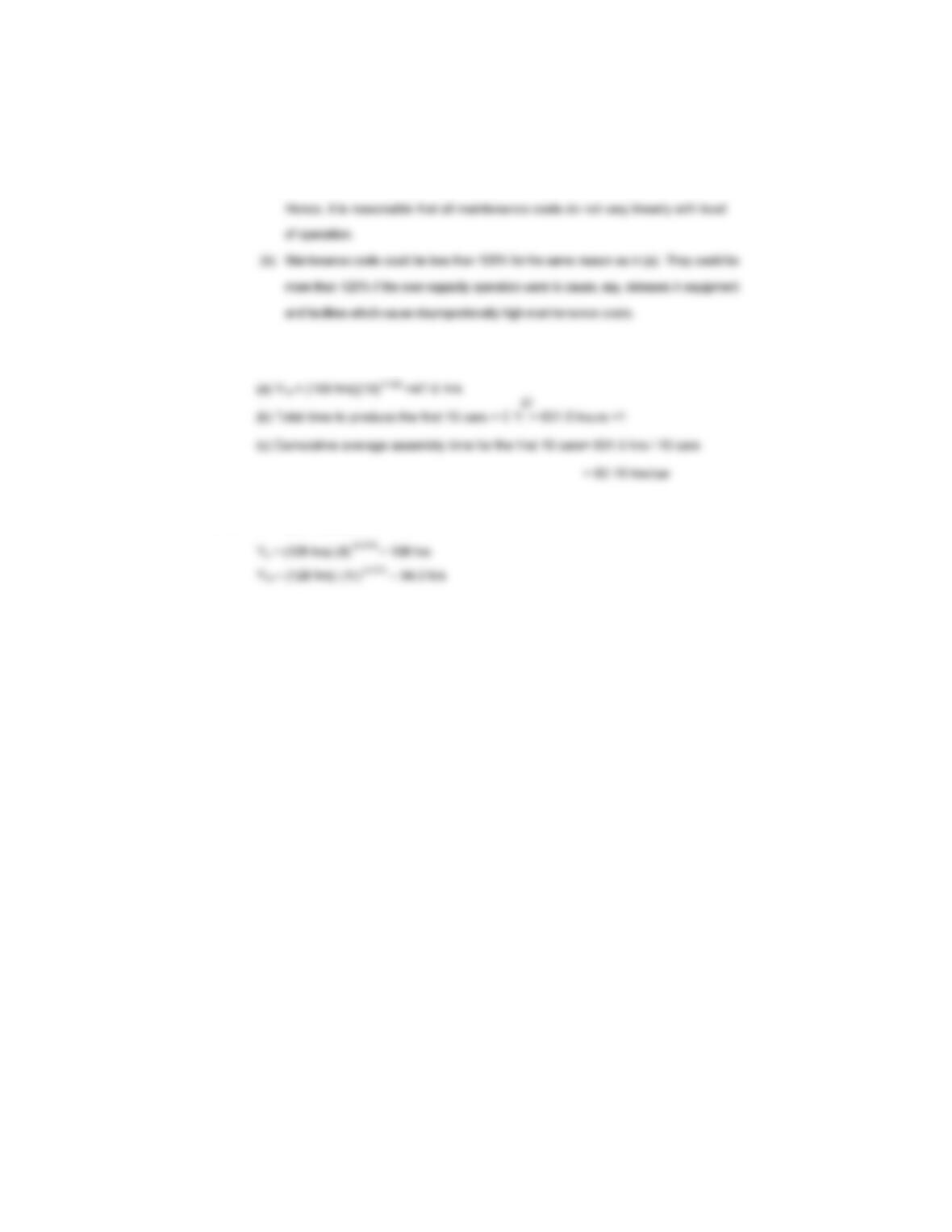
3-34. (a) Some maintenance costs are more-or-less fixed regardless of levels of operations.
3-35. b = log (0.8)/log (2) = -0.322
3-36. b = log (0.95)/log (2) = –0.074
26
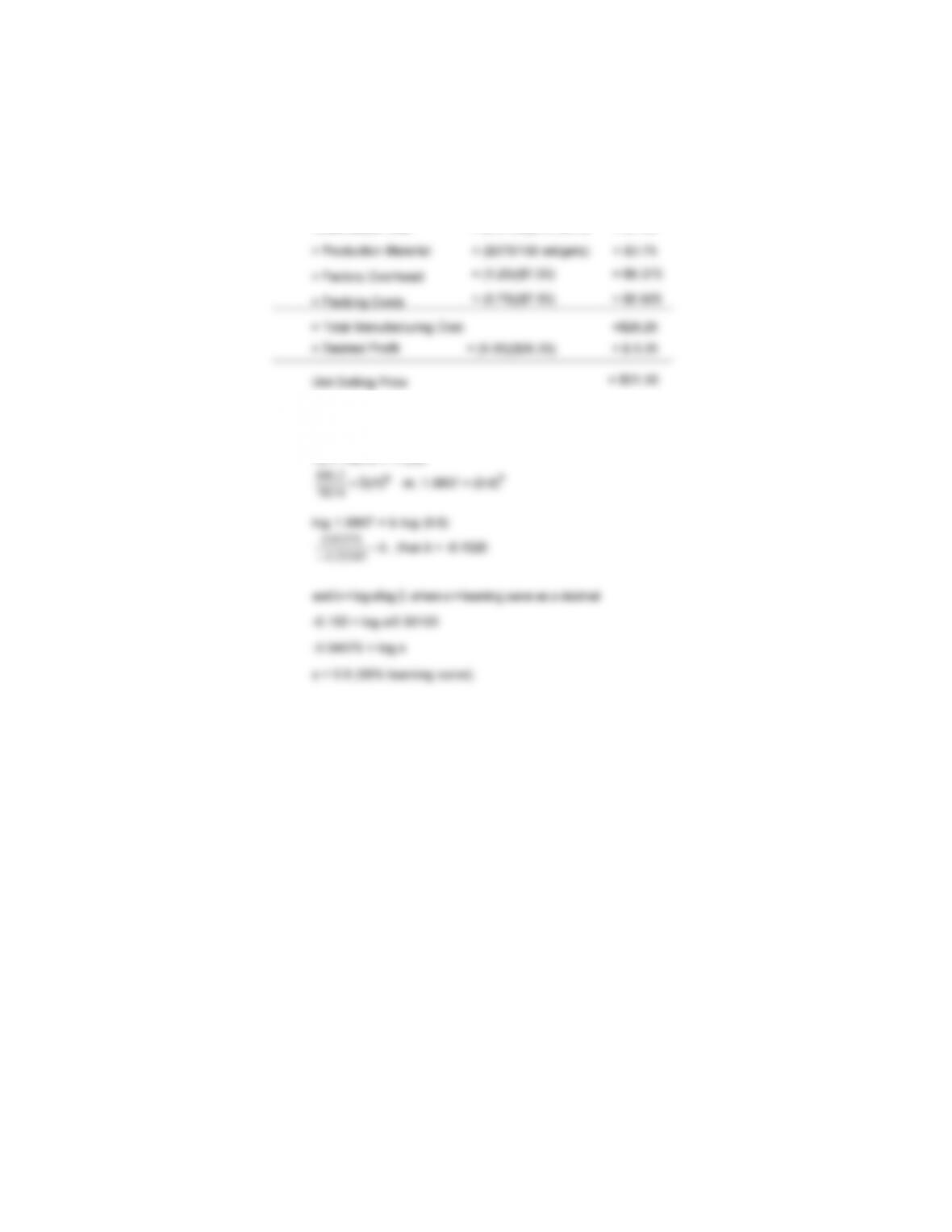
3-37. b = log (0.8)/log (2) = -0.322
Y50 = 1.76(50)-0.322 = 0.5 hrs
Direct Labor Cost
= (0.5 hrs)($15.00/hr)
= $7.50
3-38. Y3 = 846.2 = Y1(3)6
Y5 = 783.0 = Y1(5)b
2.846 = or, 1.0807 = (0.6)b
27
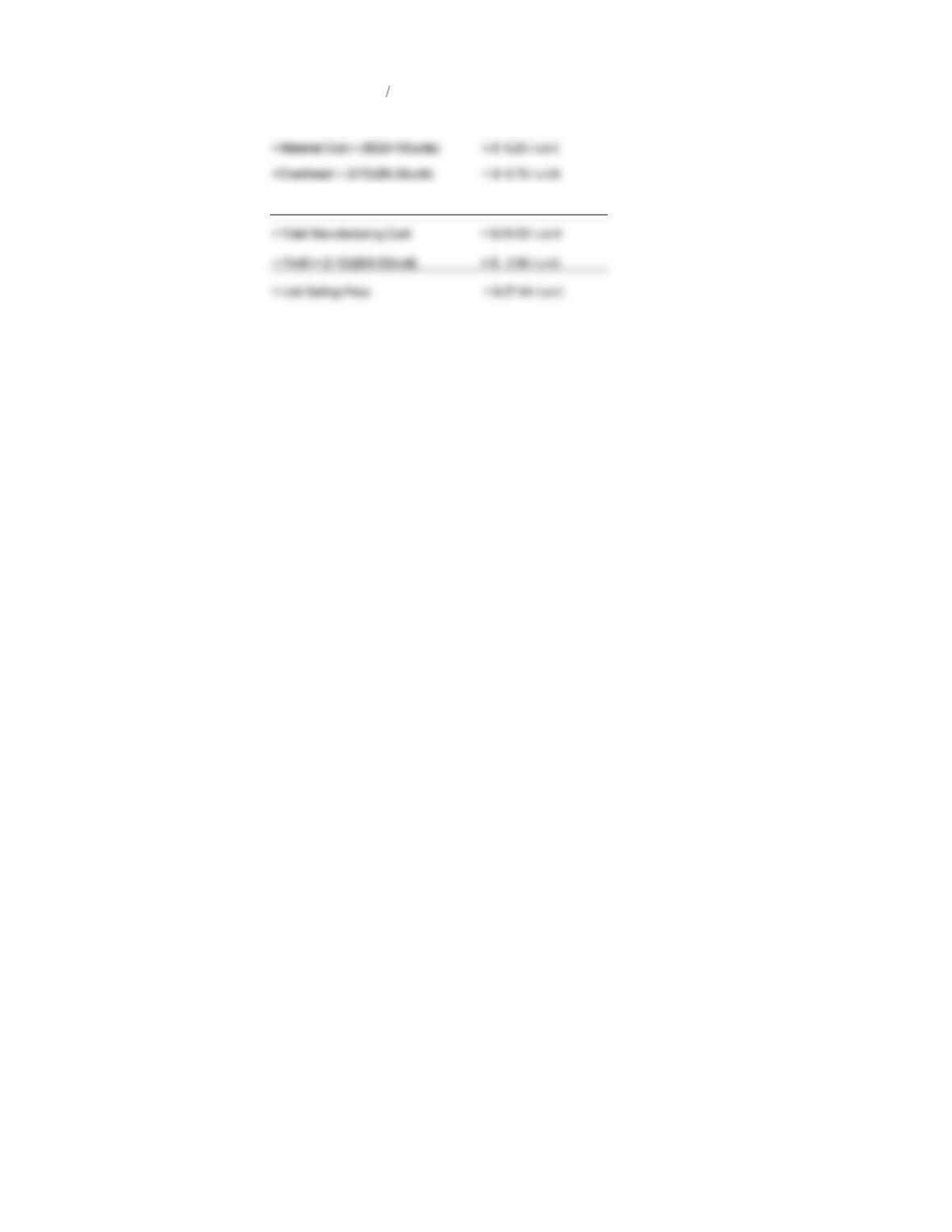
3-39. hours 0.6(50) 1.5 Z 2 log0.85 log
50 ==
Labor Cost = ($15/hr)V30hr/unm = $ 9.00 / un it
+ Packing Cost = (0.40)($$ 6.25 / u n i t ) = $ 2.50 / un i t
28