SOLUTIONS TO CHAPTER 15 PROBLEMS
Decision Criteria and Methods for Risk and Uncertainty
15-1. (a) Alternative III dominates alternative I
(b) (i) Alternative II has no chance of loss.
(ii) Alternative III has 0.3 + 0.5 = 0.8 chance of making at least 28.
(c) The most probable future is “Fair” with Pr = 0.5. Alternative III has highest outcome for
178
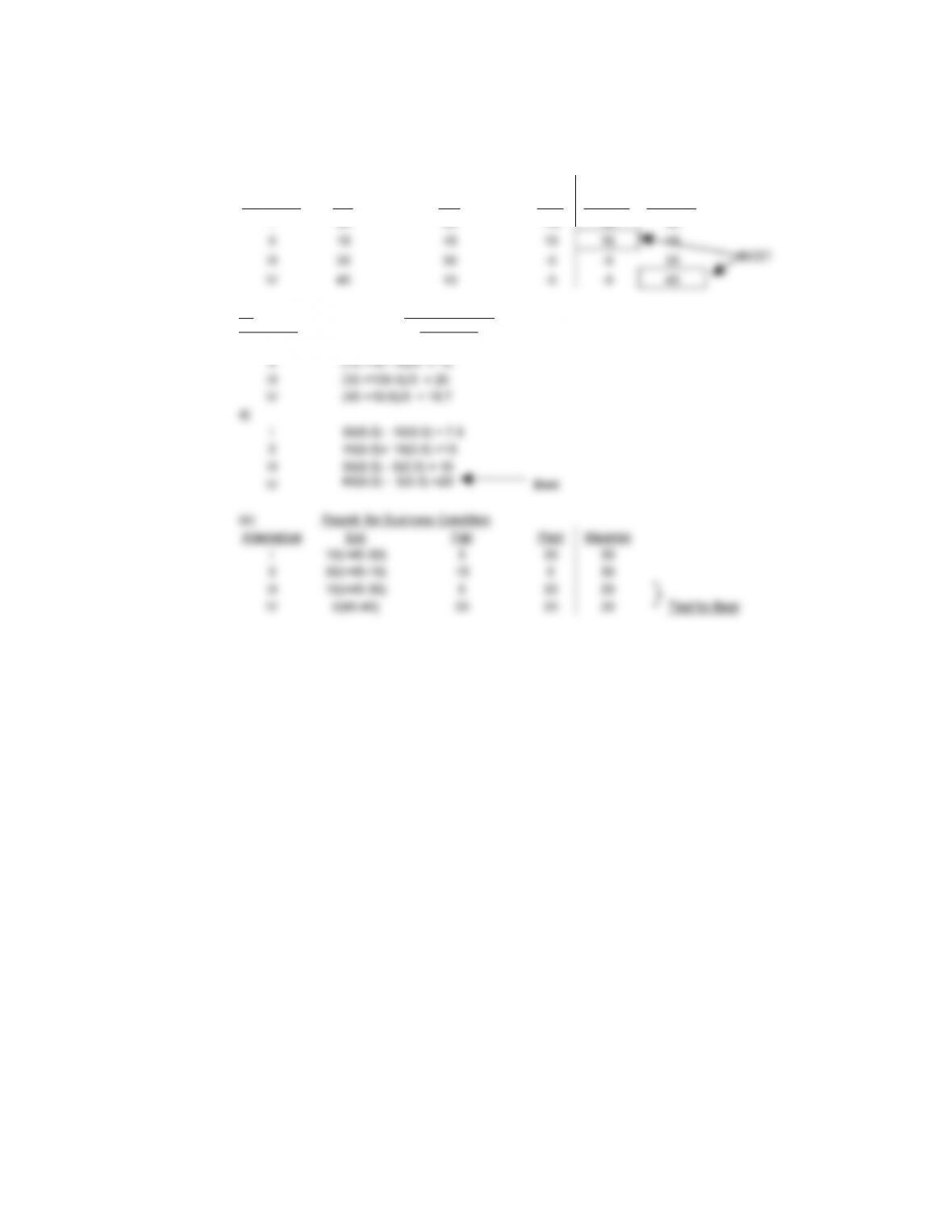
15-2. Business Condition (a) (b)
Alternative Exc Fair Poor Maximin Maximax
I 30 25 -15 15 30
(c)
Alternative
E(PW) for Equal
Probability
I (30 +25 -15)/3 = 13.3
179
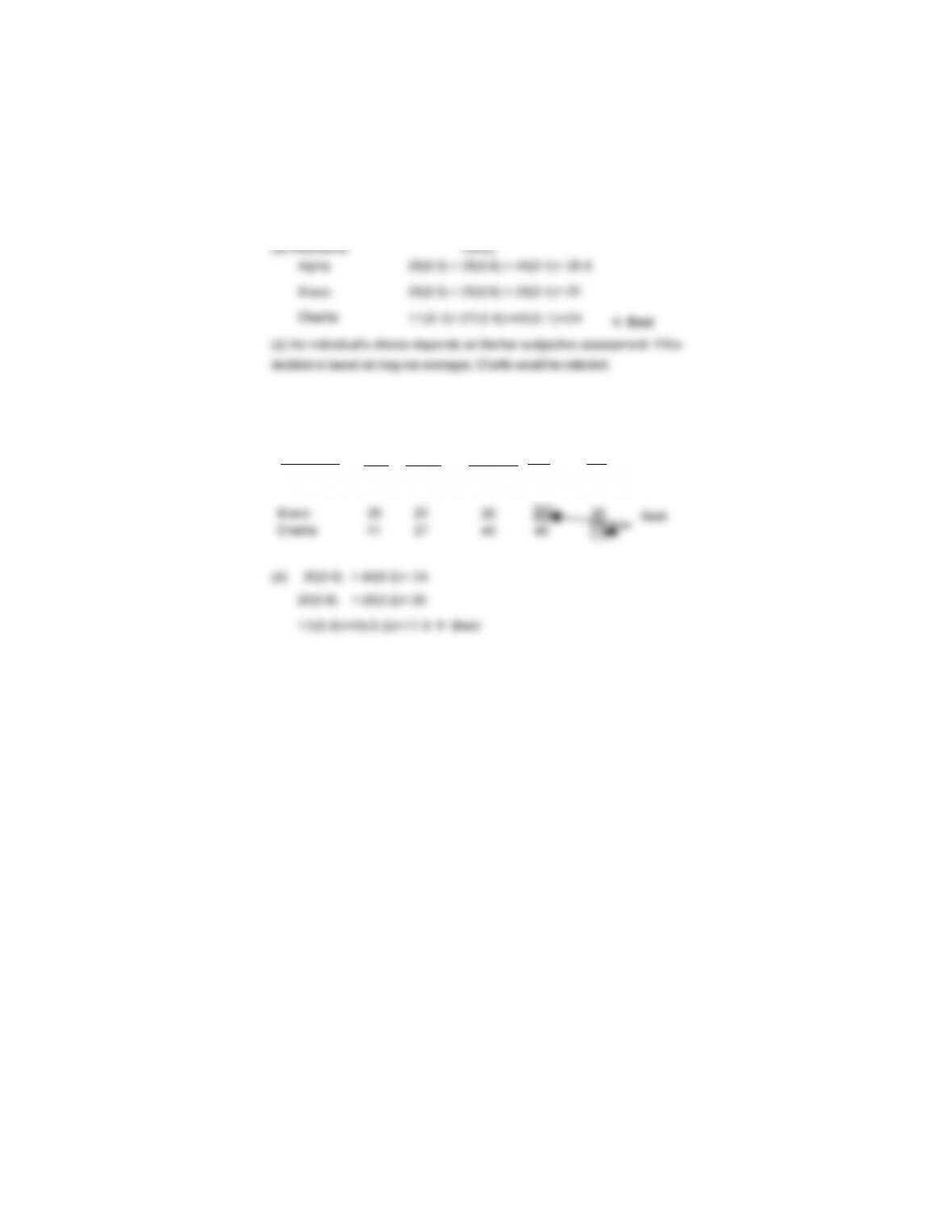
(a) No
(b) Bravo is the only alternative with all costs < 26.
(c) Bravo is best alternative for the “Erratic” state of nature.
15-3.
15-4.
State of Nature
Alternative Kind Erratic Perverse
(a) (b)
Max Min
Alpha 20 28
40 40 20
180
15-5. Alternative II is dominated by Alternative V.
Thus II can be eliminated.
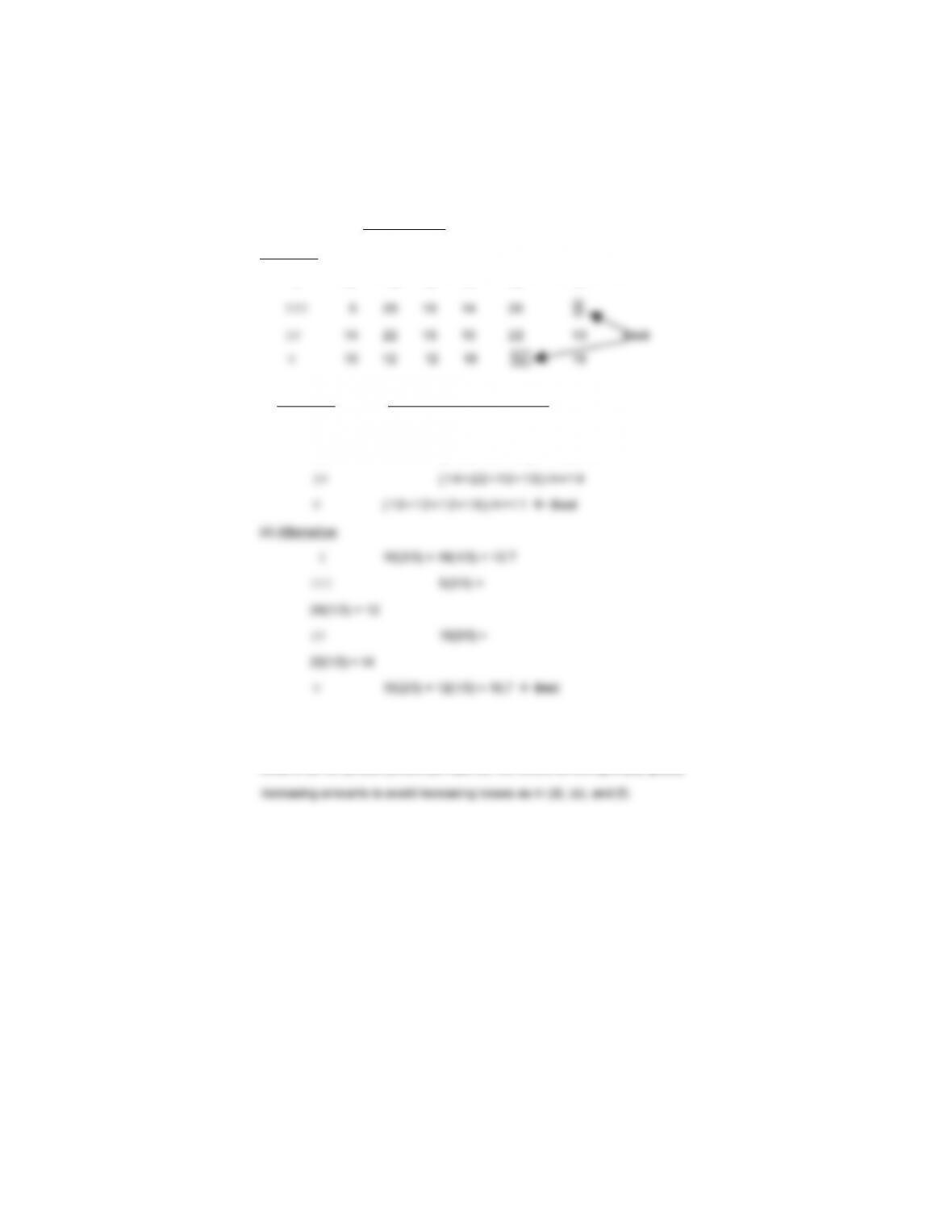
State of Nature (a) (b)
Alternative A B C D Max Min
I 18 18 10 14 18 10
(c) Alternative E(Costs) for Equal Probability
I (18+18+10+14)/4=15
III (5+26+10+14)/4 =13.75
15-6. Left to the individual decision-maker. Most student decision-makers would answer
close to $0 for (a) and (b) and perhaps (c), but would be willing to pay greatly
181
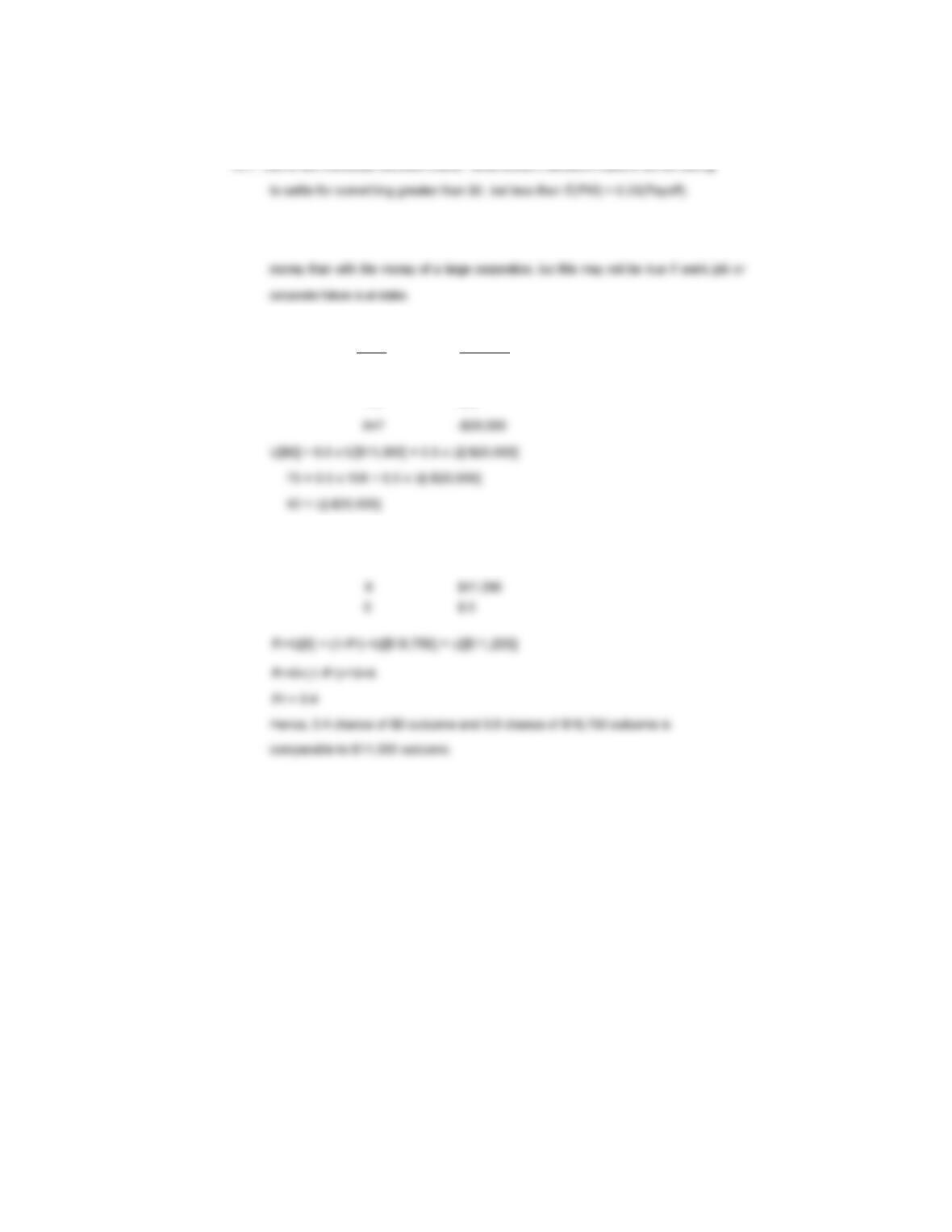
15-7. Left to the individual decision-maker. Most student decision-makers will be willing
15–8. Left to the individual decision-maker. Most individuals are more risk averse with their own
15-9. Utility Outcome
108 $11,000
75 $ 0
15-10. Utility Outcome
108 $18,750
182
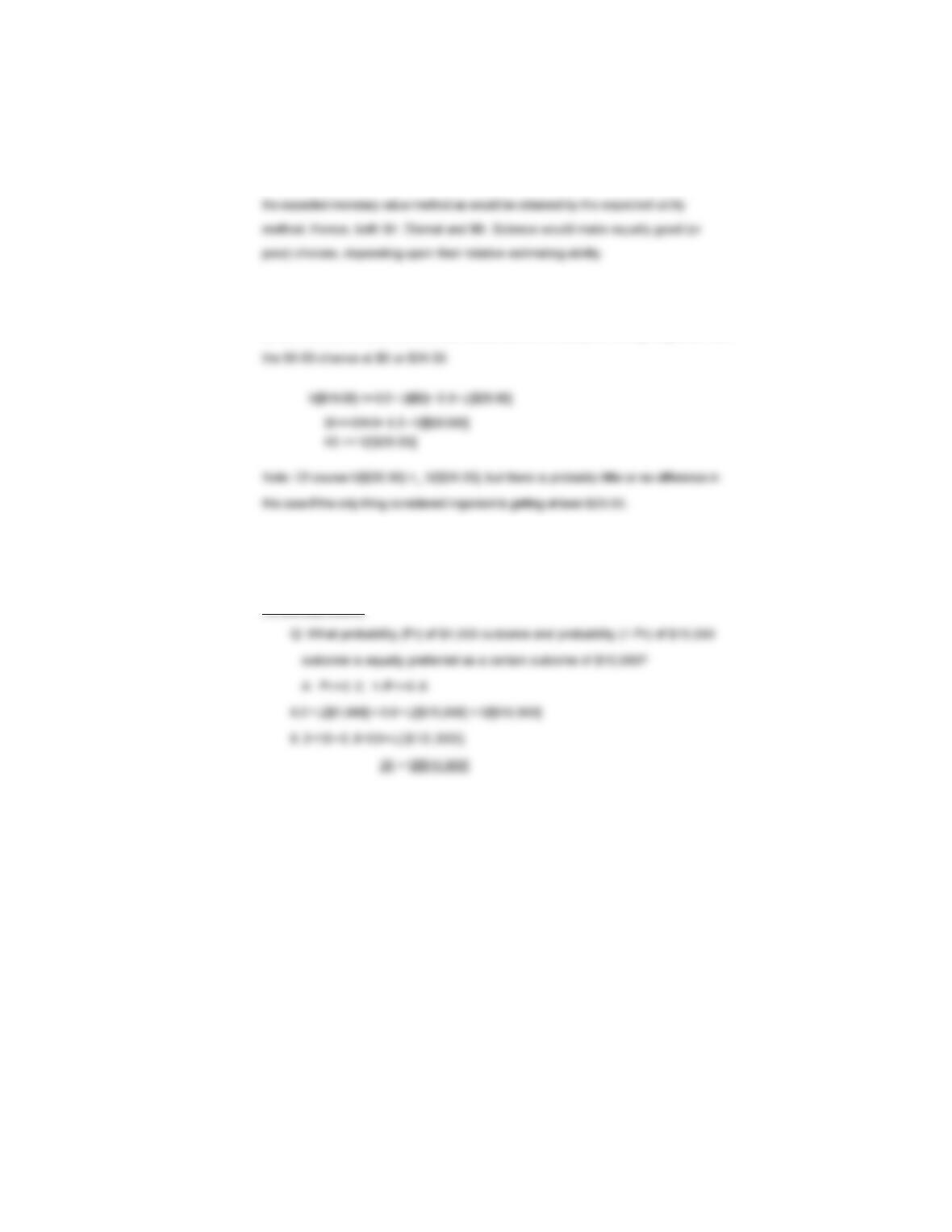
15-11. A linear utility of money function will give the same answers (choices between alternatives) by
15-12. Assuming that one does not have the opportunity to take the $16.00 and obtain at least
$4.00 from some other source, one would almost certainly be willing to gamble with
15-13. Note: The Questions (Q) and Answers (A) to one‘s self are strictly a matter of
personal preferences and risk outlook. The following are illustrative only:
To find U[$10,000]:
183
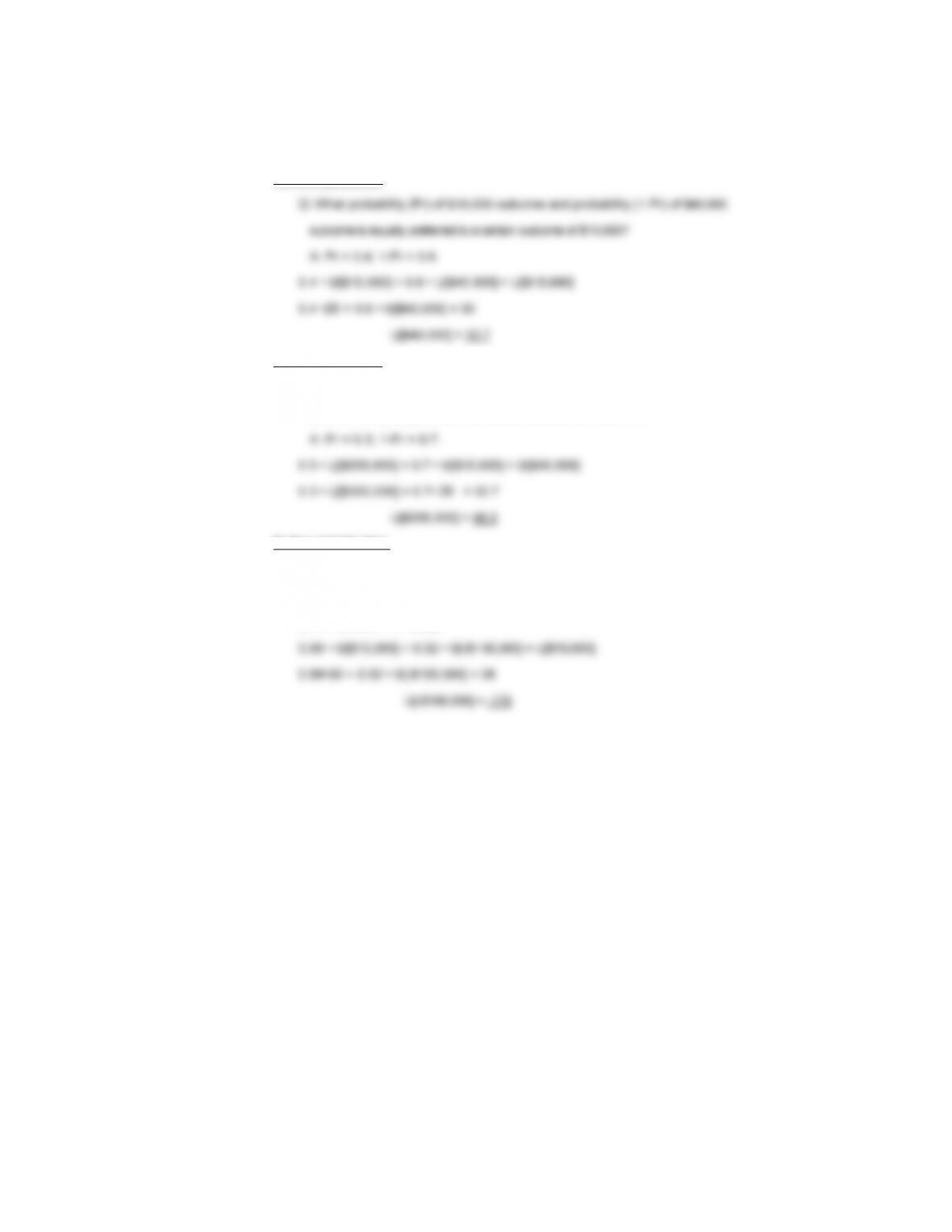
15-13. (continued)
To find U[$40,000]:
To find U[$200,000]:
Q: What probability (Pr) of $200,000 outcome and probability (1-Pr) of $10,000
outcome is equally preferred to a certain outcome of $40,000?
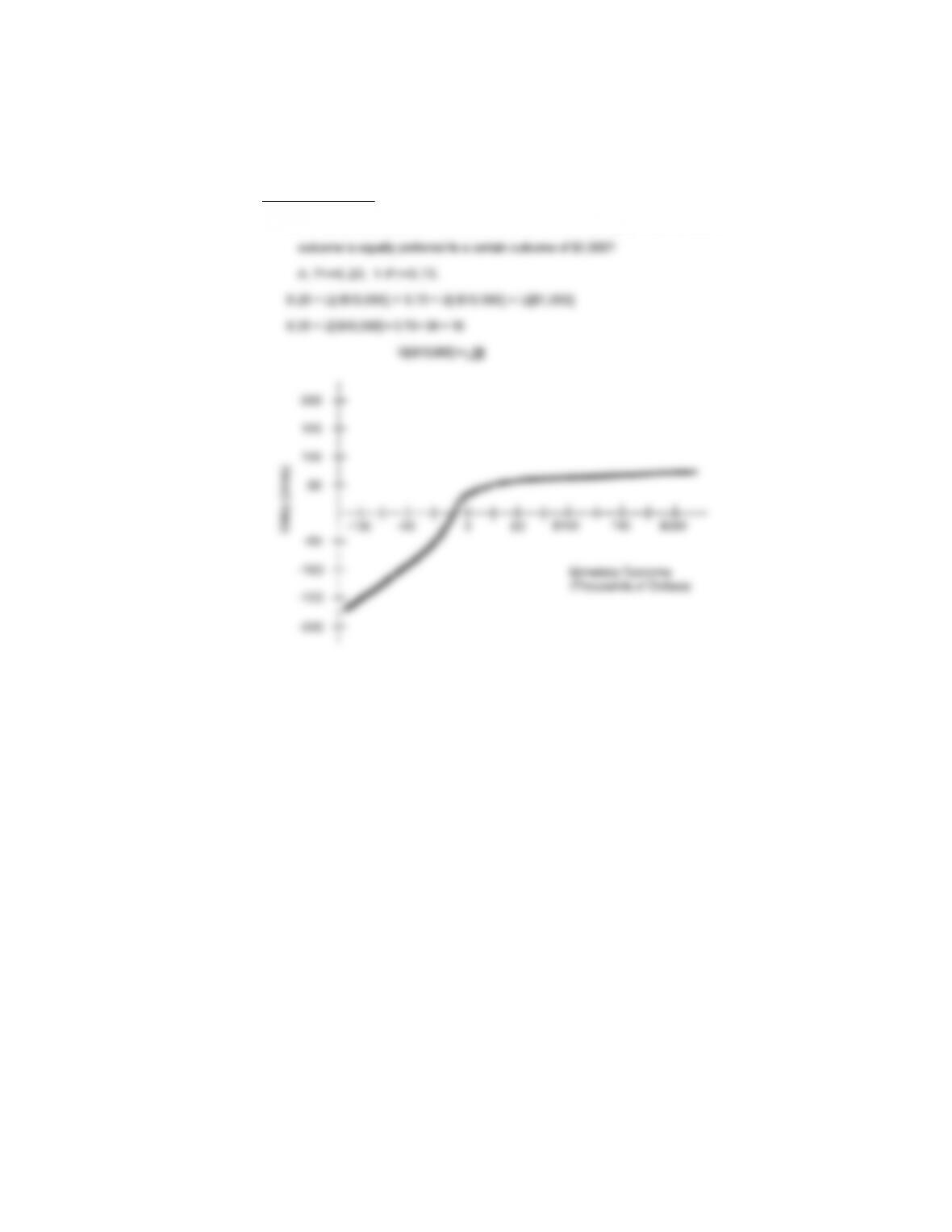
To find U[-$100,0001:
Q: What probability (Pr) of $15,000 outcome and probability (1-Pr) of –
$100,000 outcome is equally preferred to a certain outcome of $10,000?
A: Pr=0.98; 1-Pr=0.02.
184
15-13. (continued)
To find U[-$10,000]:
Q: What probability (Pr) of -$10,000 outcome and probability (1-Pr) of $10,000
185
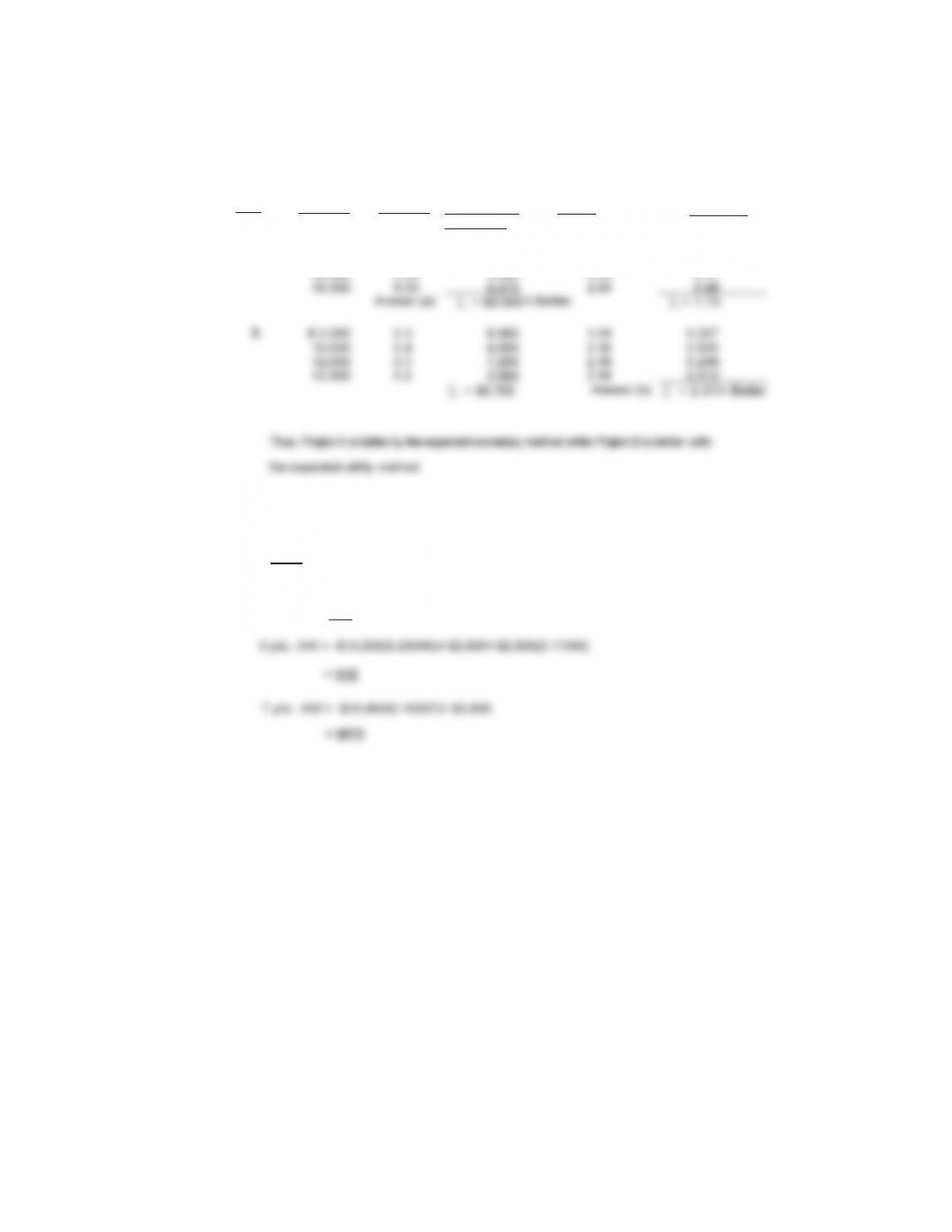
15-14.
Proj.
Monetary
Outcome
Probability of
Monetary
Outcome
Monetary Utility of
Outcome x Outcome
Probability = ln($ in
thousands)
Utility x
Probability
A $ 1,000 0.33 $0.330 0 0
15-15. Net AW = -$10,000(A/P,8%,N) + $2,800+ F(A/F,8%,3)
For N
3 yrs.: AW = -$10,000(0.38803)+ $2,800+ $4,000(0.30803)
= 153
186
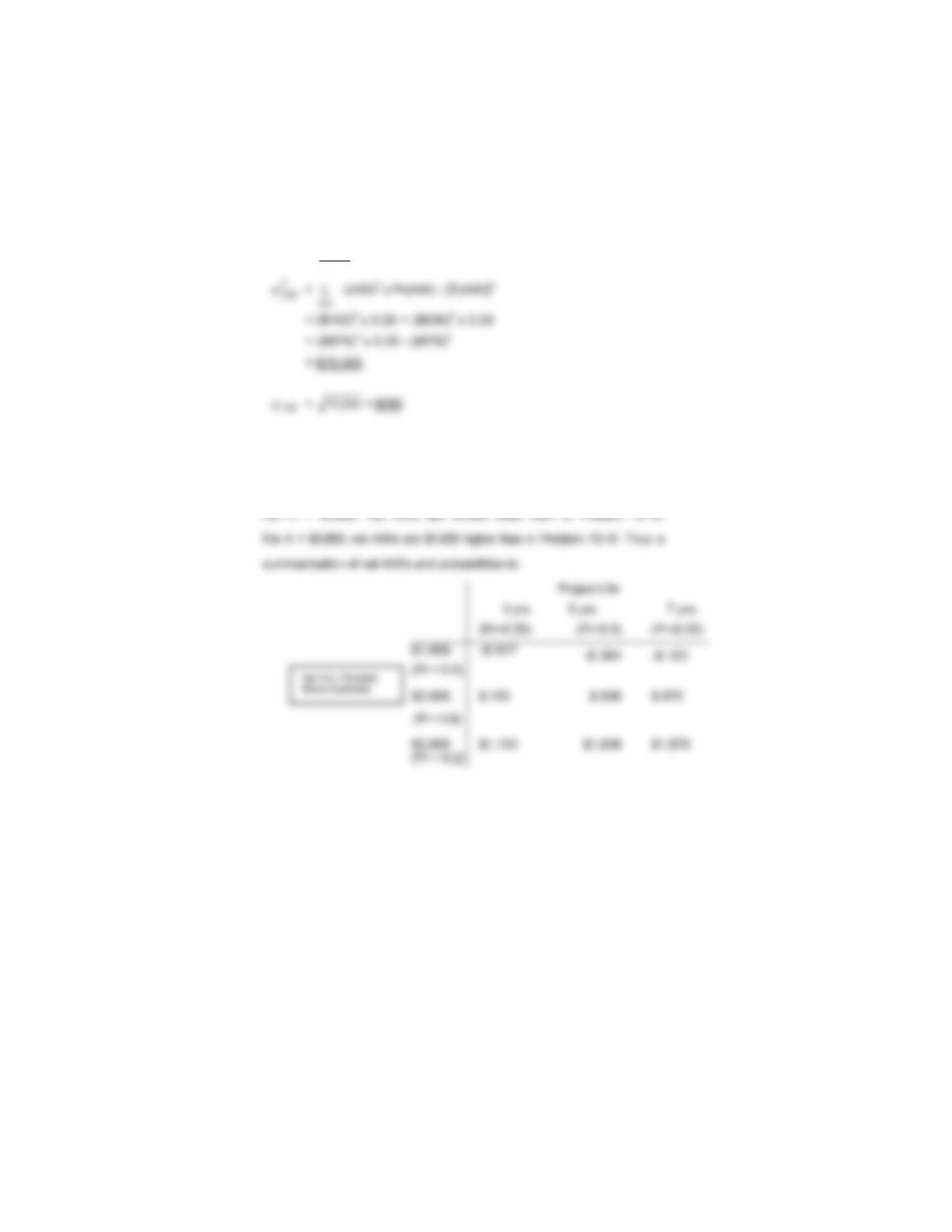
15-15. (continued)
E(AW) = ∑AW x Pr(AW)
yrs.
= $153 x 0.25 + $636 x 0.50 + $879 x 0.25
= $576.
15-16. Net AW = -$10,000(A/P,8%,N) + A + F(A/F,8%,3)
Net AW’s in Problem 15-15 are for A = $2,800.
For A = $1,800, net AW‘s are $1,000 lower than in Problem 15-15.
$2,800 $ 153 $ 636 $ 879
(Pr = 0.6)
$3
,
800 $1
,
153 $1
,
636 $1
,
879
(Pr = 0.2)
187
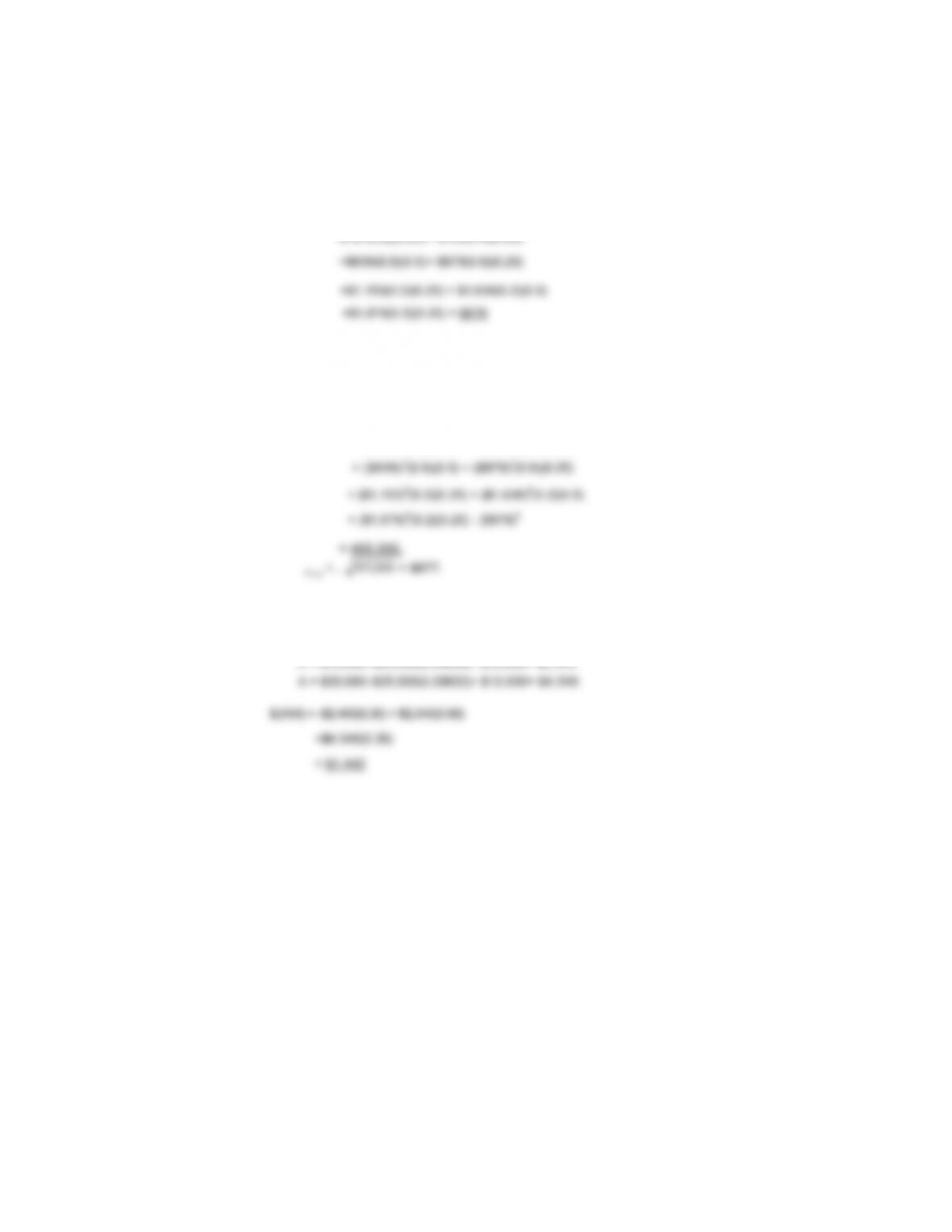
15-16. (continued)
E(AW) = ∑ ∑ AW x Pr(AW)
years net receipts
= -$847(0.2)(0.25)
-$121(0.2)(0.25)
– $364(0.2)(0.5)
+ $153(0.6)(0.25)
2
AW
σ
= [ ∑ ∑ (AW)2 x Pr(AW)] – [E(AW)]2
years net receipts
=(-$847)2(0.2)(0.25) + (-$364)2(0.2)(0.5)
+ (-$121)2(0.2)(0.25) + ($153)2(0.6)(0.25)
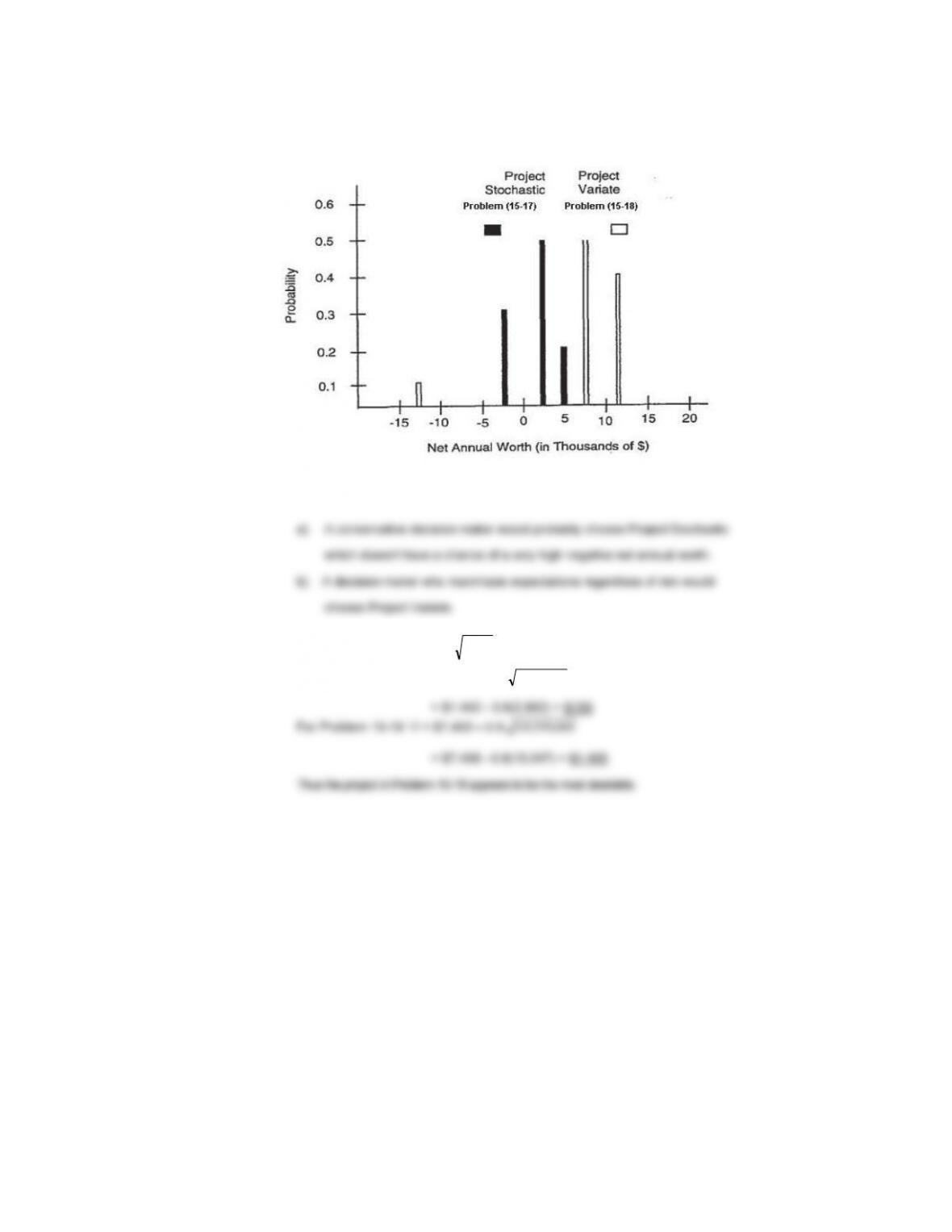
15-17. Net AW = – $25,000(A/P,15%,5)+ A
For A = $ 5,000:-$25,000(0.29832)+ $ 5,000= –$2,460
A = $10,000:-$25,000(0.29832)+ $10,000= $2,540
188
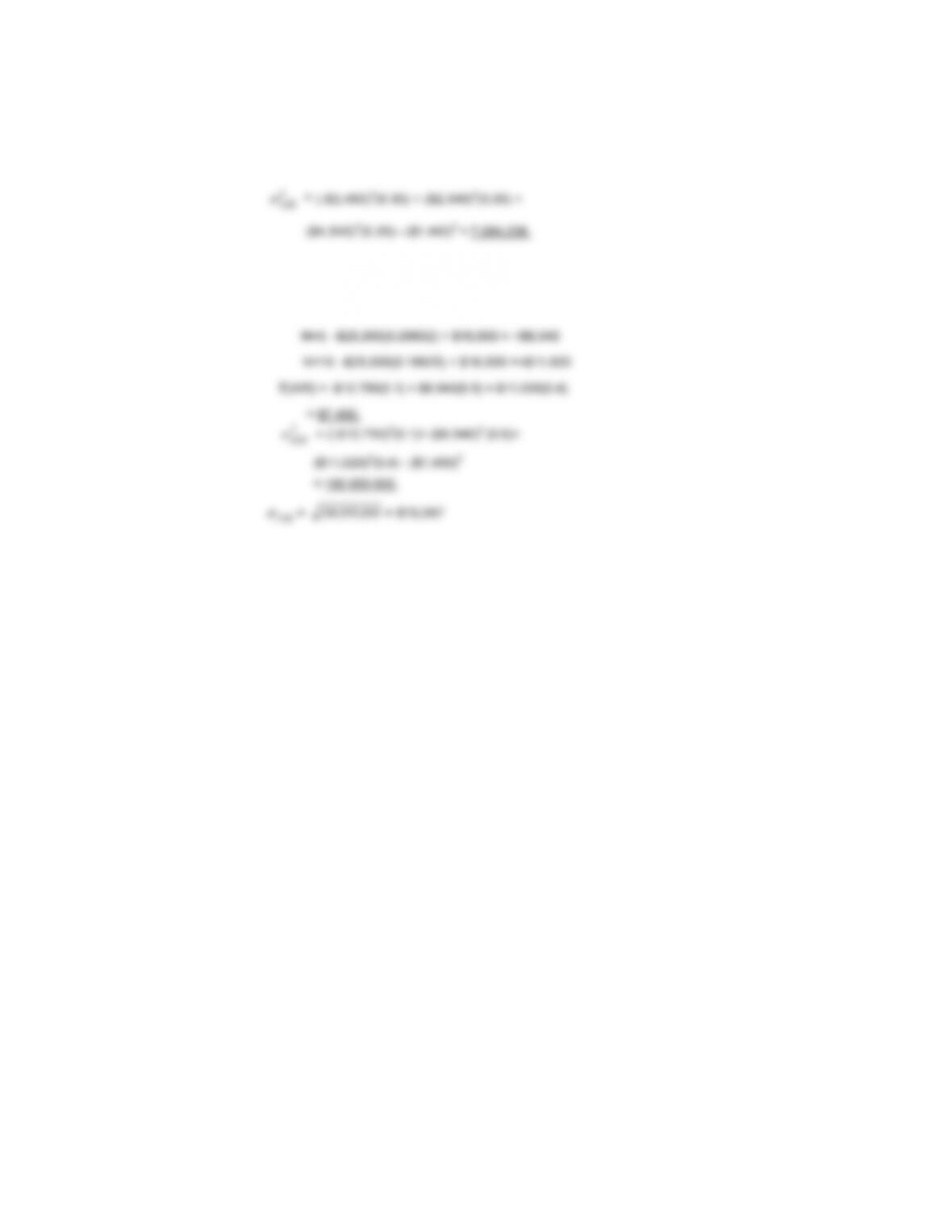
15-17. (continued)
15-18. Net AW = $25,000(A/P,15%,N) + $13,000
For N=1: -$25,000(1.1500) + $16,000 = -$12,750
AW
189
15-19.
15-20. (a) V =
µ
– A
σ
= E(AW) – A 2
AW
σ
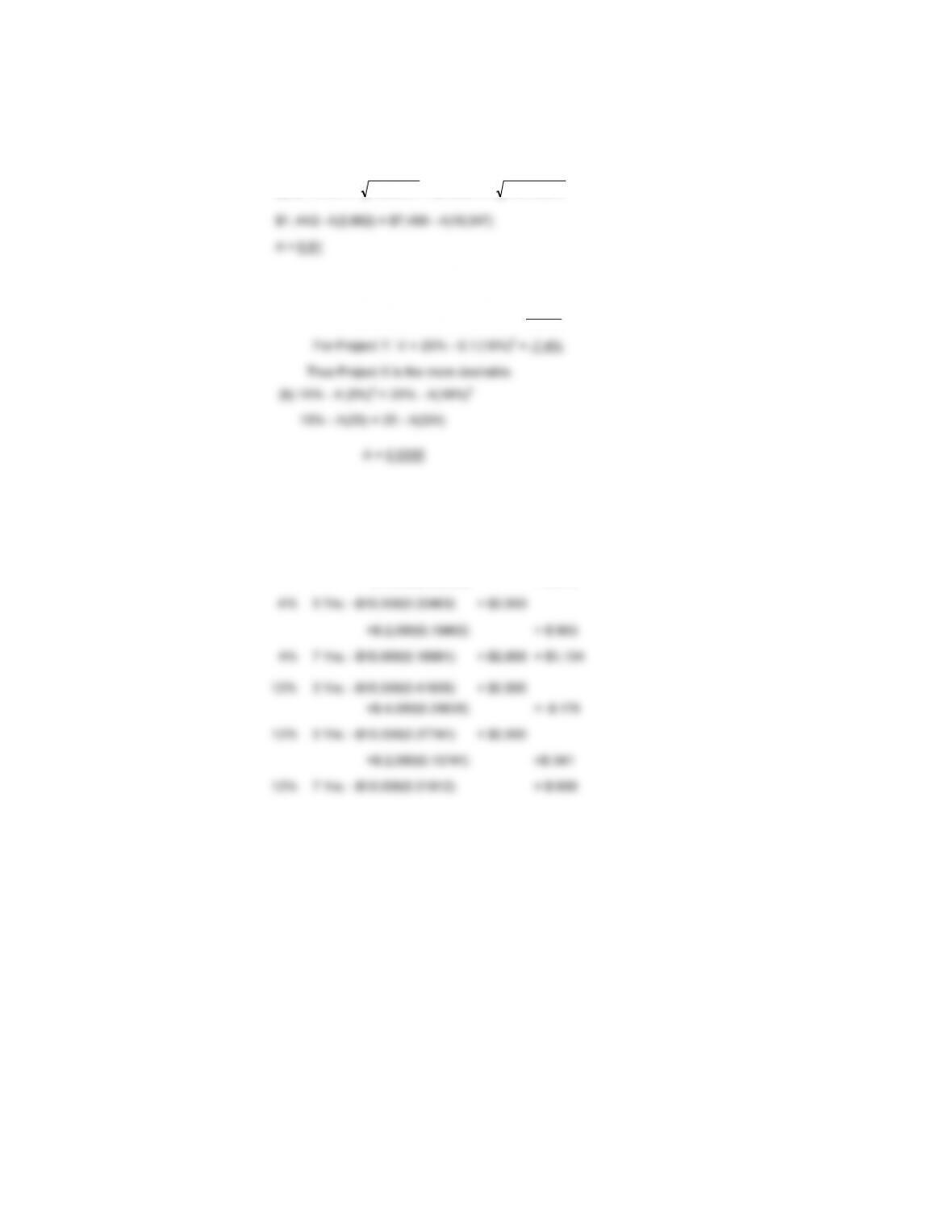
For Problem 15-17: V = $1,442 – 0.6 236,084,7
190
15-20. (continued)
(b) $1,442-A 236,084,7 = $7,400 – A 000,950,100
15-21. (a) V =
µ
– A 2
σ
= E(RR) – A 2
RR
σ
For Project X: V = 15% – 0.1 (5%)2 = 12.5%
15-22. Net AW
= -$10,000(A/P,i%,N) + $2,800 + F(A/F,i%,N)
i N
4% 3 Yrs.: -$10,000(0.36035) + $2,800
+$ 4,000(0.32035) = $ 376
191
15-22. (continued)
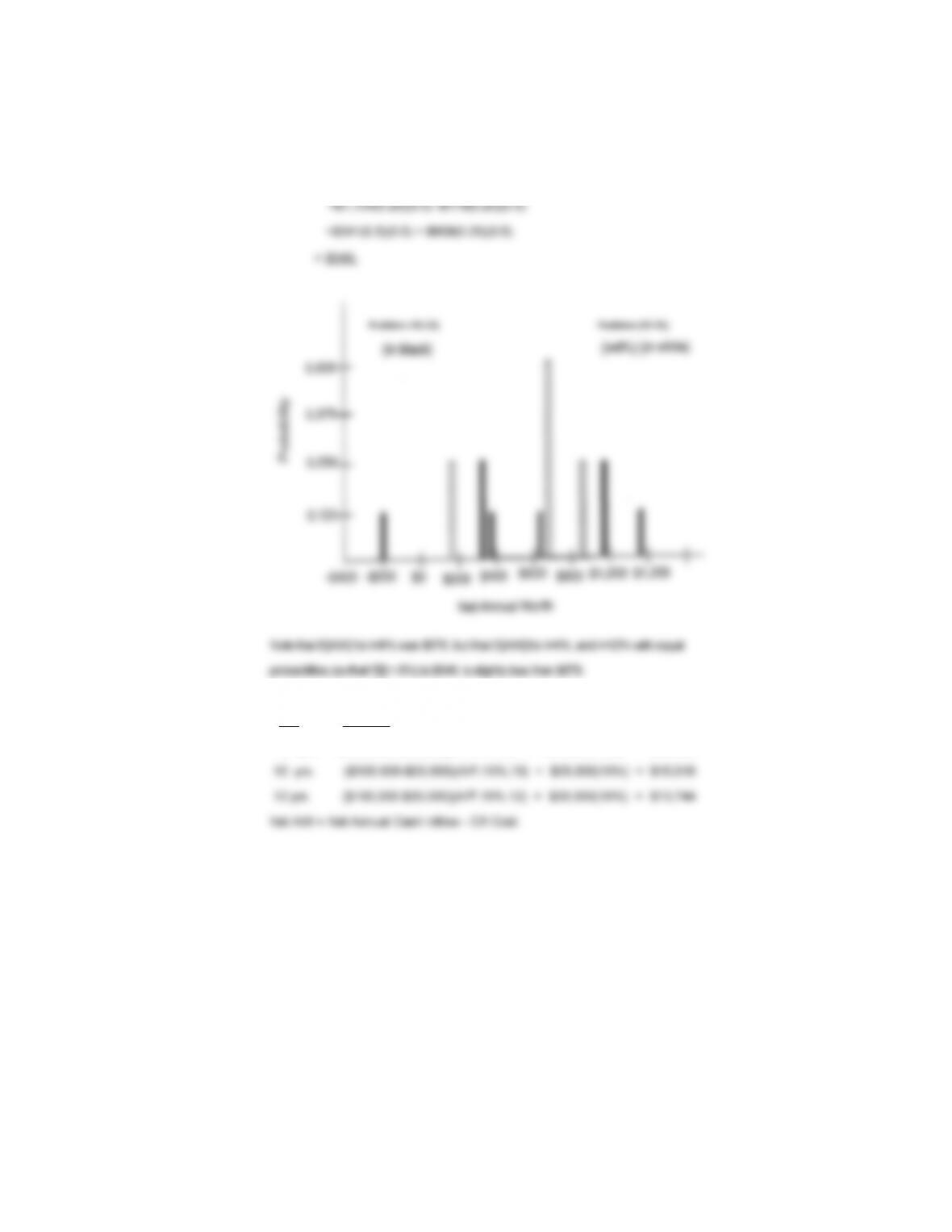
E[AW] = $376(0.25)(0.5) + $963(0.5)(0.5)
15-23. Life CR Cost
6 yrs. ($100,000-$20,000)(A/P,10%,6) + $20,000(10%) = $20,368
192
15-23 (continued)
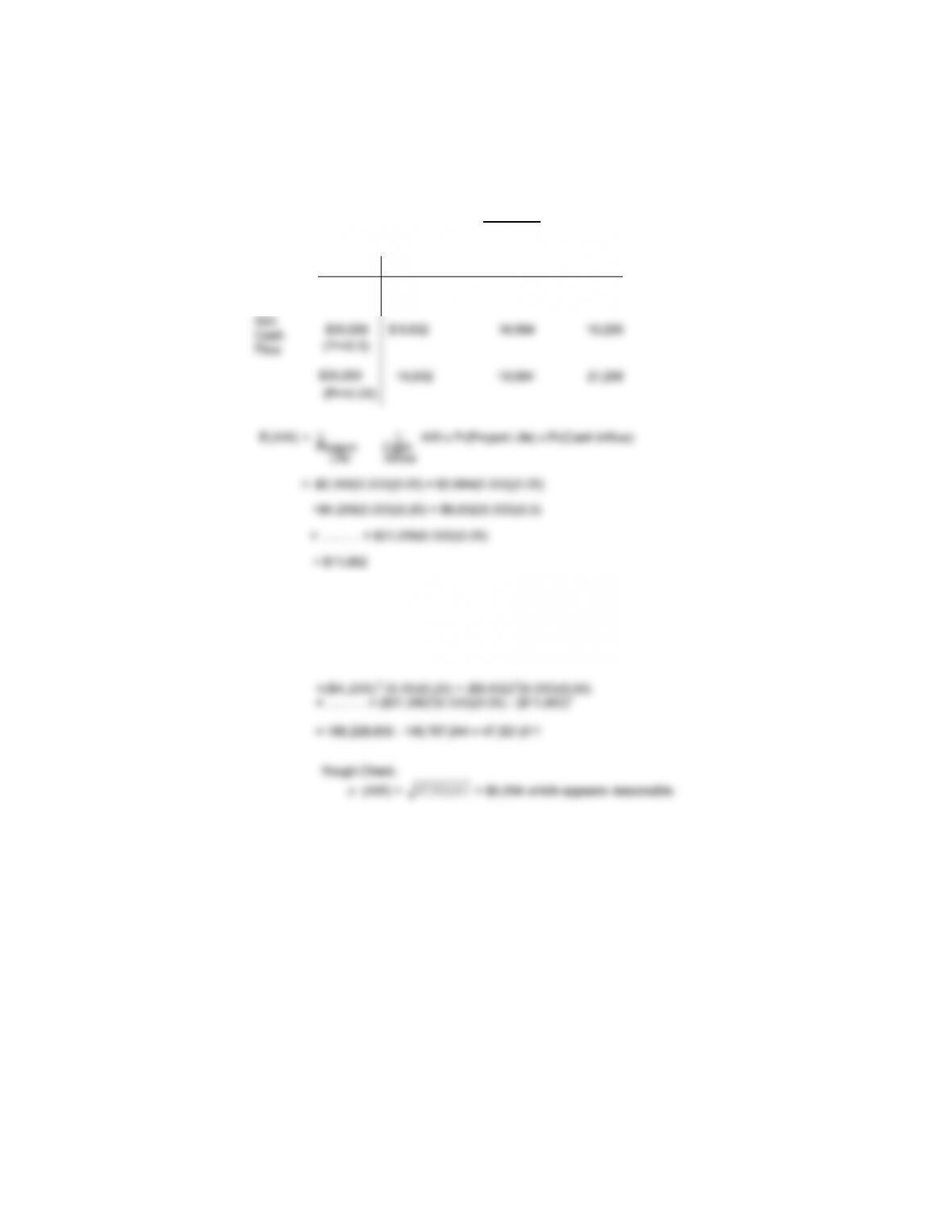
V(AW) = ∑ ∑ (AW)2 x Pr(Project Life) x Pr(Cash Inflow)
Project Cash
Life Inflow
– [E(AW)2]
= (-$2,368)2(0.333)(0.25) + ($2,984)2(0.333)(0.25)
Project Life
6 yrs. 10 yrs. 12 yrs.
(Pr=0.333) (Pr=0.333) (Pr=0.333)
$18,000 -$ 2,368
$
2
,
984
$
4
,
256
(Pr=0.25)
Net
A
nn
193
15-24. (a) “Risk-neutral” means expected value would be the logical criterion
E(first bet) = +$100 + 0.5($200) + 0.5(-$50) = $175
E(second bet) = +$100 + 0.5($350) + 0.5(-$50) = $225 (better)
194