SOLUTIONS TO CHAPTER 10 PROBLEMS
New Product and Expansion Analysis
Note to instructor: Advise students to use a 40% income tax rate unless directed otherwise.
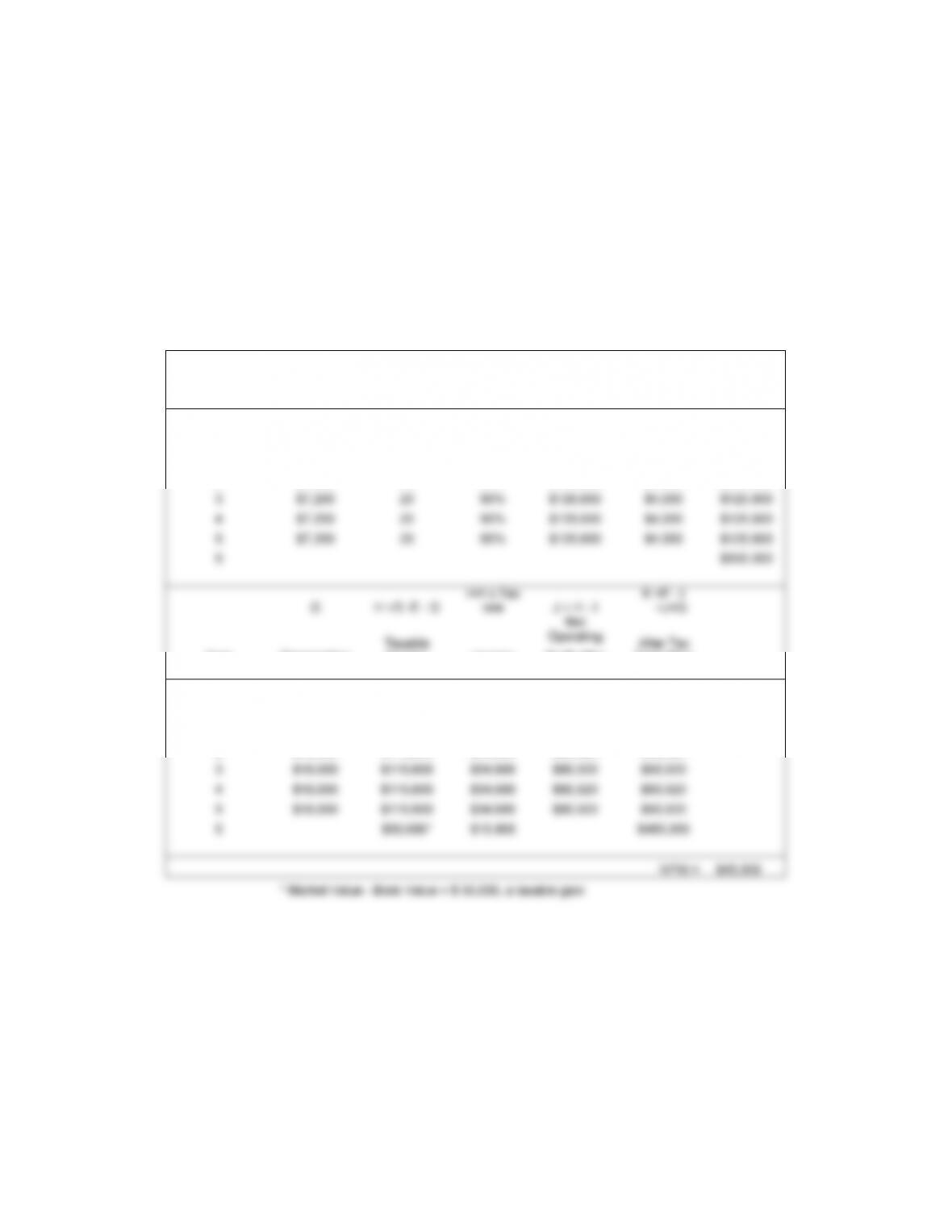
10-1 (a)
Interest Rate 15.00%
Purchase Price $ 500,000
Tax Rate 30.00%
Sale Price $500,000
A B C D =AxBxC E F = D – E
Rent per Number of % Before Tax
Year unit units occupancy Gross rent Maintenance Cash Flow
0 -$500,000
1 $7,200 20 90% $129,600 $4,000 $125,600
2 $7,200 20 90% $129,600 $4,000 $125,600
Taxable
Year Depreciation Income Income
Tax
Profit After
Tax
Cash Flow
0 -$500,000
1 $10,000 $115,600 $34,680 $80,920 $90,920
2 $10,000 $115,600 $34,680 $80,920 $90,920
126
10-1. (continued)
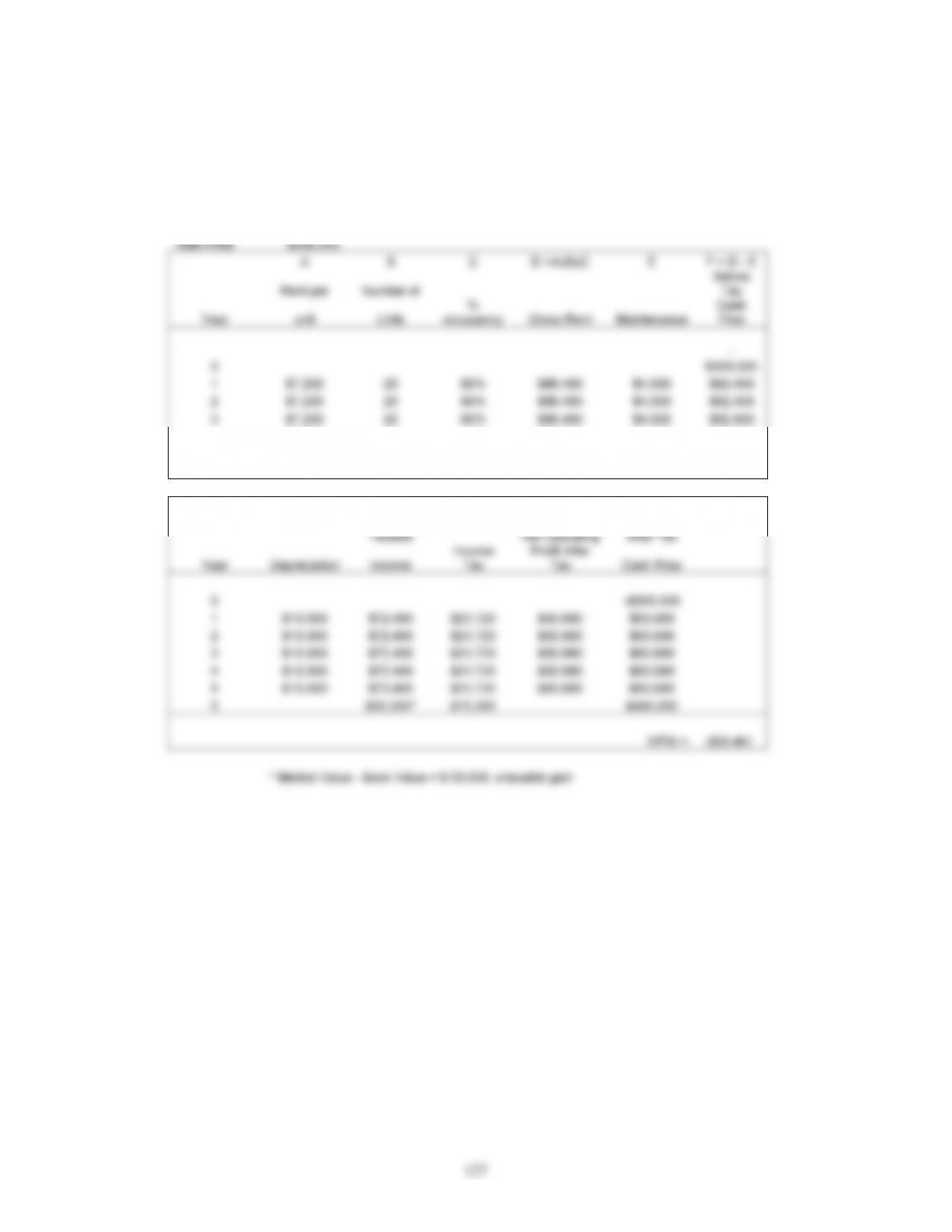
(b)
Interest Rate 15.00%
Purchase
Price $ 500,000
Tax Rate 30.00%
4 $7,200 20 60% $86,400 $4,000 $82,400
5 $7,200 20 60% $86,400 $4,000 $82,400
5 $500,000
G H =D -E – G
I=H x Tax
rate J = H – I
K =F – I
=J+G
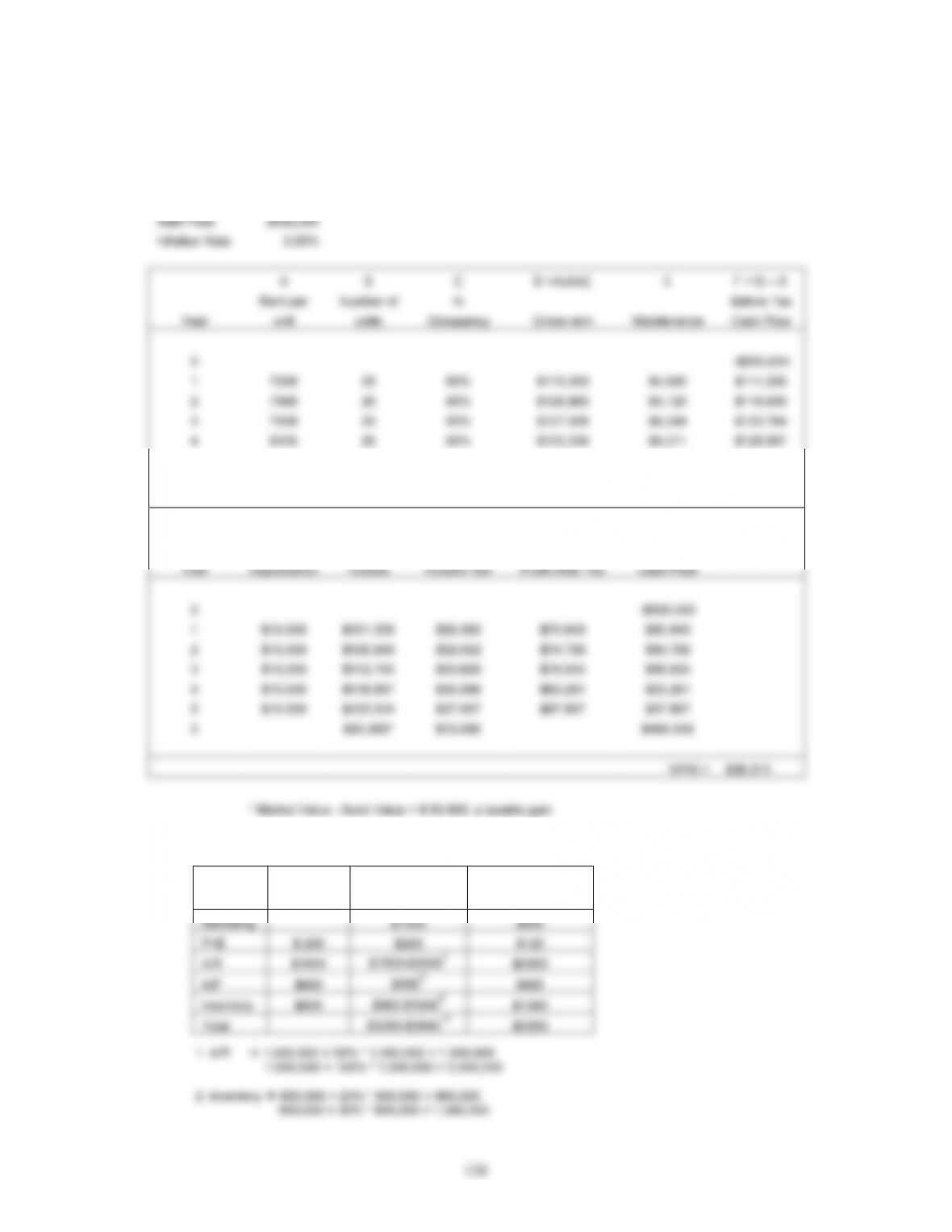
10-2. Starr Rental Revisited
Interest Rate 15.00%
Purchase
Price $ 500,000
Tax Rate 30.00%
5 8752 20 80% $140,026 $4,502 $135,524
5 $500,000
G H =F – G I=H x Tax rate J = H – I
K =F – I
=J+G
Taxable Net Operating After Tax
10-3. All $ In Thousands
Existing
Investment
Required New
Investment
Before tax
Worst Case Net
After Tax (for
problem 10-4)
10-4. Net After Tax Cash Flows in Thousands of $
10-5. Value Chain Factors + Stake holders impacted
Following are some examples of questions that should be asked and an example of an approximate analysis in
response to the last question
Questions are the same as those faced by Ajax for new product plus the need to test the following assumptions:
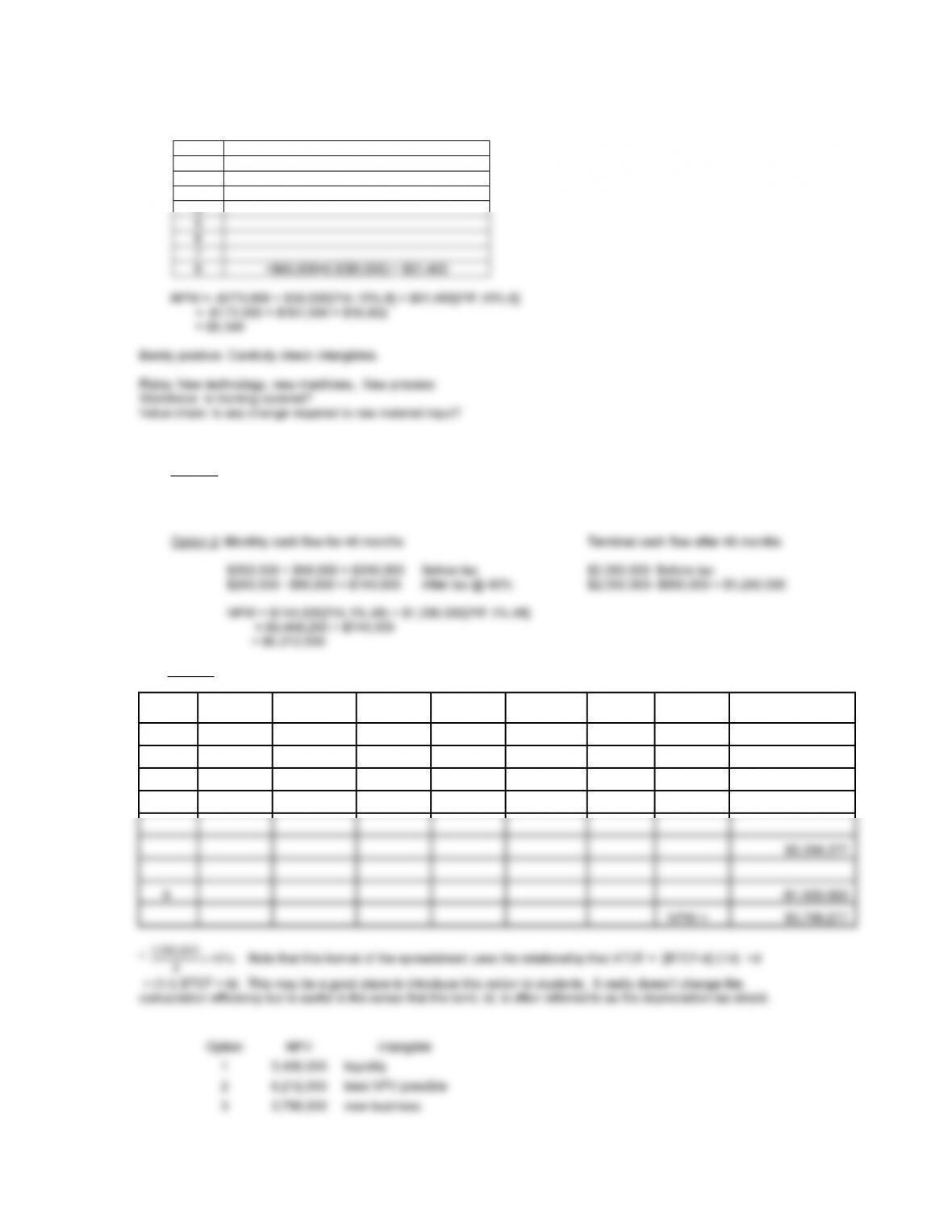
0 -$3360a
1
129
10-6.
0 -$165,000-$8000 = -$173,000
1 $50,000(1-0.4) + $15,000(0.4) = $36,000
2
3
10-7.
Option 1: Sell at $9,000,000
Taxable gain =$9,000,000
Tax on gain = 0.4($9,000,000) = $3,600,000
Net after Tax = $ 5,400,000
Option 3:
Year
Sales
Units Contribution Overhead BTCF (1-t) BTCF td*
After Tax
Salvage
After-Tax
Cash Flow
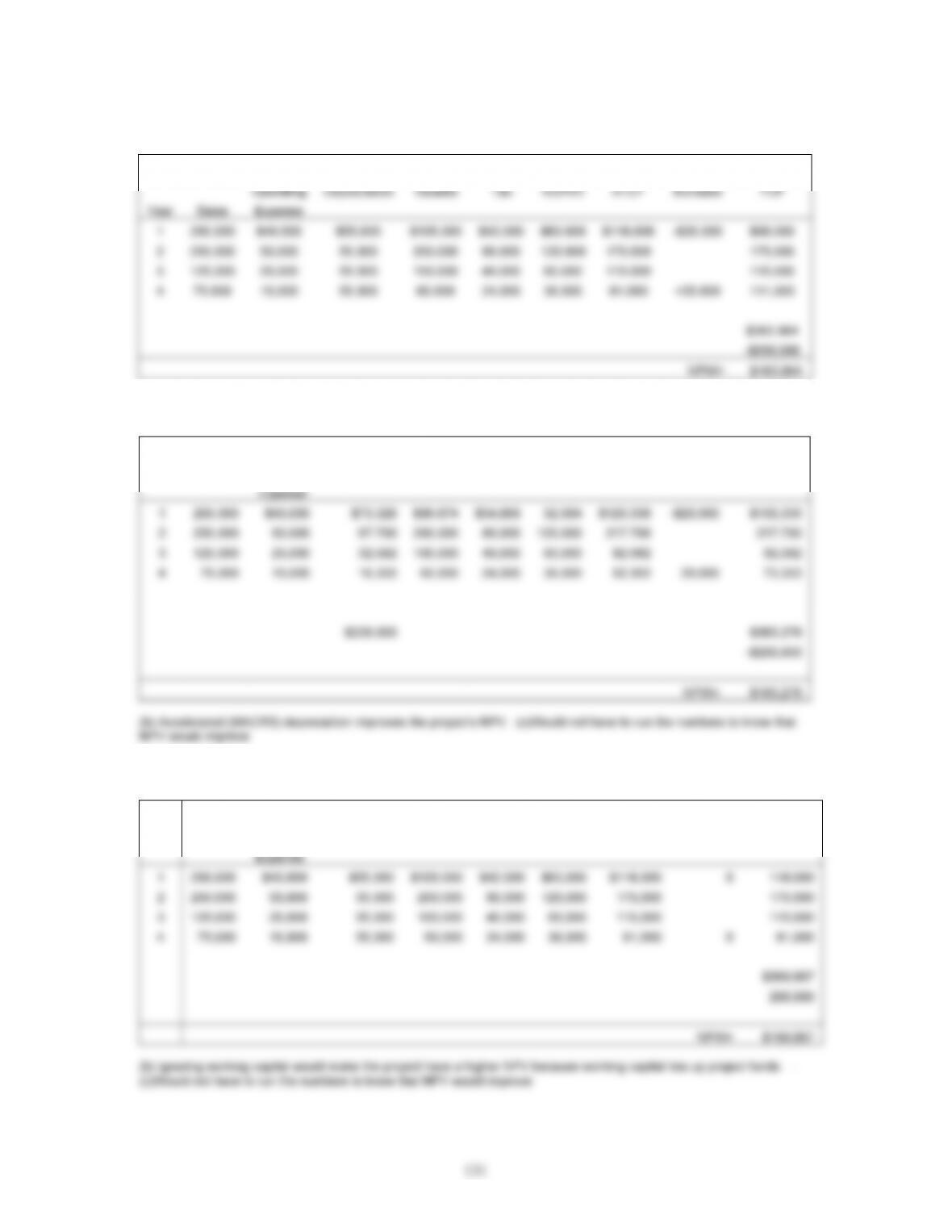
1 200,000 $1,800,000 $200,000 $1600000 $960000 $150000 1110000
2 300,000 2,700,000 200,000 2500000 1500000 150000 1650000
3 400,000 3,600,000 200,000 3400000 2040000 150000 2190000
4 100,000 900,000 200,000 700000 420000 150000 1800000 2370000
130
10-8.
Working
Capital
Net ATCF
or
10-9.
Year Sales Operating Depreciation Taxable Tax NOPAT ATCF
Working
Capital
Increase
Net ATCF
or
FCF
10-10.
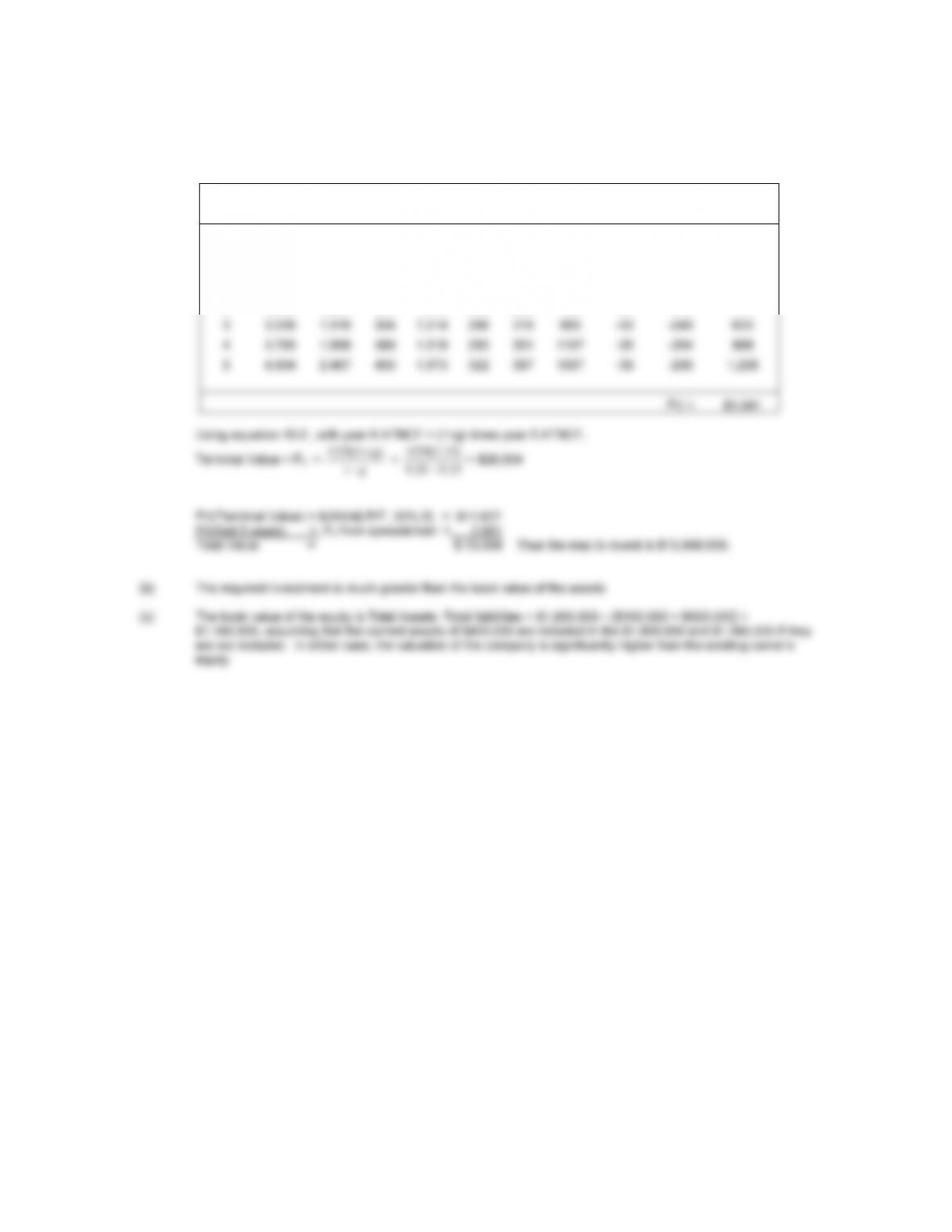
Year Sales Operating Depreciation Taxable Tax NOPAT ATCF
Working
Capital
Increase
Net ATCF
or
FCF
10-11.
(a) All numbers in thousands
Rev CGS SGA CFBT D Tax ATCF ∆WC Capex ATNCF
0
(Ref) $2,000 $1,000 $200 $800 $200 $240 $560 -$24 -$180 $356
1 2,200 1,100 220 880 220 264 616 -26 -198 392
2 2,530 1,265 253 1,012 242 290 722 -29 -218 475
132
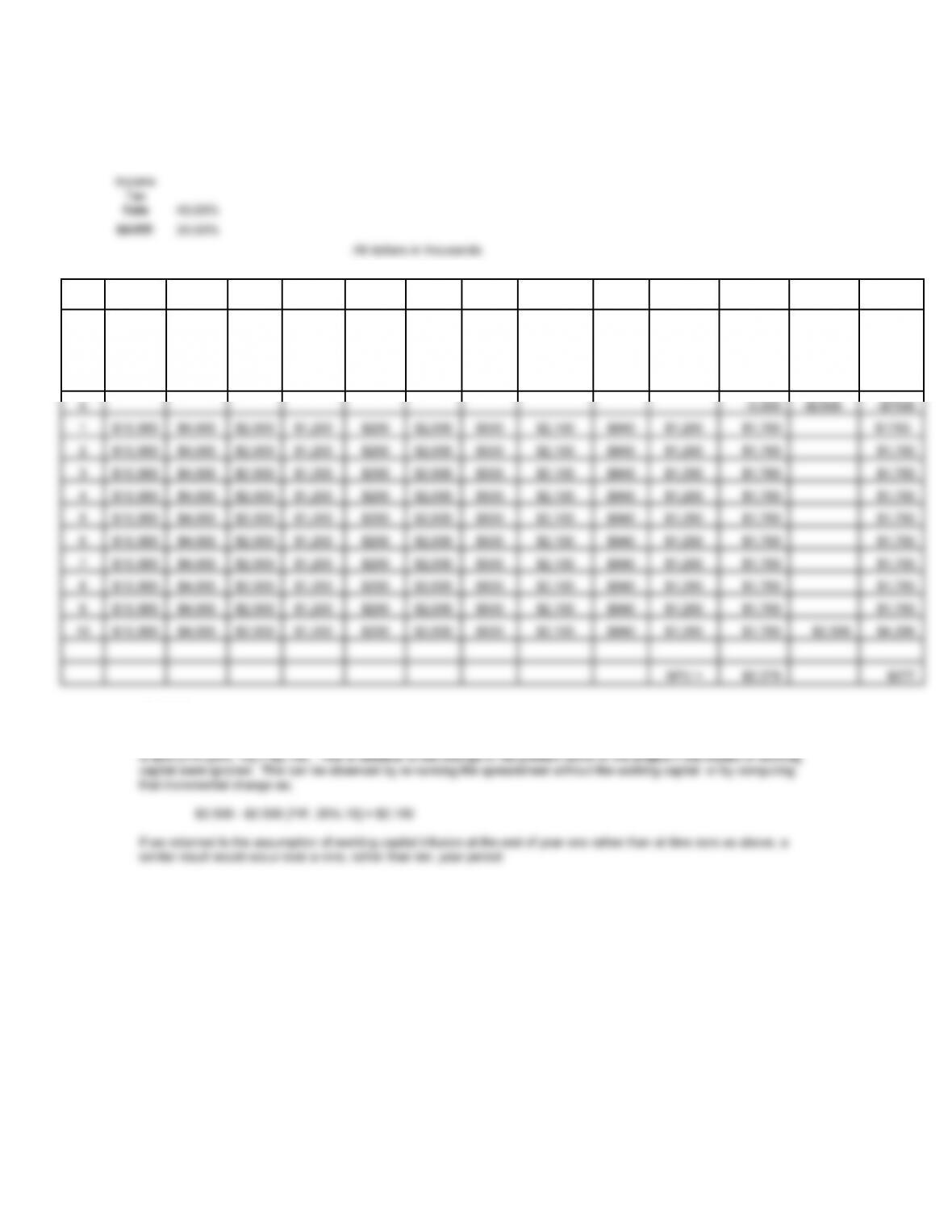
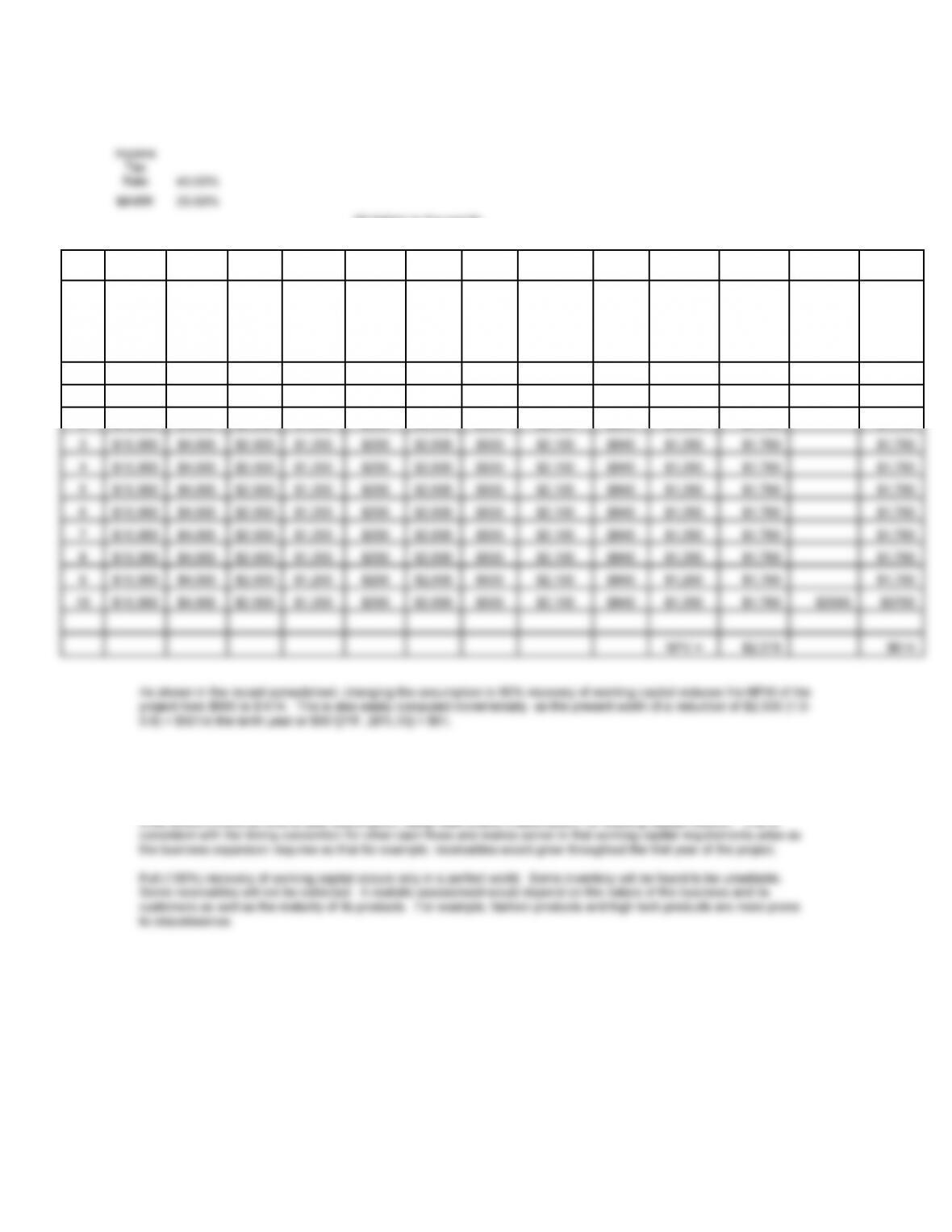
10-12.(a) The spreadsheet below is identical to example 10-3 in the text except that the timing of the working capital
infusion has been shifted from the end of year 1 to year 0 or immediately
A B C D E F
G = A-B-
C-D-E-F
H =
.4G I= G – H J = I + F K
L = J +
K
Year
Sales
Material
Labor
Variable
OH
Plant
Costs
BTCF
Depre.
Taxable
Income
Taxes
NOPAT
After Tax
Cash
Flow
Change
in
working
capital
Net
cash
Flow
10-12 (b)
Interest on the $2506 invested at time 0, is 20% of $2506 = $501 per year for 10 years. The Present worth of this interest
133
10-12 (c)
All dollars in thousands
A B C D E F
G = A-B-
C-D-E-F
H =
.4G I= G – H J = I + F K
L = J +
K
Year
Sales
Material
Labor
Variable
OH
Plant
Costs
BTCF
Depre.
Taxable
Income
Taxes
NOPAT
After Tax
Cash
Flow
Change
in
working
capital
Net
cash
Flow
0 -5,000 0 -$5000
1 $10,000 $4,000 $2,000 $1,200 $200 $2,600 $500 $2,100 $840 $1,260 $1,760 -$2,506 $746
2 $10,000 $4,000 $2,000 $1,200 $200 $2,600 $500 $2,100 $840 $1,260 $1,760 $1,760
10-12 (d)
The assumptions which make the most sense should be determined on a case by case basis. However, the most realistic
ones would involve an end-of-year assumption, rather than a time 0 assumption, for working capital infusion. This is
134