Marketing Performance Tools and Application Exercises
4.1 Economic Value Analysis: Figures 4-12 and 4-13 are used with this marketing performance tool to
answer the questions A (below) and B (next page).
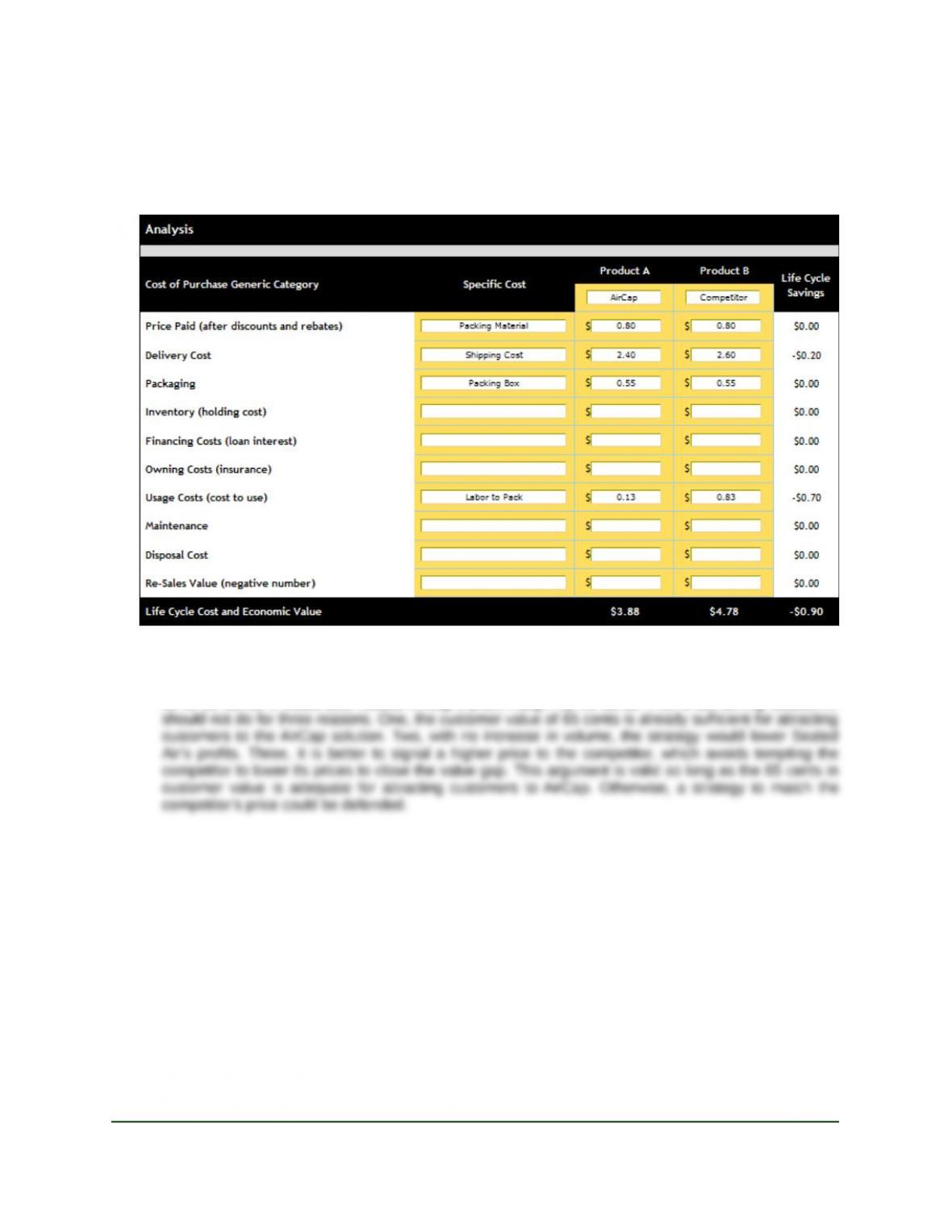
A. If Sealed Air sold its AirCap product for the same price as the competing product, how would the
economic value change? Why shouldn’t Sealed Air do this, since a price equal to the competitor’s price
creates more economic value for the customer?
Teaching Note:Matching the competitor’s price of 80 cents for packaging material would mean
lowering the AirCap price by 25 cents. While this would increase the customer value by 25 cents, from
65 to 90 cents, it would also reduce AirCap’s profit margin by 25 cents. This is something Sealed Air
Market-Based Management Copyright © 2012
Sixth Edition –11– Pearson Education, Inc.
Instructor’s Manual– Chapter 2 Publishing as Prentice Hall
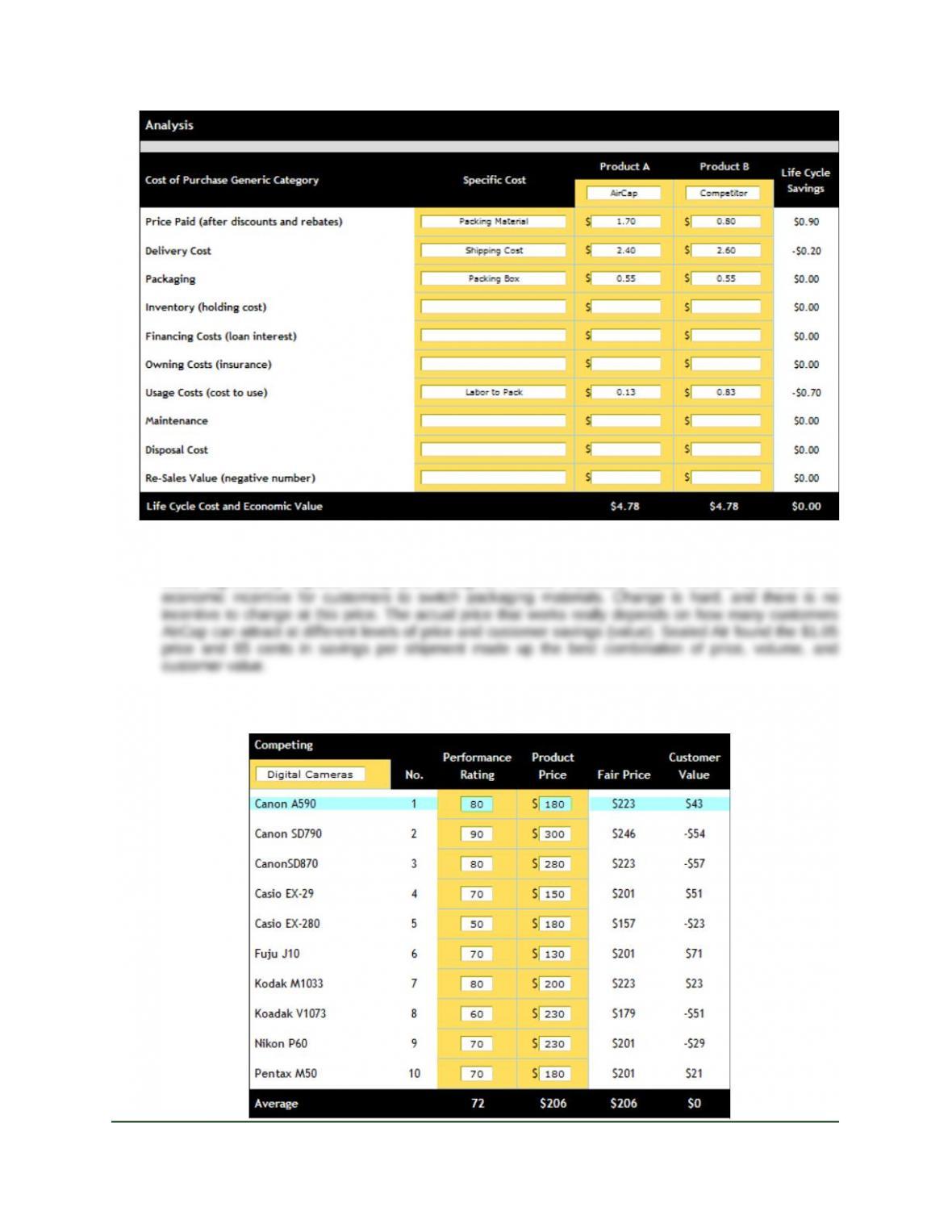
B. What price would Sealed Air charge for its AirCap product to produce a zero economic value? This
would make more money for Sealed Air, but why would this be an unwise move?
Teaching Note: At a price of $1.70, the economic value (or life-cycle savings) would be zero. While this
would significantly improve AirCap profit margins, it would drastically reduce volume, as there is no
4.2 Price-Performance Value Mapping: Figures 4-16 and 4-17 are used with this marketing performance tool
to answer questions A (below) and B (next page).
Market-Based Management Copyright © 2012
Sixth Edition –12– Pearson Education, Inc.
Instructor’s Manual– Chapter 2 Publishing as Prentice Hall
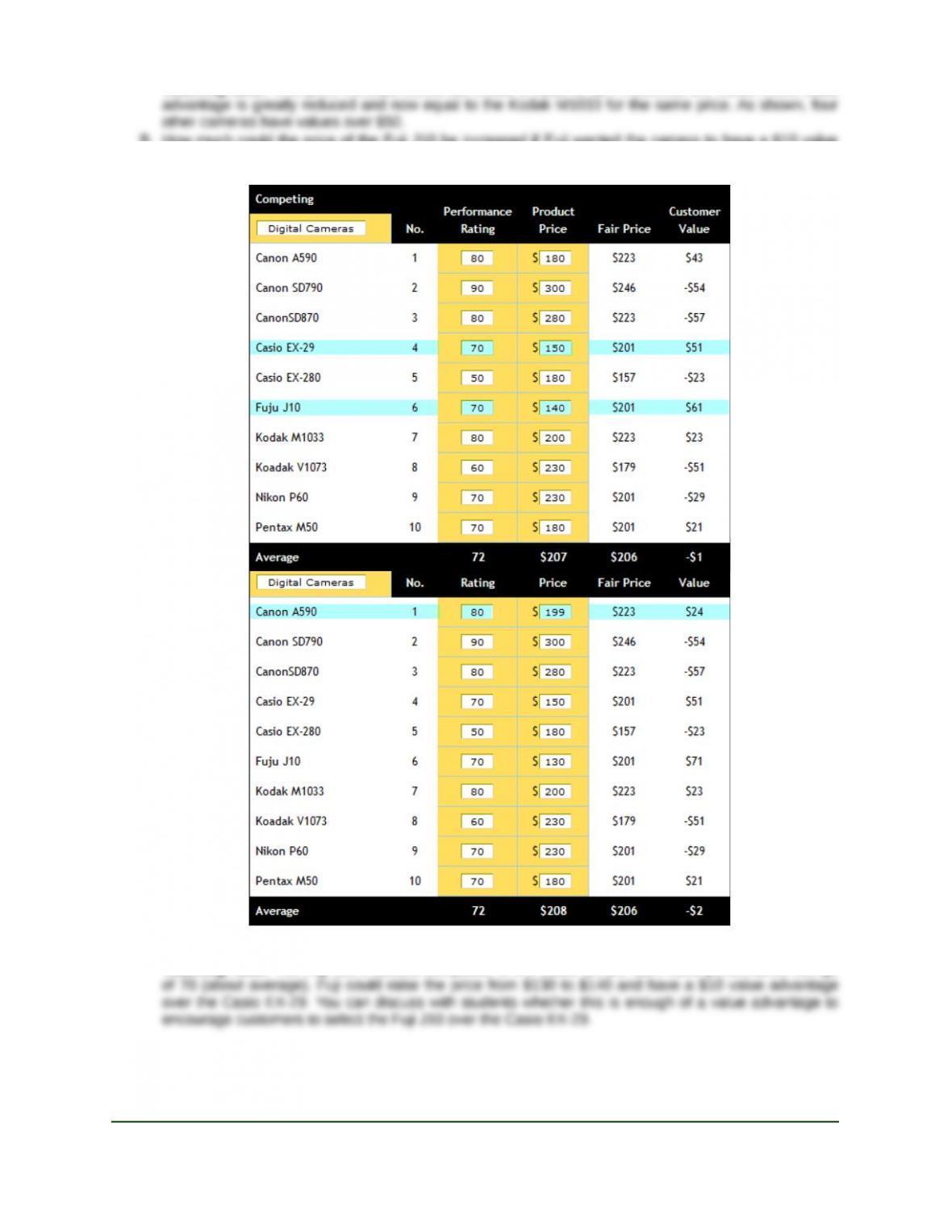
A. How would the customer value change is the price of the Canon A590 is increased from $180 to $199?
Teaching Note: This price increase would still create a value of $24. However, the Canon A590 value
B. How much could the price of the Fuji J10 be increased if Fuji wanted the camera to have a $10 value
advantage over the next best customer value in the market?
Teaching Note: The Fuji J10’s closest competitor is the Casio EX-29. Both have performance ratings
Market-Based Management Copyright © 2012
Sixth Edition –13– Pearson Education, Inc.
Instructor’s Manual– Chapter 2 Publishing as Prentice Hall
4.3 Customer Value Analysis: Figures 4-20 to 4-26 are used with this marketing performance tool to answer
questions A (below) and B (next page).
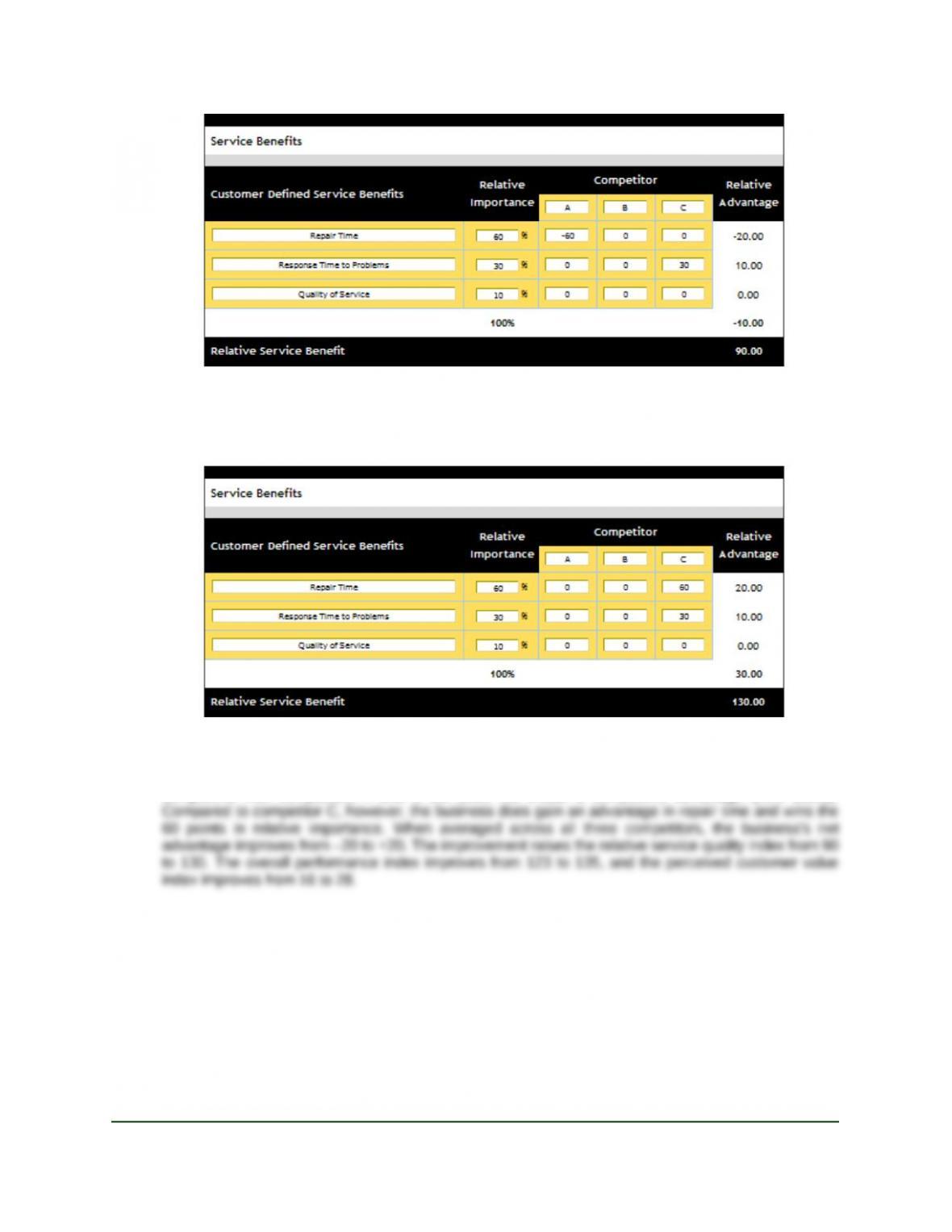
A. How would the company’s customer value change if it raised its repair time rating from 5 to 7? How
would this affect the competitors’ customer values?
Teaching Note:This can be tricky for students. They will need to refer to Figure 4-21 and then make
the changes shown above. An increase in the repair time rating from 5 to 7 enables the business to be
competitive with competitors A and B but does not create a competitive advantage (zero score).
Market-Based Management Copyright © 2012
Sixth Edition –14– Pearson Education, Inc.
Instructor’s Manual– Chapter 2 Publishing as Prentice Hall
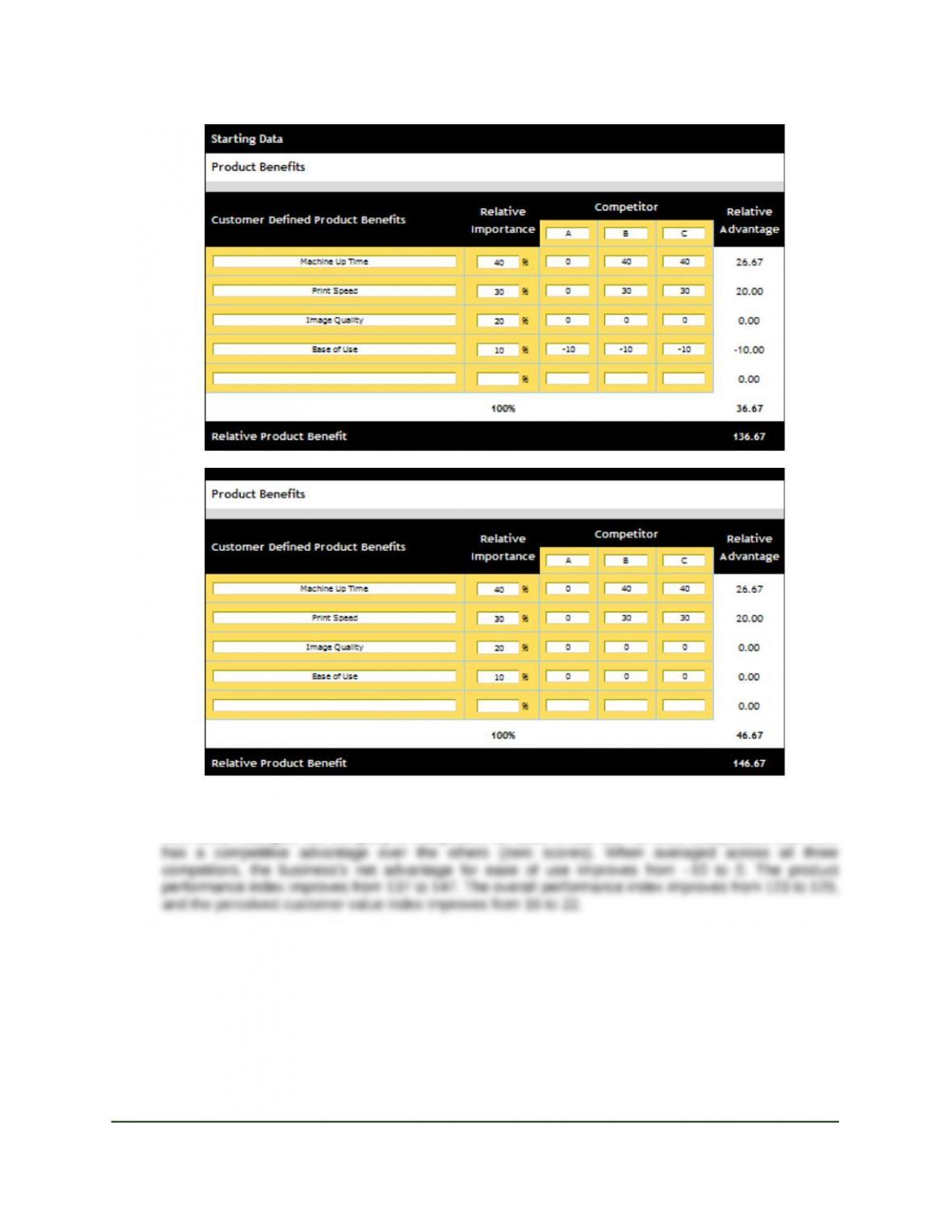
B. What would be the value impact of improving the ease-of-use product benefit from 4 to 6? Would this
improve perceived customer value more than addressing the repair time benefit problem in the previous
question?
Teaching Note: Students will need to refer to Figure 4-20 and then make the changes shown above.
With these changes, the company is competitive on ease of use with all three competitors and none
4.4 Price-Performance Trade-Offs and Customer Value: Figures 4-28 to 4-30 are used with this marketing
performance tool to answer questions A (below) and B (next page).
Market-Based Management Copyright © 2012
Sixth Edition –15– Pearson Education, Inc.
Instructor’s Manual– Chapter 2 Publishing as Prentice Hall
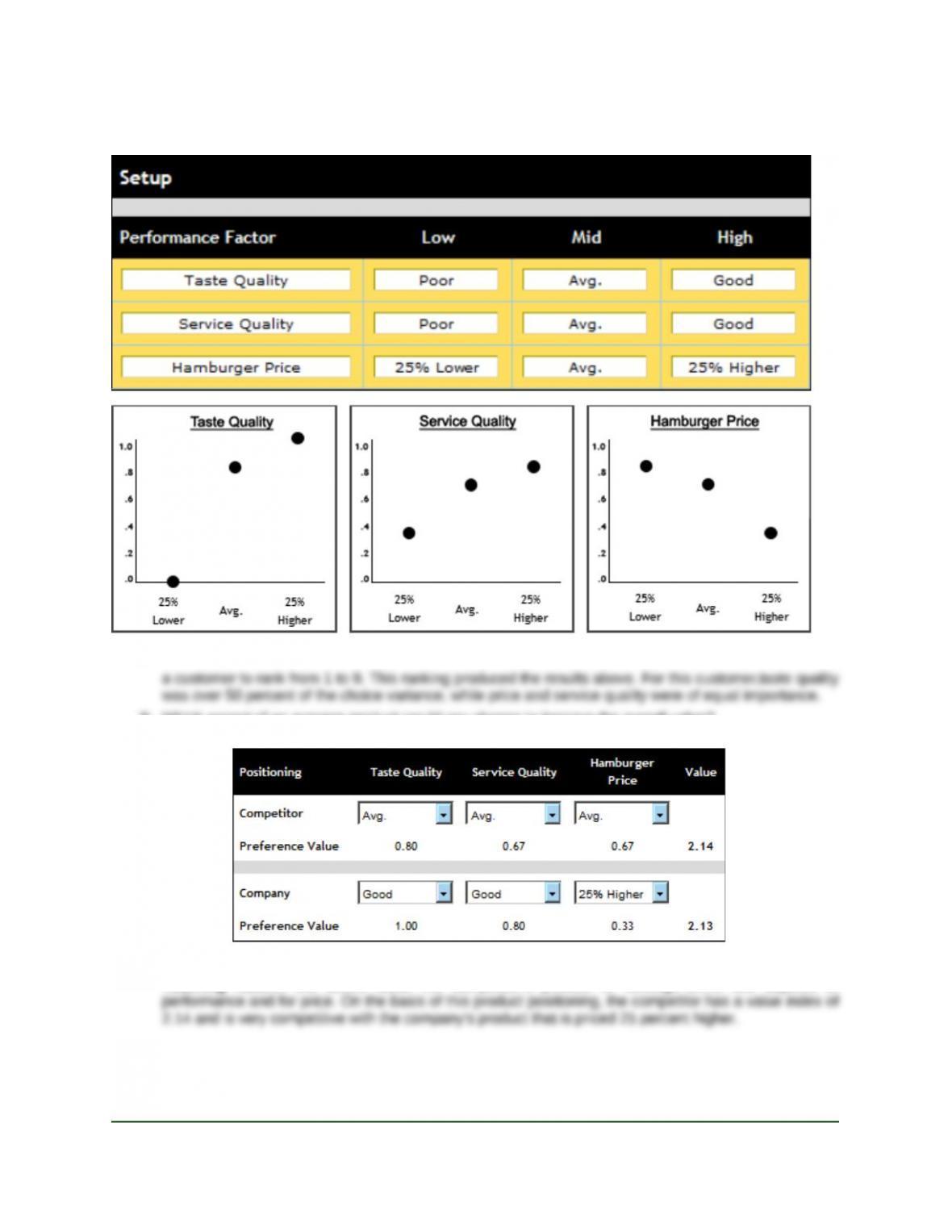
A. Create a trade-off analysis with three levels of hamburger quality (poor, average, and good), service
quality (poor, average, and good) and price (25% lower than average, average, and 25% higher than
average) and rank your preferences of the nine options presented from 1 (most preferred) to 9 (least
preferred). Which aspect of price or performance is most important and which is least important?
Teaching Note: The setup for the trade-off analysis is shown above. The analysisused nine options for
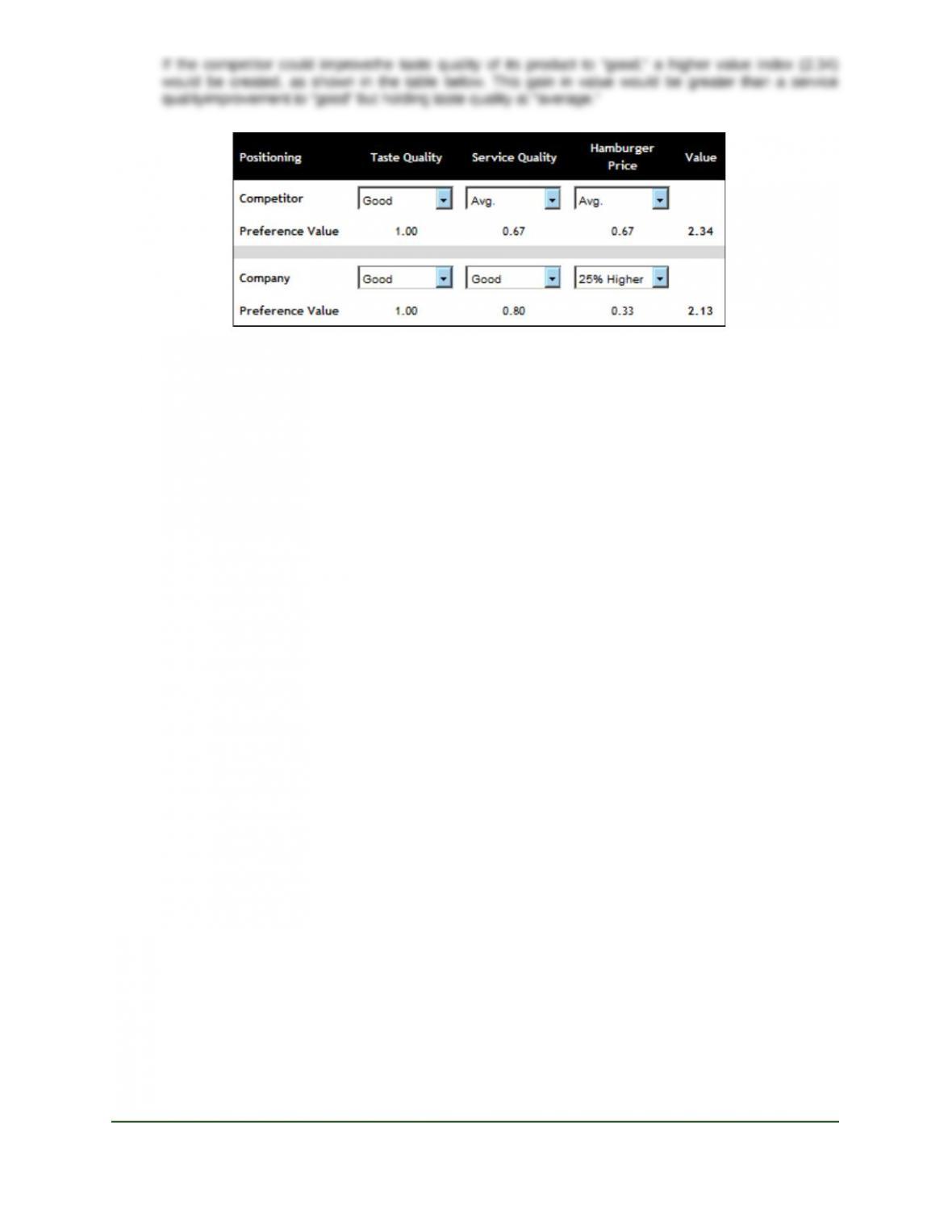
B. Which aspect of an average product would you change to improve the overall value?
Teaching Note:In the above table, the competitor’s product is “average”forthe two aspects of
Market-Based Management Copyright © 2012
Sixth Edition –16– Pearson Education, Inc.
Instructor’s Manual– Chapter 2 Publishing as Prentice Hall
Market-Based Management Copyright © 2012
Sixth Edition –17– Pearson Education, Inc.
Instructor’s Manual– Chapter 2 Publishing as Prentice Hall