Kosky, Balmer, Keat and Wise: Exploring Engineering, Fourth Edition, Solution Manual, Chapter 1
Solution Manual Chapter 1: What Engineers Do
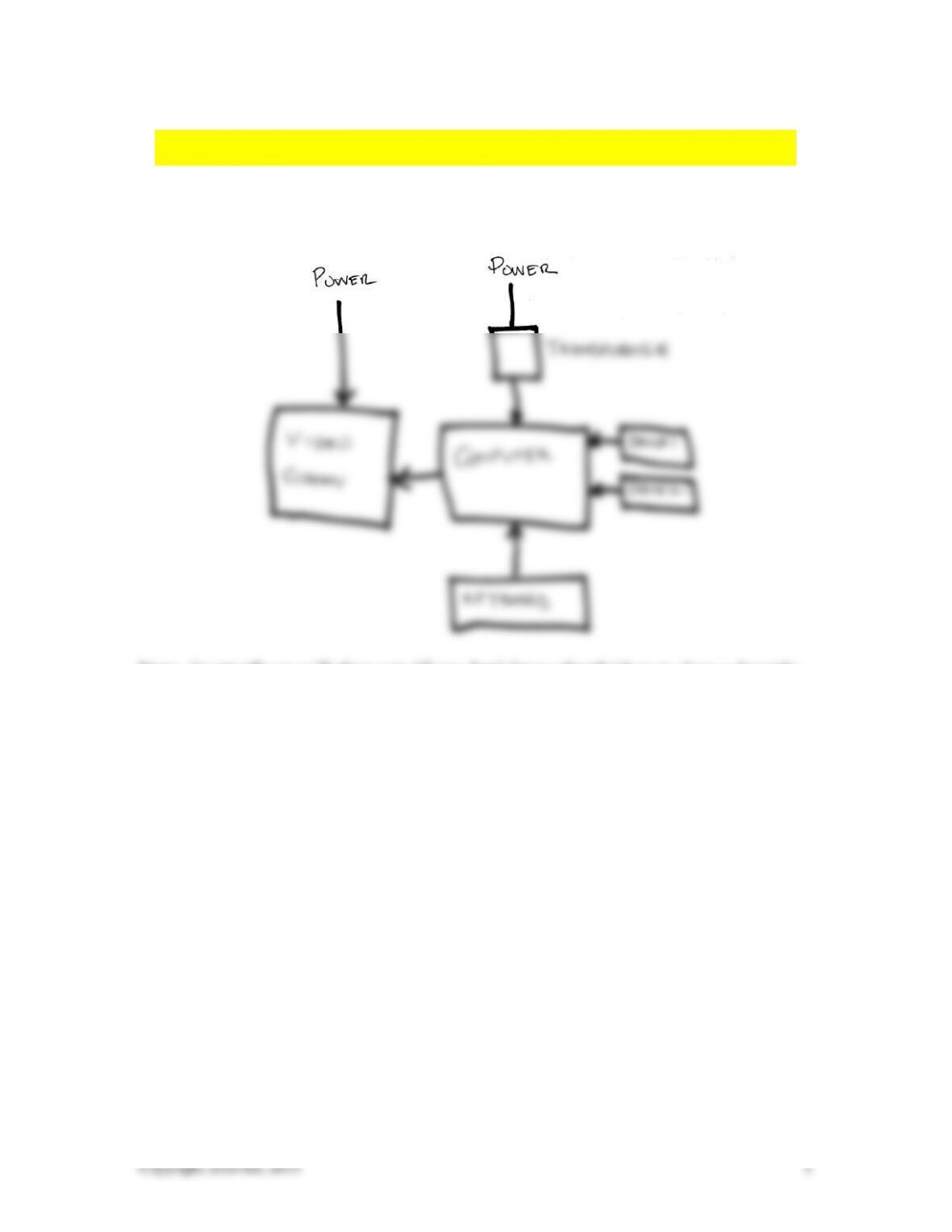
1-1) Draw a conceptual sketch of your computer. Identify the keyboard, screen, power
source, and information storage devices using arrows and labels.
Note: Eventually we will show you (if you don’t know already) how to draw a decently
formatted sketch on your computer. Meanwhile this crude representation will suffice!
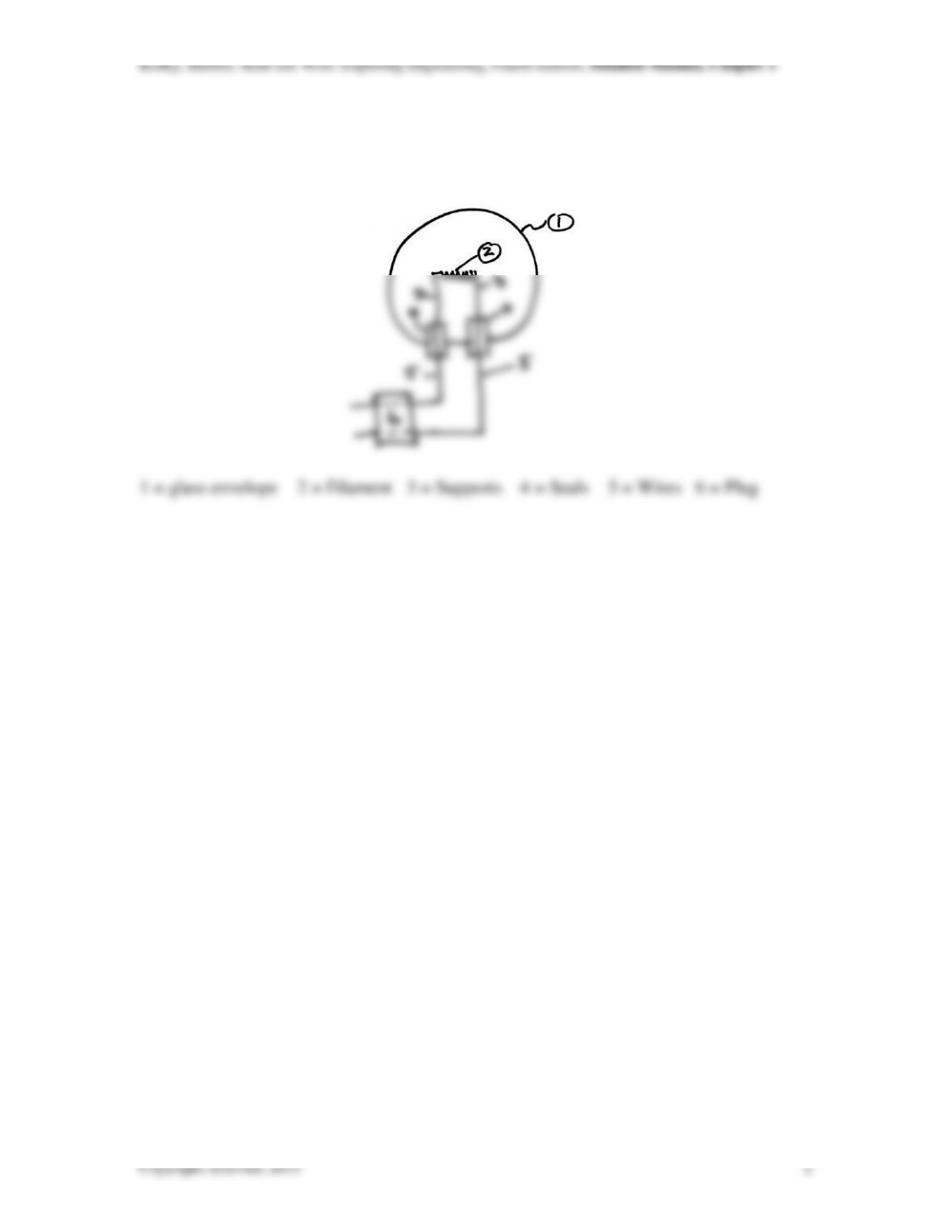
1-2) Draw a conceptual sketch of an incandescent light bulb. Identify all the components
using arrows and numbers as in Figure 1.1.

1-3) Draw a conceptual sketch of a ballpoint pen. Identify all the components with arrows
and labels as in Figure 1.2 of this chapter.
The name of ballpoint pen’s parts and components
No.
Name
No.
Name
1
refill
14
clip
2
ball
15
barrel shell
3
point
16
cap
4
socket
17
clip screw
5
slot
18
clip screw
6
eyelet
19
connector
7
refill tube
20
button spring
8
ink
21
ratchet spring
9
grease
22
retracting spring
10
cartridge
23
plunger
11
plastic lube
24
trapped spring
12
point
25
ratchet frame
13
barrel
26
liner

Kosky, Balmer, Keat and Wise: Exploring Engineering, Fourth Edition, Solution Manual, Chapter 1
Copyright, Elsevier, 2015
4
—see http://www.ball-pen-
manufacturers.com/pen_show_110_The_name_of_ballpoint_pen’s_parts.htm
(Hong-Li Pen manufacturing Co, Ltd.)
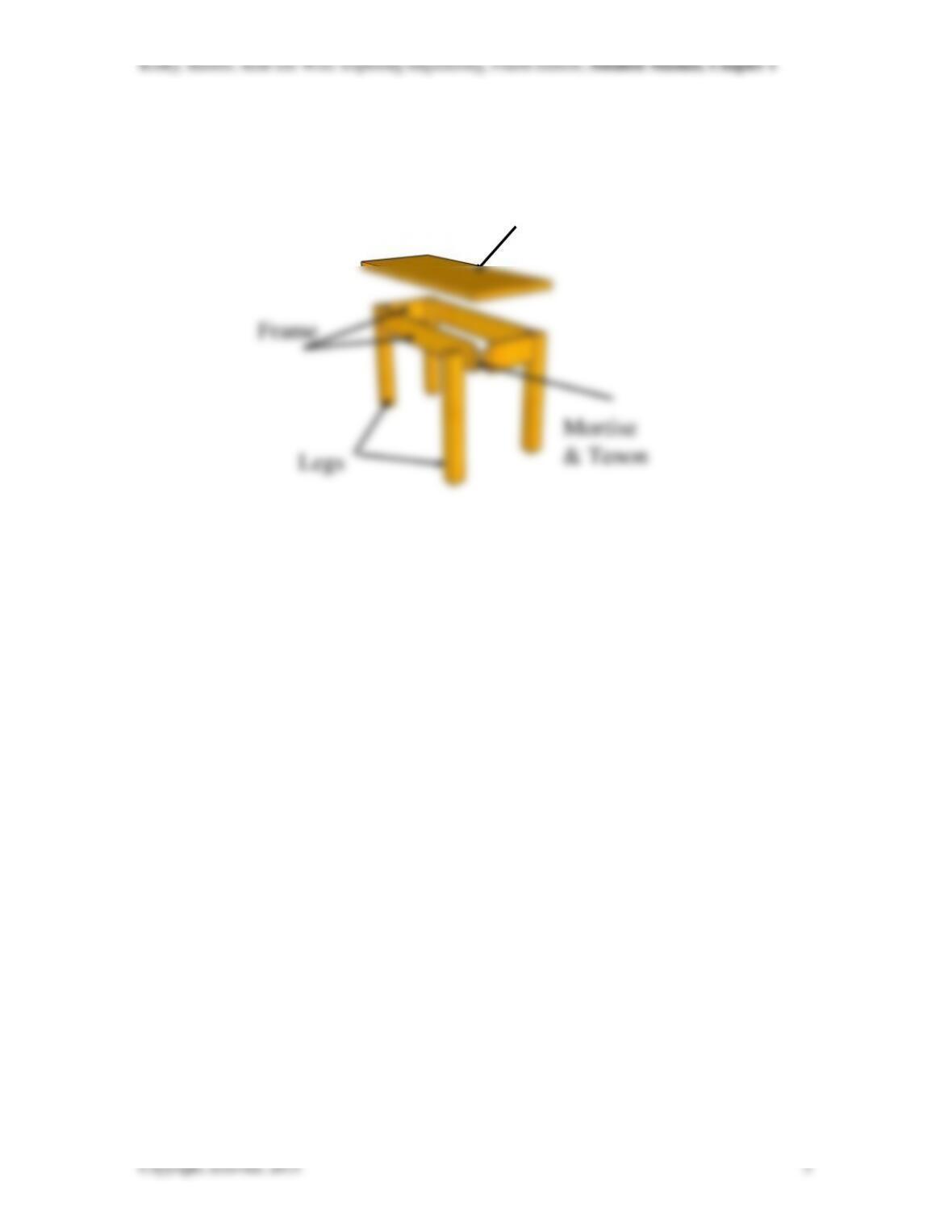
1-4) The figure below is an exploded view of a table. Identify and label all the
components.
Table top
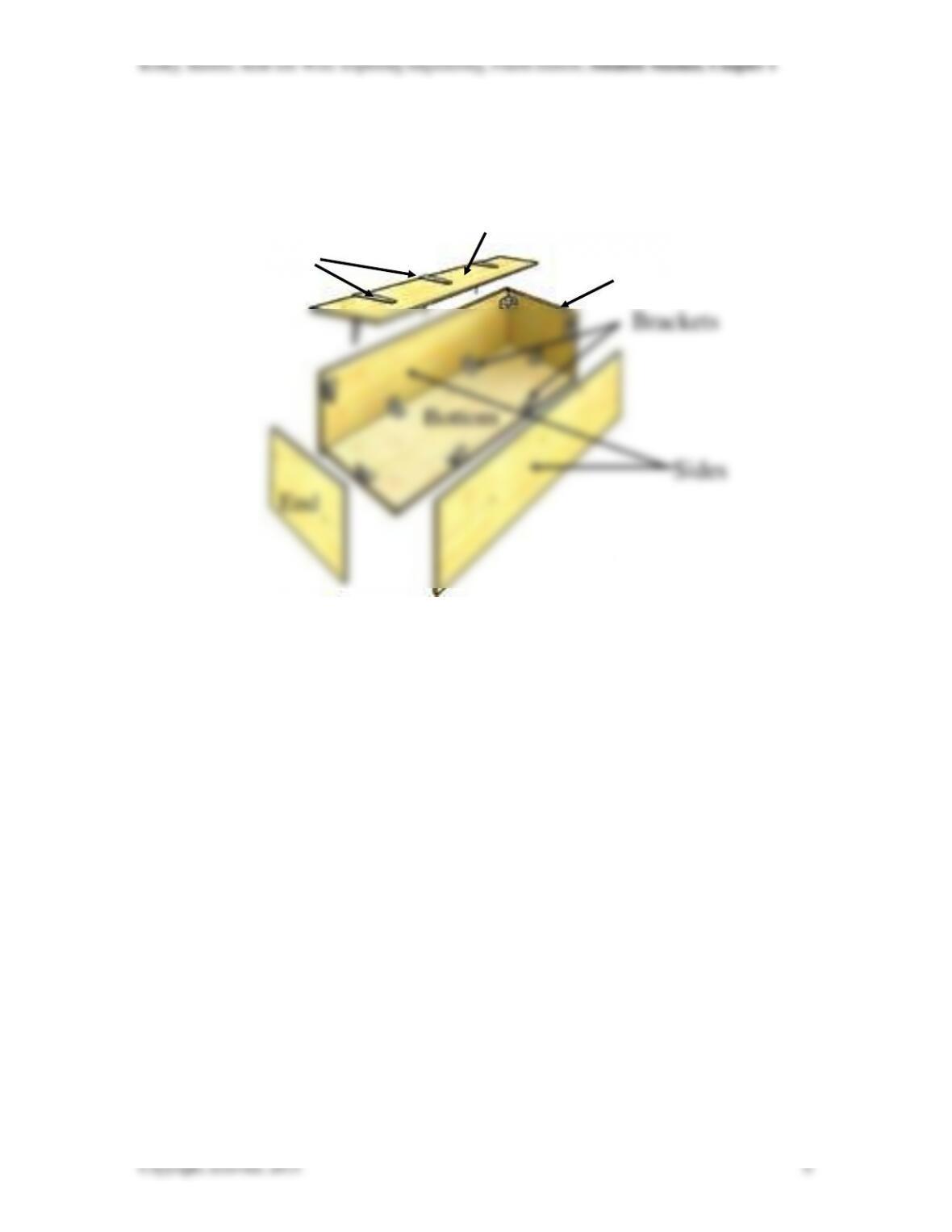
1-5) The figure below is an exploded view of a box. Identify and label all the
components.
End
Lid
Hinges
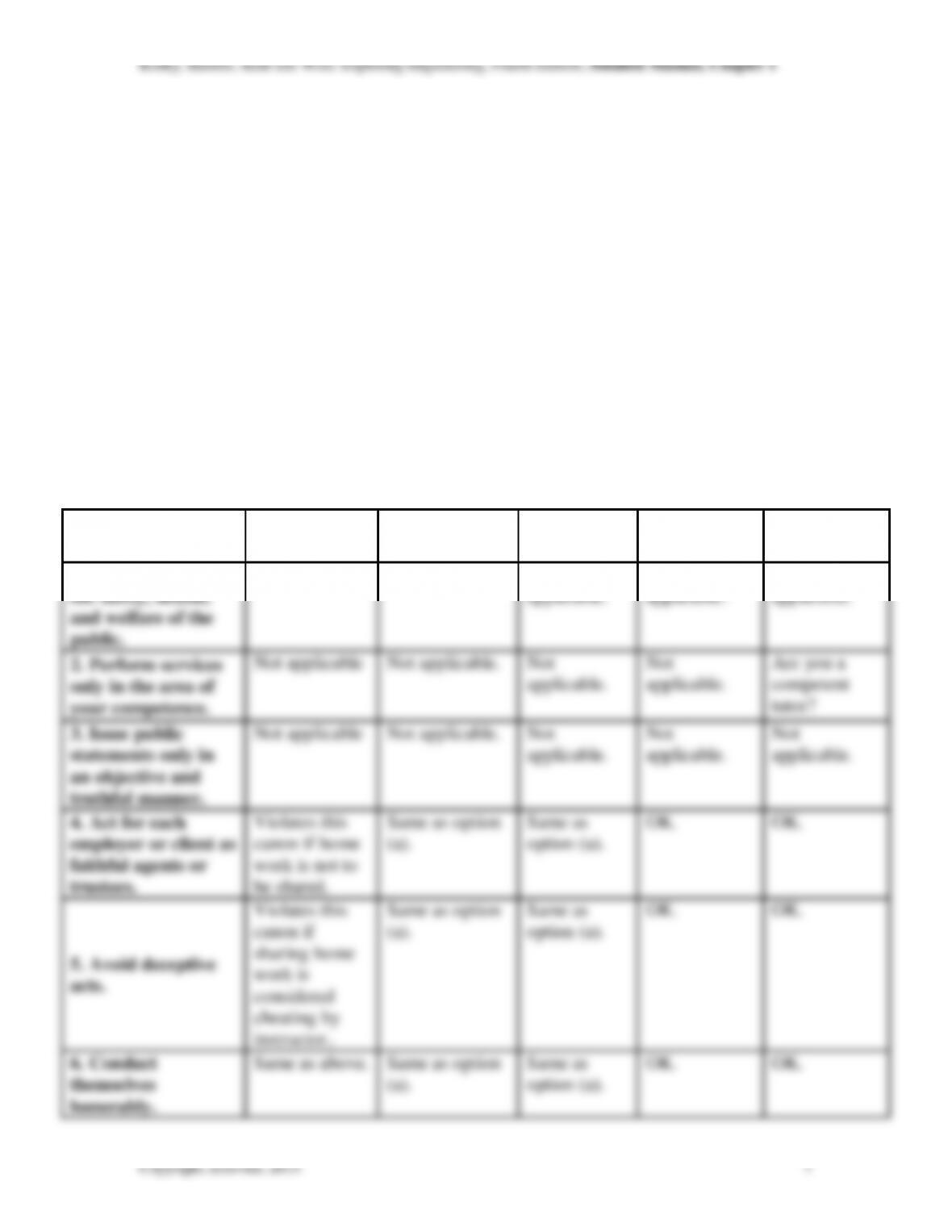
1-6) Repeat Example 1.3 using the NSPE Code of Engineering Ethics. Solve using the
Engineering Ethics Matrix.
(Example 1.3: An Ethical Situation
You and your roommate are both enrolled in the same engineering class. Your
roommate spent the weekend partying and did not do the homework that is due on
Monday. You did the homework, and your roommate asks to see it. You are afraid he or
she will just copy it and turn it in as his or her own work. What are you ethically
obligated to do?
a. Show your roommate the homework.
b. Show the homework but ask your roommate not to copy it.
c. Show the homework and tell the roommate that if the homework is copied, you will
tell the professor.
d. Refuse to show the homework.
e. Refuse to show the homework but offer to spend time tutoring the roommate.)
Ethical Decision Matrix
Canons
Option (a)
Option (b)
Option (c)
Option (d)
Option (e)
1. Hold paramount
the safety, health,
and welfare of the
public.
Not applicable.
Not applicable.
Not
applicable.
Not
applicable.
Not
applicable.
2. Perform services
only in the area of
your competence.
Not applicable
Not applicable.
Not
applicable.
Not
applicable.
Are you a
competent
tutor?
3. Issue public
statements only in
an objective and
truthful manner.
Not applicable
Not applicable.
Not
applicable.
Not
applicable.
Not
applicable.
4. Act for each
employer or client as
faithful agents or
trustees.
Violates this
canon if home
work is not to
be shared.
Same as option
(a).
Same as
option (a).
OK.
OK.
5. Avoid deceptive
acts.
Violates this
canon if
sharing home
work is
considered
cheating by
instructor..
Same as option
(a).
Same as
option (a).
OK.
OK.
6. Conduct
themselves
honorably.
Same as above.
Same as option
(a).
Same as
option (a).
OK.
OK.

Kosky, Balmer, Keat and Wise: Exploring Engineering, Fourth Edition, Solution Manual, Chapter 1
Copyright, Elsevier, 2015
8
Of course, it may be possible to find a code of professional ethics that will lead to a
contrary opinion to another code, but as per the solution in the text for Example 1.3, this
code of professional ethics favors the same solutions, namely d & e.
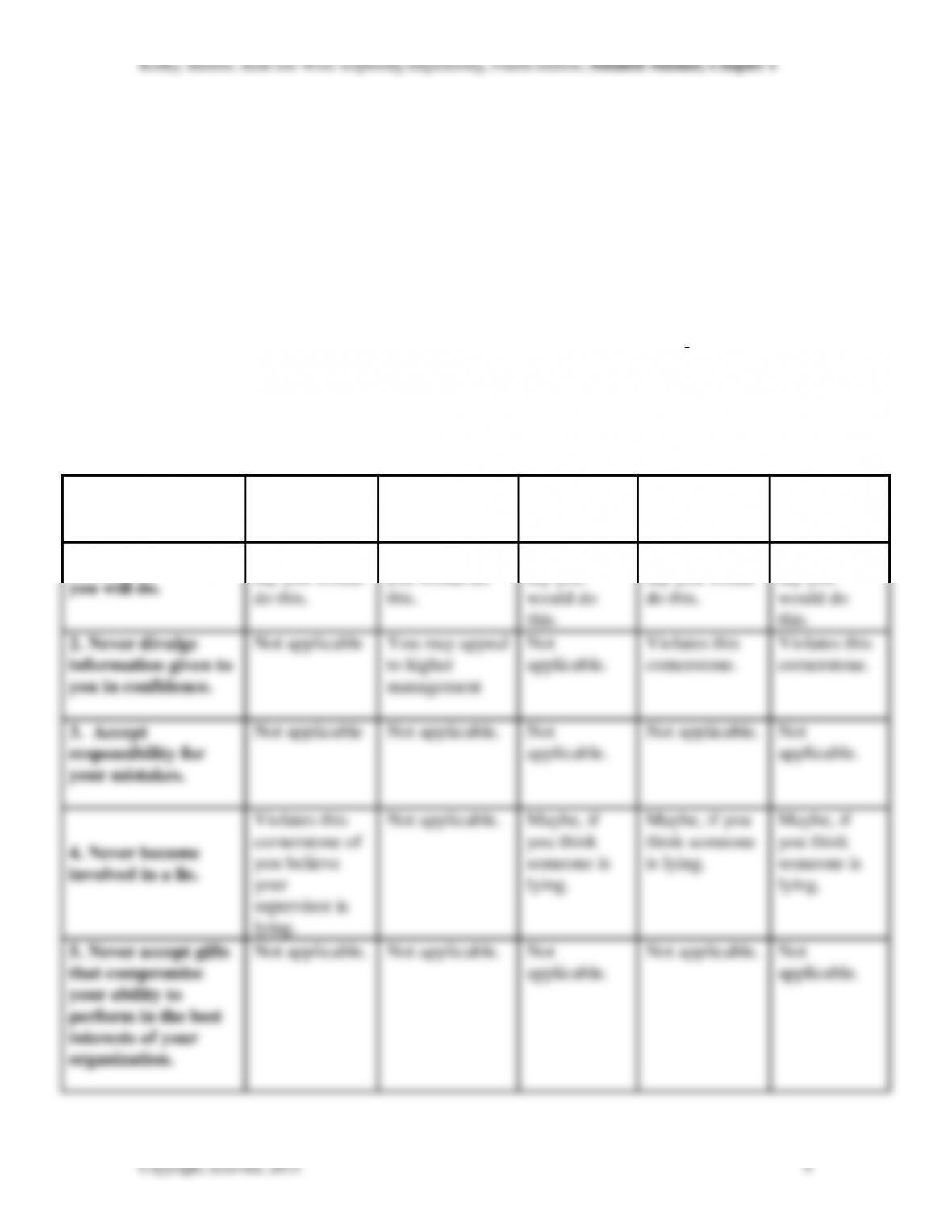
1-7) Repeat Example 1.4 using the Five Cornerstones of Ethical Behavior. Solve using
the Engineering Ethics Matrix
(Example 1.4
You are a civil engineer on a team designing a bridge for a state government. Your team
submits what you believe to be the best design by all criteria, at a cost that is within the
limits originally set. However, some months later the state undergoes a budget crisis.
Your supervisor, also a qualified civil engineer, makes design changes to achieve cost
reduction that he or she believes will not compromise the safety of the bridge. You are
not so sure, though you cannot conclusively demonstrate a safety hazard. You request
that a new safety analysis be done. Your supervisor denies your request on the grounds of
time and limited budget. What do you do?)
Cornerstone
a) Go along
with the
decision
b) Appeal to
higher
management
c) Quit your
job
d) Write your
state
representative
e) Call a
newspaper
reporter
1. Do what you say
you will do.
You did not
say you would
do this.
You did not say
you would do
this.
You did not
say you
would do
this.
You did not
say you would
do this.
You did not
say you
would do
this.
2. Never divulge
information given to
you in confidence.
Not applicable
You may appeal
to higher
management
Not
applicable.
Violates this
cornerstone.
Violates this
cornerstone.
3. Accept
responsibility for
your mistakes.
Not applicable
Not applicable.
Not
applicable.
Not applicable.
Not
applicable.
4. Never become
involved in a lie.
Violates this
cornerstone of
you believe
your
supervisor is
lying.
Not applicable.
Maybe, if
you think
someone is
lying.
Maybe, if you
think someone
is lying.
Maybe, if
you think
someone is
lying.
5. Never accept gifts
that compromise
your ability to
perform in the best
interests of your
organization.
Not applicable.
Not applicable.
Not
applicable.
Not applicable.
Not
applicable.

Copyright, Elsevier, 2015
10
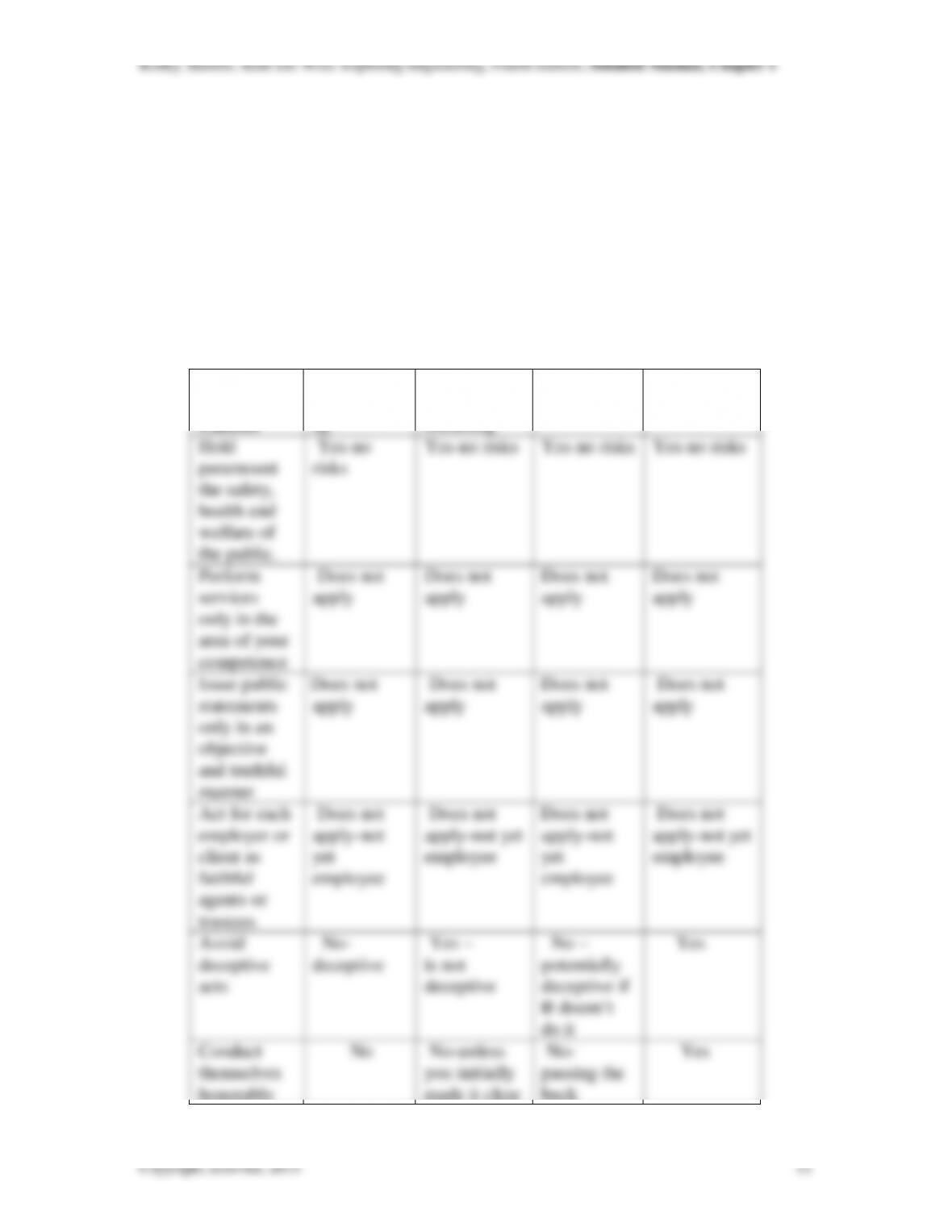
1-8) It is the last semester of your senior year and you are anxious to get an exciting
electrical engineering position in a major company. You accept a position from company
A early in the recruiting process, but continue to interview hoping for a better offer. Then
your dream job offer comes along from company B. More salary, better company, more
options for advancement, it is just what you have been looking for. What should you do?
a. Just don’t show up for work at company A.
b. Send a letter to A retracting your job acceptance with them.
c. Ask company B to contact company A and tell them you won’t be working for
them.
d. Reject the offer from company B and work for company A anyway.
Options
Canons
a.) Just
don’t show
up
b.) Send
letter
retracting
c.) Ask B
d.) Reject B
Hold
paramount
the safety,
health and
welfare of
the public.
Yes-no
risks
Yes-no risks
Yes-no risks
Yes-no risks
Perform
services
only in the
area of your
competence
Does not
apply
Does not
apply
Does not
apply
Does not
apply
Issue public
statements
only in an
objective
and truthful
manner
Does not
apply
Does not
apply
Does not
apply
Does not
apply
Act for each
employer or
client as
faithful
agents or
trustees
Does not
apply-not
yet
employee
Does not
apply-not yet
employee
Does not
apply–not
yet
employee
Does not
apply–not yet
employee
Avoid
deceptive
acts
No–
deceptive
Yes –
is not
deceptive
No –
potentially
deceptive if
B doesn’t
do it
Yes
Conduct
themselves
honorably
No
No-unless
you initially
made it clear
No–
passing the
buck
Yes

Kosky, Balmer, Keat and Wise: Exploring Engineering, Fourth Edition, Solution Manual, Chapter 1
Copyright, Elsevier, 2015
12
…
to A that you
would retract
if offered by
B
The “best” answer is to reject the offer from Company B; however, the real message here
is to be upfront with company A while provisionally accepting their offer saying you
reserve the right to go to Company B.

1-9) A company purchased an expensive computer program for your summer job with
them. The license agreement states that you can make a backup copy, but you can only
use the program on one computer at a time. Your senior design course professor would
like you to use the program for your senior design project. What should you do?
a. Give the program to your professor and let him/her worry about the consequences.
b. Copy the program and use it because no one will know.
c. Ask your supervisor at the company that purchased the program if you can use it at
school on your senior project.
d. Ask your professor to contact the company and ask for permission to use the
program at school.
Options
Canons
a.) Give to
Prof
b.) Copy and
use
c.) Ask
supervisor
d.) Ask Prof
to contact
Hold
paramount
the safety,
health and
welfare of
the public.
Yes- no
risk
Yes-no risk
Yes-no risk
Yes-no risk
Perform
services
only in the
area of your
competence
Does not
apply
Does not
apply
Does not
apply
Does not
apply
Issue public
statements
only in an
objective
and truthful
manner
Does not
apply
Does not
apply
Does not
apply
Does not
apply
Act for each
employer or
client as
faithful
agents or
trustees
No-cheats
company
No– cheats
company
Yes
Yes
Avoid
deceptive
acts
No – is
deceptive
No – is
deceptive
Yes
Yes
Conduct
themselves
honorably
No
No
Yes
Yes
You need to do c) and d).