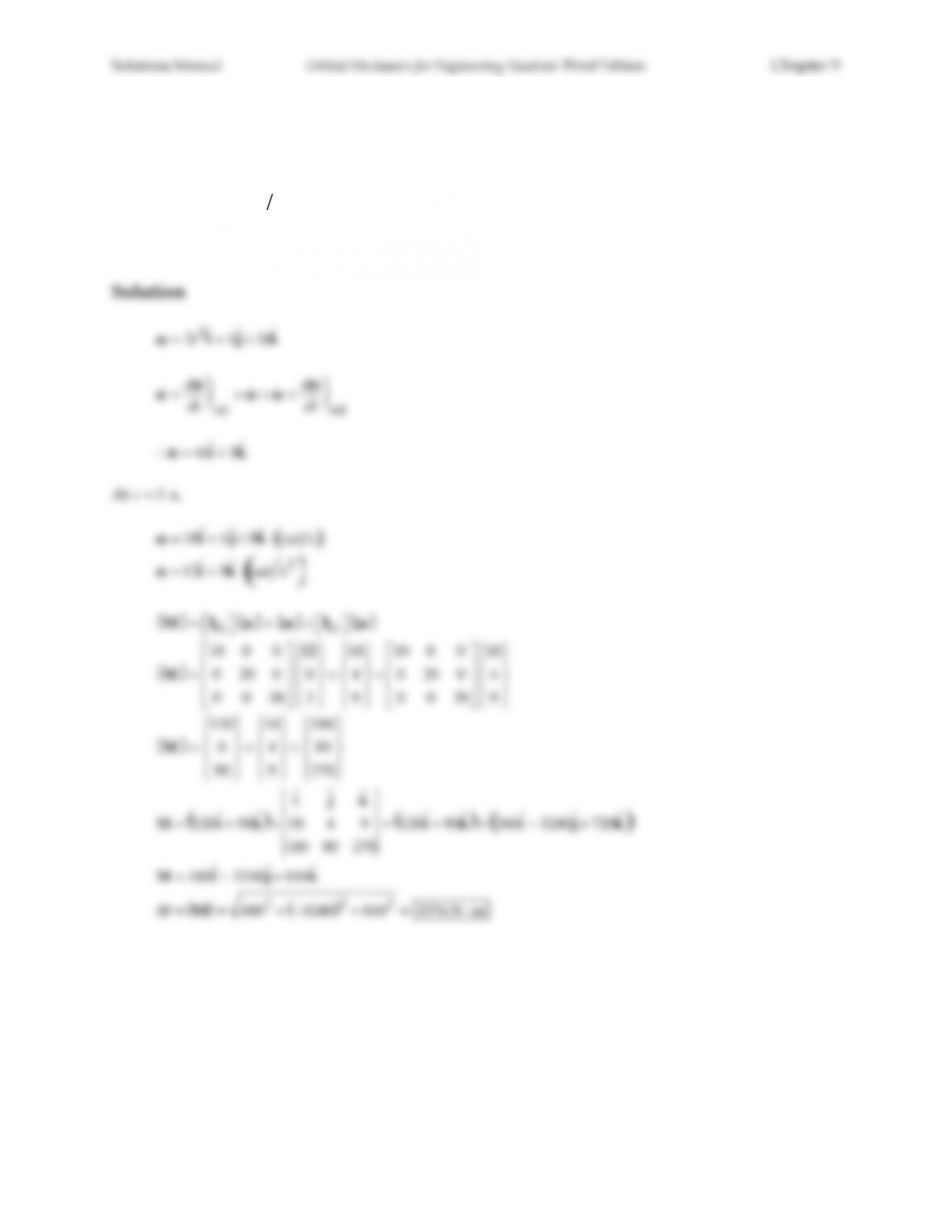
Problem 9.13 Relative to a body-fixed xyz frame
IG
10 0 0
0 20 0
0 0 30
kg m2
and
2t2ˆ
i4ˆ
j3tˆ
k rad s
, where t is the time in seconds. Calculate the magnitude of the net moment
about the center of mass G at
t3 s
.
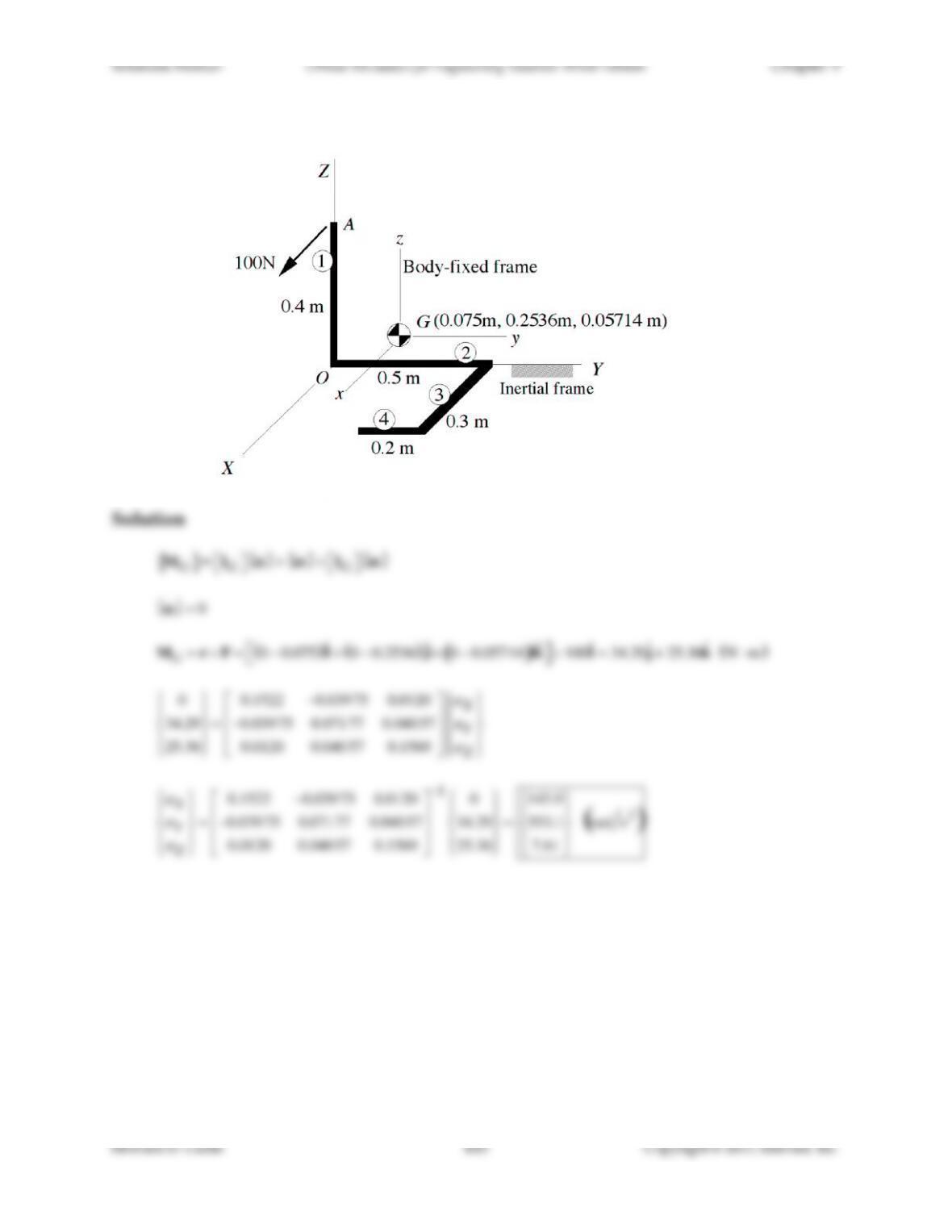
Problem 9.14 In Example 9.11, the system is at rest when a 100 N force is applied to point A as shown.
Calculate the inertial components of angular acceleration at that instant.
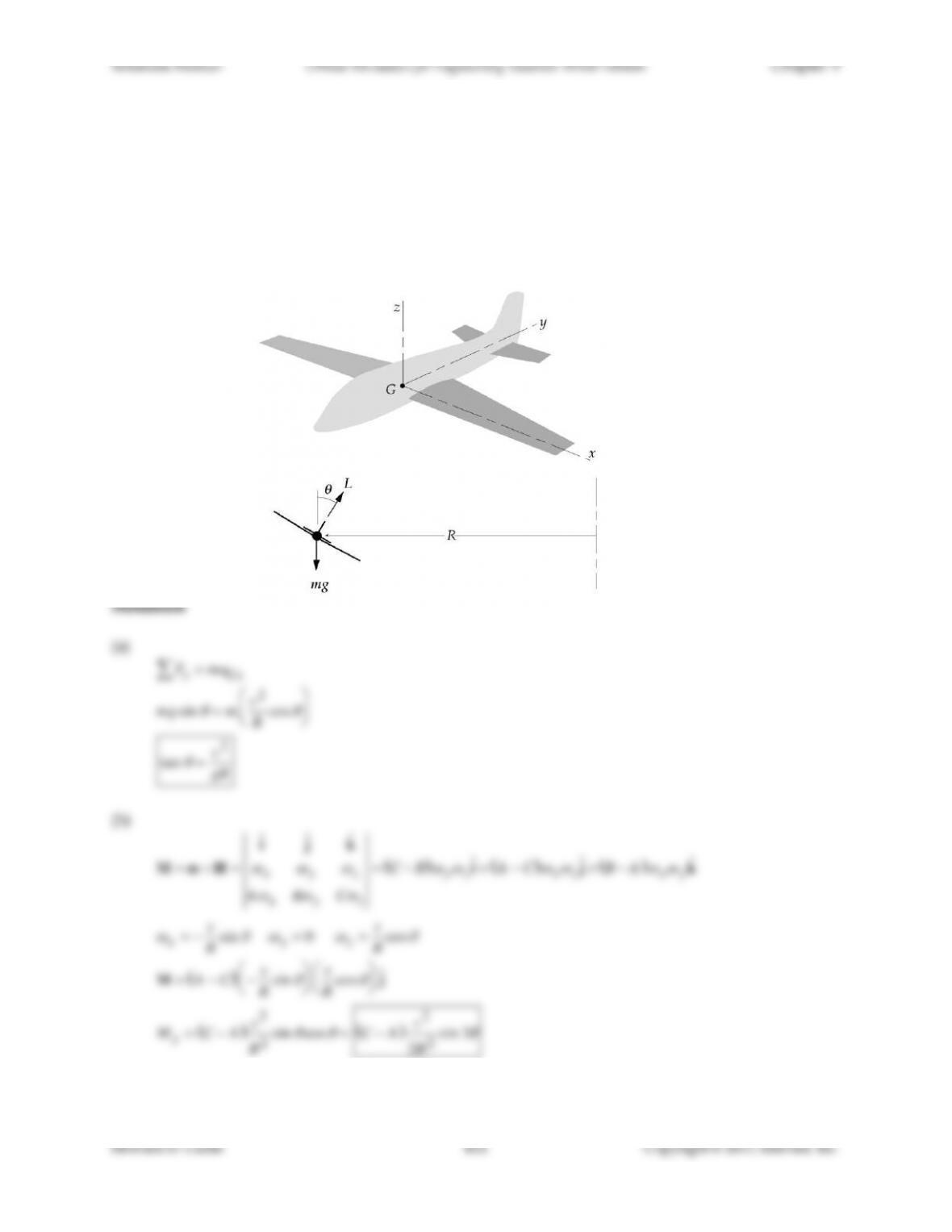
Problem 9.15 The body-fixed xyz axes pass through the center of mass G of the airplane and are the
principal axes of inertia. The moments of inertia about these axes are A, B and C, respectively. The
airplane is in a level turn of radius R with a speed v.
(a) Calculate the bank angle
.
(b) Use Euler’s equations to calculate the rolling moment
My
that must be applied by the
aerodynamic surfaces.
R2sin
2R2sin 2
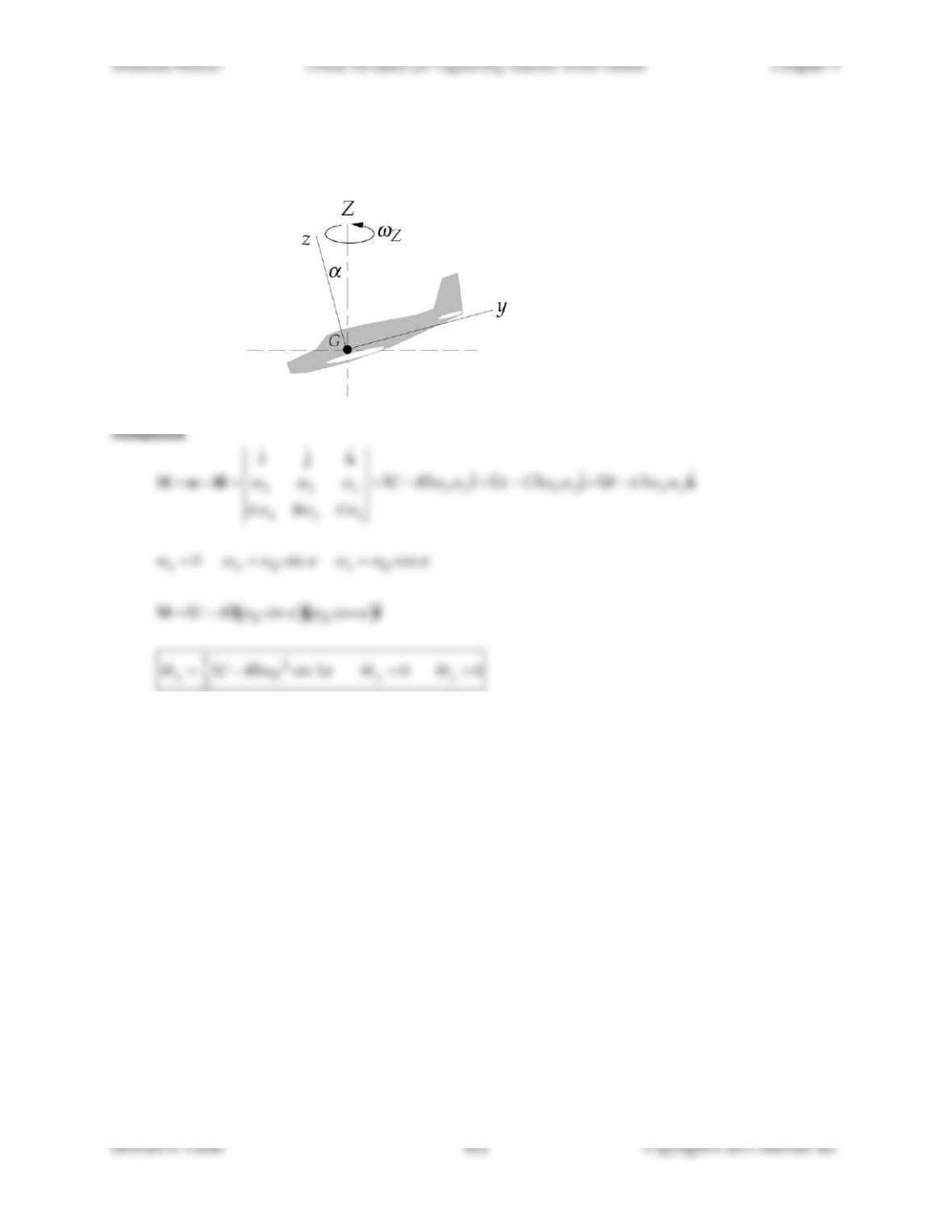
Problem 9.16 The airplane in Problem 9.15 is spinning with an angular velocity
Z
about the vertical
Z axis. The nose is pitched down at the angle
. What external moments must accompany this
maneuver?
2CB
Z2sin 2
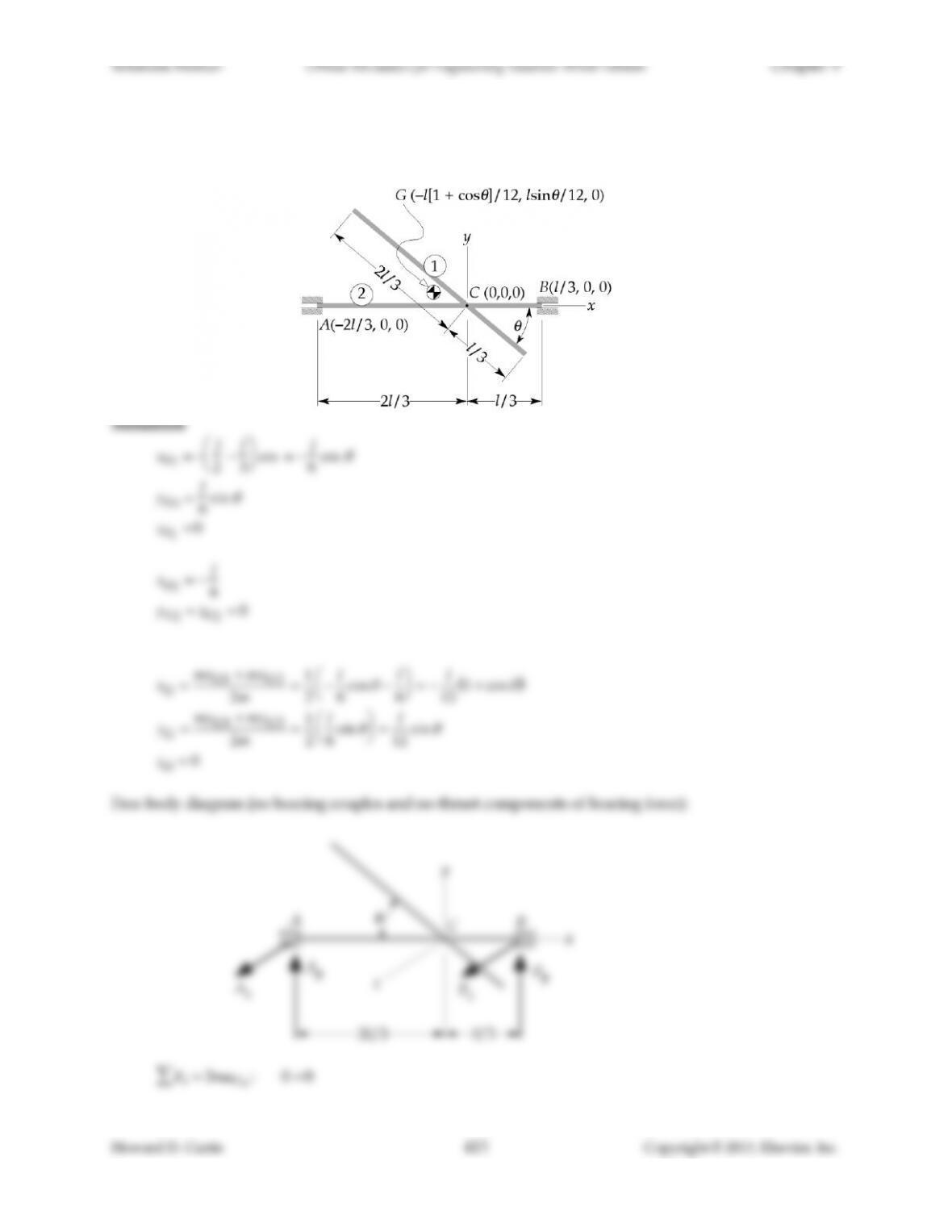
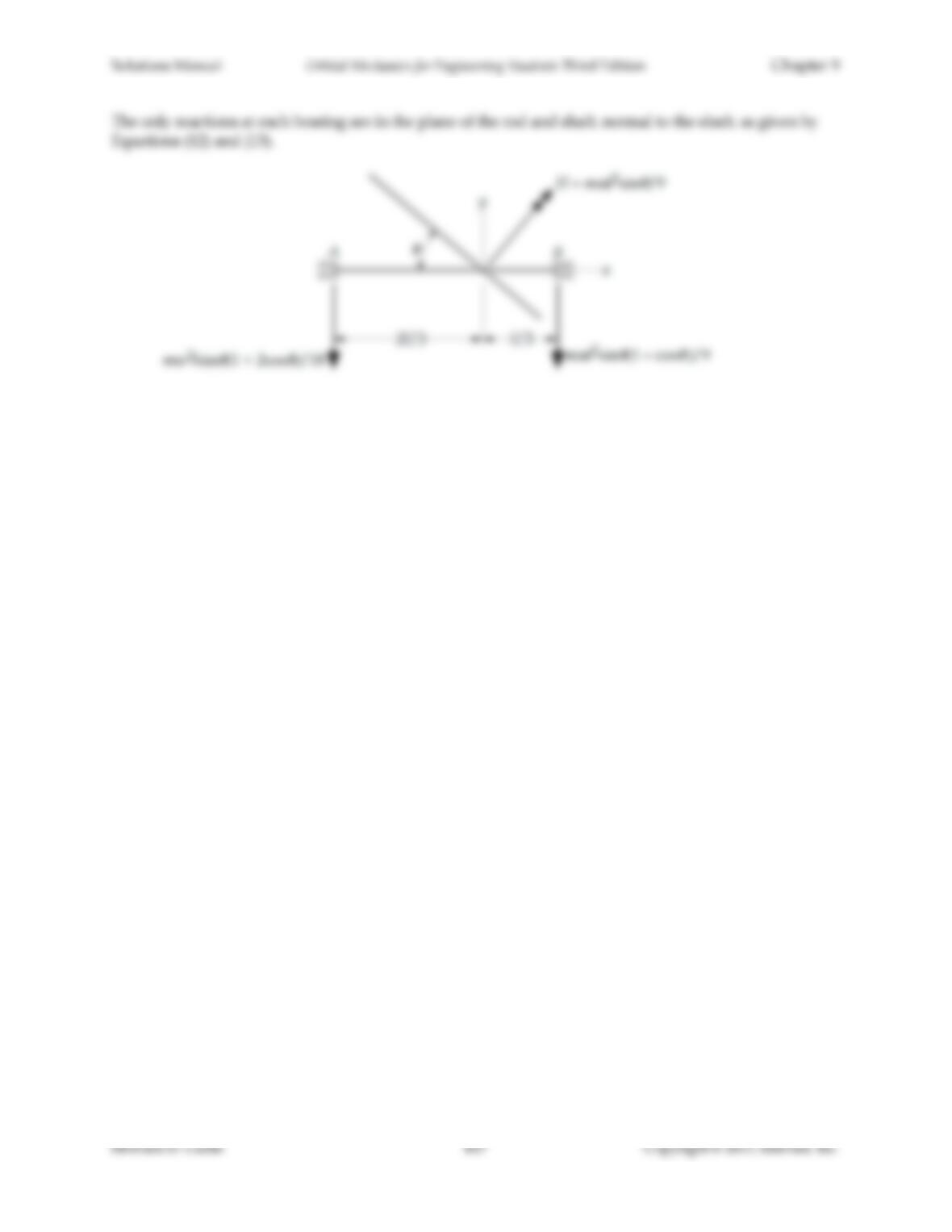
Problem 9.17 Two identical slender rods of mass m and length l are rigidly joined together at an angle
at point C, their 2/3 point. Determine the bearing reactions at A and B if the shaft rotates at a constant
angular velocity
. Neglect gravity and assume that the only bearing forces are normal to rod AB.
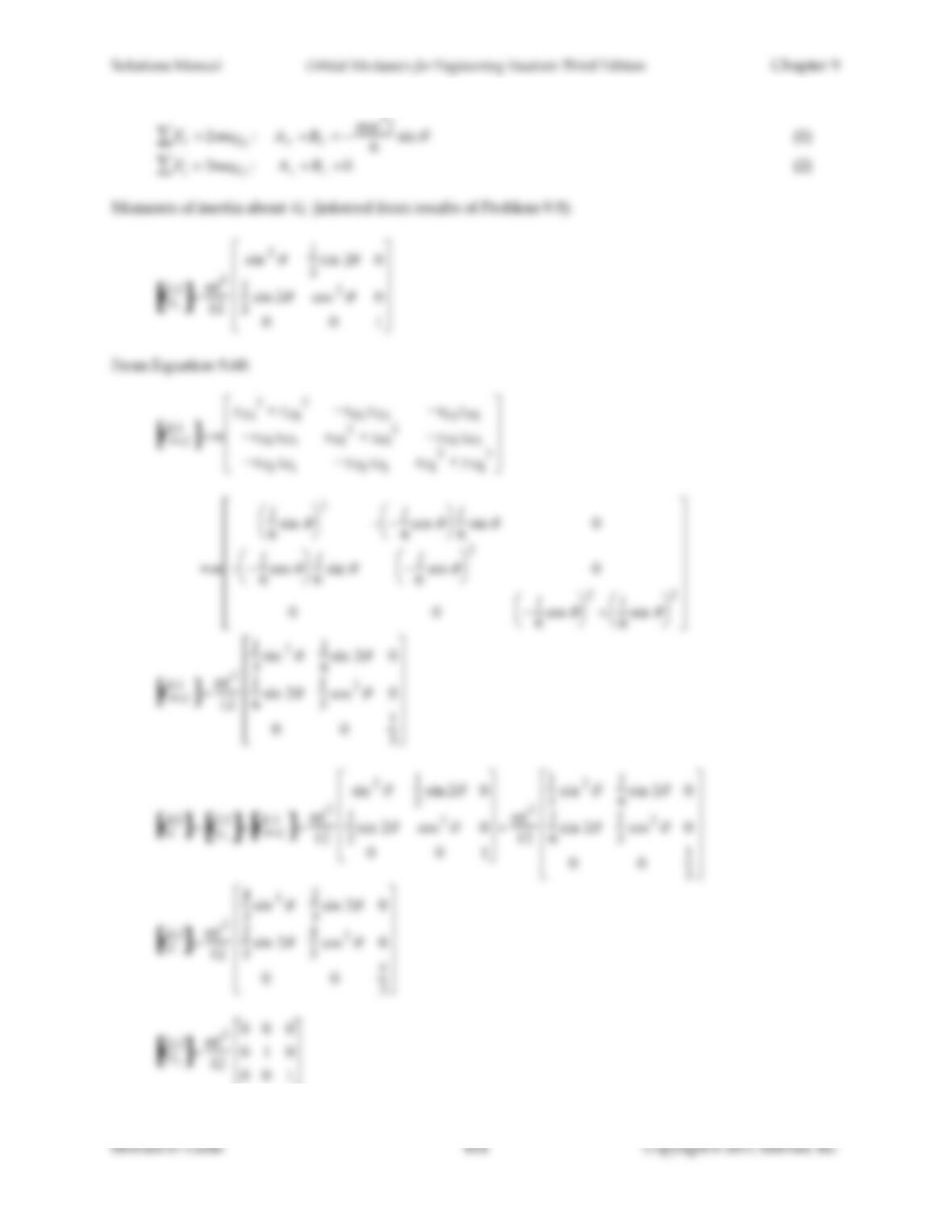
F
y2maGy
: AyBy m
2l
6sin
(1)
F
z2maGz
: AzBz0
(2)
Moments of inertia about
G
1
(inferred from results of Problem 9.9):
IG1
1
ml2
12
sin 2
1
2sin
0
1
2sin
cos 2
0
0 0 1
From Equation 9.60:
Im
1
C
m
yG1
2zG1
2xG1yG1xG1zG1
xG1yG1xG12zG12yG1zG1
xG1zG1yG1zG1xG1
2yG1
2
m
l
6sin
2
l
6cos
l
6sin
0
l
6cos
l
6sin
l
6cos
2
0
0 0 l
6cos
2
l
6sin
2
Im
1
C
ml 2
12
1
3sin 2
1
6sin 2
0
1
6sin 2
1
3cos2
0
0 0 1
3
IC
1
IG1
1
Im
1
C
ml 2
12
sin 2
1
2sin
0
1
2sin
cos2
0
0 0 1
ml 2
12
1
3sin 2
1
6sin 2
0
1
6sin 2
1
3cos2
0
0 0 1
3
IC
1
ml 2
12
4
3sin 2
2
3sin 2
0
2
3sin 2
4
3cos2
0
0 0 4
3
IG2
2
ml 2
12
0 0 0
0 1 0
0 0 1
Solutions Manual Orbital Mechanics for Engineering Students Third Edition Chapter 9
Im
2
C
m
yG2
2zG2
2xG2yG2xG2zG2
xG2yG2xG22zG22yG2zG2
xG2zG2yG2zG2xG2
2yG2
2
m
0 0 0
0l
6
2
0
0 0 l
6
2
Im
2
C
ml 2
12
0 0 0
01
30
0 0 1
3
IC
2
IG2
2
Im
2
C
ml 2
12
0 0 0
0 1 0
0 0 1
ml2
12
0 0 0
01
30
0 0 1
3
IC
2
ml 2
12
0 0 0
04
30
0 0 4
3
IC
IC
1
IC
2
ml 2
12
4
3sin2
2
3sin 2
0
2
3sin 2
4
3cos 2
0
0 0 4
3
ml2
12
0 0 0
04
30
0 0 4
3
IC
ml 2
9sin2
ml 2
18 sin 2
0
ml 2
18 sin 2
ml2
91cos2
0
0 0 2ml2
9
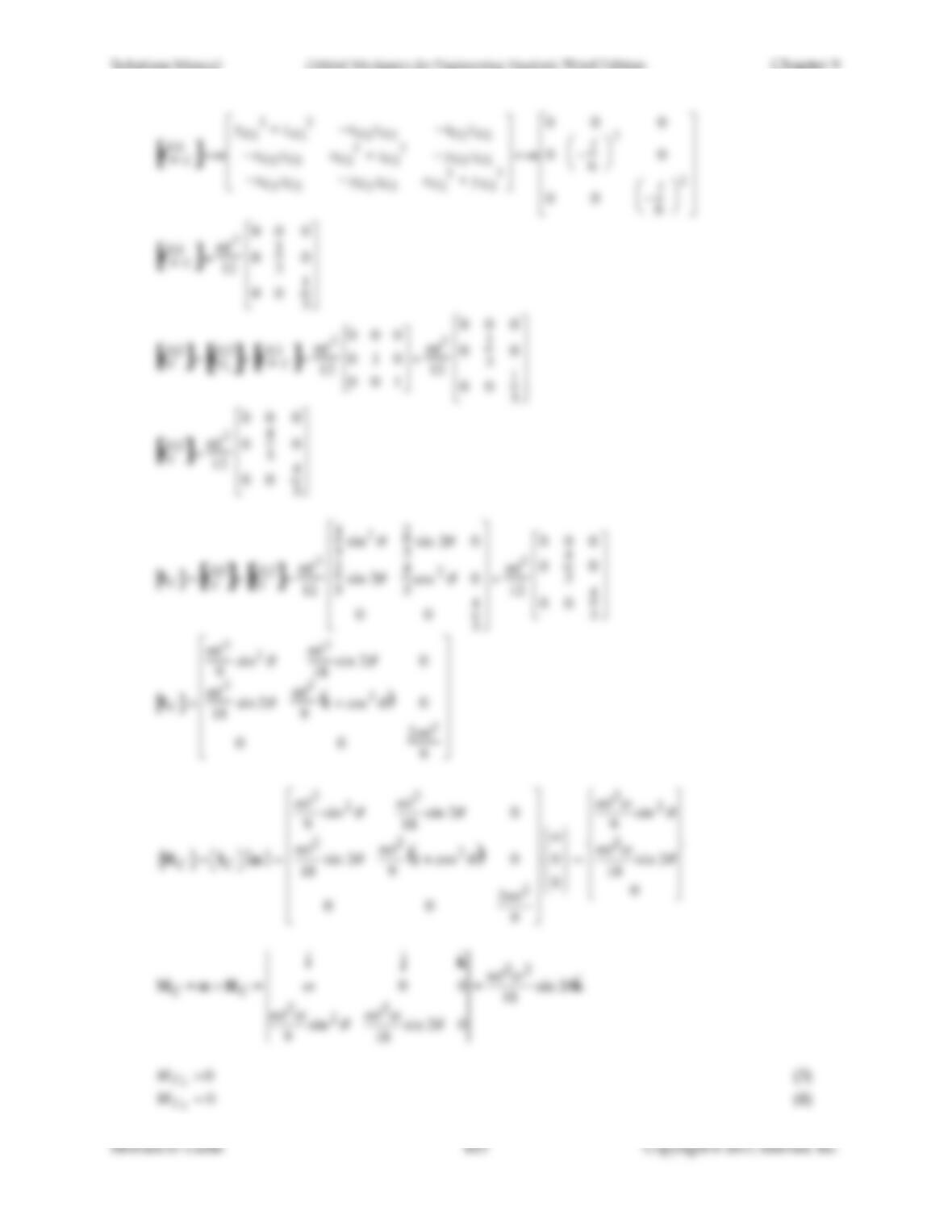
HC
IC
ml2
9sin 2
ml2
18 sin 2
0
ml2
18 sin 2
ml2
91cos2
0
0 0 2ml2
9
0
0
ml2
9sin 2
ml2
18 sin 2
0
MCHC
ˆ
iˆ
jˆ
k
0 0
ml2
9sin 2
ml2
18 sin 2
0
ml2
2
18 sin 2
ˆ
k
MCx0
(3)
MCy0
(4)
Solutions Manual Orbital Mechanics for Engineering Students Third Edition Chapter 9
Howard D. Curtis 416 Copyright © 2013, Elsevier, Inc.
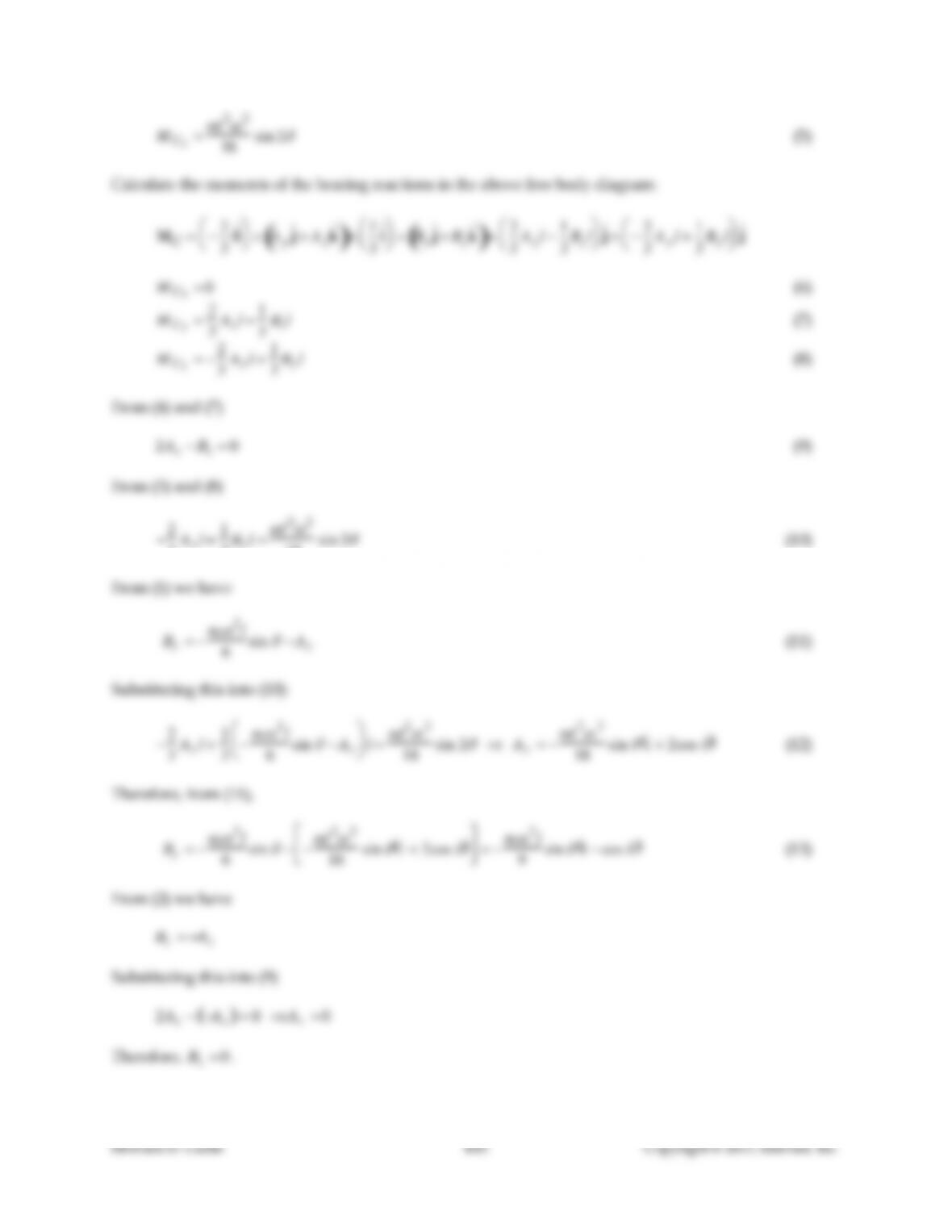
MCzml 2
2
18 sin 2
(5)
Calculate the moments of the bearing reactions in the above free body diagram:
MC 2
3lˆ
i
Ay
ˆ
jAz
ˆ
k
l
3
ˆ
i
By
ˆ
jBz
ˆ
k
2
3Azl1
3Bzl
ˆ
j 2
3Ayl1
3Byl
ˆ
j
MCx0
(6)
MCy2
3Azl1
3Bzl
(7)
MCz 2
3Ayl1
3Byl
(8)
From (4) and (7)
2AzBz0
(9)
From (5) and (8)
2
3Ayl1
3Bylml 2
2
18 sin 2
(10)
From (1) we have
By m
2l
6sin
Ay
(11)
Substituting this into (10):
2
3Ayl1
3m
2l
6sin
Ay
lml2
2
18 sin 2
Ay ml 2
2
18 sin
12cos
(12)
Therefore, from (11),
By m
2l
6sin
ml 2
2
18 sin
12cos
m
2l
9sin
1cos
(13)
From (2) we have
Bz Az
Substituting this into (9)
2Az Az
0 Az0
Therefore,
Bz0
.
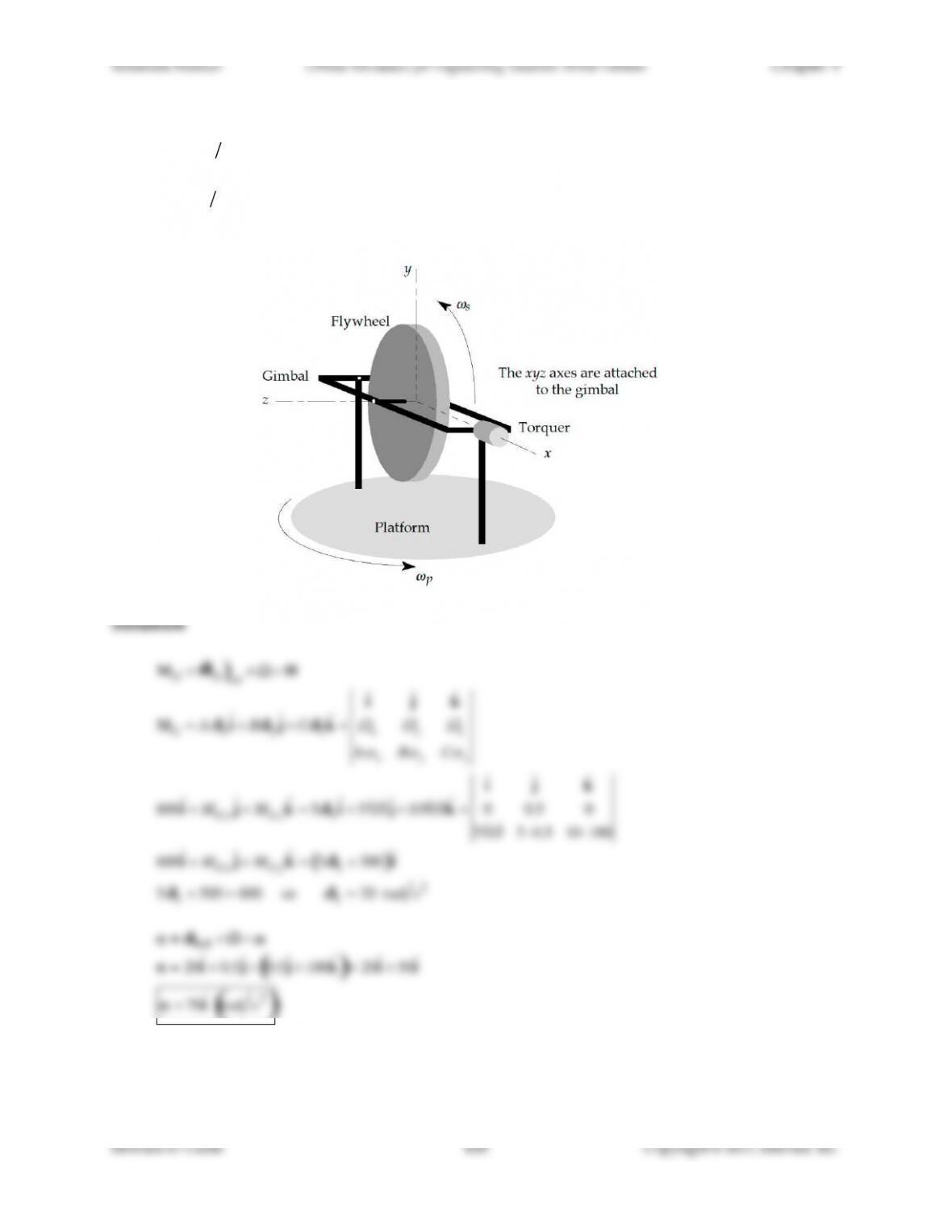
Problem 9.18 The flywheel (A = B = 5 kg-m2, C = 10 kg-m2) spins at a constant angular velocity of
s100ˆ
k rad s
. It is supported by a massless gimbal that is mounted on the platform as shown. The
gimbal is initially stationary relative to the platform, which rotates with a constant angular velocity of
p0.5ˆ
j rad s
. What will be the gimbal’s angular acceleration when the torquer applies a torque of
600ˆ
i N-m
to the flywheel?
70ˆ
i rad s2
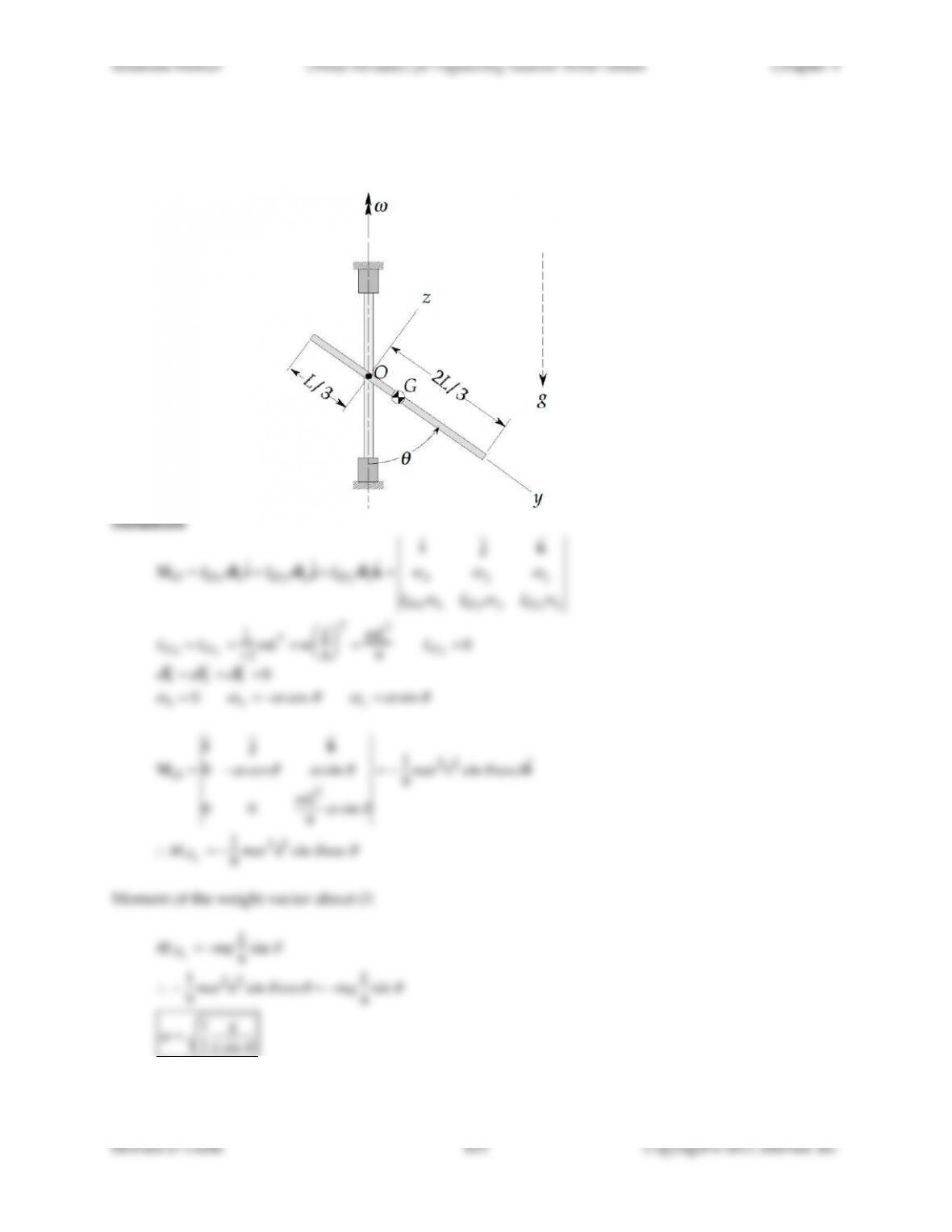
Problem 9.19 A uniform slender rod of length L and mass m is attached by a smooth pin at O to a
vertical shaft that rotates at constant angular velocity
. Use Euler’s equations and the body frame
shown to calculate
at the instant shown.
3
2
g
Lsin
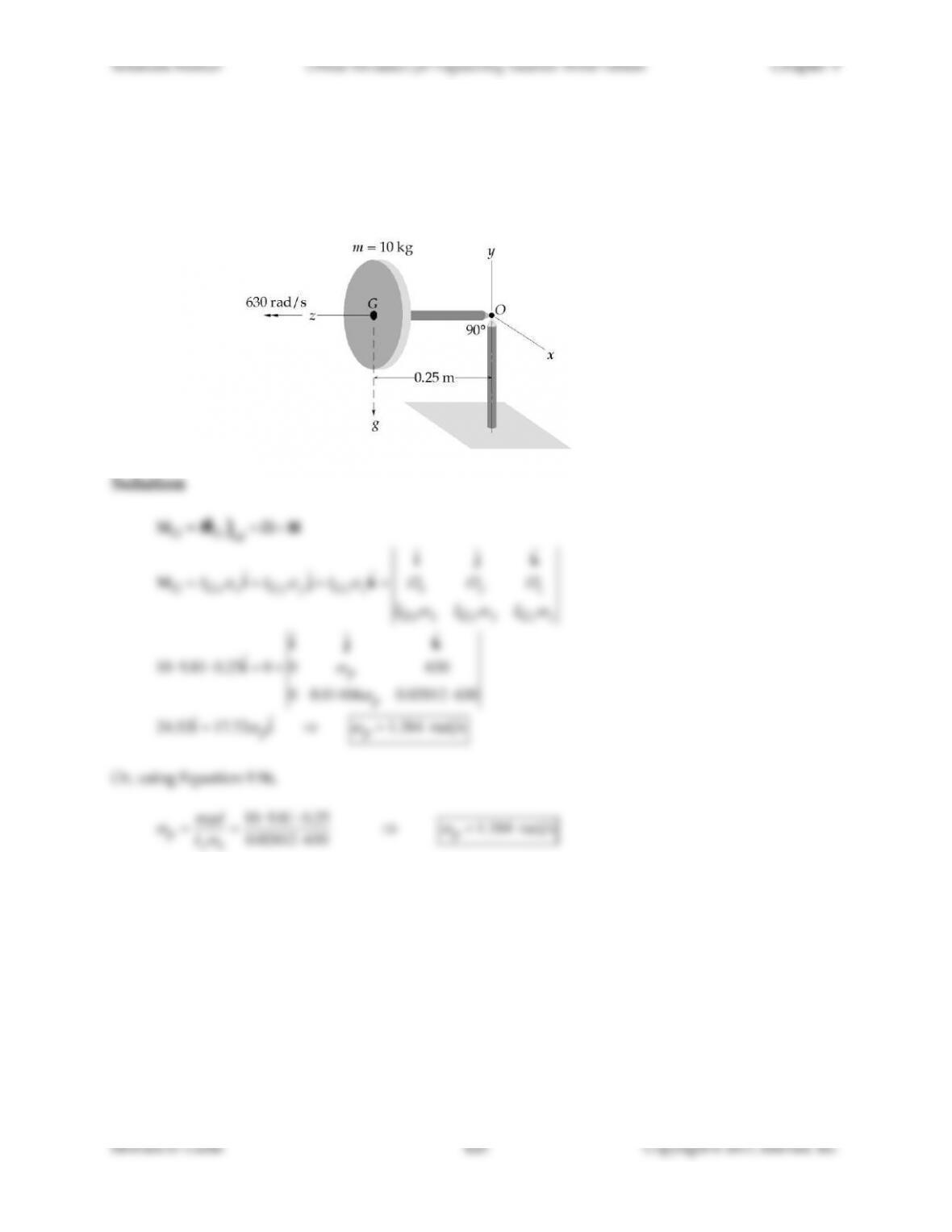
Problem 9.20 A uniform, thin circular disk of mass 10 kg spins at a constant angular velocity of 630
rad/s about axis OG, which is normal to the disk, and pivots about the frictionless ball joint at O.
Neglecting the mass of the shaft OG, determine the rate of precession if OG remains horizontal as shown.
Gravity acts down, as shown. G is the center of mass, and the y-axis remains fixed in space. The moments
of inertia about G are
IGz0.02812 kg m2
, and
IGxIGy0.01406 kg m2
.
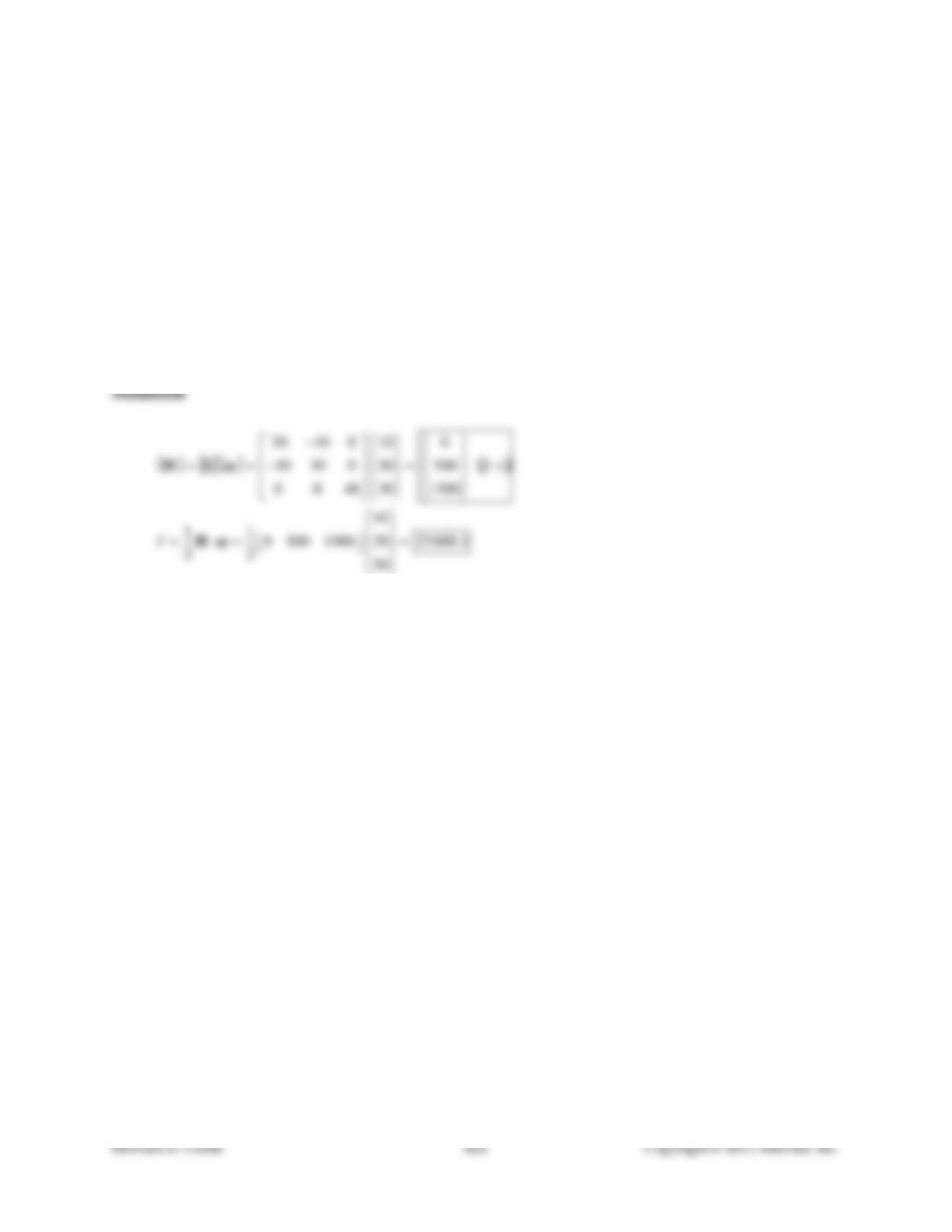
pmgd
Iz
s
0.02812630
p1.384 rad s
Solutions Manual Orbital Mechanics for Engineering Students Third Edition Chapter 9
Problem 9.21 Consider a rigid body experiencing rotational motion associated with angular velocity
.
The inertia tensor (relative to body-fixed axes though the center of mass G) is
20 10 0
10 30 0
0 0 40
kg m2
and
10ˆ
i20ˆ
j30ˆ
k rad/ sec
. Calculate
(a) the angular momentum
HG
, and
(b) the rotational kinetic energy (about G).
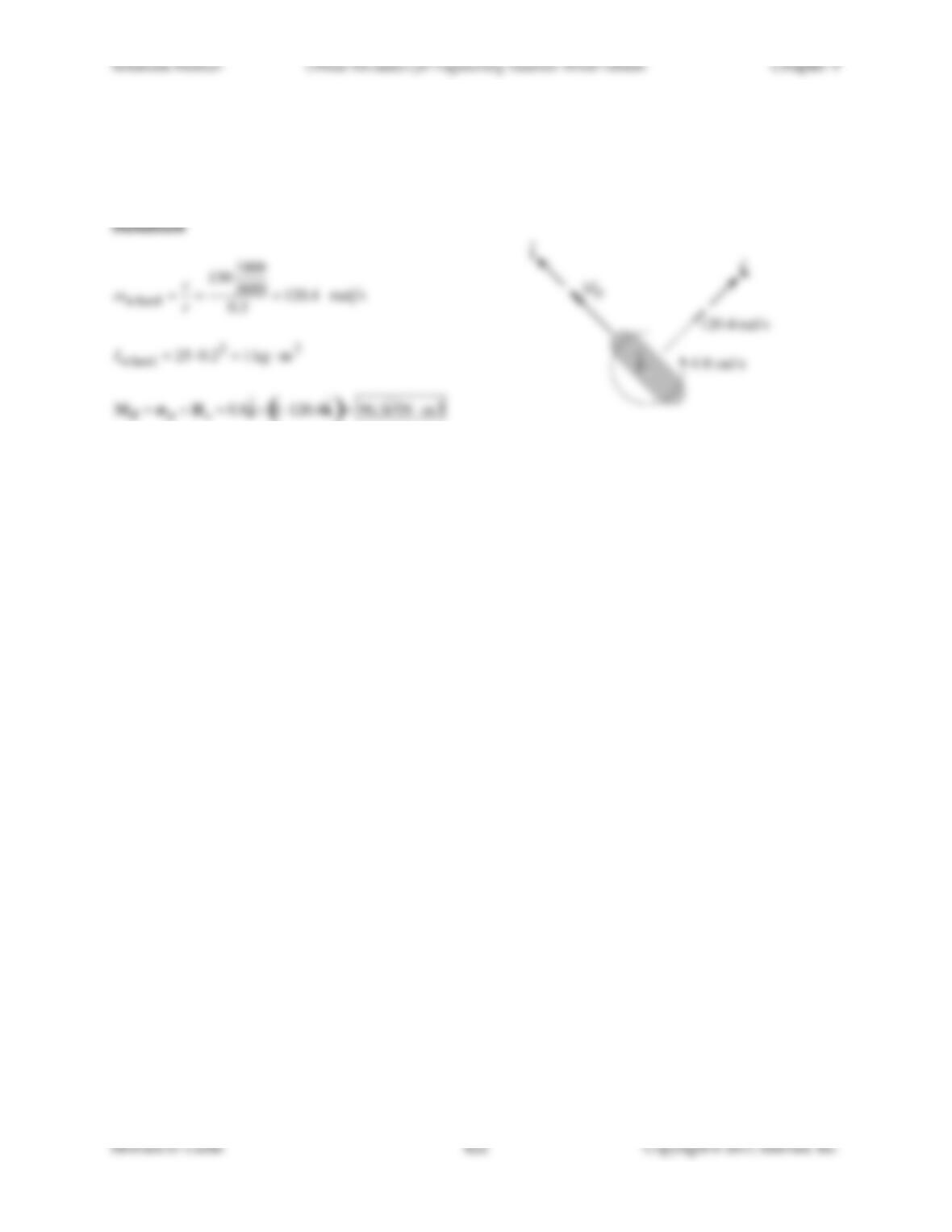
T1
2H1
20 500 1500
10
20
30
23000 J
Problem 9.22 At the end of its take-off run, an airplane with retractable landing gear leaves the
runway with a speed of 130 km/hr. The gear rotate into the wing with an angular velocity of 0.8 rad/s
with the wheels still spinning. Calculate the gyroscopic bending moment in the wheel bearing B. The
wheels have a diameter of 0.6 m, a mass of 25 kg and a radius of gyration of 0.2 m.
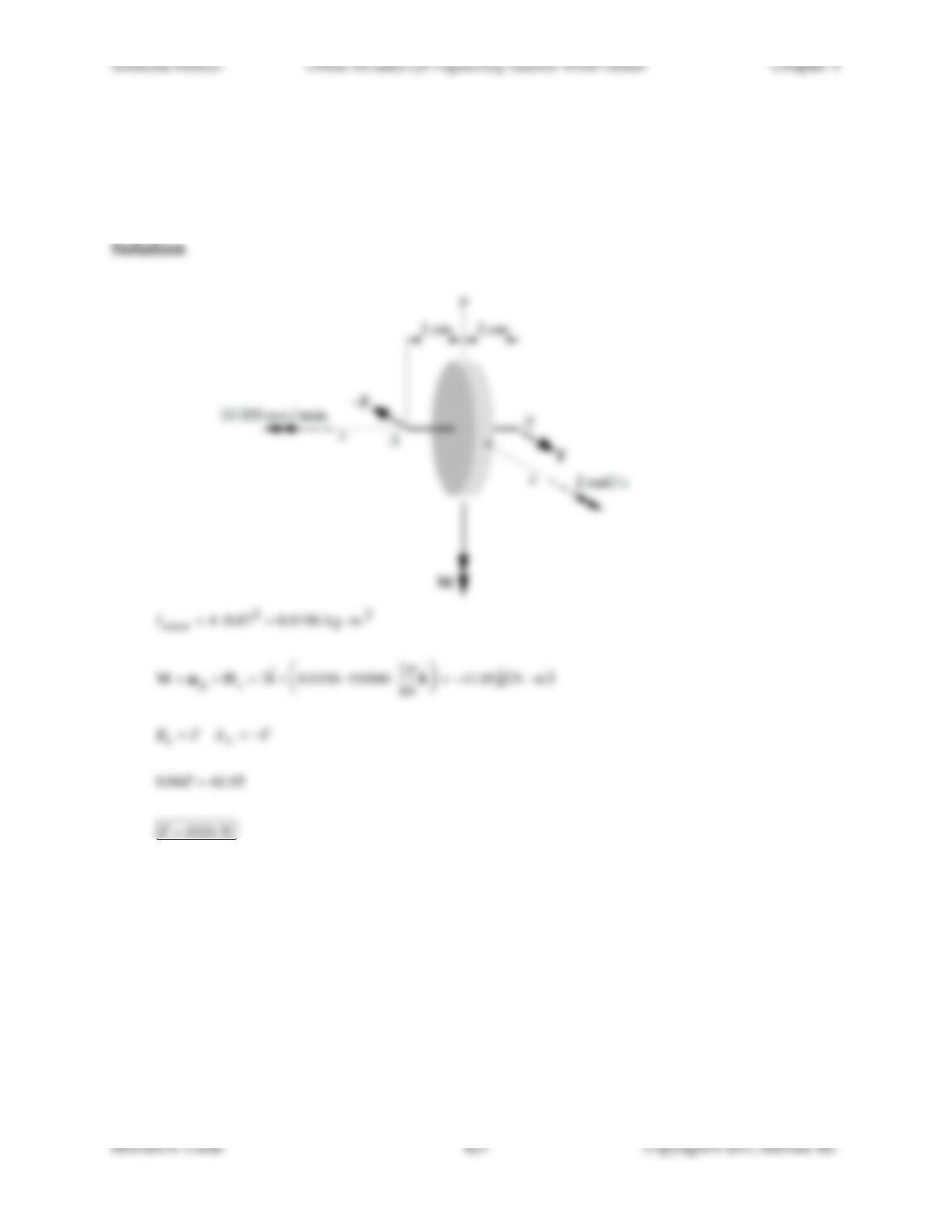
wheel v
r
130 1000
3600
0.3 120.4 rad s
Iwheel 25 0.221 kg m2
MBpHs0.8ˆ
j1120.4 ˆ
k
96.3ˆ
i N m
Problem 9.23 The gyro rotor, including shaft AB, has a mass of 4 kg and a radius of gyration 7 cm
around AB. The rotor spins at 10 000 revolutions per minute while also being forced to rotate around the
gimbal axis CC at 2 radians per second. What are the transverse forces exerted on the shaft at A and B?
Neglect gravity.
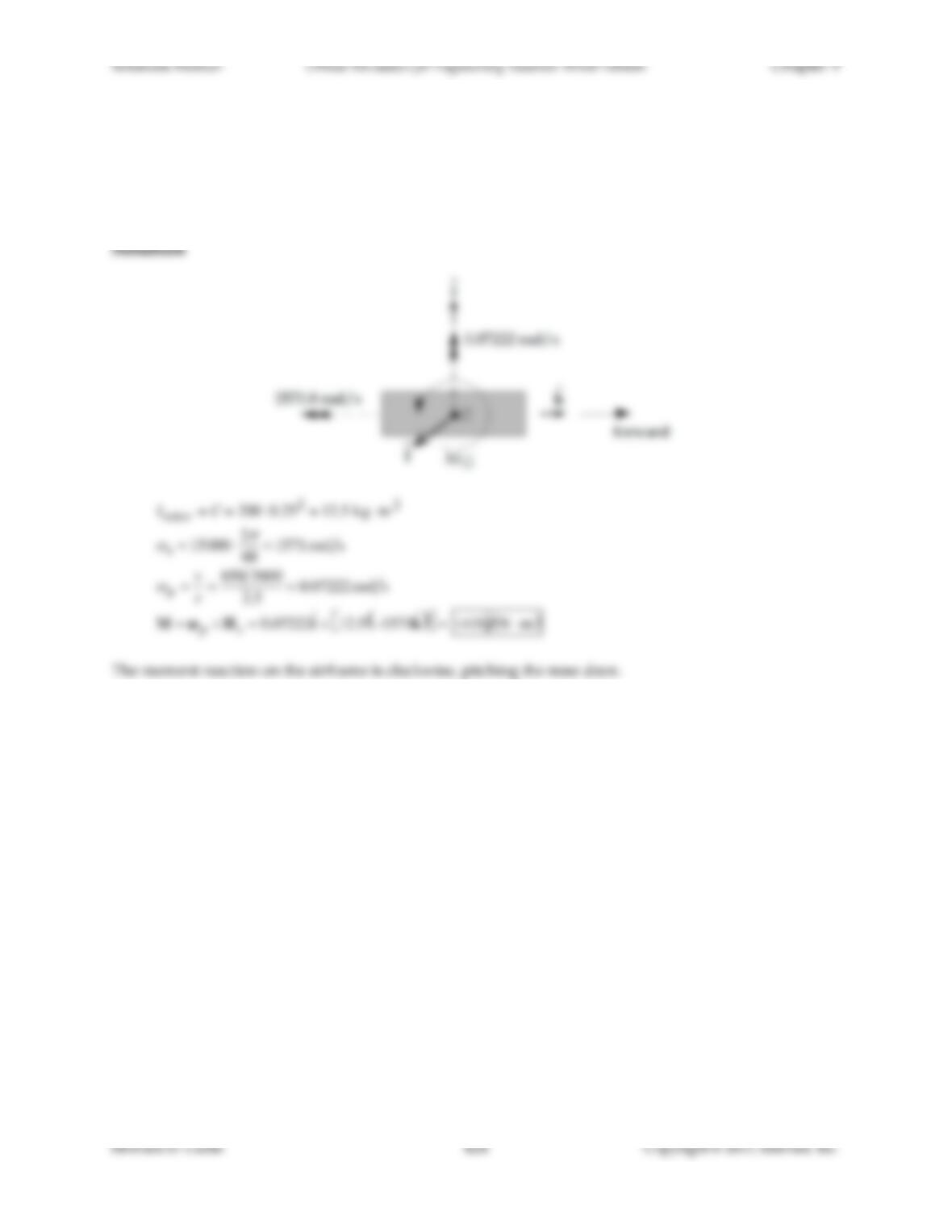
0.04F41.05
F1026 N
Problem 9.24 A jet aircraft is making a level, 2.5 km radius turn to the left at a speed of 650 km/hr. The
rotor of the turbojet engine has a mass of 200 kg, a radius of gyration of 0.25 m and rotates at 15 000
revolutions per minute clockwise as viewed from the front of the airplane. Calculate the gyroscopic
moment that the engine exerts on the airframe and specify whether it tends to pitch the nose up or down.
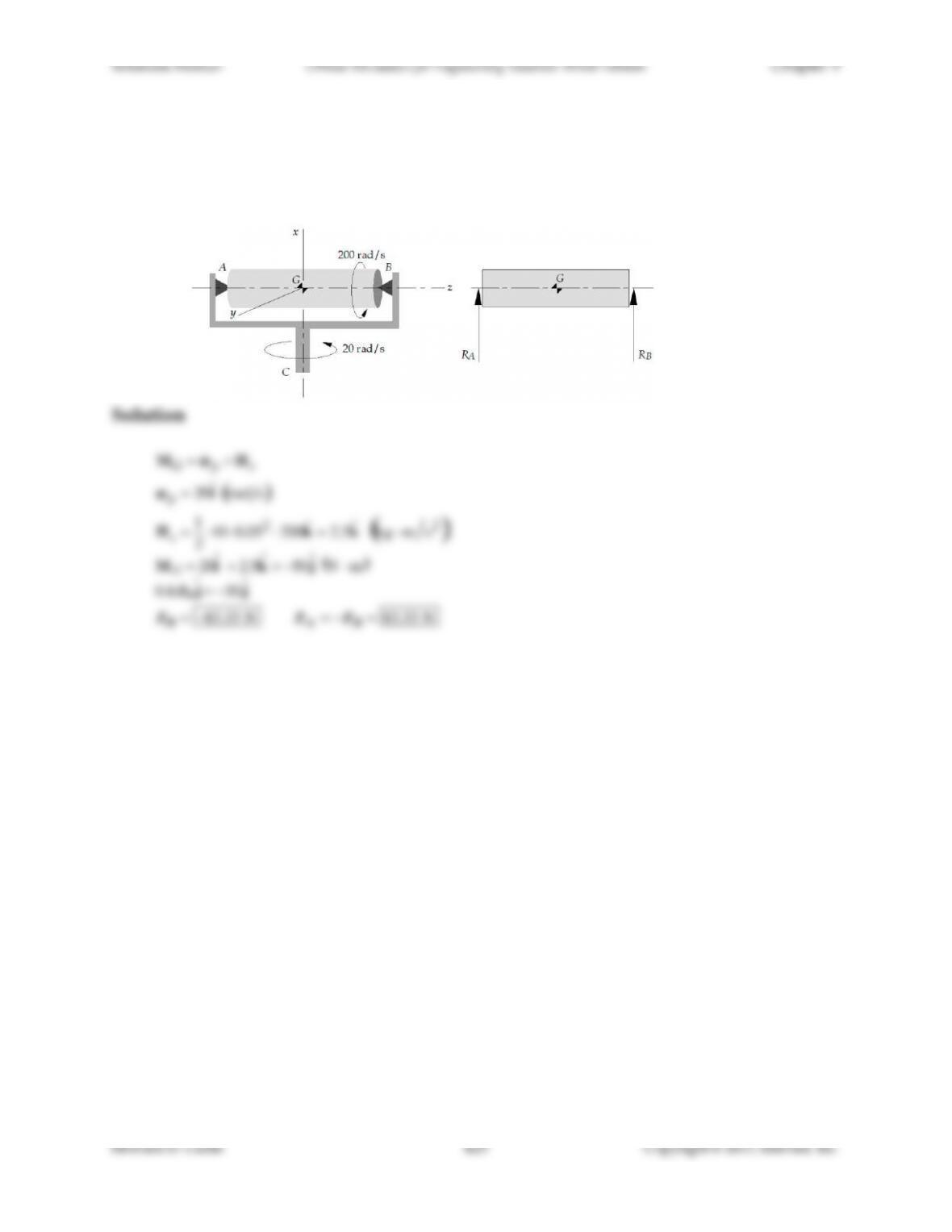
Problem 9.25 cylindrical rotor of mass 10 kg, radius 0.05 m and length 0.60 m is simply supported at
each end in a cradle that rotates at a constant 20 rad/s counterclockwise as viewed from above. Relative
to the cradle, the rotor spins at 200 rad/s counterclockwise as viewed from the right (from B towards A).
Assuming there is no gravity, calculate the bearing reactions
RA
and
RB
. Use the co-moving xyz frame
shown, which is attached to the cradle but not to the rotor.
Solutions Manual Orbital Mechanics for Engineering Students Third Edition Chapter 9
Problem 9.26 The Euler angles of a rigid body are
50
,
25
and
70
. Calculate the angle (a
positive number) between the body-fixed x axis and the inertial X axis.
0.4326
xX cos10.4326
115.6