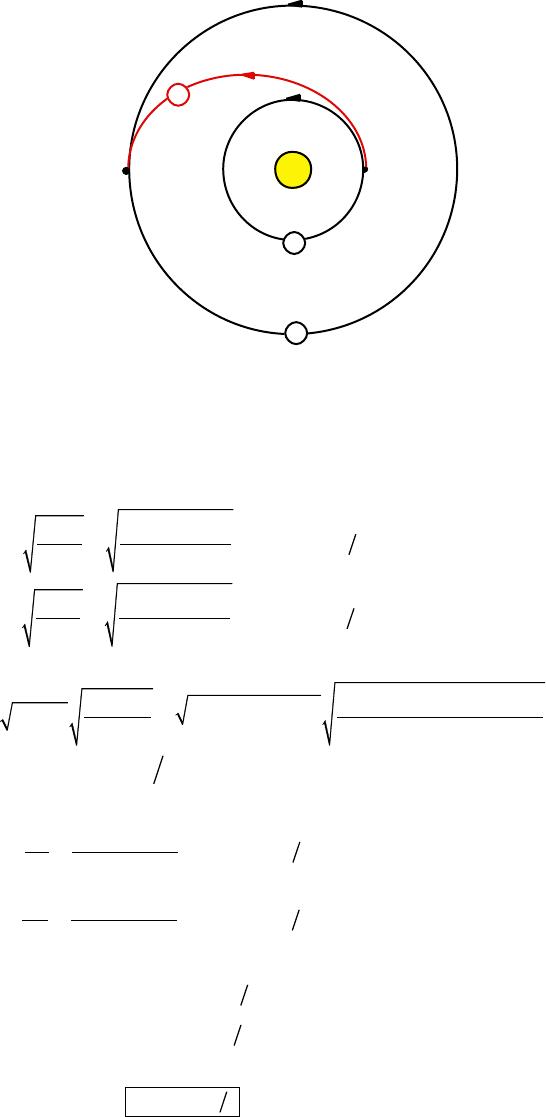
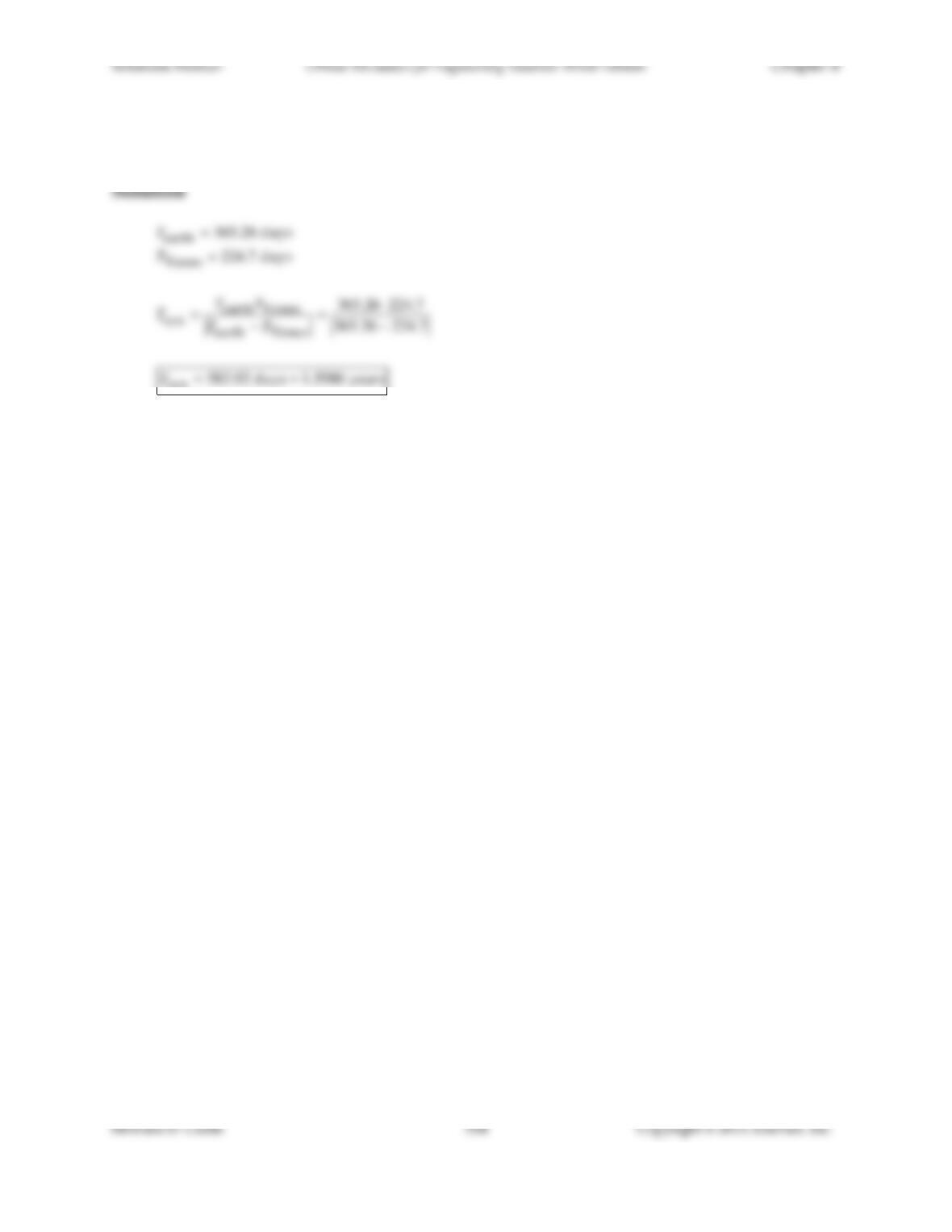
Problem 8.1 Find the total delta–v required for a Hohmann transfer from earth orbit to Saturn’s orbit.

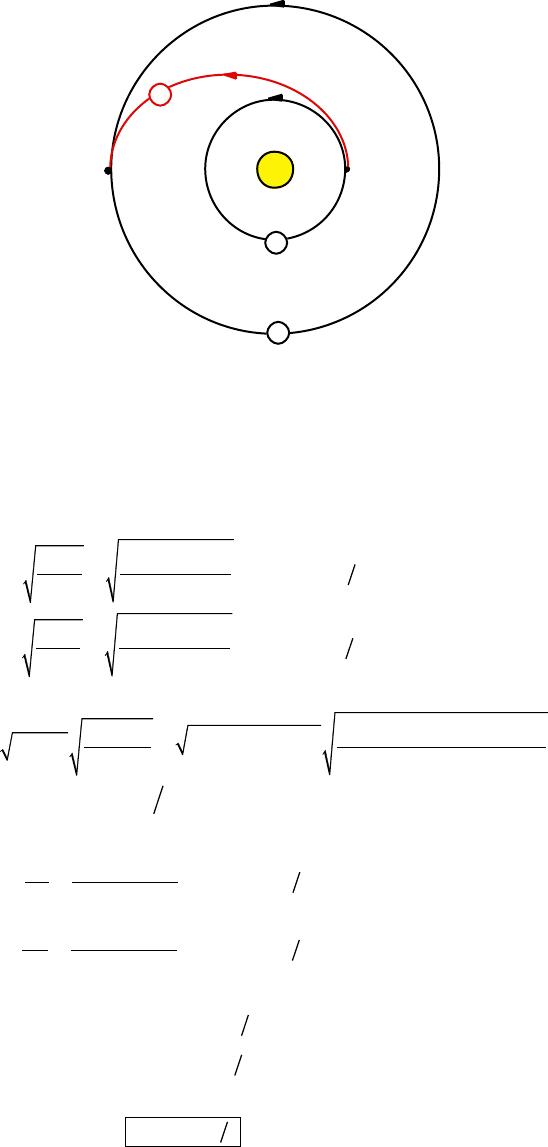
Problem 8.2 Find the total delta-v required for a Hohmann transfer from Mars’ orbit to Jupiter’s orbit.
1
2
3
Sun
Mars orbit
Jupiter orbit
A
B
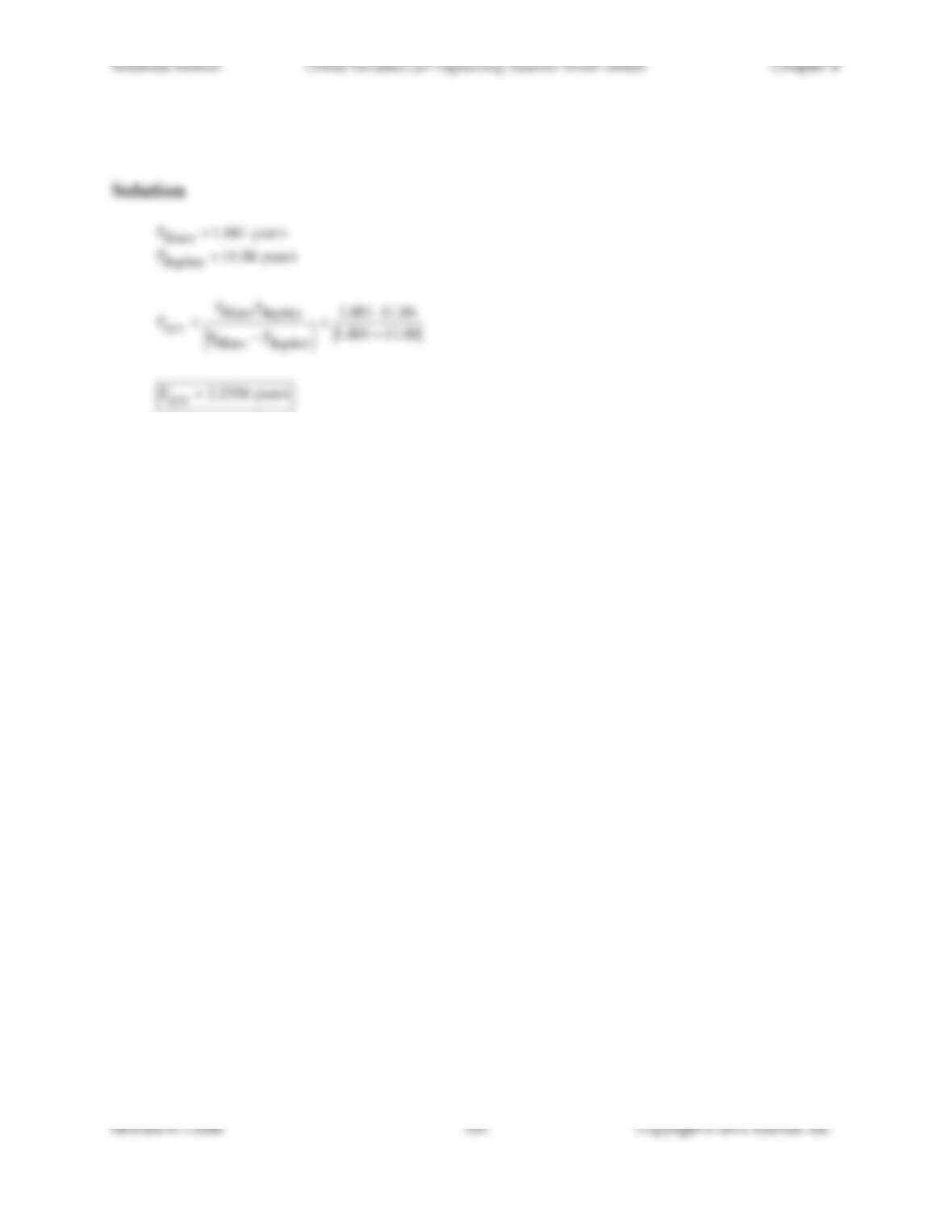
Problem 8.3 Calculate the synodic period of Venus relative to the earth.

Problem 8.4 Calculate the synodic period of Jupiter relative to Mars.
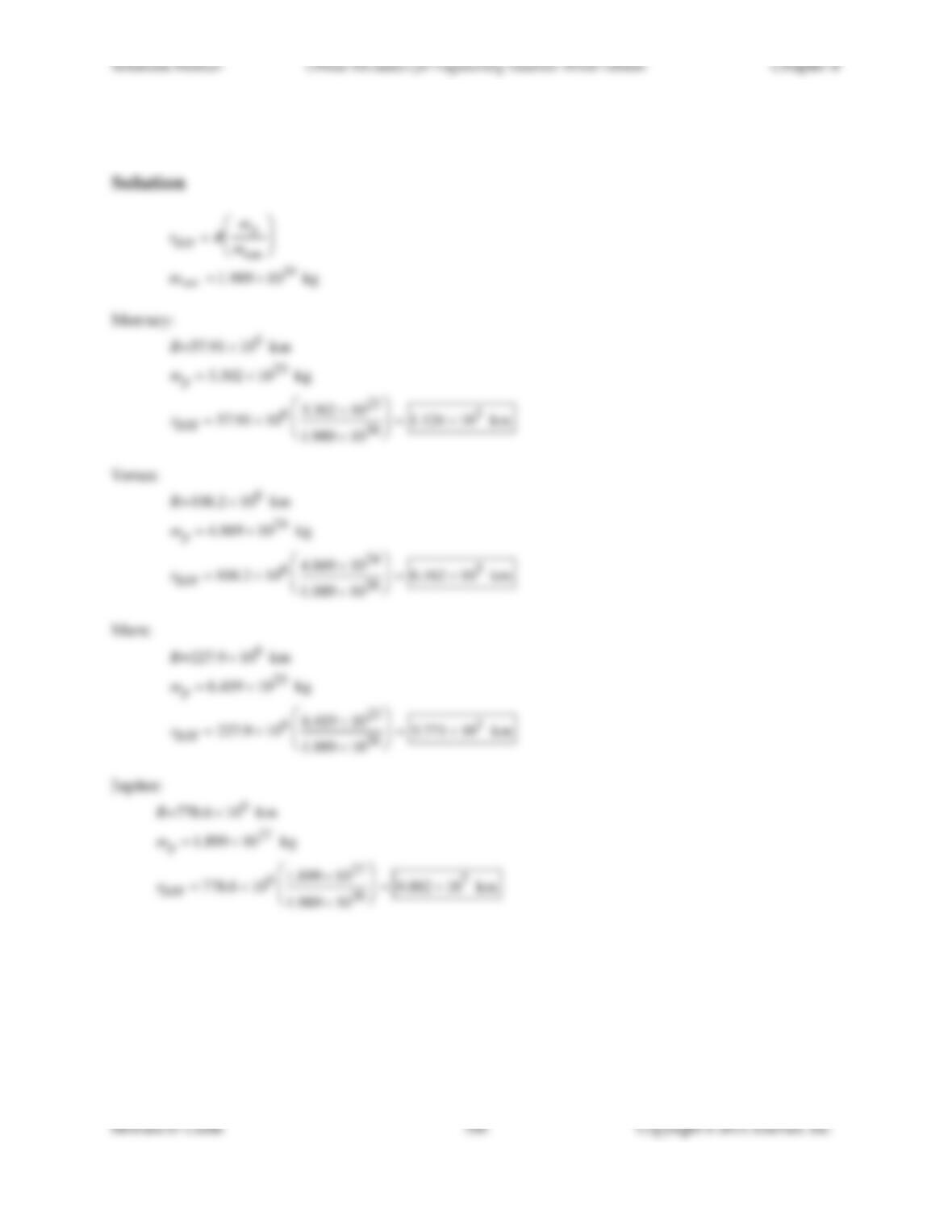

Problem 8.5 Calculate the radius of the spheres of influence of Mercury, Venus, Mars and Jupiter.
Solutions Manual Orbital Mechanics for Engineering Students Third Edition Chapter 8
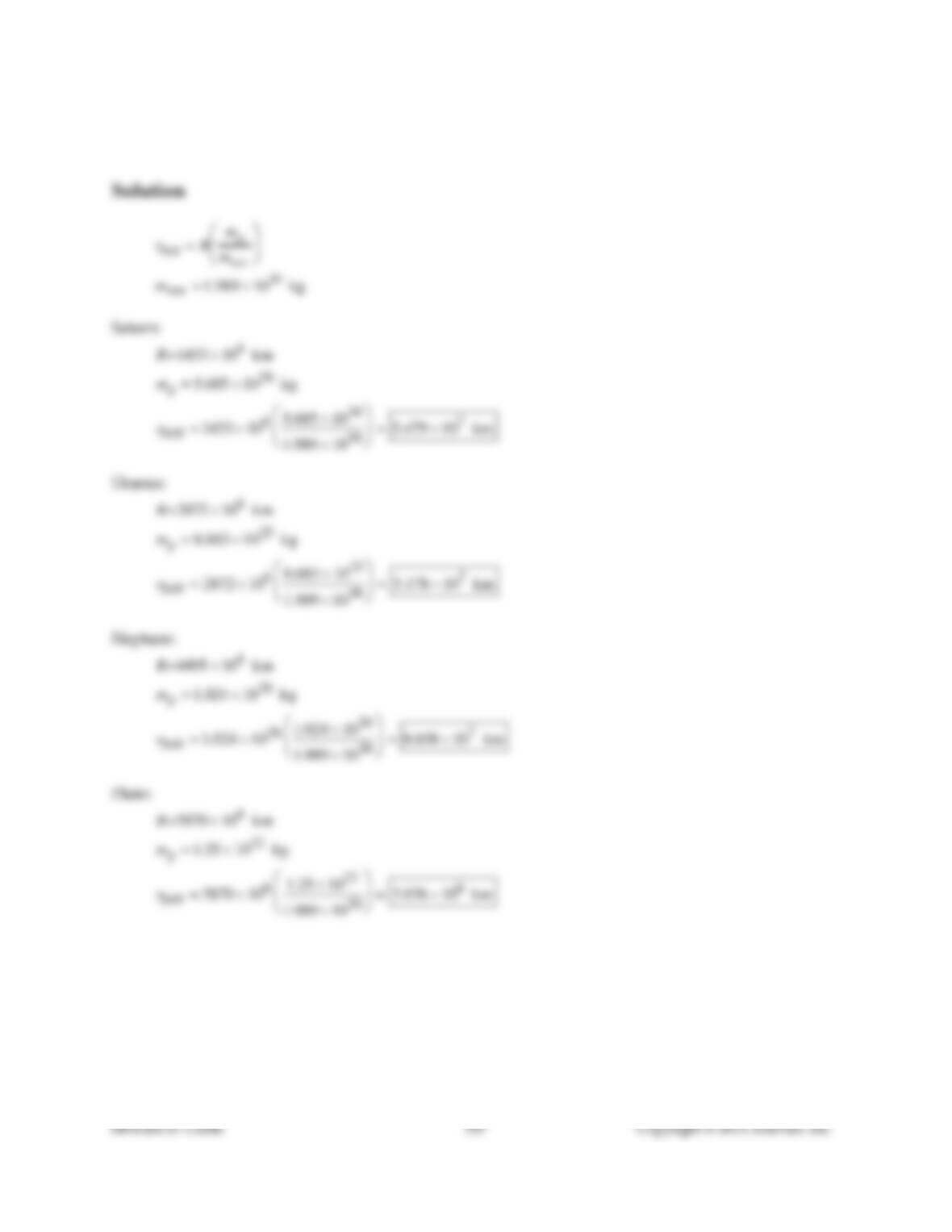
Problem 8.4 Calculate the radius of the spheres of influence of Saturn, Uranus and Neptune.
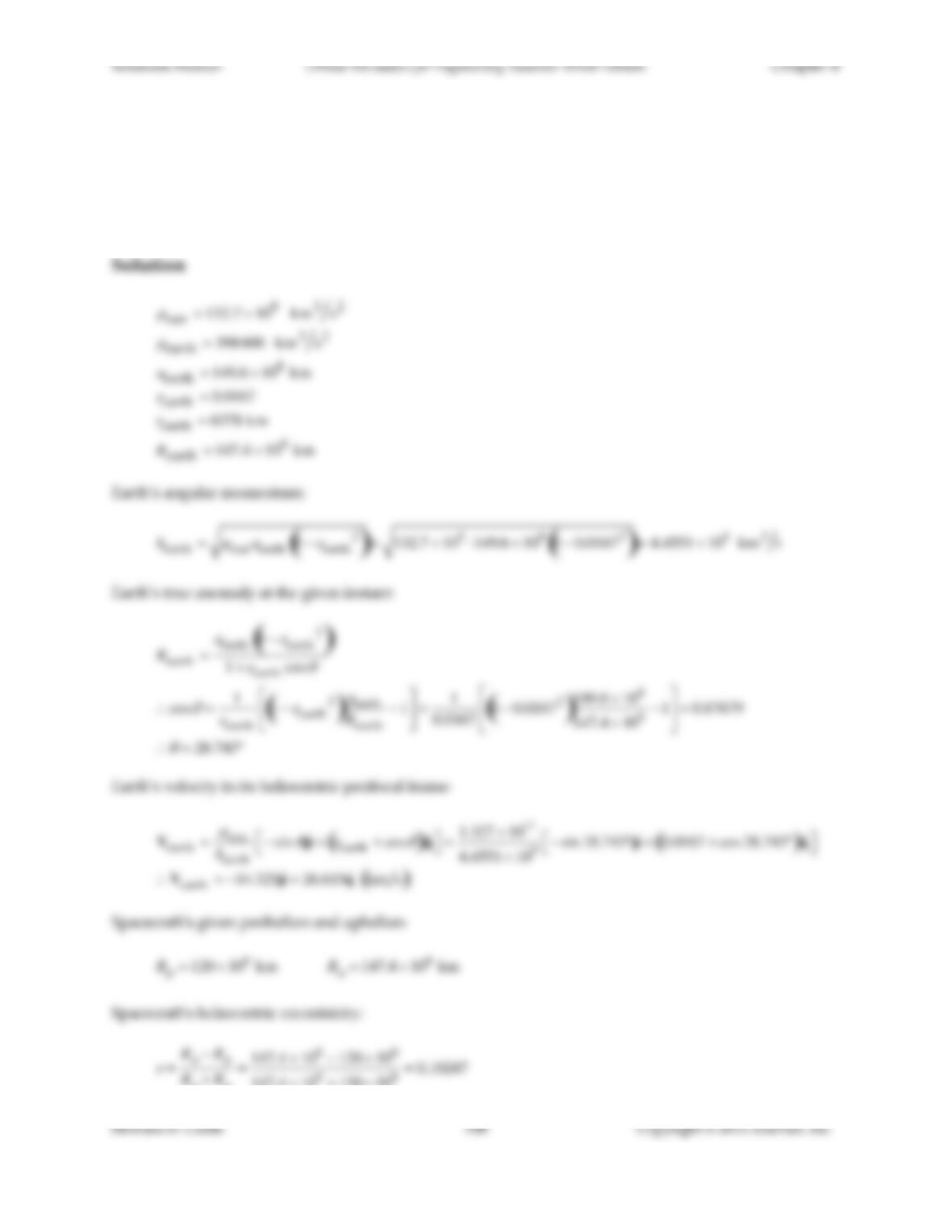

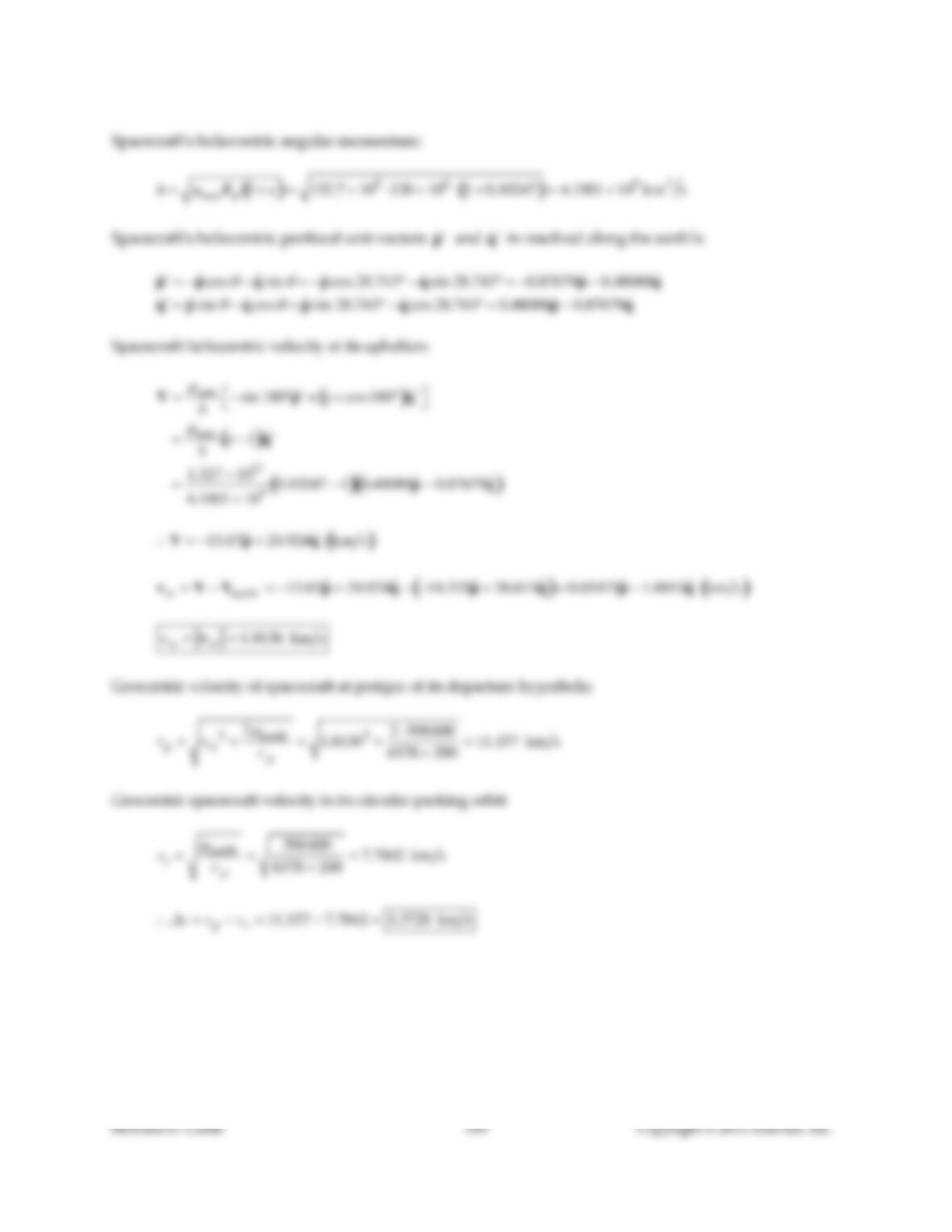
Problem 8.7 On a date when the earth was
147.4 106 km
from the sun, a spacecraft parked in a 200
km altitude circular earth orbit was launched directly into an elliptical orbit around the sun with perihe-
lion of
120 106 km
and aphelion equal to the earth’s distance from the sun on the launch date. Calculate
the delta-v required and
v
of the departure hyperbola.
147.4 106120 1060.10247

Solutions Manual Orbital Mechanics for Engineering Students Third Edition Chapter 8
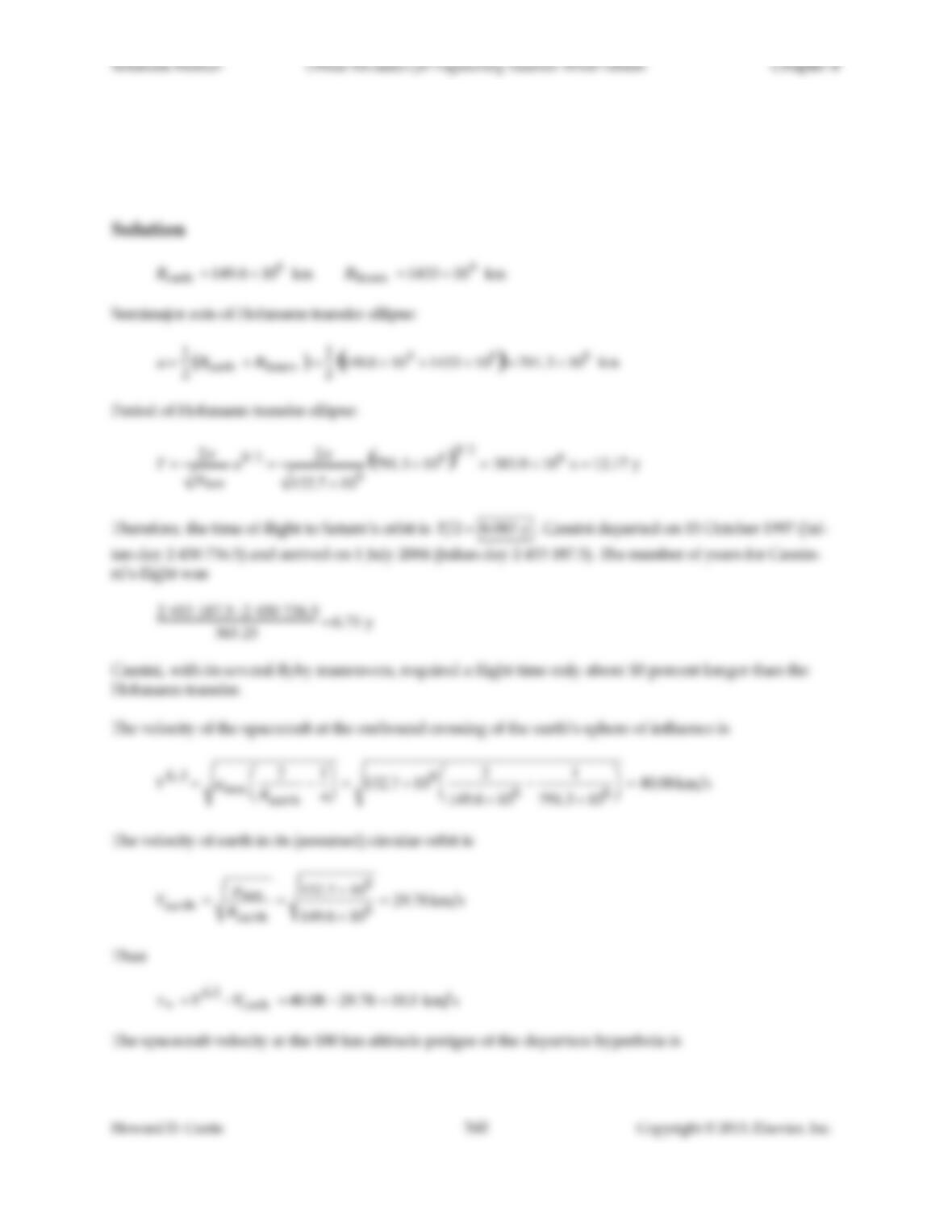

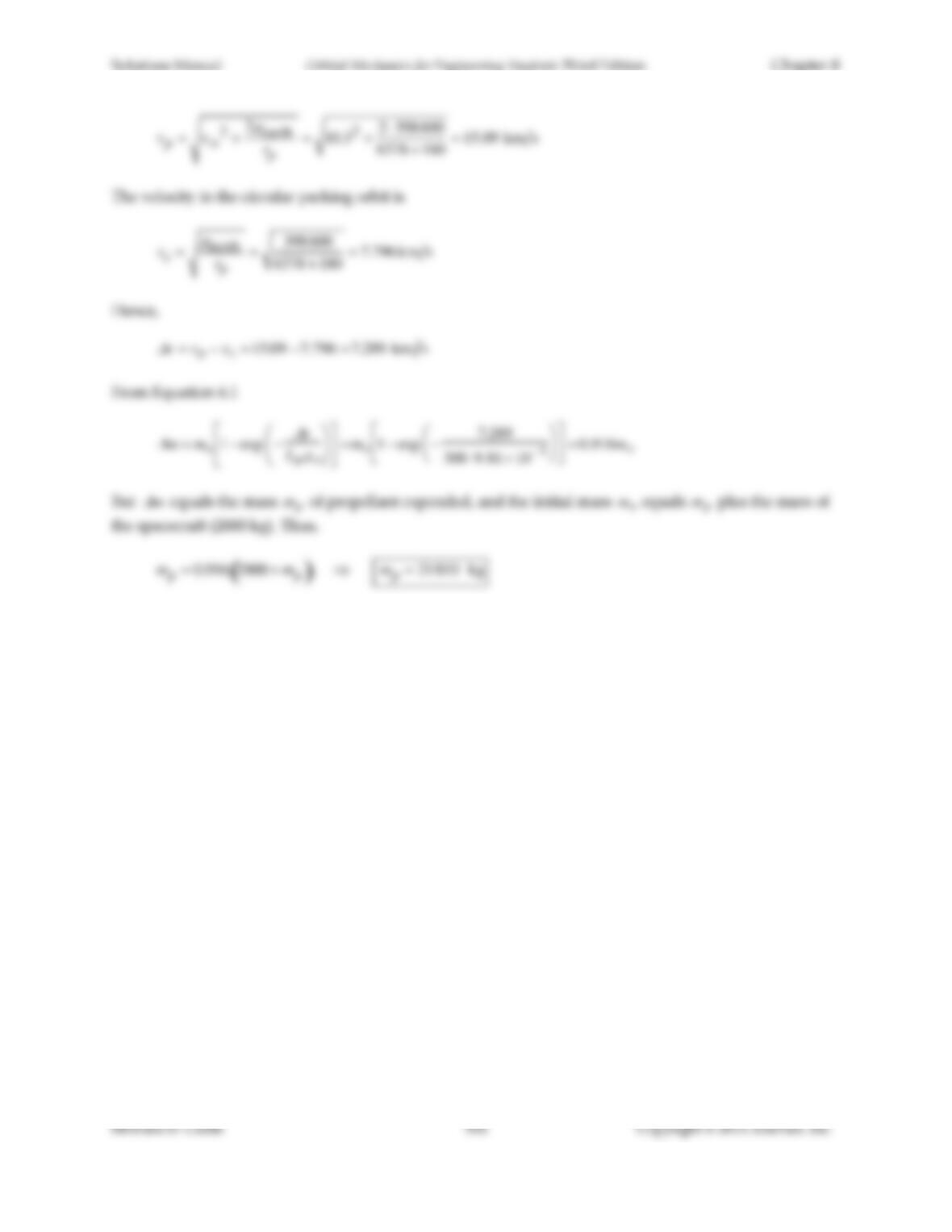
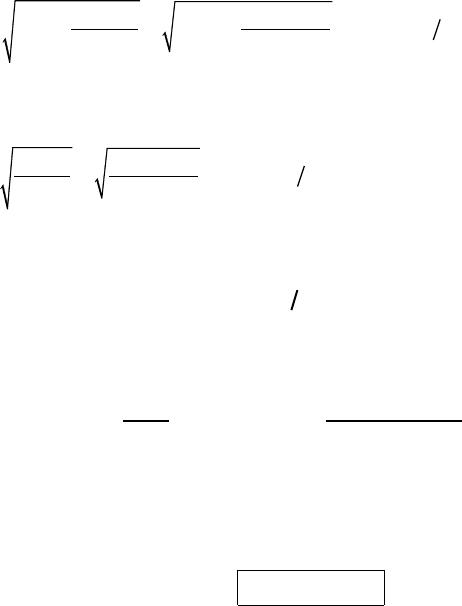
Problem 8.8 Calculate the propellant mass required to launch a 2000 kg spacecraft from a 180 km circu-
lar earth orbit on a Hohmann transfer trajectory to the orbit of Saturn. Calculate the time required for the
mission and compare it to that of Cassini. Assume the propulsion system has a specific impulse of 300 s.
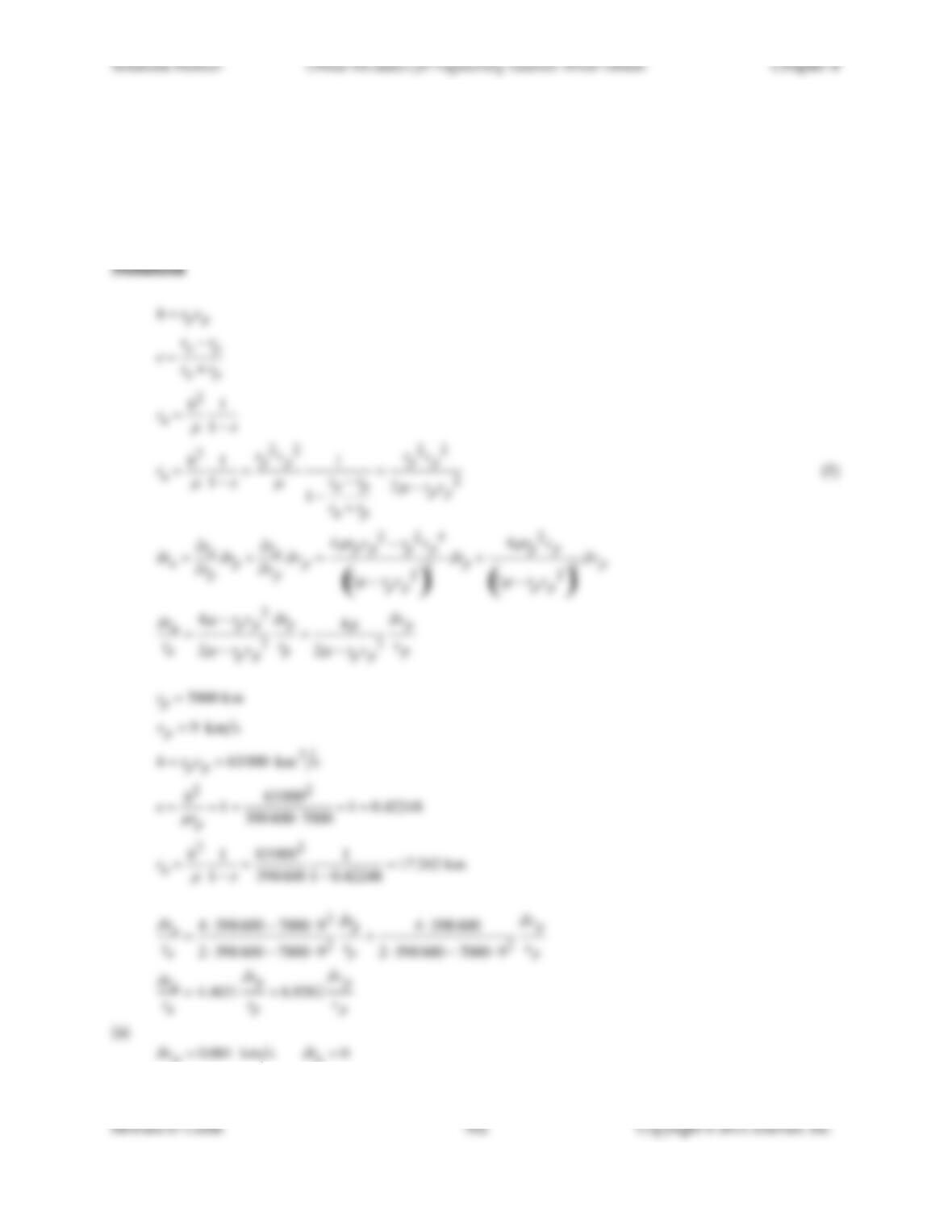

Problem 8.9 An earth orbit has a perigee radius of 7000 km and a perigee velocity of 9 km/s. Calculate
the change in apogee radius due to a change of
(a) 1 km in the perigee radius.
(b) 1 m/s in the perigee speed.


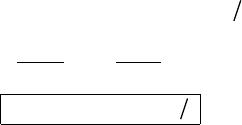
Problem 8.10 An earth orbit has a perigee radius of 7000 km and a perigee velocity of 9 km/s. Calcu-
late the change in apogee speed due to a change of
(a) 1 km in the perigee radius.
(b) 1 m/s in the perigee speed.

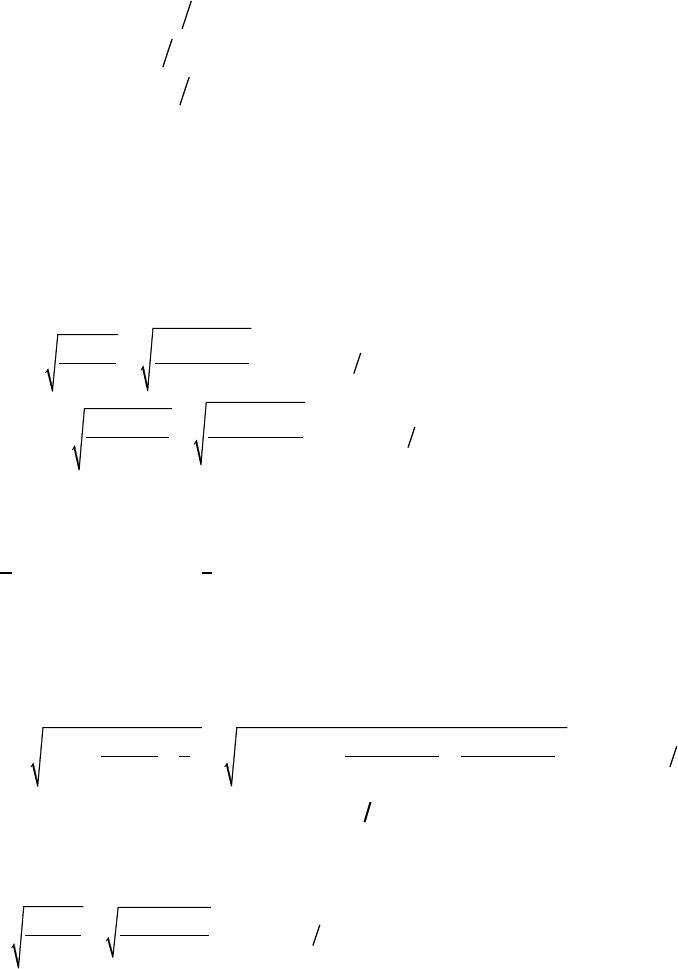
Problem 8.11 Estimate the total delta-v requirement for a Hohmann transfer from earth to Mercury,
assuming a 150 km circular parking orbit at earth and a 150 km circular capture orbit at Mercury. Fur-
thermore, assume that the planets have coplanar circular orbits with radii equal to the semimajor axes
listed in Table A.1.
Semimajor axis of Hohmann transfer ellipse:

Spacecraft velocity relative to Mercury at periapsis of the approach hyperbola:
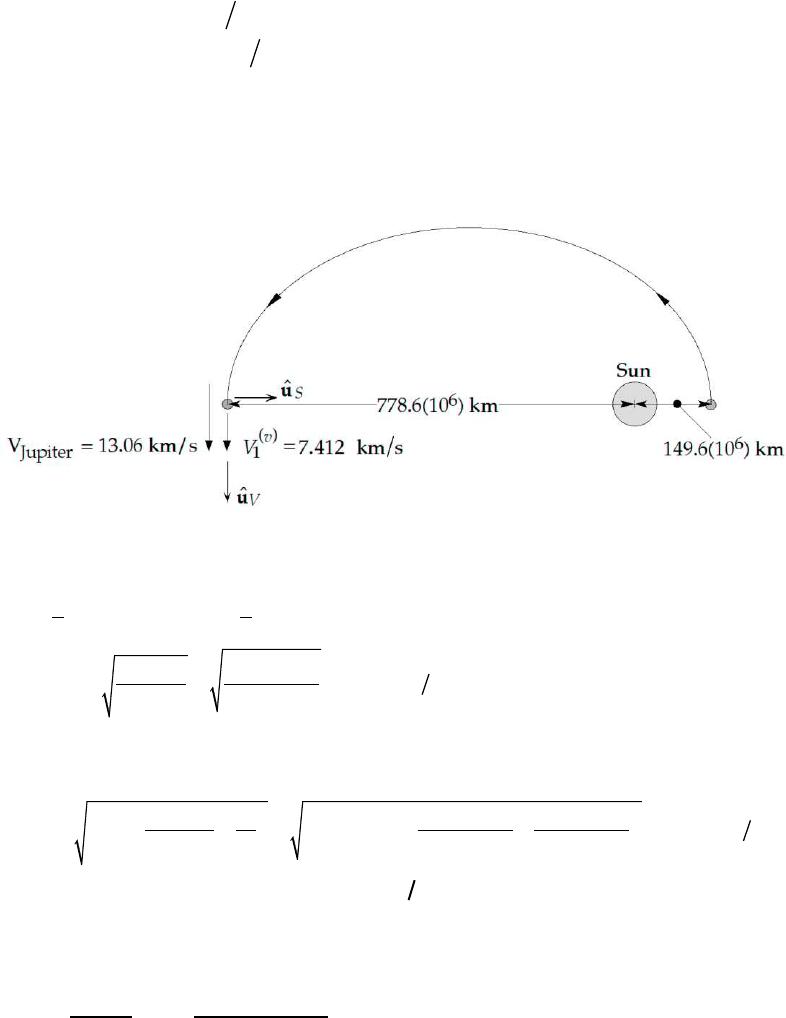
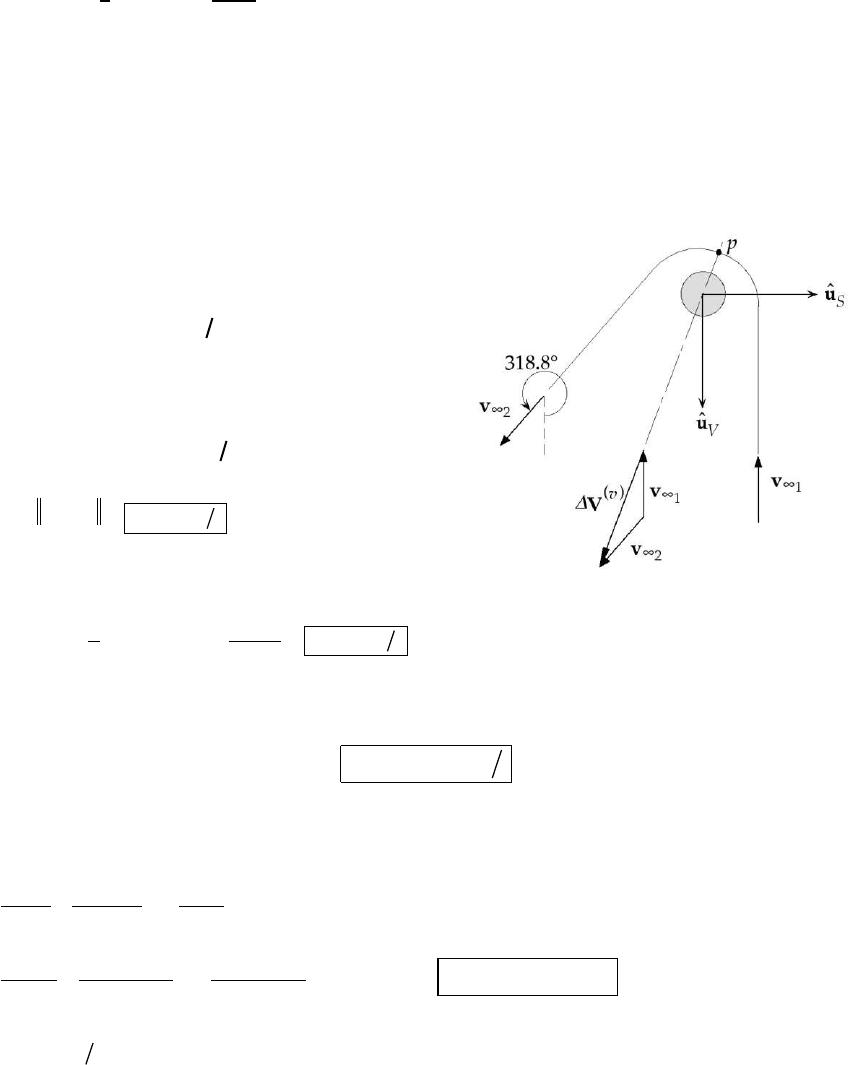
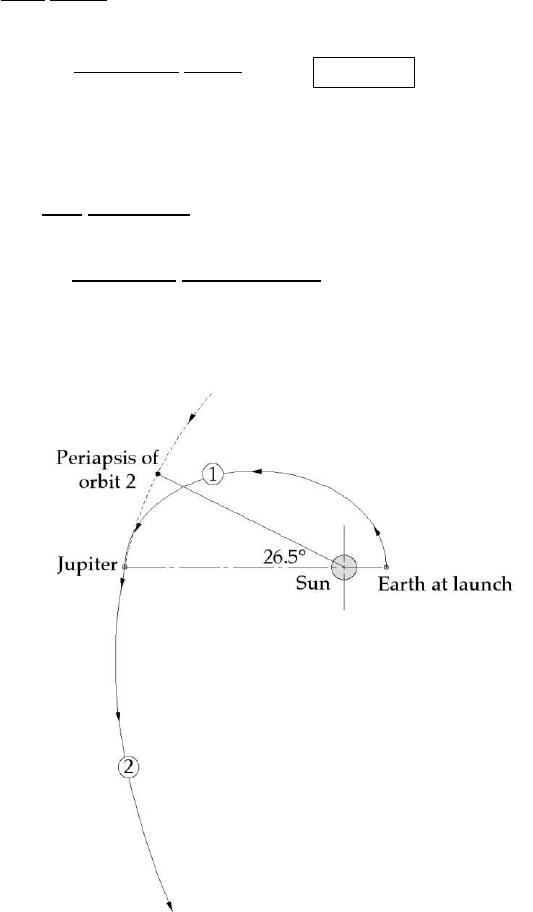
Problem 8.12 Suppose a spacecraft approaches Jupiter on a Hohmann transfer ellipse from earth. If the
spacecraft flies by Jupiter at an altitude of 200 000 km on the sunlit side of the planet, determine the or-
bital elements of the post-flyby trajectory and the delta-v imparted to the spacecraft by Jupiter’s gravity.
Assume that all of the orbits lie in the same (ecliptic) plane.
Solutions Manual Orbital Mechanics for Engineering Students Third Edition Chapter 8
Solutions Manual Orbital Mechanics for Engineering Students Third Edition Chapter 8