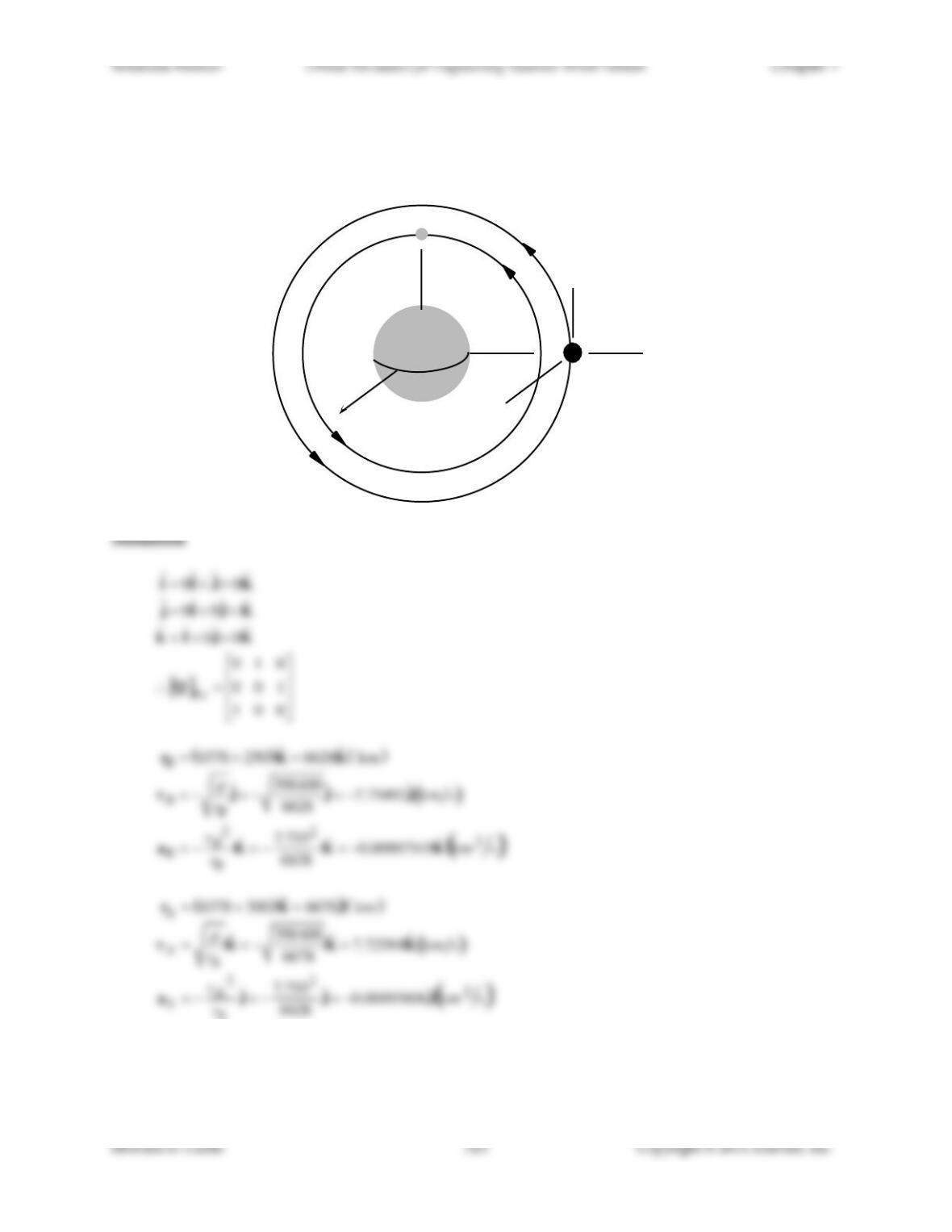
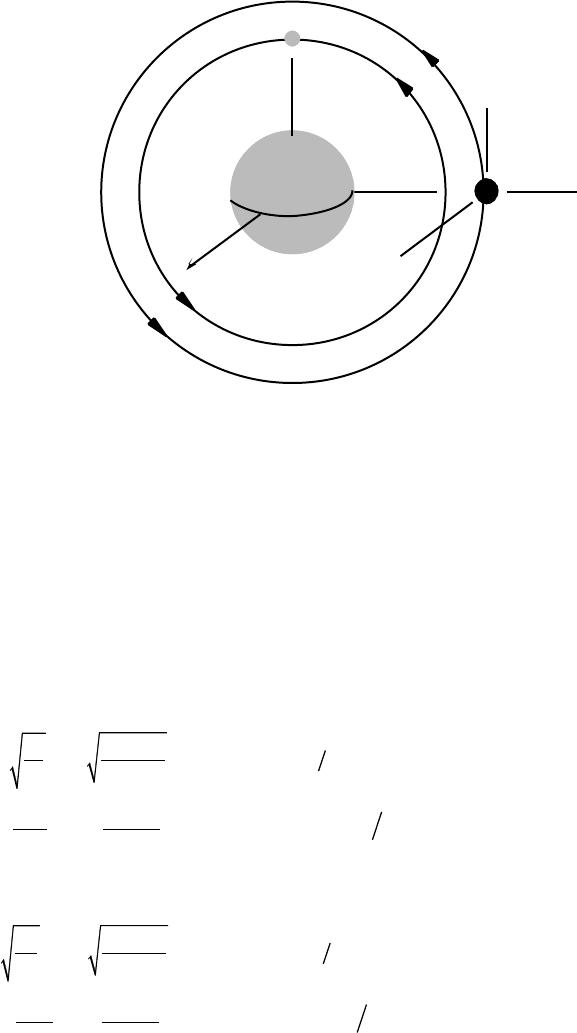
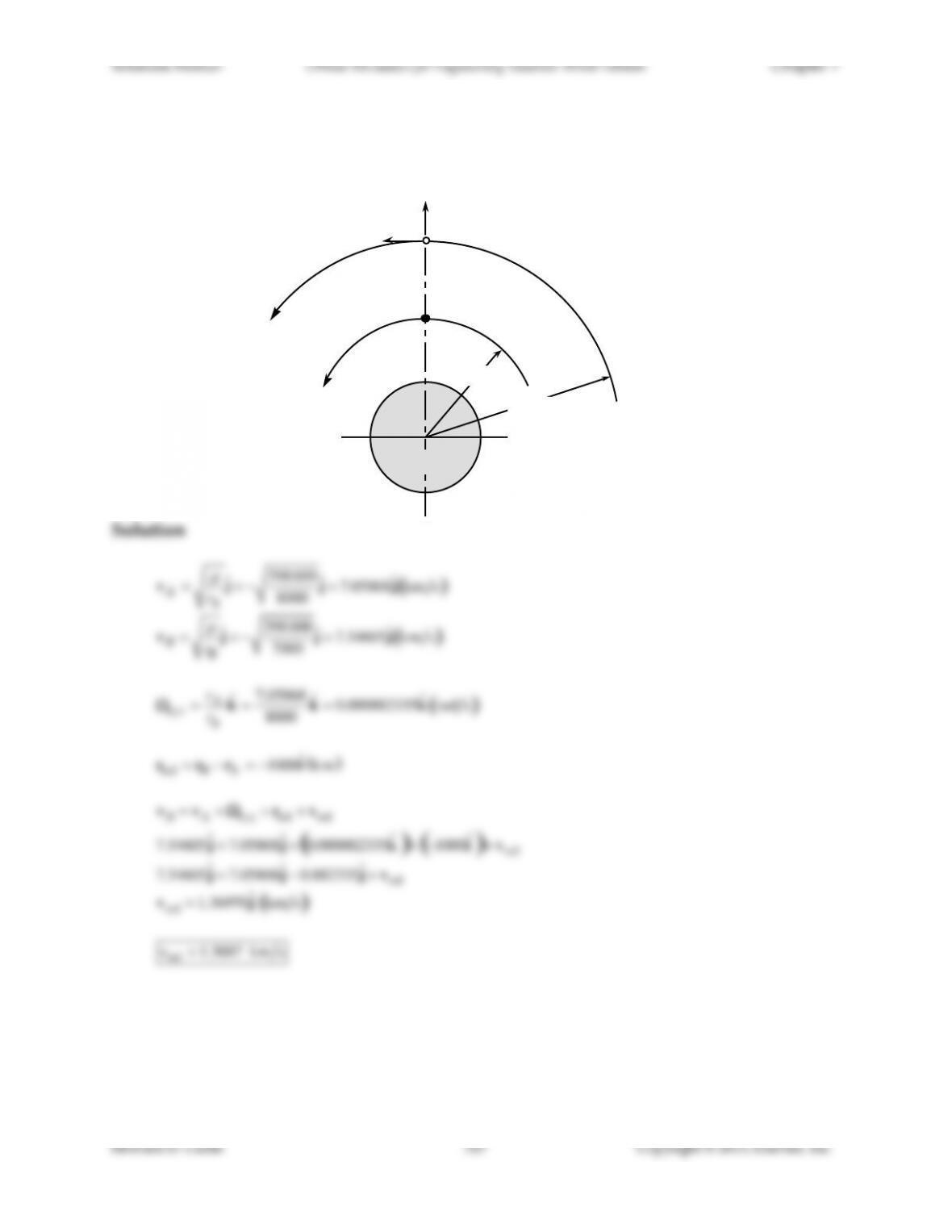
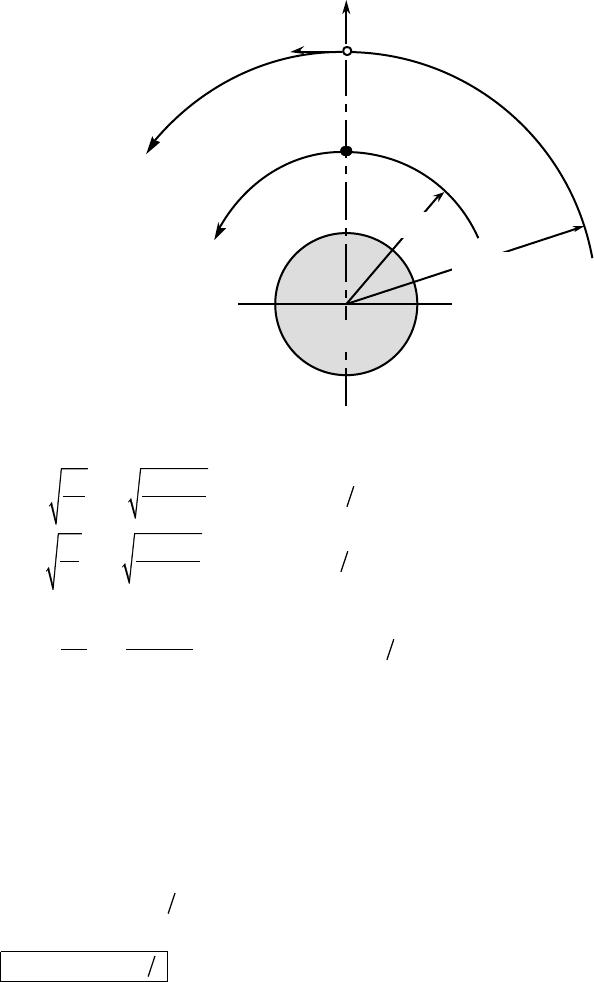
Problem 7.1 Two manned spacecraft, A and B (see figure), are in circular polar (i = 90°) orbits around
the earth. A’s orbital altitude is 300 km; B’s is 250 km. At the instant shown (A over the equator, B over
the north pole), calculate (a) the position (b) velocity and (c) the acceleration of B relative to A. A’s y-axis
points always in the flight direction, and its x axis is directed radially outward at all times.
X
Y
Z
A
B
y
z
x
Earth
N
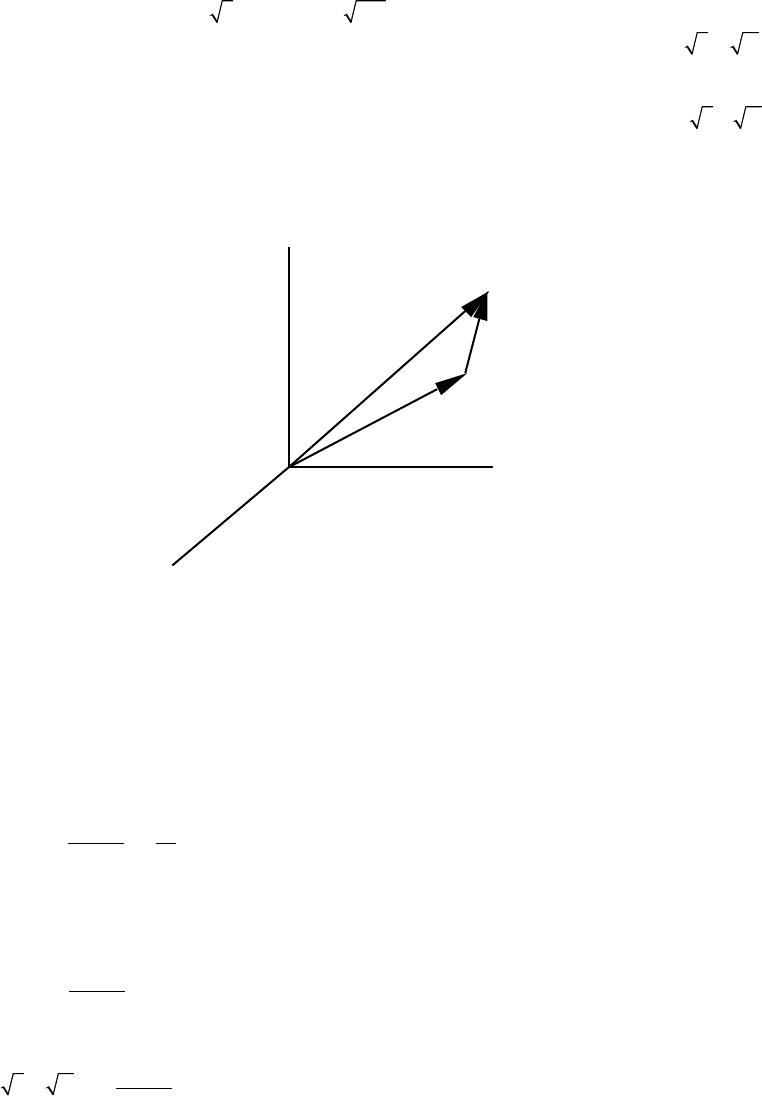
Problem 7.2 Spacecraft A and B are in coplanar, circular geocentric orbits. The orbital radii are shown
in the figure. When B is directly below A, as shown, calculate B’s speed
vBrel
relative to A.
x
yA
B
Earth
8000 km
7000 km
Problem 7.3 Use the order of magnitude analysis in this chapter as a guide to answer the following
questions.
(a) If
rR
r
, express
r
(where
rrr
) to the first order in
r
(i.e., to the first order in the
components of
r
xˆ
i
yˆ
j
zˆ
k
). In other words, find
O
r
, such that
rRO
r
,
where
O
r
is linear in
r
.
(b) For the special case
R3ˆ
i4ˆ
j5ˆ
k
and
r0.01i0.01j0.03k
, calculate
rR
and com-
pare that result with
O
r
.
(c) Repeat part (b) using
rˆ
iˆ
j3ˆ
k
and compare the results.
R
r
r
x
y
z
Solutions Manual Orbital Mechanics for Engineering Students Third Edition Chapter 7

Solutions Manual Orbital Mechanics for Engineering Students Third Edition Chapter 7
Problem 7.4 Write the expression
ra1e2
1ecos
as a linear function of e, valid for small values of e
(
e 1
).

Solutions Manual Orbital Mechanics for Engineering Students Third Edition Chapter 7
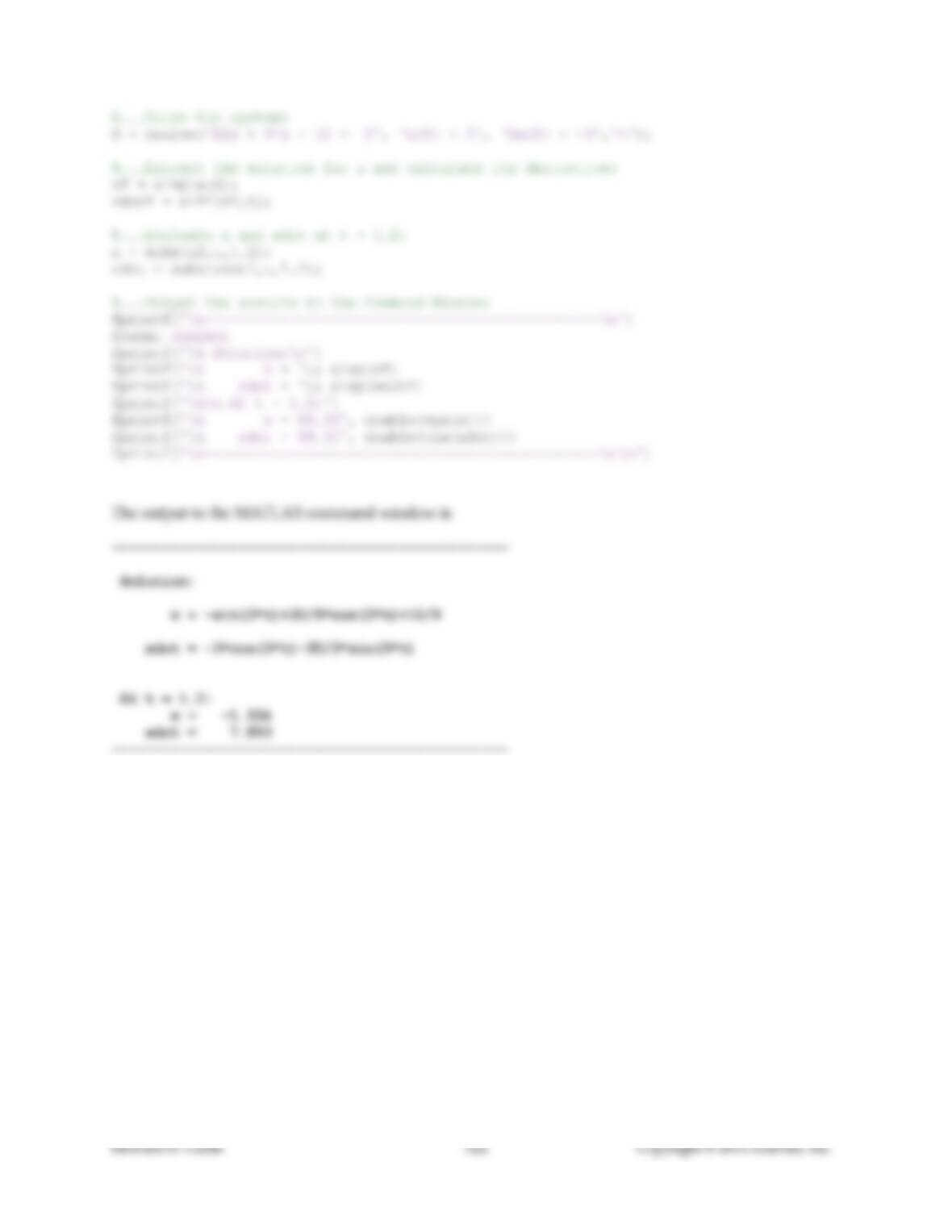
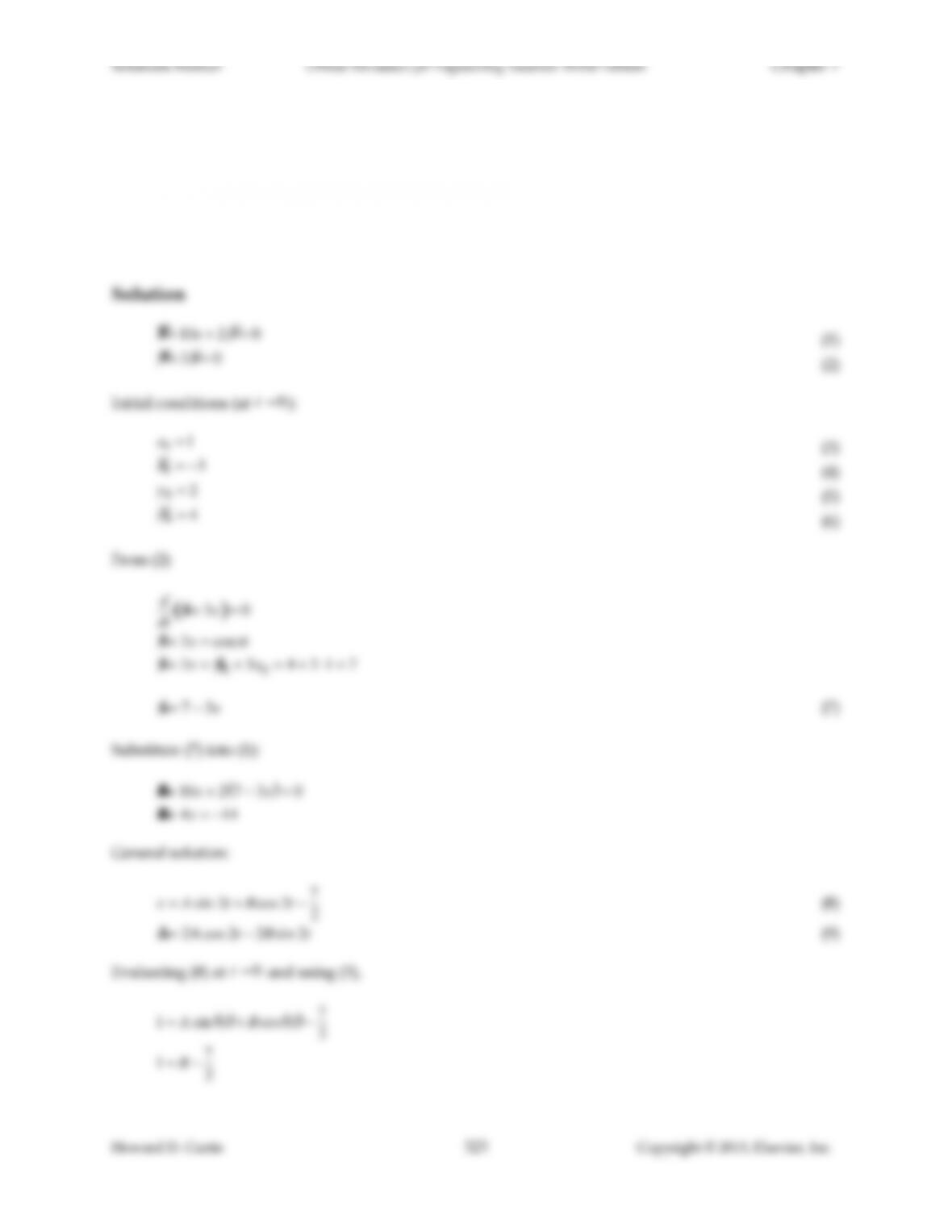
Problem 7.5 Given
&&
x9x10
, with the initial conditions
x5
and
&
x 3
at t = 0, find
x
and
&
x
at
t1.2
.
Solutions Manual Orbital Mechanics for Engineering Students Third Edition Chapter 7

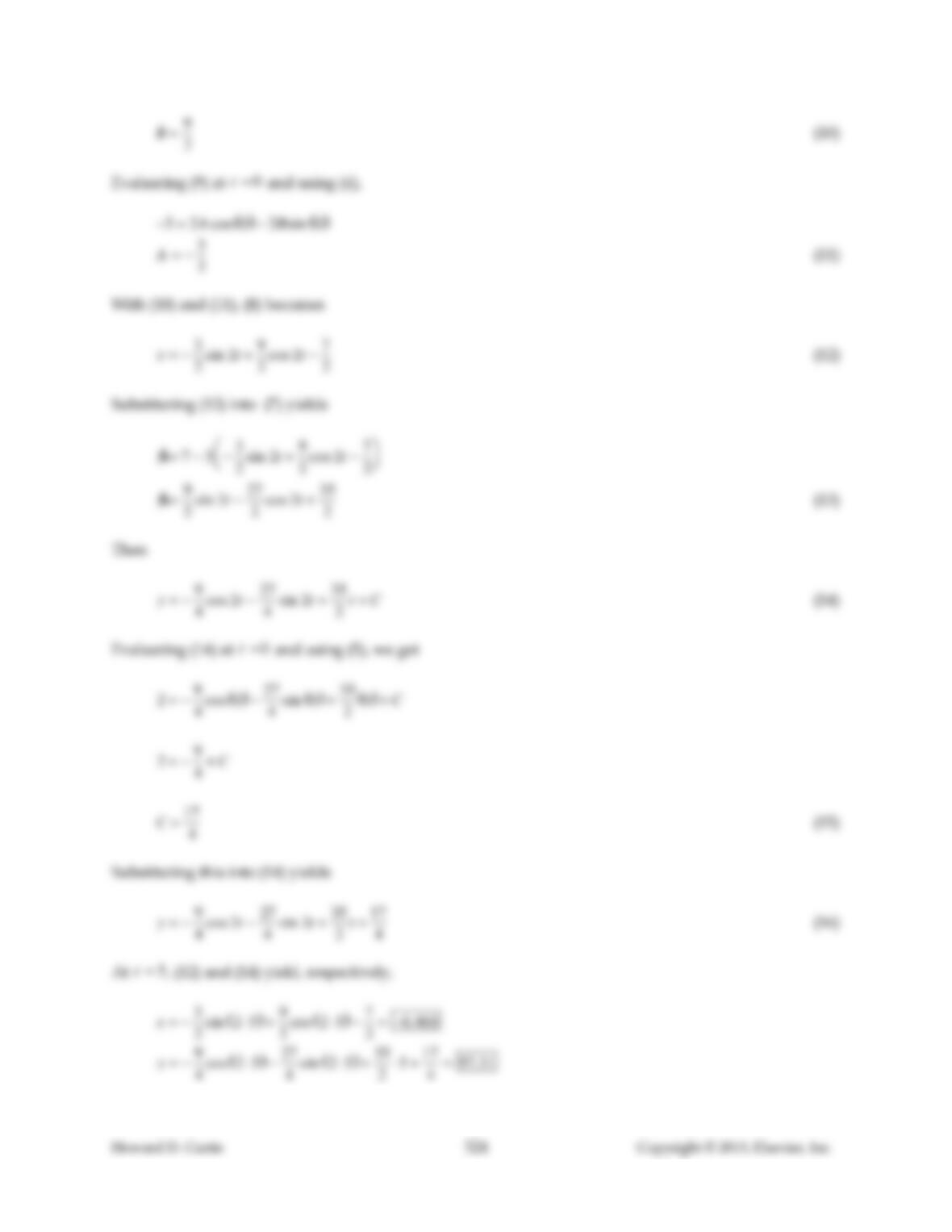
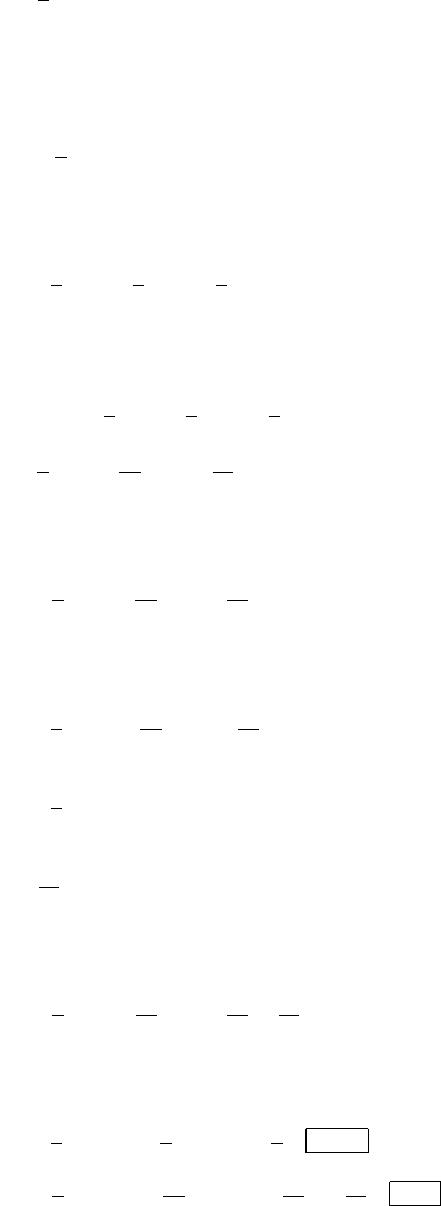
Problem 7.6 Given that
&&
x10x2&
y0
&&
y3&
x0
with initial conditions
x0
1
,
y0
2
,
&
x0
3
and
&
y0
4
, find x and y at
t5
.
Solutions Manual Orbital Mechanics for Engineering Students Third Edition Chapter 7
Solutions Manual Orbital Mechanics for Engineering Students Third Edition Chapter 7
–—–——–—––——–—–—–—–—––——–—––——–––
Problem 7.7 A space station is in a 90-minute period earth orbit. At
t0
, a satellite has the following
position and velocity components relative to a Clohessy-Wiltshire frame attached to the space sta-
tion:
rˆ
i km
,
v10ˆ
j m s
. How far is the satellite from the space station 15 minutes later?
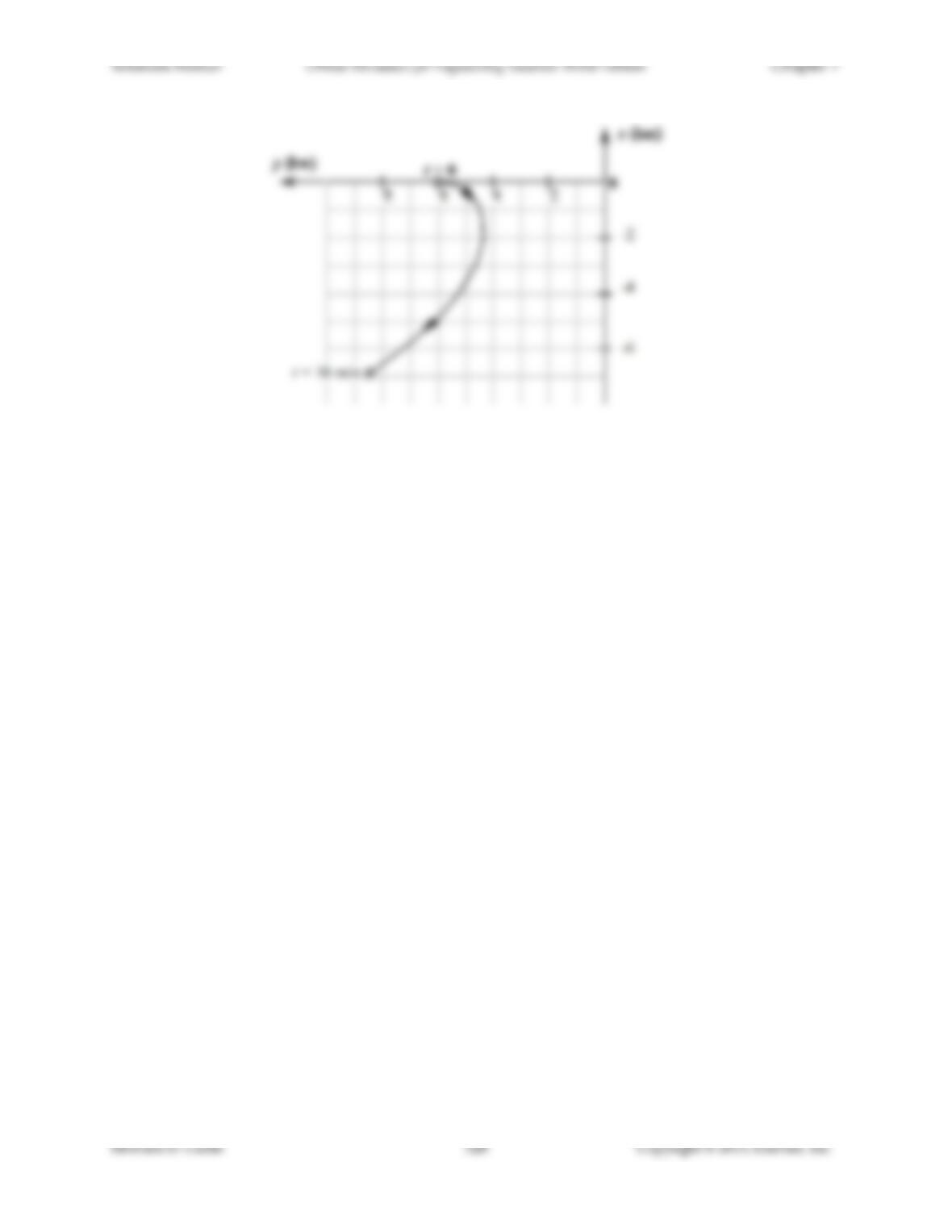
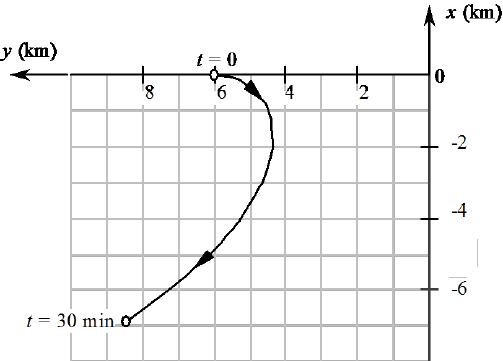
Problem 7.8 Spacecraft A and B are in the same circular earth orbit with a period of 2 hours. B is 6 km
ahead of A. At t = 0, B applies an in-track delta-v (retrofire) of 3 m/s. Using a Clohessy-Wiltshire frame
attached to A, determine the distance between A and B at t = 30 minutes and the velocity of B relative to
A.
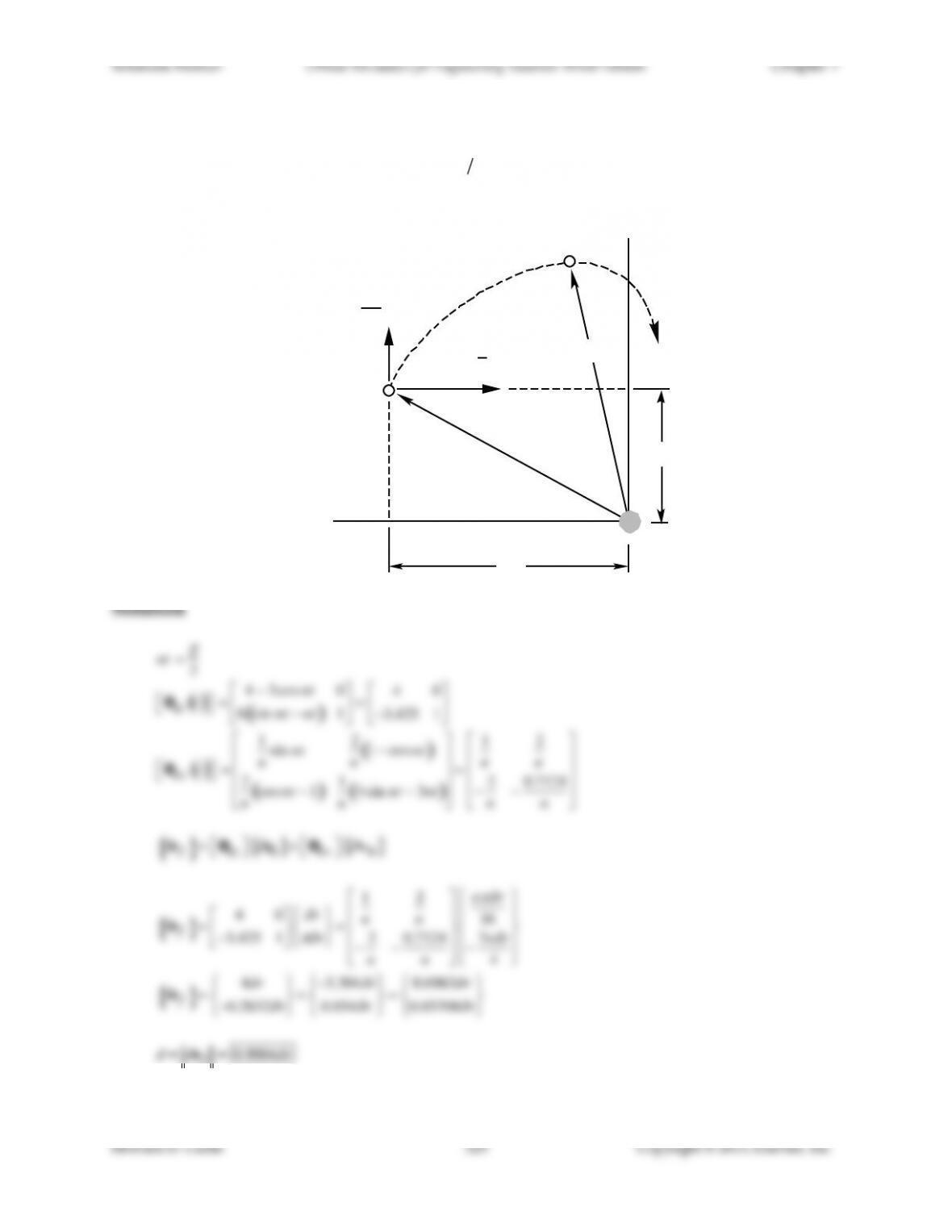
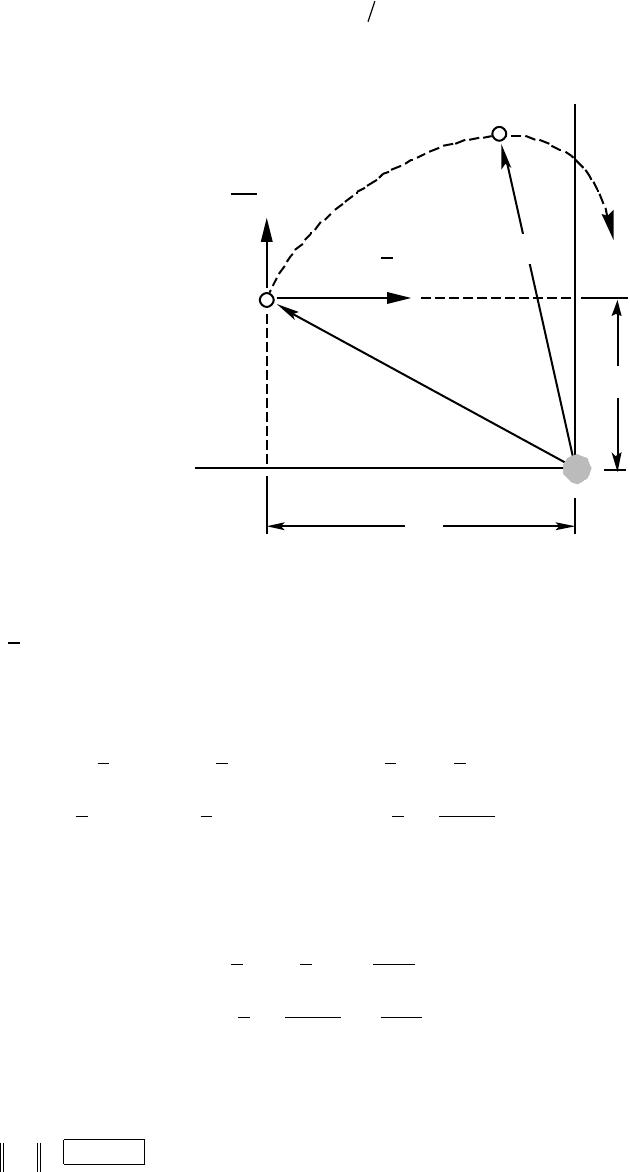
Problem 7.9 The Clohessy-Wiltshire coordinates and velocities of a spacecraft upon entering a rendez-
vous trajectory with the target vehicle are shown. The spacecraft orbits are co-planar. Calculate the dis-
tance d of the spacecraft from the target when
t
2n
, where n is the mean motion of the target’s circu-
lar orbit.
(
x,
y)
r
r
d
Target
Spacecraft at t = 0+
y
x
CW frame
7
4n
r
16 n
r
Solutions Manual Orbital Mechanics for Engineering Students Third Edition Chapter 7
Problem 7.10 At time t = 0 a particle is at the origin of a CW frame with a relative velocity
v0vˆ
j
.
What will be the relative speed of the particle after one-half orbital period of the C-W frame?
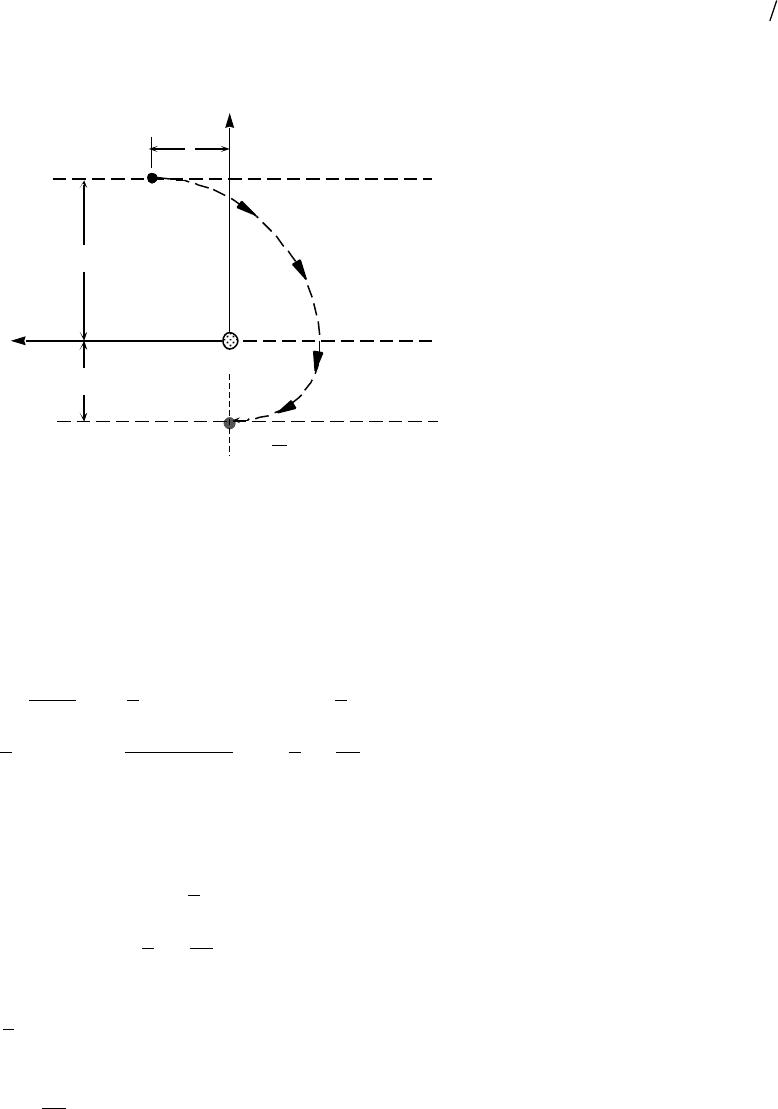
Problem 7.11 The chaser and the target are in close-proximity, coplanar circular orbits. At
t0
, the
position of the chaser relative to the target is
r
0rˆ
iaˆ
j
, where a is given and r is unknown. The relative
velocity at
t0
is
v0
v0ˆ
j
(
v0
is unknown), and the chaser ends up at
rf aˆ
i
when
t
n
,
where n is the mean motion of the target. Use the Clohessy-Wiltshire equations to find the required value
of the orbital spacing r.
y
x
Chaser
CW frame
a
a
t0
t
n
r = ?
Target
Solutions Manual Orbital Mechanics for Engineering Students Third Edition Chapter 7

Problem 7.12 A space station is in a circular earth orbit of radius 6600 km. An approaching spacecraft
executes a delta-v burn when its position vector relative to the space station is
r
0ˆ
iˆ
jˆ
k km
. Just
before the burn the relative velocity of the spacecraft was
v0
5ˆ
k m s
. Calculate the total delta-v re-
quired for the space shuttle to rendezvous with the station in one third period of the space station orbit.