Problem 6.41 An earth satellite is in an elliptical orbit of eccentricity 0.3 and angular momentum
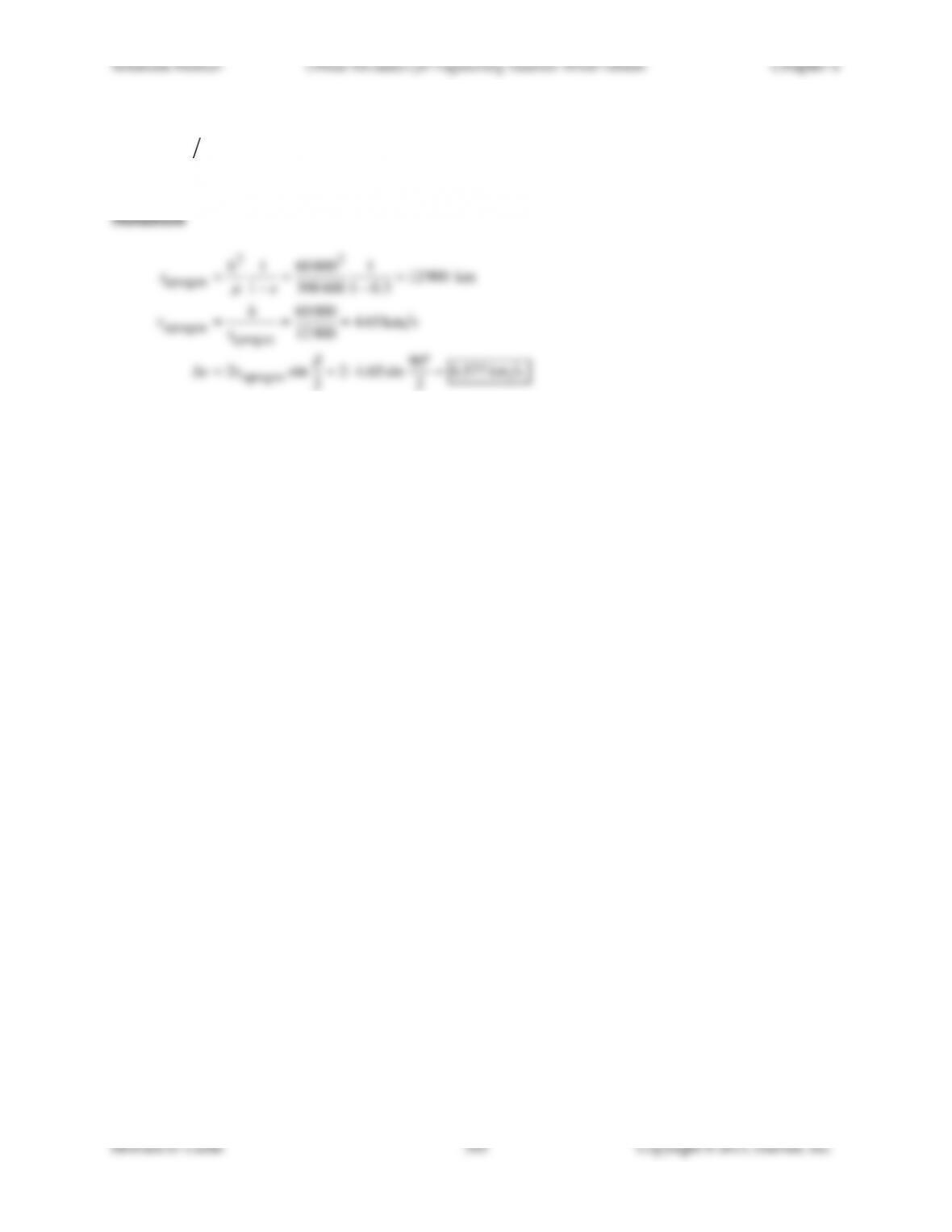
60000 km 2s
. Find the delta-v required for a 90° change in inclination at apogee (no change in speed).
r
apogee
12 900 4.65 km s
v2vapogee sin
224.65 sin 90
26.577 km s
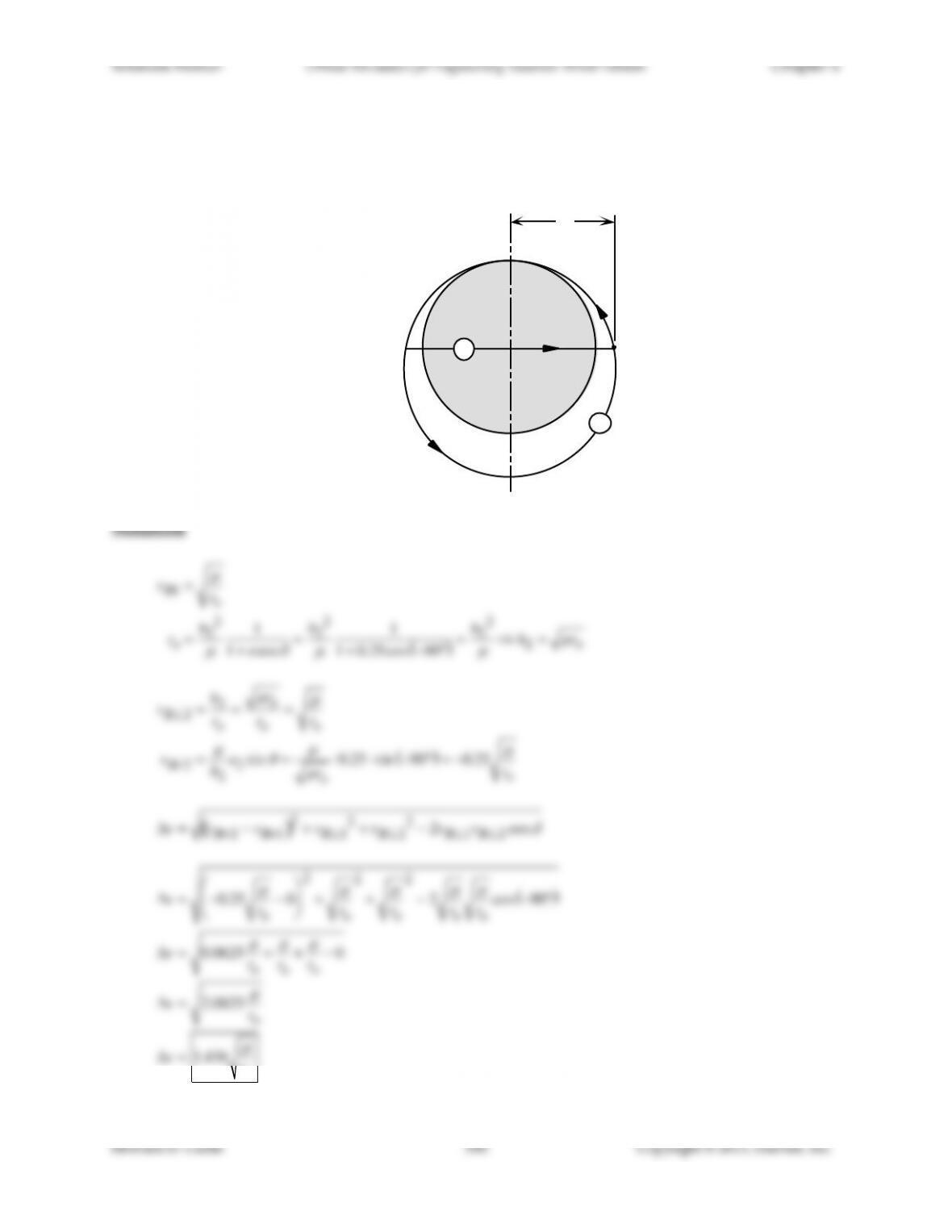
Problem 6.42 A spacecraft is in a circular, equatorial orbit (1) of radius
ro
about a planet. At point B it
impulsively transfers to polar orbit (2), whose eccentricity is 0.25 and whose perigee is directly over the
North Pole. Calculate the minimum delta-v required at B for this maneuver.
ro
v1.436
ro
ro
B
N
S
1
2
Orbit 1 shown edge-on
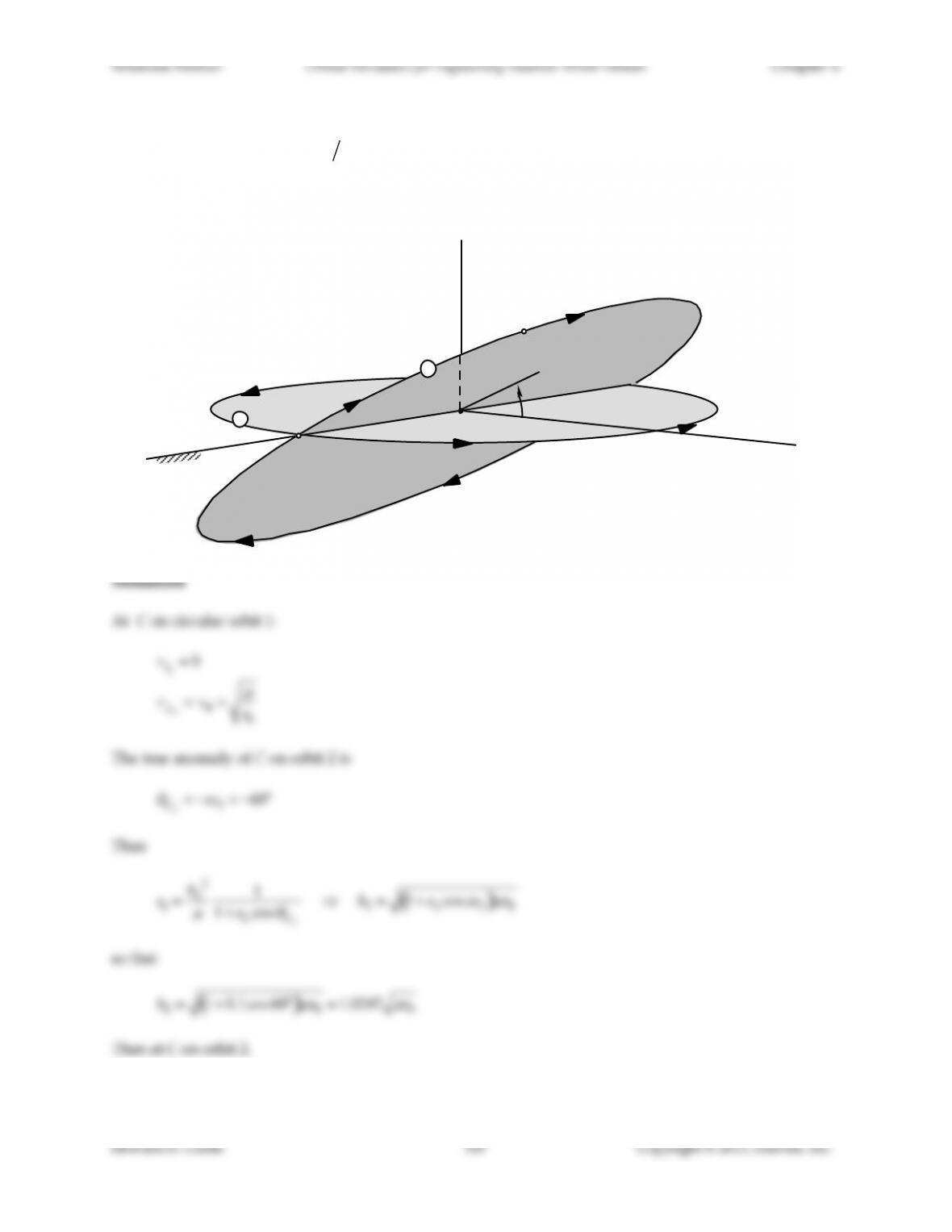
Problem 6.43 A spacecraft is in a circular, equatorial orbit (1) of radius
r0
and speed
v0
about an un-
known planet (
398 600 km3s2
). At point C it impulsively transfers to orbit (2), for which the ascend-
ing node is point C, the eccentricity is 0.1, the inclination is 30° and the argument of periapsis is 60°. Cal-
culate, in terms of
v0
, the single delta-v required at C for this maneuver.
XY
Z
Periapsis
C
2
1e = 0
e = 0.1 30°
Solutions Manual Orbital Mechanics for Engineering Students Third Edition Chapter 6
Problem 6.44 A spacecraft is in a 300 km circular parking orbit. It is desired to increase the altitude to
600 km and change the inclination by 20°. Find the total delta-v required if
(a) The plane change is made after insertion into the 600 km orbit (so that there are a total of three
delta-v burns).
(b) If the plane change and insertion into the 600 km orbit are accomplished simultaneously (so
that the total number of delta-v burns is two).
(c) The plane change is made upon departing the lower orbit (so that the total number of delta-v
burns is two).
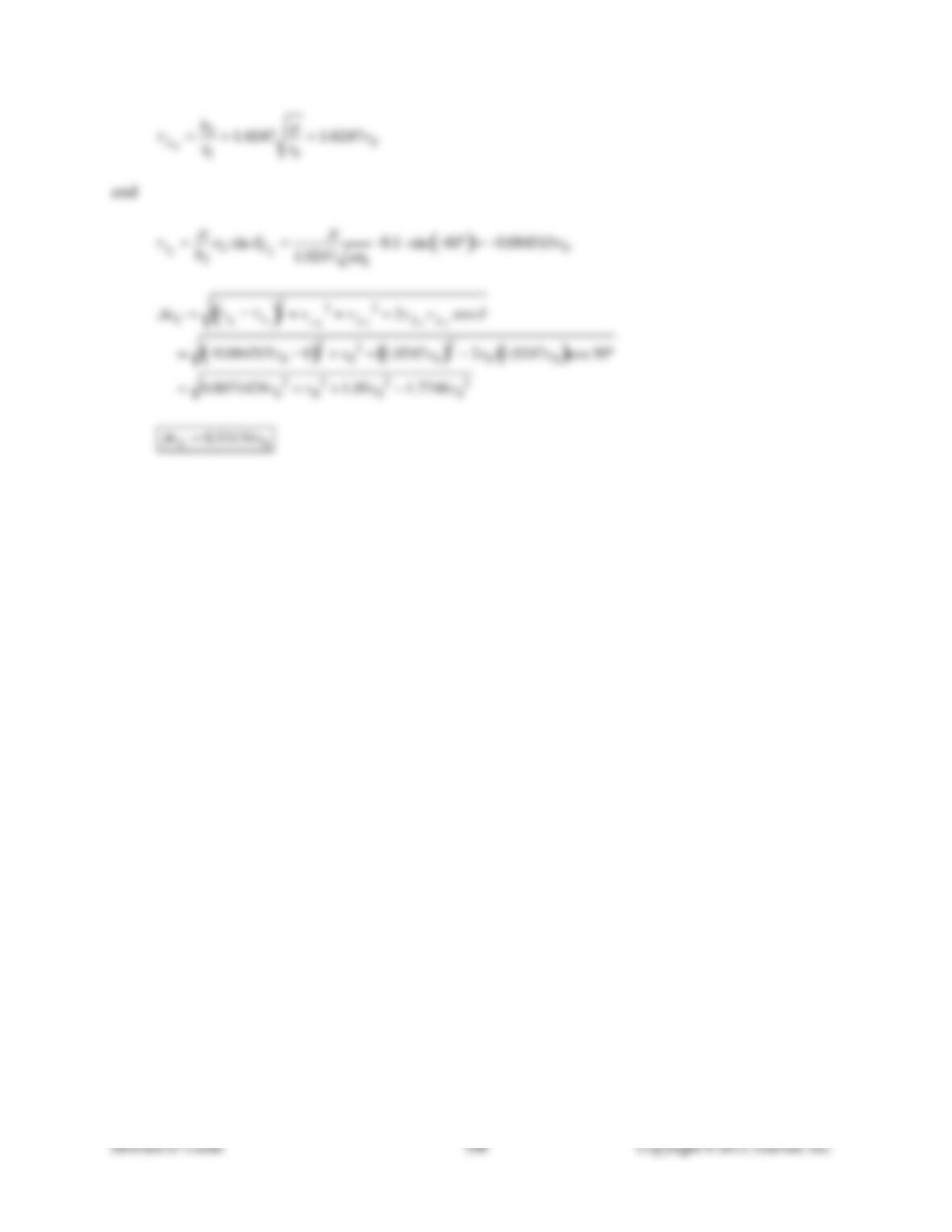
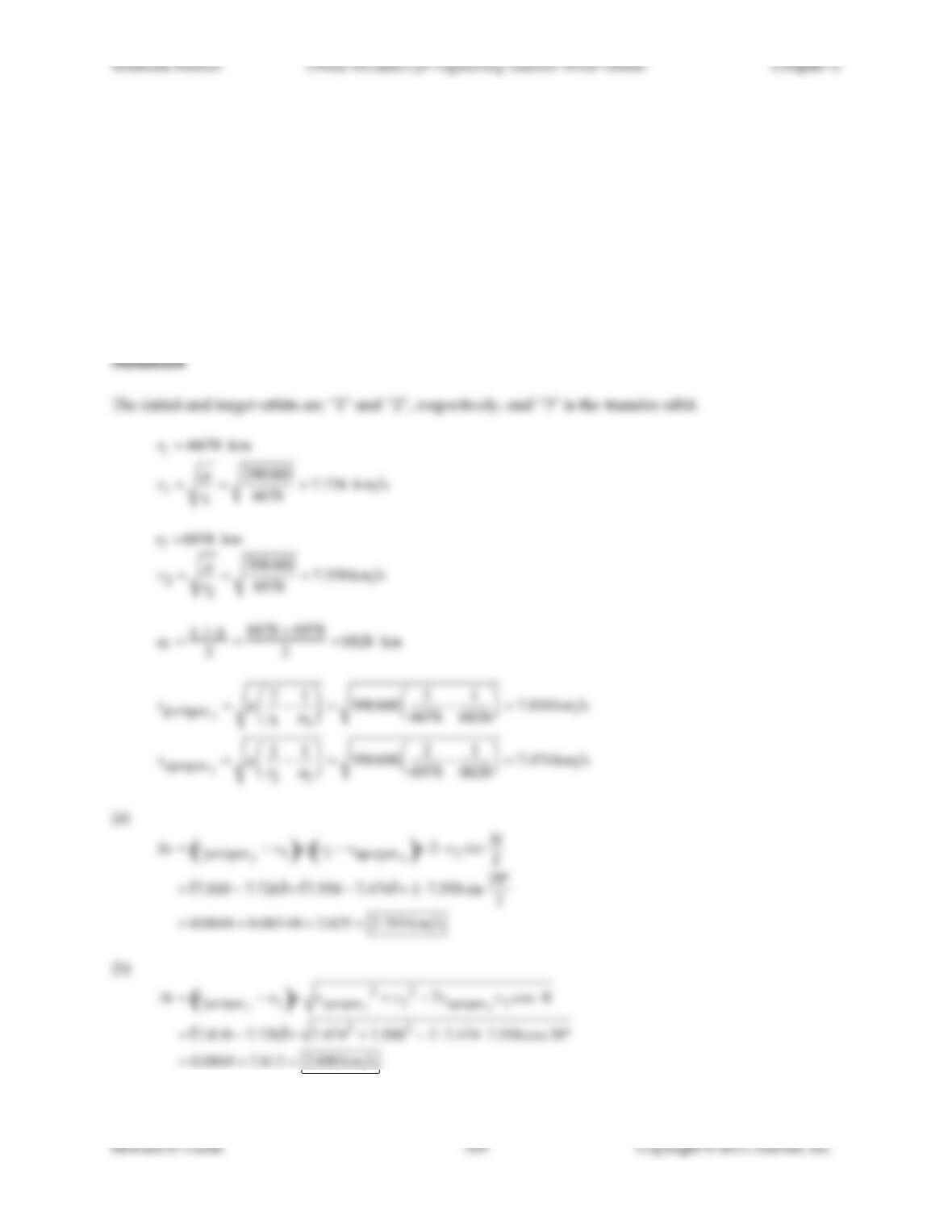
0.0844 2.612 2.696 km s
(c)
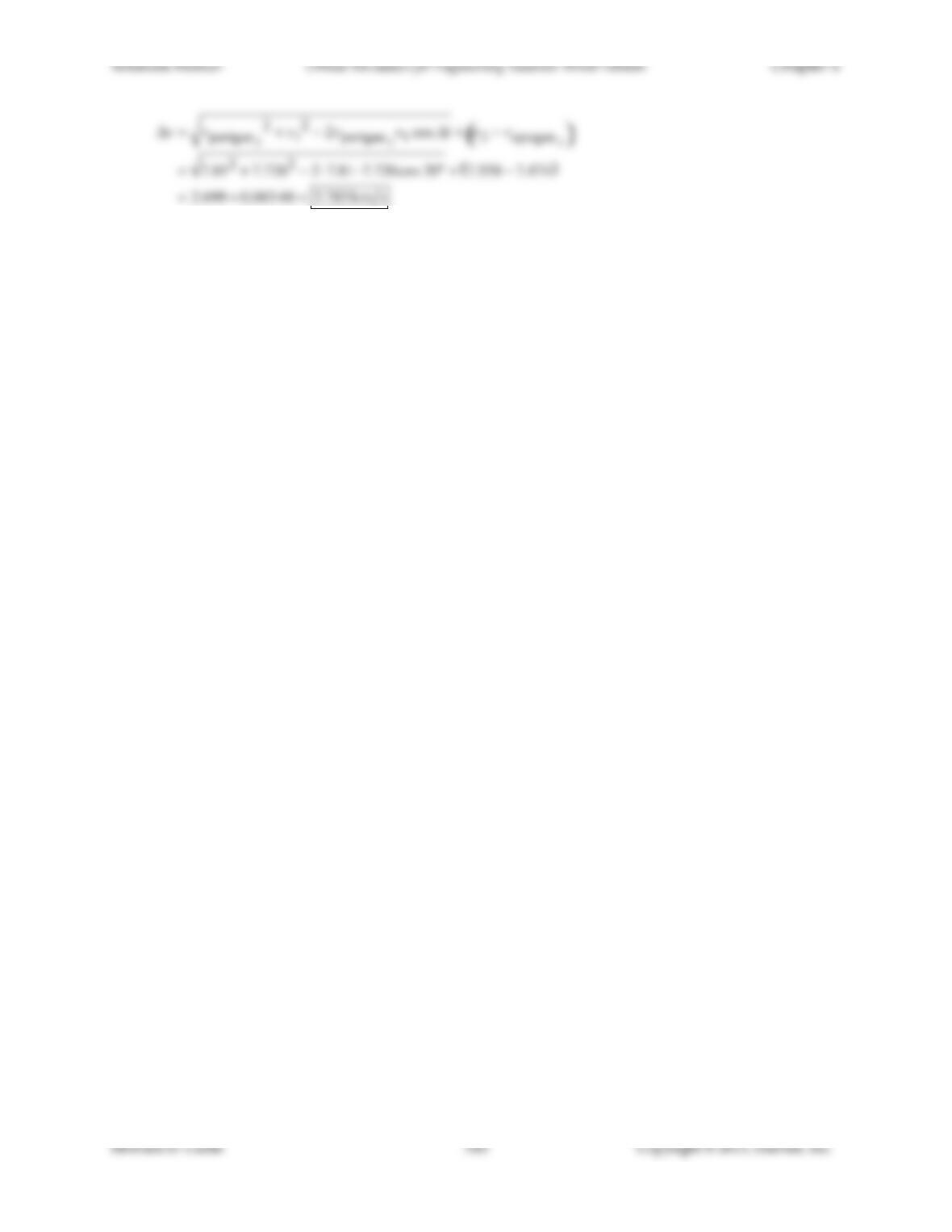
vvperigee 3
2v122vperigee 3v1cos iv2vapogee 3
2.699 0.083 48 2.783 km s
Problem 6.45 Calculate the total propellant expenditure for Problem 6.3 using finite-time delta-v ma-
neuvers. The initial spacecraft mass is 4000 kg. The propulsion system has a thrust of 30 kN and a specific
impulse of 280 s.
Problem 6.46 Calculate the total propellant expenditure for Problem 6.3 using finite-time delta-v ma-
neuvers. The initial spacecraft mass is 4000 kg. The propulsion system has a thrust of 30 kN and a specific
impulse of 280 s.
Problem 6.47 At a given instant
t0
, a 1000 kg earth-orbiting satellite has the inertial position and veloc-
ity vectors
r
0436ˆ
i6083ˆ
j2529 ˆ
k km
and
v0 7.340ˆ
i0.5125ˆ
j2.497 ˆ
k km s
. 89 minutes later a
rocket motor with
Isp 300s
and 10 kN thrust aligned with the velocity vector ignites and burns for 120
seconds. Use numerical integration to find the maximum altitude reached by the satellite and the time it
occurs.
Solutions Manual Orbital Mechanics for Engineering Students Third Edition Chapter 6