B
1
Solutions Manual Orbital Mechanics for Engineering Students Third Edition Chapter 6
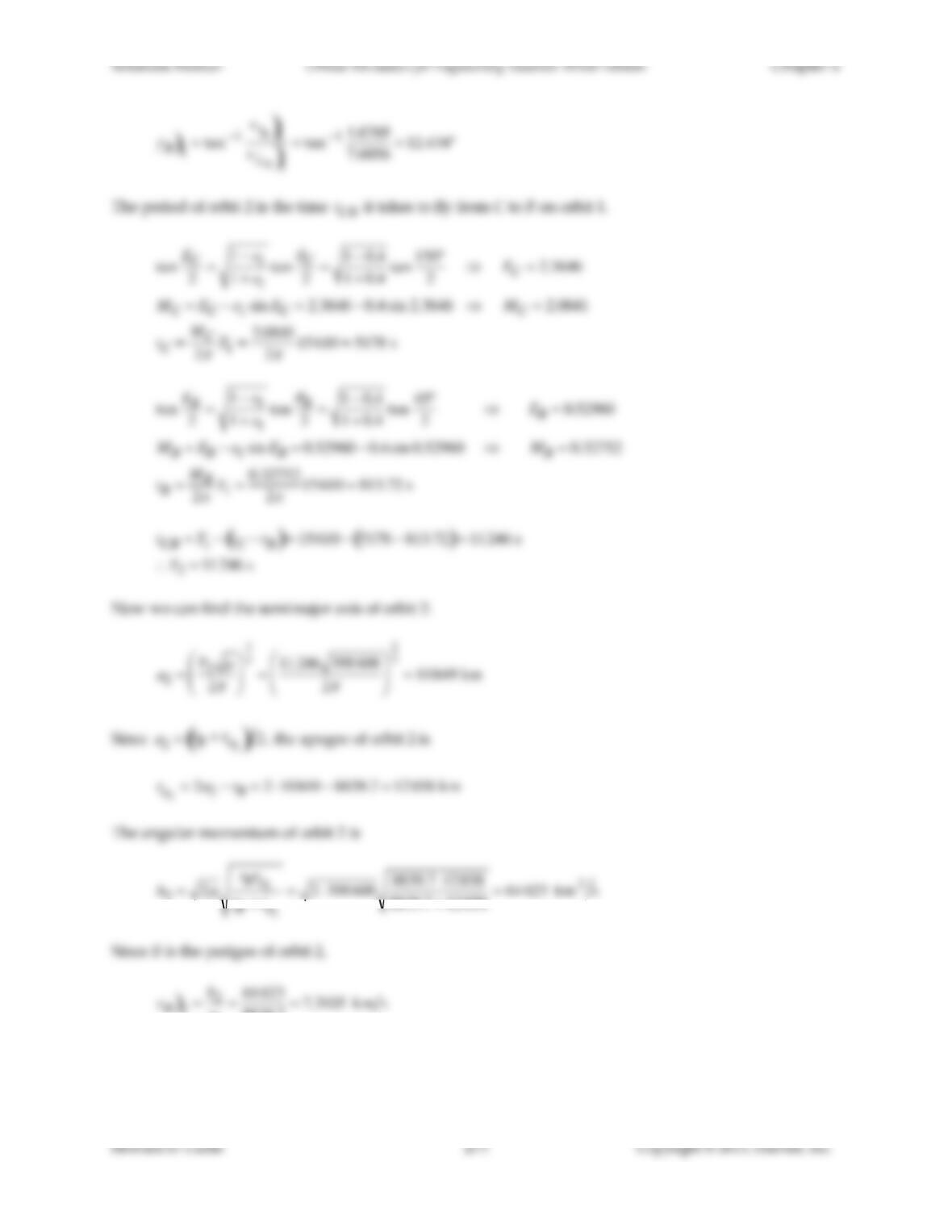
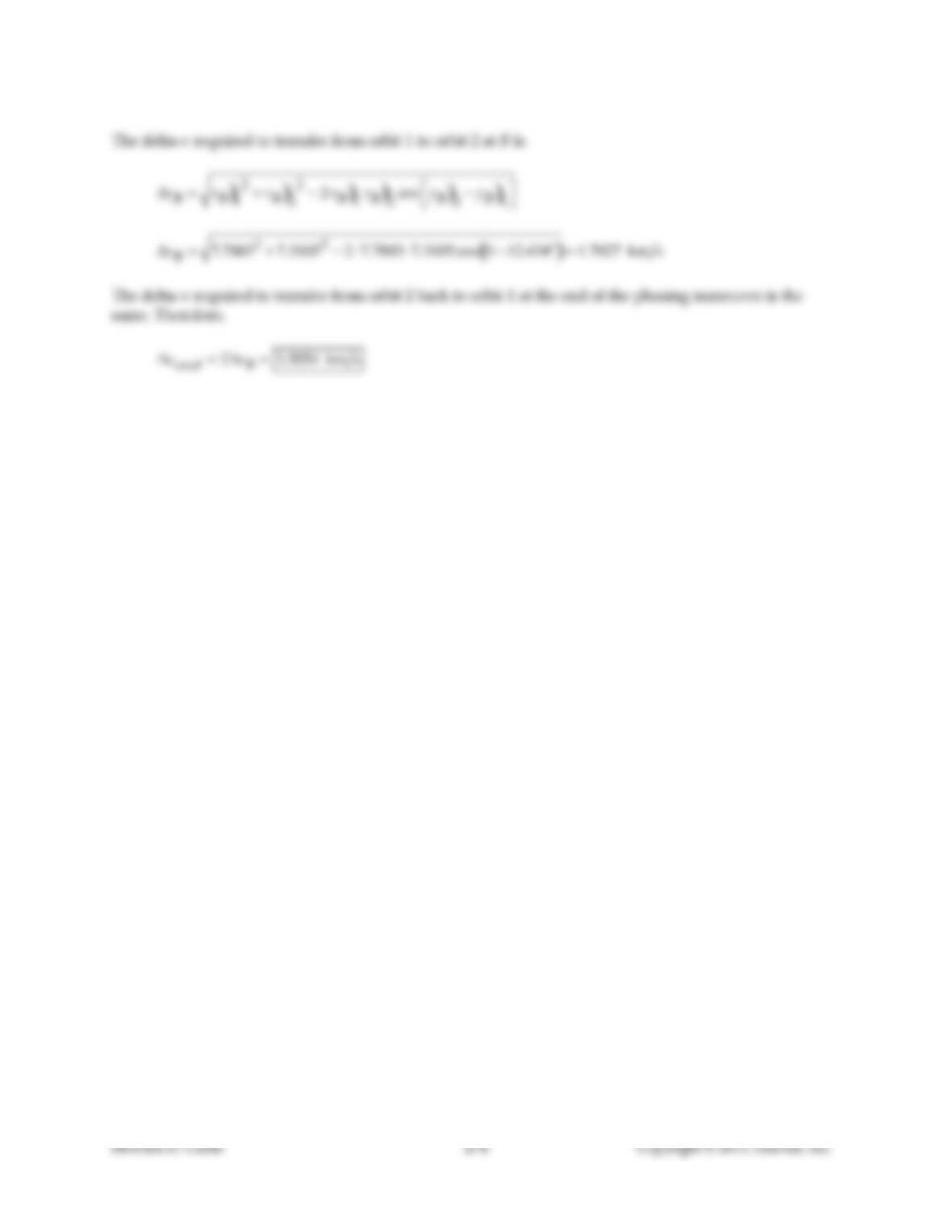
vtotal 2vB3.3054 km s
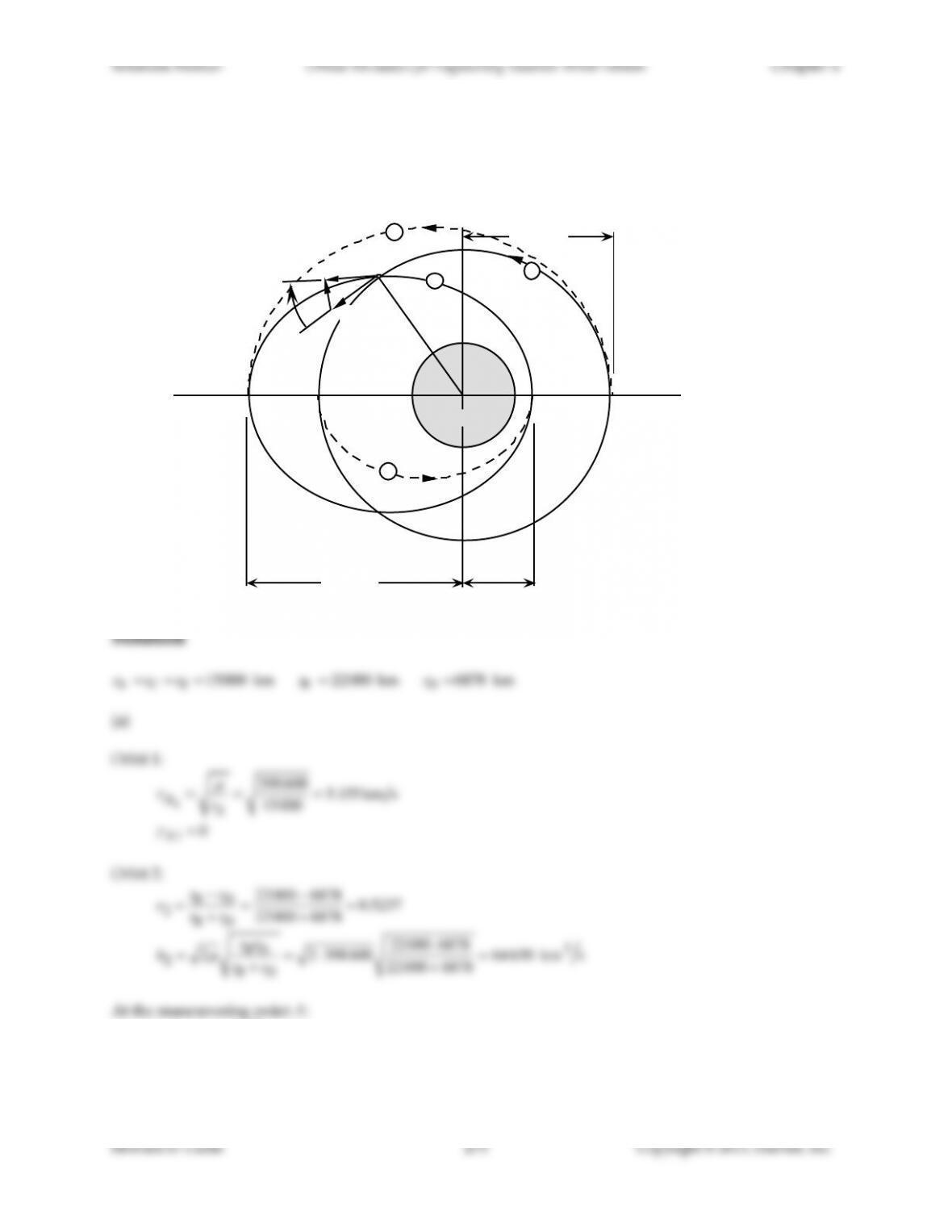
Problem 6.24 (a) With a single delta-v maneuver, the earth orbit of a satellite is to be changed from a
circle of radius 15 000 km to a collinear ellipse with perigee altitude of 500 km and apogee radius of 22000
km. Calculate the magnitude of the required delta-v and the change in the flight path angle
.
(b) What is the minimum total delta-v if the orbit change is accomplished instead by a Hohmann transfer?
15 000 km
22 000 km 6878 km
2
A
B C D E
2
vA1
v
A2
v
Common apse
line
Earth
3
1
4
Howard D. Curtis 276 Copyright © 2013, Elsevier, Inc.
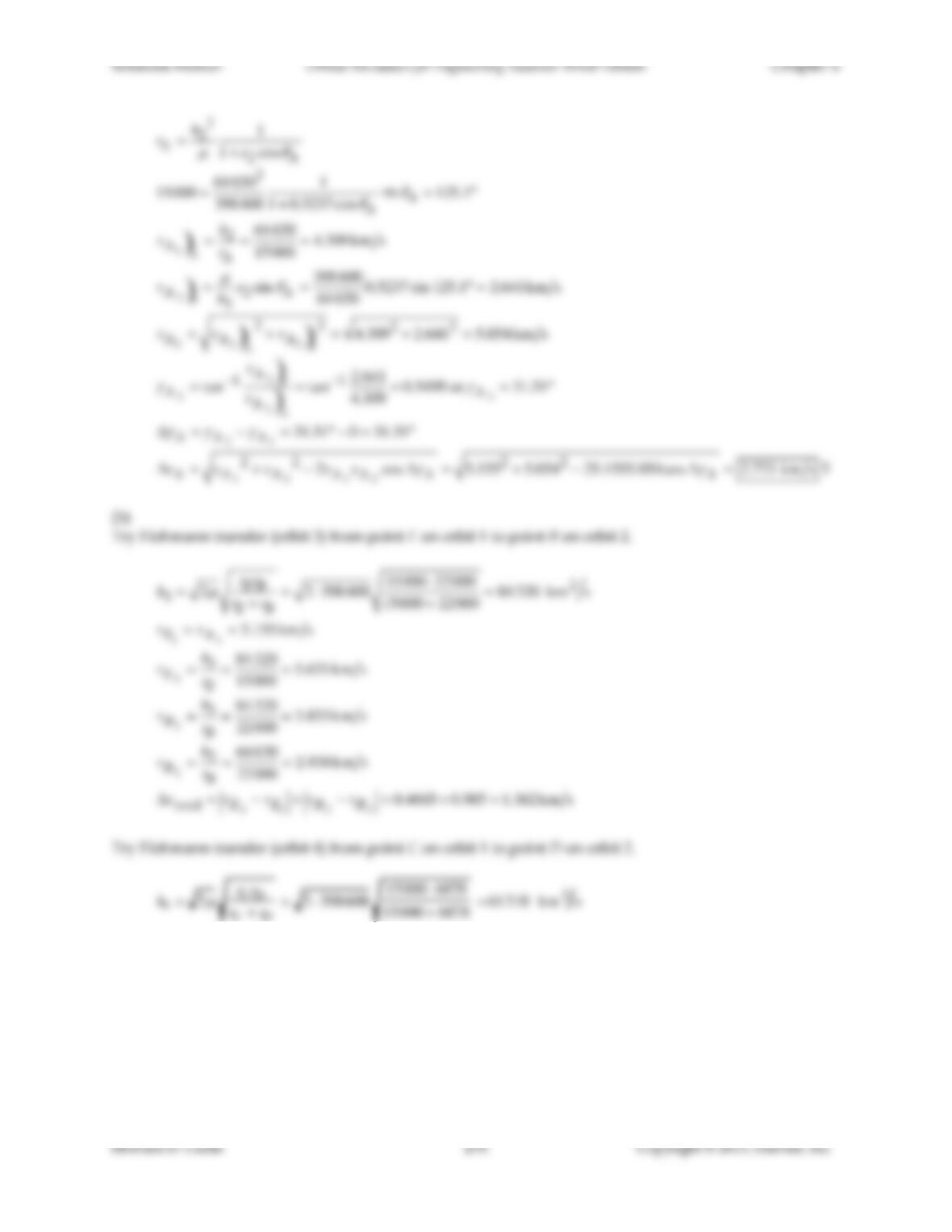
rAh22
1
1e2cos
A
15000 64 6302
398 600
1
10.5237 cos
A
A125.1
vA2
h2
rA
64 630
15000 4.309 km s
vA2
r
h2
e2sin
A398 600
64 630 0.5237 sin 125.1 2.641km s
vA2vA2
2vA2
r
24.30922.64125.054 km s
A2tan 1vA2
r
vA2
tan 12.641
4.309 0.5499
A231.51
A
A2
A131.51 031.51
vAvA1
2vA2
22vA1vA2cos
A5.15525.054225.1555.054 cos
A2.773 km s
T
(b)
Try Hohmann transfer (orbit 3) from point E on orbit 1 to point B on orbit 2.
h32
r
Er
B
r
Er
B
2398 600 15000 22000
15000 22000 84 320 km 2s
vE1vA15.155 km s
vE3h3
r
E
84 320
15 000 5.621 km s
vB3h3
r
B
84 320
22000 3.833 km s
vB2h2
r
B
64 630
22000 2.938 km s
vtotal vE3vE1vB2vB30.4665 0.985 1.362 km s
Try Hohmann transfer (orbit 4) from point C on orbit 1 to point D on orbit 2.
h42
rCrD
rCr
D
2398600 15000 6878
15000 6878 61310 km 2s
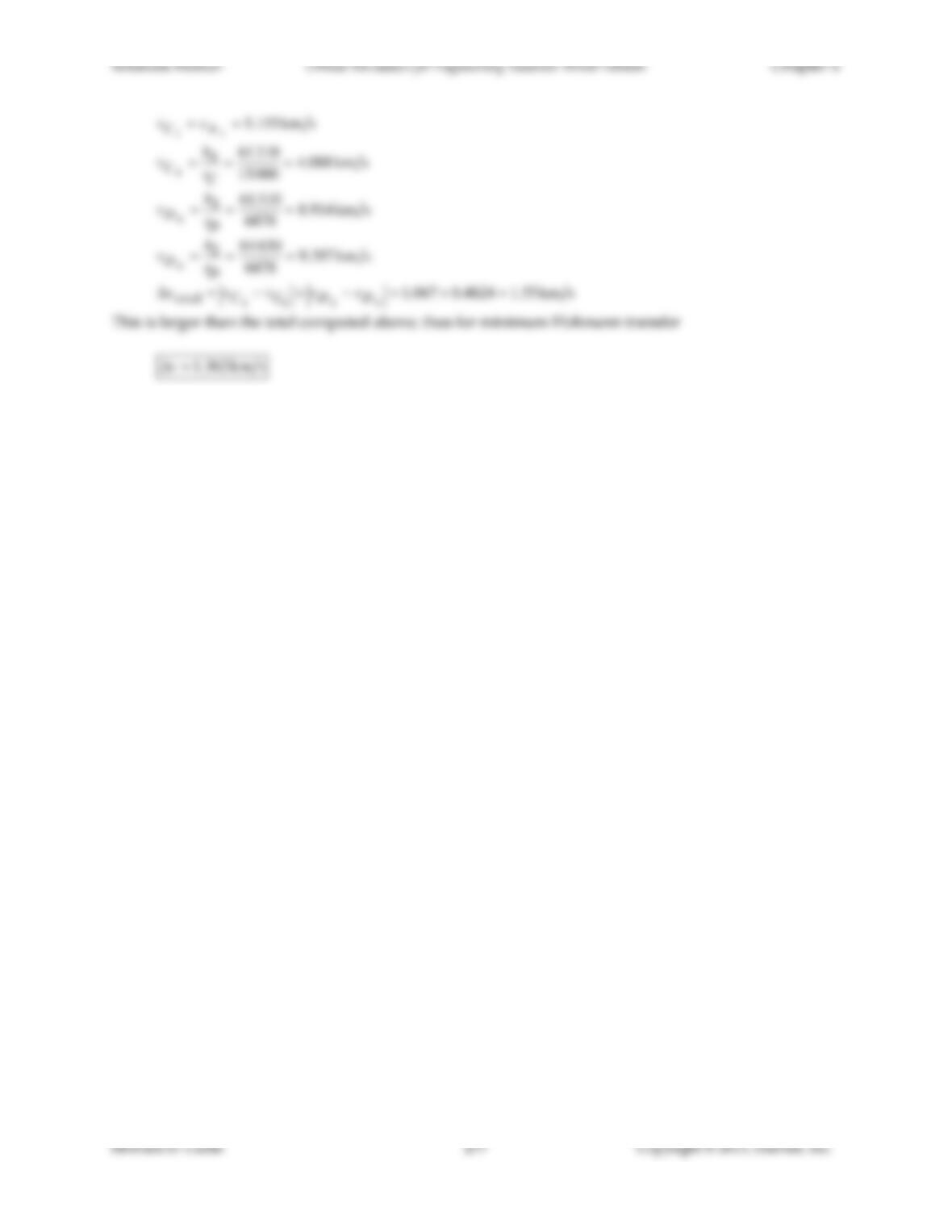
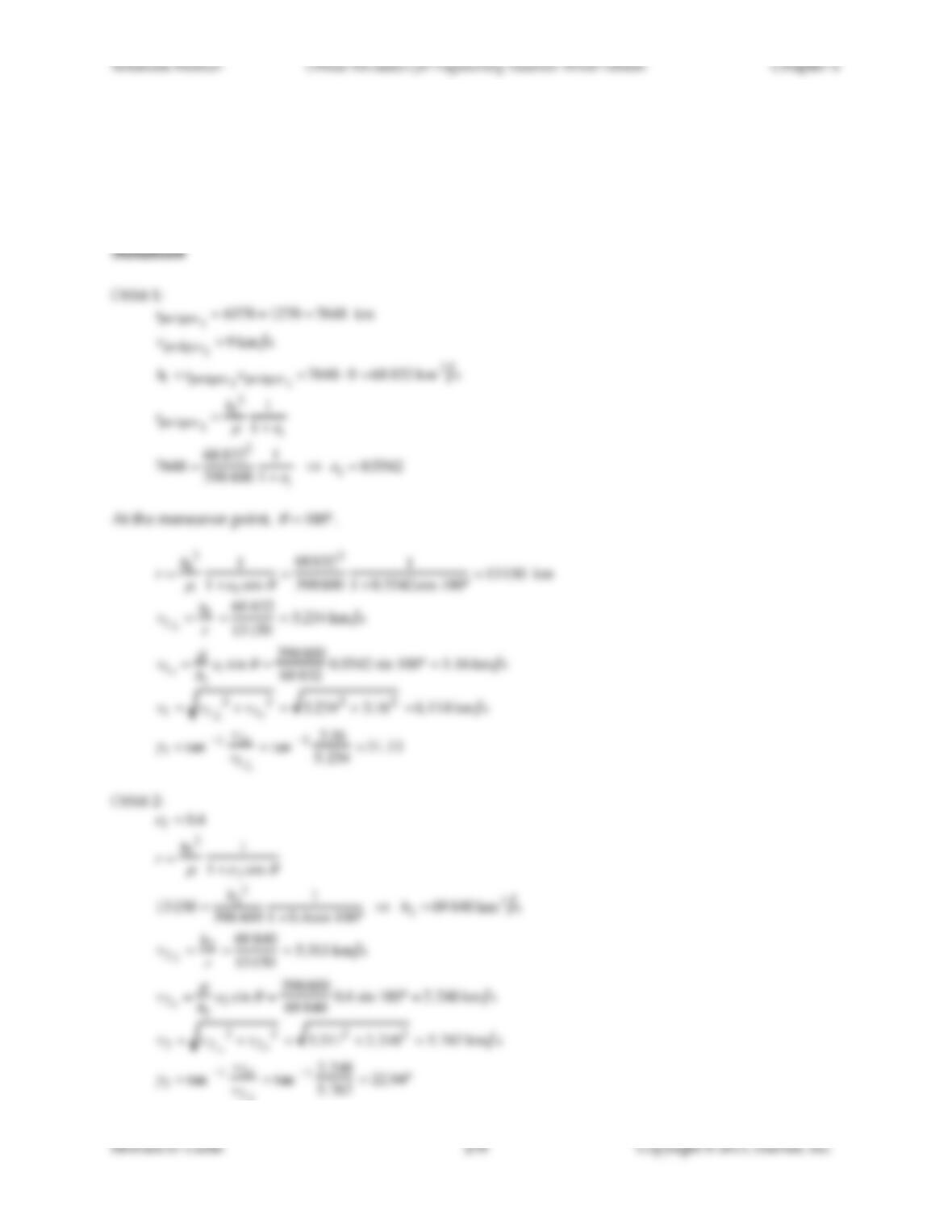
vC1vA15.155 km s
vC4h4
r
C
61 310
15000 4.088 km s
v1.362 km s
Problem 6.25 An earth satellite has a perigee altitude of 1270 km and a perigee speed of 9 km/s. It is
required to change its orbital eccentricity to 0.4, without rotating the apse line, by a delta-v maneuver at
100
. Calculate the magnitude of the required
v
and the change in flight path angle
.
v2v22v2r
25.31122.24825.767 km s
2tan 1v2r
v2
tan 12.248
5.767 22.94
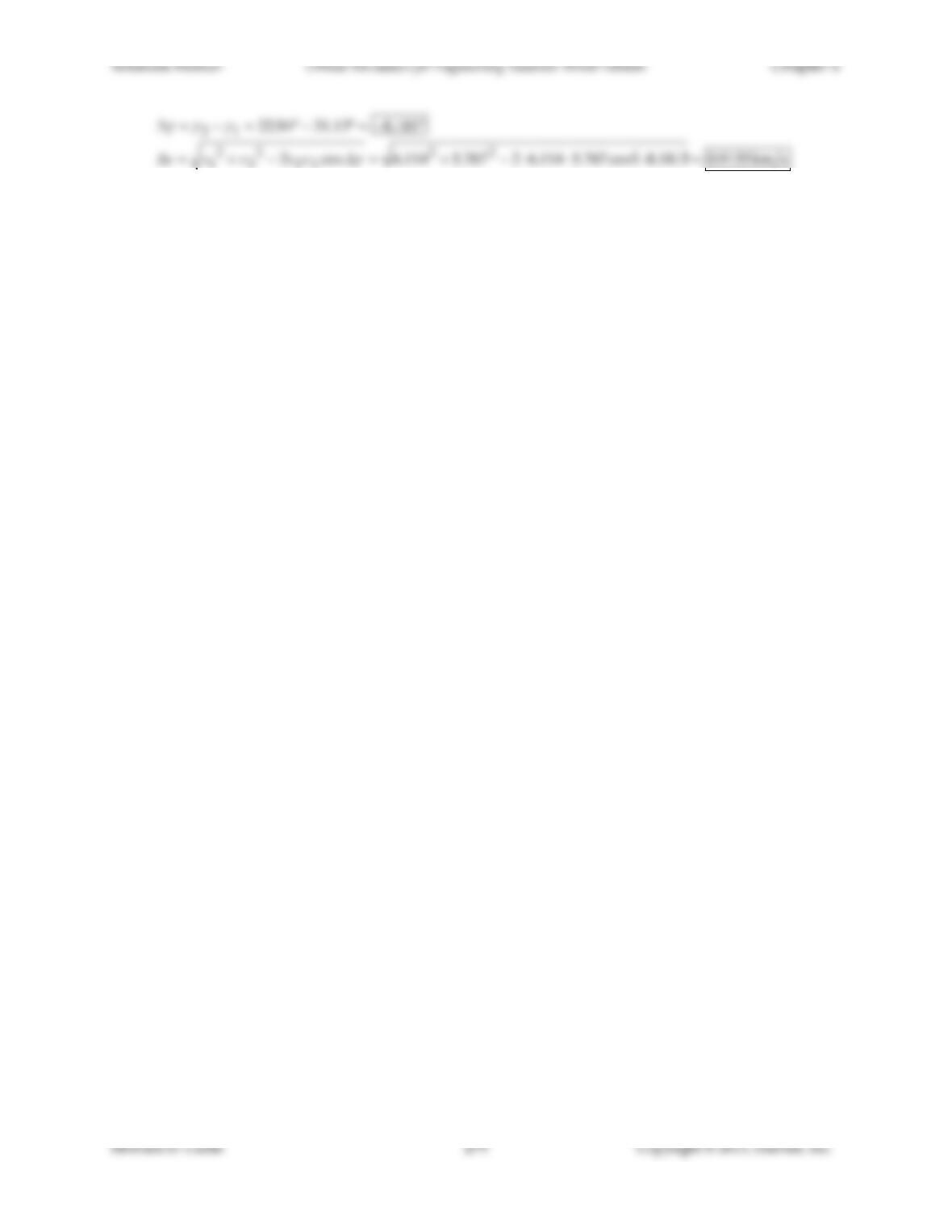
2
122.94 31.13 8.181
vv12v222v1v2cos
6.11425.767226.114 5.767 cos 8.181
0.9155km s
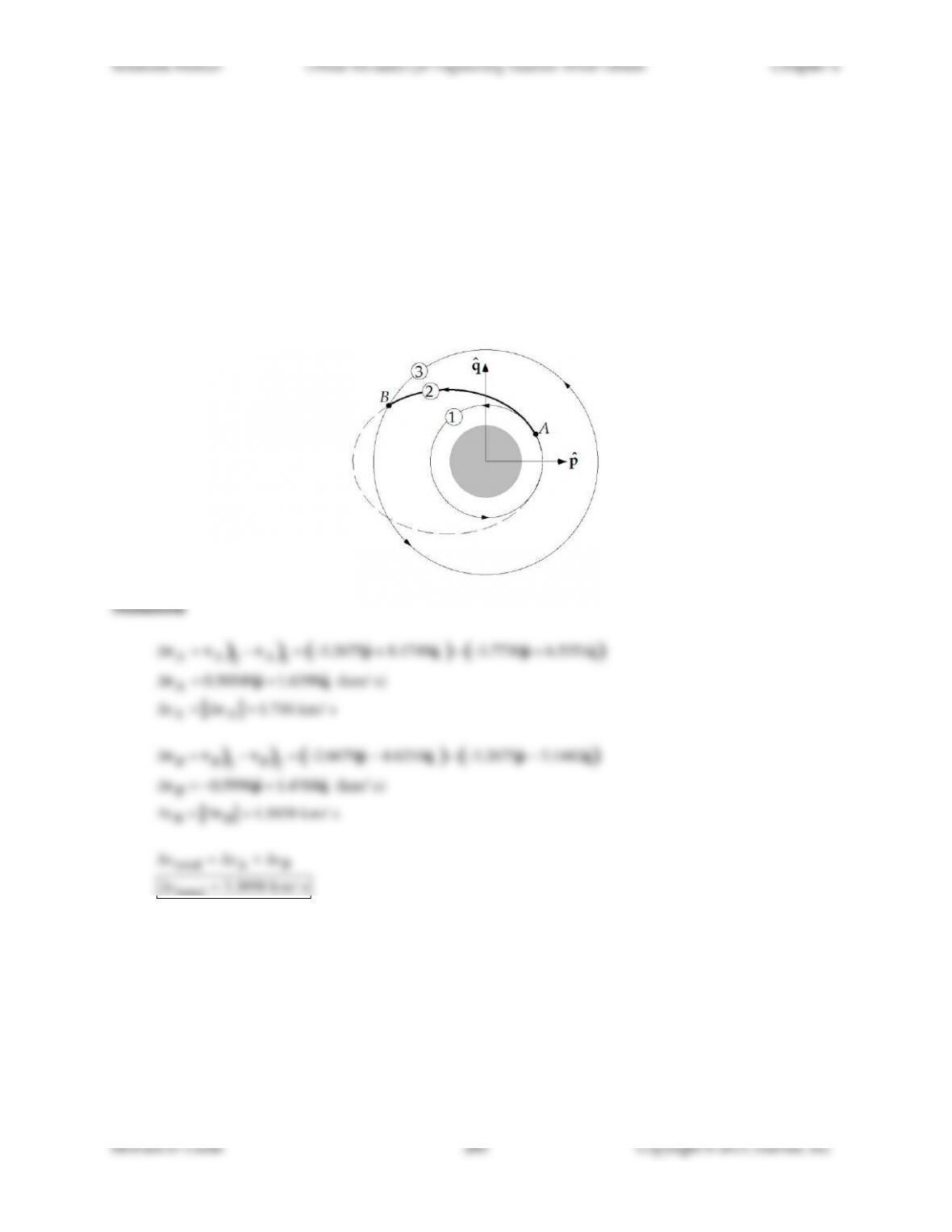
Problem 6.26 The velocities at points A and B on orbits 1, 2 and 3, respectively, are (relative to the
perifocal frame)
vA
1 3.7730 ˆ
p6.5351ˆ
q (km/ s)
vA2 3.2675 ˆ
p8.1749 ˆ
q (km/ s)
vB2 3.2675 ˆ
p3.1442 ˆ
q (km/ s)
vB3 2.6679 ˆ
p4.6210 ˆ
q (km/ s)
Calculate the total
v
for a transfer from orbit 1 to orbit 3 by means of orbit 2.
vtotal 3.3098 km/ s
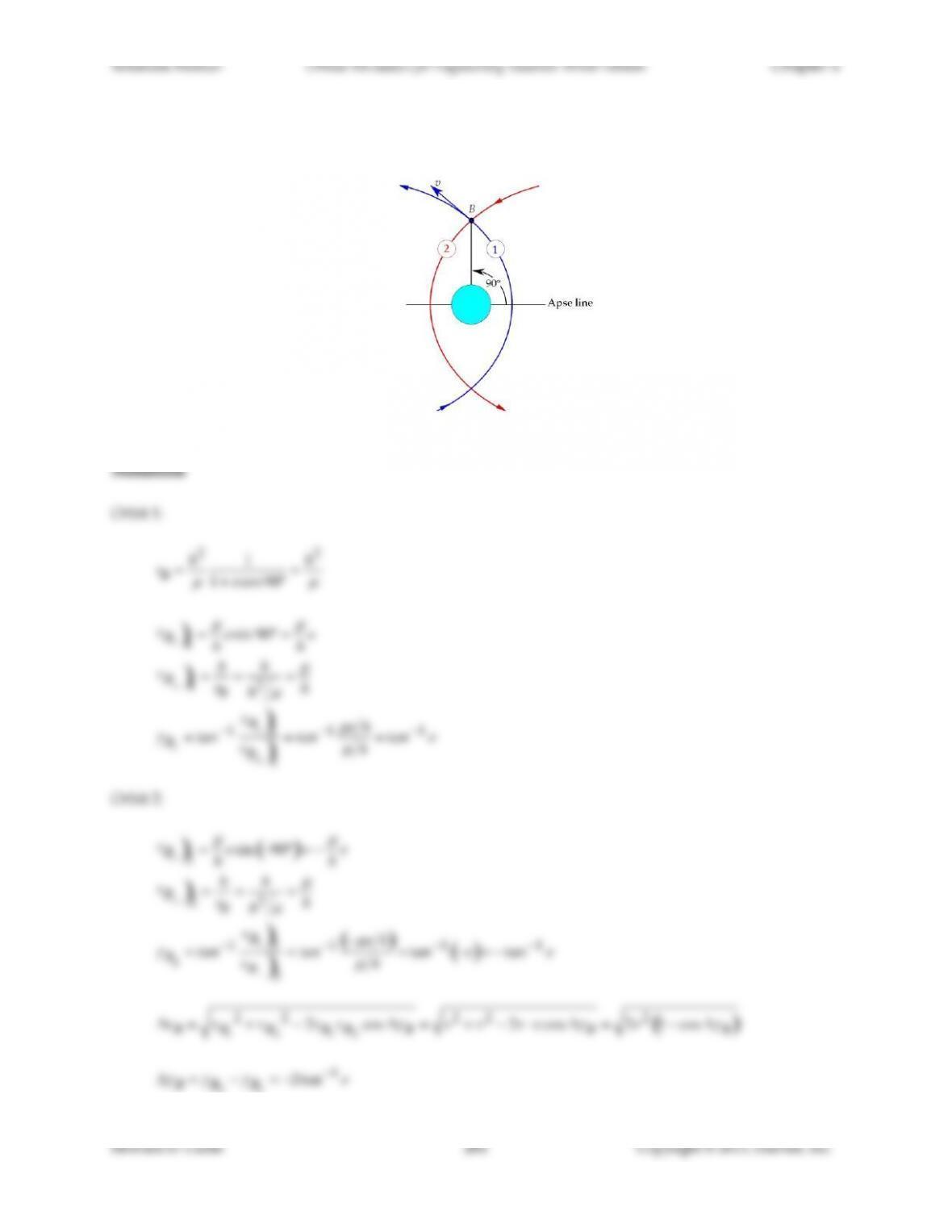
Problem 6.27 Trajectories 1 and 2 are ellipses with eccentricity 0.4 and the same angular momentum h.
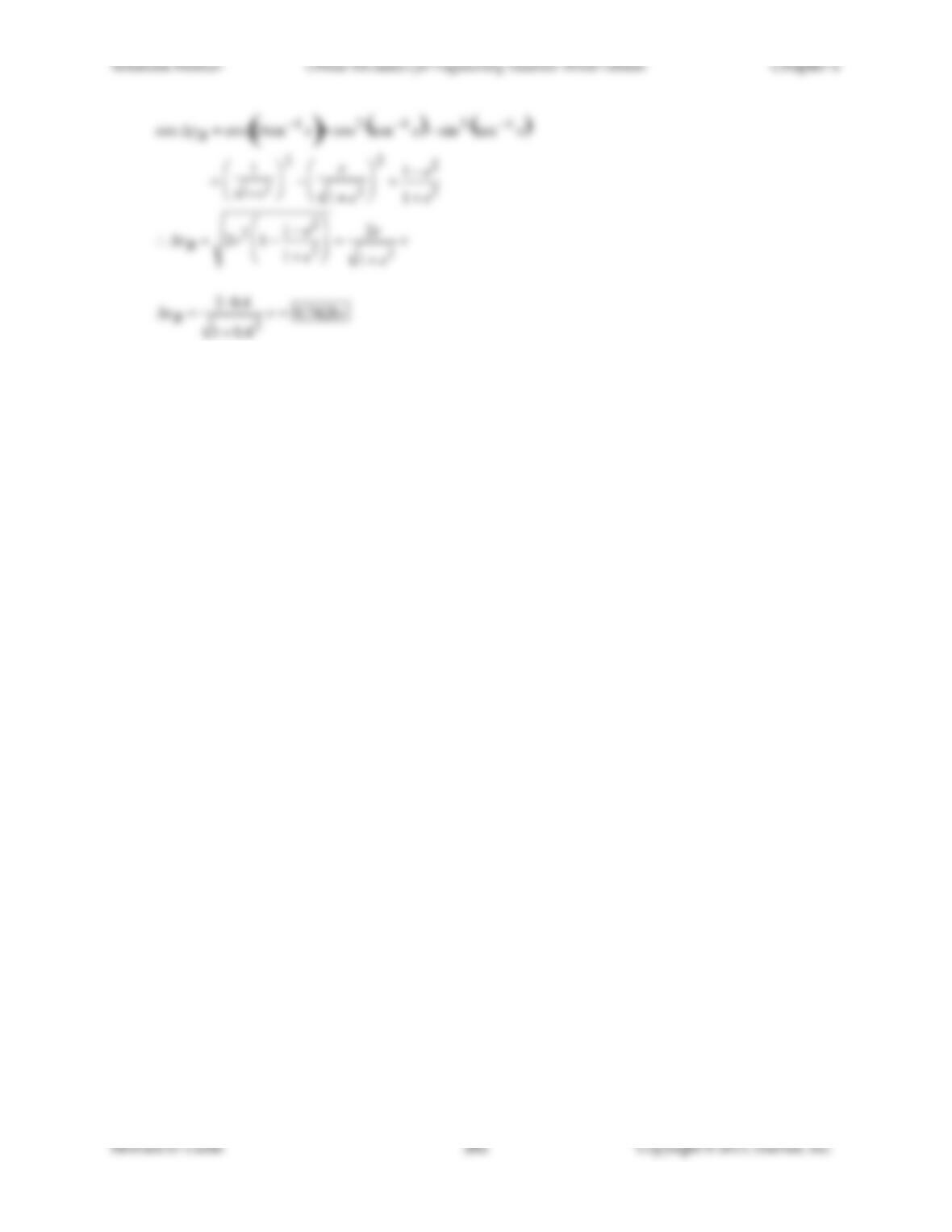
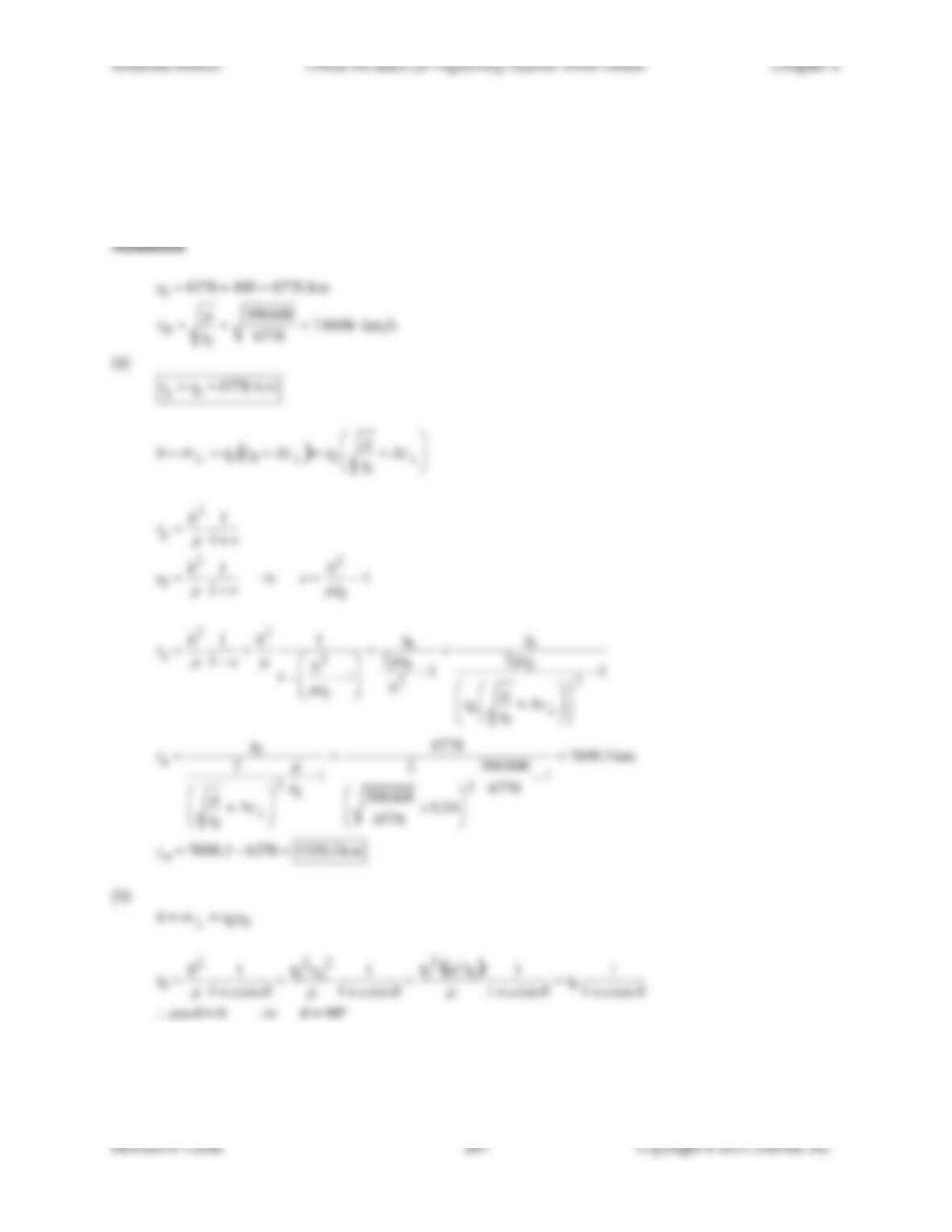
Their speed at B is v. Calculate, in terms of v, the
v
required at B to transfer from orbit 1 to orbit 2.
B
B2
B1 2 tan 1e
cos
Bcos 2 tan 1e
cos2tan 1e
sin 2tan 1e
10.42v0.7428v
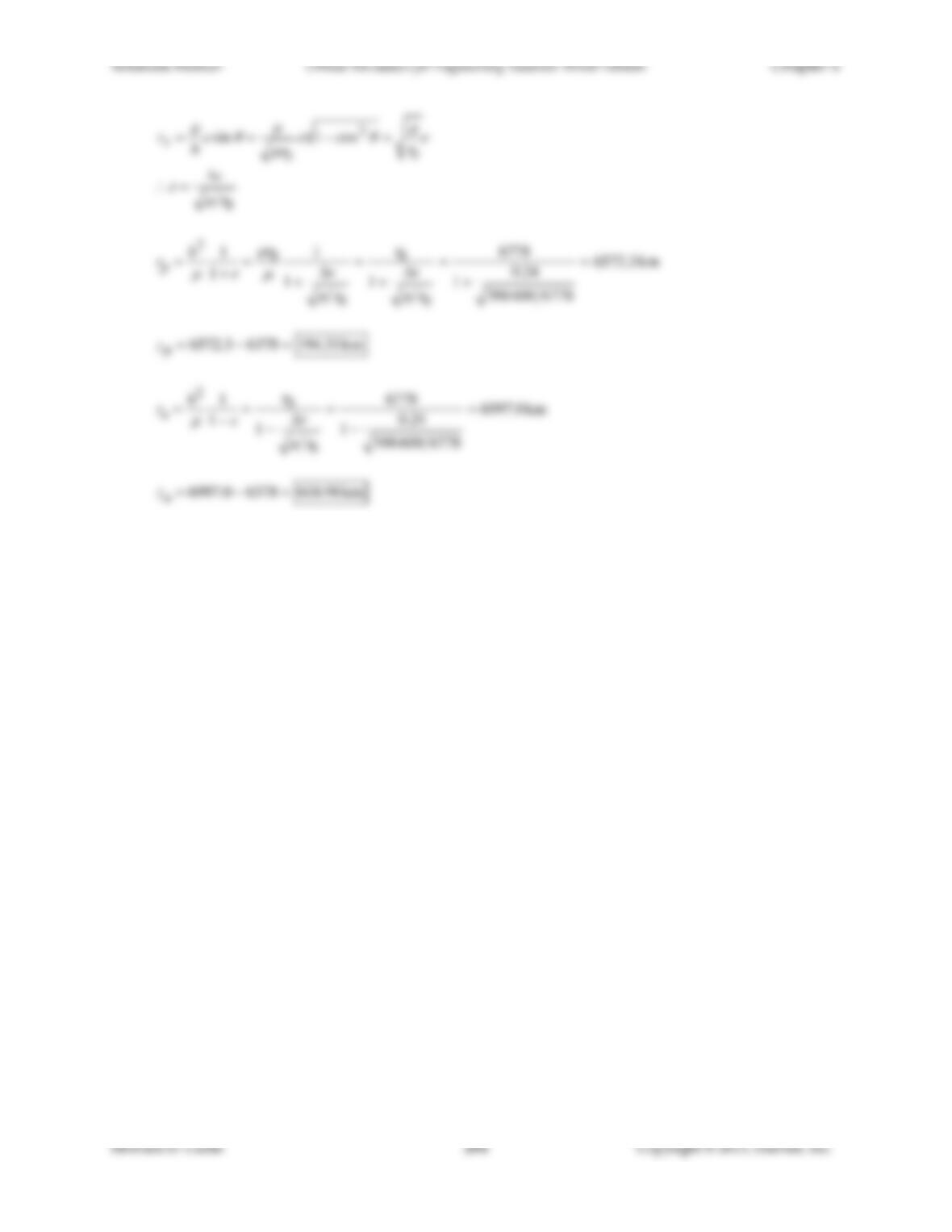
Problem 6.28 A satellite is in a circular earth orbit of altitude 400 km. Determine the new perigee and
apogee altitudes if the satellite’s onboard rocket
(a) Provides a delta-v in the tangential direction of 240 m/s.
(b) Provides a delta-v in the radial (outward) direction of 240 m/s.
vr
hesin
r
0
e1cos2
r
0
e
za6997.0 6378 618.98km
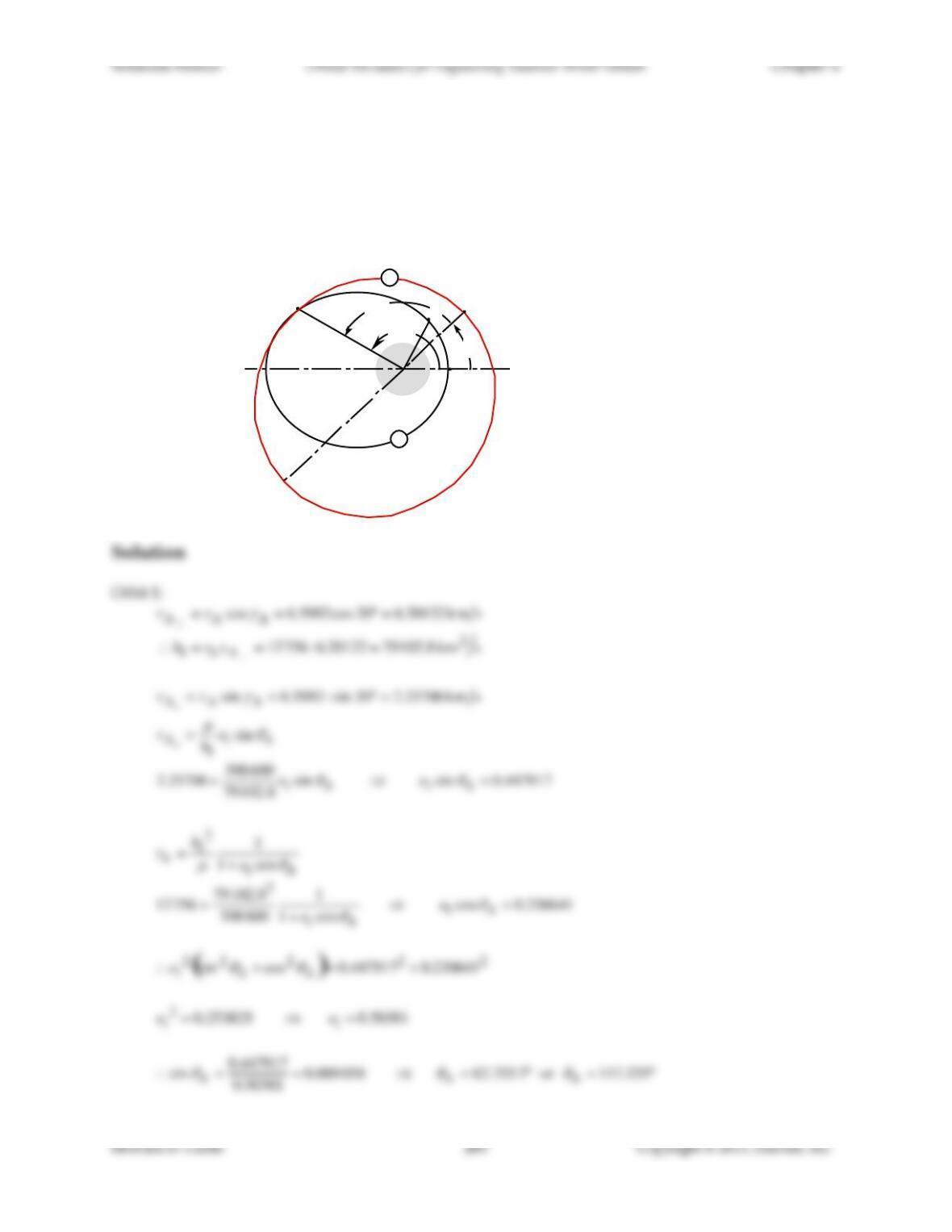
Problem 6.29 At point A on its earth orbit, the radius, speed and flight path angle of a satellite are
rA12 756 km
,
vA6.5992 km/ s
and
A20
. At point B, at which the true anomaly is 150°, an im-
pulsive maneuver causes
v 0.75820 km/ s
and
vr0
.
(a) What is the time of flight from A to B?
(b) What is the rotation of the apse line as a result of this maneuver?
B
150°
1
2
P1
P2
A
Solutions Manual Orbital Mechanics for Engineering Students Third Edition Chapter 6
1h1
r
B
27 848.9 2.84043km s
Solutions Manual Orbital Mechanics for Engineering Students Third Edition Chapter 6
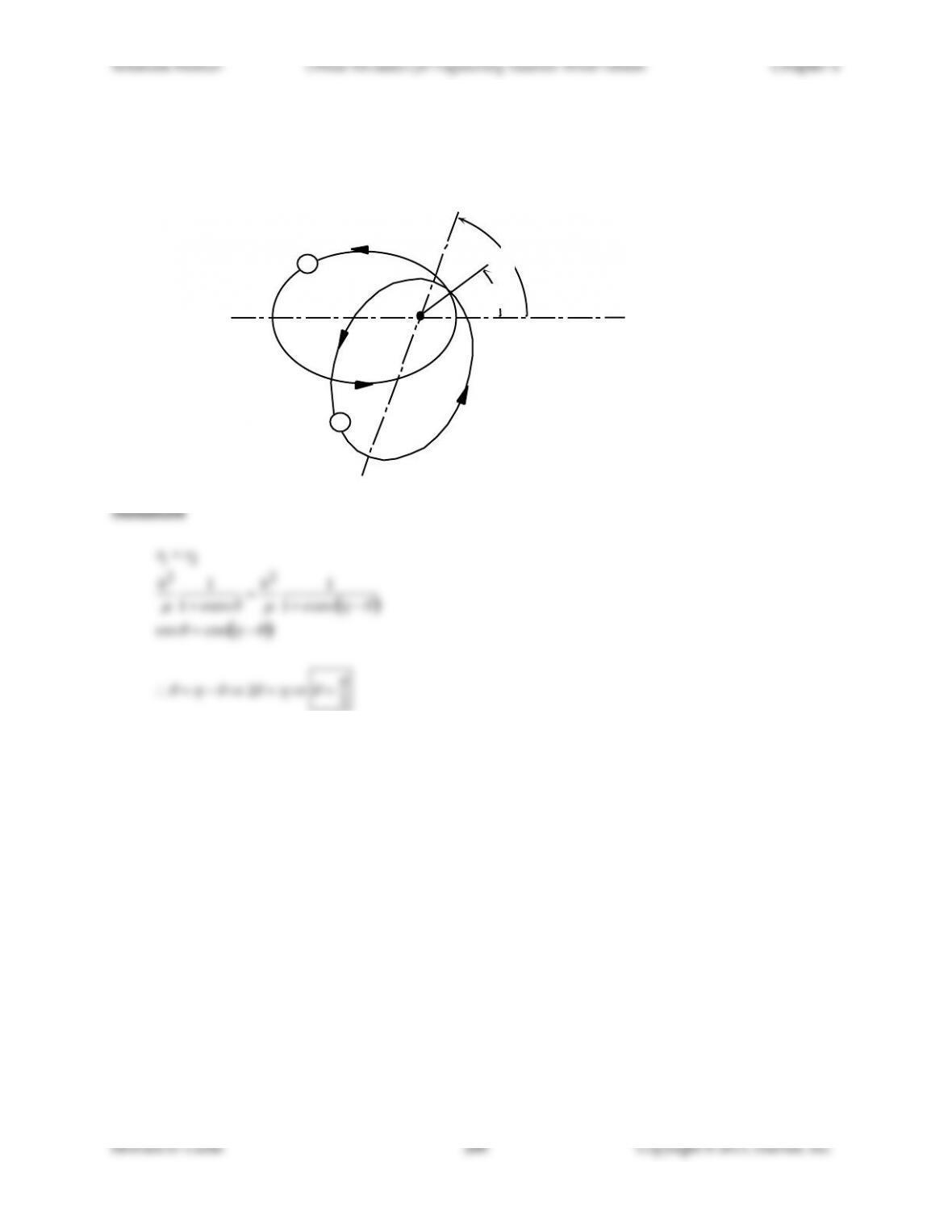
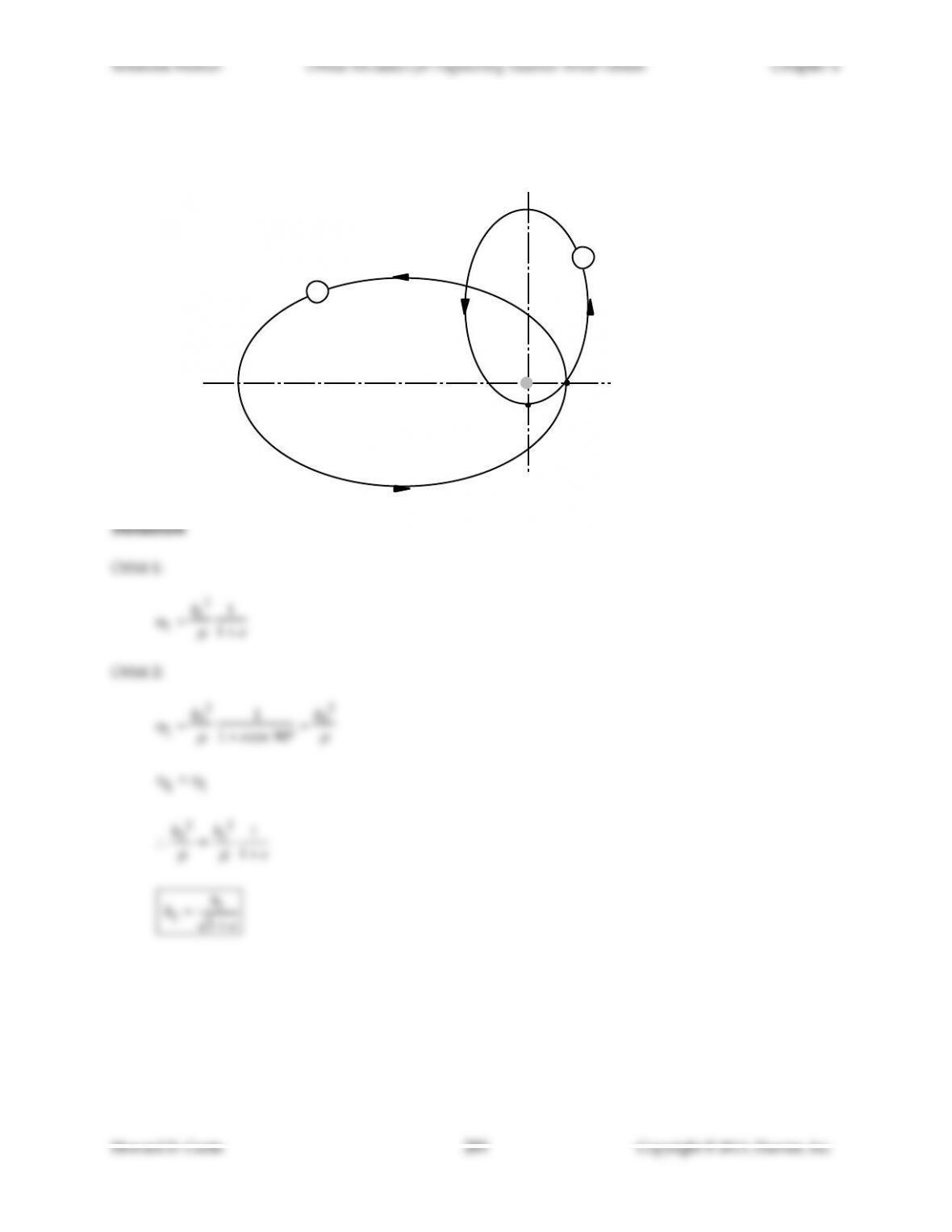
Problem 6.30 A satellite is in elliptical orbit 1. Calculate the true anomaly
(relative to the apse line of
orbit 1) of an impulsive maneuver that rotates the apse line an angle
counterclockwise but leaves the
eccentricity and the angular momentum unchanged.
2
2
Original apse
line
2
1
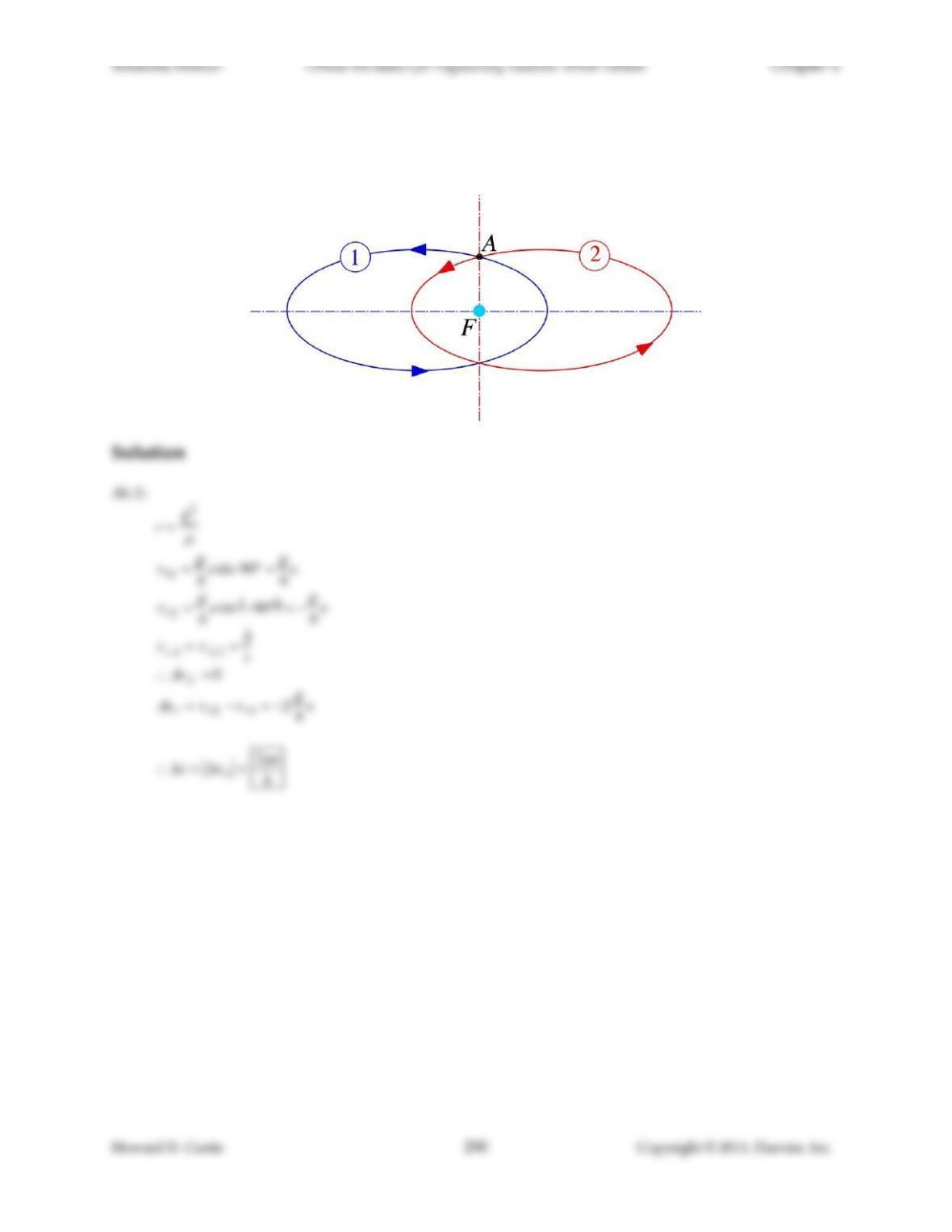
Problem 6.31 A satellite in orbit 1 undergoes a delta-v maneuver at perigee
P
1
such that the new orbit
2 has the same eccentricity
e
, but its apse line is rotated 90° clockwise from the original one. Calculate the
specific angular momentum of orbit 2 in terms of that of orbit 1 and the eccentricity
e
.
1e
1
2
P
1
P
2
F
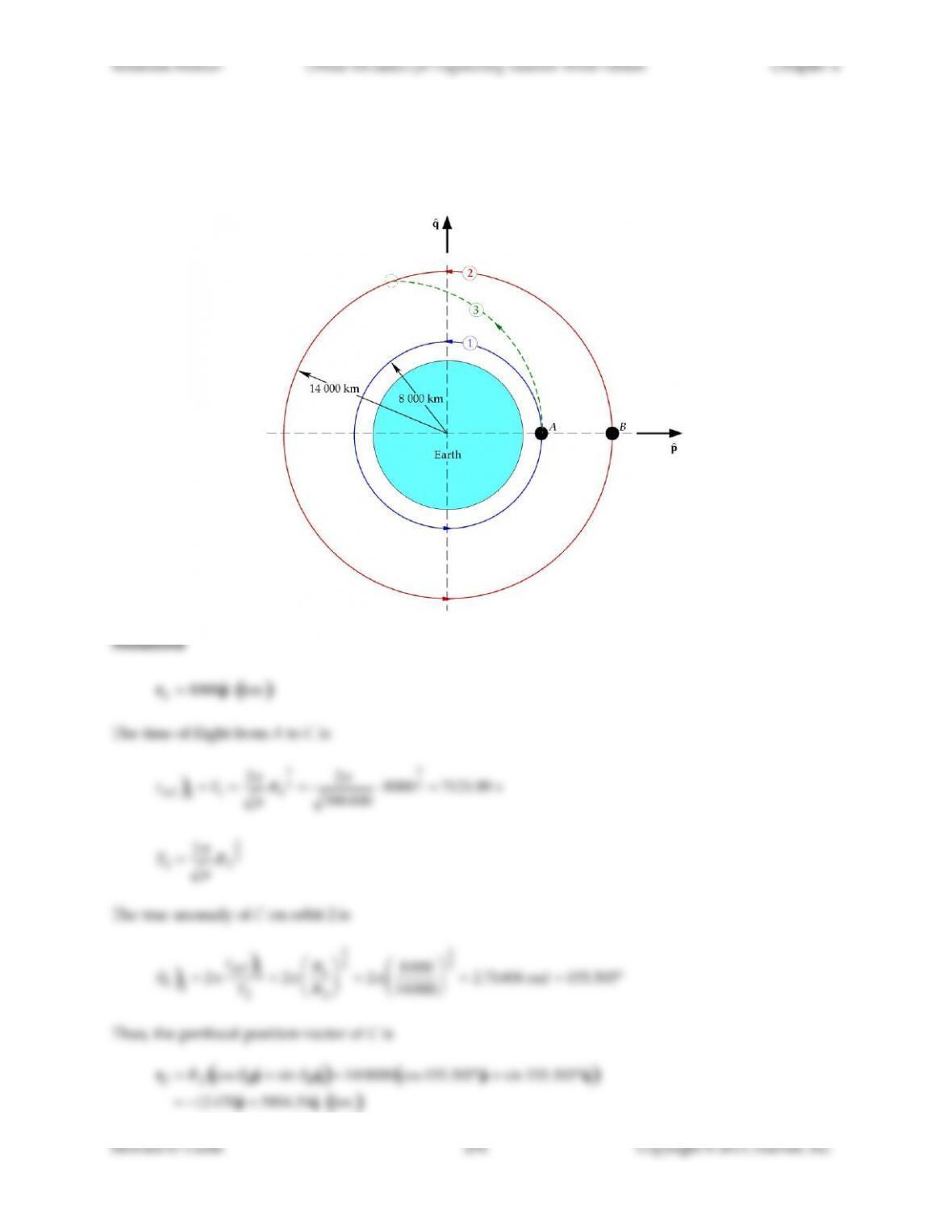
Problem 6.32 Calculate the delta-v required at A in orbit 1 for a single impulsive maneuver to rotate
the apse line 180° counterclockwise (to become orbit 2), but keep the eccentricity e and the angular mo-
mentum
h
the same.
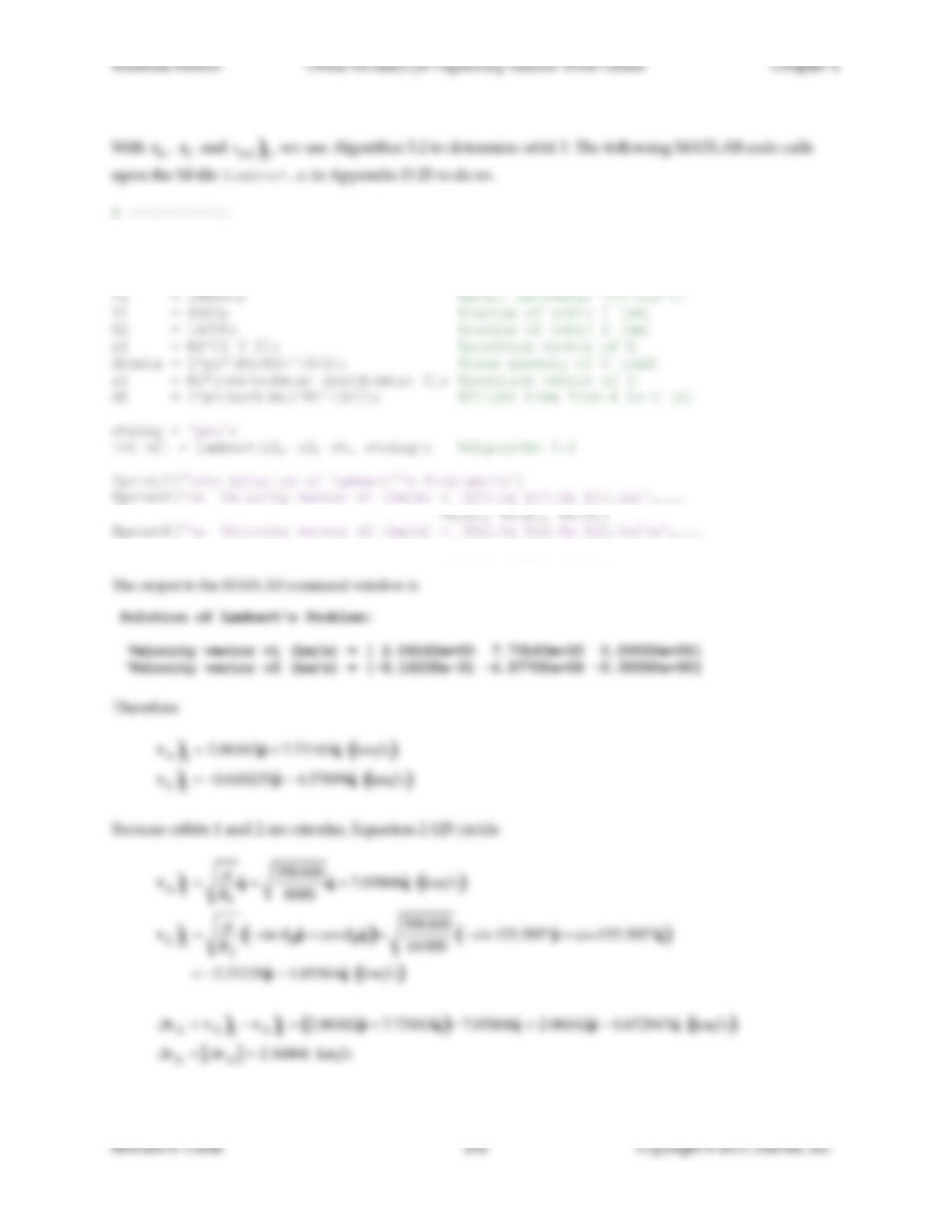
Problem 6.33 Spacecraft A and B are in concentric, coplanar circular orbits 1 and 2, respectively. At the
instant shown, spacecraft A executes an impulsive delta-v maneuver to embark on orbit 3 in order to in-
tercept and rendezvous with spacecraft B in a time equal to the period of orbit 1. Calculate the total delta–
v required.
12 470 ˆ
p5804.51ˆ
q km
% Problem 6_33
% ––——–––—–
clear
global mu
v2(1), v2(2), v2(3))
vA
vA2.16866 km s