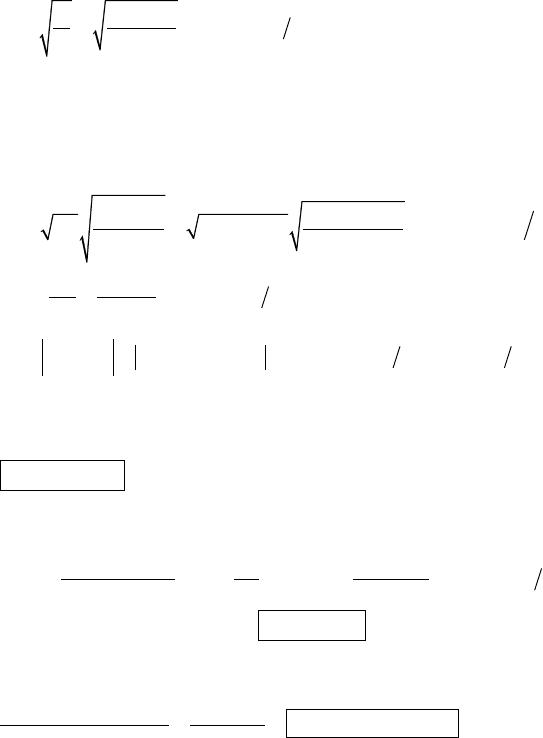
Problem 6.1 A large spacecraft has a mass of 125,000 kg. Its orbital maneuvering engines produce a
thrust of 50 kN. The spacecraft is in a 400 km circular earth orbit. A delta-v maneuver transfers the space-
craft to a coplanar 300 km by 400 km elliptical orbit. Neglecting propellant loss and using elementary
physics (linear impulse equals change in linear momentum, distance equals speed times time), estimate
(a) the time required for the
v
burn and
(b) the distance traveled by the spacecraft during the burn.
(c) Calculate the ratio of your answer for (b) to the circumference of the initial circular orbit.
(d) What percent of the initial mass was expelled as combustion products?
(d)
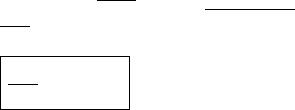
Problem 6.2 A satellite traveling 8 km/s at a perigee altitude of 500 km fires a retrorocket. What delta–
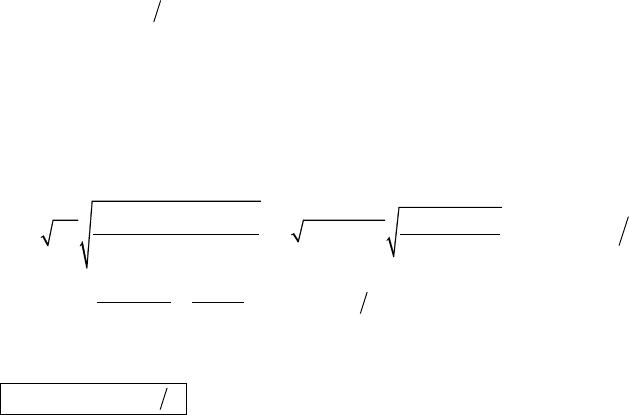
v is necessary to reach a minimum altitude of 200 km during the next orbit?
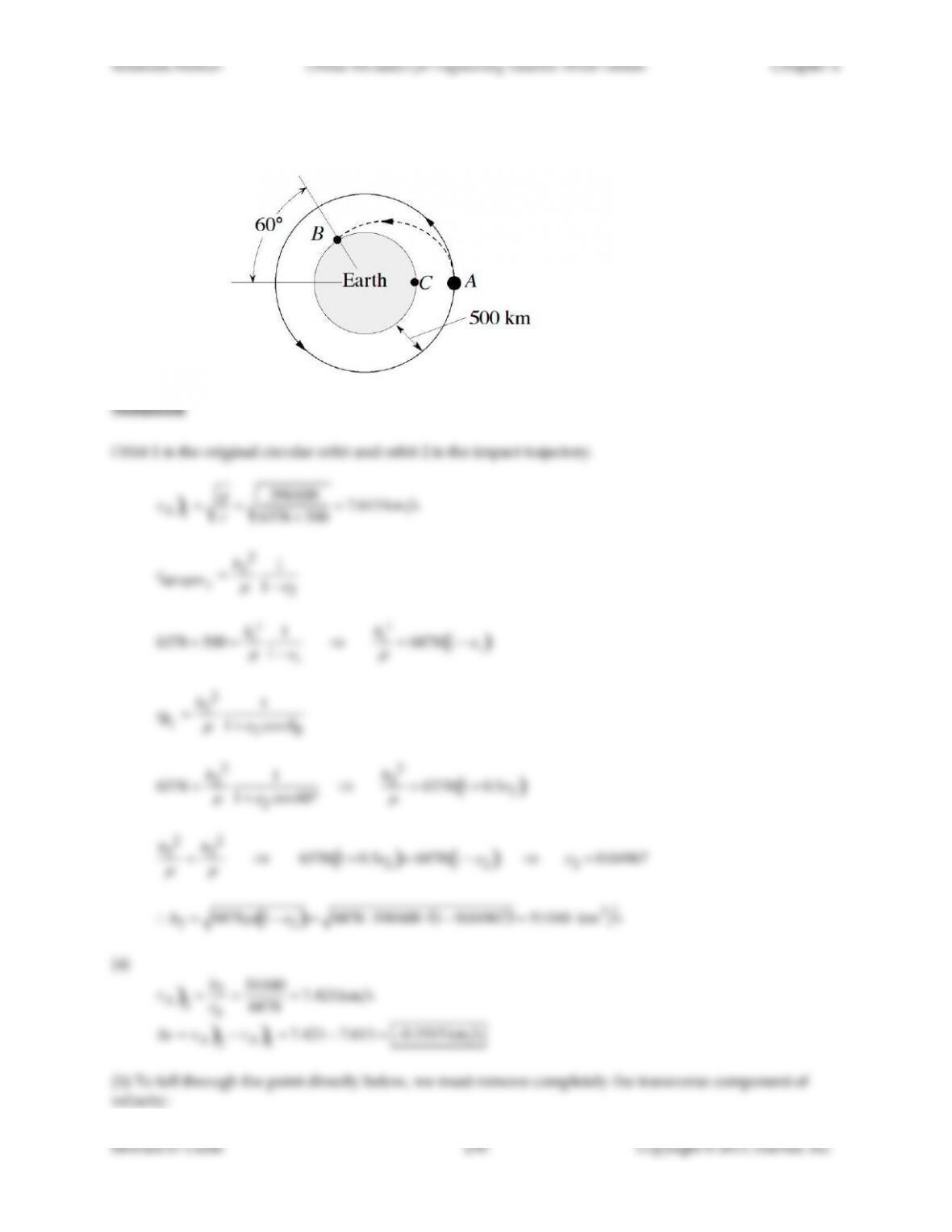
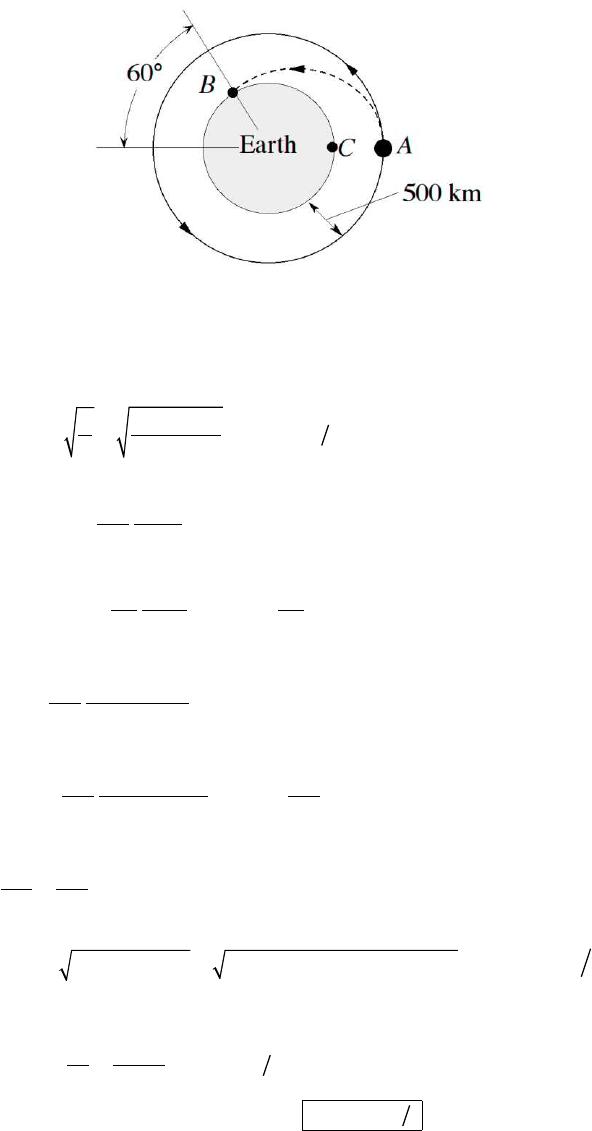
Problem 6.3 A spacecraft is in a 500 km altitude circular earth orbit. Neglecting the atmosphere, find
the delta-v required at A in order to impact the earth at (a) point B; (b) point C.
Problem 6.4 A satellite is in a circular orbit at an altitude of 250 km above the earth’s surface. If an
onboard rocket provides a delta-v of 200 m/s in the direction of the satellite’s motion, calculate the alti-
tude of the new orbit’s apogee.
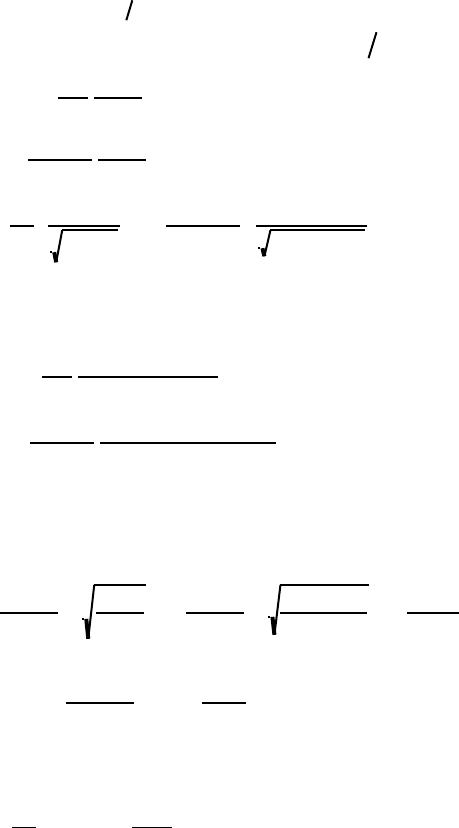
Problem 6.5 A spacecraft S is in a geocentric hyperbolic trajectory with a perigee radius of 7000 km and
a perigee speed of
1.3vesc
. At perigee, the spacecraft releases a projectile B with a speed of 7.1 km/s par-
allel to the spacecraft’s velocity. How far d from the earth’s surface is S at the instant B impacts the earth?
Neglect the atmosphere.
Solutions Manual Orbital Mechanics for Engineering Students Third Edition Chapter 6
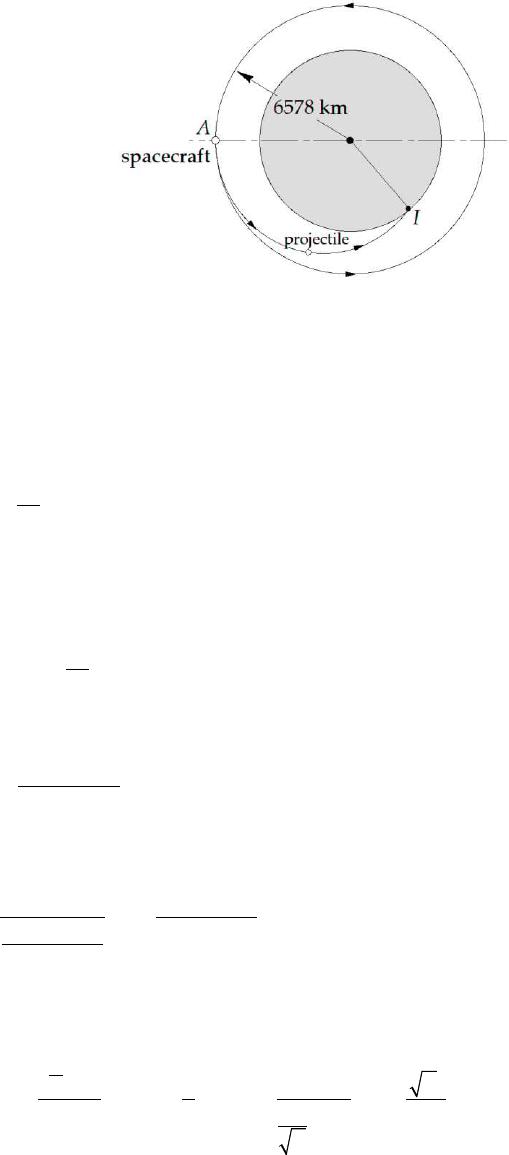
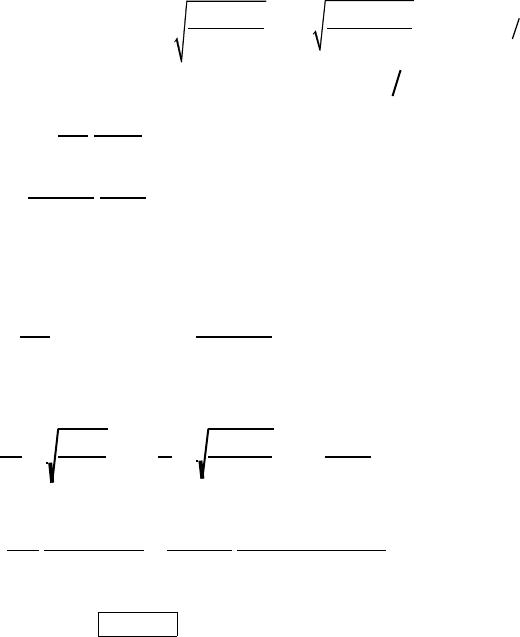
Problem 6.6 A spacecraft is in a 200 km circular earth orbit. At t = 0, it fires a projectile in the direction
opposite to the spacecraft’s motion. Thirty minutes after leaving the spacecraft, the projectile impacts the
earth. What delta-v was imparted to the projectile? Neglect the atmosphere.
f E
f E
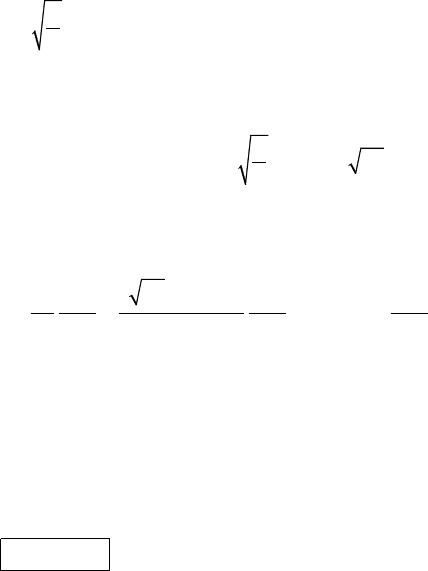
Problem 6.7 A spacecraft is in a circular orbit of radius r and speed v around an unspecified planet. A
rocket on the spacecraft is fired, instantaneously increasing the speed in the direction of motion by the
amount
v
v
, where
0
. Calculate the eccentricity of the new orbit.
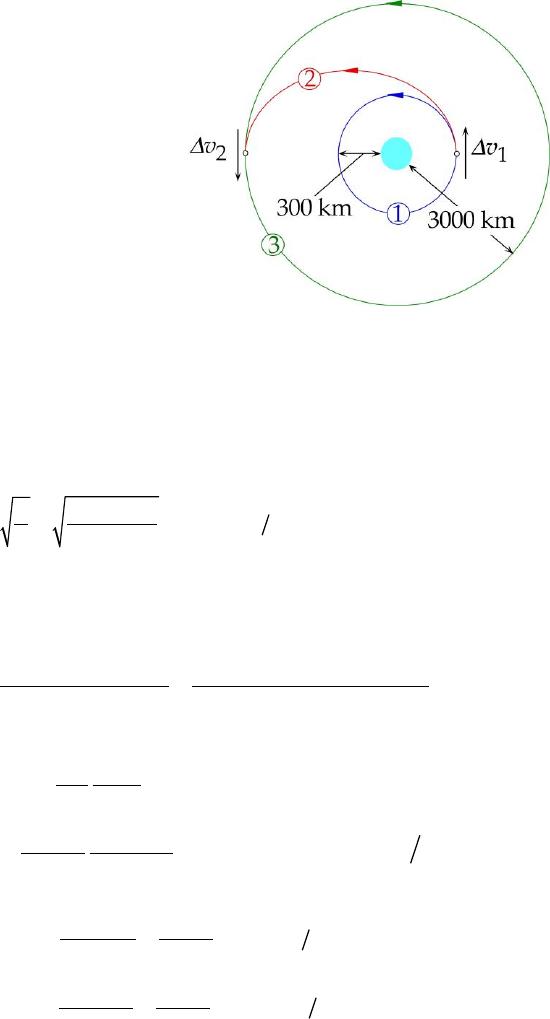
Problem 6.8 A spacecraft is in a 300 km circular earth orbit. Calculate
(a) the total delta-v required for a Hohmann transfer to a 3000 km coplanar circular earth orbit and
(b) the transfer orbit time.
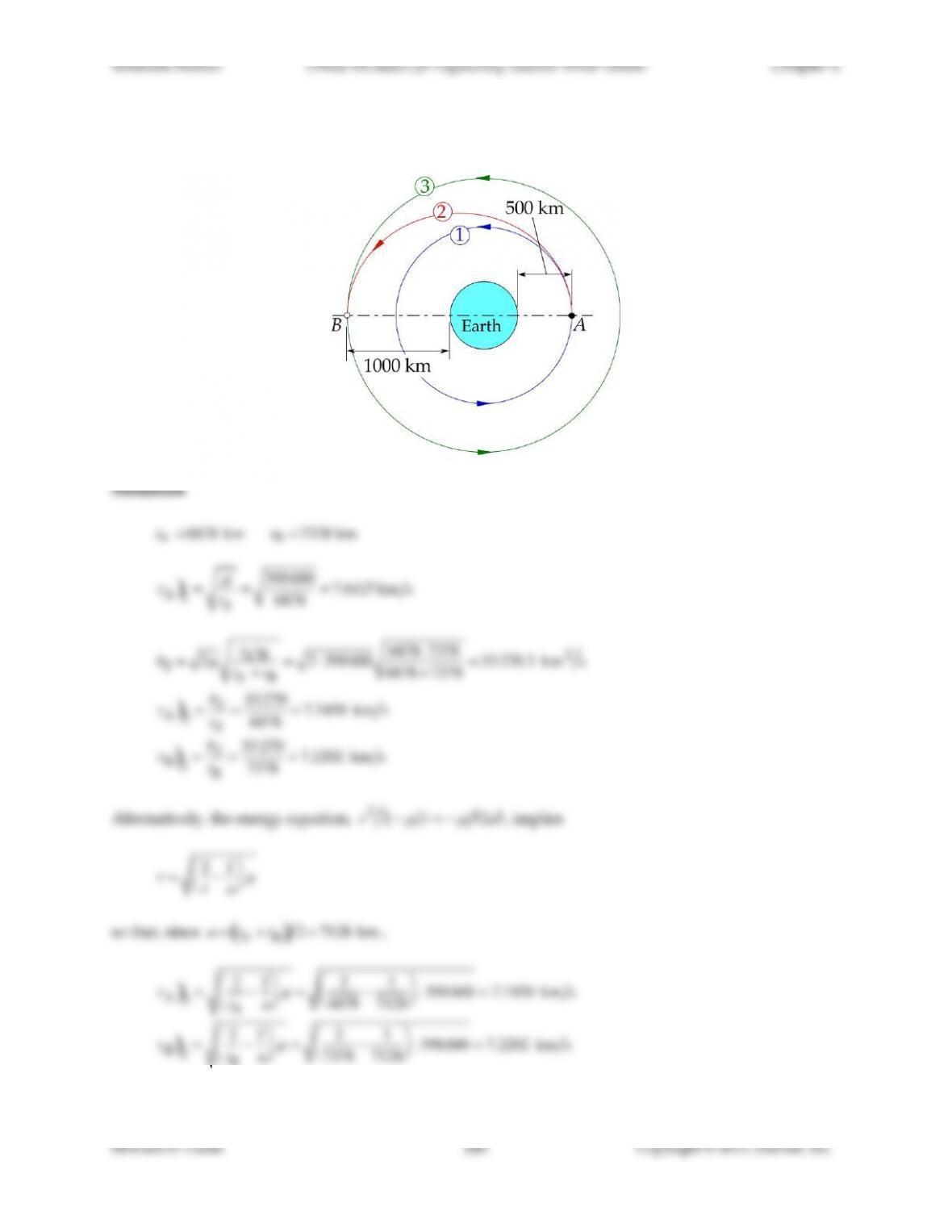
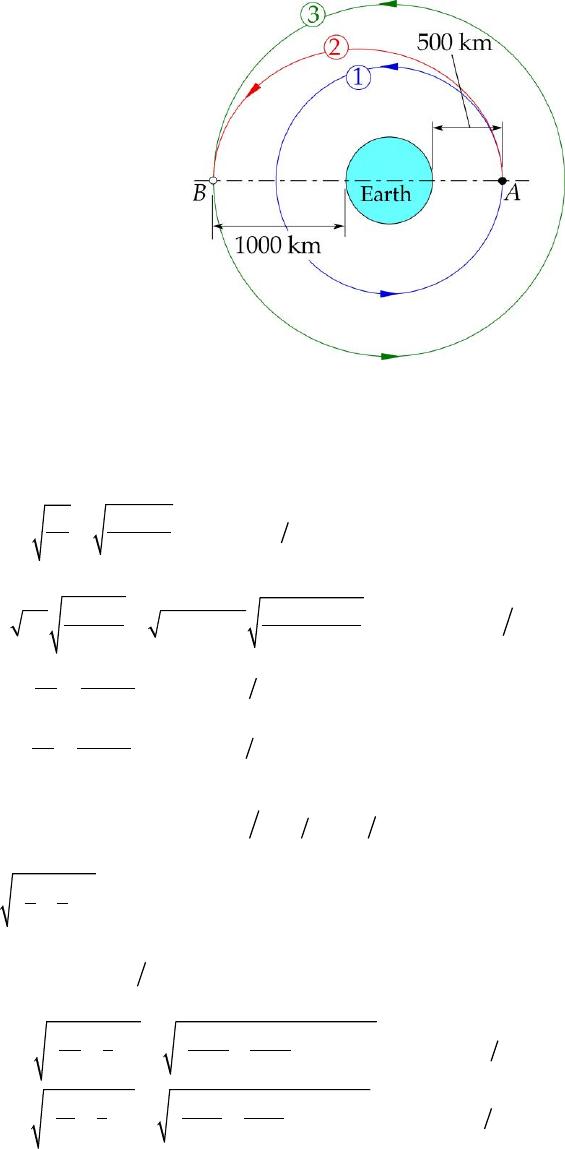
Problem 6.9 A space vehicle in a circular orbit at an altitude of 500 km above the earth executes a
Hohmann transfer to a 1000 km circular orbit. Calculate the total delta-v requirement.
B
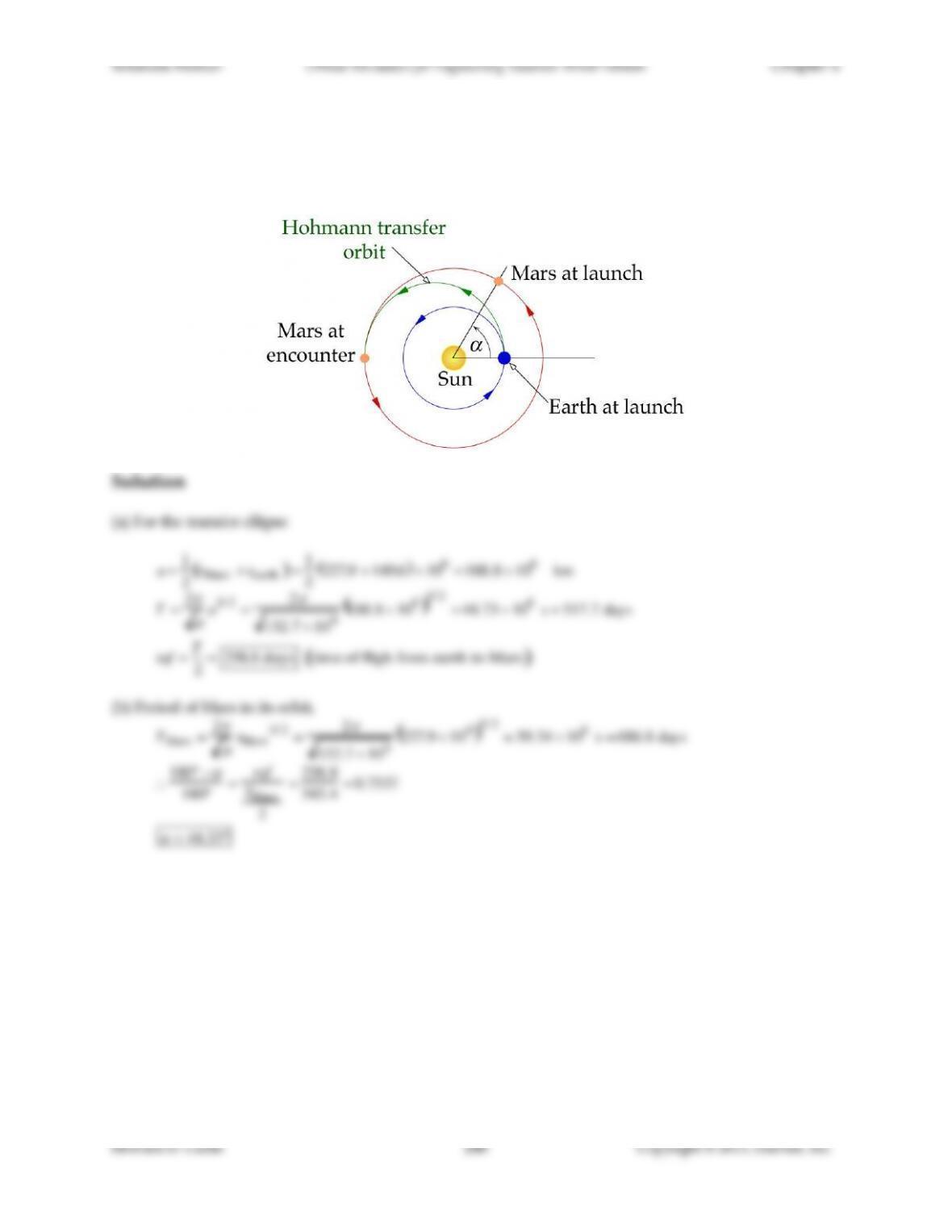
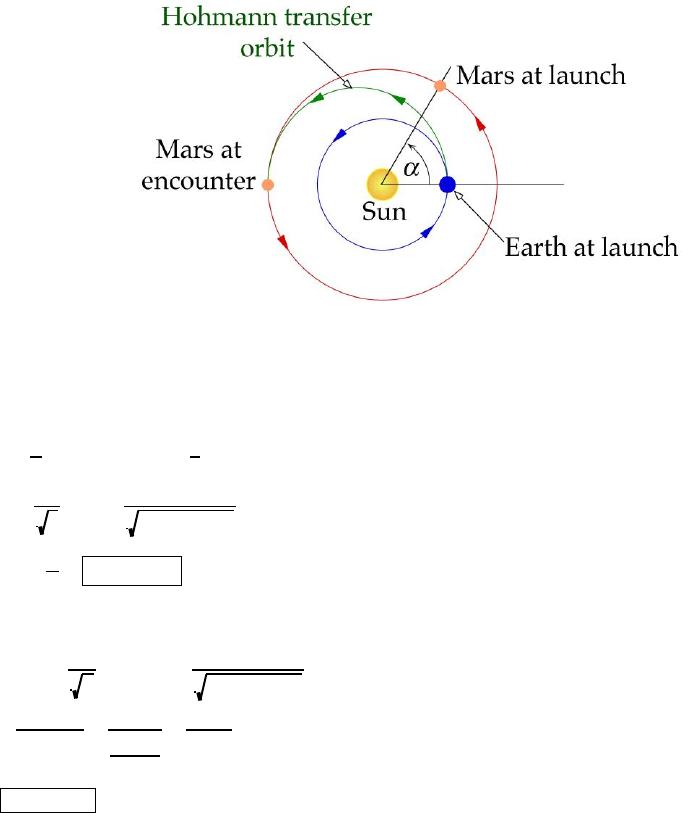
Problem 6.10 Assuming the orbits of earth and Mars are circular and coplanar, calculate
(a) the time required for a Hohmann transfer from earth orbit to Mars orbit and
(b) the initial position of Mars (
) in its orbit relative to earth for interception to occur.
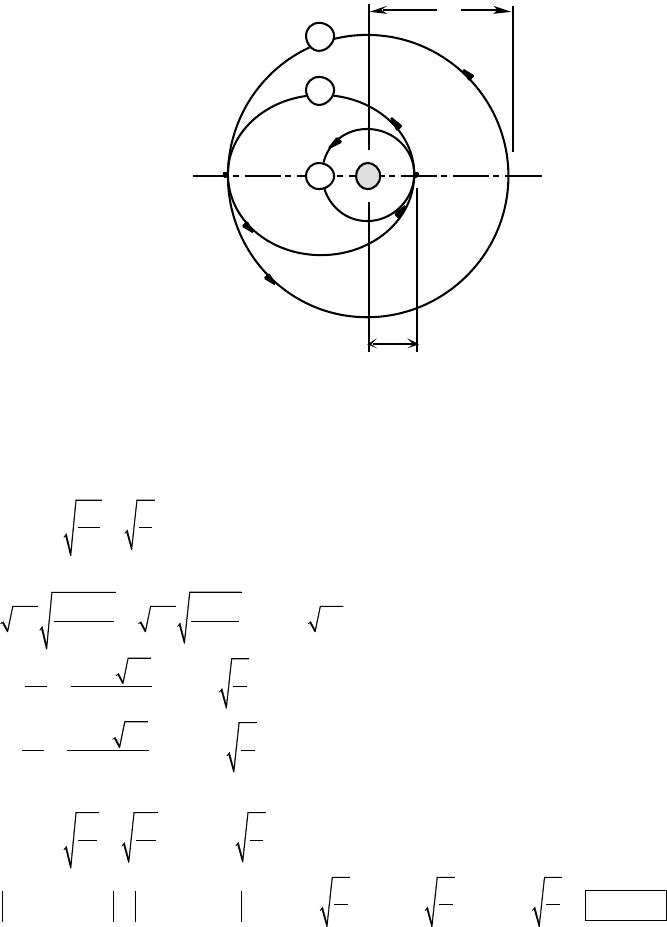
Problem 6.11 Calculate the total delta-v required for a Hohmann transfer from the smaller circular or-
bit to the larger one.
A
3r
r
1
2
3
B
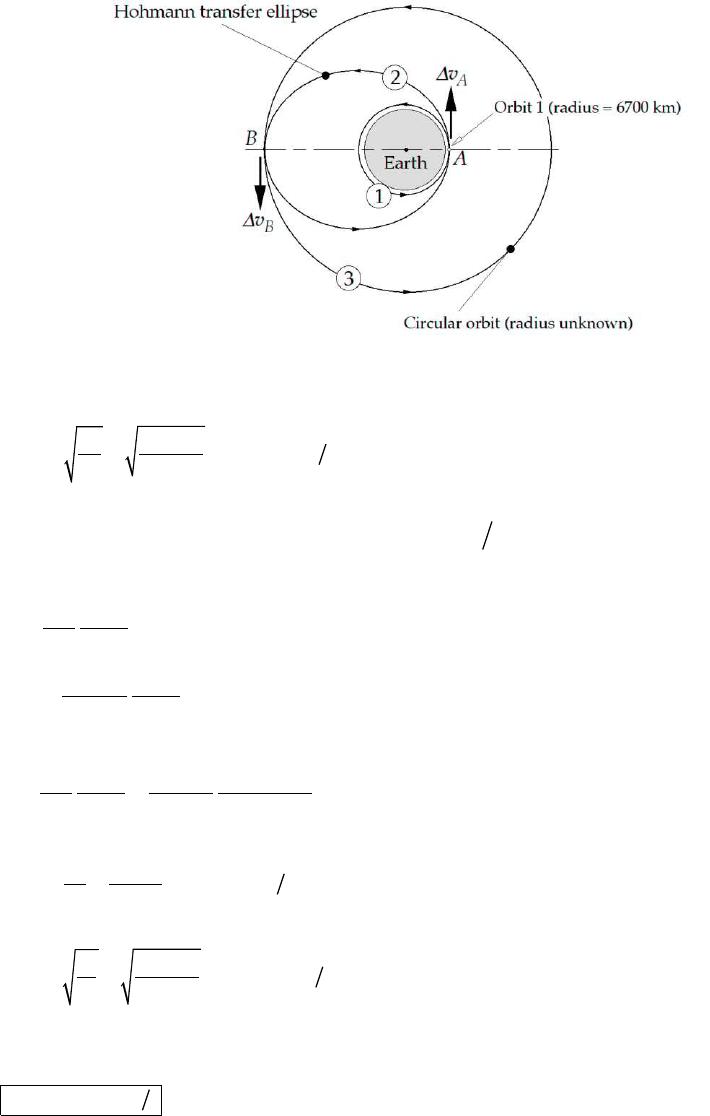
Problem 6.12 With a
vA
of 1.500 km/s, a spacecraft in the circular 6700 km geocentric orbit 1 initiates
a Hohmann transfer to the larger circular orbit 3. Calculate
vB
at apogee of the Hohmann transfer el-
lipse 2.
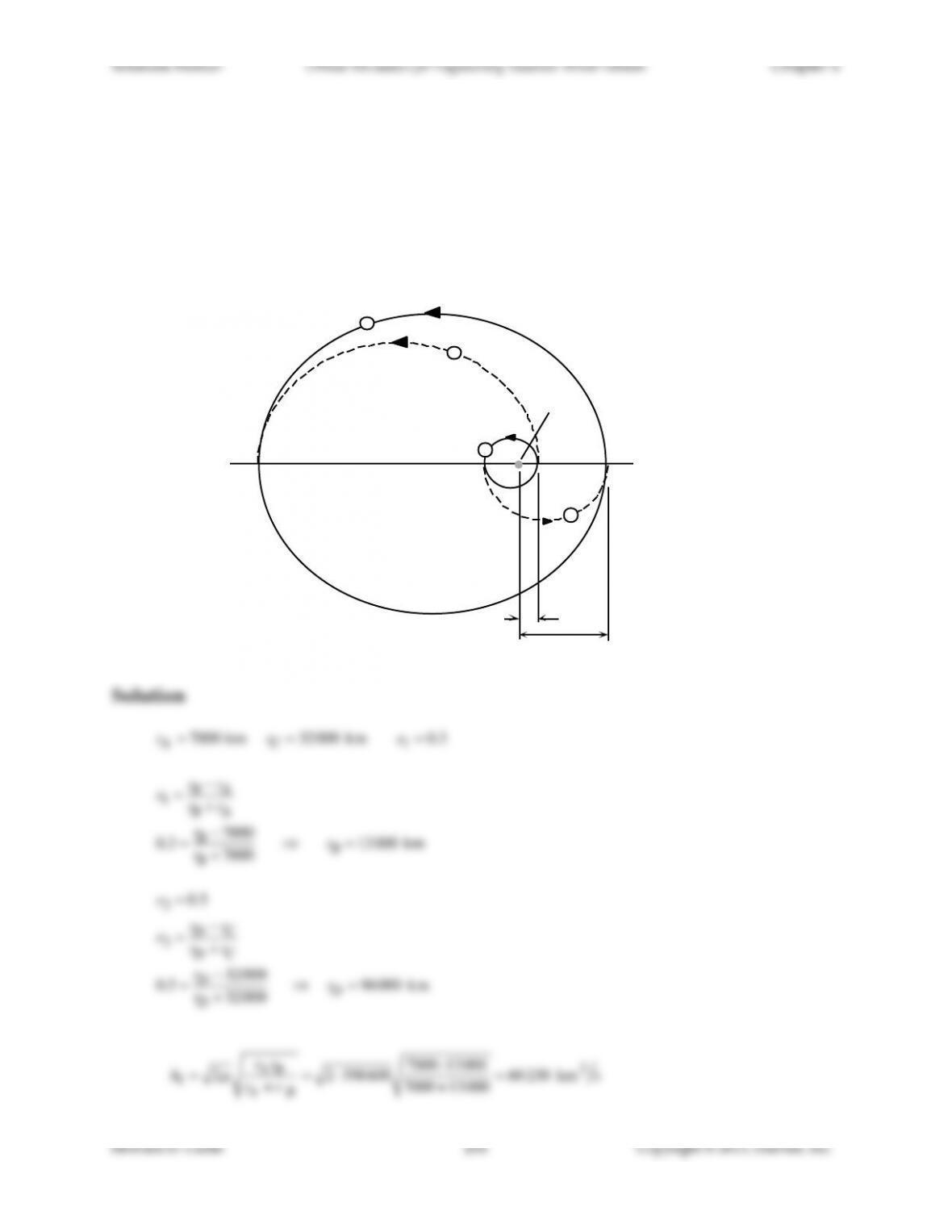
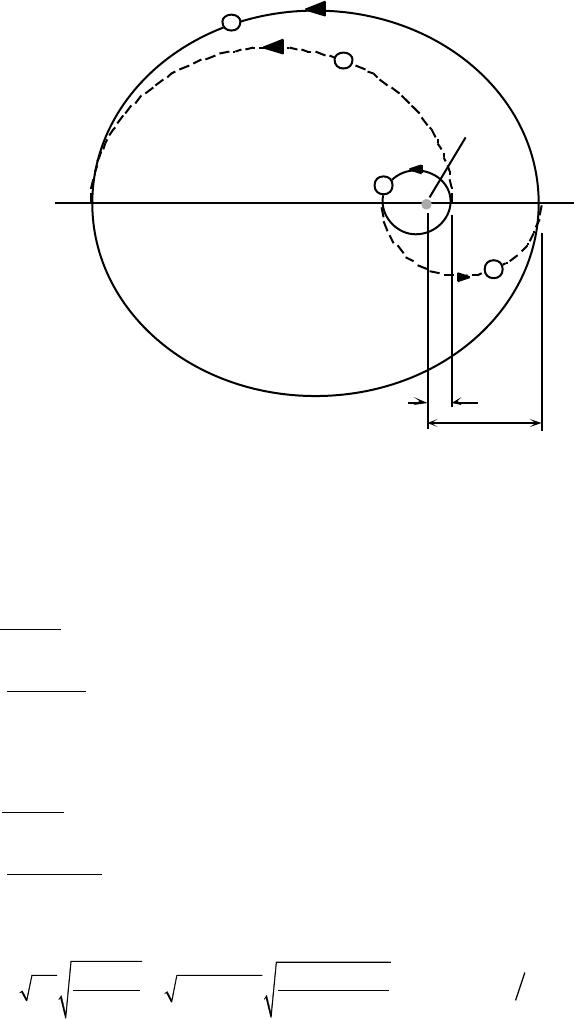
Problem 6.13 Two geocentric elliptical orbits have common apse lines and their perigees are on the
same side of the earth. The first orbit has a perigee radius of
rp7000 km
and
e0.3
, whereas for the
second orbit
rp32000 km
and
e0.5
.
(a) Find the minimum total delta-v and the time of flight for a transfer from the perigee of the in-
ner orbit to the apogee of the outer orbit.
(b) Do part (a) for a transfer from the apogee of the inner orbit to the perigee of the outer orbit.
7000 km
32 000 km
1
2
e = 0.3
e = 0.5
Earth
A
BC
D
3
4
Solutions Manual Orbital Mechanics for Engineering Students Third Edition Chapter 6