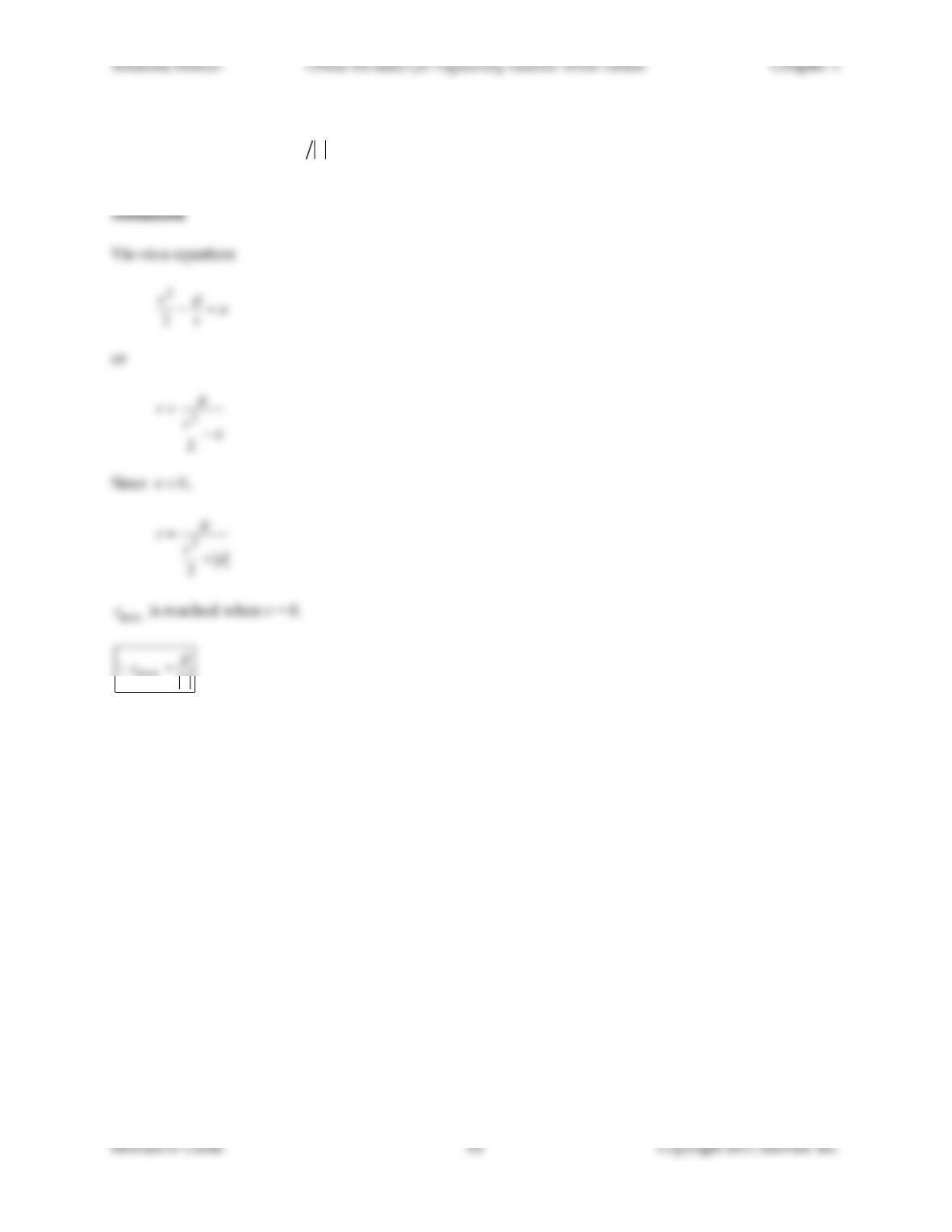
Problem 2.14 If the specific energy
of the two-body problem is negative, show that
m2
cannot move
outside a sphere of radius
centered at
m1
.
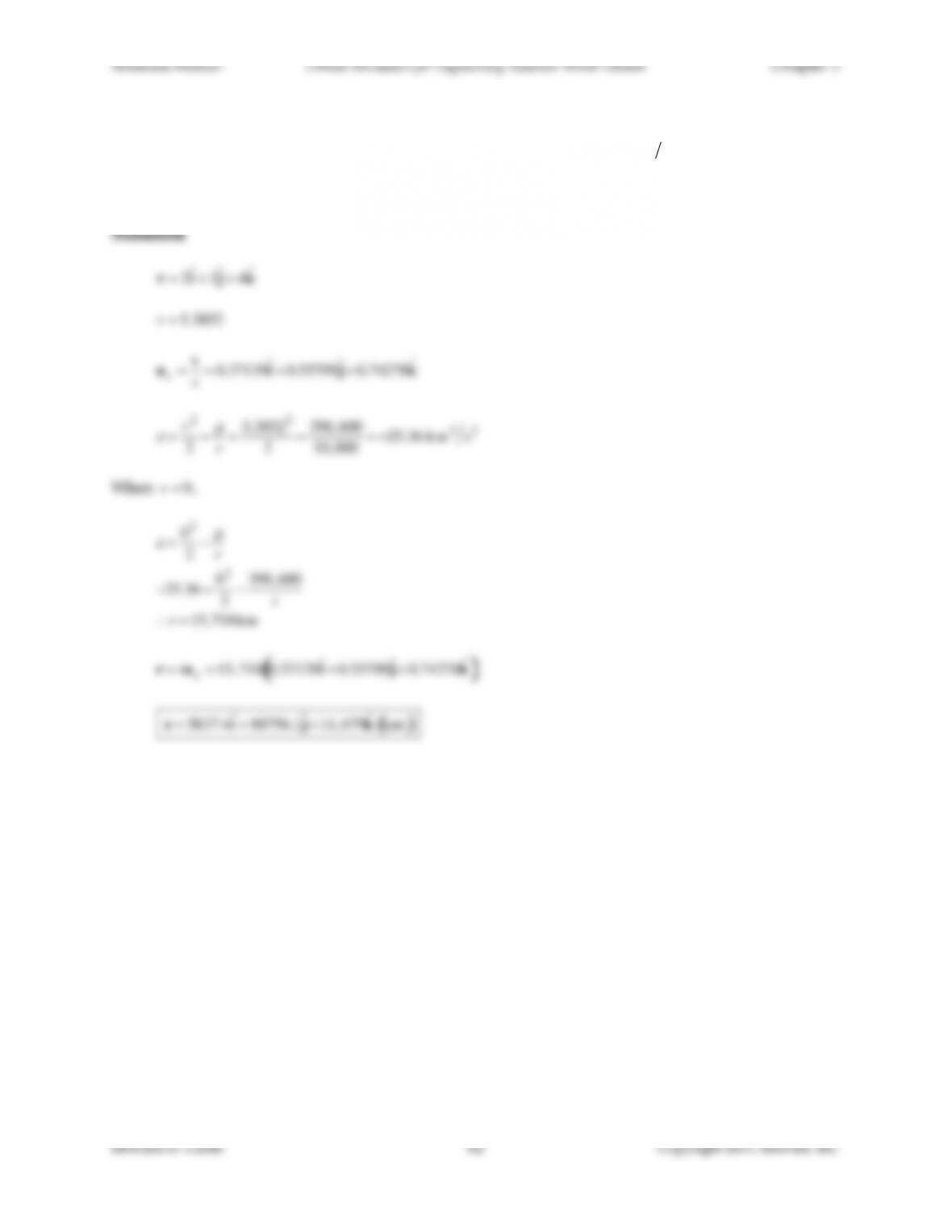
Problem 2.15 Relative to a non-rotating Cartesian coordinate frame with origin at the center O of the
earth, a spacecraft in a rectilinear trajectory has the velocity
v2ˆ
i3ˆ
j4ˆ
kkm s
when its distance from
O is 10,000 km. Find the position vector
r
when the spacecraft comes to rest.
r5837.4ˆ

Problem 2.16 The specific angular momentum of a satellite in circular earth orbit is
60,000km 2s
. Cal-
culate the period.
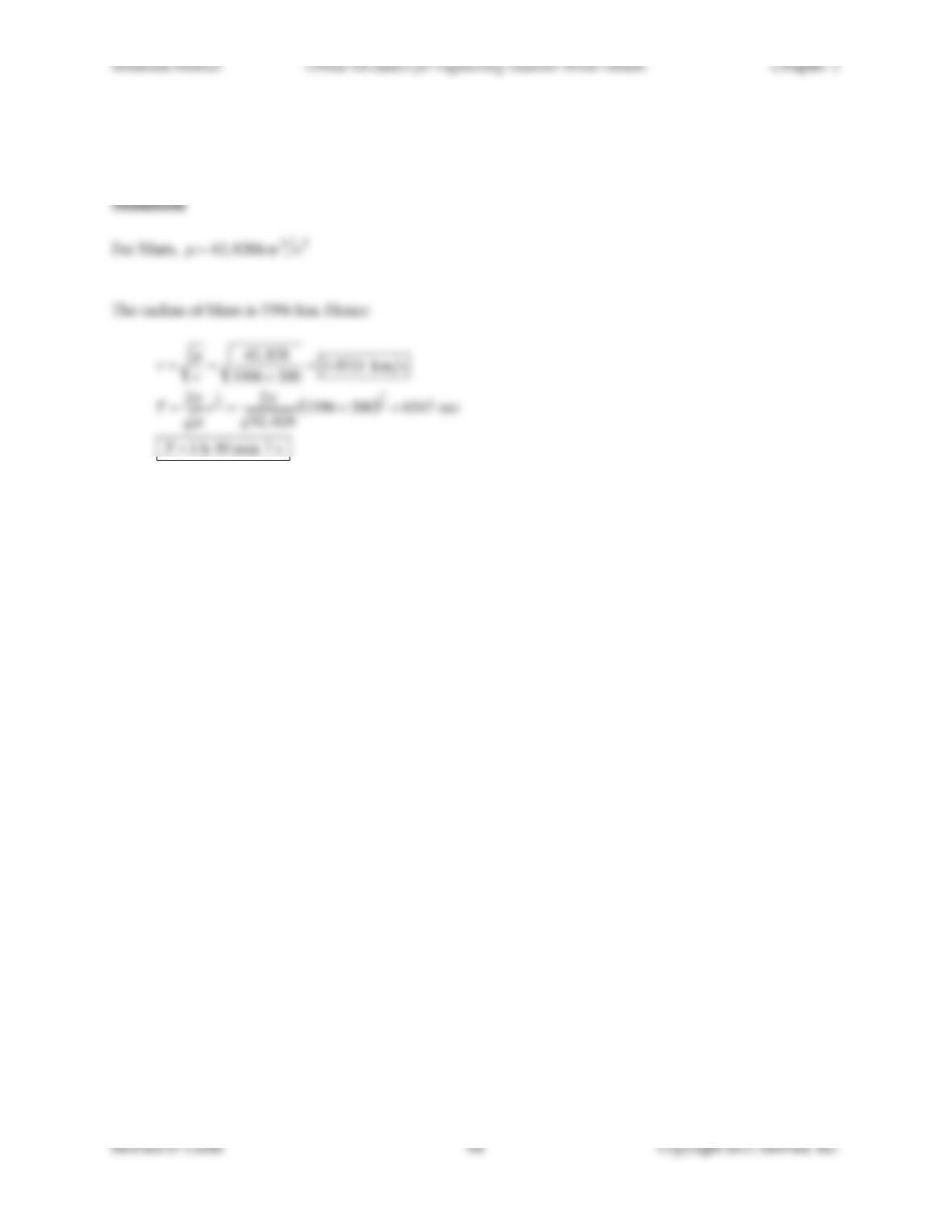
Problem 2.17 A spacecraft is in a circular orbit of Mars at an altitude of 200 km. Calculate its speed and
its period.
42,828 3396 200
T1 h 49 min 7 s
Solutions Manual Orbital Mechanics for Engineering Students Third Edition Chapter 2
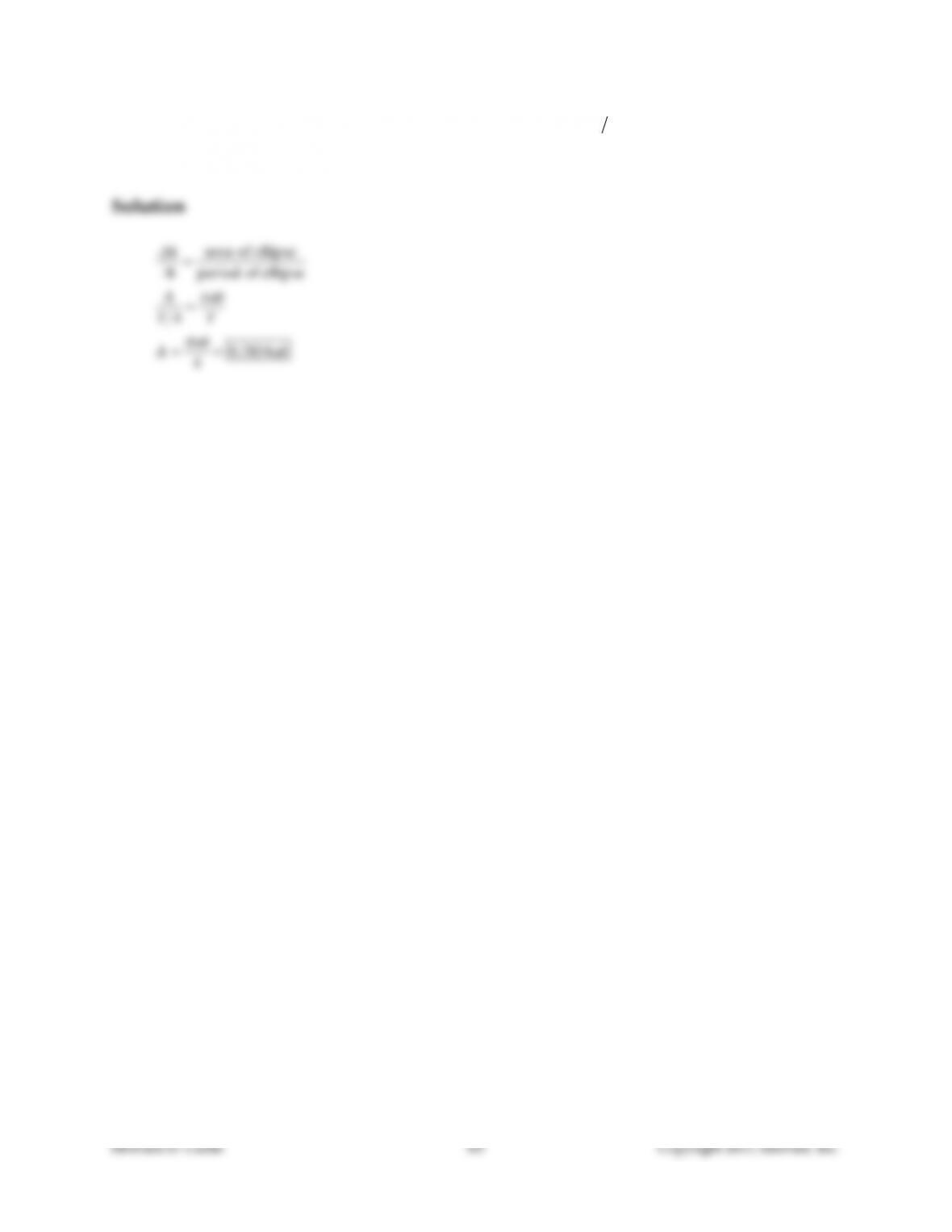
Problem 2.18 Calculate the area A swept out during the time
tT4
since periapsis, where T is the
period of the elliptical orbit.
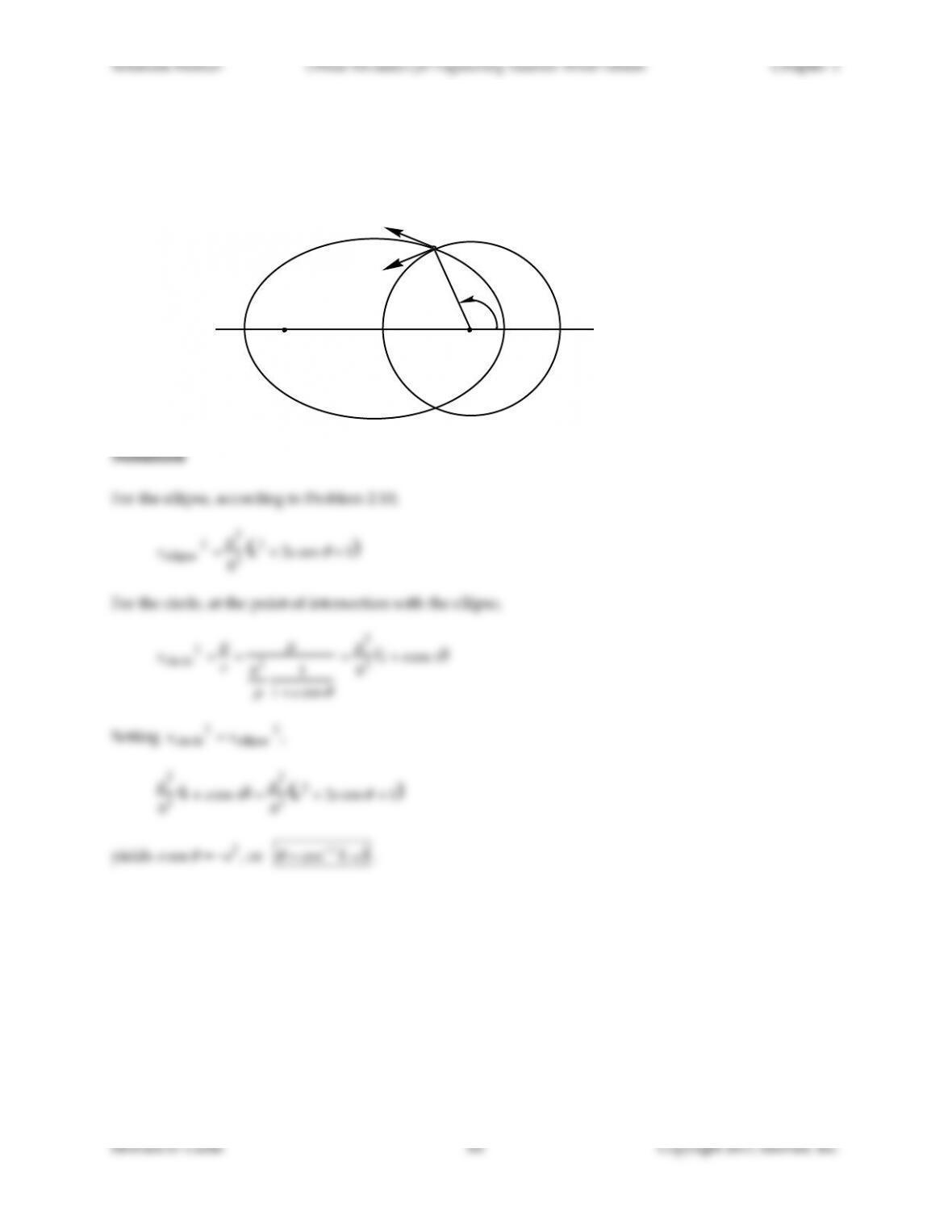
Problem 2.19 Determine the true anomaly
of the point(s) on an elliptical orbit at which the speed
equals the speed of a circular orbit with the same radius, i.e.,
vellipse vcircle
.
F’ F
vcircle
vellipse
r
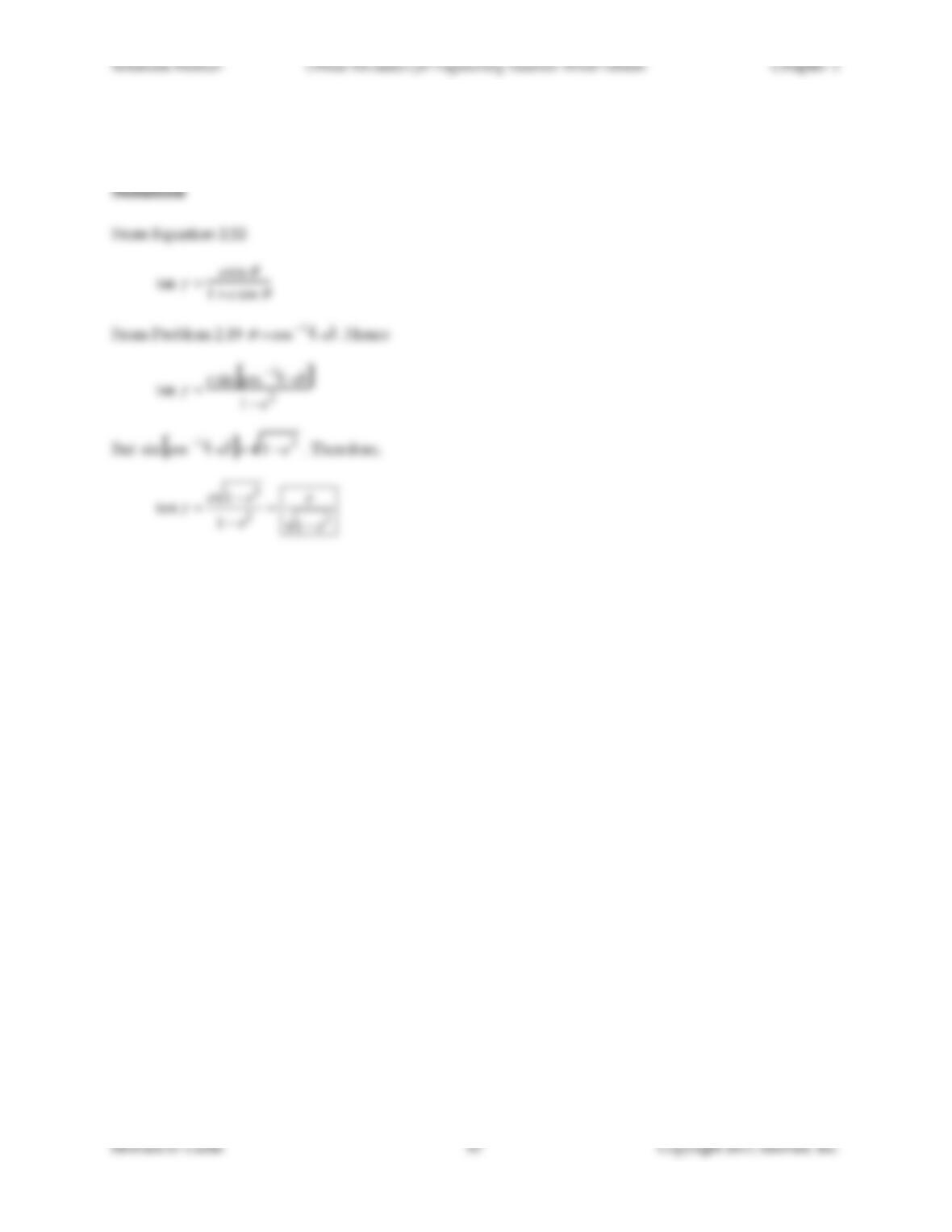
Problem 2.20 Calculate the flight path angle at the locations found in Problem 2.19.
1e2e
1e2
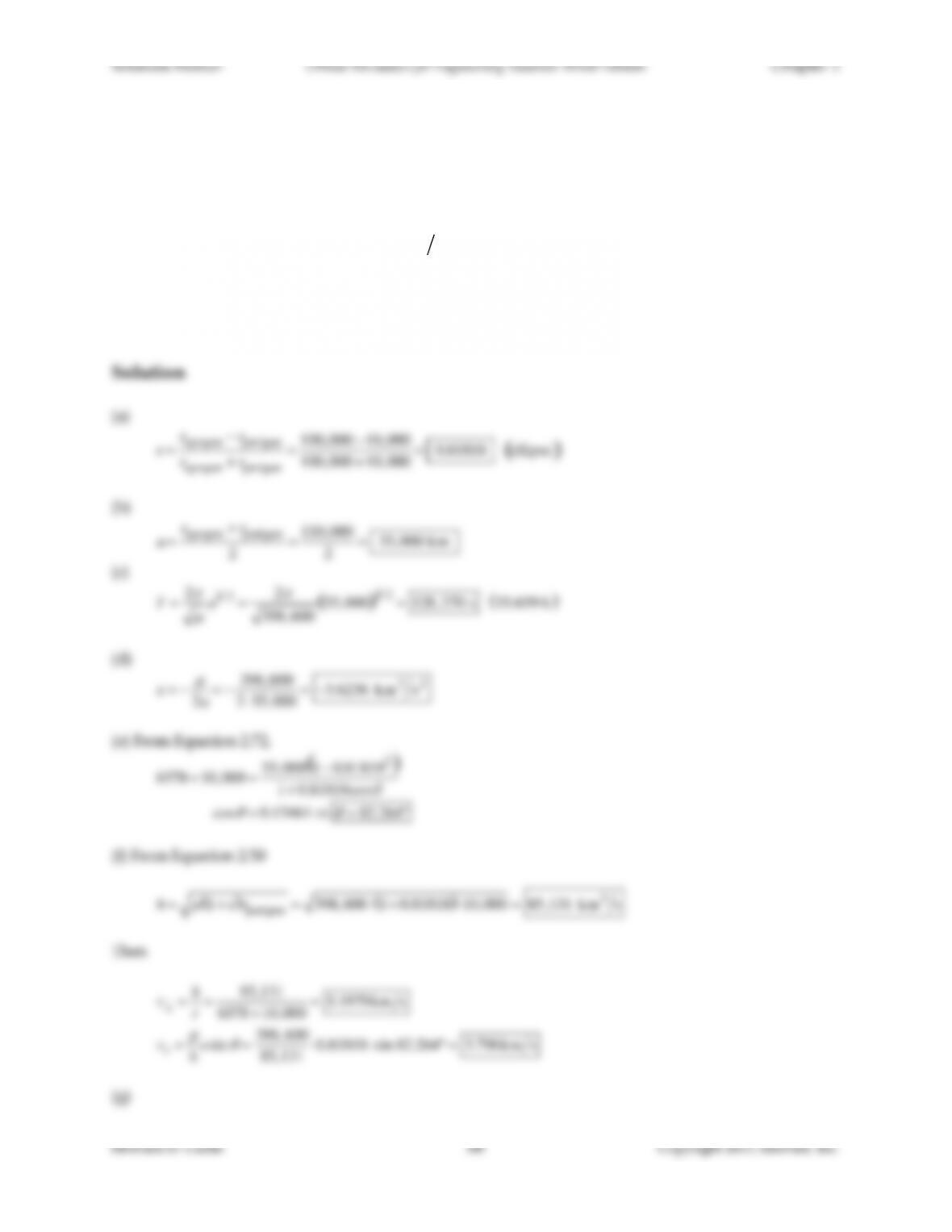
Problem 2.21 An unmanned satellite orbits the earth with a perigee radius of 10,000 km and an apogee
radius of 100,000 km. Calculate
(a) the eccentricity of the orbit;
(b) the semimajor axis of the orbit (km);
(c) the period of the orbit (hours);
(d) the specific energy of the orbit (
km 2s2
);
(e) the true anomaly at which the altitude is 10000 km (degrees);
(f)
vr
and
v
at the points found in part (e) (km/s);
(g) the speed at perigee and apogee (km/s).
Solutions Manual Orbital Mechanics for Engineering Students Third Edition Chapter 2
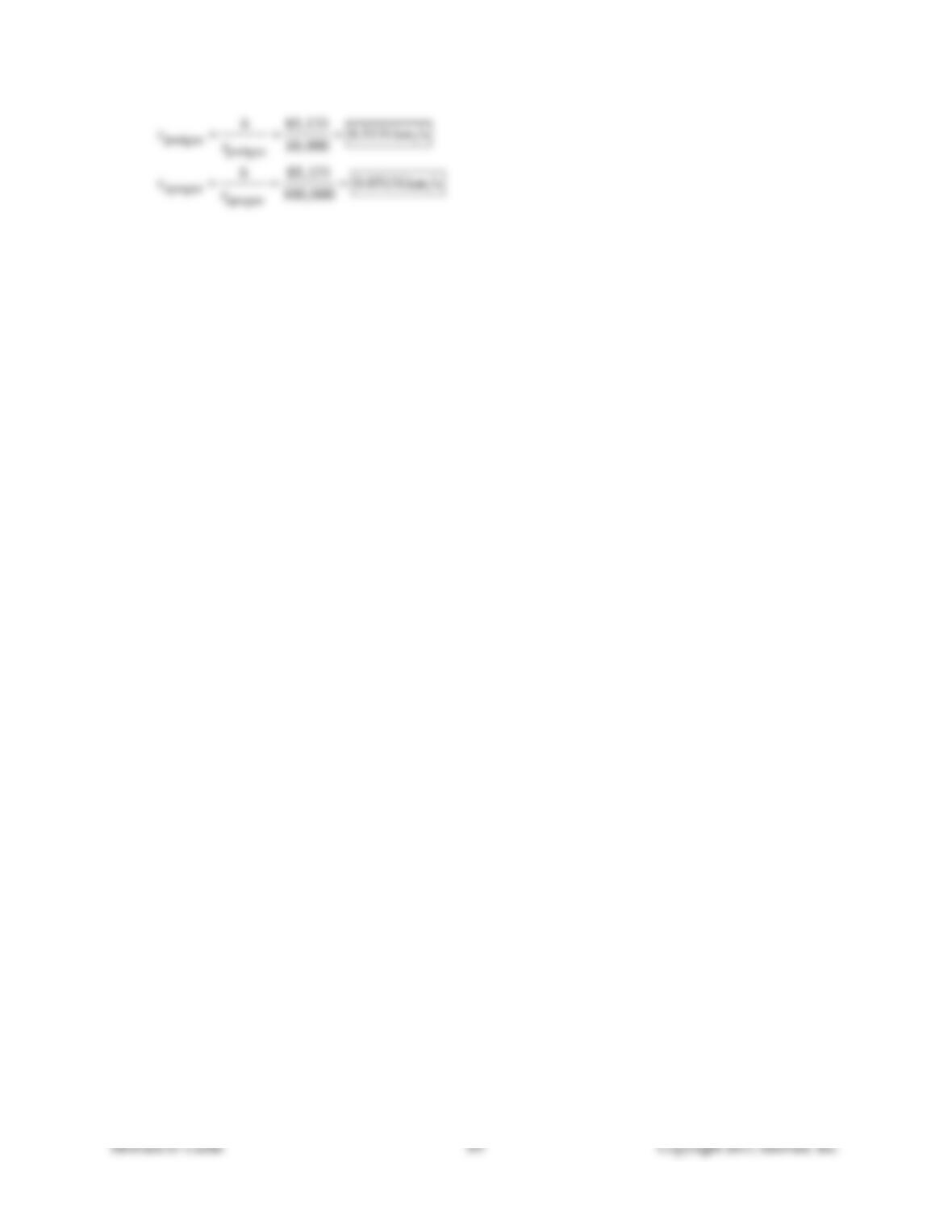
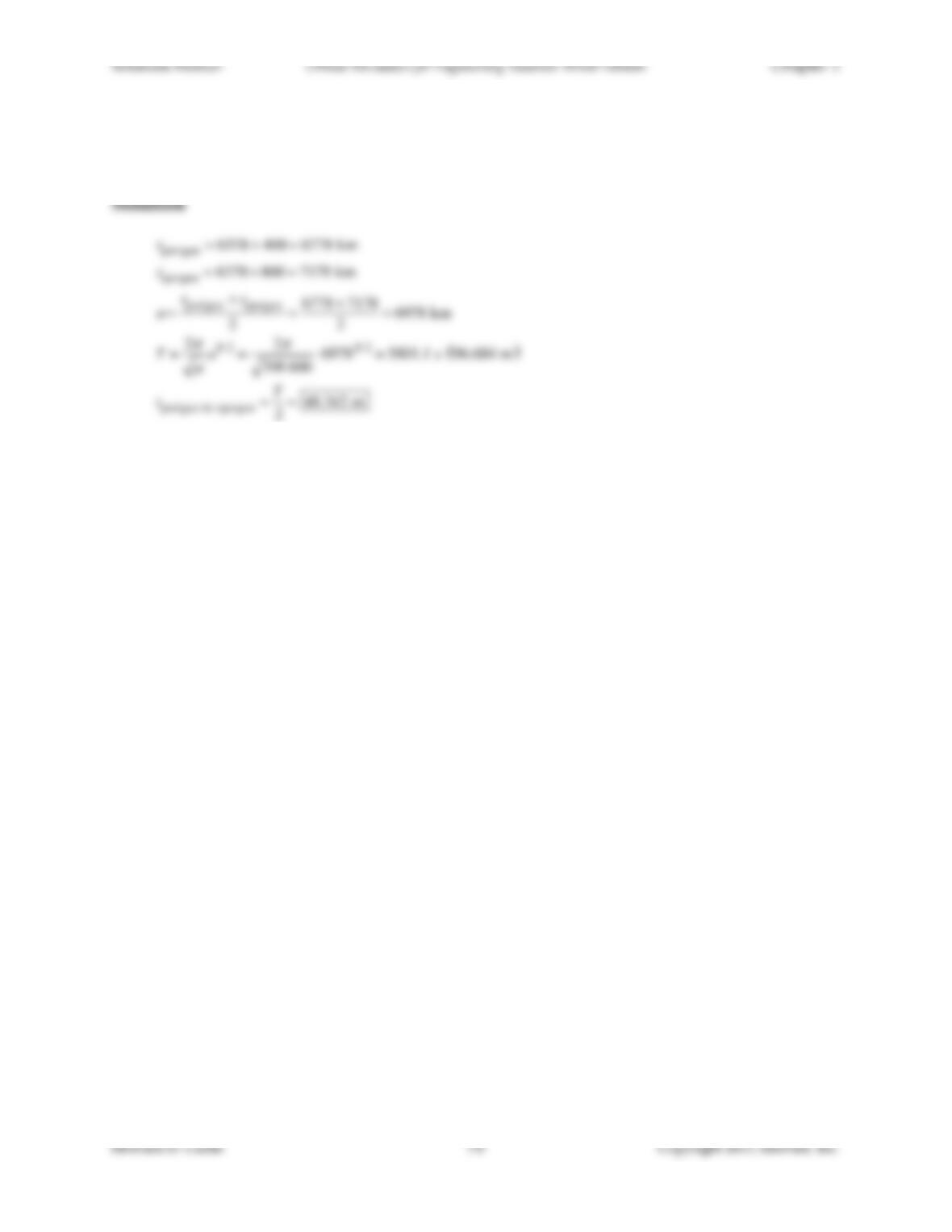
vperigee h
rperigee
85,131
10,000 8.5131km s
vapogee h
r
apogee
85,131
100,000 0.85131km s
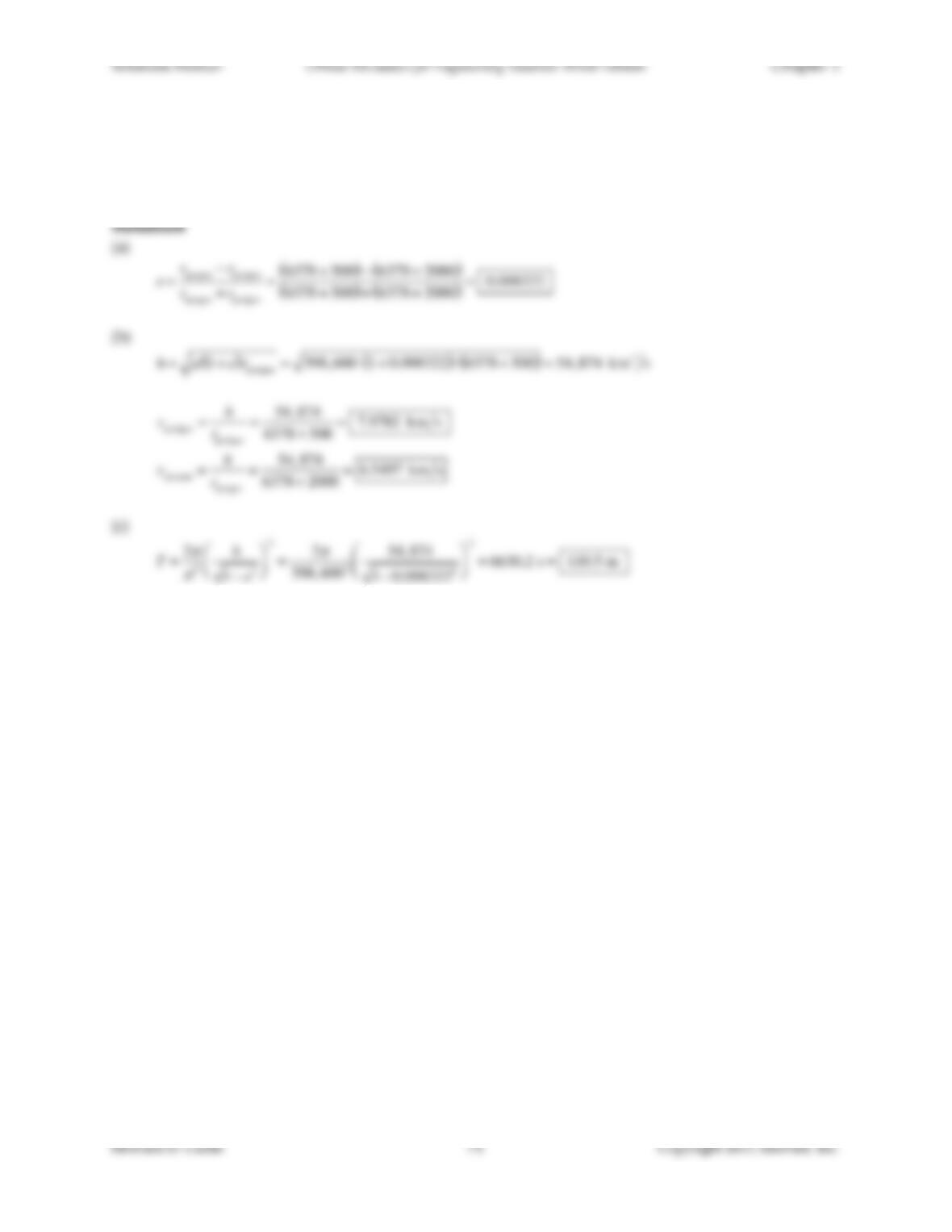
Problem 2.22 A spacecraft is in a 400 km by 600 km low earth orbit. How long (in minutes) does it take
to coast from perigee to apogee?
26778 7178
26978 km
T2
a3/ 2 2
398 600 69783/ 2 5801.1 s 96.684 m
tperigee to apogee T
248.342 m
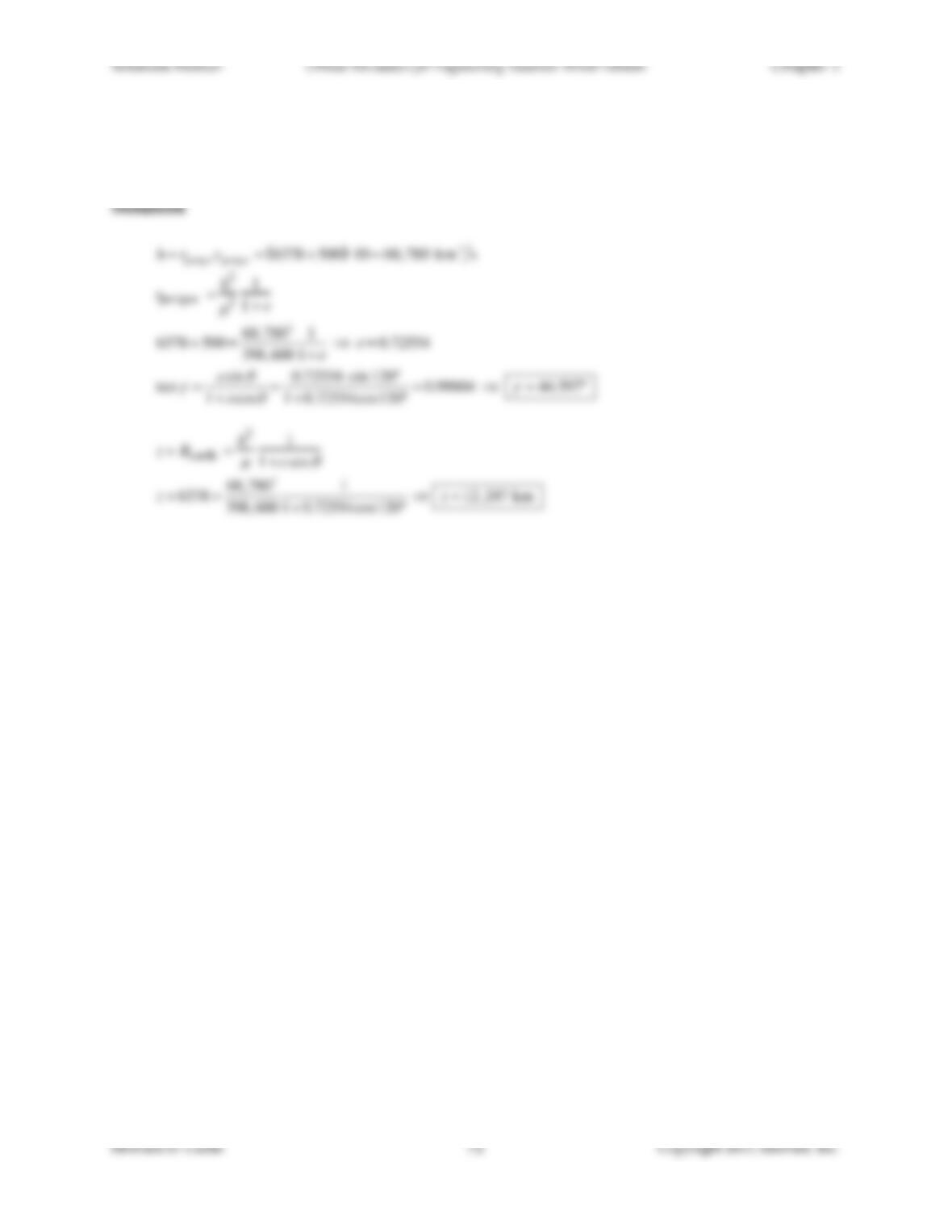
Problem 2.23 The altitude of a satellite in an elliptical orbit around the earth is 2000 km at apogee and
500 km at perigee. Determine (a) the eccentricity of the orbit; (b) the orbital speeds at perigee and apogee;
(c) the period of the orbit.
2
1e2
398,6002
10.0983222
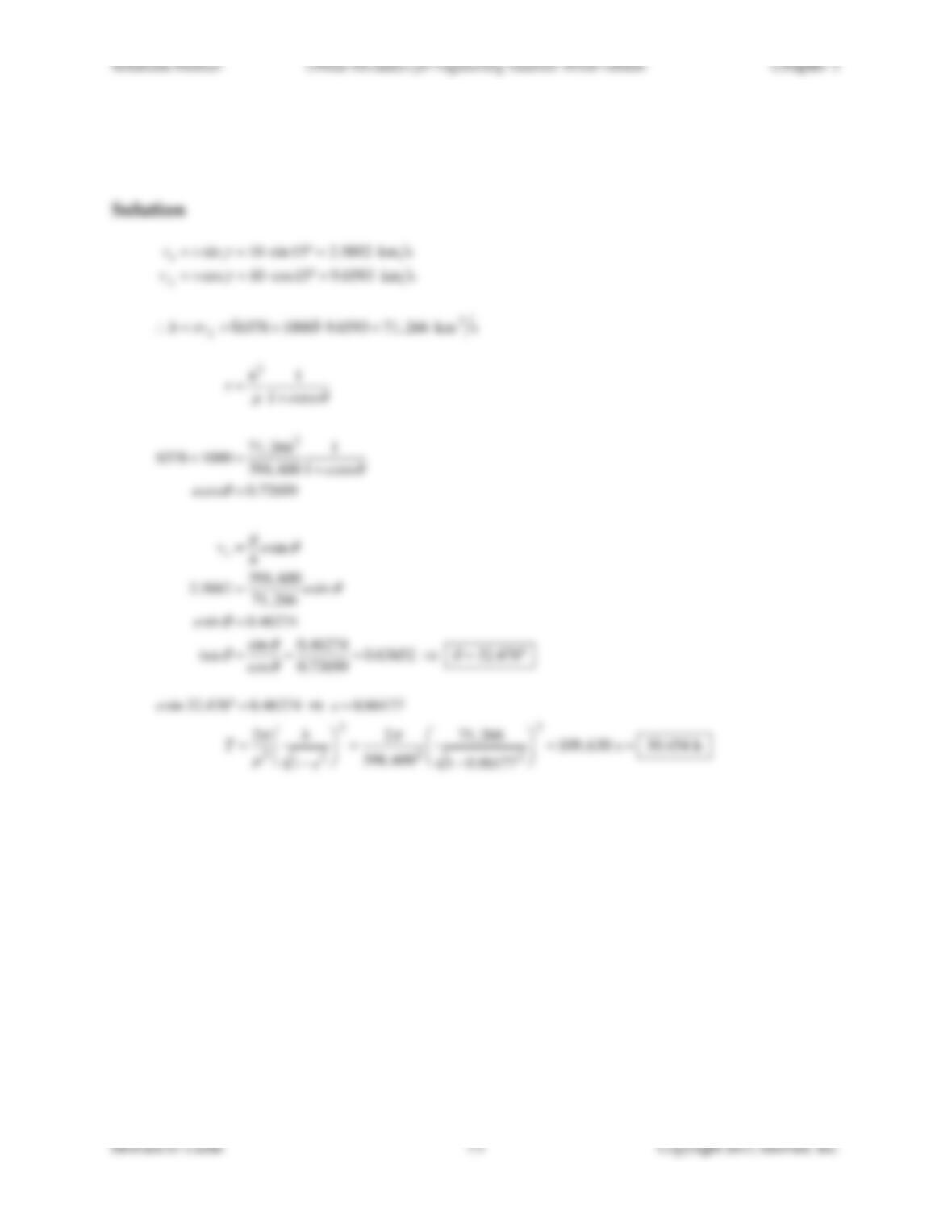
Problem 2.24 A satellite is placed into an earth orbit at perigee at an altitude of 500 km with a speed of
10 km/s. Calculate the flight path angle
and the altitude of the satellite at a true anomaly of 120°.
Problem 2.25 A satellite is launched into earth orbit at an altitude of 1000 km with a speed of 10 km/s
and a flight path angle of 15°. Calculate the true anomaly of the launch point and the period of the orbit.
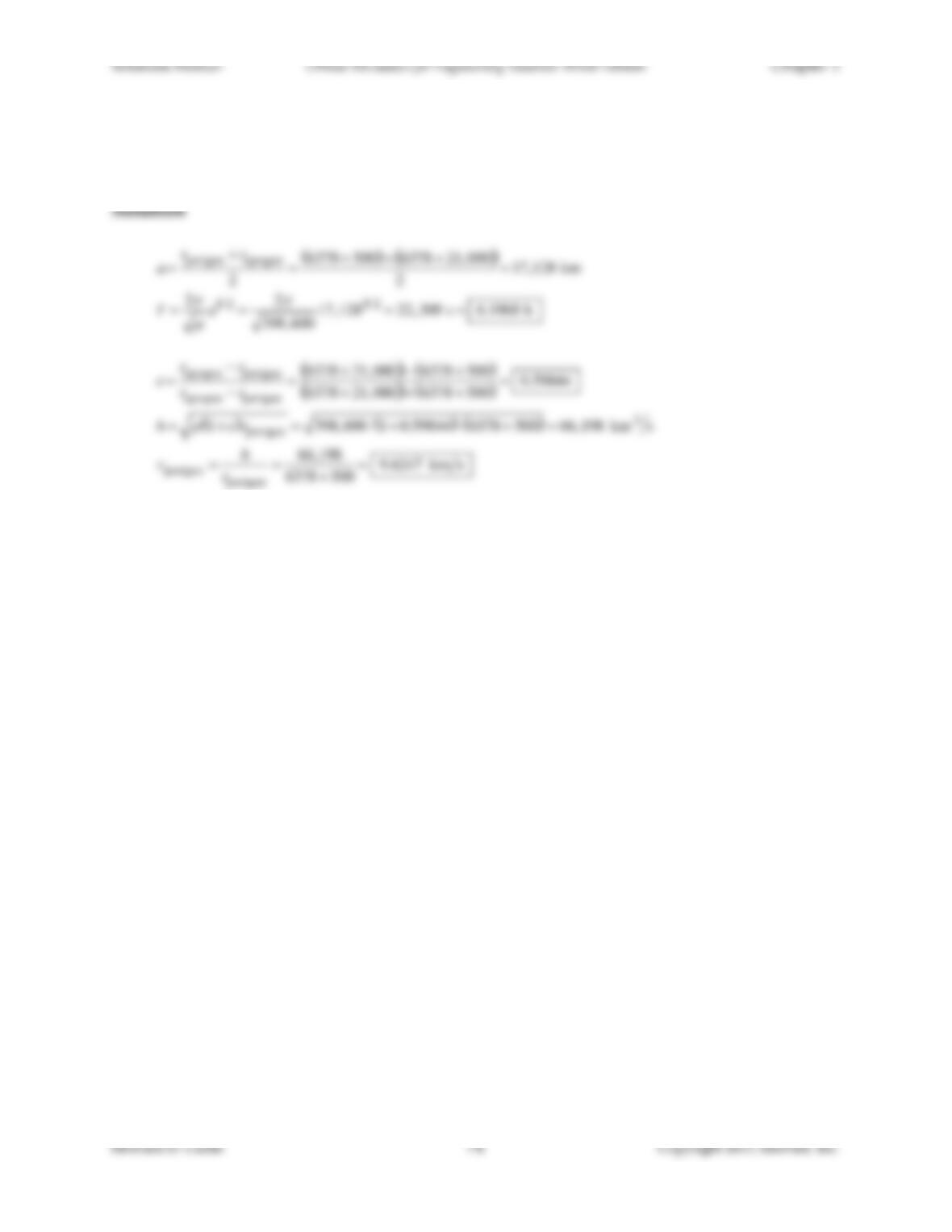
Problem 2.26 A satellite has perigee and apogee altitudes of 500 km and 21,000 km. Calculate the orbit
period, eccentricity, and the maximum speed.
r
perigee
6378 500 9.6247 km s
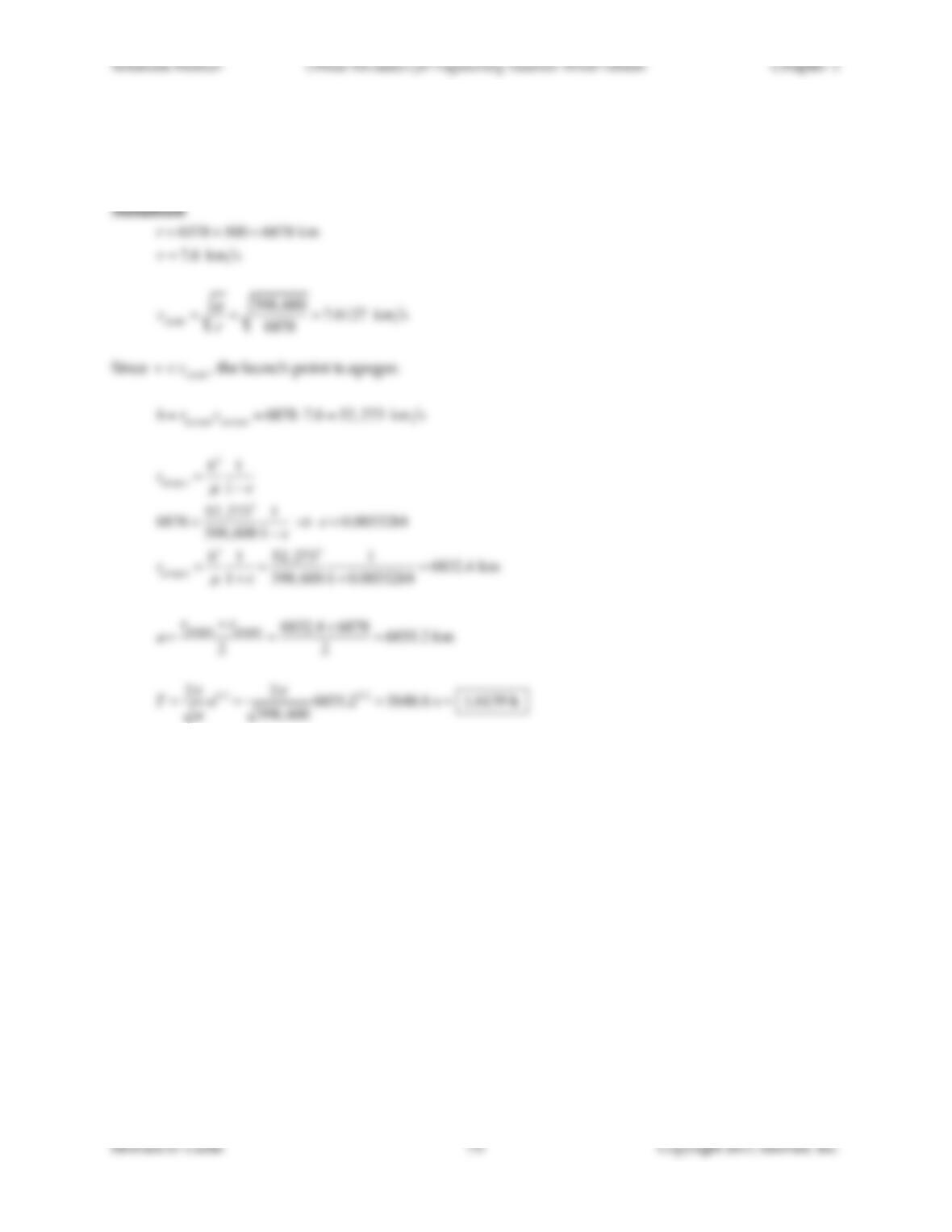
Problem 2.27 A satellite is launched parallel to the earth’s surface with a speed of 7.6 km/s at an alti-
tude of 500 km. Calculate the period.
1e52, 2732
398,600
10.0033284 6832.4 km
arperigee r
apogee
26832.4 6878
26855.2 km
T2
a3/ 2 2
398,600 6855.23/ 2 5648.6 s 1.6139 h
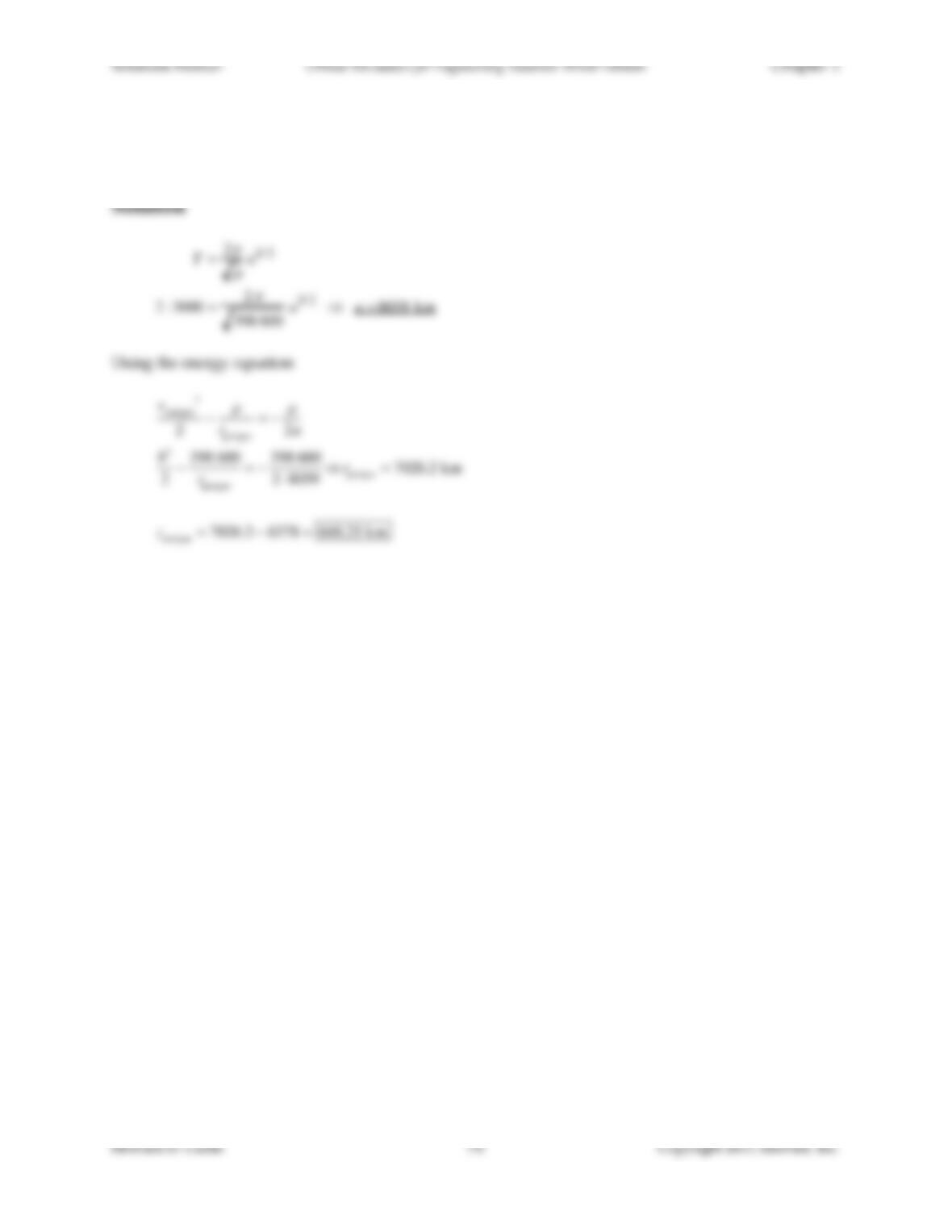
Problem 2.28 A satellite in orbit around the earth has a perigee velocity of 8 km/sec. Its period is 2
hours. Calculate its altitude at perigee.
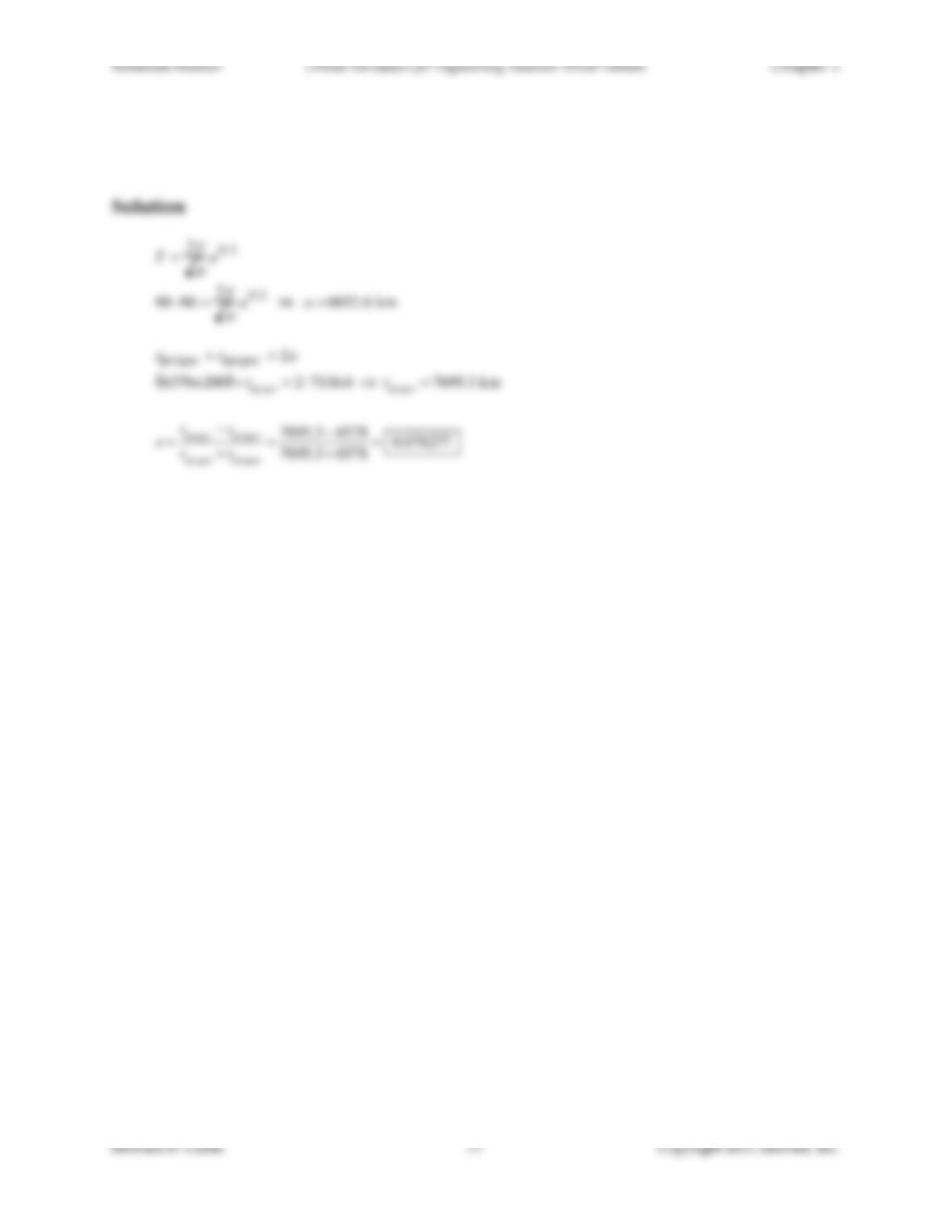
Problem 2.29 A satellite in polar orbit around the earth comes within 200 km of the north pole at its
point of closest approach. If the satellite passes over the pole once every 100 minutes, calculate the eccen-
tricity of its orbit.
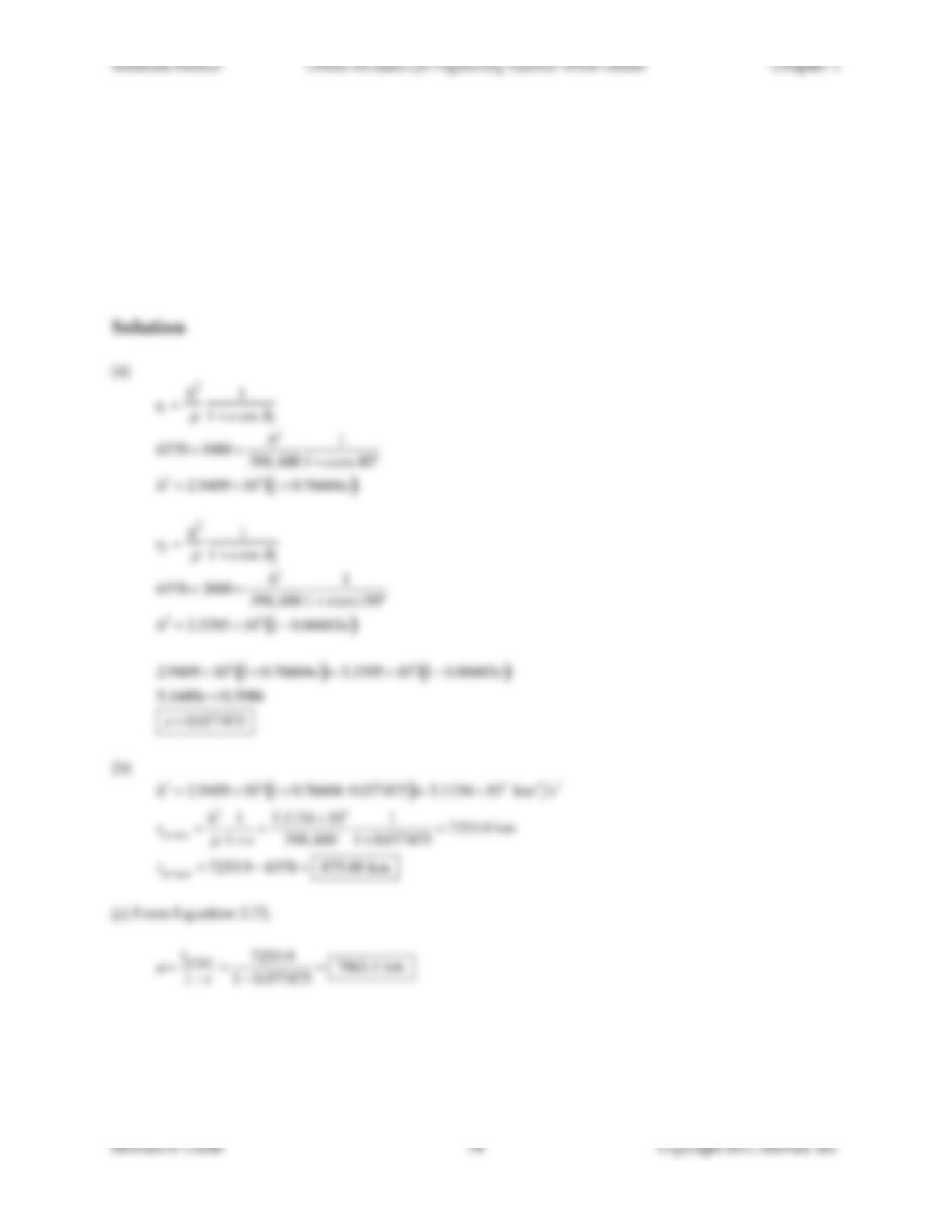
Problem 2.30 The following position data for an earth orbiter are given:
Altitude = 1700 km at a true anomaly of 130.
Altitude = 500 km at a true anomaly of 50.
Calculate:
(a) The eccentricity.
(b) The perigee altitude (km).
(c) The semimajor axis (km)
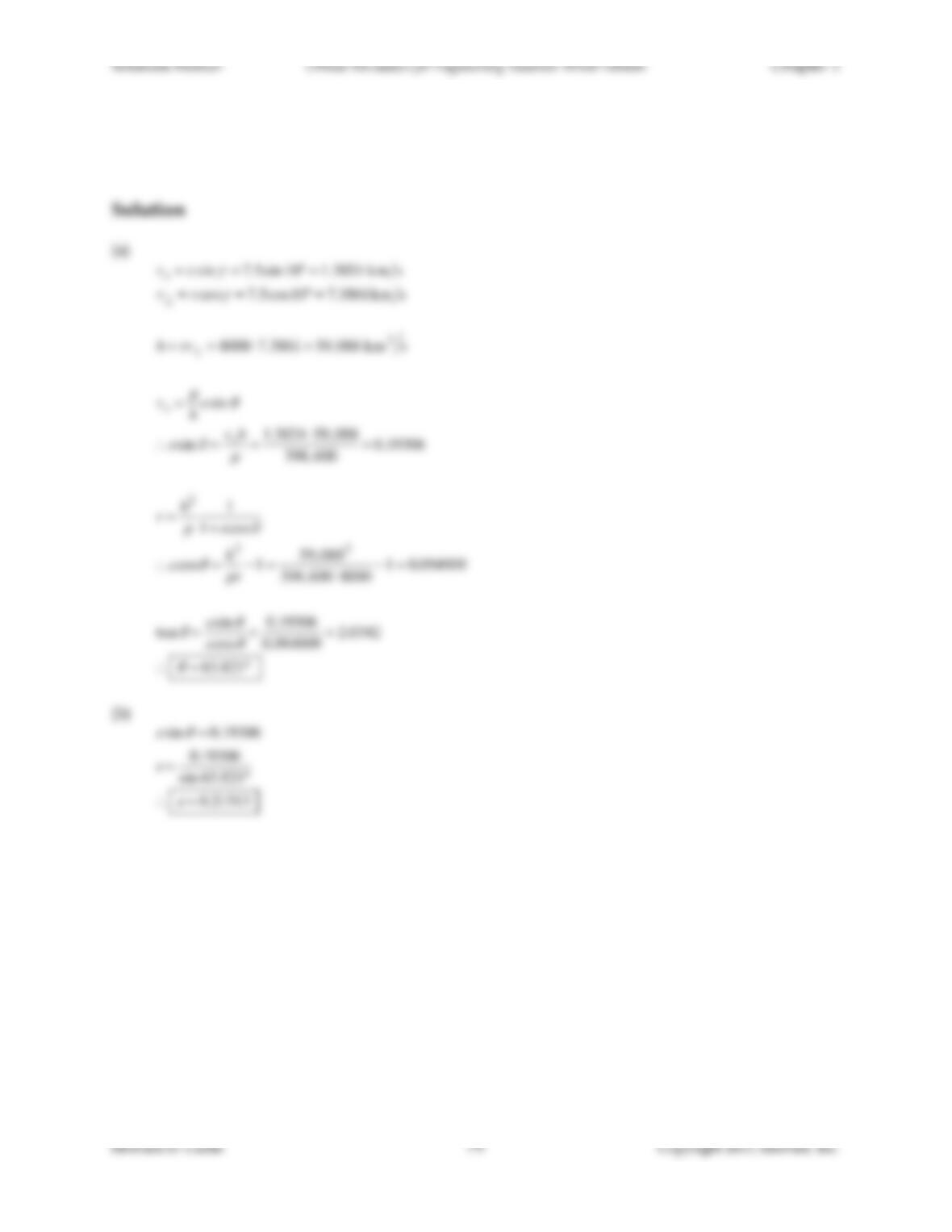
Problem 2.31 An earth satellite has a speed of 7.5 km/s and a flight path angle of 10 degrees when its
radius is 8000 km. Calculate (a) the true anomaly (degrees) and (b) the eccentricity of the orbit.
sin 63.821
e0.21513
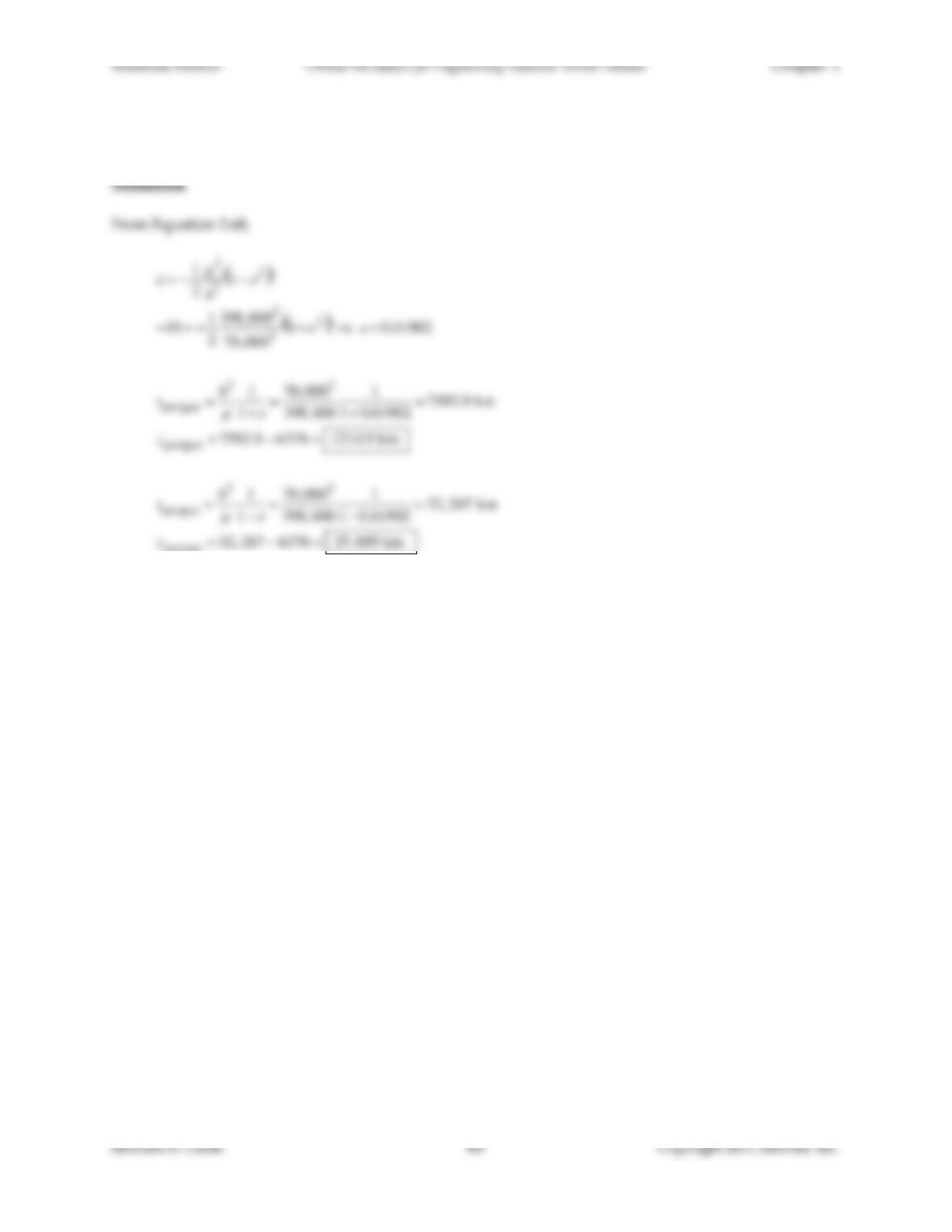
Problem 2.32 If, for an earth satellite, the specific angular momentum is 70,000 km2/s and the specific
energy is –10 km2/s2, calculate the apogee and perigee altitudes.
1e70,0002
398,600
10.61902 7592.9 km
zperigee 7592.9 6378 1214.9 km
r
apogee h2
1
1e70,0002
398,600
1
10.61902 32,267 km
zapogee 32, 267 6378 25,889 km