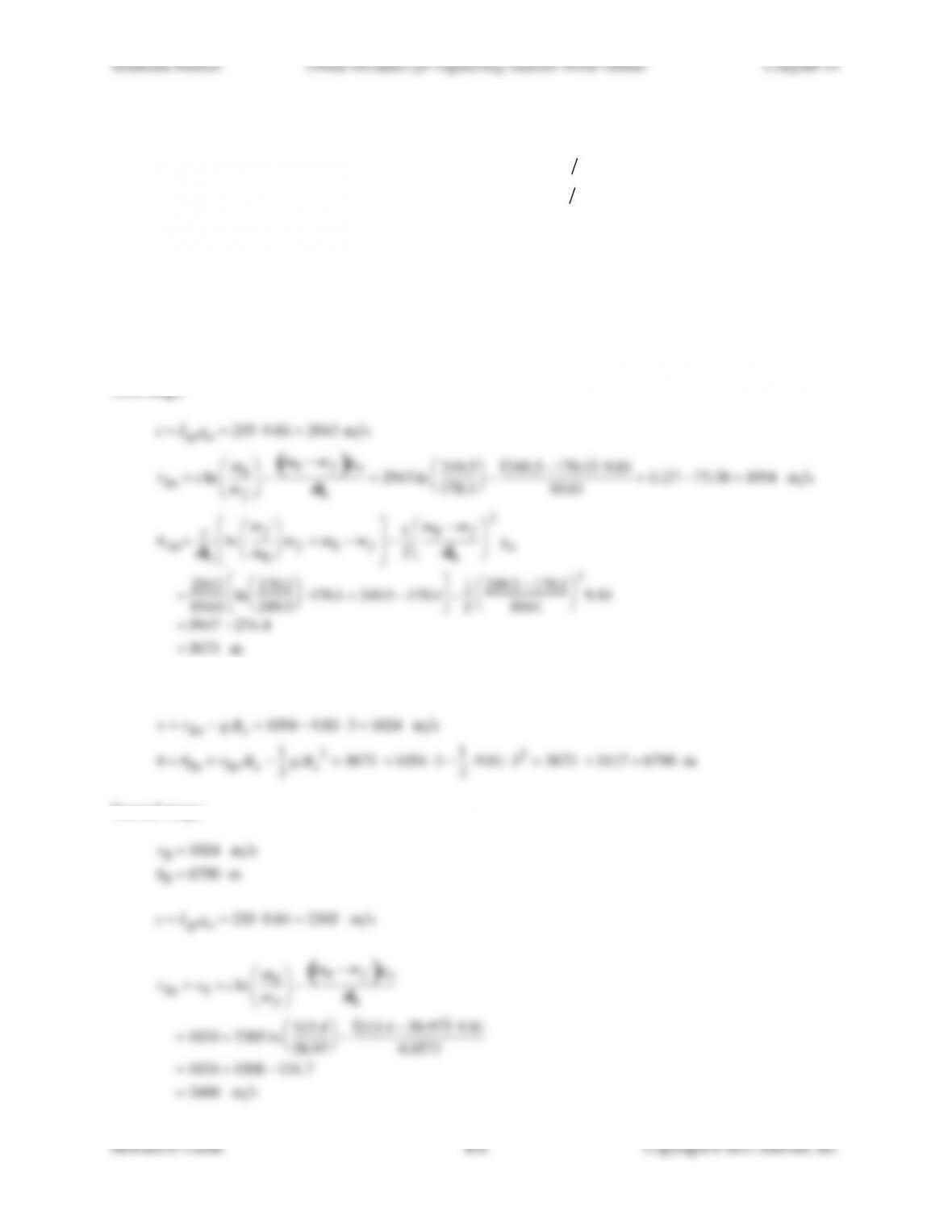
Problem 11.1 A two stage, solid-propellant sounding rocket has the following properties.
First stage:
m0249.5 kg mf170.1 kg &
me10.61 kg s Isp 235 s
Second stage:
m0113.4 kg mf58.97 kg &
me4.053 kg s Isp 235 s
Delay time between burnout of first stage and ignition of second stage: 3 seconds.
As a preliminary estimate, neglect drag and the variation of earth’s gravity with altitude to calculate the
maximum height reached by the second stage after burnout.
Solution
First stage:
Solutions Manual Orbital Mechanics for Engineering Students Third Edition Chapter 11
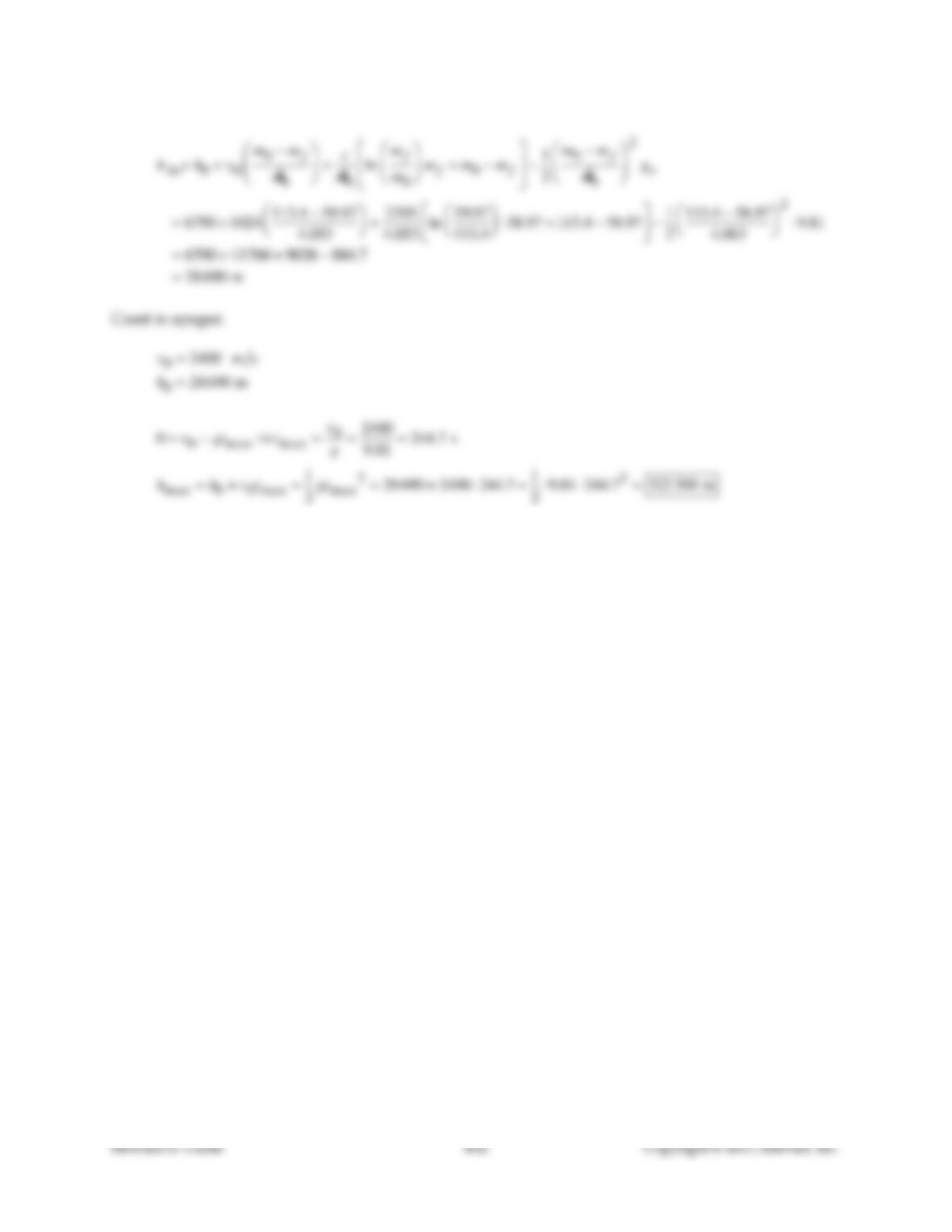
hmax h0v0tmax 1
2gtmax228690 2400244.7 1
29.81244.72322300 m
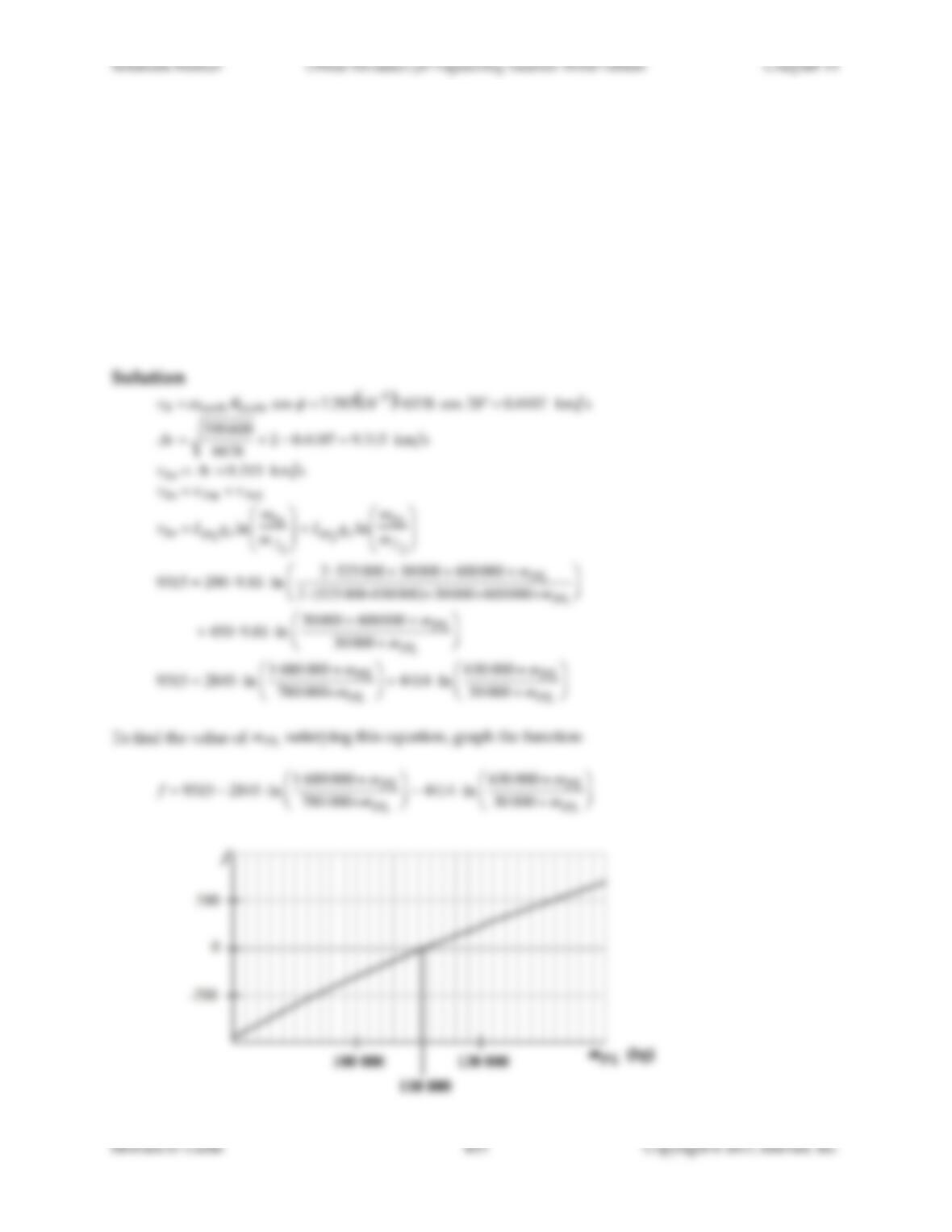
Problem 11.2 A two-stage launch vehicle has the following properties:
First stage: two solid propellant rockets. Each one has a total mass of 525 000 kg, 450 000 kg of
which is propellant.
Isp 290 s
.
Second stage: two liquid rockets with
Isp 450 s
. Dry mass = 30 000 kg, propellant mass = 600 000
kg.
Calculate the payload mass to a 300 km orbit if launched due east from KSC. Let the total gravity and
drag loss be 2 km/s.
Solutions Manual Orbital Mechanics for Engineering Students Third Edition Chapter 11
Howard D. Curtis 454 Copyright © 2013, Elsevier, Inc.
mPL 110800 kg
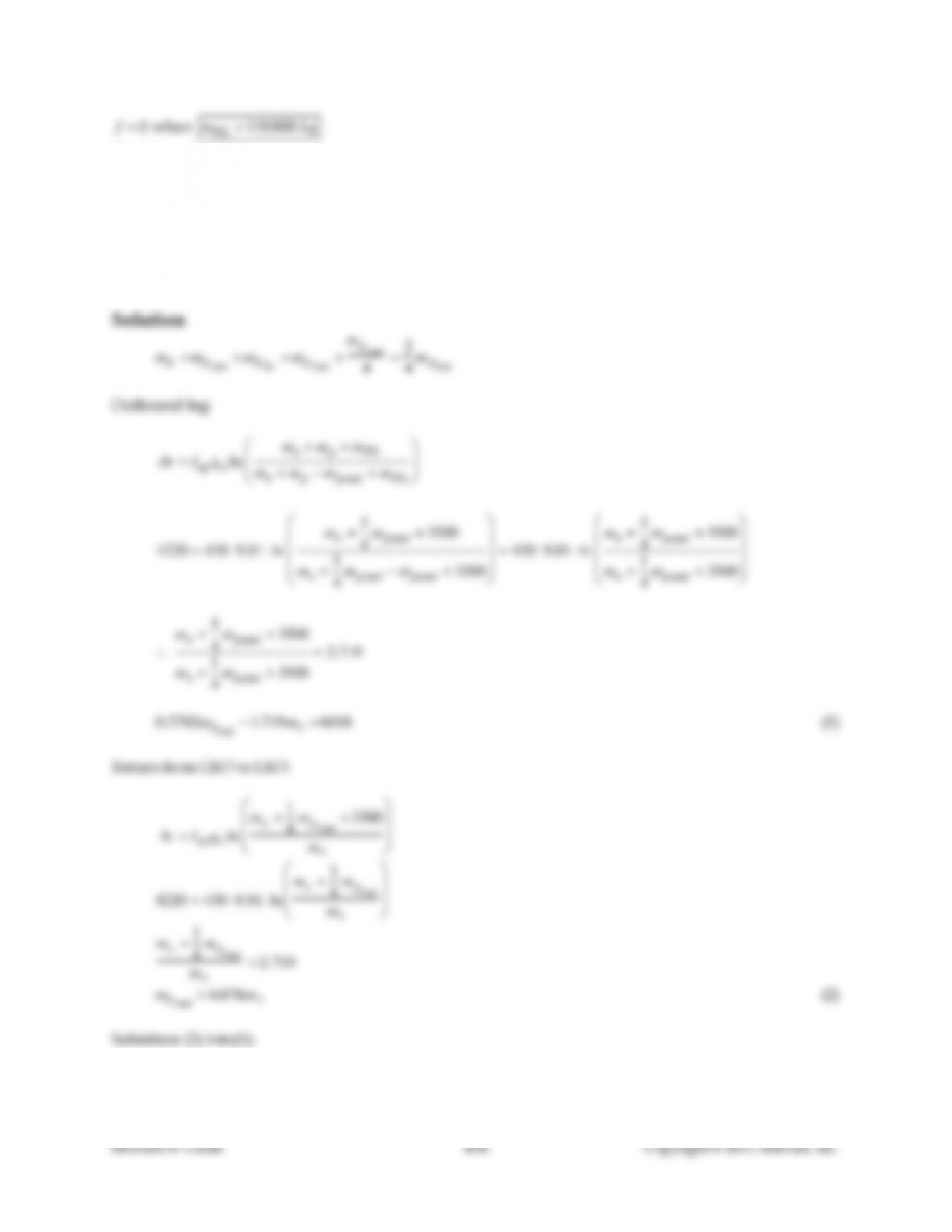
Problem 11.3 Suppose a spacecraft in permanent orbit around the earth is to be used for delivering
payloads from low earth orbit (LEO) to geostationary equatorial orbit (GEO). Before each flight from
LEO, the spacecraft is refueled with propellant, which it uses up in its round trip to GEO. The outbound
leg requires four times as much propellant as the inbound return leg. The delta-v for transfer from LEO to
GEO is 4.22 km/s. The specific impulse of the propulsion system is 430 s. If the payload mass is 3500 kg,
calculate the empty mass of the vehicle.
0.5702 6.876me
1.719me6018
me2733 kg
Problem 11.4 Consider a rocket comprising three similar stages (i.e., each stage has the same specific
impulse, structural ratio and payload ratio). The common specific impulse is 310 s. The total mass of the
vehicle is 150 000 kg, the total structural mass (empty mass) is 20 000 kg and the payload mass is 10 000
kg. Calculate
(a) The mass ratio n and the total
v
for the three-stage rocket.
(b)
mp1, mp2, and mp3
.
(c)
mE1, mE2 and mE3
.
(d)
mo1, mo2 and mo3
.
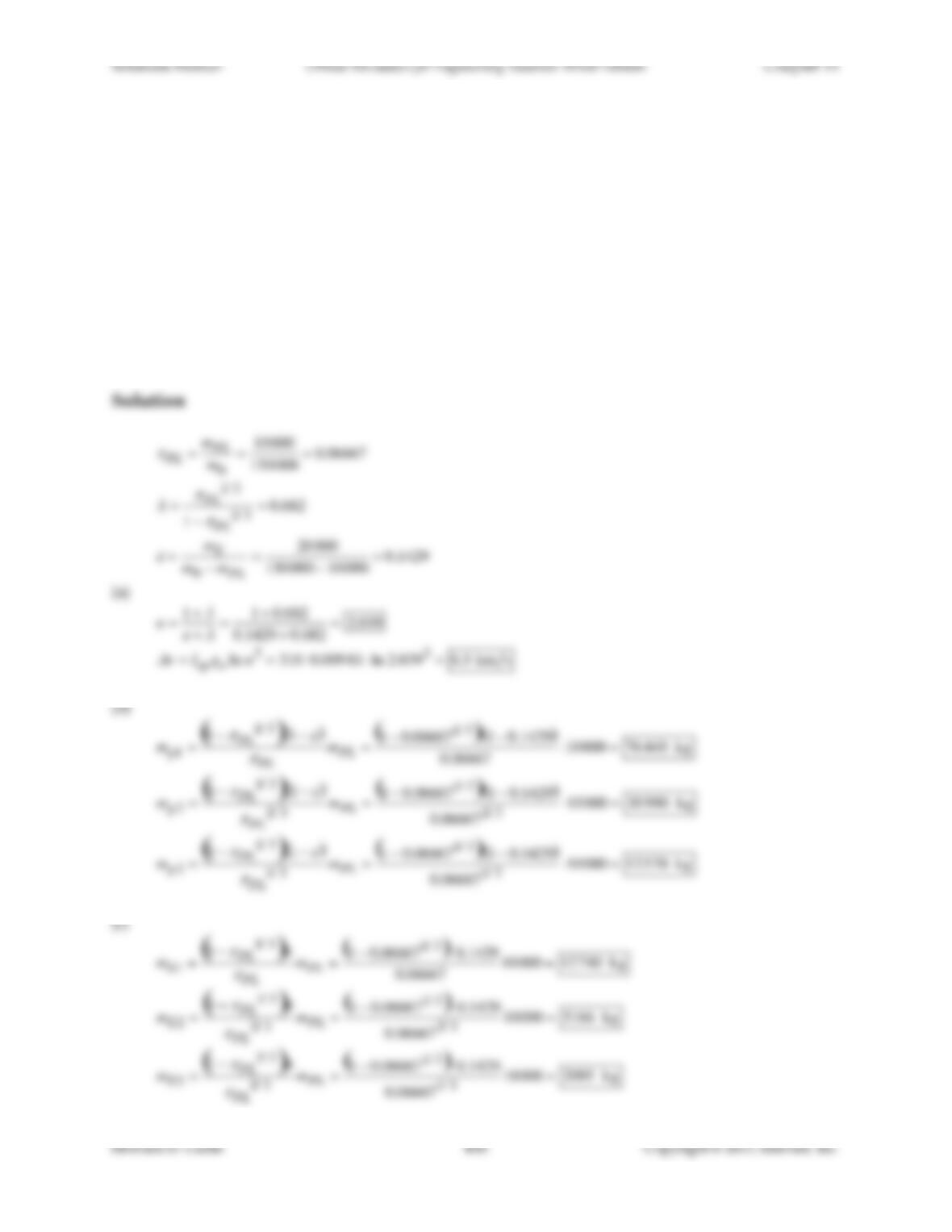
vIspgoln n33100.00981ln 2.03936.5 km s
PL1/ 3 mPL 10.066671/ 3
0.066671/ 3 10000 12570 kg
PL2/ 3 mPL 10.066671/ 3
0.066672/ 3 10000 5166 kg
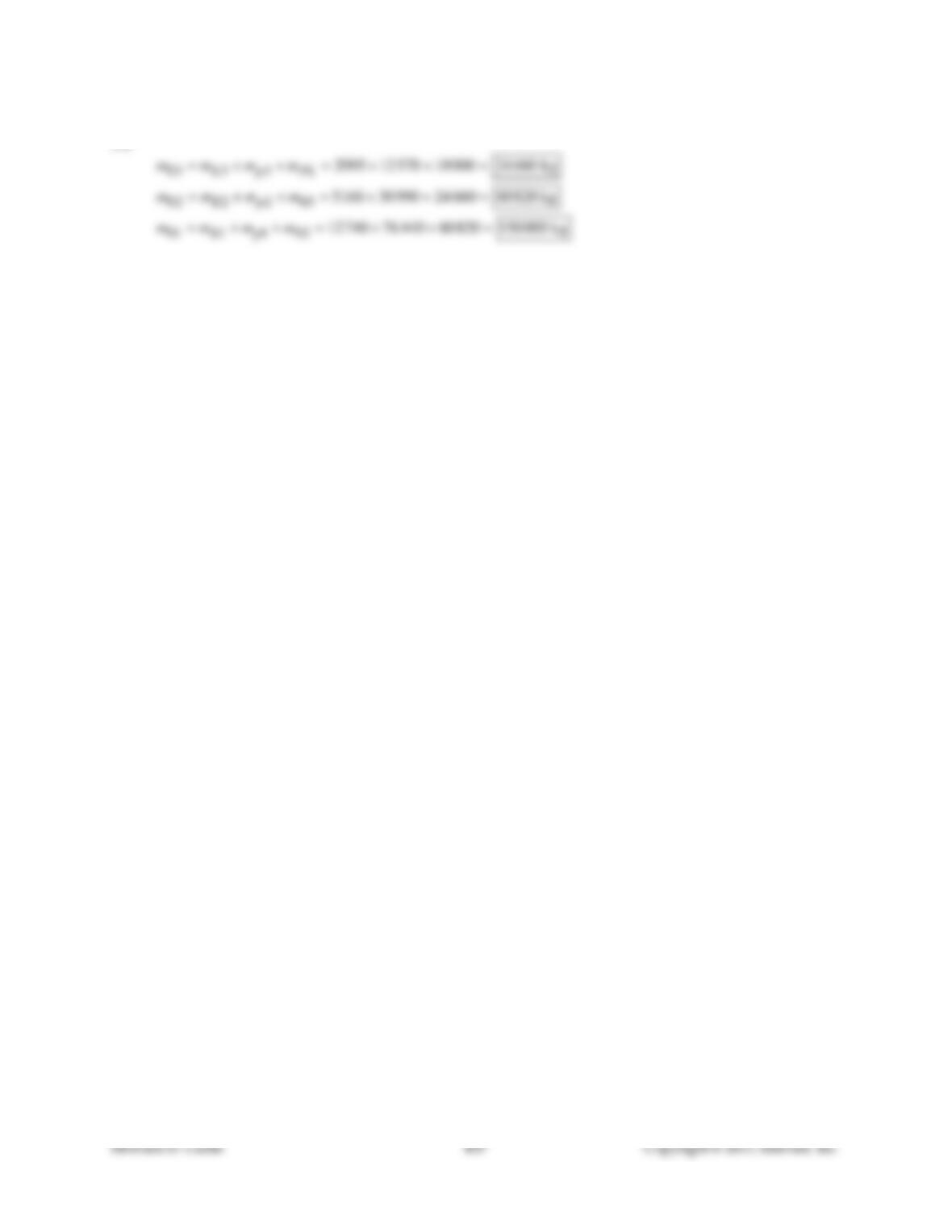
mE31
PL1/ 3
PL1/ 3 mPL 10.066671/ 3
0.1429
0.066671/ 3 10000 2095 kg
Solutions Manual Orbital Mechanics for Engineering Students Third Edition Chapter 11
(d)
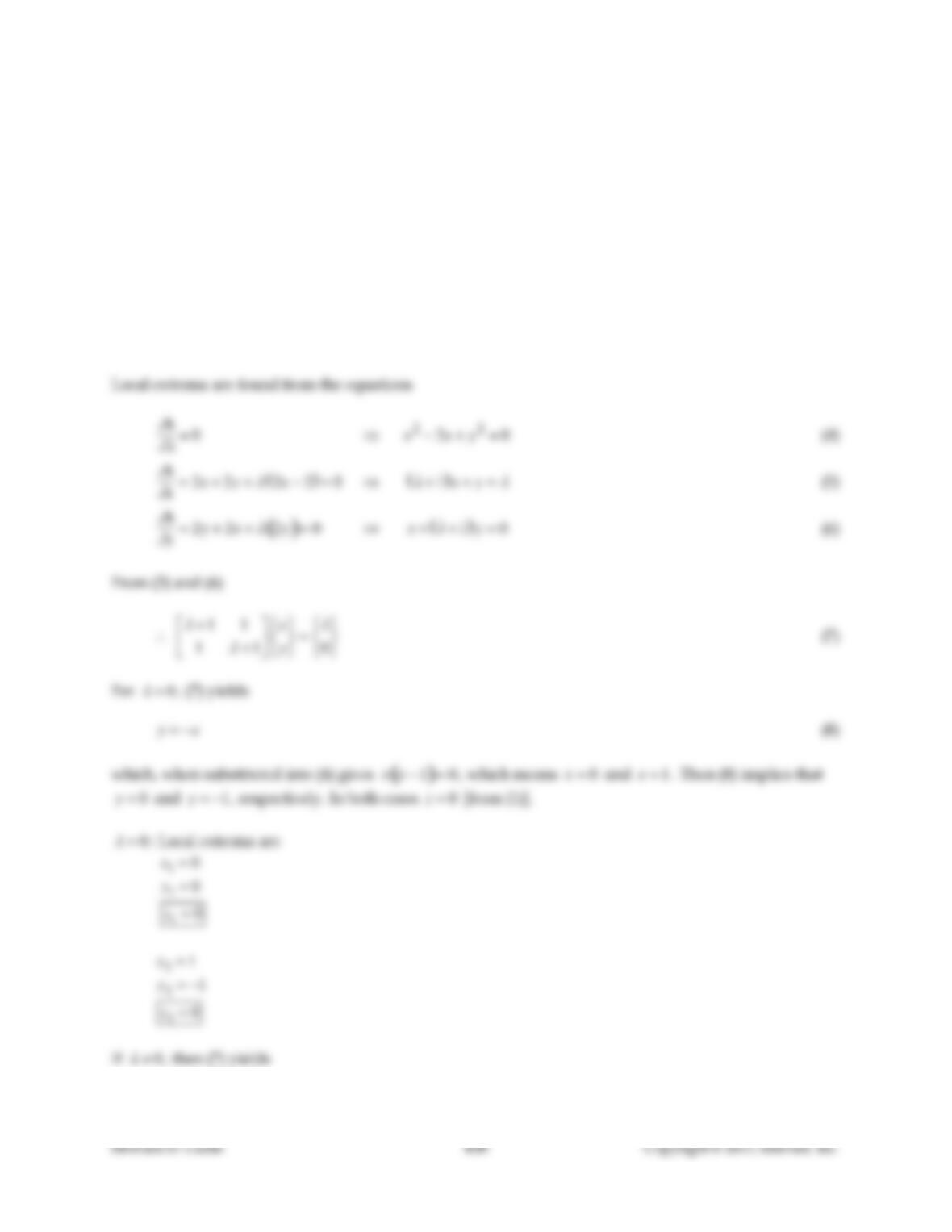
m03 mE3mp3mPL 2095 12570 10000 24660 kg
Solutions Manual Orbital Mechanics for Engineering Students Third Edition Chapter 11
Problem 11.5 Find the extrema of the function
zxy
2
subject to x and y lying on the circle
x1
2y21
.
Solution
zx2y22xy
(1)
gx22xy2
(2)
hz
gx2y22xy
x22xy2
(3)
0
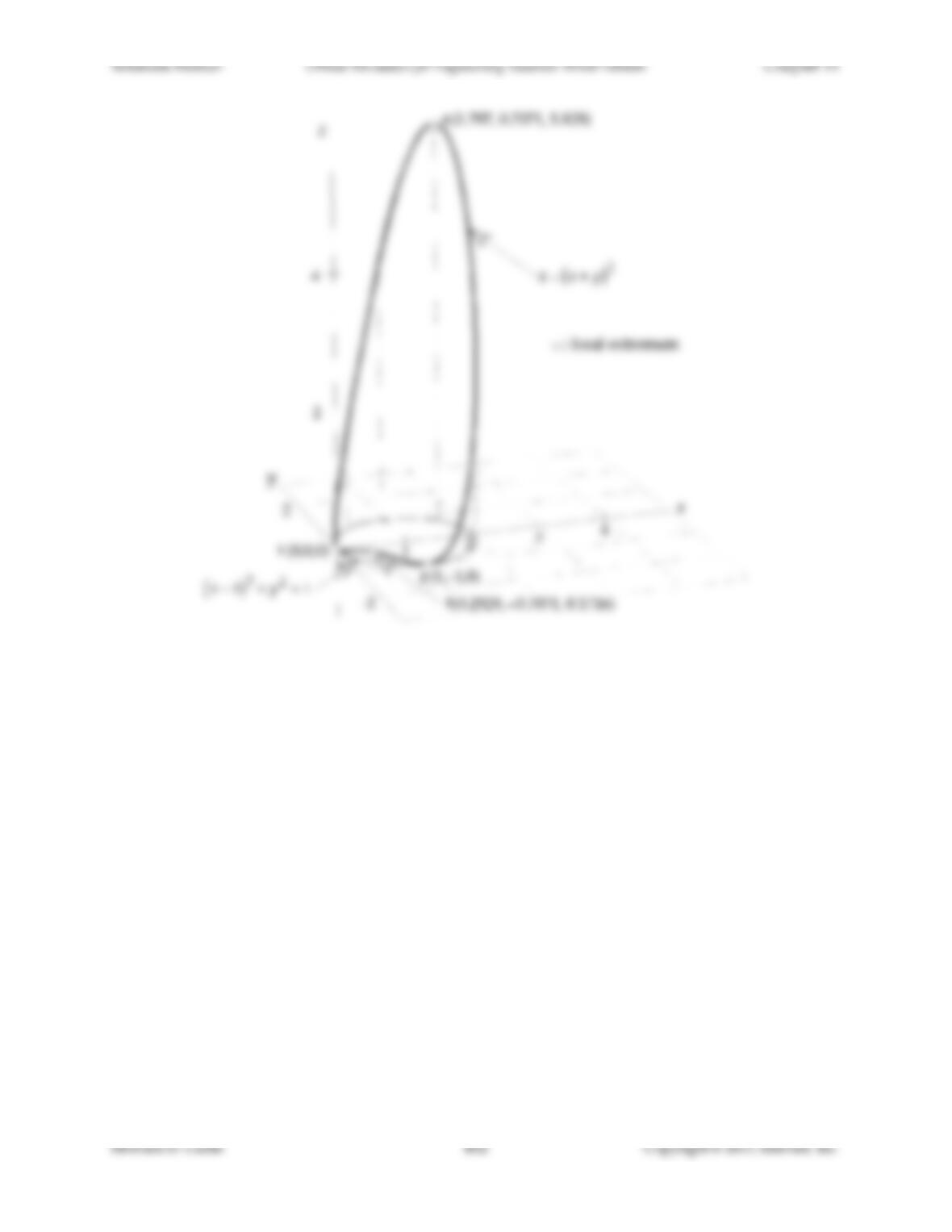
: Local extrema are
x10
y10
z10
x21
y2 1
z20
If
0
, then (7) yields
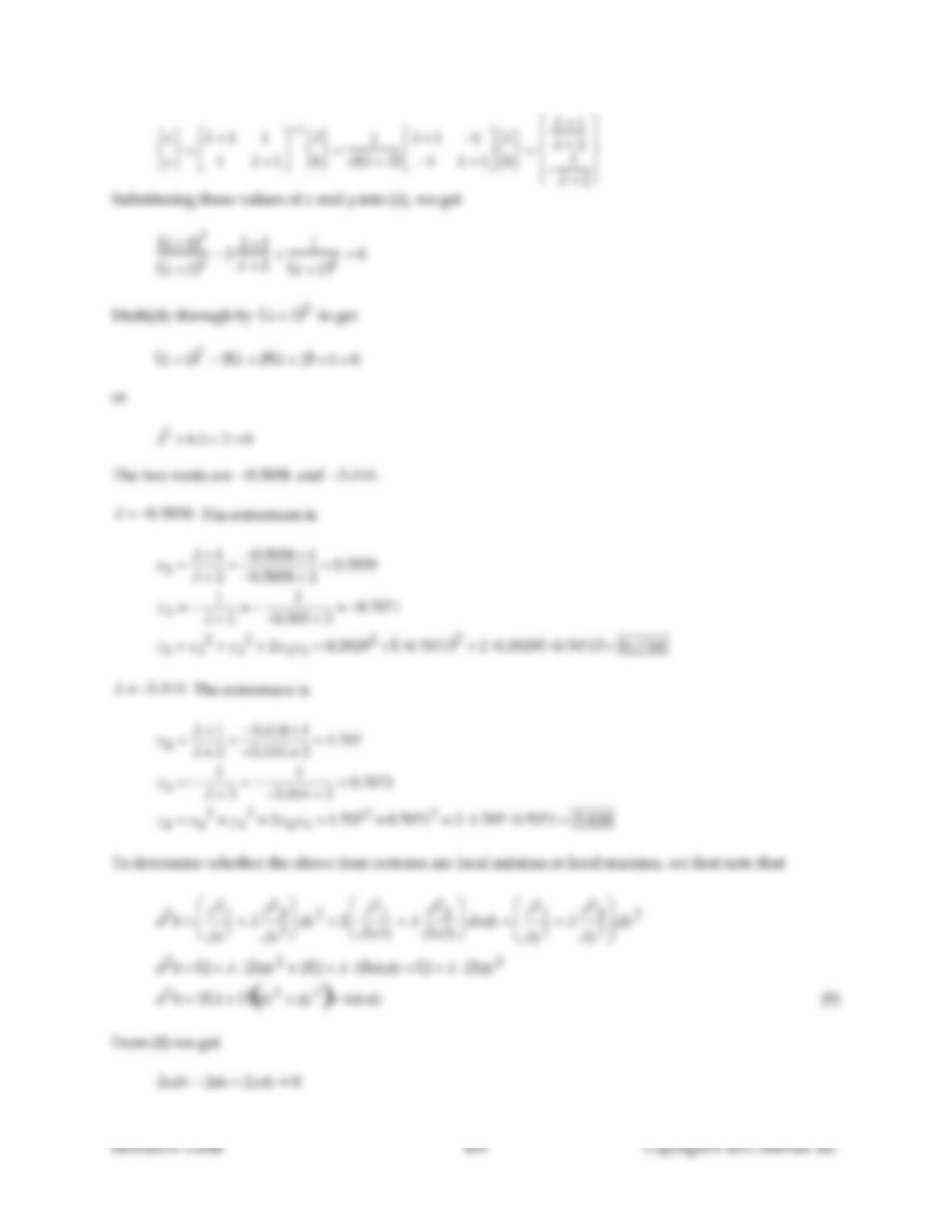
Solutions Manual Orbital Mechanics for Engineering Students Third Edition Chapter 11
Howard D. Curtis 459 Copyright © 2013, Elsevier, Inc.
x
y
1 1
1
1
1
0
1
2
11
1
1
0
1
2
1
2
Substituting these values of x and y into (4), we get
1
2
2
22
1
21
2
20
Multiply through by
2
2
to get
1
22
1
2
10
or
24
20
The two roots are
0.5858
and
3.414
.
0.5858:
The extremum is
x3
1
20.5858 1
0.5858 20.2929
y3 1
2 1
0.585 2 0.7071
z3x32y322x3y30.29292 0.7071
220.2929 0.7071
0.1716
3.414:
The extremum is
x4
1
23.414 1
3.414 21.707
y4 1
2 1
3.414 20.7071
z4x42y422x4y41.70720.7071221.7070.7071 5.828
To determine whether the above four extrema are local minima or local maxima, we first note that
d2h
2z
x2
2g
x2
dx22
2z
x
y
2g
x
y
dxdy
2z
y2
2g
y2
dy2
d2h2
2
dx22 2
0
dxdy 2
2
dy2
d2h2
1
dx2dy2
4dxdy
(9)
From (4) we get
2xdx 2dx 2ydy 0
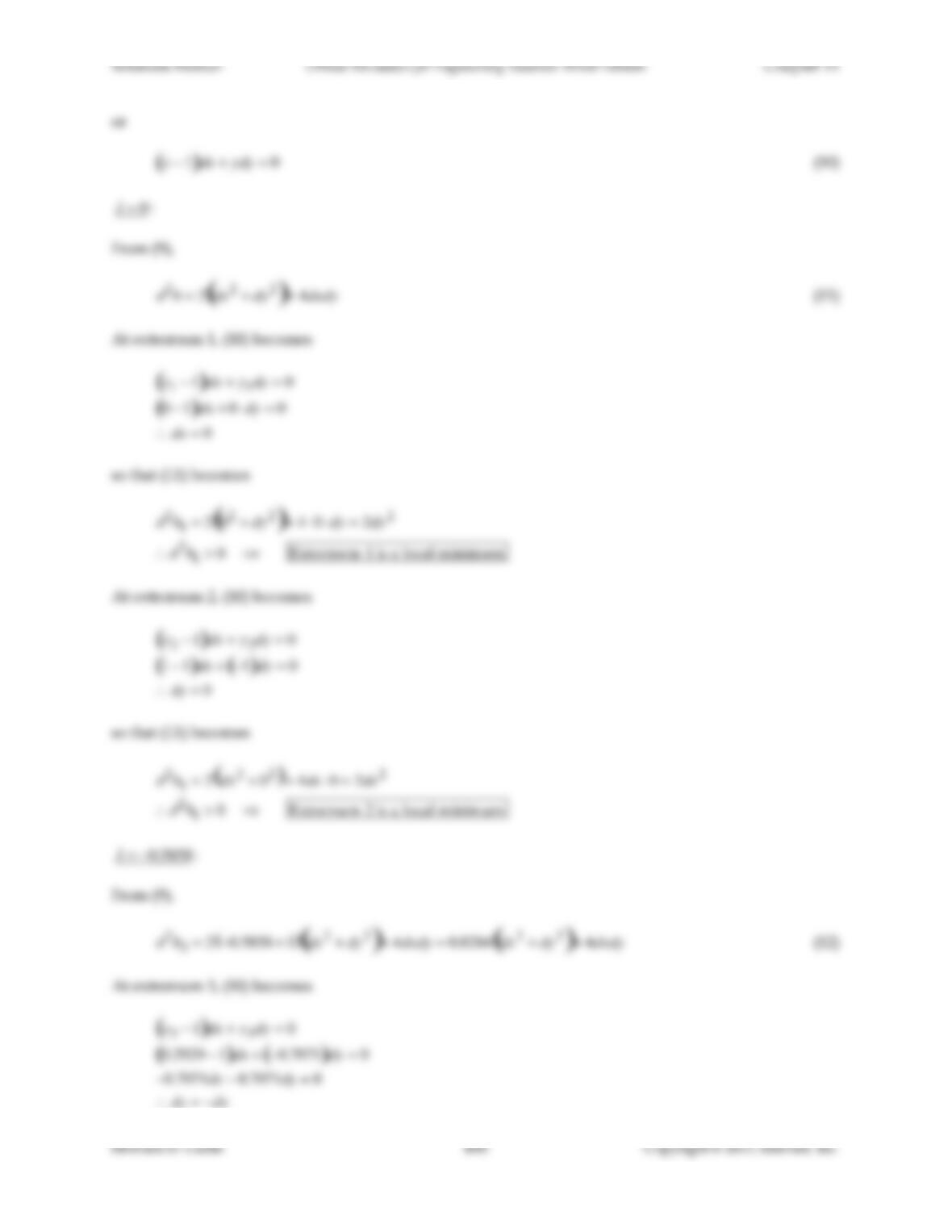
0.7071dx 0.7071dy 0
dy dx
Solutions Manual Orbital Mechanics for Engineering Students Third Edition Chapter 11
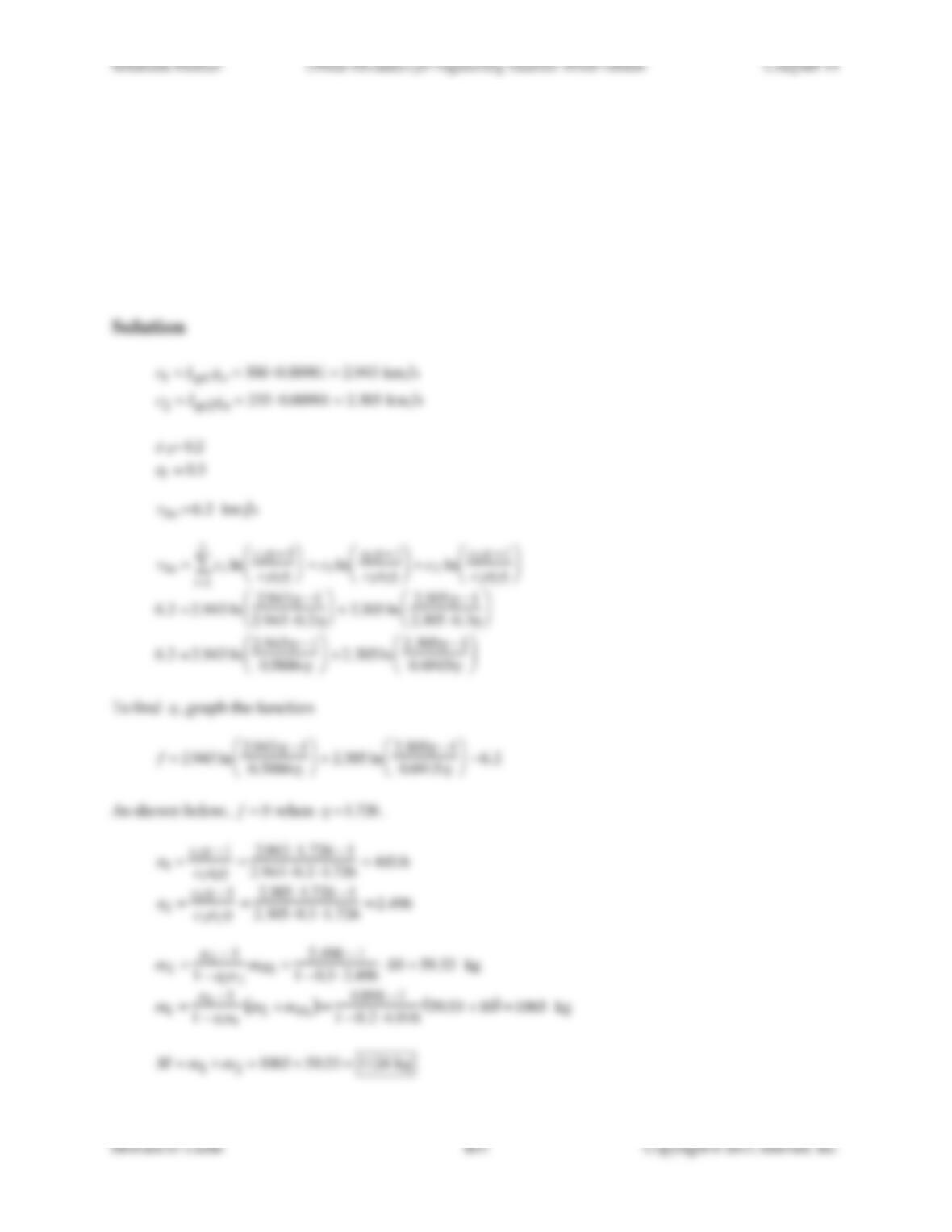
Problem 11.6 A small two-stage vehicle is to propel a 10 kg payload to a speed of 6.2 km/s. The prop-
erties of the stage are:
First stage:
Isp 300 s
and
0.2
.
Second stage:
Isp 235 s
and
0.3
.
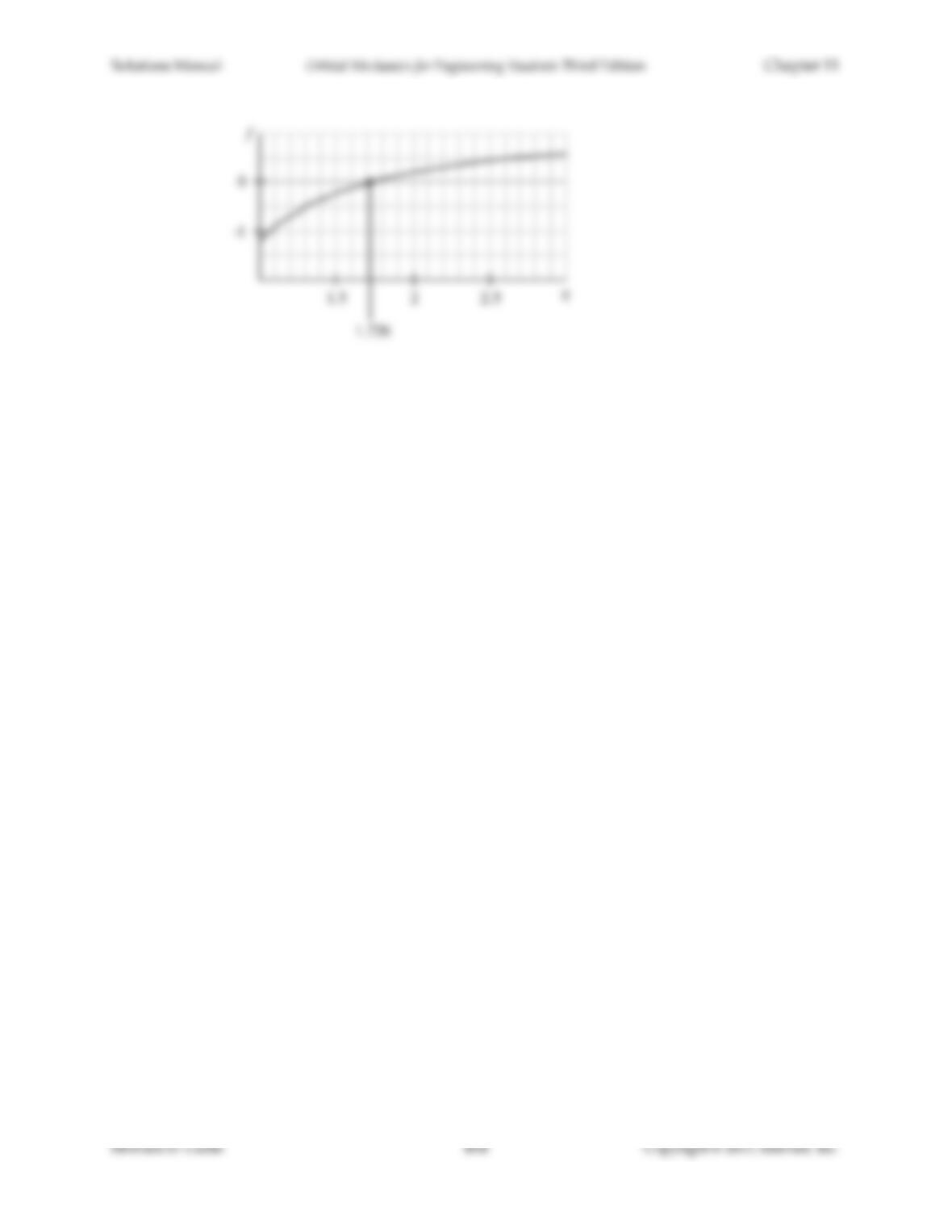
Estimate the optimum mass of the vehicle.

Solutions Manual Orbital Mechanics for Engineering Students Third Edition Chapter 11