
1-1
Chapter 1
The Dynamics of People and Organizations
Chapter Overview
The key purpose of this chapter is to introduce the field of organizational behavior (OB) and its basic
elements in order to provide a solid foundation for the following chapters.
The chapter begins by defining organizational behavior and explaining the goals of OB. It points out
the key elements or forces in OB (people, structure, technology, and the environment) in which an
organization operates. It further elaborates on the major positive characteristics of organizational
behavior. The basic concepts that revolve around the nature of people and organizations are
presented next, followed by four basic approaches to the study of OB:
• Human resources (supportive) approach
• Contingency approach
• Results-oriented approach
• Systems approach
The chapter then explores the problems and challenges that exist in OB’s nature and use.
Chapter Learning Objectives
After reading this chapter, students should understand:
1. The meaning of organizational behavior
2. The key goals and forces with which it is concerned
3. The basic concepts of organizational behavior
4. Major approaches taken in this book
5. How organizational behavior affects organizational performance
6. The limitations of organizational behavior
Discussion and Project Ideas
“A good beginning accomplishes half of the task to be done.” Certainly this is true in teaching
courses in human behavior and organizations. The first few class sessions are quite important
because they set the tone of the course and the students’ attitudes toward it. Learning is best
accomplished when there is a desire to learn; therefore, perhaps the most important class objective in
the beginning is to motivate the students by showing them that this subject is interesting, that it is
worthwhile, and that it is something they need.
1-2
This implies that students have not yet achieved their optimal ability in organizational behavior, and
they cannot achieve it merely through further experience and maturity. Study and training also are
needed. It is, therefore, important in the beginning to dispel as far as possible any students’ feelings
that effective work with people in organizations is simply common sense, being nice to people, and
so on.
In addition to attitude development, a second major objective of Chapter 1 is to communicate to the
students, the fundamental philosophical ideas underlying organizational behavior. Unless they
understand and at least partly accept these ideas, the subject will lack the meaning necessary for
motivated study. The following suggestion could help you meet these objectives:
Divide the class into groups of four or five. Ask the groups to read the case which follows and to
list all potential explanations for the person’s described behavior. After taking input from all
groups, show how their reasons can be divided according to the key elements of organizational
behavior. Use this case as an example while describing the various approaches to explaining and
controlling organizational behavior which will be covered later in this course. You might, for
example, give short explanations of the person’s behavior in terms of need theory, reinforcement
theory, and expectancy theory. Similarly, you might suggest changing the behavior through
reinforcement strategies, job enrichment, counseling, or organization development. In this way,
the nature and scope of the course can be discussed using a concrete example to which the
students can relate.
Lecture Outline
Introduction
• Organizations are complex systems.
• Human behavior in organizations is sometimes unpredictable.
• Human behavior in an organization can be partially understood.

1-3
• There are no perfect solutions to organizational problems.
Understanding Organizational Behavior
Definition
• Organizational behavior is the systematic study and careful application of knowledge about
how people—as individuals and as groups—act within organizations.
• It strives to find ways in which people can act more effectively.
• It is an applied science, in that information about effective practices in one organization is
being extended to many others.
• It provides a useful set of tools at many levels of analysis.
o It helps managers look at the behavior of individuals within an organization.
o It also aids their understanding of the complexities involved in interpersonal relations.
o It is valuable for examining the dynamics of relationships within small groups, both
formal teams and informal groups.
o When two or more groups need to coordinate their efforts, managers become interested
in the intergroup relations that emerge.
o Organizations can also be viewed, and managed, as whole systems that have
interorganizational relationships.
Goals
• Most sciences have four major thrusts, and these are also goals of organizational behavior:
o The first objective is to describe, systematically, how people behave under a variety of
conditions.
o A second goal is to understand why people behave as they do.
o Predicting future employee behavior is another goal of organizational behavior.
o The final goal of organizational behavior is to control, at least partially, and develop
some human activity at work.
• Managers need to remember that organizational behavior is a human tool for human benefit.
Forces
• A complex set of forces affects the nature of organizations today.
• A wide array of issues and trends in these forces can be classified into four areas:
o People
o Structure
o Technology
o Environment in which the organization operates
• People
o People make up the internal social system of the organization.
o Groups are dynamic, vary in size, and may be formal or informal.
1-4
o Organizations should exist to serve people; rather than people existing to serve
organizations.
o The workforce has become a rich melting pot of diversity, which means that
employees bring a wide array of educational, ethnic, cultural, religious, gender
economic backgrounds, talents, and perspectives to their jobs.
o Occasionally, this diversity presents challenges for management to resolve.
o Some of the changes in the labor force are as follows:
▪ There has been a decline in the work ethic and a rise in emphasis on leisure, self–
expression, fulfillment, and personal growth.
▪ The automatic acceptance of authority by employees has decreased, while desires
for participation, autonomy, and control have increased.
o Several major factors are affecting the workforce:
• Structure
o Structure defines the formal relationship and use of people in organizations.
o All the employees must be related in some structural way so their work can be
effectively coordinated.
o The relationships between the employees create complex problems of cooperation,
negotiation, and decision-making.
• Technology
o Technology provides the resources with which people work and affects the tasks they
perform.
o It allows people to do more and better work, but it also restricts people in various ways.
o It has costs as well as benefits.
o Examples of the impact of technology include the:
▪ Increasing use of robots and automated control systems in assembly lines
▪ Dramatic shift from a manufacturing to a service economy
▪ Impressive advances in computer hardware and software capabilities
o The technological advancements places increased pressure on OB to maintain the
delicate balance between technical and social systems.
• Environment
o Environments can be internal or external, and all organizations operate within them.
o Numerous changes in the environment create demands on the organization.
1-5
▪ Citizens expect organizations to be socially responsible.
▪ New products and competition for customers come from around the world.
o All these factors—but especially the rapid globalization of the marketplace—influence
one another in a complex system that creates a dynamic context for a group of people.
Positive Characteristics of the Organizational Behavior Field
• One major strength of organizational behavior is its interdisciplinary nature.
o It draws from the fields of psychology, sociology, social psychology, group dynamics,
and anthropology.
o It integrates relevant knowledge from these behavioral science disciplines with other
social sciences that can contribute to the subject.
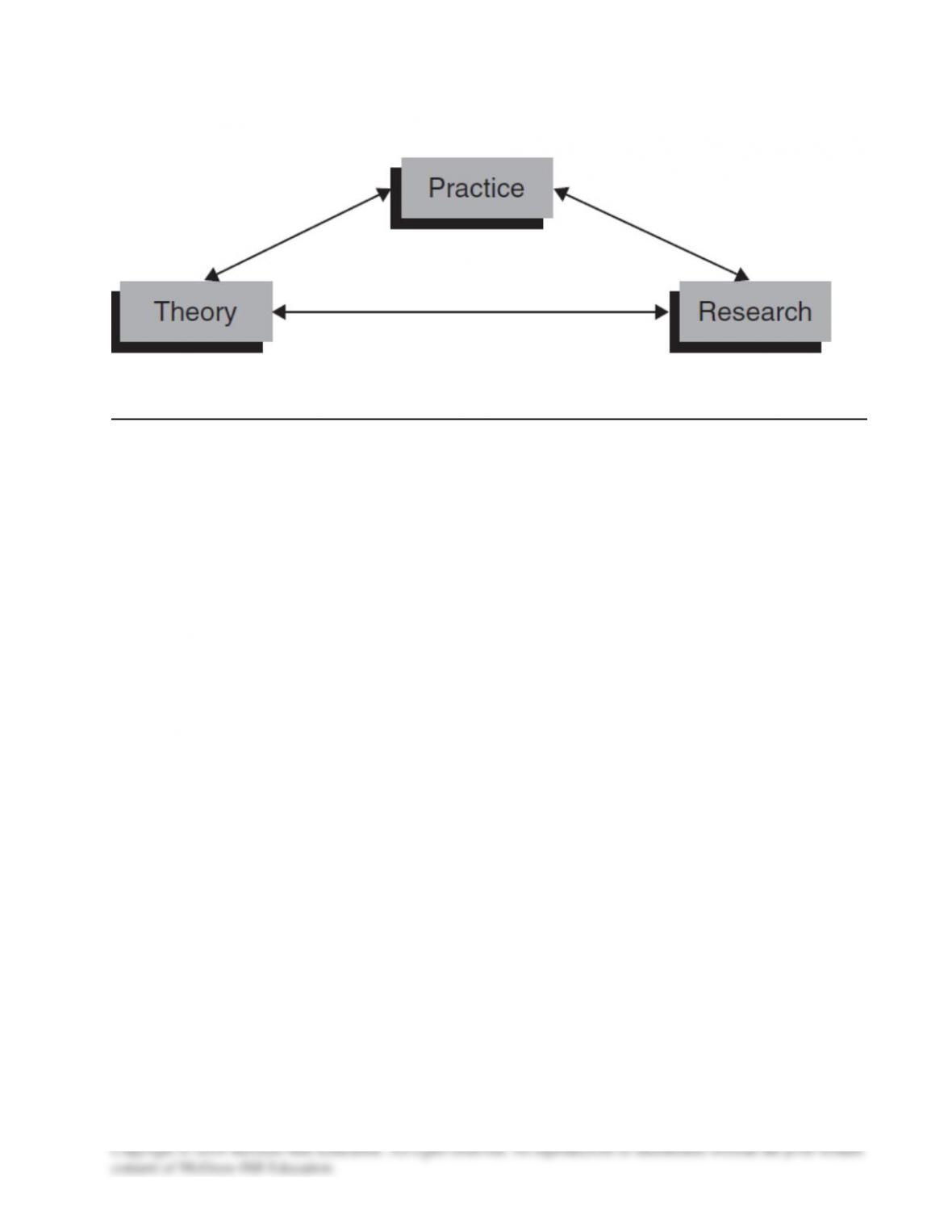
• Another strength of organizational behavior is its emerging base of research knowledge,
theories, models, and conceptual frameworks.
o The key to its past and future success revolves around theory development, research,
and managerial practices.
• Theories offer explanations of how and why people think, feel, and act as they do.
o They identify important variable and link them to form tentative propositions that can
be tested through research.
o Evidence-based management depends heavily on the explicit use of four pillars of
information:
▪ Immersion in, and critical evaluation of, existing research evidence on “best
organizational practices”
▪ In-depth information unique to the organization and its local context
▪ Input and reactions from various persons affected by it
▪ The wisdom, expertise, and practiced judgment of the manager
1-6
Fundamental Concepts
The Nature of People
• Individual Differences
o The idea of individual differences is supported by science.
o The idea of individual differences comes originally from psychology.
o Individual differences mean that management can motivate employees best by treating
them differently.
o The belief that each person is different from all others is typically called law of
individual differences.
• Perception
o People’s view of their objective environment is filtered by perception, which is the
unique way in which each person sees, organizes, and interprets things.
o People tend to act on the basis of their perceptions.
o Selective perception is the process in which people tend to pay attention to those
features of their work environment that are consistent with or reinforce their own
expectations.
• A Whole Person
o Although some organizations may wish they could employ only a person’s skill or
brain, they actually employ a whole person rather than certain characteristics.
o Jobs shape people somewhat as they perform them, so management must be concerned
with the job’s effect on the whole person.
• Motivated Behavior
o In the case of needs, people are motivated not by what others think they ought to have
but by what they themselves want.
o Management has two basic ways to motivate people:
▪ It can show them how certain actions will increase their need fulfillment.
▪ It can threaten decreased need fulfillment if they follow an undesirable course of
action.
1-7
o A path toward increased need fulfillment is the better approach, and this illustrates that
motivation is essential to the operation of organizations.
• Desire for Involvement
o Many employees today are actively seeking opportunities at work to become involved
in relevant decisions, thereby contributing their talents and ideas to the organization’s
success.
o Meaningful involvement can be achieved through employee empowerment—a practice
that will result in mutual benefit for both parties.
The Nature of Organizations
• Social Systems
o Organizations are social systems; consequently, activities therein are governed by
social laws as well as psychological laws.
o Their behavior is influenced by their group as well as their individual drives.
o Two types of social systems exist side by side in organizations:
▪ Formal (official) social system
▪ Informal social system
o All parts of the system are interdependent and each part is subject to influence by any
other part.
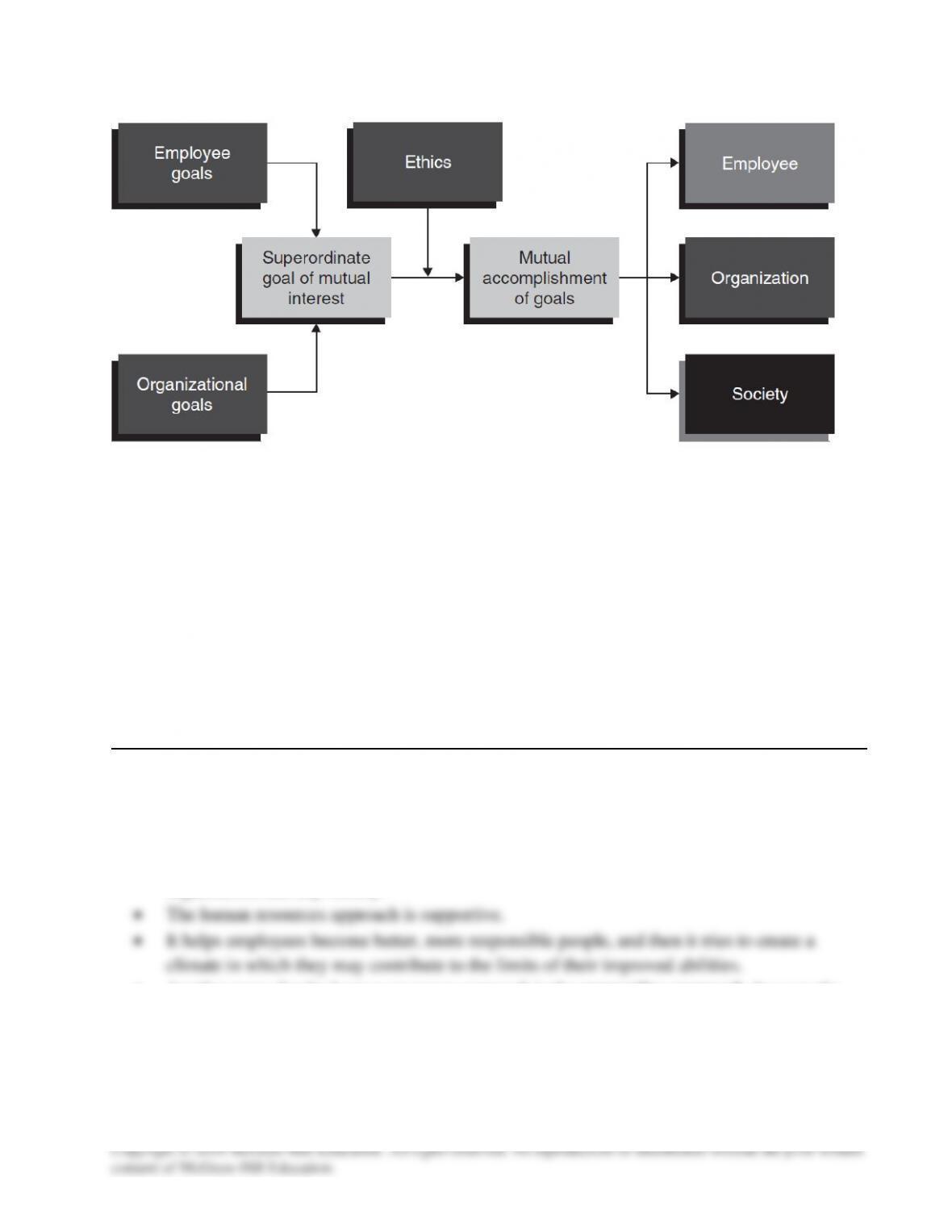
• Mutual Interest
o Organizations need people, and people need organizations.
o They are formed and maintained on the basis of some mutuality of interest among
their participants.
o If mutuality is lacking, trying to assemble a group and develop cooperation makes no
sense, because there is no common base on which to build.
o Mutual interest provides a superordinate goal—one that can be attained only through
the integrated efforts of individuals and their employers.
1-8
• Ethics
o Companies have established codes of ethics, publicized statements of ethical values,
provided ethics training, rewarded employees for notable ethical behavior, publicized
positive role models, and set up internal procedures to handle misconduct.
o They have begun to recognize that since organizational behavior always involves
people, ethical philosophy is involved in one way or another in each action they take.
o When the organization’s goals and actions are ethical, it is more likely that individual,
organizational, and social objectives will be met.
o People find more satisfaction in work when there is cooperation and teamwork.
Basic Approaches of this Book
A Human Resources (Supportive) Approach
• The human resources approach is developmental.
• It is concerned with the growth and development of people toward higher levels of
competency, creativity, and fulfillment, because people are the central resource in any
organization and any society.
• Another name for the human resources approach is the supportive approach, because the
manager’s primary role changes from control of employees to active support of their growth
and performance.
A Contingency Approach
1-9
• Traditional management searched for principles to provide “one best way” of managing.
• Management principles were considered to be universal.
• The more accepted view in the twenty-first century is that few across-the-board concepts
apply in all instances.
• Situations are much more complex than first perceived, and the different variables may
require different behavioral approach.
A Results-Oriented Approach
• A dominant goal for many organizations is to be productive, so this results orientation is a
common thread woven through organizational behavior.
• Productivity, at its simplest, is a ratio that compares units of output with units of input, often
against a predetermined standard.
• Productivity often is measured in terms of economic inputs and outputs, but human and
social inputs and outputs are also important.
• Organizational behavior decisions typically involve human, social, or economic issues.
• A Formula:
o It is generally accepted that the product of knowledge and one’s skill in applying it
constitute the human trait called ability (Knowledge × Skill = Ability).
▪ It can be improved through hiring better workers for learning or providing
• Despite having the requisite ability, motivation, and opportunity to perform, employee
productivity is sometimes stifled.
• Research shows that the following factors create detrimental distractions at work:
o Personal relationships
o Chatty co-workers
o Dysfunctional work relationships
1-10
o Personal financial or legal problems
o Child-related or caregiving issues
o Personal health problems
A Systems Approach
• Treating an organization as a system is critically important to its success.
• The ten fundamental elements of the systems approach include:
o Many variables operate within a complex social system.
o The parts of a system are interdependent and causally related.
o Many subsystems are contained within larger systems.
o Systems generally require inputs, engage in some dynamic process, and produce
o Often, multiple ways can be used to achieve a desired objective.
o Systems can be understood, changed, and managed if its members focus on problem
causes instead of symptoms.
• The systems approach compels managers to take a holistic and synthesizing view of the
subject.
• Managers need to interpret people–organization relationships in terms of the whole person,
whole group, whole organization, and whole social system.
• Negative effects as well as positive effects sometimes result from the behavioral actions of
managers.
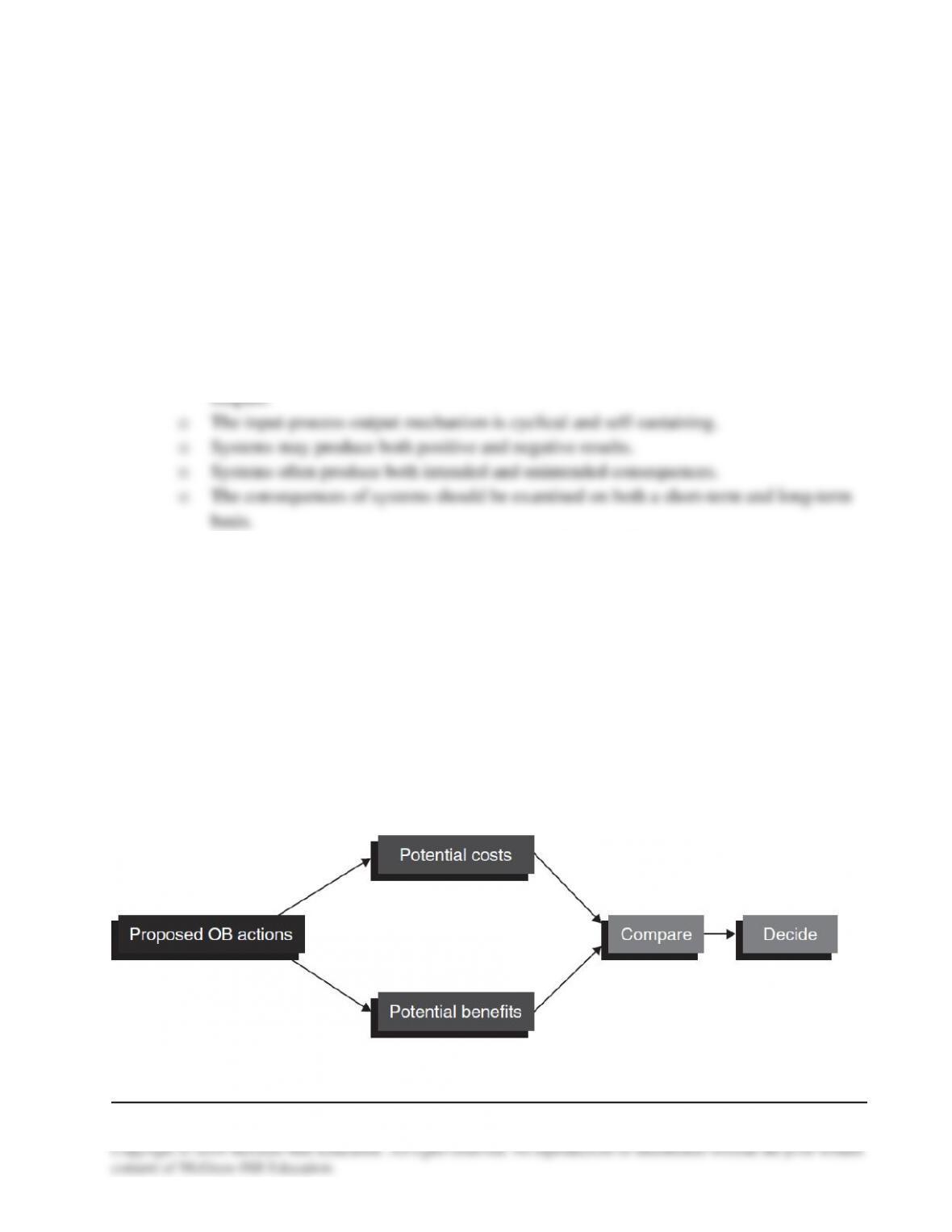
• Cost-benefit analysis is needed to determine whether potential actions will have a net
positive or net negative effect.
Limitations of Organizational Behavior

1-11
Behavioral Bias
• Managers who lack system understanding and become superficially infatuated with OB may
develop a behavioral bias, which gives them a narrow viewpoint that emphasizes satisfying
employee experiences while overlooking the broader system of the organization in relation to
all its publics.
• Concern for employees can be so greatly overdone that the original purpose of bringing
people together—productive organizational outputs for society—is lost.
• To assume that the objective of OB is simply to create a satisfied workforce is a mistake, for
that goal will not automatically translate into new products and outstanding customer service.
• Behavioral bias can be so misapplied that it harms employees as well as the organization.
• Some managers, in spite of their good intentions, so overwhelm others with care that the
recipients of such care are emotionally smothered and reduced to dependent—and
unproductive—indignity.
o The employees become content, not fulfilled.
o They find excuses for failure rather than take responsibility for progress.
o They lack self-discipline and self-respect.
The Law Of Diminishing Returns
• Overemphasis on a valid organizational behavior practice may produce negative results, as
indicated by the law of diminishing returns.
• In economics, the law of diminishing returns refers to a declining amount of extra outputs
when more of a desirable input is added to an economic situation.
o After a certain point, the output from each unit of added input tends to become smaller.
o The added output eventually may reach zero and even continue to decline when more
units of inputs are added.
• The law of diminishing returns in organizational behavior works in a similar way.
o The concept implies that for any situation there is an optimum amount of a desirable
practice.
• Essentially, the law of diminishing returns is a system concept.
o When an excess of one variable develops, although the variable is desirable, it tends to
restrict the operating benefits of other variables so substantially that net effectiveness
declines.
o Organizational effectiveness is achieved not by maximizing one human variable but by
combining all system variables together in a balanced way.
Unethical Treatment of People and Use of Resources
• A significant concern about organizational behavior is that its knowledge and techniques can
be used to manipulate people unethically as well as to help them develop their potential.
• People who lack respect for the basic dignity of the human being could learn organizational
1-12
behavior ideas and use them for selfish ends.
• They could use what they know about motivation or communication in the manipulation of
people without regard for human welfare.
• The philosophy of organizational behavior is supportive and oriented toward human
resources.
o However, the knowledge and techniques of organizational behavior may be used for
negative as well as positive consequences.
o The possibility of manipulation means that people in power in organizations must
maintain high ethical and moral integrity and not misuse their power.
• Ethical leadership will recognize such principle as the following:
o Social responsibility—responsibility to others arises when people have power in an
organization.
o Open communication—the organization will operate as a two-way open system, with
open receipt of inputs from people and open disclosure of its operations to them.
o Cost-benefit analysis—in addition to economic costs and benefits, human and social
costs and benefits of an activity will be analyzed in determining whether to proceed
Continuing Challenges
Seeking Quick Fixes and Using Old Solutions
• One problem that has plagued organizational behavior has been the tendency for business
firms to have short time horizons for the expected payoff from behavioral programs.
o This search for a quick fix sometimes leads managers to embrace the newest fad, to
address the symptoms while neglecting underlying problems, or to fragment their
efforts within the firm.
Varying Environments
• Another challenge that confronts organizational behavior is to see whether the ideas that have
been developed and tested during periods of organizational growth and economic plenty will
endure with equal success under new conditions.
o Specifically, the environment in the future may be marked by shrinking demand, scarce

1-13
resources, and more intense competition.
• When organizations stagnate, decline, or have their survival threatened, there is evidence that
stress and conflict increase.
Definitional Confusion
• Organizational behavior, early in its history experienced some difficulty emerging as a
clearly defined field of study and application.
o There was a lack of consensus regarding its:
▪ Unit of analysis (individual, group, or total organization)
▪ Greatest need (as a source of empirical data and integrating theory, or a basis for
applied information)
▪ Major focus (micro or macro issues)
▪ Major contributions to date
• This lack of clear definition was compounded by multiple criteria used to assess its
effectiveness.
o Issues here include:
▪ Identification of relevant stakeholders
▪ Short or long time frame to wait for results
▪ Reliance on soft or hard data
o All these issues have subsequently received useful attention and clarification.
Suggested Answers to Discussion Questions
1. Define organizational behavior in your own words. Ask a friend outside of class or work
associate to do the same. Identify and explore the nature of any differences between the
two definitions.
Students’ answers may vary. However, responses should emphasize that organizational
behavior is the study and application of knowledge about people within organizations.
2. Assume that a friend states, “Organizational behavior is selfish and manipulative,
because it serves only the interests of management.” How would you respond?
Students’ answers may vary. Answer may include the following points:
• Organizational behavior’s (OB) use of the social sciences helps to improve employee
1-14
Copyright © 2014 McGraw-Hill Education. All rights reserved. No reproduction or distribution without the prior written
consent of McGraw-Hill Education.
rather than statistical, approach to employees.
Any of these responses points out how OB benefits employees, as well as management.
3. As you begin to understand organizational behavior, why do you think it has become a
popular field of interest?
4. Consider the statement, “Organizations need people, and people also need
organizations.” Is this assertion true for all types of organizations? Give examples where
it is, and probably isn’t, true.
Students’ answers may vary. Organizations come about as a result of a mutual interest of the
5. Review the fundamental concepts that form the basis of organizational behavior. Which
concepts do you think are more important than the others? Explain.
The fundamental concepts that form the basis of organizational behavior deal with the nature
of people and the nature of organizations. The nature of people encompasses individual
differences, the whole person, motivated behavior, and human dignity. Social systems and
mutual interest are concepts related to the nature of organizations.
1-15
Copyright © 2014 McGraw-Hill Education. All rights reserved. No reproduction or distribution without the prior written
consent of McGraw-Hill Education.
concepts provide a holistic approach to organizational behavior.
6. Select one of your work associates or friends. Identify the qualities that make that person
substantially different from you. In what ways are you basically similar? Which
dominates, the differences or similarities?
7. Discuss the major features of the social system in an organization where you have
worked. In what ways did that social system affect you and your job performance, either
positively or negatively?
8. Review the four approaches to organizational behavior. As you read this book, keep a list
of the ways in which those themes are reflected in each major topic.
Students should be able to list and summarize the following four approaches to organizational
behavior:
• Human resources approach—emphasizes development of people
9. Examine the formulas leading to effective organizational productivity. Which factors do
you think have the greatest potential for making a difference between organizations?
What can be done to affect the other ones?
1-16
Copyright © 2014 McGraw-Hill Education. All rights reserved. No reproduction or distribution without the prior written
consent of McGraw-Hill Education.
Student answers will vary. The text suggests that motivation is the most important factor
because of its relationship to organizational behavior. Without proper motivation through
organizational behavior, employees may not acquire the ability to perform, which will affect
the organization’s performance in the long run.
10. Are behavioral biases and diminishing returns from organizational behavior practices
the same or different? Discuss.
Behavioral bias and diminishing returns are two separate problems. People who lack system
Assess Your Own Skills
Incident
The Transferred Sales Representative
(Note: The case comments are for guidance only. Many other points may be made about each case.)
1-17
When problems have been identified adequately, the instructor can then focus on what actions would
constitute better handling of this situation. This approach provides the instructor an opportunity to
emphasize that the remainder of the book will be devoted to providing frameworks and ideas that
will help students understand organizational situations so that they can avoid the kinds of mistakes
that the regional sales manager made.
Experiential Exercise
Ethics in Organizational Behavior
As discussed in the chapter, ethics in organizational behavior is a major concern for all
organizational stakeholders. The following examples quickly illustrate situations students may
experience as a manager. Many other points may be made about each case:
1. A manager, following the law of individual differences, allows her six employees to
establish their own starting times for work each day.
2. A supervisor finds that members of a certain minority group are faster workers than
whites, and thereafter hires only those minorities for particular jobs.
3. An organization, frustrated over continual complaints about its appraisal system and
pay, decides that “equal pay for all employees” (despite differences in their performance)
will work best.
4. An organization is faced with a possible union certification election. To find out what
employees are thinking, top management installs electronic eavesdropping equipment in
the cafeteria.
1-18
Copyright © 2014 McGraw-Hill Education. All rights reserved. No reproduction or distribution without the prior written
consent of McGraw-Hill Education.
• Are there legal implications for this behavior?
• No privacy for employees during non-work/break time
5. A company hires a consulting firm to conduct an attitude survey of its employees. When
the consultants suggest that they could code the questionnaires secretly so that responses
could be traced back to individuals, the company agrees that it would be “interesting.”
Generating OB Insights