CD14-39
14.33
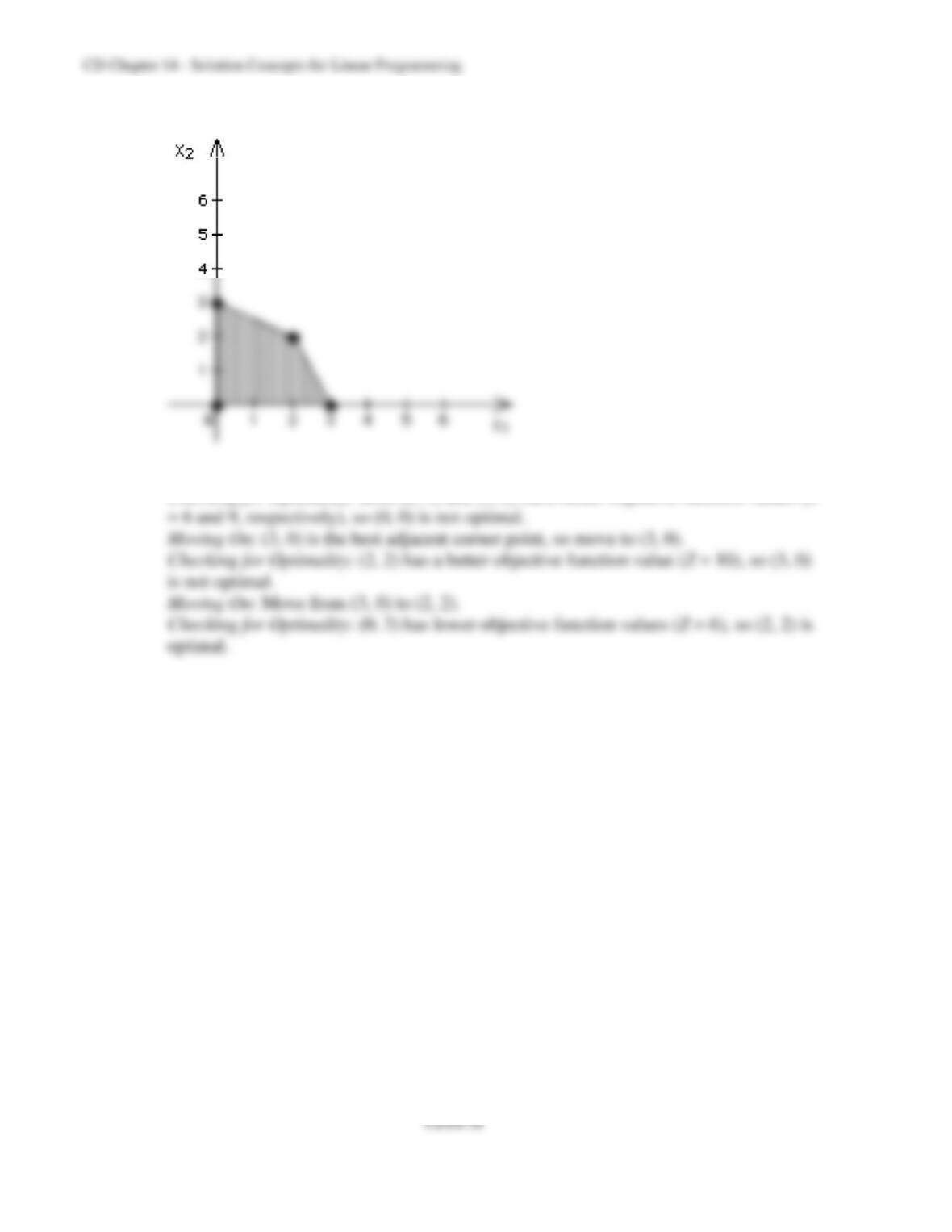
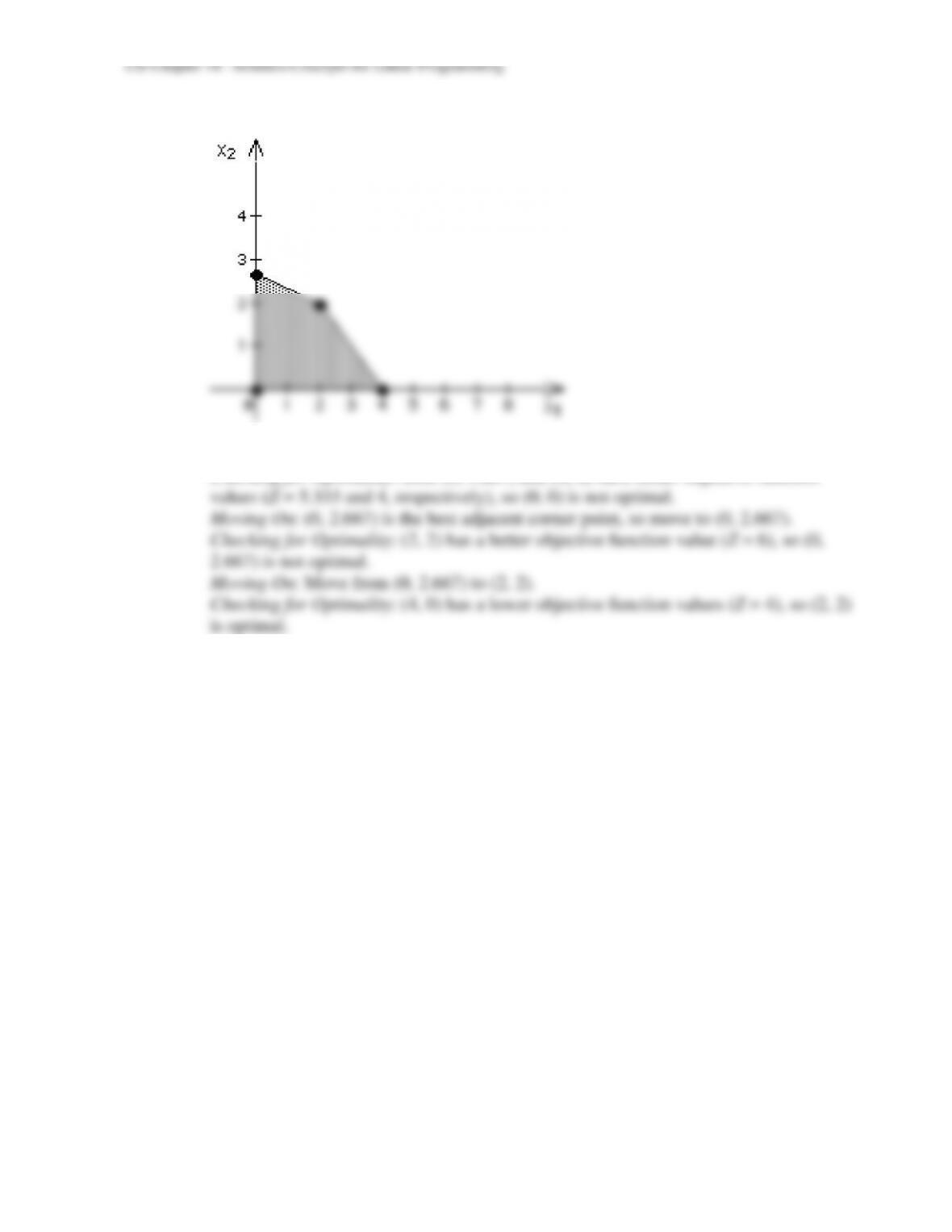
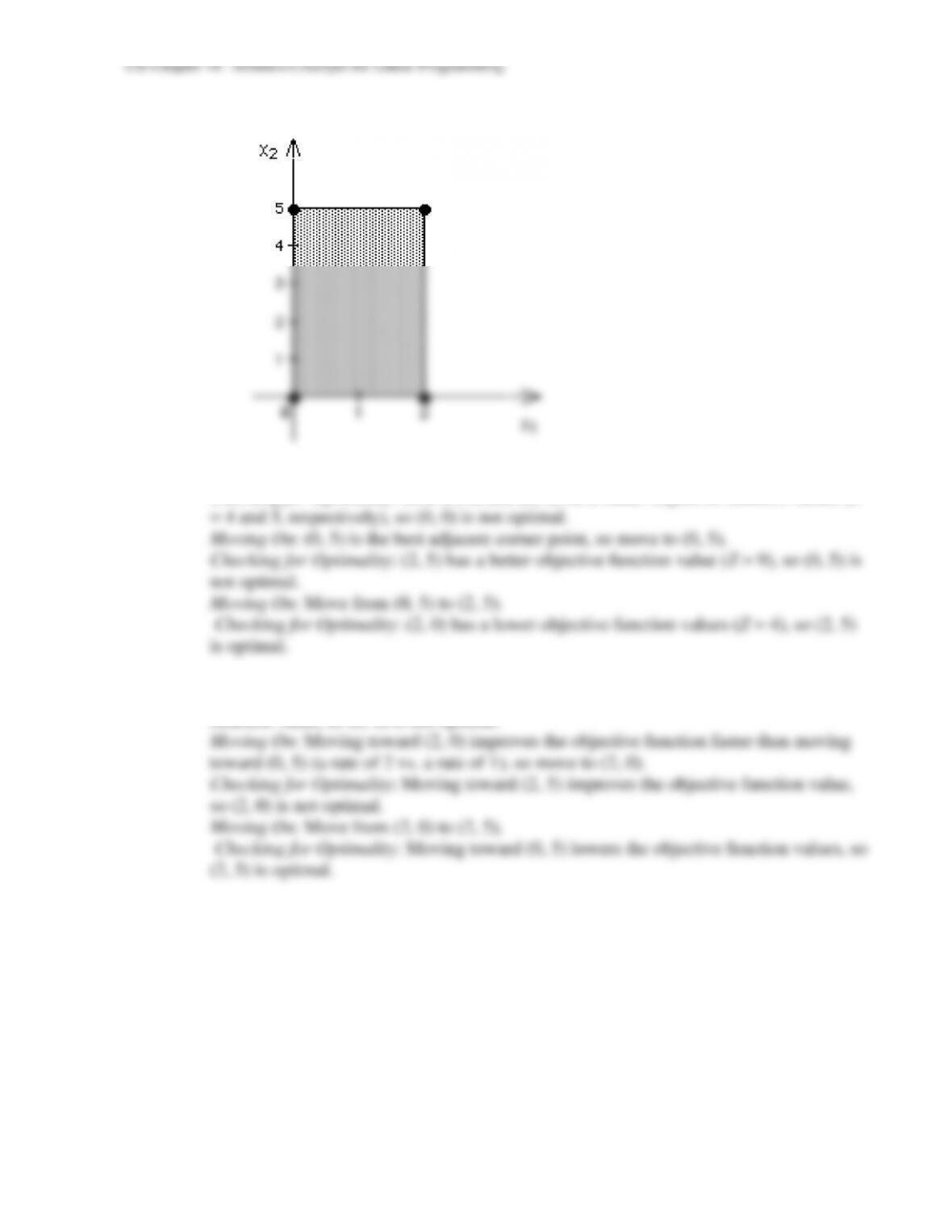
Getting Started: Select (0, 0) as the initial corner point.
Checking for Optimality: Both (0, 2.667) and (4, 0) have better objective function
CD14-41
14.35 a)
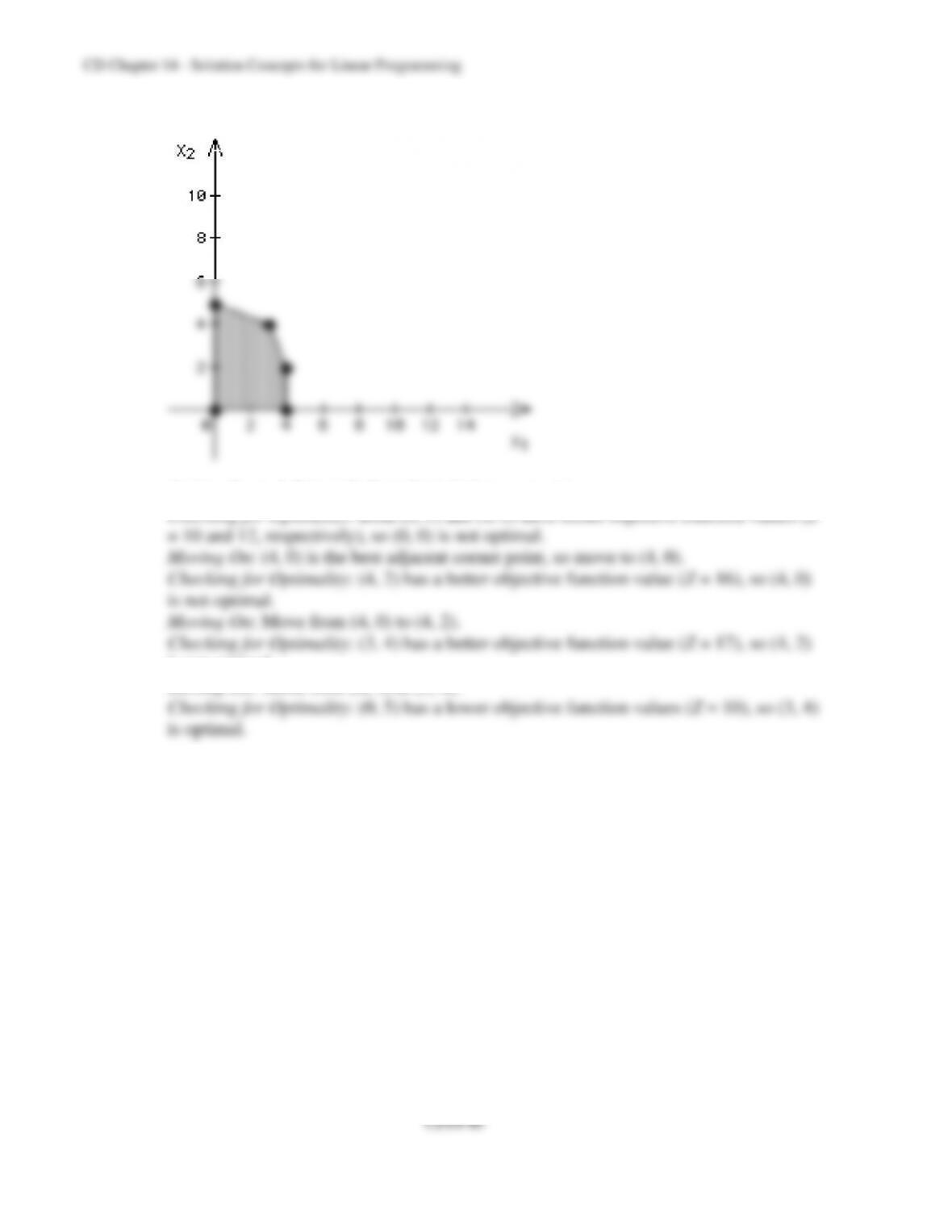
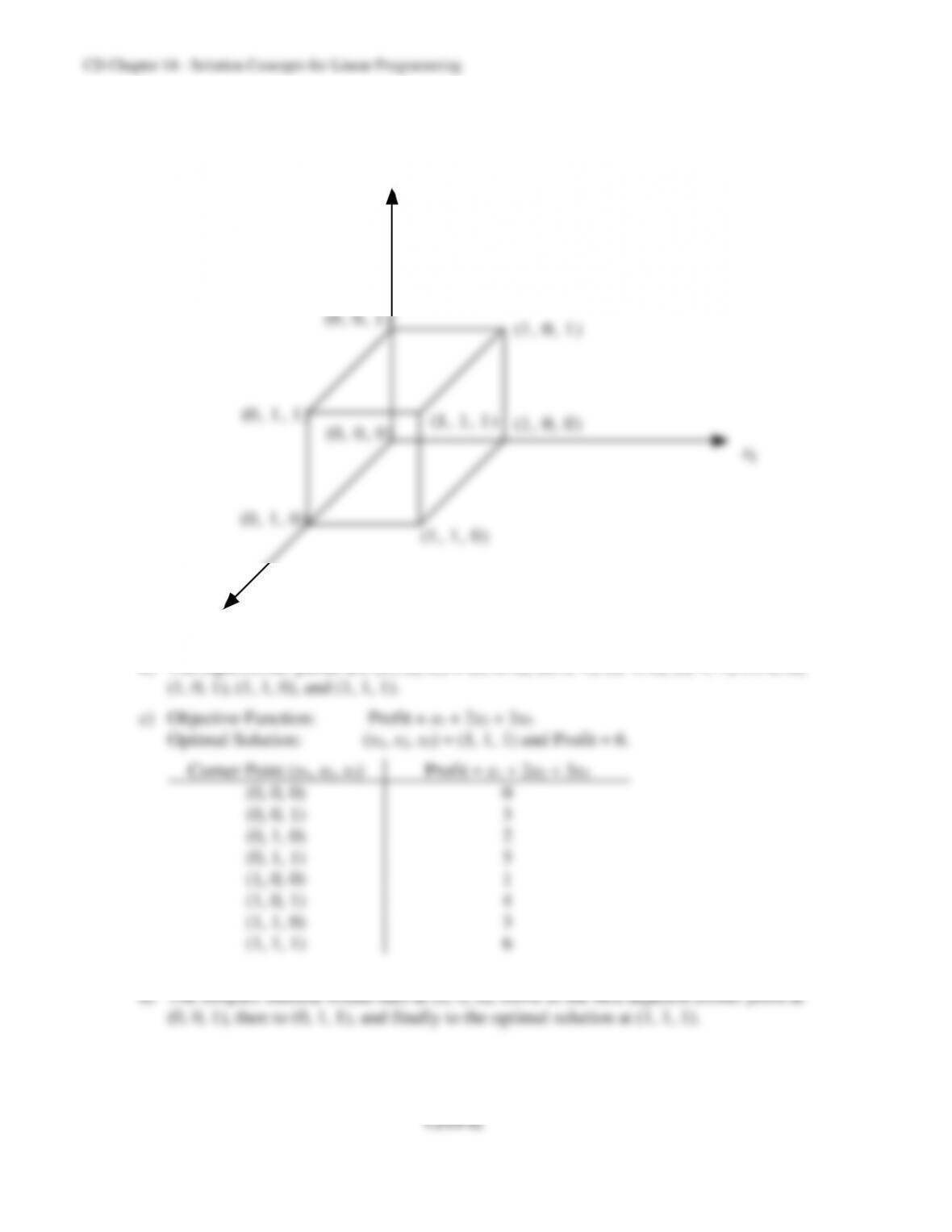
Getting Started: Select (0, 0) as the initial corner point.
Checking for Optimality: Both (2, 0) and (0, 5) have better objective function values (Z
b) Getting Started: Select (0, 0) as the initial corner point.
Checking for Optimality: Moving toward either (2, 0) or (0, 5) improves the objective
function value, so (0, 0) is not optimal.
14.37 a)
x1
x2
x3
(0, 3, 2)
(2, 0, 0)
(2, 0, 2)
(0, 0, 2)
(2, 2, 2)
(2, 2, 0)
(0, 3, 0)
(1, 3, 2)
(1, 3, 0)
(0, 0, 0)
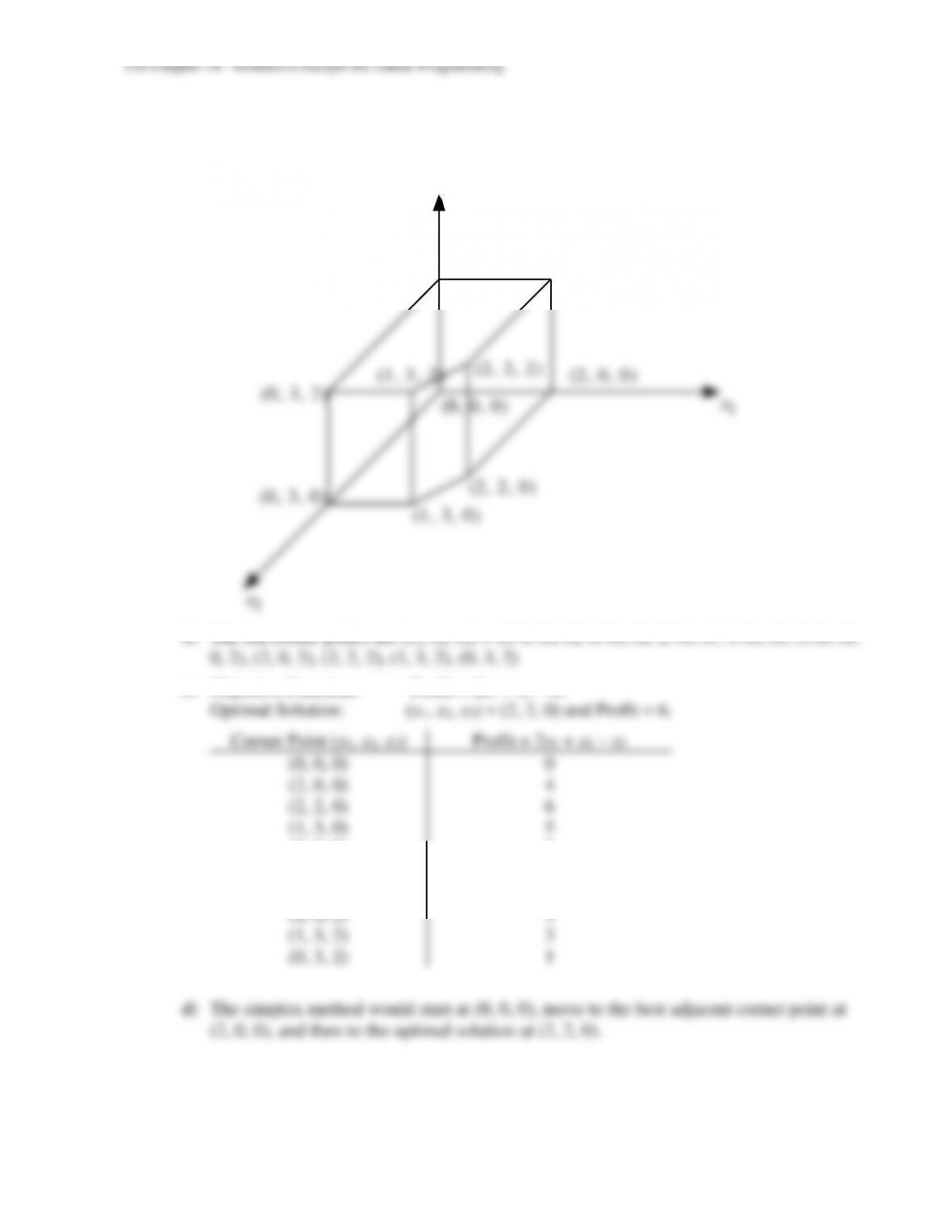
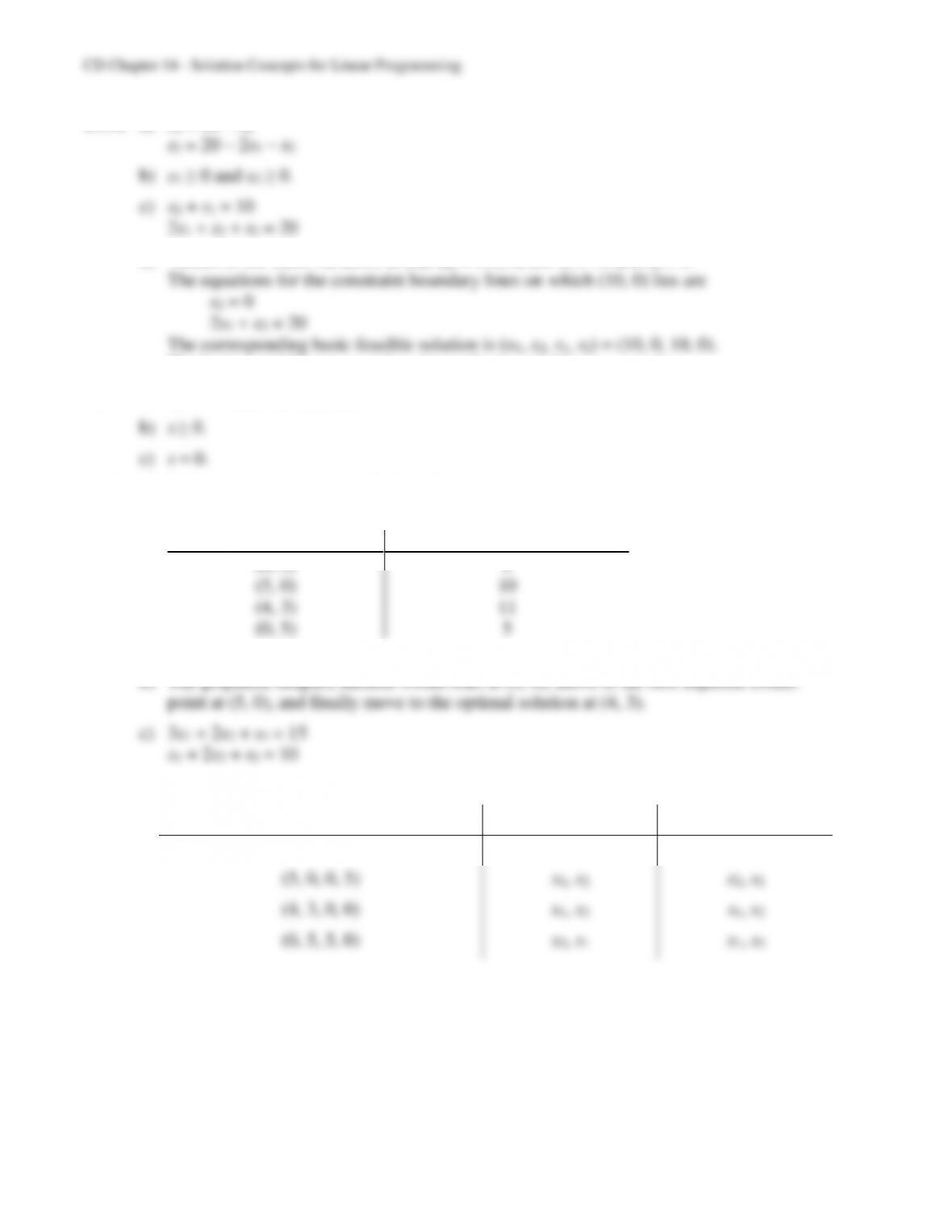
b) The ten corner points are (x1, x2, x3) = (0, 0, 0), (2, 0, 0), (2, 2, 0), (1, 3, 0), (0, 3, 0), (0,
0, 2), (2, 0, 2), (2, 2, 2), (1, 3, 2), (0, 3, 2)
c) Objective Function: Profit = 2x1 + x2 – x3
CD14-44
14.38 a) s1 = 10 – x2
d) Values of the slack variables at (x1, x2) = (10, 0) are s1 = 10 and s2 = 0.
The basic variables are x1 and s1; the nonbasic variables are x2 and s2.
14.39 a) 25x1 + 40x2 + 50x3 ≤ 500.
14.40 a) Objective Function: Profit = 2x1 + x2
Optimal Solution: (x1, x2) = (4, 3) and Profit = 11
Corner Point (x1, x2)
Profit = 2x1 + x2
(0, 0)
0
(5, 0)
10
(4, 3)
11
(0, 5)
5
b) The graphical simplex method would start at (0, 0), move to the best adjacent corner
d)
Basic Feasible Solution (x1, x2, s1, s2)
Basic Variables
Nonbasic Variables
(0, 0, 15, 10)
s1, s2
x1, x2
(5, 0, 0, 5)
x1, s2
x2, s1
(4, 3, 0, 0)
x1, x2
s1, s2
(0, 5, 5, 0)
x2, s1
x1, s2
e) The graphical simplex method would start at (0, 0, 15, 10), move to the best adjacent
corner point at (5, 0, 0, 5), and finally move to the optimal solution at (4, 3, 0, 0).
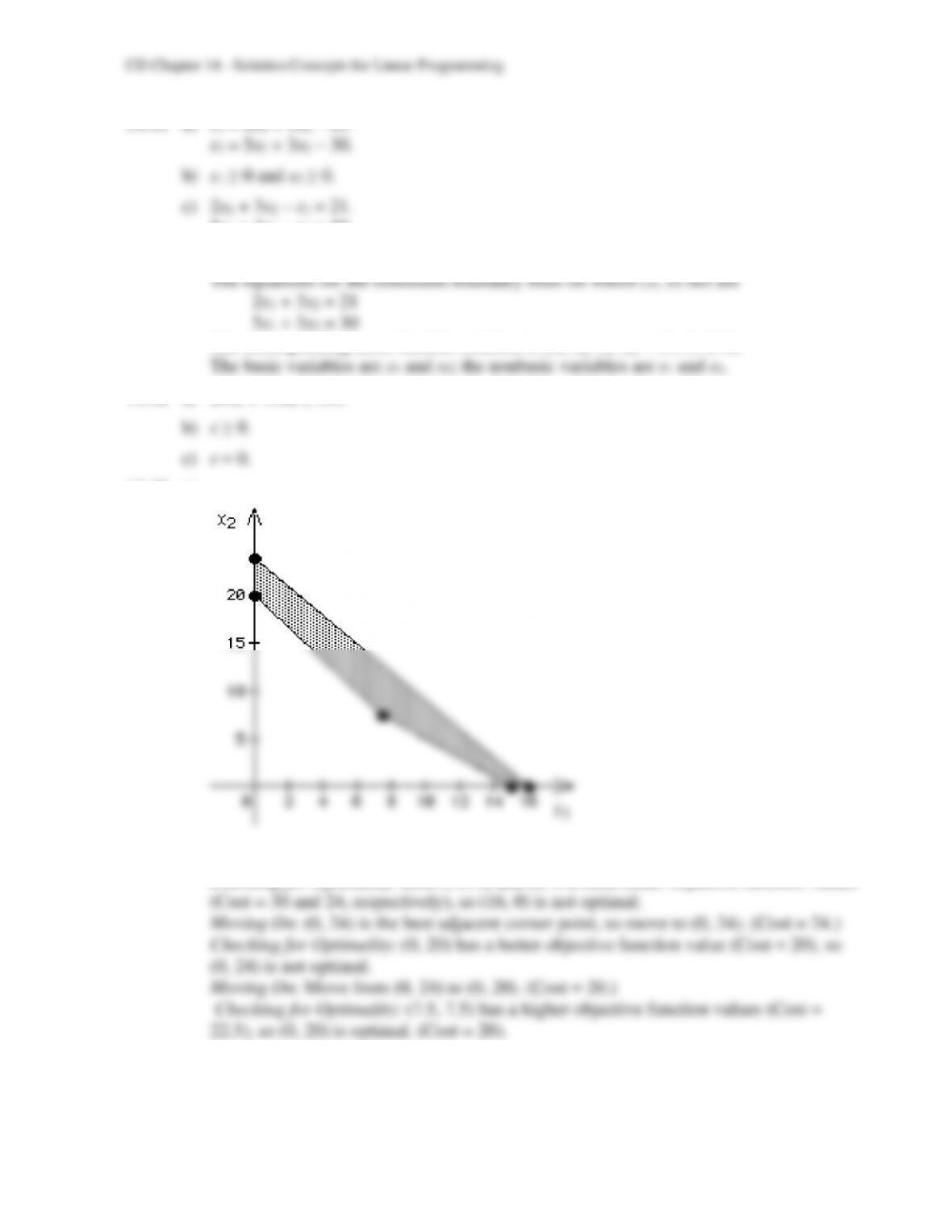
CD14-45
5x1 + 3x2 – s2 = 30.
d) Values of the surplus variables at (x1, x2) = (3, 5) are s1 = 0 and s2 = 0.
The corresponding basic feasible solution is (x1, x2, s1, s2) = (3, 5, 0, 0).
14.42 a) 20x1 + 10x2 ≥ 100.
14.43 a)
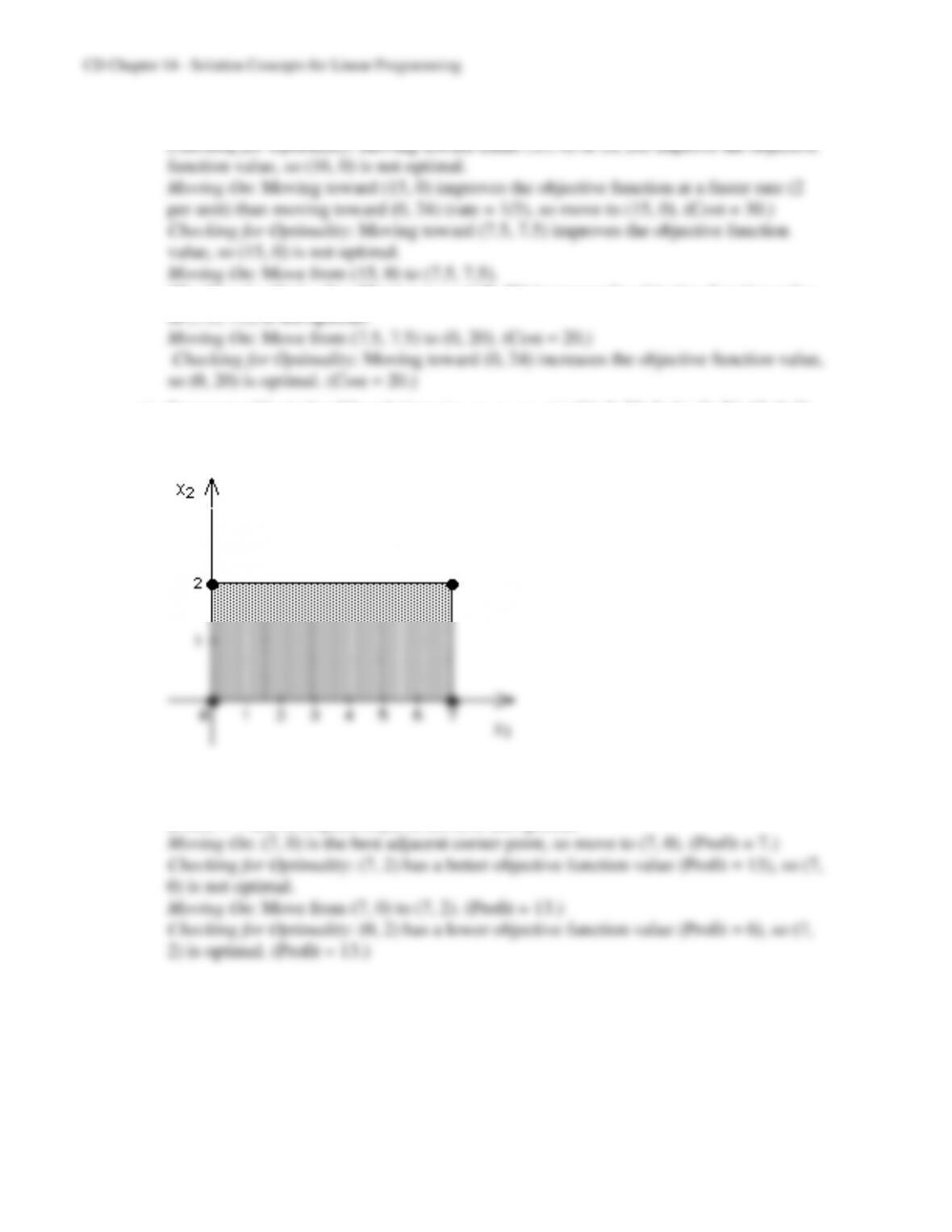
Getting Started: Select (16, 0) as the initial corner point. (Cost = 32.)
Checking for Optimality: Both (15, 0) and (0, 24) have better objective function values
CD14-46
b) Getting Started: Select (16, 0) as the initial corner point. (Cost = 32.)
Checking for Optimality: Moving toward (0, 20) improves the objective function value,
c) Sequence of basic feasible solutions (x1, x2, s1, s2, s3): (16, 0, 20, 0, 1), (0, 24, 12, 0, 9),
(0, 20, 0, 8, 5).
14.44 a)
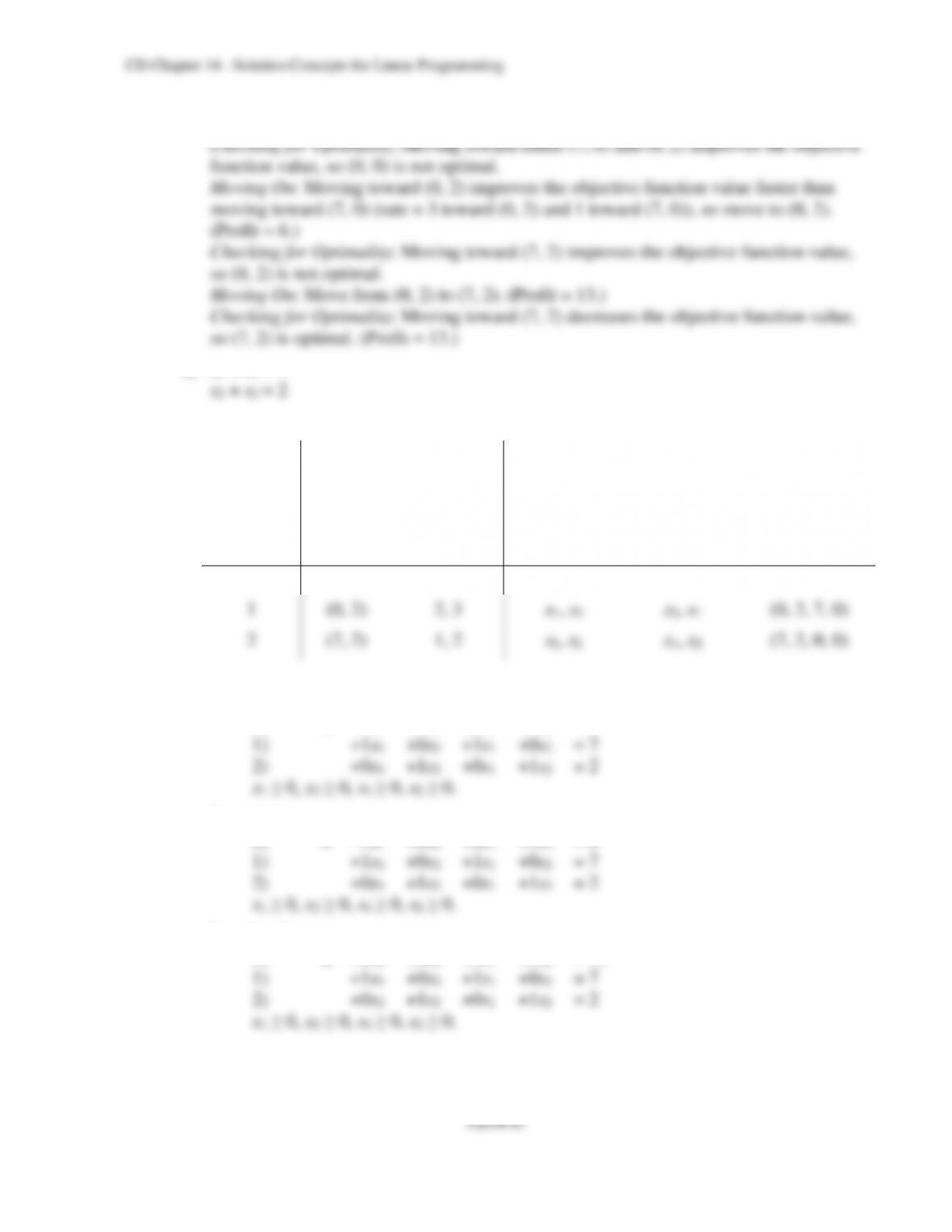
Getting Started: Select (0, 0) as the initial corner point. (Profit = 0.)
Checking for Optimality: Both (7, 0) and (0, 2) have better objective function values
(Profit = 7 and 6, respectively), so (0, 0) is not optimal.
CD14-48
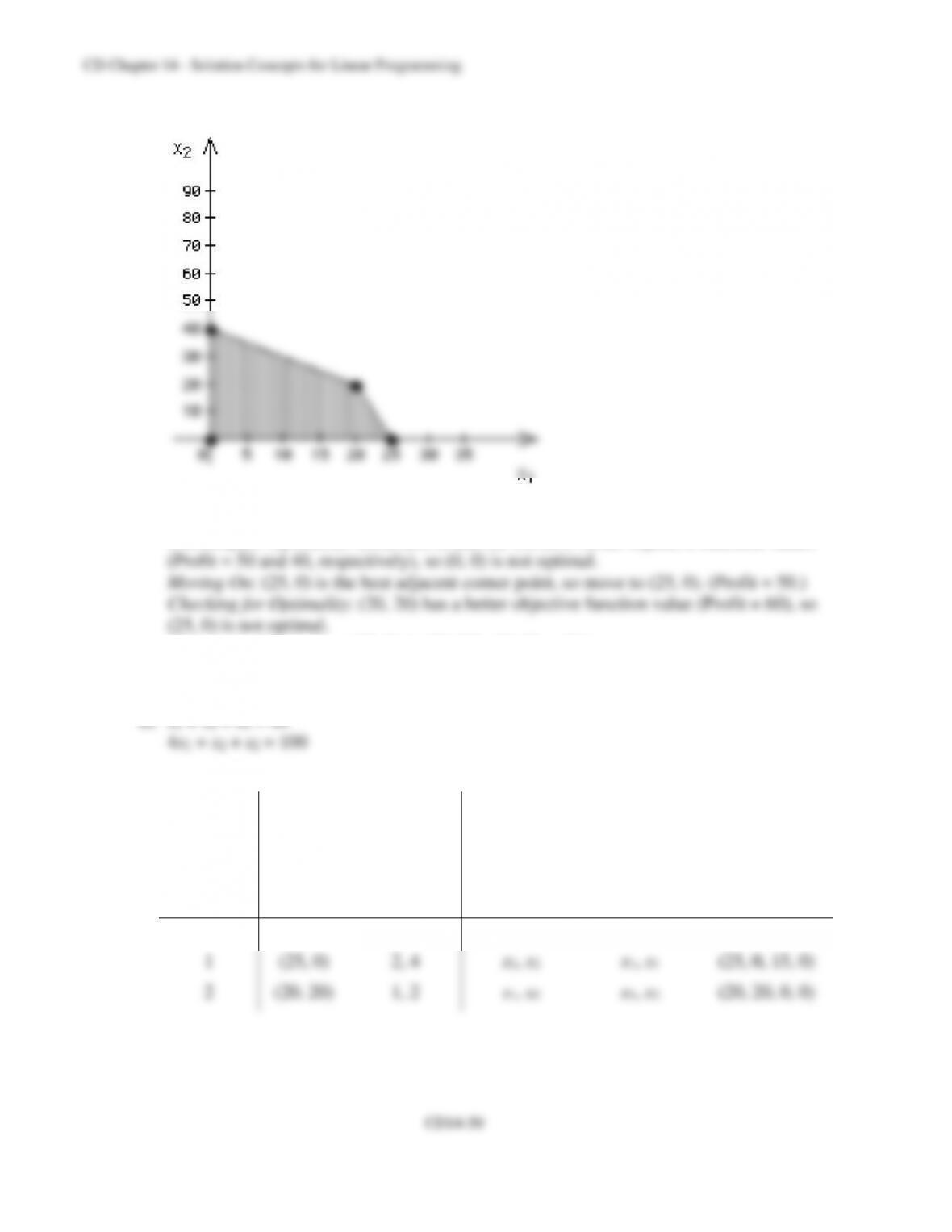
14.45 a)
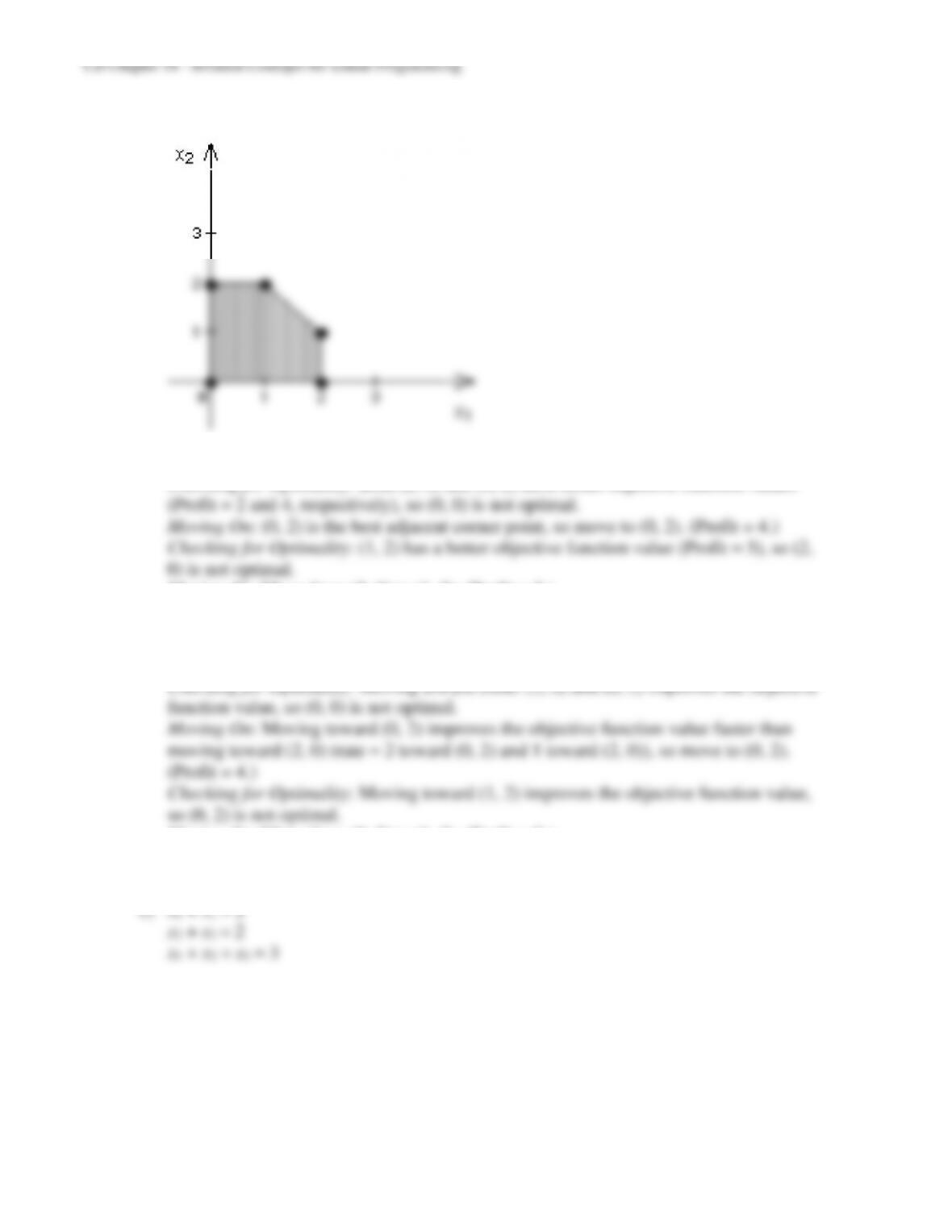
Getting Started: Select (0, 0) as the initial corner point. (Profit = 0.)
Checking for Optimality: Both (2, 0) and (0, 2) have better objective function values
Moving On: Move from (2, 0) to (1, 2). (Profit = 5.)
Checking for Optimality: (2, 1) has a lower objective function value (Profit = 4), so (1,
2) is optimal. (Profit = 5.)
b) Getting Started: Select (0, 0) as the initial corner point. (Profit = 0.)
Moving On: Move from (0, 2) to (1, 2). (Profit = 5.)
Checking for Optimality: Moving toward (2, 1) decreases the objective function value,
so (1, 2) is optimal. (Profit = 5.)
CD14-49
d)
Geometric Progression
Algebraic Progression
Iteration
Corner
Point
CBE
Nonbasic
Variables
Basic
Variables
Basic
Feasible
Solution
(x1, x2, s1, s2, s3)
0
(0, 0)
4, 5
x1, x2
s1, s2, s3
(0, 0, 2, 2, 3)
1
(0, 2)
2, 4
x1, s2
x2, s1, s3
(0, 2, 2, 0, 1)
2
(1, 2)
2, 3
s2, s3
x1, x2, s1
(1, 2, 1, 0, 0)
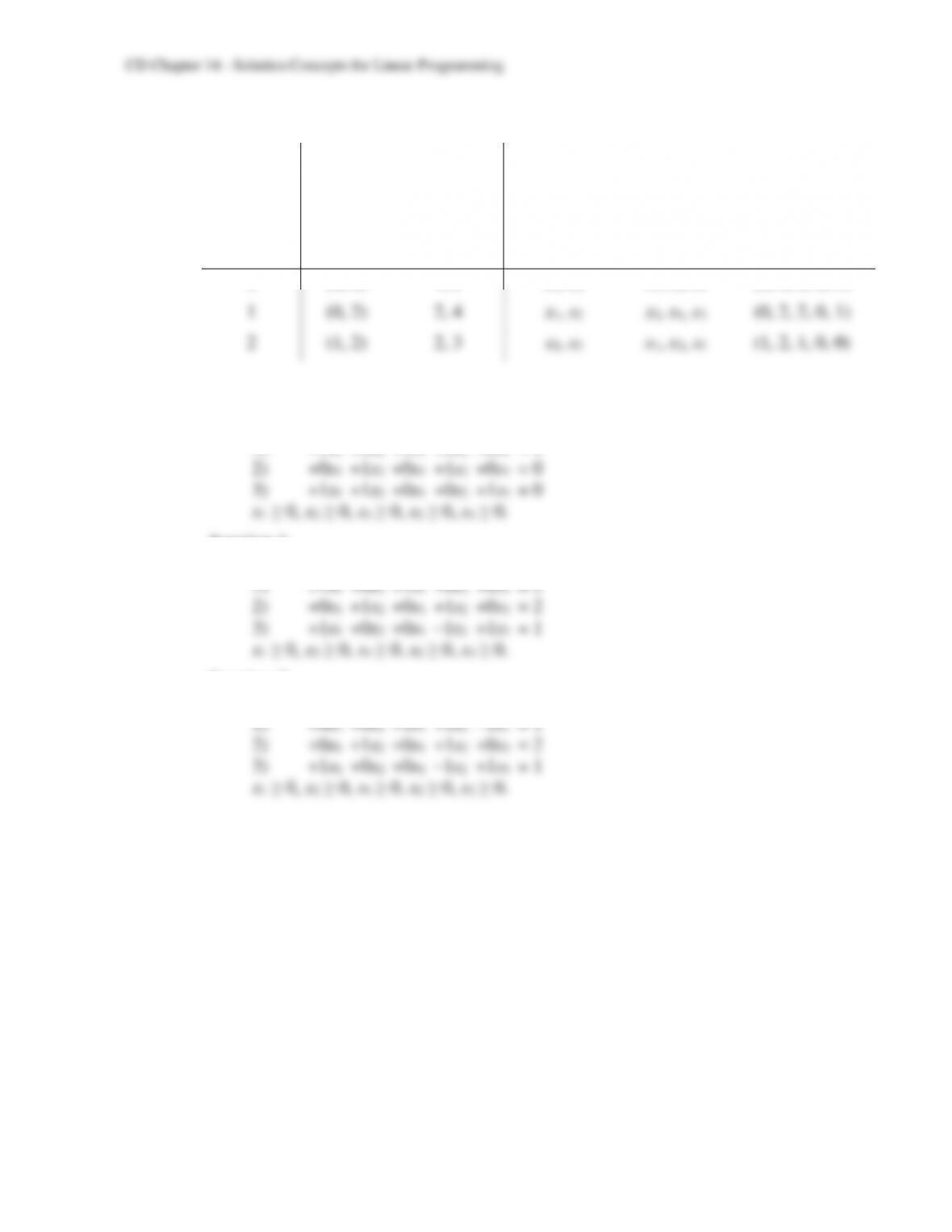
e) Iteration 0:
0) Z –1x1 –2x2 +0s1 +0s2 +0s3 = 0
1) +1x1 +0x2 +1s1 +0s2 +0s3 = 0
Iteration 1:
0) Z –1x1 +0x2 +0s1 +2s2 +0s3 = 4
Iteration 2:
0) Z +0x1 +0x2 +0s1 +1s2 +1s3 = 5
CD14-51
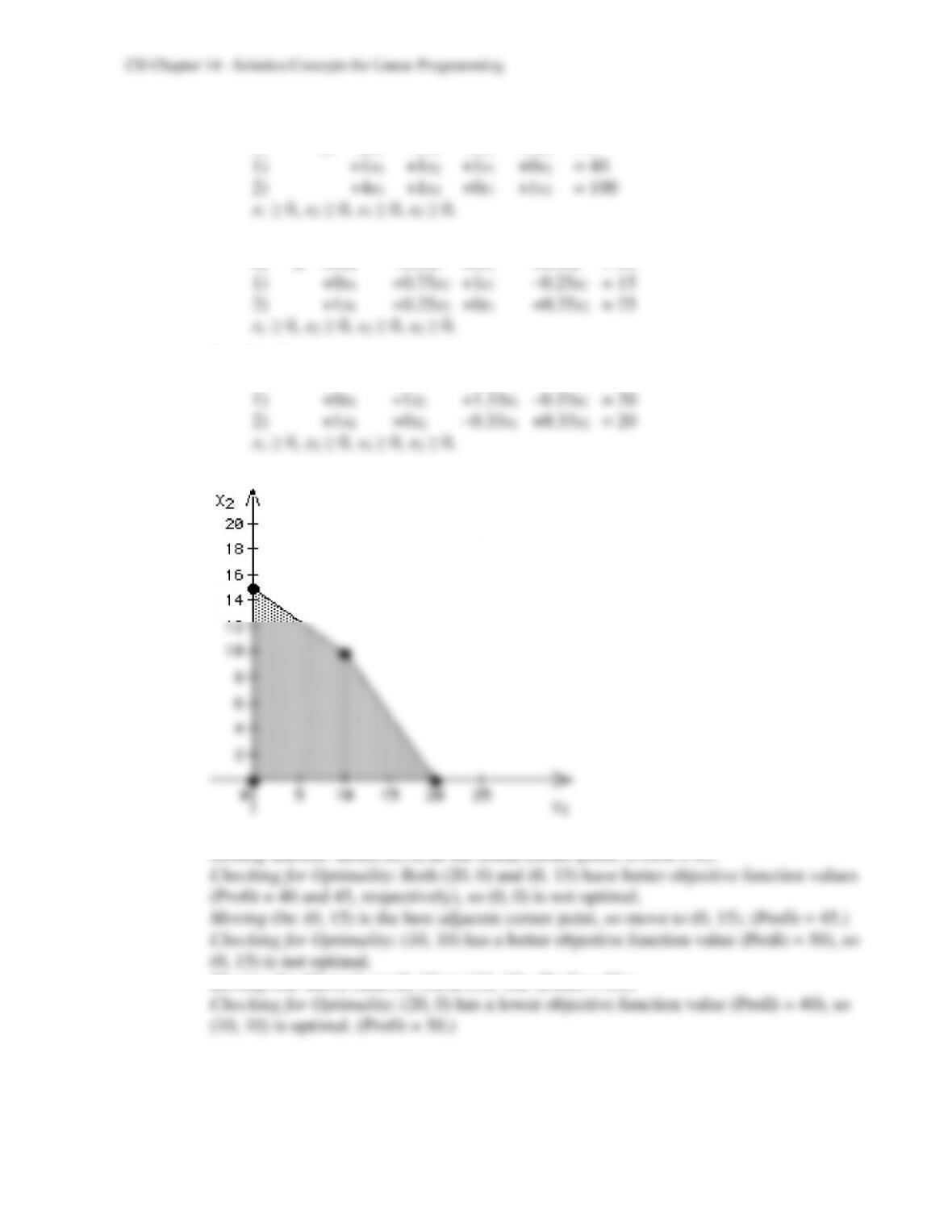
d) Iteration 0:
0) Z –2x1 –1x2 +0s1 +0s2 = 0
Iteration 1:
0) Z +0x1 –0.5x2 +0s1 +0.5s2 = 50
Iteration 2:
0) Z +0x1 +0x2 +0.67s1 +0.33s2 = 60
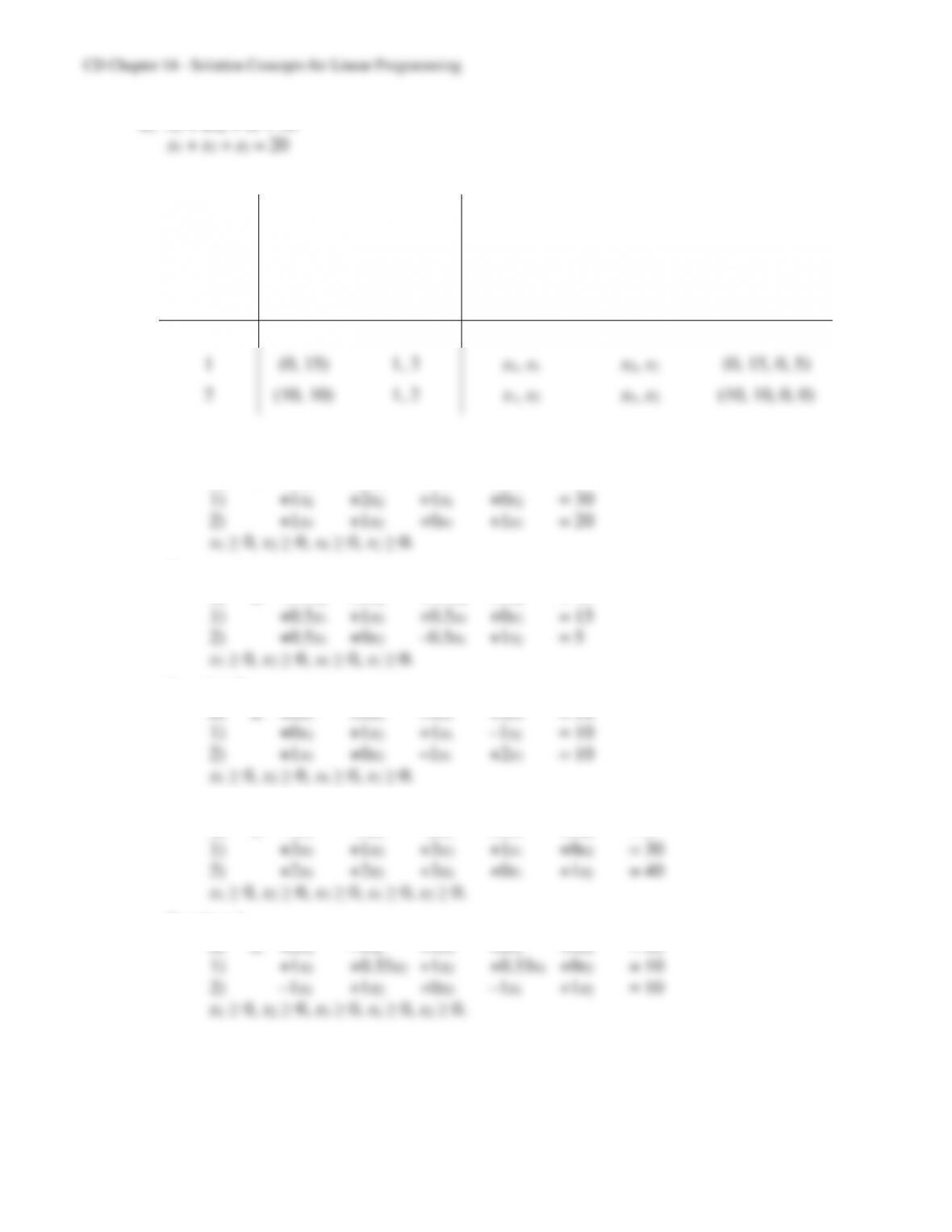
14.47 a)
Moving On: Move from (0, 15) to (10, 10). (Profit = 50.)
CD14-52
b) x1 + 2x2 + s1 = 30
c)
Geometric Progression
Algebraic Progression
Iteration
Corner
Point
CBE
Nonbasic
Variables
Basic
Variables
Basic
Feasible
Solution
(x1, x2, s1, s2)
0
(0, 0)
3, 4
x1, x2
s1, s2
(0, 0, 30, 20)
1
(0, 15)
1, 3
x1, s1
x2, s2
(0, 15, 0, 5)
2
(10, 10)
1, 2
s1, s2
x1, x2
(10, 10, 0, 0)
d) Iteration 0:
0) Z –2x1 –3x2 +0s1 +0s2 = 0
Iteration 1:
0) Z –0.5x1 +0x2 +1.5s1 +0s2 = 45
Iteration 2:
0) Z +0x1 +0x2 +1s1 +1s2 = 50
14.48 a) Iteration 0:
0) Z –4x1 –3x2 –6x3 +0s1 +0s2 = 0
Iteration 1:
0) Z +2x1 –1x2 +0x3 +2s1 +0s2 = 60
CD14-53
Iteration 2:
0) Z +1x1 +0x2 +0x3 +1s1 +1s2 = 70
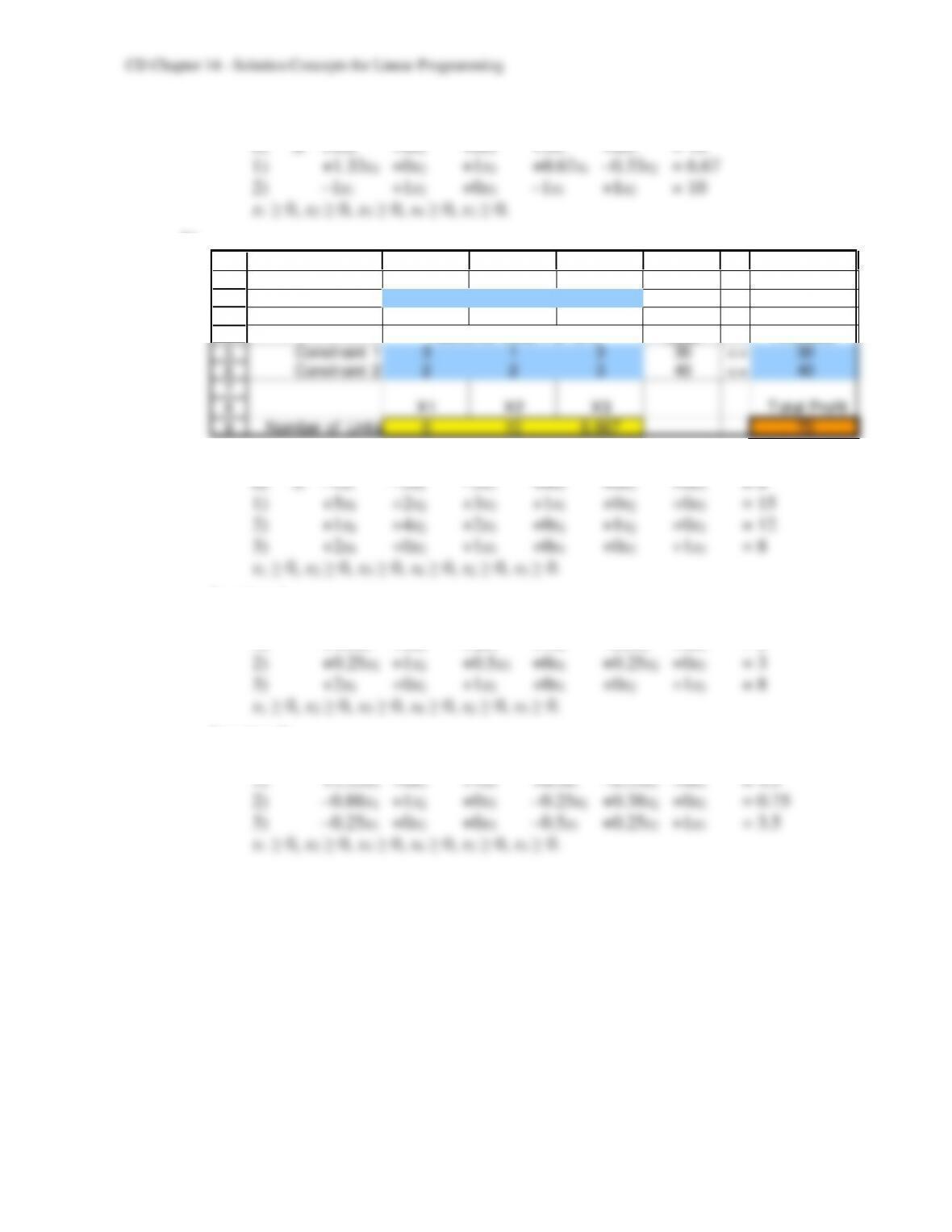
b)
1
2
3
4
5
6
7
8
9
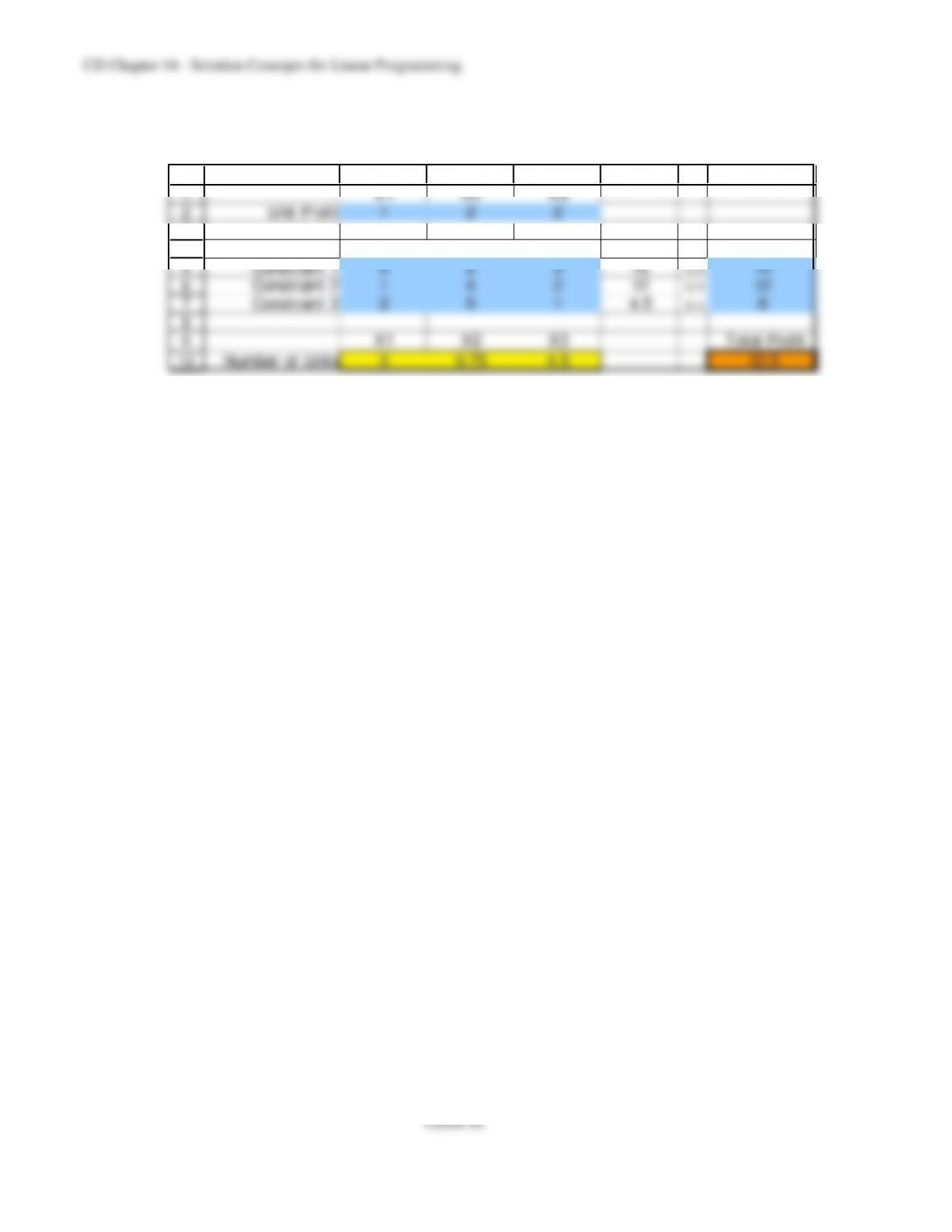
A B C D E F G
X1 X2 X3
Unit Prof it 4 3 6
Resource Used Per Unit Used Available
Constraint 1 3 1 3 30 <= 30
Constraint 2 2 2 3 40 <= 40
X1 X2 X3 T otal Profit
Number of Units 0 10 6.667 70
14.49 a) Iteration 0:
Iteration 1:
0) Z –0.5x1 +0x2 –1x3 +0s1 +0.5s2 +0s3 = 6
1) +4.5x1 +0x2 +2x3 +1s1 –0.5s2 +0s3 = 9
Iteration 2:
0) Z +1.75x1 +0x2 +0x3 +0.5s1 +0.25s2 +0s3 = 10.5