Chapter 01 – Introduction
1-1
Chapter 1 Introduction
Review Questions
1.1-1 The rapid development of the discipline began in the 1940’s and 1950’s.
1.1-2 The traditional name given to the discipline is operations research.
1.1-3 A management science study provides an analysis and recommendations, based on the
quantitative factors involved in the problem, as input to the managers.
Problems
1.1 If Q units are produced per month, then
1.2 a) $40,000
Chapter 01 – Introduction
1-2
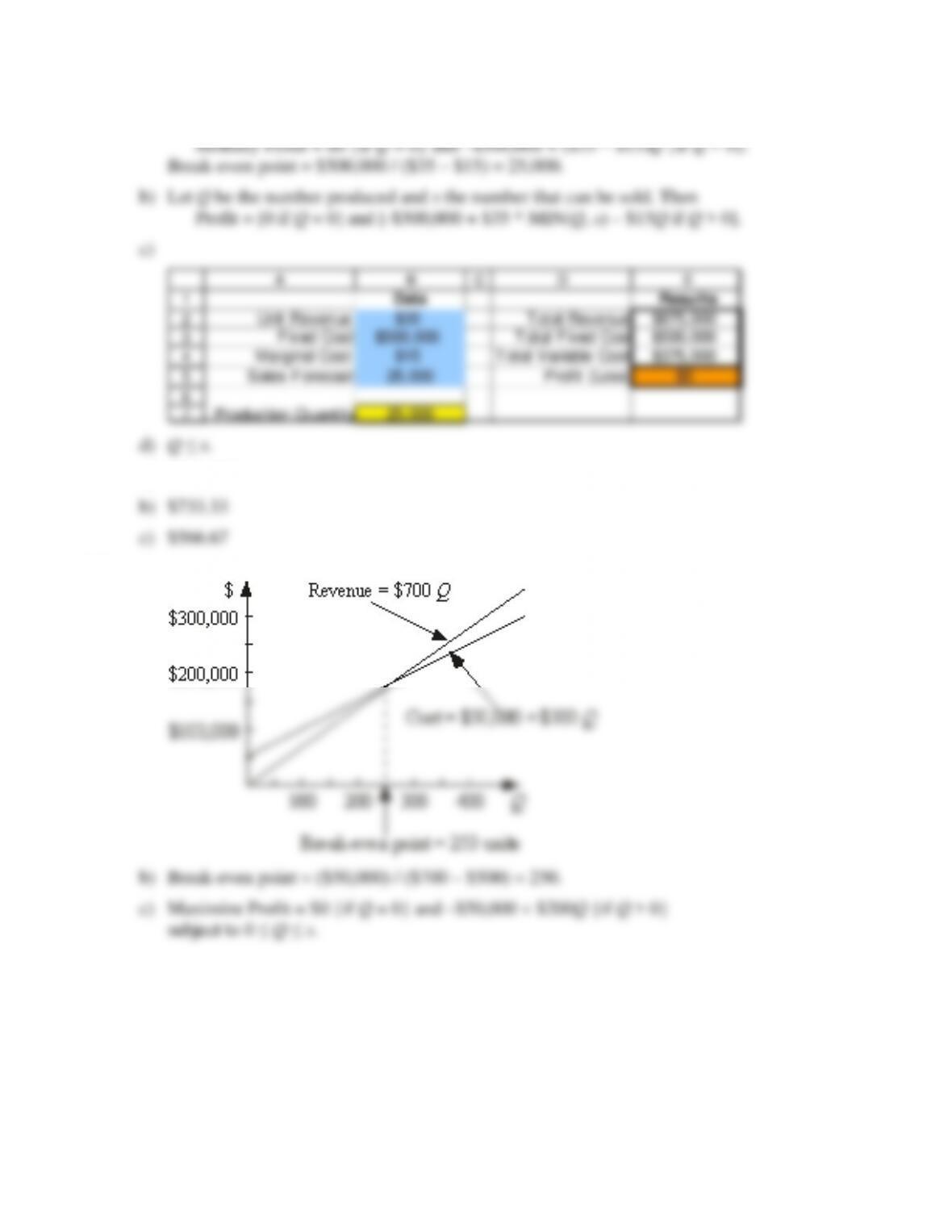
1.3 a) Let Q be the number of units produced and sold. Then
1.4 a) $150,000
1.5 a)
Chapter 01 – Introduction
d)
1
2
3
4
5
6
7
A B C D E
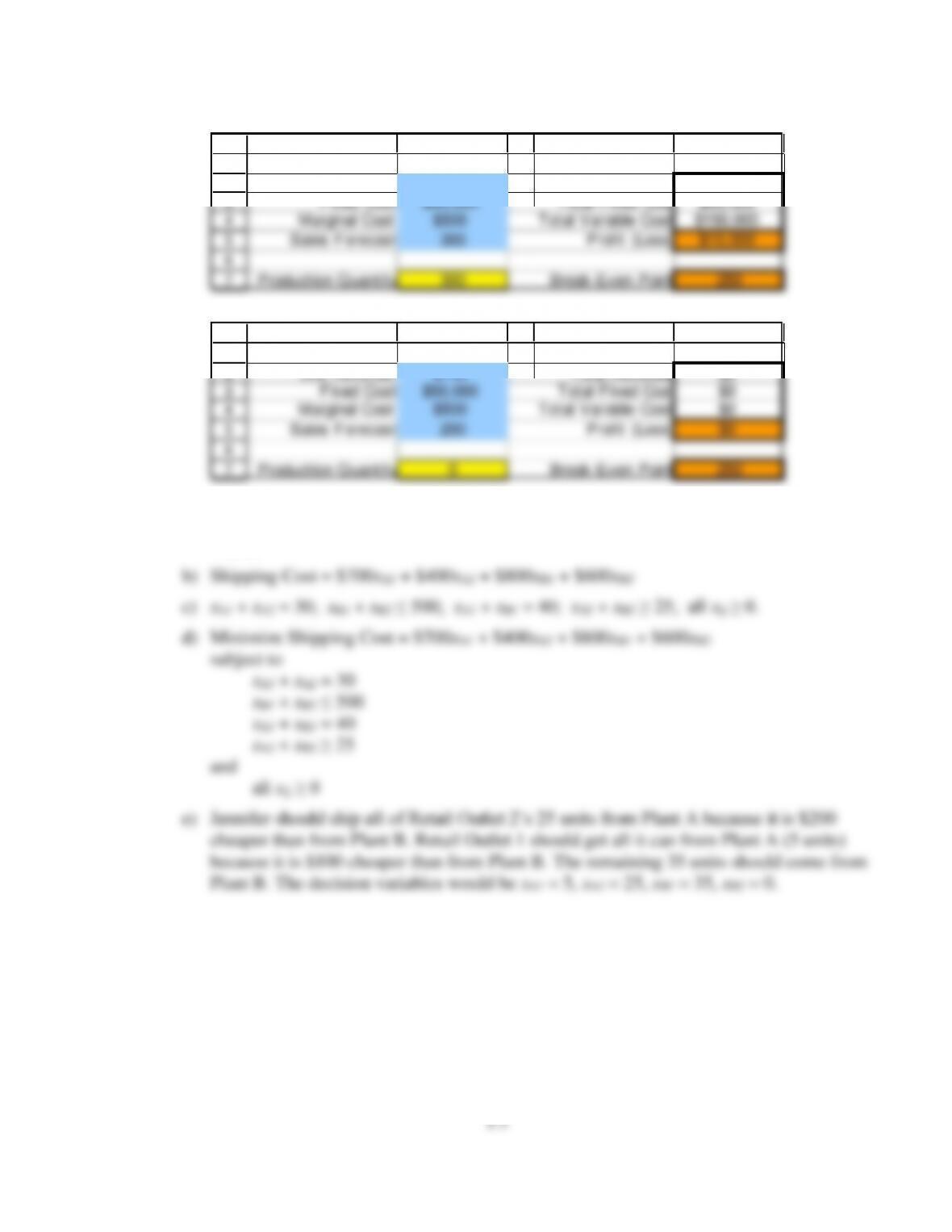
Data Results
Unit Revenue $700 Total Revenue $210,000
Fixed Cost $50,000 Total Fixed Cost $50,000
Marginal Cost $500 Total Variable Cost $150,000
Sales Forecast 300 Profit (Loss) $10,000
Production Quantity 300 Break–Even Point 250
e)
1
2
3
4
5
6
7
A B C D E
Data Results
Unit Revenue $700 Total Revenue $0
Fixed Cost $50,000 Total Fixed Cost $0
Marginal Cost $500 Total Variable Cost $0
Sales Forecast 200 Profit (Loss) $0
Production Quantity 0 Break–Even Point 250
1.6 a) Jennifer must decide how much to ship from each plant (A and B) to each retail outlet
(1 and 2). Let xˆj = amount to ship from plant i (for i = A, B) to each retail outlet j (for j
= 1, 2).
1-4
1.7 a)
1
2
3
4
5
6
A B C D E
Data Results
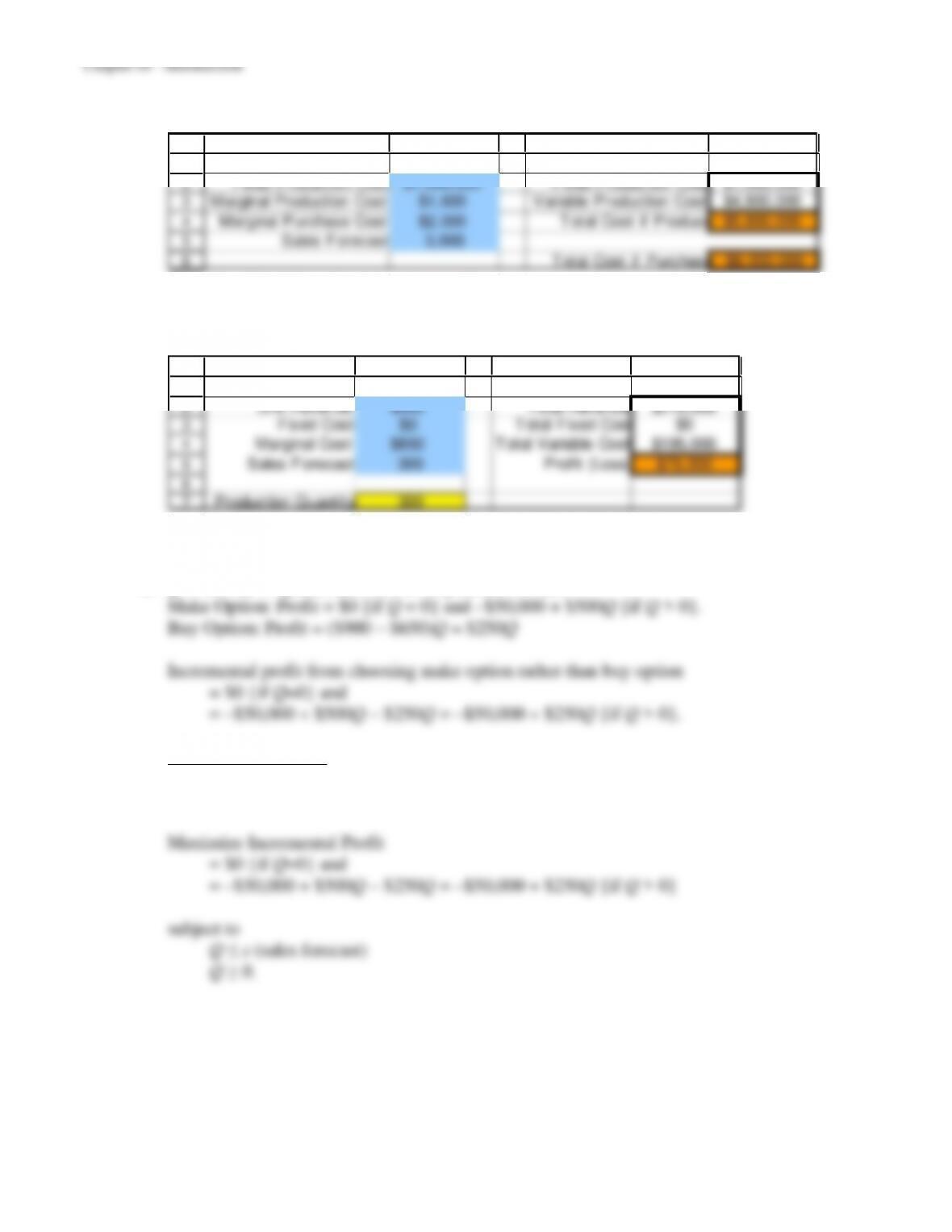
Fixed Production Cost $1,000,000 Fixed Production Cost $1,000,000
Marginal Production Cost $1,600 Variable Production Cost $4,800,000
Marginal Purchase Cost $2,000 Total Cost if Produce $5,800,000
Sales Forecast 3,000
Total Cost if Purchase $6,000,000
They should produce the motors internally.
b) Break-even point = $1,000,000 / ($2,000 – $1,600) = 2,500.
1.8 a)
1
2
3
4
5
6
7
A B C D E
Data Results
Unit Revenue $900 Total Revenue $270,000
Fixed Cost $0 Total Fixed Cost $0
Marginal Cost $650 Total Variable Cost $195,000
Sales Forecast 300 Profit (Loss) $75,000
Production Quantity 300
b) The make option appears to be better ($100,000 profit for the make option vs. $75,000
profit for the buy option).
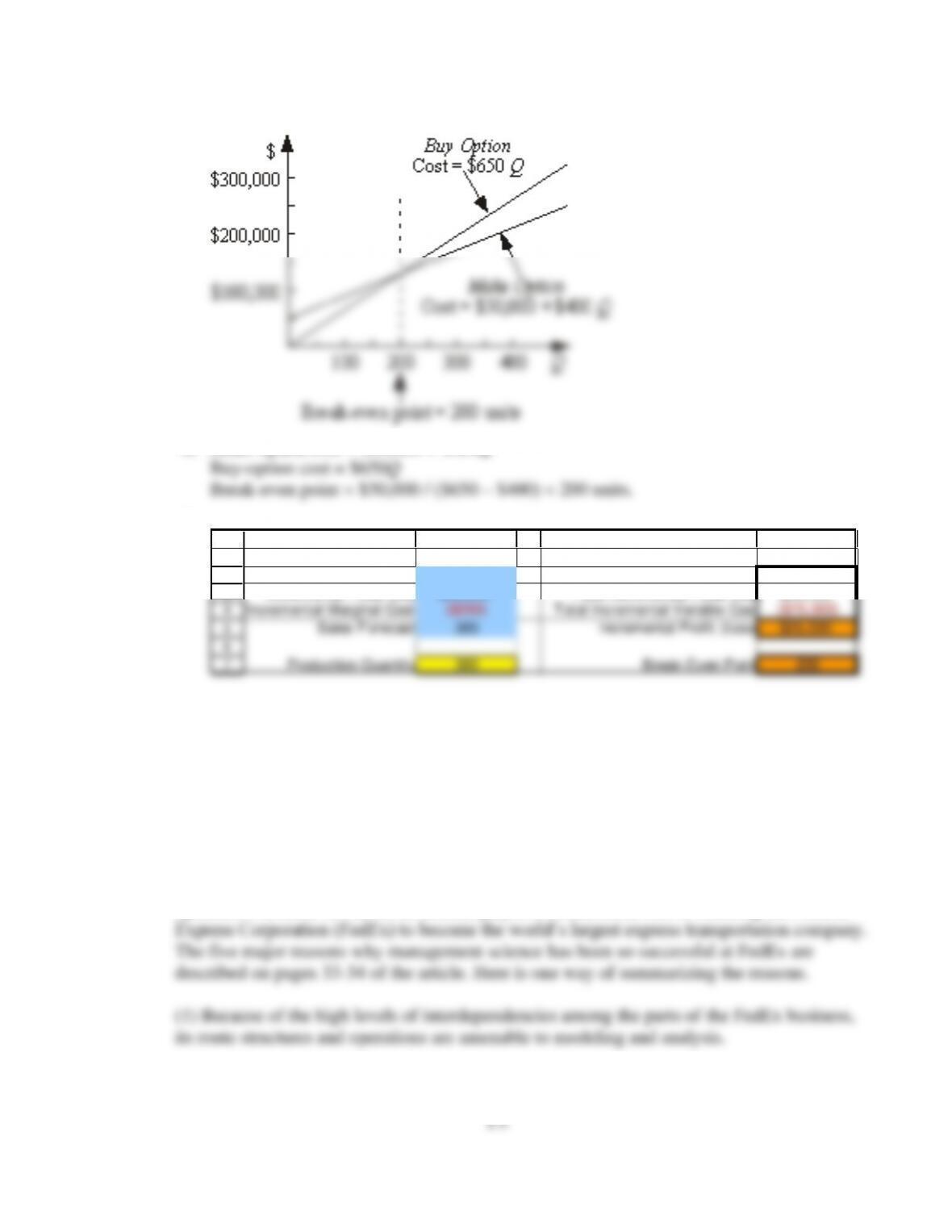
c) Q = number of grandfather clocks to produce for sale.
Mathematical model:
Now interpret Q as the number to produce with the make option. The model is to find
the value of Q so as to
Chapter 01 – Introduction
d)
e) Make-option cost = $50,000 + $400Q
f)
1
2
3
4
5
6
7
A B C D E
Data Results
Incremental Revenue $0 Incremental Revenue $0
Incremental Fixed Cost $50,000 Total Incremental Fixed Cost $50,000
Incremental Marginal Cost ($250) Total Incremental Variable Cost ($75,000)
Sales Forecast 300 Incremental Profit (Loss) $25,000
Production Quantity 300 Break–Even Point 200
If s ≤ 200, then set Q = 0 (so buy instead of make).
If s > 200, then set Q = s (so make option with Q = s).
Since s = 300, use make option and produce 300 grandfather clocks.
1.9 An answer for the selected application can be found by referring to the corresponding
question in the chapter indicated in Table 1.1 and then reading its answer in this Solutions
Manual.
1.10 Find the answers as described above for Problem 1.9.
1.11 This article describes the dramatic story of how management science (referred to as
operations research or OR in the article) played a fundamental role in enabling the Federal