
Class Discussion: After the discussion and mock interviews are completed, discuss what the students
observed:
• What kinds of questions were asked?
• What information should have been prepared?
• What was the interviewer looking for?
• What questions were the most difficult to answer? Why? Which were easiest?
• Ask the interviewer/recruiter to comment on the interviews, particularly on how students
could have improved their performance.
15. Types of Employment Interviews
Objective: Students will gain experience with job interviews in panel, audition, and behavioral formats.
Procedure: Divide the class into six groups. Assign to each group one of the job interview formats
(panel, audition, and behavioral). Allow seven minutes for each group to construct a role play
demonstrating three or four questions and answers in their assigned format.
Class Discussion: For each format discuss questions such as
• Have you ever participated in this type of interview before?
• How does this format differ from traditional job interview formats?
• What advice would you give to a friend who will soon be interviewed in one of these
formats?
• What should an interviewee avoid doing in this type of interview?
16. Bona-Fide Occupational Questions
Objective: Students will become more familiar with the BFOQs.
Procedure: Invite a representative from your college human resources department to visit your class to
explain the following aspects of BFOQs: (1) how the concept of BFOQs developed in the U.S., (2) the
rationale behind these regulations, (3) basic guidelines for remembering which types of questions are
BFOQs and which are not, and (4) suggestions for responding to interviewers who ask BFOQs. Ask
students to peruse Table 6-6 before class and prepare questions to ask the guest speaker.
Class Discussion: Allow the guest speaker time to present her or his remarks. Follow with a question-
and-answer session. Prepare some of your own questions in case students forget. You might ask:
• What’s all the fuss? Is this concept really important, or is just nit picking?
• I’m overwhelmed by all the details in Table 6-6. How can I ever remember which topics I’m
not supposed to ask about?
• What if I accidentally inquire about a topic that is not a BFOQ? Will I be liable for damages?
• In your experience, is it worth protesting if an interviewer asks me questions that are not
BFOQs?
• What do you think is the most effective response to a BFOQ that I think could hinder my
chances of getting the job?
17. Ethical Obligations
Purpose: This exercise emphasizes the importance of ethical communication during interviewing.

Procedure: Ask students to locate professionals who conduct interviews as part of their job. Instruct
students to ask these professionals what they consider to be the most important ethical obligations of
interviewers and interviewees, and what advice they might have for conducting ethical interviews.
Students could also ask the professionals whether they have ever witnessed any ethical violations that
they feel free to talk about. If so, have the professional describe the violation, why it occurred, what the
consequences were, and how a similar violation might be prevented in the future.
Class Discussion: Try to categorize ethical guidelines mentioned by the interviewees in terms of
the ethical guidelines in the text. Ask students to relate what they have learned from these
interviews to the information in the text. Elicit consequences of unethical behavior and reasons
why ethical behavior is desirable and important.
IM 6-14
Types of Questions
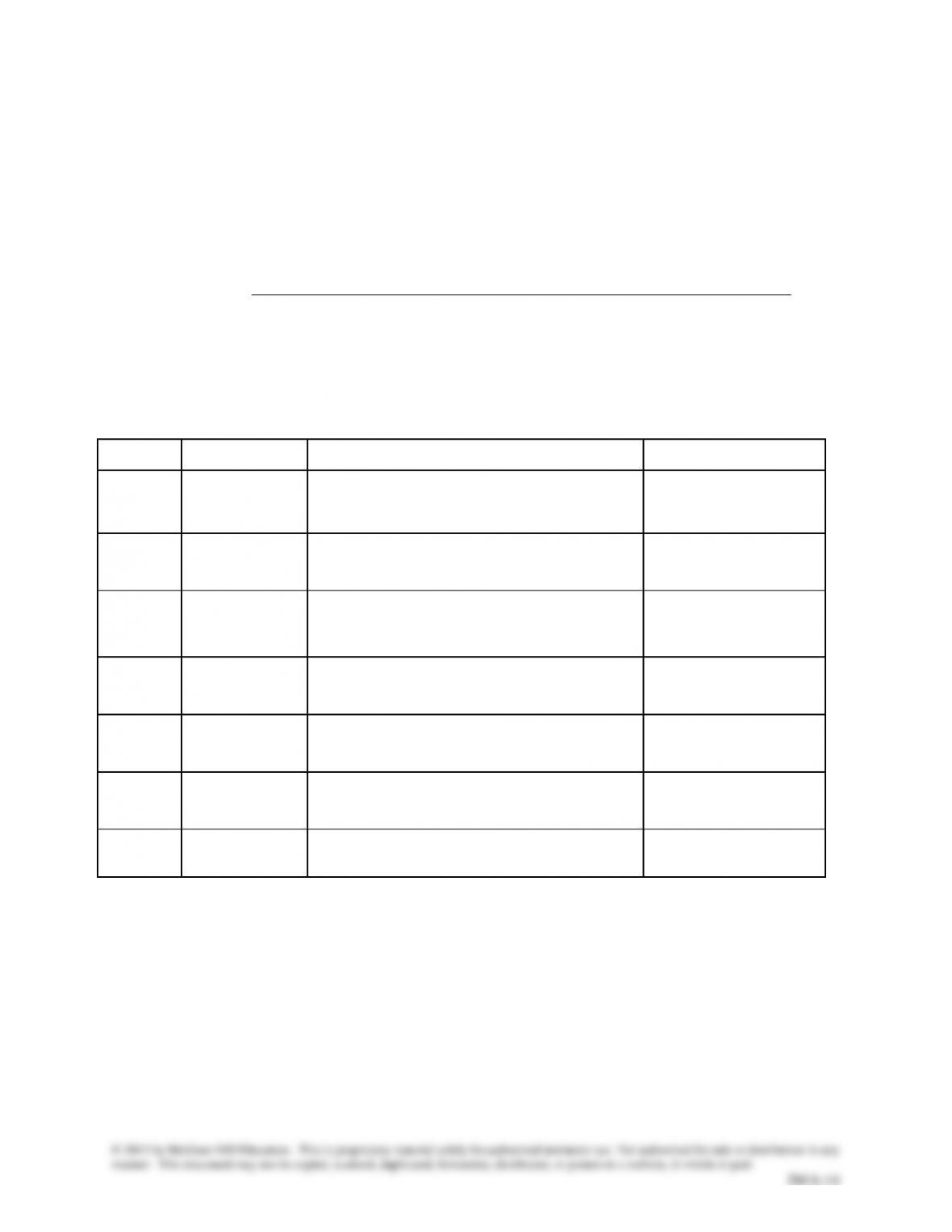
Instructions: Watch a 10- to 15-minute segment of an interview news show. As you watch, take
notes, and jot down the questions asked and the kinds of responses each generated. Categorize
the questions by types.
Types of Questions
Open vs. Closed
Direct vs. Indirect
Primary vs. Secondary
Opinion vs. Fact
Hypothetical
Verbal and Nonverbal Probes
Question
Type of Question
Purpose
Response
Now, prepare questions that are the opposite of or different from those asked during the
interview. For example, if the question was an open question, write a closed question on the
same material. Speculate on the kind of answer the opposite questions would evoke.

Sample Job Interview Questions
Interest in the Organization
1. Why would you like to work for us?
2. How did you hear about this opening?
3. What material have you read about our organization?
4. What do you know about our products or services?
5. What do you know about the history of our organization?
Work-Related (General)
1. Which position has given you the most satisfaction?
2. How have your previous work positions prepared you for this experience?
3. Why did you choose this career?
4. What did you do that was innovative in your last position?
5. What do you think your previous supervisors would cite as your strengths?
6. What is your greatest weakness?
Work-Related (Specific)
1. When you are supervising others, how do you get your point across?
2. Describe a typical strategy that you would use in a sales call.
3. What criteria do you use when assigning work to others?
4. Tell me about a situation in which you made a wrong decision and how you corrected it.
5. How do you follow up on work assigned to others?
Education and Training
1. What special skills do you have?
2. Which aspect of your education has best prepared you for this position?
3. Which course did you like most in college?
4. If you had your education to do over, what would you do differently?
5. Why did you choose ____________ as your major?
6. Describe a book you’ve read recently and what impact it had on you.
Career Plans and Goals
1. What are your long–range career plans?
2. If you join our organization, what would you like to be doing five years from now?
3. How do you feel about the way your career has gone so far?
4. What are you doing to prepare yourself for advancement?
5. Who influenced you the most in your career choice?
Job Performance
1. How do you ensure that you are receiving feedback regarding your performance?
2. All of us have pluses and minuses in our performance: What are some of your
pluses/minuses?
3. Which criteria do you use when making decisions?
4. How were you evaluated during your last two evaluations?

Written Application Exercises
1. Interviewing as a Job Skill
Learn more about the frequency and importance of interviewing. Choose a person whose work interests
you and who spends much of his or her time interviewing in the course of a typical week. Ask your
interviewee what kinds of interviews are common and what role they play in making his or her work
successful. Report your findings in an essay.
2. Recovering From Career Interview Blunders
Read several articles about Interviewing Mistakes, such as those listed below:
http://www.worktree.com/tb/in_mistakes.cfm
http://jobsearch.about.com/od/interviewsnetworking/a/interviewblund.htm
http://www.job-search-steps.com/interview-question-and-answer.html
http://money.cnn.com/2009/11/18/news/economy/interview.blunders.fortune/index.htm
Write an essay about five blunders of your choosing. Address the following:
• Devise a strategy for recovering from these mistakes if you happened to make them.
• How could you guard against making each of these mistakes?
3. Conduct your own Mock Interview
Visit the InterviewNet Mock Interviews site (available at http://www.job-
interview.net/sample/demosamp.htm). Scroll down to the list of mock interviews and choose a field that
interests you. Work through the exercises for that interview.
Write an essay in which you first explain what you learned from this mock interview experience.
Next, write a paragraph in which you give advice, in your own words, about answering interview
questions to a student who is about to go to a job interview in your chosen career field.
4. Definition of Interview and Types of Interviews
An interview is one type of conversation, which has the following characteristics:
• between two parties
• at least one party has a specific, predetermined purpose
• structured (some planning and organization is needed)
• an element of control by the interviewer (to keep the conversation moving toward the
goal)
• unequal ratio of speaking time (interviewee usually talks 70-80% of the time)
Do we engage in such purposeful conversations very often? Yes, in the classroom, at work, and in the
community we often engage in interviews. This exercise will help you recognize the different types of
interviews we often participate in.
Part 1: In your own words, define and explain the difference between an informal conversation compared
to an interview. How does this difference impact you as in interviewer? As an interviewee?
Part 2: First write a two or three word definition of each type of interview in the chart below. Then draw
a symbol to help you remember this form of interview. Finally, provide an example. One row has
already been completed for you.
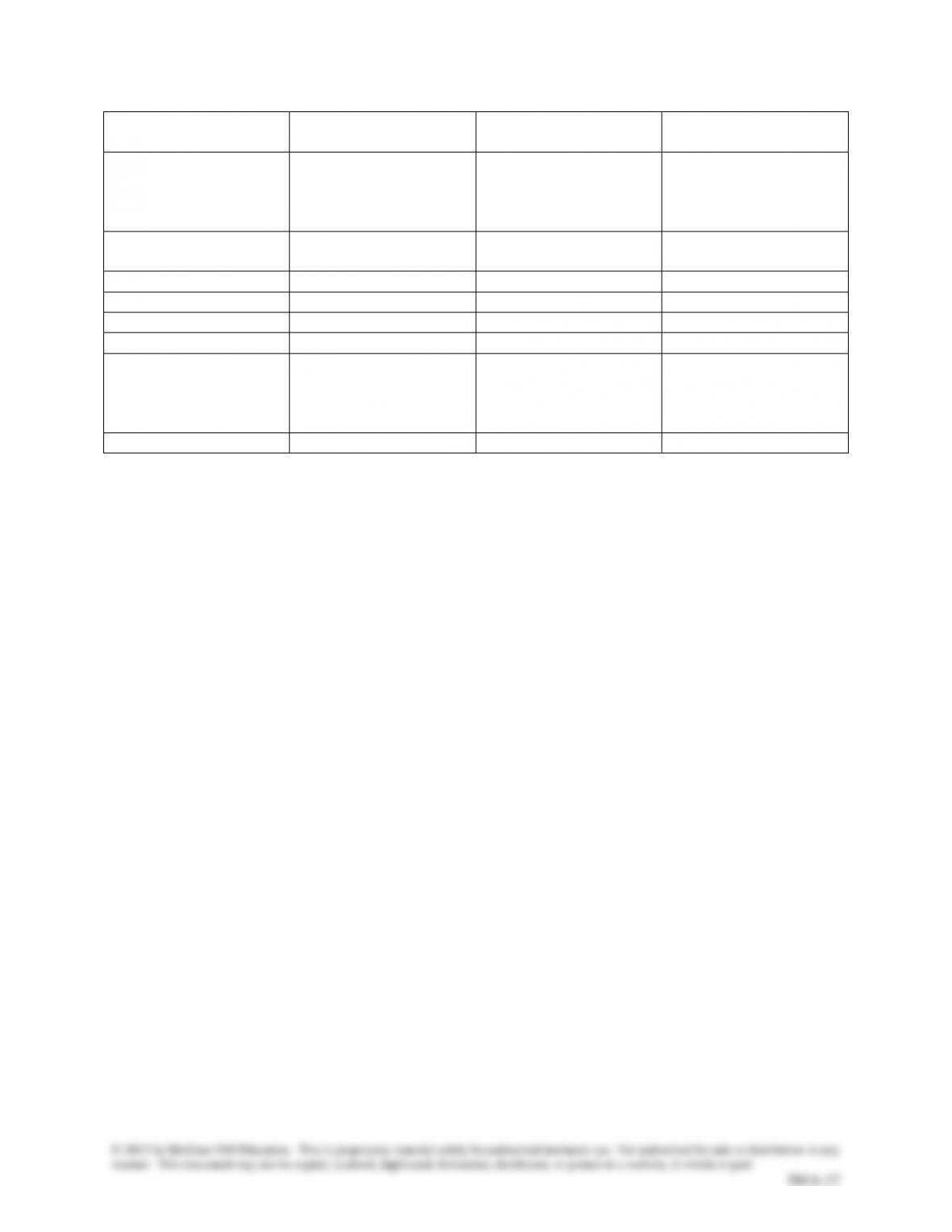
Type of Interview
Key Word Definition
Symbol
(your drawing)
An Example
Selection interview
(also called job
interview or
employment interview)
Performance appraisal
interview
Disciplinary interview
Survey interview
Diagnostic interview
Research interview
Investigative interview
Find the cause
?
Insurance adjustor
wants to find out why a
driver rear-ended a
school bus.
Exit interview
Video Activities
1. Types of Questions Used in News Interviews
Objective: This activity illustrates that different types of questions may necessitate different types of
answers and to gives students the opportunity to prepare questions on content-specific areas.
Procedure: Videotape two or three five-minute segments of an interview news show (TV or radio).
Distribute copies of the handout titled “Types of Questions,” located at the end of this section. Play the
video clips in class. As students watch, have them write down the questions that are asked and the kinds
of responses that are generated. Students should then categorize the questions according to type.
Class Discussion: After students have completed this activity, class discussion could focus on their
ability to distinguish among the different types of questions.
• Can you make any generalizations about the types of questions that are most prevalent?
• Which types of questions do guests seem to like the most?
• Which types of questions do guests seem to like the least?
• Which types of questions elicit the most information for viewers?
• Which questions are guests most adept at dodging?
• Compare the kinds of questions you and your classmates observed. Can you make any
generalizations?
• Were there any questions you had trouble classifying? Why?
• Did any questions break any of the guidelines from the text? Explain.
2. Observe an Interview
Objective: Students will differentiate effective and ineffective communication behaviors in an
interview.

IM 6-18
Procedure: Videotape a short interview conducted on television. Show the interview to your
class, pausing for discussion after each section of the interview.
Class Discussion: Discuss elements of the interview.
The setting:
Is the setting conducive to this type of interview? Explain.
The opening:
Was there an identifiable opening?
Did the interviewer build rapport, orient the interviewee, and motivate
the interviewee?
The body:
How was the interview structured?
Did the interviewer maintain control of the flow of the interview? If so, how?
Did the interview follow any identifiable sequence of questions?
What types of questions were used most frequently? Were the questions
appropriate for this type of interview?
The closing:
Did the interviewer clarify the results of the interview, establish future
actions, and conclude with pleasantries?
Overall assessment:
Did it appear that the interviewer had prepared questions ahead of time?
What nonverbals did you observe? Were they appropriate for this
occasion? Why or why not?
How do televised interviews differ from most workplace interviews? (Suggested
answers: goal is to entertain a third party; teleprompters are used; content must be
acceptable to the sponsoring organization)
What have you learned from observing this interview that you can apply
to improve your own communication when you participate in an interview?
3. Interview Ethics
Increase your awareness of ethical issues of interviewing by analyzing a televised or radio
interview.
a. Evaluate the ethics of the interview by considering how well the interviewer and
interviewee comply with the ethical obligations covered in this chapter. Support your
comments with specific examples.
b. What role did nonverbal communication play in your assessment?
c. Are there situations in which it would be advisable to breach any of the ethical
obligations?
Additional Resources
Print
Allen, J. (2000) The Complete Q and A job interview book. New York: John Wiley & Sons.
Austin, N. K. (1996, March). The new job interview: Beyond the trick question. Working Woman, 23–24.
An interesting article for students because it helps interviewees see that getting the job involves
convincing the interviewer that you can do the work.

Criscito, P. (2000). Résumés in cyberspace: Your complete guide to computerized job search. Barron’s
Educational Series, Inc.
The title says it all. There’s plenty of practical advice for job seekers.
Fry, R. (2000). 101 great answers to the toughest interview questions. NJ: Career Press.
Practical advice for anyone preparing for a job interview.
Gifford, R., Ng, C. F., & Wilkinson, M. Nonverbal cues in the employment interview: Links between
applicant qualities and interviewer judgments. In J. DeVito, & R. E. Denton (Eds.), The
nonverbal communication reader (pp. 99–106). Prospect Heights, IL: Waveland Press, Inc.
The authors emphasize the importance of nonverbal communication in this context.
Gill, A. M., & Lewis, S. M. (1996). Help wanted: An inexperienced job seeker’s complete guide to career
success. Prospect Heights, IL: Waveland.
The authors divide their book into four sections: getting started, getting noticed, getting offers,
and getting ahead. Of particular note are the chapters on “Networking,” “High-Impact
Interviews,” and “Negotiating for Job Satisfaction.”
Gutman, A. (2010). EEO law and personnel practices (3rd ed.). Thousand Oaks, CA: Sage Publications.
Graben, S. (2000). The everything online job search book. Holbrook, MA: Adams Media Corporation.
Payne, S. L. The art of asking questions. NJ: Princeton University Press, 1980.
This classic is out of print, but can be found in used book stores. Focuses on public opinion polls.
Discusses various types of questions and the challenges encountered in phrasing questions
effectively.
DVD
Common Mistakes People Make in Interviews. (2003) 27 min. Cambridge Educational Media.
Uses a wrong way/right way format to illustrate how to project a professional image.
Effective Communication and Interviewing Skills. (2009) 20 min. Insight Media.
Methods for interacting with patients in a diagnostic interview.
Good First Impressions: Proven Tips and Techniques for Successful Interviews. (2011) 40 min. Insight
Media.
Taboos and how-to’s for creating a positive impression. Includes group interviews, phone
interviews, and ineffective interviewers.
Group Assessment Interview. (2008) 17 min. Insight Media.
How to present oneself during a group assessment interview.
How Supervisors Should Appraise Employee Performance. 23 min. Kantola Productions.
Illustrates keys to an effective review process.
Informational Interviewing and Networking. (2004) 28 min.
How to find networking contacts and conduct informational interviews.

Interrogation: Field Interviewing. (2006) 45 min. Insight Media.
Teaches proper techniques for investigative interviewing.
Interviewing Job Applicants with Disabilities. 18 min. Kantola Productions.
Proper etiquette, fair treatment, and legal requirements for interviewing applicants with
disabilities.
Interviewing Strategies. (2004) 29 min. Cambridge Educational Media.
Explains the STAR (Situation-Task-Action-Result) framework for interview preparation.
An Overview of Investigative Interviewing. (1998) 62 min. Cambridge Educational Media.
British actors enact the right way to interrogate victims, witnesses, and suspects.
Performance Appraisals: Getting Results. 18 min. Cambridge Educational Media.
Use performance appraisals as a motivational tool for underperformers and top performers.
Includes study guide and instructor manual.
Performance Management and Appraisal: Featuring BuyCostumes.com. (2007) 8 min. RMI Media.
Features an ongoing appraisal system which develops employees as company resources.
Question Types in Interviews. (2008) 12 min. Insight Media.
Situational, behavioral, and probing questions, as well as types of questions to avoid.
Tough Times Job Strategies. (2003) 24 min. Cambridge Educational Media.
Advice on framing your skills to show your value to many employers. Features interviews in a
variety of professions.
Who Would You Hire? First Impression. (2011) 30 min. Insight Media.
Presents six job interviews and asks students to evaluate each.
Web
Archer North
http://www.performance-appraisal.com/intro.htm
Presents a short history of performance appraisals, along with goal-setting advice and other tips.
ChangingMinds.org
http://changingminds.org/disciplines/hr/selection/interview.htm
Identifies types and structures of interviews.
CollegeGrad.com
http://www.collegegrad.com/intv/
From this home page, students can access articles about each step in the job interview process.
Connecticut Dept of Labor
http://www.ctdol.state.ct.us/progsupt/jobsrvce/intervie.htm
Overviews types and structures of interviews.
Denison University
http://www.denison.edu/offices/career/telephoneinterview.pdf
Provides strategies for telephone interviews.

IM 6-21
Fort Hays State University
http://www.fhsu.edu/career/interview/
Includes various interview guides.
Free Management Library
http://www.managementhelp.org/commskls/intrvews/intrvews.htm#anchor4293519341
From this page you can access links describing various types of interviews such as exit
interviews, interviewing job candidates, and interviewing as a research method.
Free Management Library
http://www.managementhelp.org/evaluatn/intrview.htm
Guidelines for research interviews.
Job-interview.net
http://www.job-interview.net/sample/Demosamp.htm
Try your hand at mock job interviews on this site.
Media College.com
http://www.mediacollege.com/video/interviews/structure.html
Provides an explanation of interview structure.
Monster.com
http://career-advice.monster.com/resumes-cover-letters/careers.aspx
Provides advice and samples for resumes and cover letters.
Oklahoma City Community College
http://www.occc.edu/ES/pdf/Guidebook.pdf
Download an interviewing guidebook covering interview preparation, etiquette, dress, typical job
duties, and more.
Quintessential Careers
http://www.quintcareers.com/teen_job_strategies.html
Presents job interview strategies for teens.
Virginia Tech Career Services
http://ei.cs.vt.edu/~cs3604/careers/interview.html
Excellent and concise information about various topics concerning job interviews, such as
business etiquette. Types of interviews, lawful and unlawful questions, and tips on resume
writing. Includes a questionnaire you can use to rate your “dress sense.”
Workforce.com
http://www.workforce.com/section/06/article/23/93/48.html
Outlines the best conditions for conducting exit interviews. Requires a free registration.
Work Force
http://www.wa.gov/esd/guides/jobsearch/strategy/interview_structure.htm
Explains how to prepare for being interviewed.