HANDOUT 8–2 SOLUTION
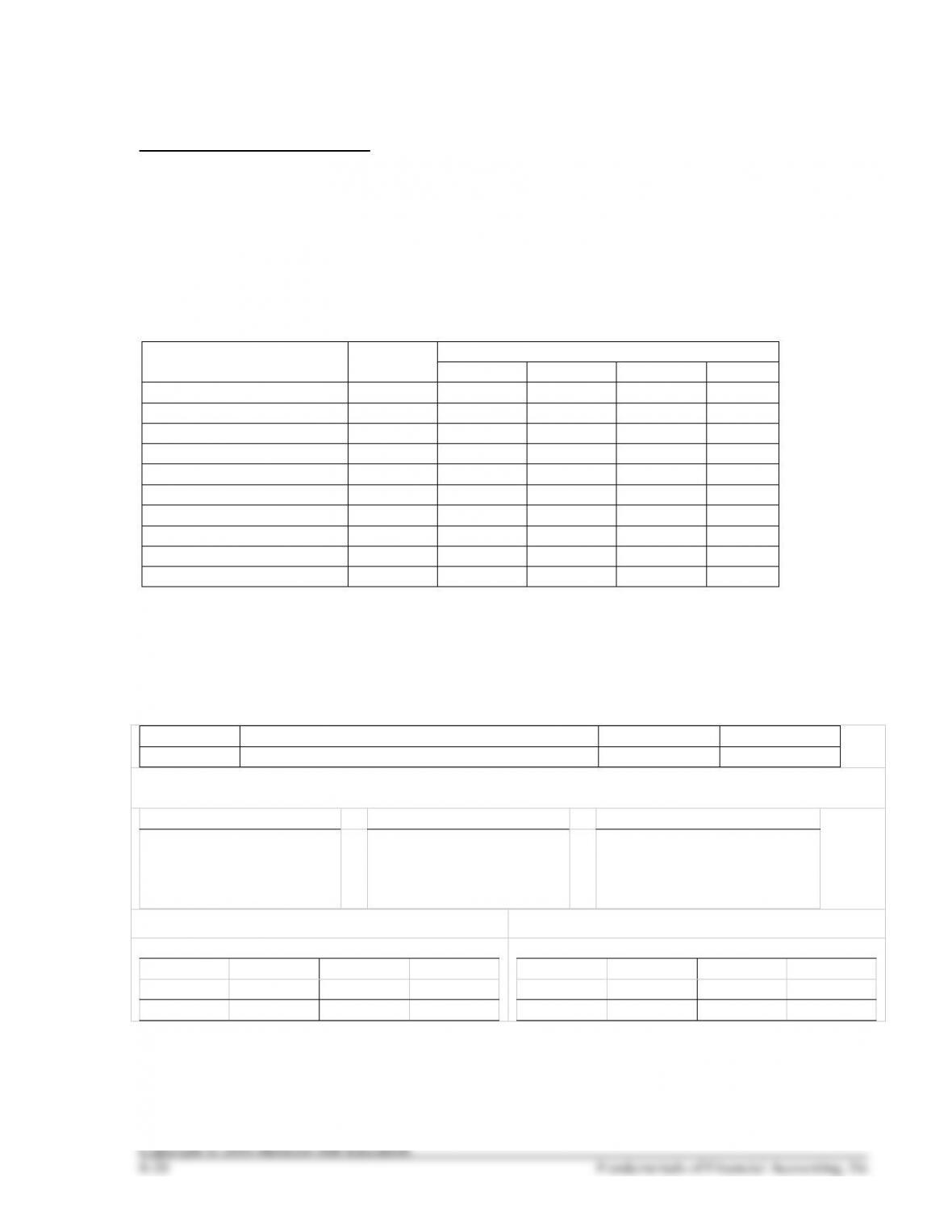
ESTIMATION AND RECORDING OF UNCOLLECTIBLE ACCOUNTS –
AGING OF ACCOUNTS RECEIVABLE METHOD
Part 1
In 2016, Vandolay reported $300,000 in sales. The company’s allowance for doubtful accounts has an
unadjusted credit balance of $12,000. Vandolay Industries accountants prepared the following Aging of
Accounts Receivable:
Customer
Total
Number of days unpaid
0-30
30-60
60-90
Over 90
Alpha Sales
$ 700
$700
Gamma Manufacturing Co.
1,900
$1,900
Delta Shipping Corp.
2,200
$2,200
Epsilon Industries
6,000
$6,000
Theta Manufacturing
1,800
1,800
Zeta Industries
600
600
Other customers
248,800
140,100
36,900
29,800
42,000
Totals
$262,000
$142,000
$40,000
$32,000
$48,000
Estimated percentage
2%
4%
8%
20%
Estimated uncollectible
$ 16,600
$ 2,840
$ 1,600
$ 2,560
$9,600
Vandolay accountants believe that receivables 0-30 days old have a 2% chance of noncollection.
Receivables 30-60 days old have a 4% chance of noncollection. Receivables 60-90 days old have an 8%
chance of noncollection. Receivables over 90 days old have a 20% chance of noncollection. The
company’s allowance for doubtful accounts has an unadjusted credit balance of $12,000. Prepare the
required adjusting journal entry.
Dec. 31
Bad Debt Expense
4,600
Allowance for Doubtful Accounts
4,600
Ensure the equation still balances and debits = credits
Assets
=
Liabilities
+
Stockholders’ Equity
Allowance
for
Doubtful
Accounts
–4,600
Bad Debt
Expense
–4,600
+ Bad Debt Expense (E) –
Dec. 31
4,600
End. Bal.
4,600
– Allowance for Doubtful Accounts (xA) +
12,000
Beg. Bal.
4,600
Dec. 31
16,600
End. Bal.
HANDOUT 8–2 SOLUTION, CONTINUED
Part 2
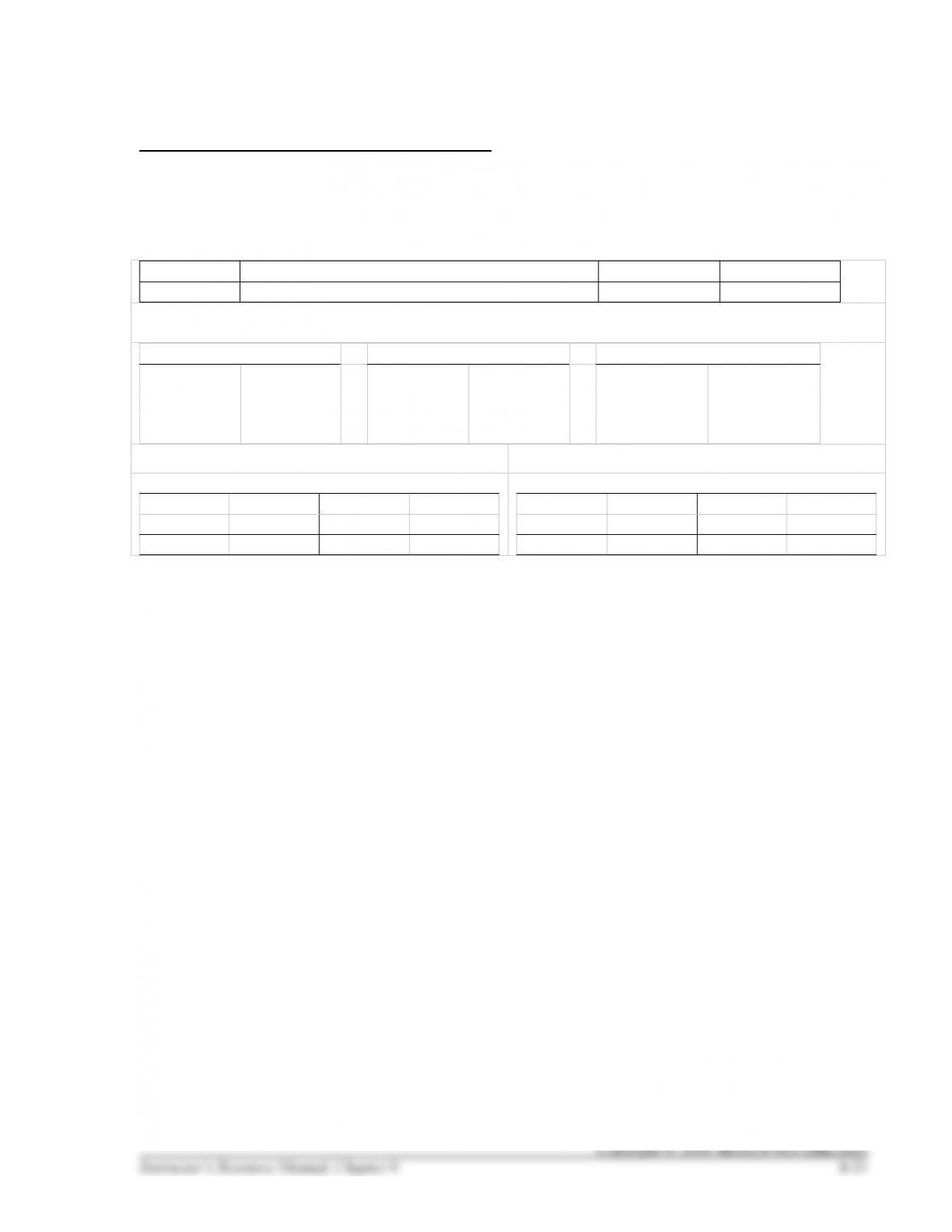
Assume instead that the company’s allowance for doubtful accounts has an unadjusted debit balance of
$400. Prepare the required adjusting journal entry.
Dec. 31
Bad Debt Expense
17,000
Allowance for Doubtful Accounts
17,000
Ensure the equation still balances and debits = credits
Assets
=
Liabilities
+
Stockholders’ Equity
Allowance
for
Doubtful
Accounts
–17,000
Bad Debt
Expense
–17,000
+ Bad Debt Expense (E) –
Dec. 31
17,000
End. Bal.
17,000
– Allowance for Doubtful Accounts (xA) +
Beg. Bal.
400
17,000
Dec. 31
16,600
End. Bal.
HANDOUT 8–3
ESTIMATION AND RECORDING OF UNCOLLECTIBLE ACCOUNTS –
PERCENTAGE OF CREDIT SALES RECEIVABLE METHOD
Part 1
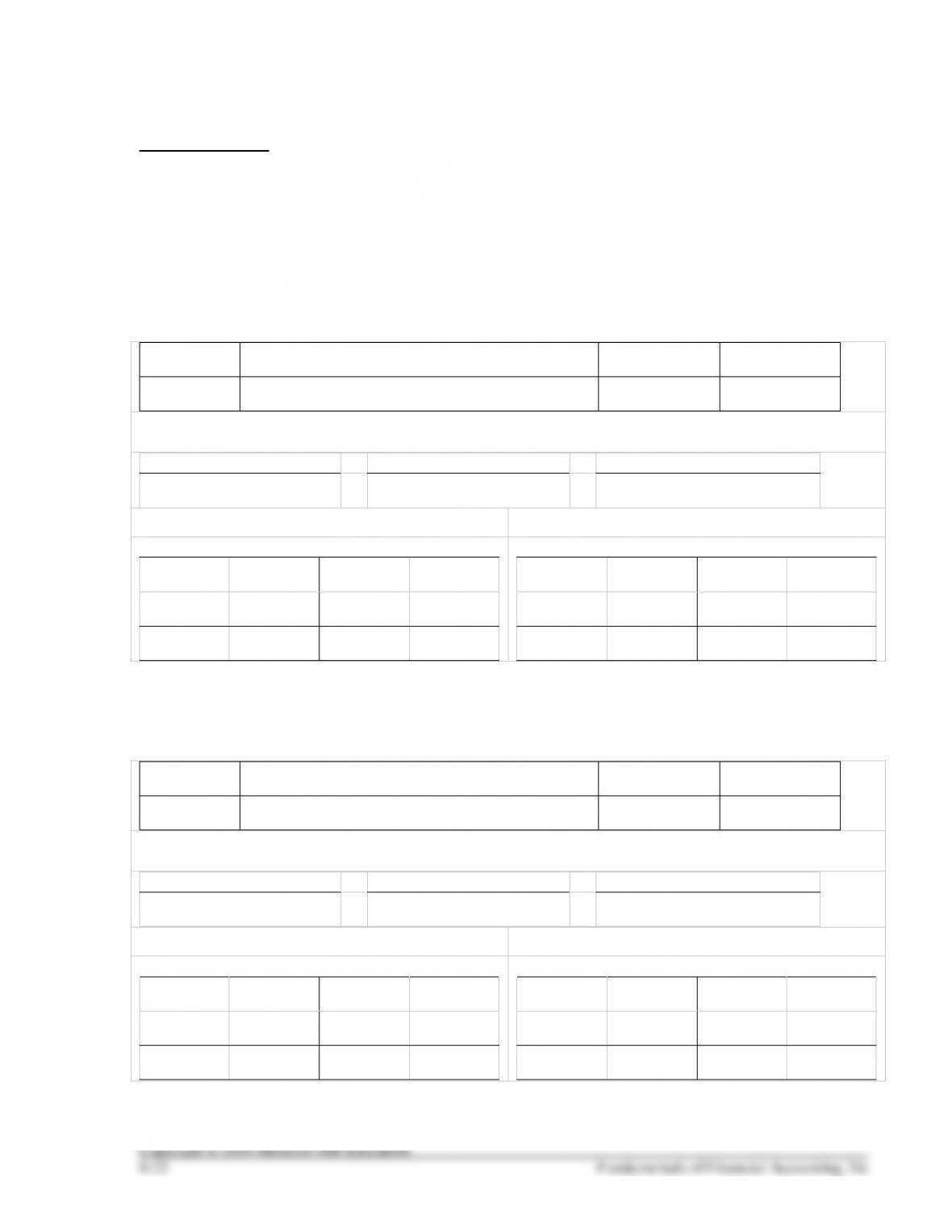
In 2016, Vandolay reported $300,000 in sales. The company’s allowance for doubtful accounts has an
unadjusted credit balance of $12,000. Based on prior experience, management estimates that 2.5% of
sales will result in bad debts. Prepare the required adjusting journal entry.
Dec. 31
Ensure the equation still balances and debits = credits
Assets
=
Liabilities
+
Stockholders’ Equity
+ Bad Debt Expense (E) –
− Allowance for Doubtful Accounts (xA) +
Part 2
Assume instead that the company’s allowance for doubtful accounts has an unadjusted debit balance of
$400. Prepare the required adjusting journal entry.
Dec. 31
Ensure the equation still balances and debits = credits
Assets
=
Liabilities
+
Stockholders’ Equity
+ Bad Debt Expense (E) –
− Allowance for Doubtful Accounts (xA) +
HANDOUT 8–3 SOLUTION
ESTIMATION AND RECORDING OF UNCOLLECTIBLE ACCOUNTS –
PERCENTAGE OF CREDIT SALES RECEIVABLE METHOD
Part 1
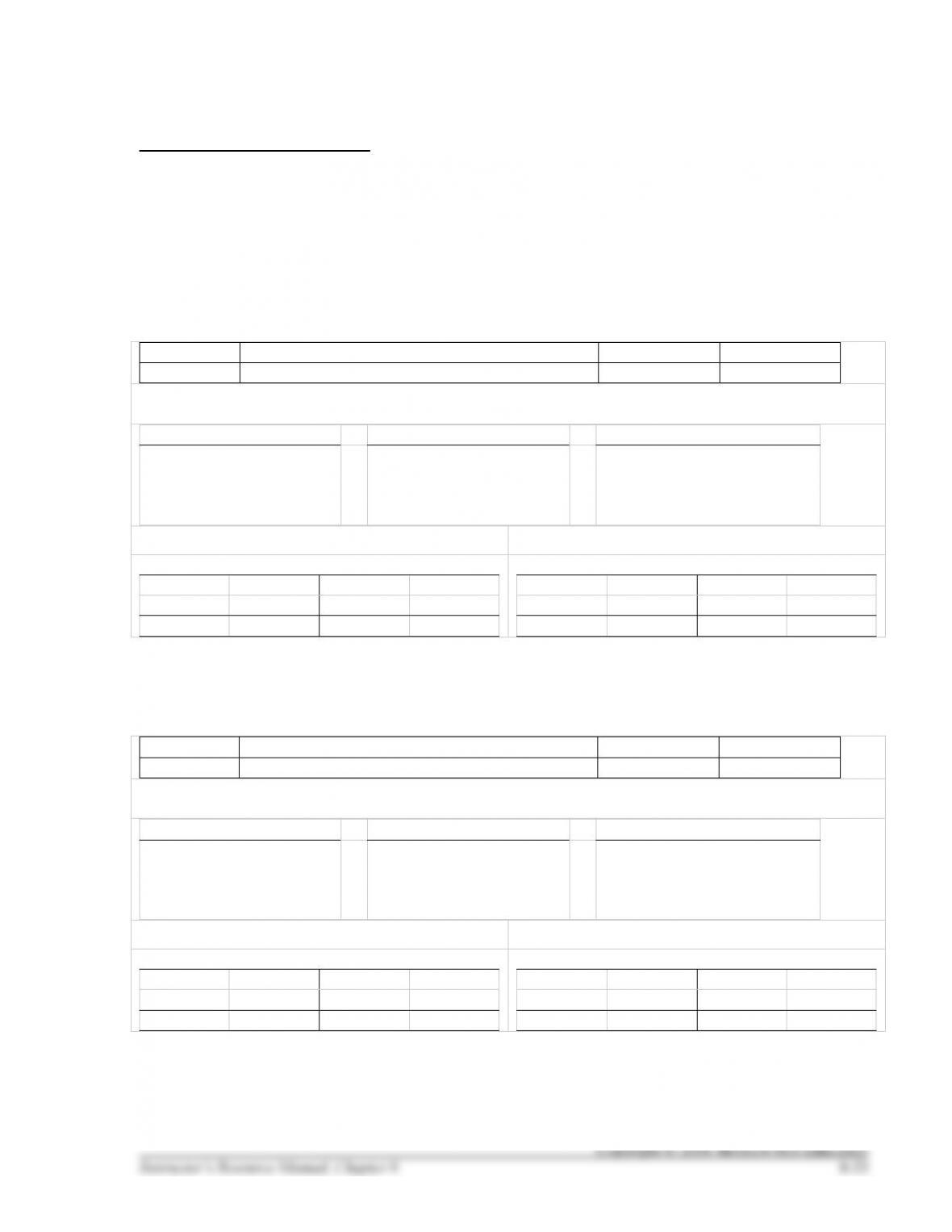
In 2016, Vandolay reported $300,000 in sales. The company’s allowance for doubtful accounts has an
unadjusted credit balance of $12,000. Based on prior experience, management estimates that 2.5% of
sales will result in bad debts. Prepare the required adjusting journal entry.
Dec. 31
Bad Debt Expense
7,500
Allowance for Doubtful Accounts
7,500
Ensure the equation still balances and debits = credits
Assets
=
Liabilities
+
Stockholders’ Equity
Allowance
for
Doubtful
Accounts
–7,500
Bad Debt
Expense
–7,500
+ Bad Debt Expense (E) –
Dec. 31
7,500
End. Bal.
7,500
− Allowance for Doubtful Accounts (xA) +
12,000
Beg. Bal.
7,500
Dec. 31
19,500
End. Bal.
Part 2
Assume instead that the company’s allowance for doubtful accounts has an unadjusted debit balance of
$400. Prepare the required adjusting journal entry.
Dec. 31
Bad Debt Expense
7,500
Allowance for Doubtful Accounts
7,500
Ensure the equation still balances and debits = credits
Assets
=
Liabilities
+
Stockholders’ Equity
Allowance
for
Doubtful
Accounts
–7,500
Bad Debt
Expense
–7,500
+ Bad Debt Expense (E) –
Dec. 31
7,500
End. Bal.
7,500
− Allowance for Doubtful Accounts (xA) +
Beg. Bal.
400
7,500
Dec. 31
7,100
End. Bal.
HANDOUT 8–4
NOTES RECEIVABLE
On April 1, 2016, Vandolay loans a $10,000 note to a customer opening a new store. The note, which
bears 10% annual interest, becomes due on March 31, 2017. Prepare the required journal entry.
Apr. 1
Ensure the equation still balances and debits = credits
Assets
=
Liabilities
+
Stockholders’ Equity
+ Note Receivable (A) –
+ Cash (A) –
On December 31, 2016, Vandolay accrued interest for the portion of the year that the note was
outstanding. Prepare the required adjusting journal entry.
Dec. 31
Ensure the equation still balances and debits = credits
Assets
=
Liabilities
+
Stockholders’ Equity
+ Interest Receivable (A) –
– Interest Revenue (R, SE) +
HANDOUT 8–4, CONTINUED
On March 31, 2017, Vandolay received all interest and principal for the note. Prepare the required journal
entry for the receipt of interest.
Dec. 31
Ensure the equation still balances and debits = credits
Assets
=
Liabilities
+
Stockholders’ Equity
+ Interest Receivable (A) –
Beg. Bal
750
– Interest Revenue (R, SE) +
[Cash account omitted]
Prepare the required journal entry for the receipt of principal.
Apr. 1
Ensure the equation still balances and debits = credits
Assets
=
Liabilities
+
Stockholders’ Equity
+ Note Receivable (A) –
Beg. Bal.
10,000
[Cash account omitted]
HANDOUT 8–4 SOLUTION
NOTES RECEIVABLE
On April 1, 2016, Vandolay loans a $10,000 note to a customer opening a new store. The note, which
bears 10% annual interest, becomes due on March 31, 2017. Prepare the required journal entry.
Apr. 1
Note Receivable
10,000
Cash
10,000
Ensure the equation still balances and debits = credits
Assets
=
Liabilities
+
Stockholders’ Equity
Note
Receivable
+10,000
Cash
–10,000
+ Note Receivable (A) –
Apr. 1
10,000
+ Cash (A) –
10,000
Apr. 1
On December 31, 2016, Vandolay accrued interest for the portion of the year that the note was
outstanding. Prepare the required adjusting journal entry.
Period outstanding: April 1 through December 31 is 9 months.
Interest = Principal × Rate × Time = 10,000 × 10% × 9/12 = $750.
Dec. 31
Interest Receivable
750
Interest Revenue
750
Ensure the equation still balances and debits = credits
Assets
=
Liabilities
+
Stockholders’ Equity
Interest
Receivable
+750
Interest
Revenue
+750
+ Interest Receivable (A) –
Dec. 31
750
– Interest Revenue (R, SE) +
750
Dec. 31
HANDOUT 8–4 SOLUTION, CONTINUED
On March 31, 2017, Vandolay received all interest and principal for the note. Prepare the required journal
entry for the receipt of interest.
Period outstanding: January 1 through March 31 is 3 months.
Interest = Principal × Rate × Time = 10,000 × 10% × 3/12 = $250.
Total amount of interest received: 12 months
Interest = Principal × Rate × Time = 10,000 × 10% × 1 = $1,000
Dec. 31
Cash
1,000
Interest Revenue
250
Interest Receivable
750
Ensure the equation still balances and debits = credits
Assets
=
Liabilities
+
Stockholders’ Equity
Interest
Receivable
–750
Interest
Revenue
+250
Cash
+1,000
+ Interest Receivable (A) –
Beg. Bal
750
750
Mar. 31
End. Bal.
0
– Interest Revenue (R, SE) +
250
Mar. 31
[Cash Account omitted]
Next, record the journal entry for receipt of the principal.
Apr. 1
Cash
10,000
Note Receivable
10,000
Ensure the equation still balances and debits = credits
Assets
=
Liabilities
+
Stockholders’ Equity
Note
Receivable
–10,000
Cash
+10,000
+ Note Receivable (A) –
Beg. Bal.
10,000
10,000
Mar. 31
End. Bal.
0
[Cash Account omitted]