PA6-2 (continued)
Req. 3
(a)
Accounts Receivable ………………………………………………….
550,000
Sales Revenue ……………………………………………………..
550,000
Cost of Goods Sold ……………………………………………………
415,000
Inventory ……………………………………………………………..
415,000
(b)
Sales Returns and Allowances …………………………………….
10,000
Accounts Receivable ……………………………………………..
10,000
(c)
Cash ($540,000 x 98%) ……………………………………………….
529,200
Sales Discounts ($540,000 x 2%) ………………………………….
10,800
Accounts Receivable ($550,000 – $10,000)……………….
540,000
PA6–3
Req. 1
Sales Revenue ($51,200 + $10,000) ……………………………… $61,200
Sales Discounts ($10,000 x 50% collected x 2%) ……………. (100)
Gross Profit Percentage
=
Gross Profit
x 100 =
$27,153
x 100 =
45.0%
Net Sales
$60,340
PA6-3 (continued)
Req. 3
(a)
Cash ………………………………………………………………………..
51,200
Sales Revenue ……………………………………………………..
51,200
Cost of Goods Sold ……………………………………………………
28,797
Inventory ……………………………………………………………..
28,797
(b)
Sales Returns and Allowances …………………………………….
600
Cash ……………………………………………………………………
600
Inventory …………………………………………………………………..
360
Cost of Goods Sold ……………………………………………….
360
(c)
Accounts Receivable ………………………………………………….
10,000
Sales Revenue ……………………………………………………..
10,000
Cost of Goods Sold ……………………………………………………
4,750
Inventory ……………………………………………………………..
4,750
(d)
Cash ………………………………………………………………………..
4,900
Sales Discounts ($10,000 x 50% x 2%) ………………………….
100
Accounts Receivable ……………………………………………..
5,000
(e)
Sales Returns and Allowances …………………………………….
160
Accounts Receivable ……………………………………………..
160
Req. 4
The contract will increase Hair World’s gross profit by $5,000 ($15,000 − $10,000), but it
will decrease the gross profit percentage, as calculated below.
Gross Profit
Percentage
=
Gross Profit
x 100 =
$27,153 + $5,000
x 100 =
Net Sales
$60,340 + $15,000
=
$32,153
x 100 =
42.7%
$75,340
The gross profit percentage decreases because the gross profit percentage on the
contract (33.3% = $5,000 ÷ $15,000) is less than the gross profit percentage earned
without the contract (45%).
PA6–4
Req. 1 BIG TOMMY CORPORATION
Income Statement
For the Year Ended December 31
Sales Revenue ……………………………………………………….….. $ 420,000
Sales Discounts………………………………………………………….. (6,000)
Req. 2 BIG TOMMY CORPORATION
Income Statement
For the Year Ended December 31
Net Sales ……………………………………………………….…….. $404,000
Cost of Goods Sold …………………………………………………….. 279,000
30.9%, which means that the company earned slightly less than $0.31 of gross profit
PA6-5
Req. 1
Periodic inventory system:
January 2
Accounts Receivable …………………………………………………
40
Sales Revenue (4 units at $10) ……………………….….
40
January 16
Accounts Receivable …………………………………………………
100
Sales Revenue (10 units at $10) ……………………..……
100
January 18
Purchases (5 units at $5) …………………………………….………
25
Accounts Payable …………………………………………………
25
January 19
Accounts Receivable …………………………………………………
100
Sales Revenue (10 units at $10) ……………………..……
100
January 24
Purchases (10 units at $5) …………………………………..………
50
Accounts Payable …………………………………………………
50
January 31
Cost of Goods Sold ……………………………………………………
175
Purchases ……………………………………………………....
75
Inventory (Beginning: 20 units at $5) ………………….……
100
Assume all goods are sold.
Inventory (Ending: 10 units at $5) …………………………..
50
Cost of Goods Sold ………………………………………………
50
Recognize that not all goods were sold.
Calculation of Cost of Goods Sold:
Beginning Inventory (20 units at $5)
$100
Add Purchases
75
Cost of Goods Available For Sale
175
Less Ending Inventory (physical count—10 units at $5)
50
Cost of Goods Sold
$125
PA6-5 (continued)
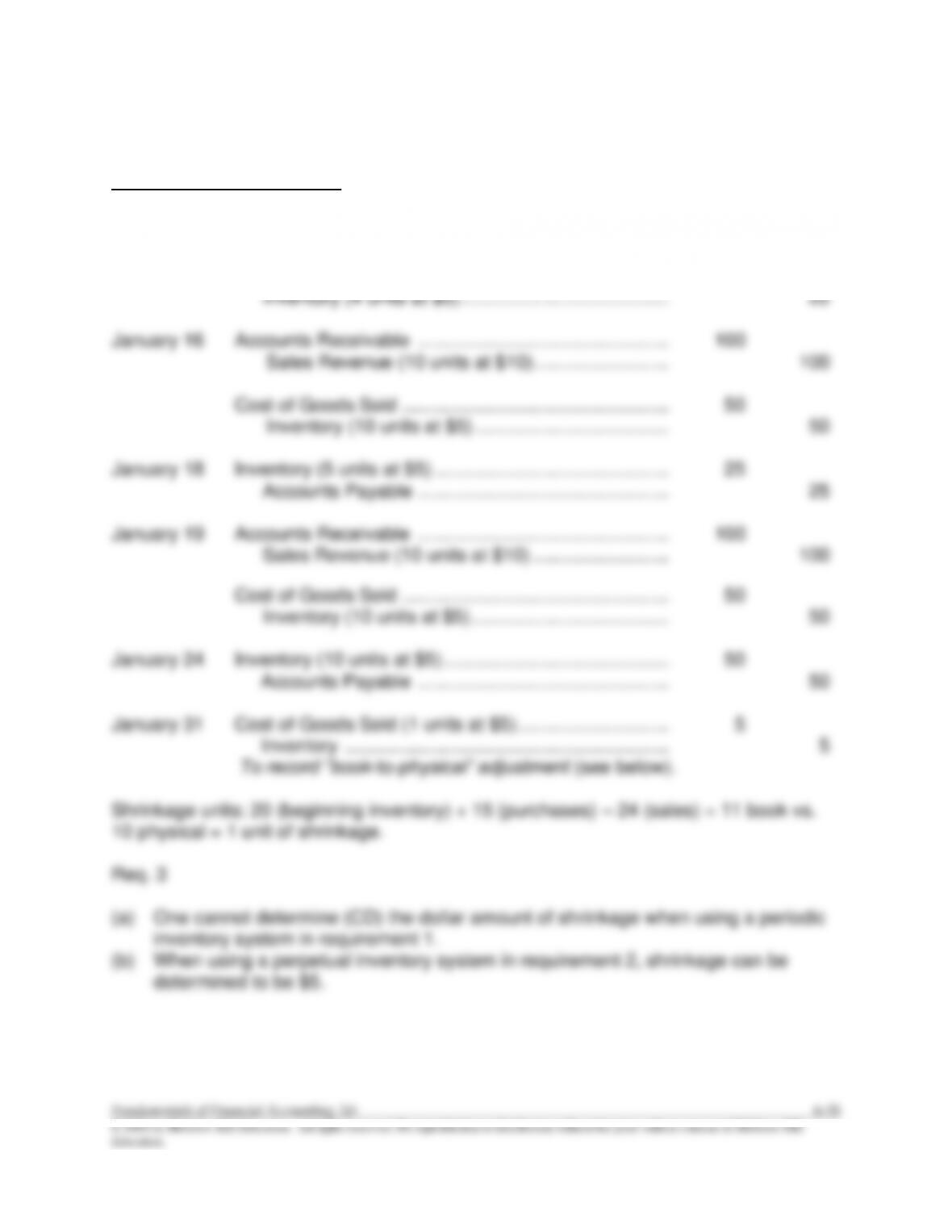
Req. 2
Perpetual inventory system:
January 2
Accounts Receivable …………………………………………………
40
Sales Revenue (4 units at $10) ……………………….….
40
Cost of Goods Sold ……………………………………………………
20
Inventory (4 units at $5) ………………………………….………
20
January 16
Accounts Receivable …………………………………………………
100
Sales Revenue (10 units at $10)……………………..……
100
Cost of Goods Sold ……………………………………………………
50
Inventory (10 units at $5) …………………………..…..………
50
January 18
Inventory (5 units at $5) ………………………………………………
25
Accounts Payable …………………………………………………
25
January 19
Accounts Receivable …………………………………………………
100
Sales Revenue (10 units at $10) ……………………..……
100
Cost of Goods Sold ……………………………………………………
50
Inventory (10 units at $5) ………………………………..………
50
January 24
Inventory (10 units at $5) …………………………..………..………
50
Accounts Payable …………………………………………………
50
January 31
Cost of Goods Sold (1 units at $5) ………………………..…
5
Inventory ……………………………………………………....
5
To record “book–to–physical” adjustment (see below).
Shrinkage units: 20 (beginning inventory) + 15 (purchases) – 24 (sales) = 11 book vs.
10 physical = 1 unit of shrinkage.
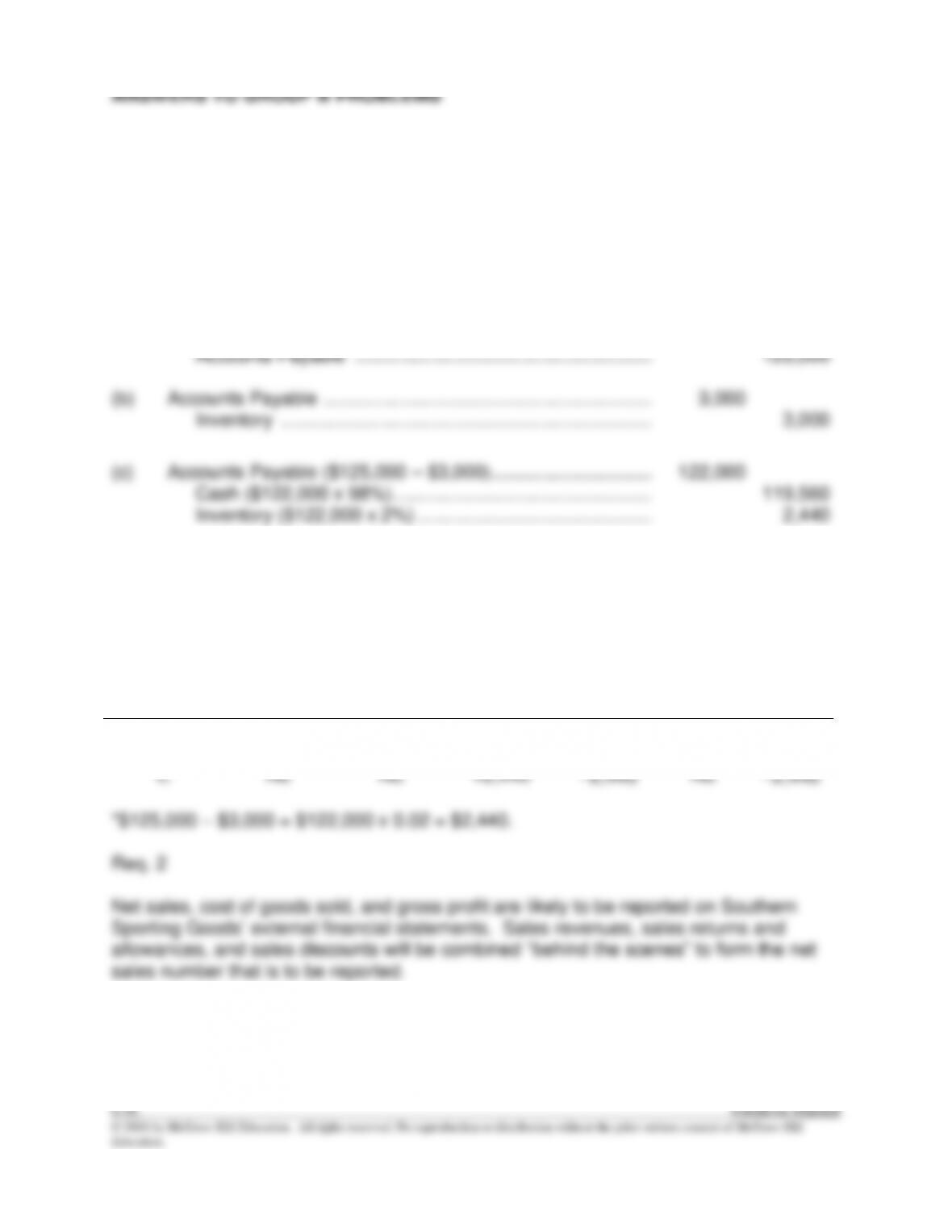
Req. 3
(a) One cannot determine (CD) the dollar amount of shrinkage when using a periodic
inventory system in requirement 1.
(b) When using a perpetual inventory system in requirement 2, shrinkage can be
determined to be $5.
6-36 Solutions Manual
© 2016 by McGraw-Hill Education. All rights reserved. No reproduction or distribution without the prior written consent of McGraw-Hill
Education.
ANSWERS TO GROUP B PROBLEMS
PB6-1
Req. 1
a.
+125,000
b.
−3,000
c.
−2,440
($125,000 − $3,000) x 2% discount
Req. 2
(a)
Inventory …………………………………………………………………..
125,000
Accounts Payable …………………………………………………
125,000
(b)
Accounts Payable ………………………………………………………
3,000
Inventory ……………………………………………………………..
3,000
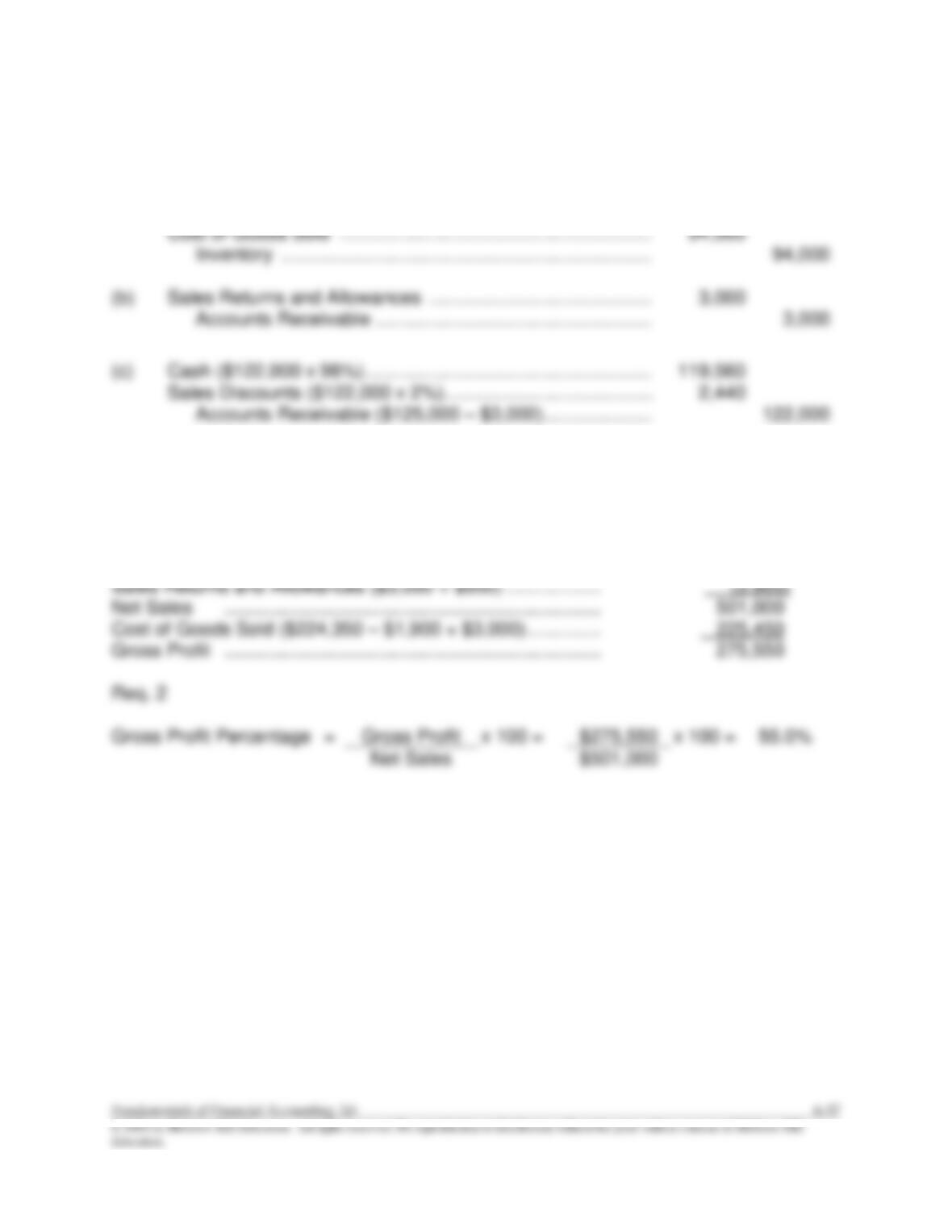
(c)
Accounts Payable ($125,000 – $3,000) ………………………….
122,000
Cash ($122,000 x 98%)…………………………………………..
119,560
Inventory ($122,000 x 2%) ………………………………………
2,440
PB6-2
Req. 1
Transaction
Sales
Revenues
Sales
Returns
and
Allowances
Sales
Discounts
Net
Sales
Cost of
Goods
Sold
Gross
Profit
a.
+125,000
NE
NE
+125,000
+94,000
+31,000
b.
NE
+3,000
NE
−3,000
NE
−3,000
c.
NE
NE
+2,440*
−2,440
NE
−2,440
*$125,000 − $3,000 = $122,000 x 0.02 = $2,440.
Req. 2
Net sales, cost of goods sold, and gross profit are likely to be reported on Southern
Sporting Goods’ external financial statements. Sales revenues, sales returns and
allowances, and sales discounts will be combined “behind the scenes” to form the net
sales number that is to be reported.
PB6–2 (continued)
Req. 3
(a)
Accounts Receivable ………………………………………………….
125,000
Sales Revenue ……………………………………………………..
125,000
Cost of Goods Sold ……………………………………………………
94,000
Inventory ……………………………………………………………..
94,000
(b)
Sales Returns and Allowances …………………………………….
3,000
Accounts Receivable ……………………………………………..
3,000
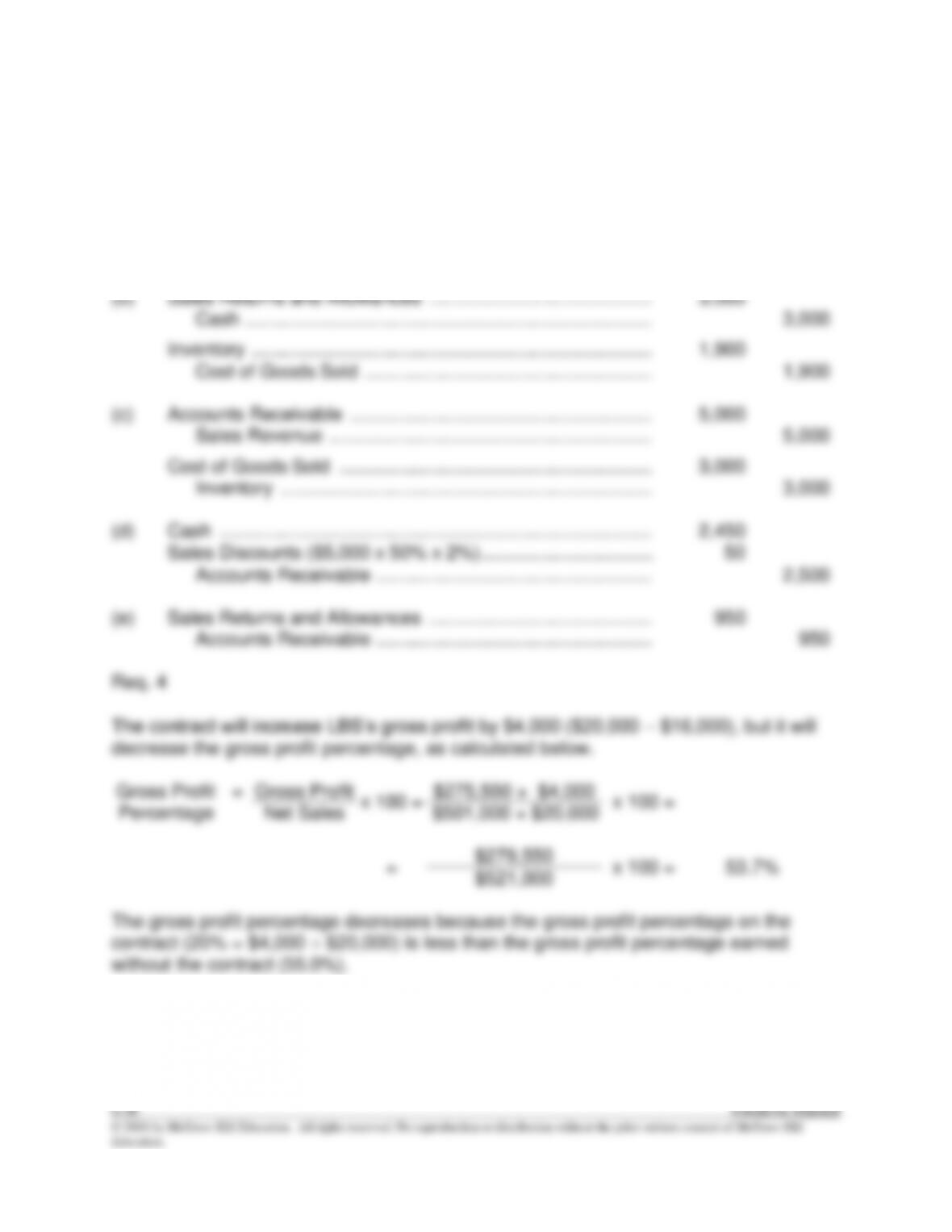
(c)
Cash ($122,000 x 98%) ……………………………………………….
119,560
Sales Discounts ($122,000 x 2%) ………………………………….
2,440
Accounts Receivable ($125,000 – $3,000)…………………
122,000
PB6–3
Req. 1
Sales Revenue ($500,000 + $5,000) ……………………………… $505,000
Sales Discounts ($5,000 x 50% collected x 2%) ……………… (50)
Gross Profit Percentage
=
Gross Profit
x 100 =
$275,550
x 100 =
55.0%
Net Sales
$501,000
PB6-3 (continued)
Req. 3
(a)
Cash ………………………………………………………………………..
500,000
Sales Revenue ………………………………………………………
500,000
Cost of Goods Sold ……………………………………………………
224,350
Inventory ……………………………………………………………..
224,350
(b)
Sales Returns and Allowances …………………………………….
3,000
Cash ……………………………………………………………………
3,000
Inventory …………………………………………………………………..
1,900
Cost of Goods Sold ……………………………………………….
1,900
(c)
Accounts Receivable ………………………………………………….
5,000
Sales Revenue ……………………………………………………..
5,000
Cost of Goods Sold ……………………………………………………
3,000
Inventory ……………………………………………………………..
3,000
(d)
Cash ………………………………………………………………………..
2,450
Sales Discounts ($5,000 x 50% x 2%) …………………………...
50
Accounts Receivable ……………………………………………..
2,500
(e)
Sales Returns and Allowances …………………………………….
950
Accounts Receivable ……………………………………………..
950
Req. 4
The contract will increase LBS’s gross profit by $4,000 ($20,000 − $16,000), but it will
decrease the gross profit percentage, as calculated below.
Gross Profit
Percentage
=
Gross Profit
x 100 =
$275,550 + $4,000
x 100 =
Net Sales
$501,000 + $20,000
=
$279,550
x 100 =
53.7%
$521,000
The gross profit percentage decreases because the gross profit percentage on the
contract (20% = $4,000 ÷ $20,000) is less than the gross profit percentage earned
without the contract (55.0%).
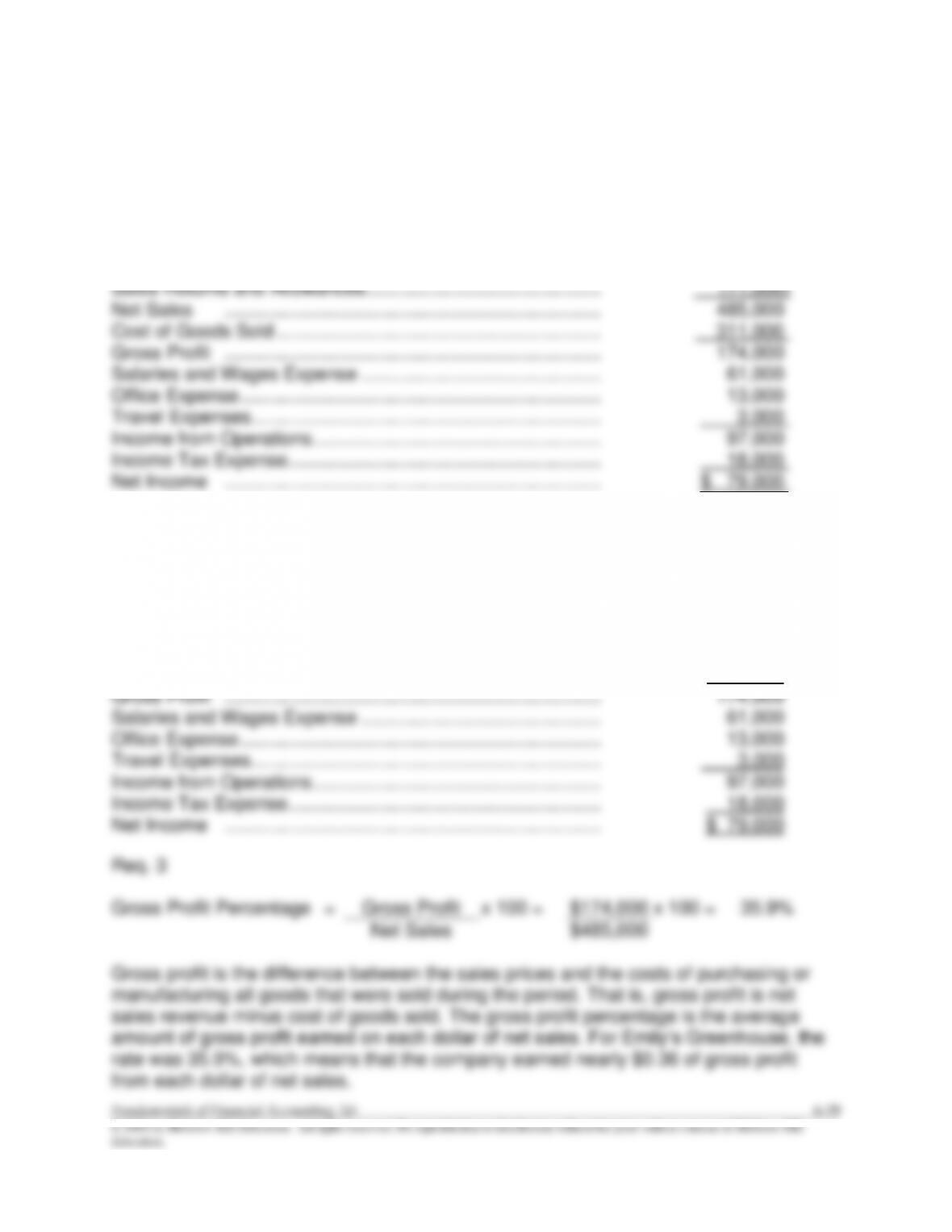
PB6–4
Req. 1
EMILY’S GREENHOUSE CORPORATION
Income Statement
For the Year Ended December 31
Sales Revenue ……………………………………………………….….. $ 504,000
Sales Discounts………………………………………………………….. (8,000)
Req. 2
EMILY’S GREENHOUSE CORPORATION
Income Statement
For the Year Ended December 31
Net Sales ……………………………………………………….…….. $ 485,000
Cost of Goods Sold …………………………………………………….. 311,000
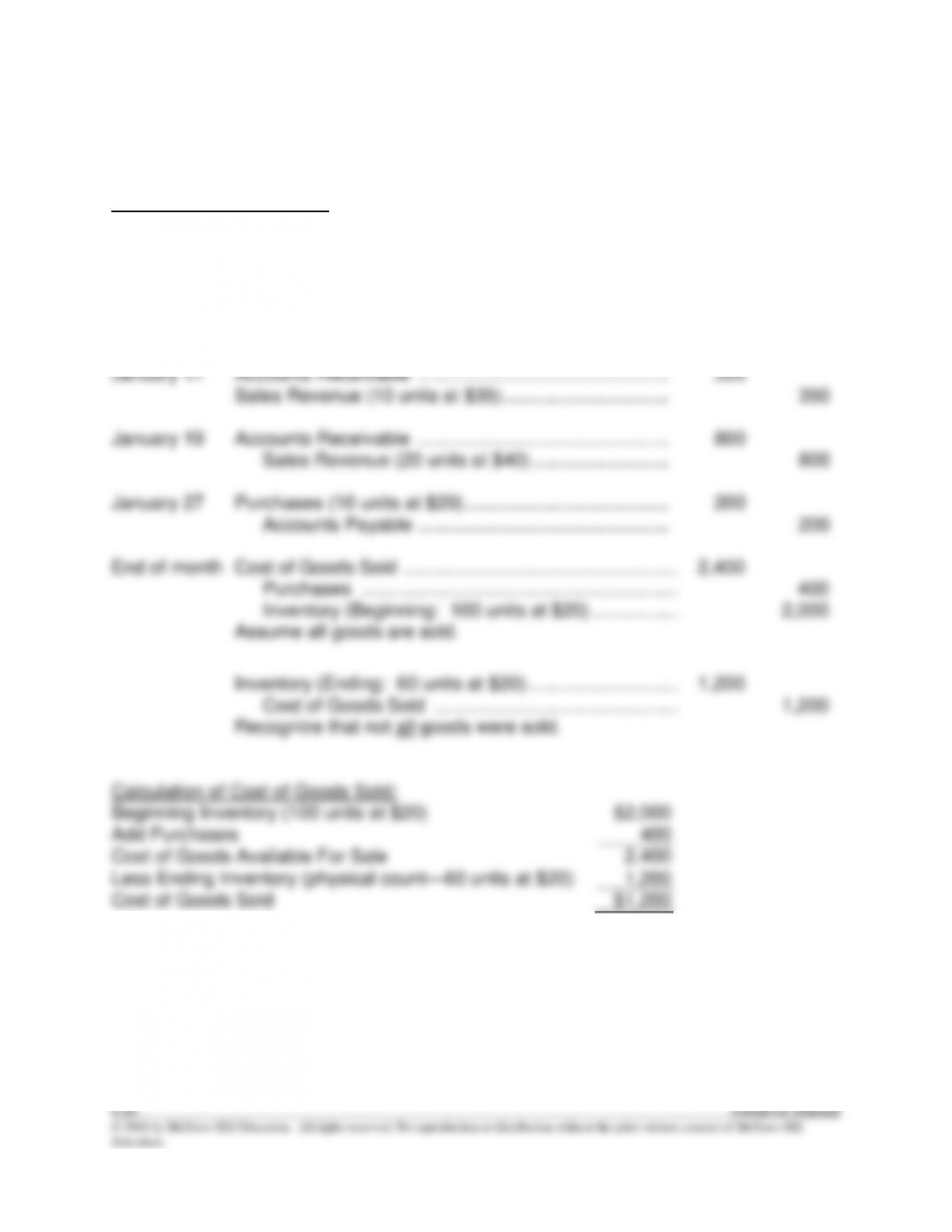
PB6-5
Req. 1
Periodic inventory system:
January 6
Accounts Receivable …………………………………………………
600
Sales Revenue (20 units at $30) ……………………..……
600
January 9
Purchases (10 units at $20) …………………………………………
200
Accounts Payable …………………………………………………
200
January 11
Accounts Receivable …………………………………………………
350
Sales Revenue (10 units at $35)…………………………..………
350
January 19
Accounts Receivable …………………………………………………
800
Sales Revenue (20 units at $40) ……………………..……
800
January 27
Purchases (10 units at $20) …………………………..…….………
200
Accounts Payable …………………………………………………
200
End of month
Cost of Goods Sold ……………………………………………………
2,400
Purchases ……………………………………………………....
400
Inventory (Beginning: 100 units at $20) ……………………
2,000
Assume all goods are sold.
Inventory (Ending: 60 units at $20) …………………………..
1,200
Cost of Goods Sold ………………………………………………
1,200
Recognize that not all goods were sold.
Calculation of Cost of Goods Sold:
Beginning Inventory (100 units at $20)
$2,000
Add Purchases
400
Cost of Goods Available For Sale
2,400
Less Ending Inventory (physical count—60 units at $20)
1,200
Cost of Goods Sold
$1,200