
Chapter Outline
Teaching Notes
C. Sales on Account and Sales Discounts
1. Sales discount––A sales price reduction given to
customers for prompt payment of their account balance.
2. Sales discount is calculated after taking into account any
sales returns and allowances.
3. When the customer pays, Cash is increased with a debit,
Sales Discounts, a contra revenue account, is increased
with a debit, and Accounts Receivable is reduced with a
credit.
4. Summary of Sales-Related Transactions
Summarized in Exhibit 6.7
a. Sales returns and allowances and sales discounts are
recorded using contra-revenue accounts.
b. Net Sales = Sales Revenues – Sales Returns and
Allowances – Sales Discounts.
D. Inventory Purchases and Sales Transactions Compared
Compared in Exhibit 6.8
1. Purchase transactions affect only balance sheet accounts.
The “Spotlight on Financial
2. Sales transactions affect accounts on both the balance
sheet and income statement.
Reporting” feature addresses
customer theft.
III. Evaluate the Results
LO 6–5 Prepare and analyze a merchandiser’s multistep income statement.
A. Gross Profit Analysis
1. Multistep income statement––Presents important
subtotals, such as gross profit, to help distinguish core
operating results from other, less significant items that
affect net income.
Illustrated in Exhibit 6.9
a. Expenses are subtracted from sales to arrive at net
income.
b. This format separates revenues and expenses that
related to core operations from all other (peripheral)
items that affect net income.
c. For merchandisers, a key measure is the amount of
profit earned over the cost of goods sold.
2. Gross profit (gross margin or simply margin)––Net sales
minus cost of goods sold; it is a subtotal, not an account.
3. Category called Selling, General, and Administrative
Expenses includes a variety of operating expenses, such
as wages, utilities, advertising, rent, and the costs of
delivering merchandise to customers.
4. Selling, General, and Administrative Expenses are
subtracted from gross profit to yield Income from
Operations, which is a measure of the company’s income
from regular operating activities before considering the
effects of interest, income taxes, and any nonrecurring
items.

Chapter Outline
Teaching Notes
B. Gross Profit Percentage
1. Gross profit percentage––A ratio indicating the
percentage of profit earned on each dollar of sales, after
considering the cost of products sold.
a. Gross profit percentage = ((Net Sales – COGS) ÷ Net
Sales) × 100.
b. Measures the percentage of profit earned on each
dollar of sales, after considering the cost of products
sold.
c. A higher gross profit ratio means that greater profit is
available to cover operating and other expenses.
2. Comparing Gross Profit Percentages
b. Gross profit percentages can vary greatly between
companies
a. Gross profit percentages can vary across industries.
LO 6–S1 Record inventory transactions in a periodic system.
IV. Recording Inventory Transactions in a Periodic System
A. Inventory Purchases—Purchases of merchandise inventory
are recorded in the Purchases account (with a debit).
B. Record Sales – No Cost of Goods Sold entry.
C. Record End-of-Period Adjustments
a. Count the number of units on hand, compute the dollar
valuation of the ending inventory, and compute and
record the cost of goods sold.
b. Transfer beginning inventory and net purchases to cost of
goods sold.
c. Adjust the cost of goods sold by subtracting the amount
of ending inventory still on hand (recognize that not all
goods were sold).

Supplemental Enrichment Activities
Note: These activities would be suitable for individual or group activities.
1. Handout 6–1
Use Handout 6–1 for an in-class activity designed to review the preparation of journal entries for
purchase transactions under a perpetual inventory system. The solution follows the handout master.
2. Handout 6–2
Use Handout 6–2 for an in-class activity designed to review the preparation of journal entries for
sales transactions under a perpetual inventory system. The solution follows the handout master.
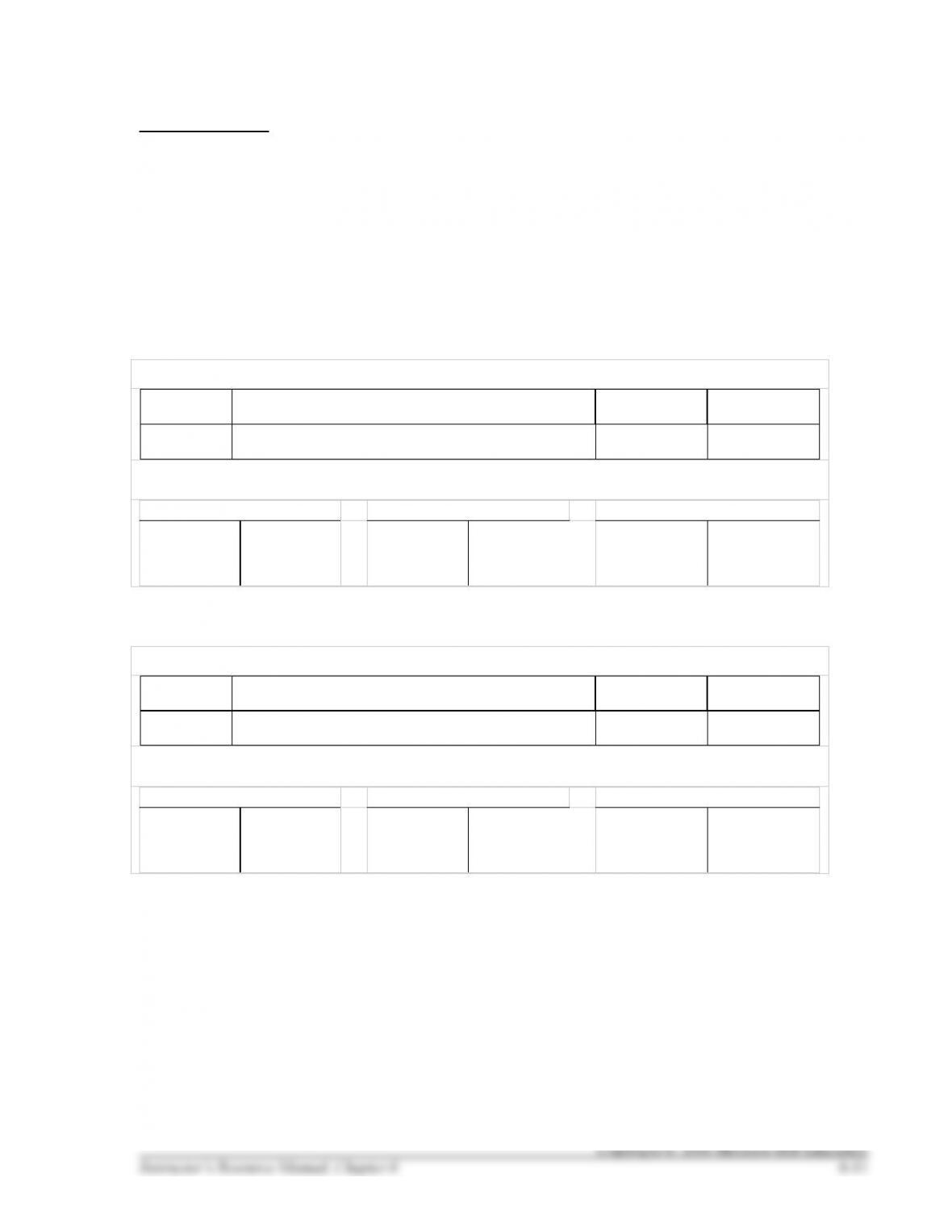
HANDOUT 6–1
PURCHASE TRANSACTIONS UNDER A PERPETUAL INVENTORY SYSTEM
Hamm Manufacturing Corp. uses a perpetual inventory system. The following activities occurred during
February 2016. Prepare a journal entry for ensure that the basic accounting equation balances for each
transaction.
On February 2, Hamm purchased $40,000 worth of inventory, on credit terms 3/10 n/30.
Prepare the required journal entries.
Debit and credit the accounts affected
Ensure the equation still balances and debits = credits
Assets
=
Liabilities
+
Stockholders’ Equity
On February 10, Hamm paid for the inventory, taking advantage of all available discounts.
Debit and credit the accounts affected
Ensure the equation still balances and debits = credits
Assets
=
Liabilities
+
Stockholders’ Equity
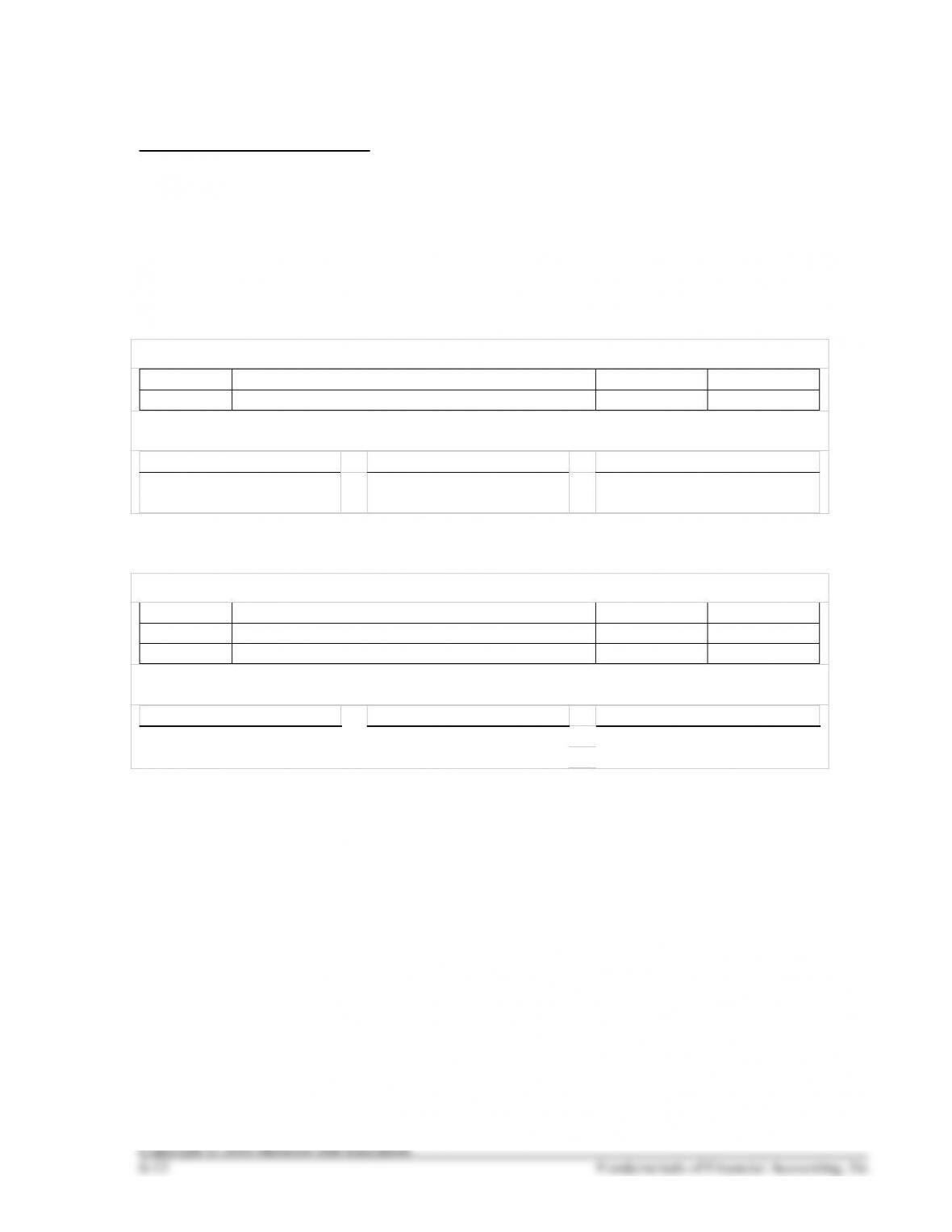
HANDOUT 6–1 SOLUTION
PURCHASE TRANSACTIONS UNDER A PERPETUAL INVENTORY SYSTEM
Hamm Manufacturing Corp. uses a perpetual inventory system. The following activities occurred during
February 2016. Prepare a journal entry for ensure that the basic accounting equation balances for each
transaction.
On February 2, Hamm purchased $40,000 worth of inventory, on credit terms 3/10 n/30.
Debit and credit the accounts affected
Feb. 2
Inventory
40,000
Accounts Payable
40,000
Ensure the equation still balances and debits = credits
Assets
=
Liabilities
+
Stockholders’ Equity
Inventory
+40,000
Accounts
Payable
+40,000
On February 10, Hamm paid for the inventory, taking advantage of all available discounts.
Debit and credit the accounts affected
Feb. 10
Accounts Payable
40,000
Cash
38,800
Inventory
1,200
Ensure the equation still balances and debits = credits
Assets
=
Liabilities
+
Stockholders’ Equity
Cash
–38,800
Accounts
–40,000
Inventory
–1,200
Payable
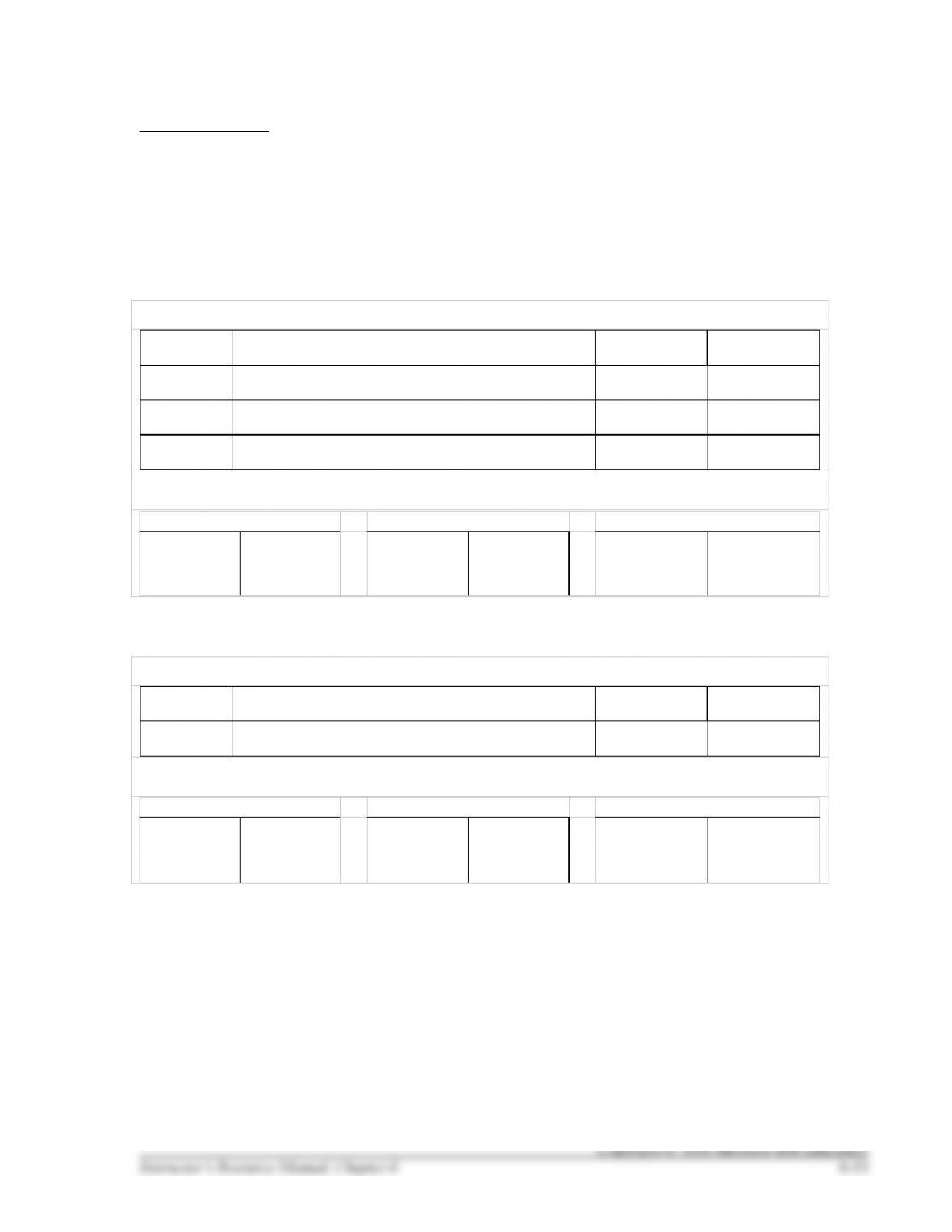
HANDOUT 6–2
SALES TRANSACTIONS UNDER A PERPETUAL INVENTORY SYSTEM
Gooddeal Inc. uses a perpetual inventory system. The following activities occurred during February 2016.
Prepare a journal entry for ensure that the basic accounting equation balances for each transaction.
On March 3, Gooddeal sold inventory costing $2,000 for $2,500, terms 2/10, n/30.
Debit and credit the accounts affected
Ensure the equation still balances and debits = credits
Assets
=
Liabilities
+
Stockholders’ Equity
Gooddeal’s customer paid for the merchandise on March 6, taking advantage of the permitted discount.
Debit and credit the accounts affected
Ensure the equation still balances and debits = credits
Assets
=
Liabilities
+
Stockholders’ Equity
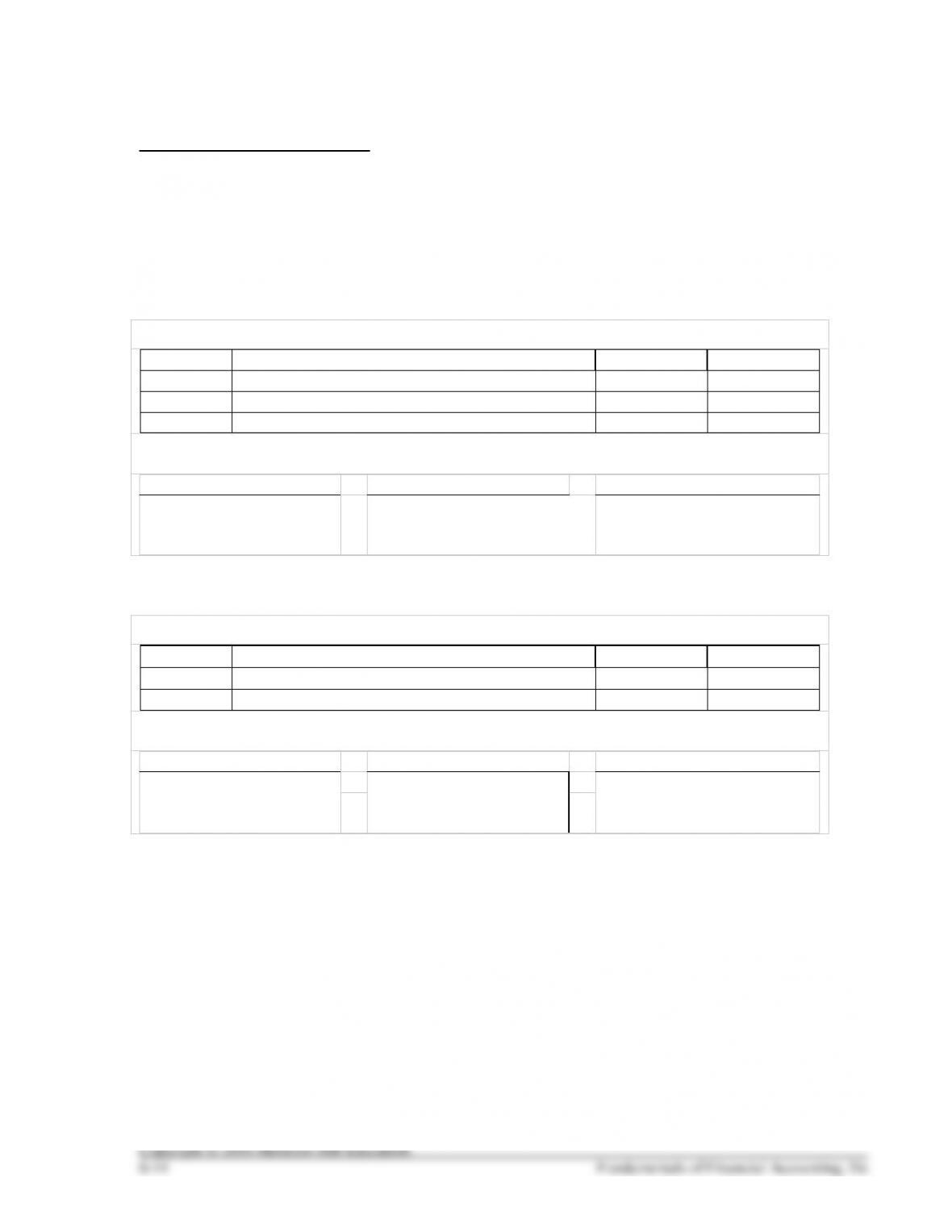
HANDOUT 6–2 SOLUTION
SALES TRANSACTIONS UNDER A PERPETUAL INVENTORY SYSTEM
Gooddeal Inc. uses a perpetual inventory system. The following activities occurred during February 2016.
Prepare a journal entry for ensure that the basic accounting equation balances for each transaction.
On March 3, Gooddeal sold inventory costing $2,000 for $2,500, terms 2/10, n/30.
Debit and credit the accounts affected
Mar. 3
Accounts Receivable
2,500
Sales
2,500
Cost of Goods Sold
2,000
Inventory
2,000
Ensure the equation still balances and debits = credits
Assets
=
Liabilities
+
Stockholders’ Equity
Accounts
+2,500
Sales
+2,500
Receivable
Inventory
–2,000
Cost of
Goods Sold
–2,000
Gooddeal’s customer paid for the merchandise on March 6, taking advantage of the permitted discount.
Debit and credit the accounts affected
Mar. 6
Cash [2,500 × 98%]
2,450
Sales Discounts [2,500 × 2%]
50
Accounts Receivable
2,500
Ensure the equation still balances and debits = credits
Assets
=
Liabilities
+
Stockholders’ Equity
Cash
+2,450
Sales
–50
Accounts
Receivable
–2,500
Discounts