HANDOUT 2–4, continued
(i) Orders a $900 computer, to be delivered in 90 days.
Debit and credit the accounts affected
Ensure the equation still balances and debits = credits
Assets
=
Liabilities
+
Stockholders’ Equity
HANDOUT 2–4 SOLUTION
THE DEBIT/CREDIT FRAMEWORK
(f) Pays $300 to the supplier in (d).
Debit and credit the accounts affected
(f)
Accounts Payable (–L)
300
Cash (–A)
300
Ensure the equation still balances and debits = credits
Assets
=
Liabilities
+
Stockholders’ Equity
Cash
–300
Accounts
Payable
–300
(g) Purchases and pays for $600 of supplies.
Debit and credit the accounts affected
(g)
Supplies (+A)
600
Cash (–A)
600
Ensure the equation still balances and debits = credits
Assets
=
Liabilities
+
Stockholders’ Equity
Supplies
+600
Cash
–600
(h) Purchases and pays for equipment costing $1,000.
Debit and credit the accounts affected
(h)
Equipment (+A)
1,000
Cash (–A)
1,000
Ensure the equation still balances and debits = credits
Assets
=
Liabilities
+
Stockholders’ Equity
Equipment
+1,000
Cash
–1,000
(i) Orders a $900 computer, to be delivered in 90 days.
No entry—this is not a transaction.
HANDOUT 2–5
POSTING TO T-ACCOUNTS
Post the transactions from handouts 2–3 and 2–4 to and then determine the ending balances of each of the
following T-accounts.
Assets
Liabilities
Stockholders’ Equity
+ Cash –
− Accounts Payable +
− Common Stock +
+ Supplies –
− Notes Payable +
− Retained Earnings +
+ Equipment –
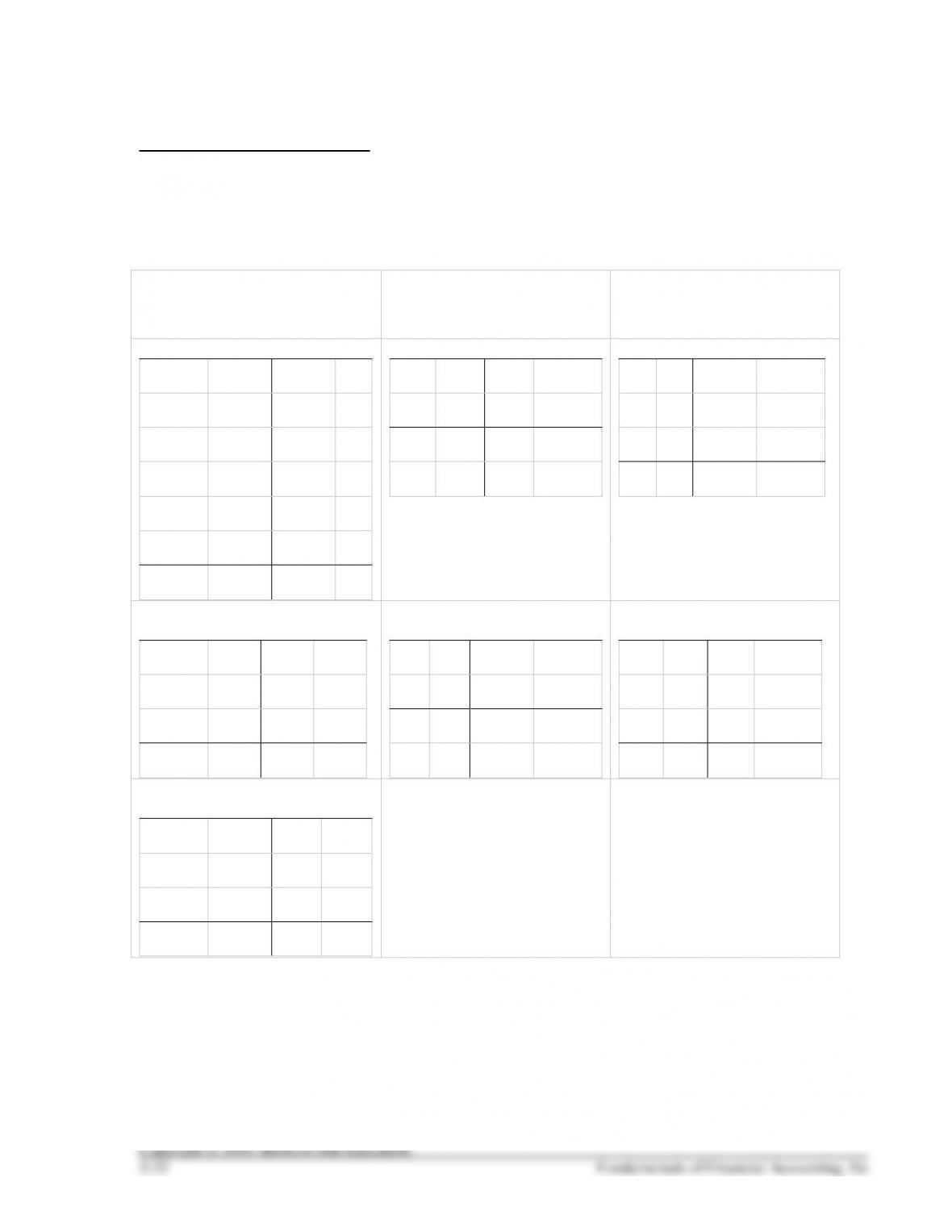
HANDOUT 2–5 SOLUTION
POSTING TO T-ACCOUNTS
Post the transactions from handouts 2–3 and 2–4 to and then determine the ending balances of each of the
following T-accounts.
Assets
Liabilities
Stockholders’ Equity
+ Cash –
BegBal
0
(a)
10,000
(b)
15,000
20,000
(c)
300
(f)
600
(g)
1,000
(h)
EndBal
3,100
− Accounts Payable +
0
BegBal
(f)
300
300
(d)
0
EndBal
− Common Stock +
0
BegBal
10,000
(a)
10,000
EndBal
+ Supplies –
BegBal
0
(d)
300
(g)
600
EndBal
900
− Notes Payable +
0
BegBal
15,000
(b)
15,000
EndBal
− Retained Earnings +
0
BegBal
0
EndBal
+ Equipment –
BegBal
0
(c)
20,000
(h)
1,000
EndBal
21,000
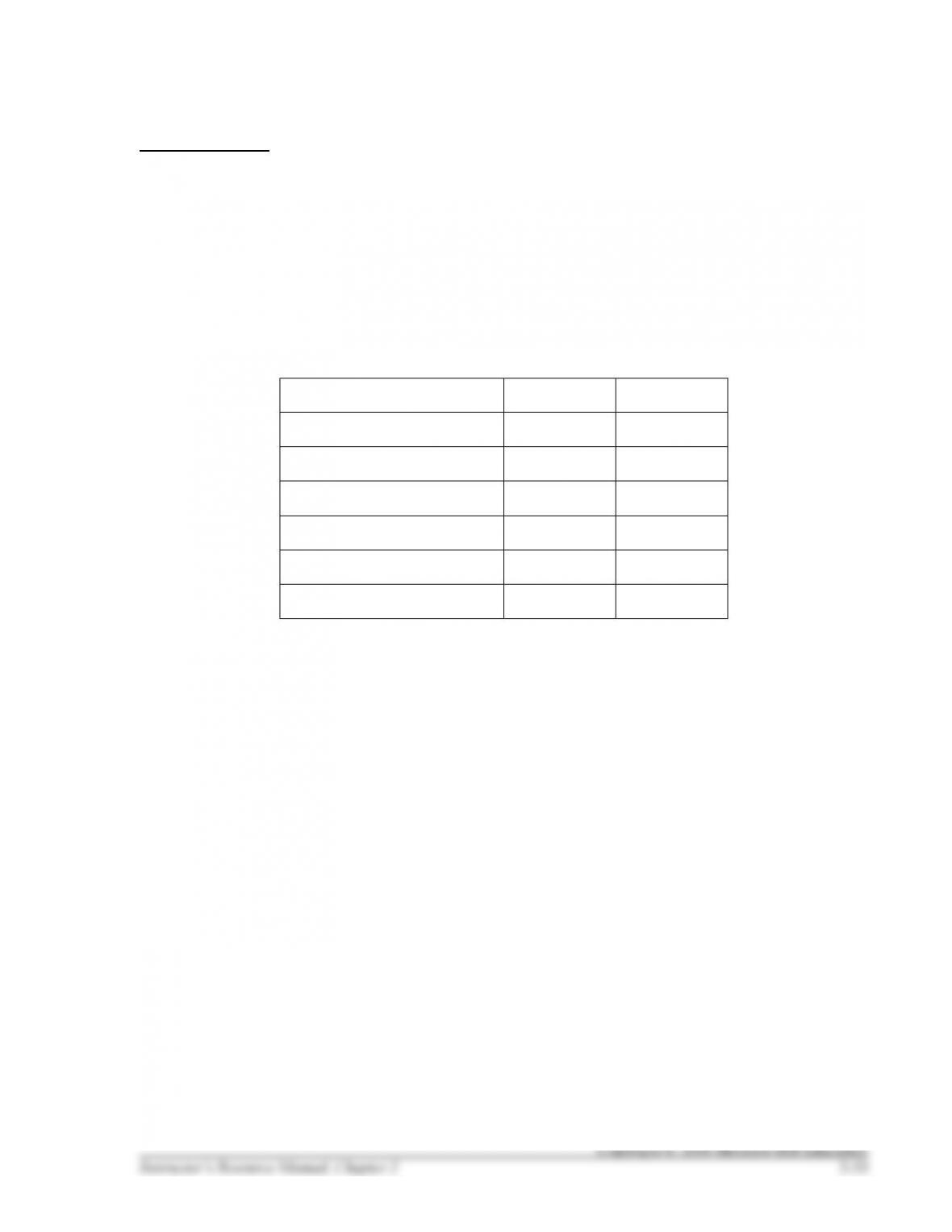
HANDOUT 2–6
PREPARING A TRIAL BALANCE AND A BALANCE SHEET
Use the ending balances from the T-accounts on Handout 2–5 to prepare a trial balance. Assume a year-
end of December 31, 2016.
World Wide Webster
Trial Balance
At December 31, 2016
Debit
Credit
Cash
Supplies
Equipment
Notes Payable
Common Stock
Retained Earnings
Totals
Use the trial balance to prepare a classified balance sheet.

HANDOUT 2–6 SOLUTION
PREPARING A TRIAL BALANCE AND A BALANCE SHEET
Use the ending balances from the T-accounts on Handout 2–5 to prepare a trial balance. Assume a year-
end of December 31, 2016.
World Wide Webster
Trial Balance
At December 31, 2016
Debit
Credit
Cash
$ 3,100
Supplies
900
Equipment
21,000
Notes Payable
$15,000
Common Stock
10,000
Retained Earnings
0
Totals
$25,000
$25,000
Use the trial balance to prepare a classified balance sheet.
World Wide Webster
Balance Sheet
At December 31, 2016
Assets
Current Assets:
Cash
$ 3,100
Supplies
900
Total Current Assets
4,000
Equipment
21,000
Total Assets
$25,000
Liabilities
Current Liabilities:
Notes Payable
$15,000
Total Current Liabilities
15,000
Stockholders’ Equity
Common Stock
10,000
Retained Earnings
0
Total Stockholders’ Equity
10,000
Total Liabilities and Stockholders’ Equity
$25,000

HANDOUT 2–7
CURRENT RATIO
Refer to the classified balance sheet from Handout 2–6 and calculate the current ratio of World Wide
Webster as of December 31, 2016. Then, interpret the current ratio.
Calculation:
Interpretation:

HANDOUT 2–7 SOLUTION
CURRENT RATIO
Refer to the classified balance sheet from Handout 2–6 and calculate the current ratio of World Wide
Webster as of December 31, 2016. Then, interpret the current ratio.
Calculation:
Current ratio = Current assets ÷ Current liabilities
Current ratio = $4,000 ÷ $15,000 = 0.27
Interpretation:
A current ratio of 0.27 indicates that the company has $0.27 of current assets for $1.00 of current
liabilities as of December 31, 2016. It does not appear that the company’s current assets are sufficient to
pay its current liabilities.