Chapter 11
1. A corporation is a separate legal entity (authorized by law to operate as if it were an
individual). It is owned by a number of persons and/or entities whose ownership is
2. The advantages of equity financing are (1) equity does not have to be repaid,
whereas debt must be repaid or refinanced and (2) dividends are optional, but
3. General Motors might have proposed the exchange of debt for equity to gain more
flexibility in its future cash outflows. Debt typically requires periodic payment of
interest until its mandatory principal repayment at maturity. On the other hand,
4. (a) Authorized Common Stock—the maximum number of shares of stock that can
be sold and issued as specified in the charter of the corporation.
5. Common Stock—the usual or normal stock of the corporation. It is the voting stock
and generally ranks after the preferred stock for dividends and assets distributed
upon dissolution. Often it is called the residual equity. Common Stock may be either
6. Par value is a nominal per share amount established for the common stock and/or
7. The usual characteristics of preferred stock are:
(1) Preferred stock allows different voting rights. It can carry anywhere from no
(2) Lower risk for preferred stock. Generally, preferred stock is less risky than
common stock because holders receive priority when dividends are paid and, if
(3) Preferred stock typically has a fixed dividend rate. For example, “6 percent
preferred stock, par value $10 per share” pays an annual dividend of 6 percent
8. Accumulated Other Comprehensive Income (Loss) is an account used to report
9. Treasury stock is a corporation’s own capital stock that was sold (issued) and later
reacquired by the corporation. Corporations frequently purchase shares of their own
10. Treasury stock is reported on the balance sheet in stockholders’ equity as a contra-
equity account, which is deducted from total stockholders’ equity. Any gain (or loss)
11. The two basic requirements to support a cash dividend are: (1) cash on hand or the
ability to obtain cash sufficient to pay the dividend and (2) a sufficient balance in
12. Cumulative preferred stock has a dividend preference such that, should the
dividends on the preferred stock for any year, or series of years, not be paid,
13. A stock dividend involves the issuance to the stockholders of a dividend in the
corporation’s own stock (rather than cash). A stock dividend is significantly different
14. The primary reasons for issuing a stock dividend are: (1) it reduces the market price
15. Both a stock dividend and a stock split increase the number of shares outstanding,
which decreases the market price per share. Thus, both moves achieve the goal of
16. When a dividend is declared and paid, four important dates are:
Declaration date—the date on which the board of directors votes the dividend. In
the case of a cash dividend, on this date a dividend liability comes into existence
and must be recorded as a debit to Dividends (which is later closed to Retained
17. The two reasons the basic EPS number is so popular are:
(1) Current earnings can predict future dividends and stock prices. If a company
18. Stock repurchases cause a decrease in the number of outstanding shares as well
equal).

19. Generally, a relatively high P/E ratio means investors expect the company to
20. Under IFRS, preferred stock is classified as debt if it imposes a fixed obligation on
the issuing company. Thus, if the company were to offer a fixed annual dividend
rate on its preferred stock, the company would have to classify the preferred stock
as a liability. This would have the effect of increasing liabilities, which increases
(rather than decreases) the debt-to-assets ratio. Alternatively, an annually
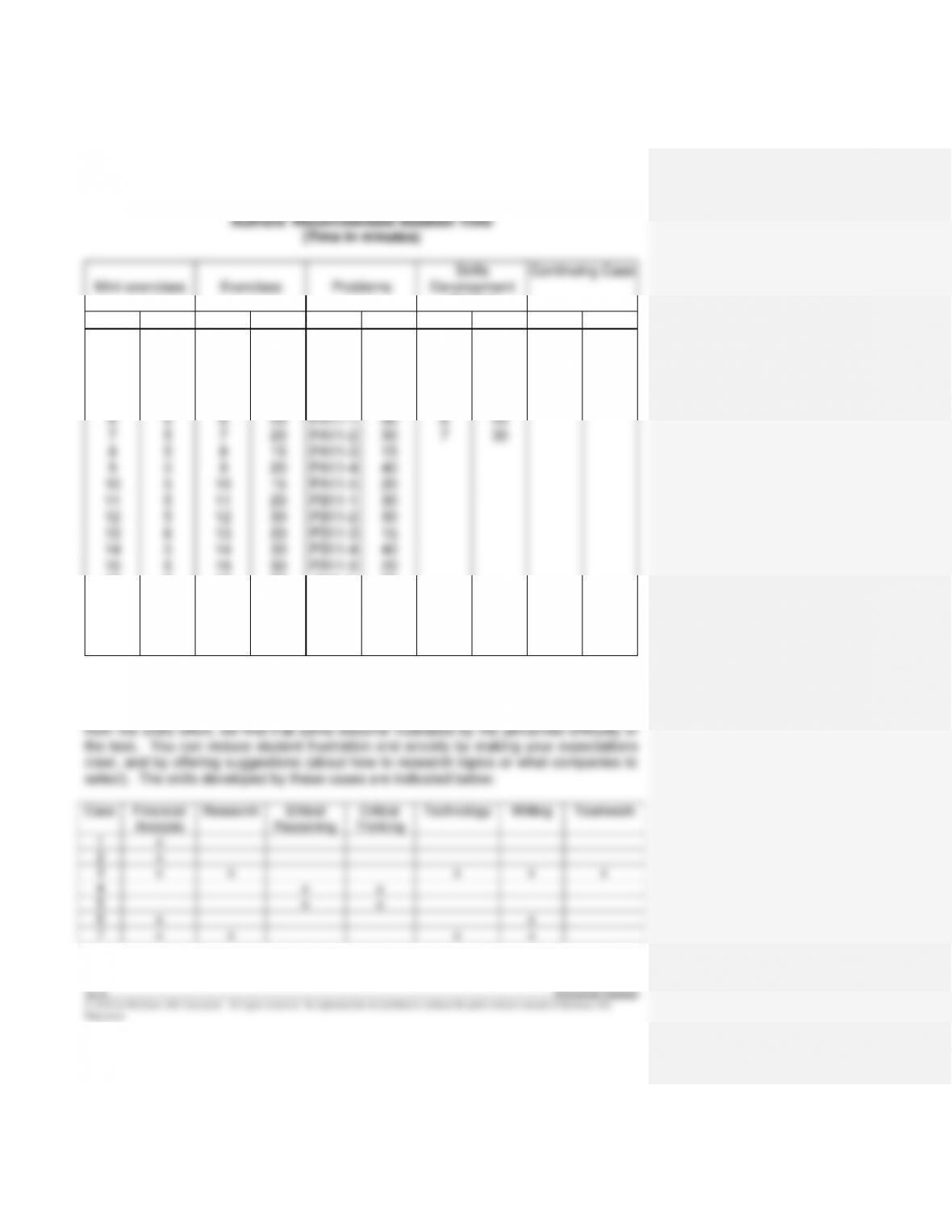
Authors’ Recommended Solution Time
(Time in minutes)
Mini-exercises
Exercises
Problems
Skills
Development
Cases*
Continuing Case
No.
Time
No.
Time
No.
Time
No.
Time
No.
Time
1
4
1
10
CP11-1
30
1
20
1
15
2
5
2
20
CP11-2
30
2
20
2
3
3
5
3
25
CP11-3
15
3
30
4
5
4
25
CP11-4
40
4
25
5
5
5
25
CP11-5
20
5
25
6
5
6
20
PA11-1
30
6
20
7
5
7
20
PA11-2
30
7
30
8
5
8
15
PA11-3
15
9
5
9
20
PA11-4
40
10
5
10
15
PA11-5
20
11
5
11
20
PB11-1
30
12
5
12
30
PB11-2
30
13
6
13
20
PB11-3
15
14
5
14
30
PB11-4
40
15
5
15
30
PB11-5
20
16
5
16
30
C11-1
35
17
30
C11-2
90
18
30
19
30
* Due to the nature of cases, it is very difficult to estimate the amount of time students
will need to complete them. As with any open-ended project, it is possible for students
to devote a large amount of time to these assignments. While students often benefit
ANSWERS TO MINI-EXERCISES
M11–1
2. E; the discretionary nature of dividends makes equity more favorable
4. E; to existing stockholders, the dilution of control from new stock issuances
makes equity less favorable (to them) than debt
M11–2
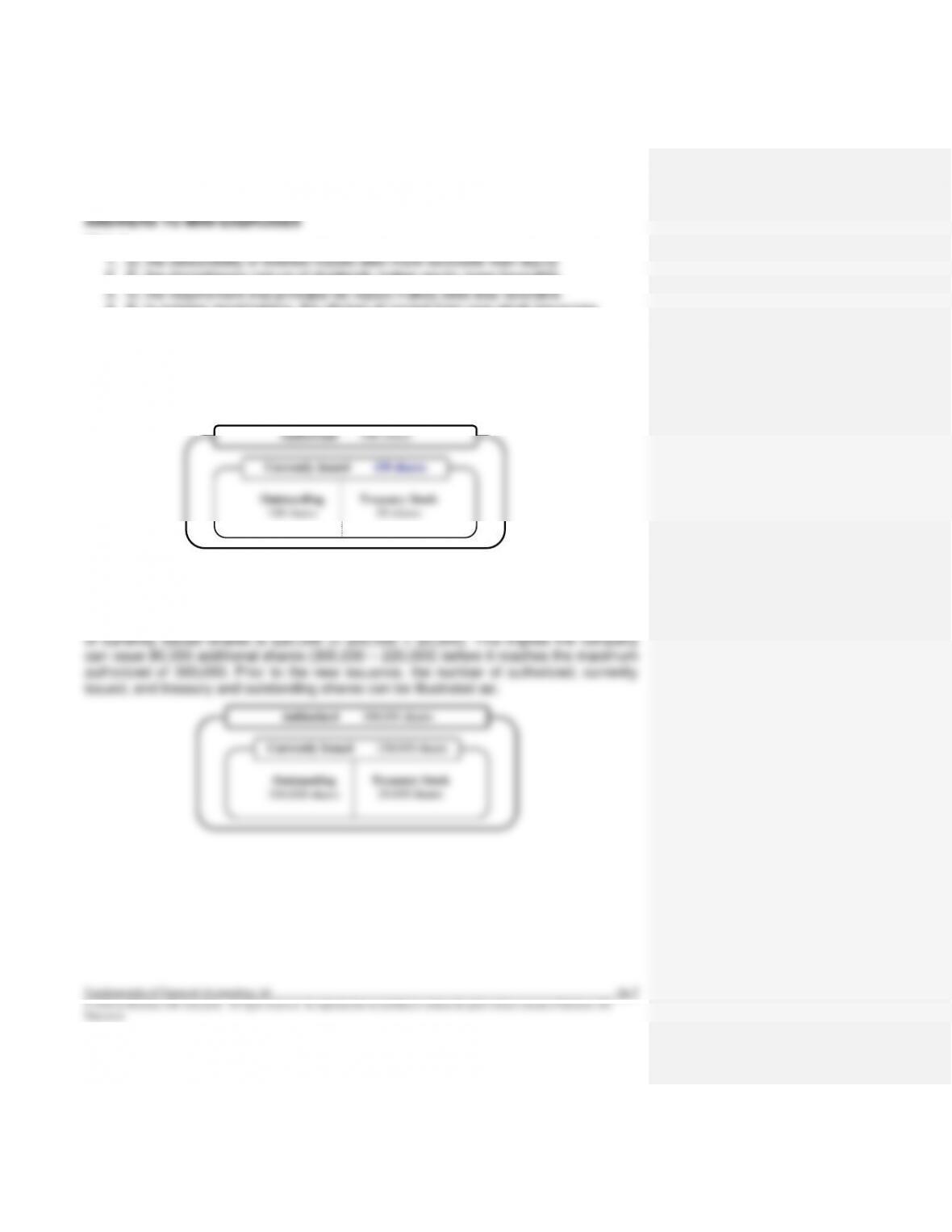
Issued shares include those that are outstanding (100) and held in treasury (50), so the
total issued is 150.
M11–3
The number of issued shares cannot exceed the number authorized. The number
authorized is given in the exercise (300,000). Currently issued shares consist of those
outstanding with investors (200,000) and those in treasury (20,000). Thus, the number
50 shares
100 shares
M11–4
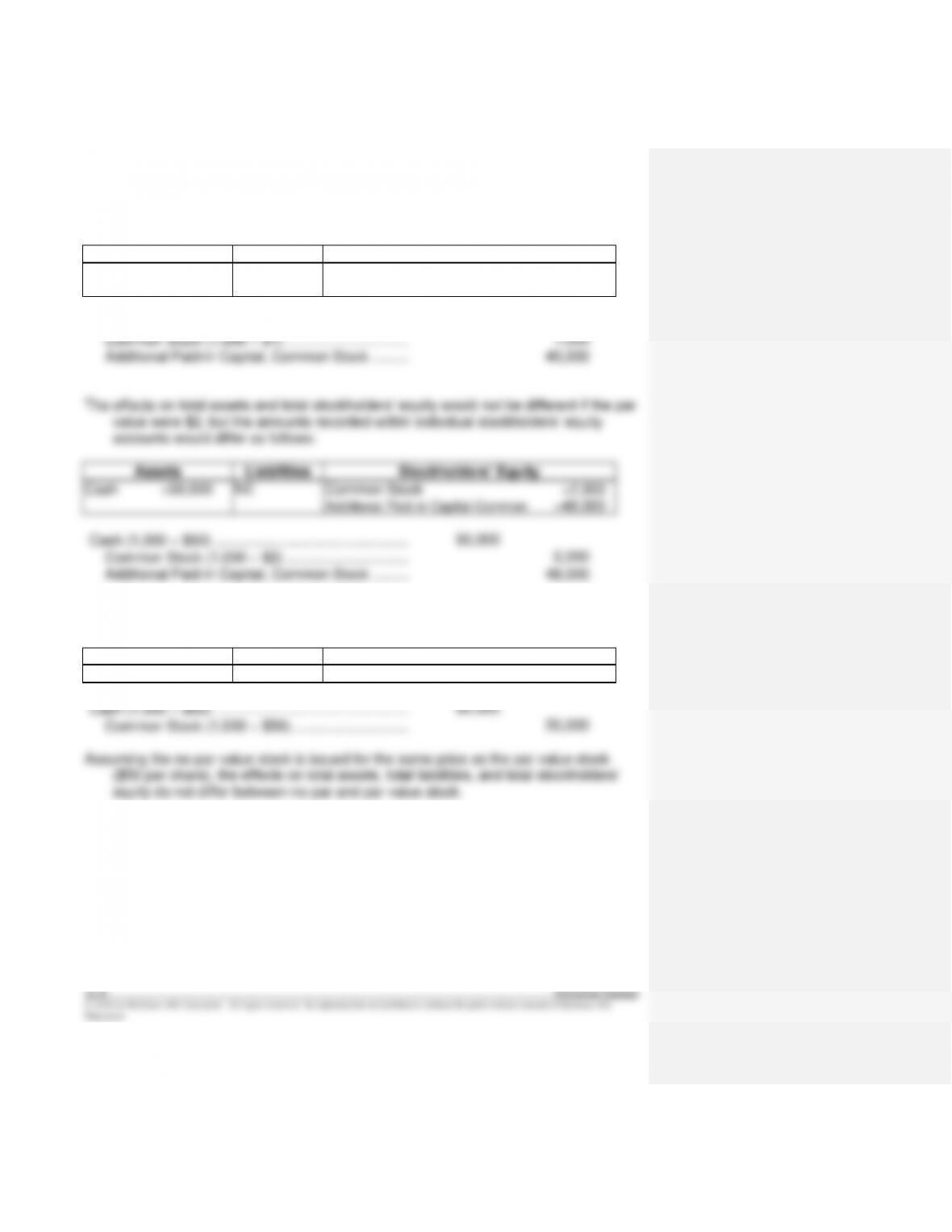
Assets
Liabilities
Stockholders’ Equity
Cash +50,000
NE
Common Stock +1,000
Additional Paid-in Capital +49,000
Cash (1,000 $50) …………………………………………..…………
50,000
Common Stock (1,000 $1) …………………………..
1,000
Additional Paid-in Capital, Common Stock ……….…………
49,000
The effects on total assets and total stockholders’ equity would not be different if the par
value were $2, but the amounts recorded within individual stockholders’ equity
accounts would differ as follows:
Assets
Liabilities
Stockholders’ Equity
Cash +50,000
NE
Common Stock +2,000
Additional Paid-in Capital-Common +48,000
Cash (1,000 $50) …………………………..…………………………
50,000
Common Stock (1,000 $2) …………………………..
2,000
Additional Paid-in Capital, Common Stock ……….…………
48,000
M11–5
Assets
Liabilities
Stockholders’ Equity
Cash +50,000
NE
Common Stock +50,000
Cash (1,000 $50) …………………………..…………………………
50,000
Common Stock (1,000 $50) …………………………..
50,000
Assuming the no-par value stock is issued for the same price as the par value stock
($50 per share), the effects on total assets, total liabilities, and total stockholders’
equity do not differ between no-par and par value stock.
M11–6
M11–7
M11–8
May 20:
Dividends (500,000 x 0.50) ………………………………..…………
250,000
Dividends Payable ……………………………………….…………
250,000
June 14:
250,000
250,000
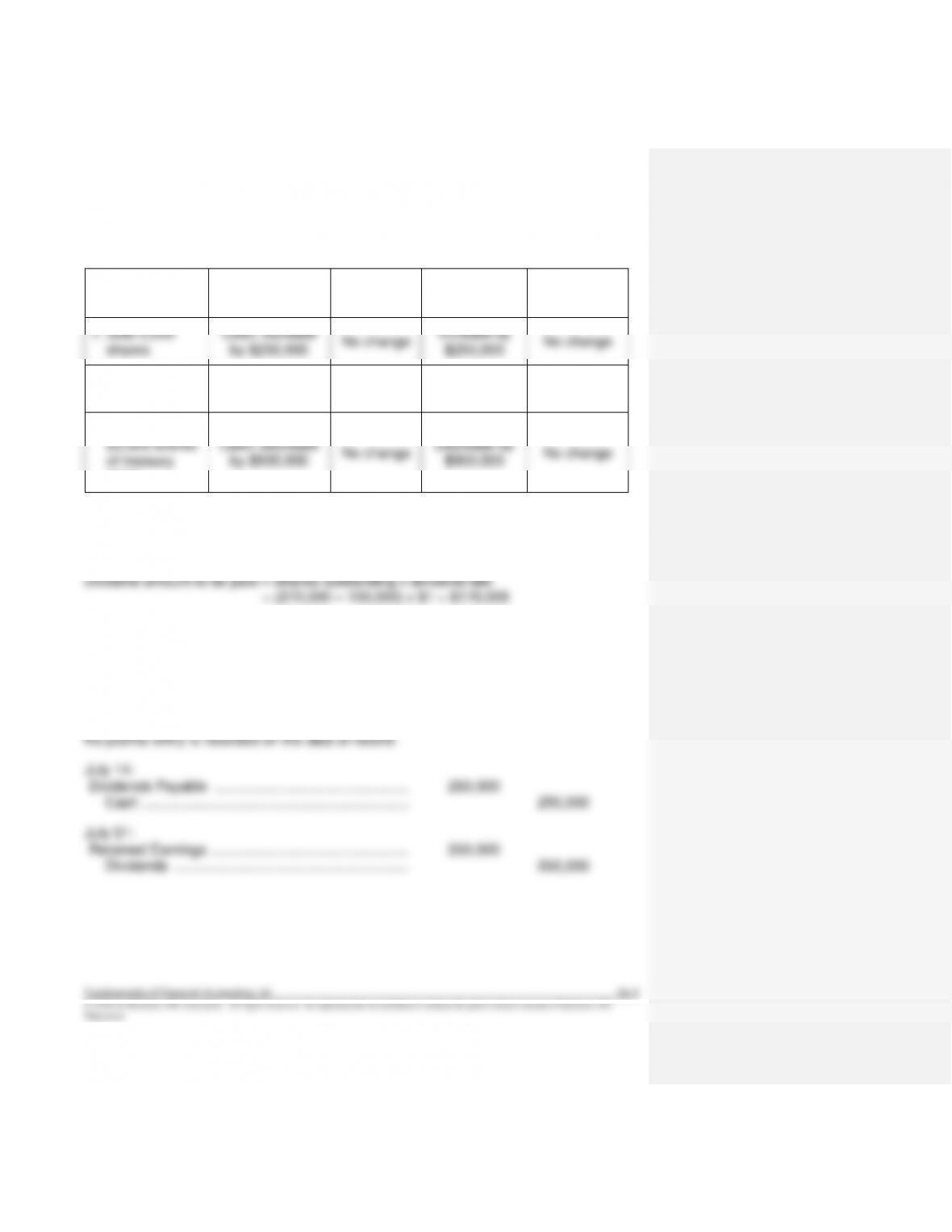
Total
Assets
Total
Liabilities
Total
Stockholders’
Equity
Net
Income
1. Sold 5,000
shares
Cash: increase
by $250,000
No change
Increase by
$250,000
No change
2. Sold 10,000
shares
Cash: increase
by $370,000
No change
Increase by
$370,000
No change
3. Purchased
20,000 shares
of treasury
stock
Cash: decrease
by $900,000
No change
Decrease by
$900,000
No change
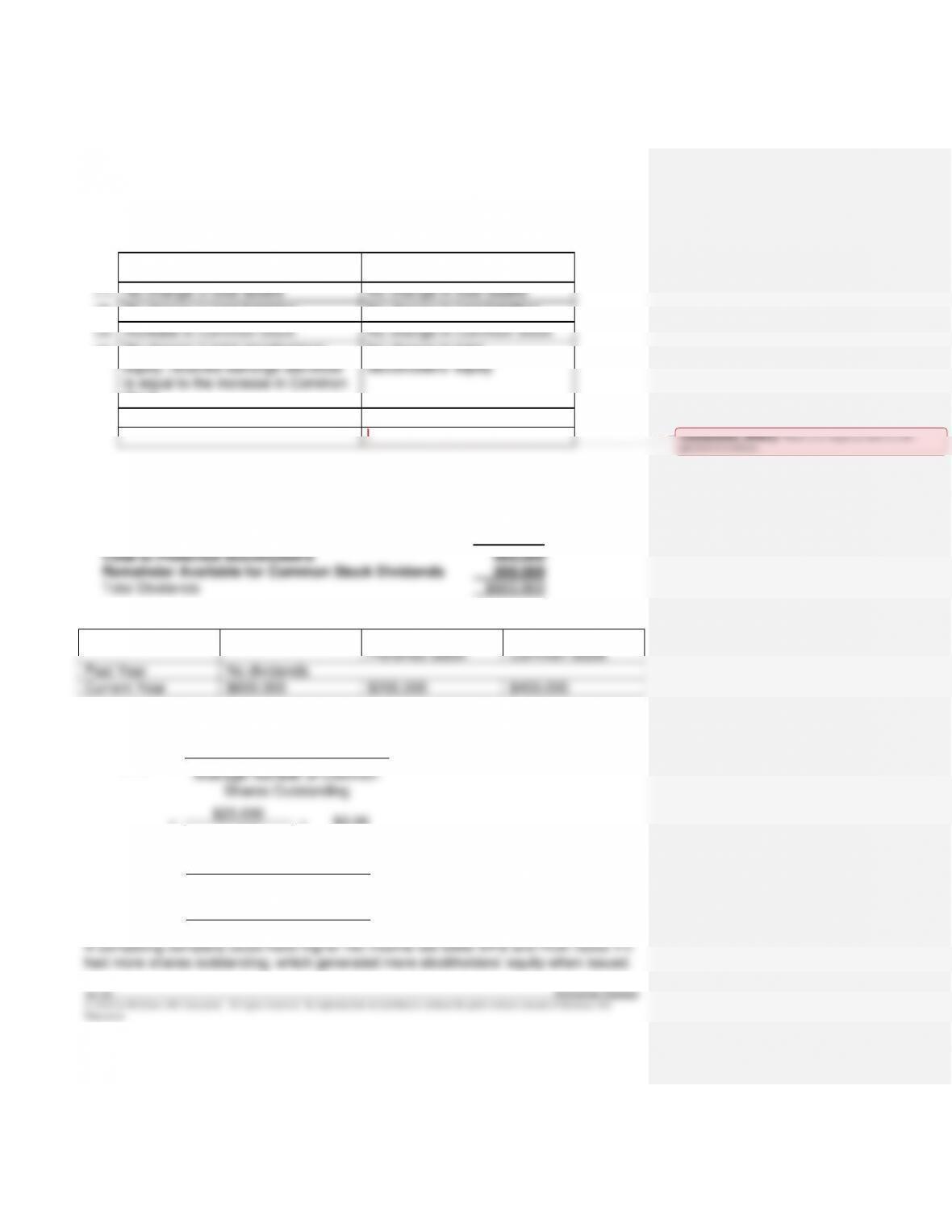
M11–9
M11–10
Stock Dividend
Stock Split
(1)
No change in total assets
No change in total assets
(2)
No change in total liabilities
No change in total liabilities
(3)
Increase in Common Stock
No change in Common Stock
(4)
No change in total stockholders’
equity: retained earnings decrease
is equal to the increase in Common
Stock.
No change in total
stockholders’ equity
(5)
Decrease in market value
Decrease in market value
M11–11
Past Year
100,000 shares $2
=
$ 200,000
Current Year
100,000 shares $2
=
200,000
Total to Preferred Stockholders
400,000
Remainder Available for Common Stock Dividends
200,000
Total Dividends
$600,000
M11–12
Year
Total Dividends
Dividends on $2
Preferred Stock
Dividends on
Common Stock
Past Year
No dividends
Current Year
$600,000
$200,000
$400,000
M11–13
EPS
=
Net Income
Average Number of Common
Shares Outstanding
=
$23,000
=
$2.00
11,500
ROE
=
Net Income
Average Stockholders’ Equity
=
$23,000
=
10.0%
(240,000 + 220,000) ÷ 2
Commented [JPW1]: There is no longer an item 6 to this
problem in textbook.