HANDOUT 10–1 SOLUTION
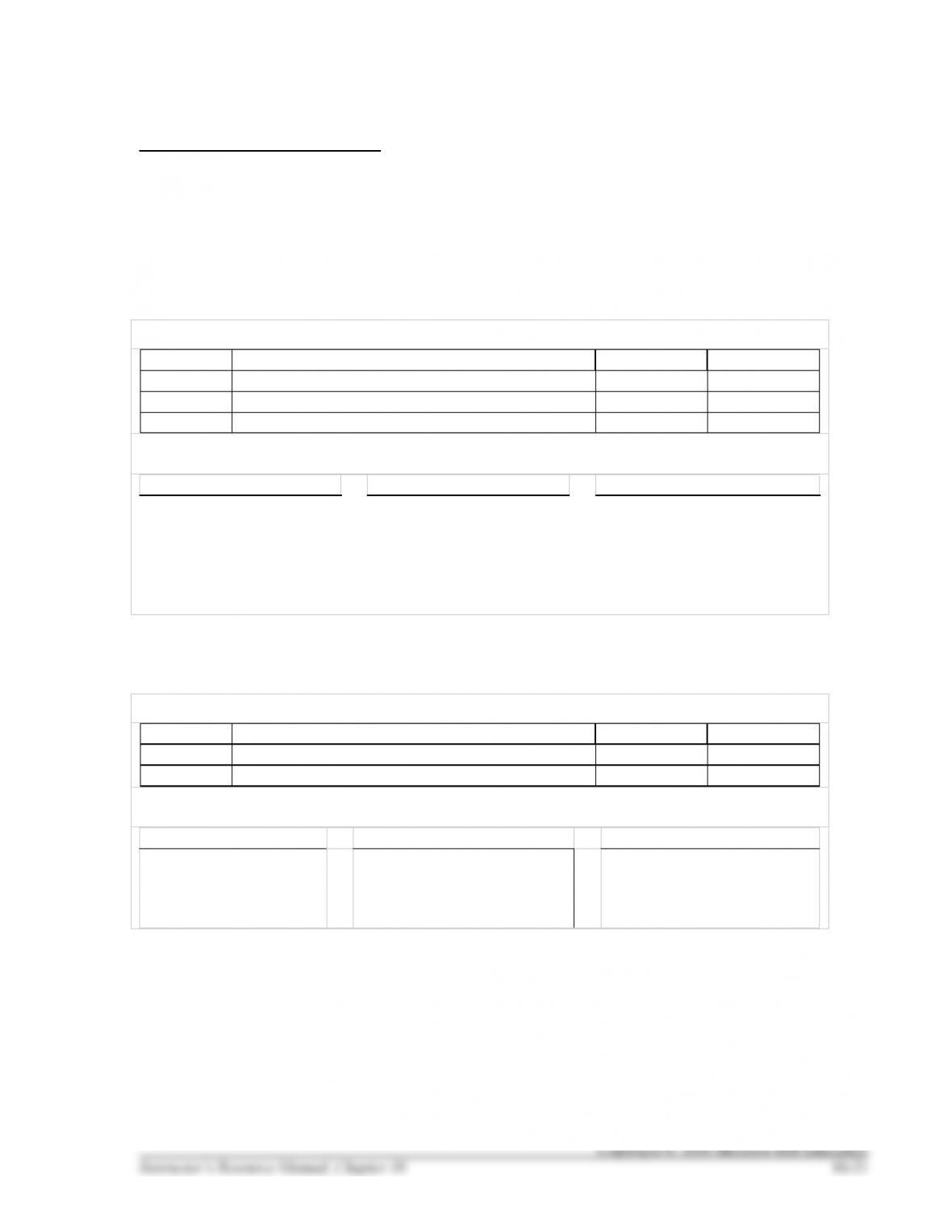
PAYROLL ENTRIES
J&W Buffet Co. employees earned $350,000 in the week ended December 17, 2016. Of this, $26,775 was
withheld from employees’ pay for FICA and $62,000 for income taxes. The net pay was directly
deposited into the employees’ bank accounts. The company must pay $1,200 for unemployment taxes.
Prepare the journal entry to record the employees’ portion of payroll for December 17, 2016.
Debit and credit the accounts affected
Dec. 17
Salaries and Wages Expense
350,000
2016
Withheld Income Taxes Payable
62,000
FICA Payable
26,775
Cash
261,225
Ensure the equation still balances and debits = credits
Assets
=
Liabilities
+
Stockholders’ Equity
Cash
–261,225
Withheld
Income
Taxes
Payable
+62,000
Salaries and
Wages
Expense
–350,000
FICA
Payable
+26,775
Prepare the journal entry to record the employer’s share of FICA payroll taxes for December 17, 2016.
Debit and credit the accounts affected
Dec. 17
Payroll Tax Expense
27.975
2016
FICA Payable
26,775
Unemployment Tax Payable
1,200
Ensure the equation still balances and debits = credits
Assets
=
Liabilities
+
Stockholders’ Equity
FICA
Payable
Unemployment
Tax Payable
+26,775
+1,200
Salaries and
Wages
Expense
–27,975
HANDOUT 10–2
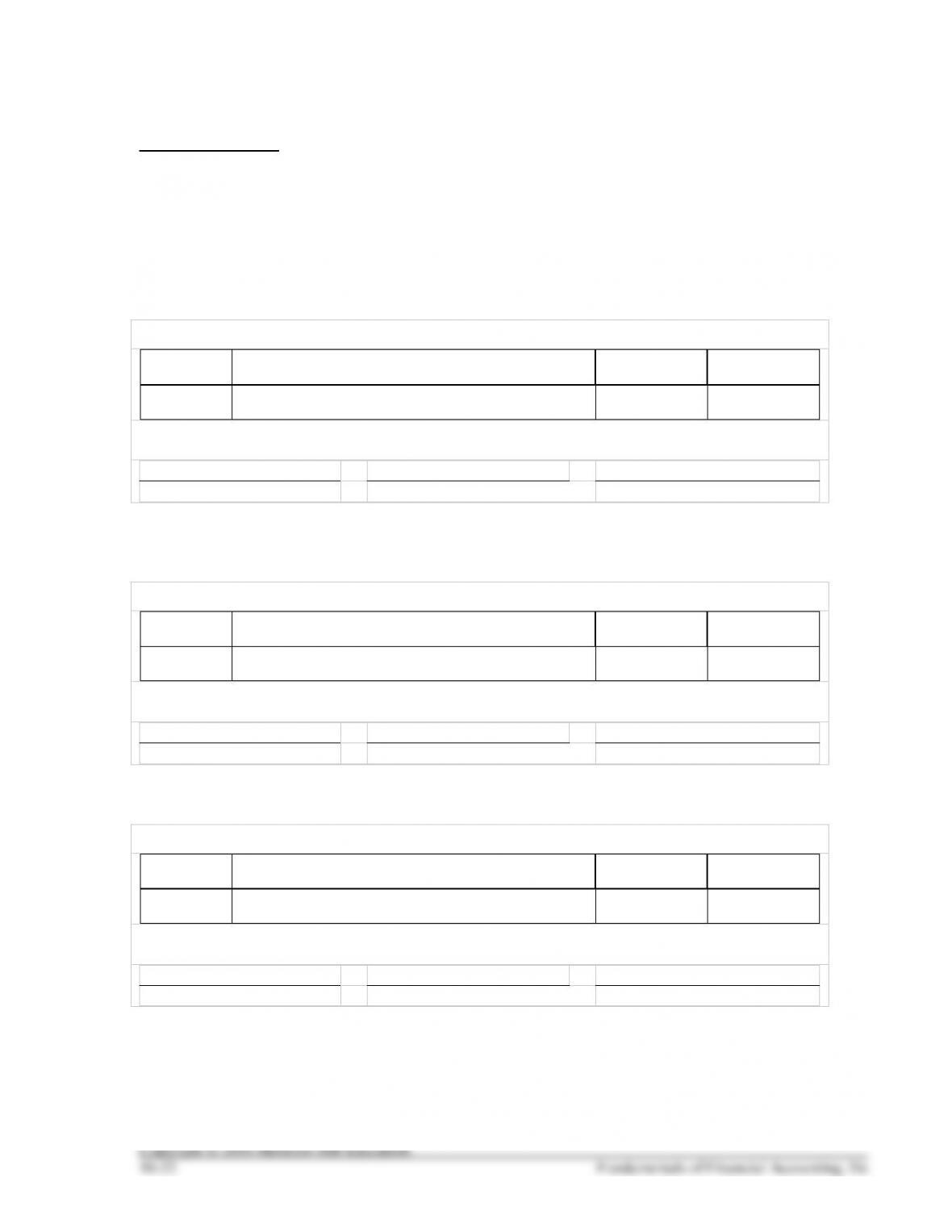
NOTES PAYABLE
Mumford Co. borrowed a $100,000 note payable on June 1, 2016, with 6% interest. The note is due on
May 31, 2017.
Prepare the journal entry to record the issuance of the note and receipt of cash on June 1, 2016.
Debit and credit the accounts affected
Ensure the equation still balances and debits = credits
Assets
=
Liabilities
+
Stockholders’ Equity
Prepare the adjusting journal entry to record the interest owed at the end of the accounting period on
December 31, 2016.
Debit and credit the accounts affected
Ensure the equation still balances and debits = credits
Assets
=
Liabilities
+
Stockholders’ Equity
Prepare the journal entries to record the interest and principal payments to the lender on May 31, 2017.
Debit and credit the accounts affected
Ensure the equation still balances and debits = credits
Assets
=
Liabilities
+
Stockholders’ Equity
HANDOUT 10–2 SOLUTION
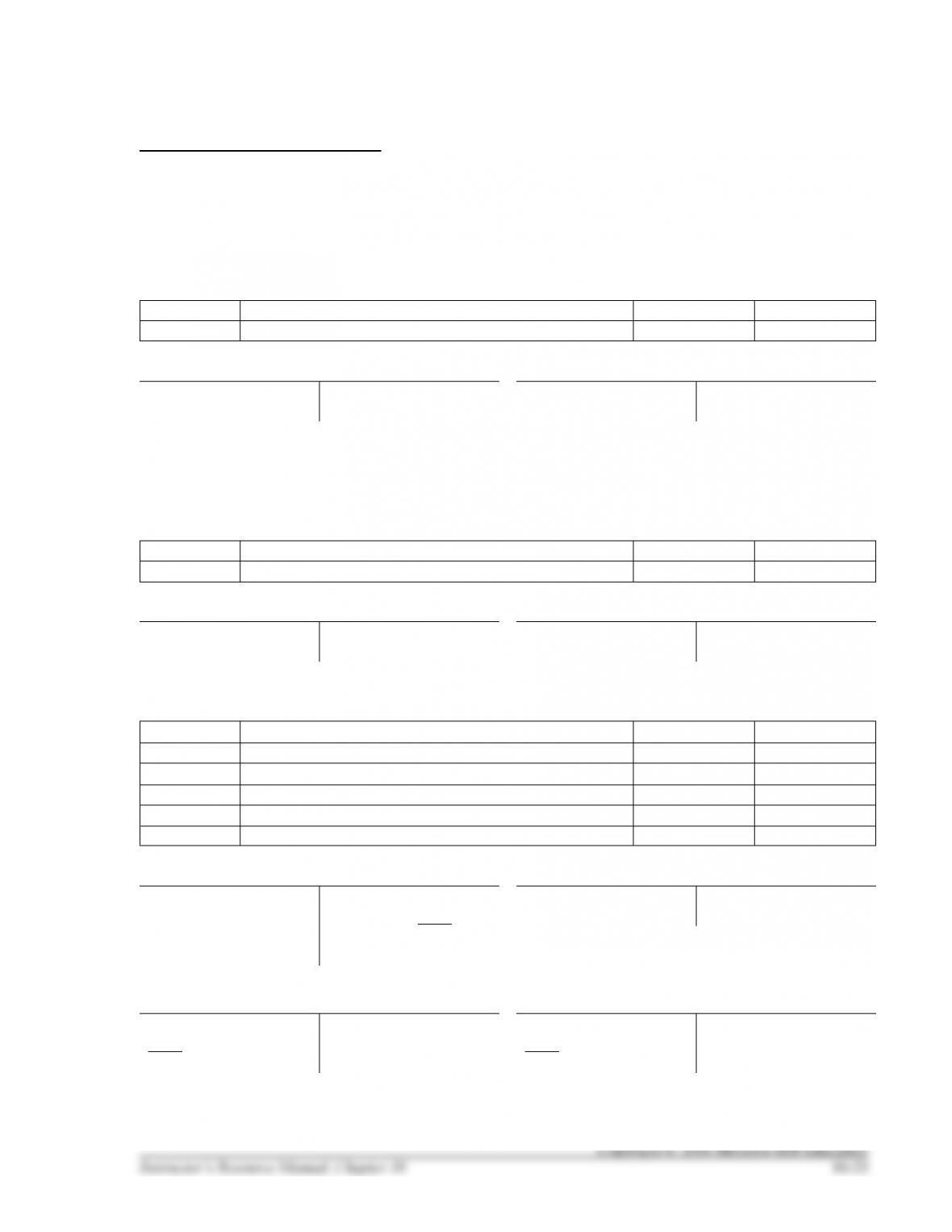
NOTES PAYBLE
Mumford Co. borrowed a $100,000 note payable on June 1, 2016, with 6% interest. The note is due on
May 31, 2011.
Prepare the journal entry to record the issuance of the note and receipt of cash on June 1, 2016.
June 1
Cash
100,000
2016
Note Payable
100,000
+ Cash (A) –
June 1
100,000
– Note Payable (L) +
100,000
June 1
Prepare the adjusting journal entry to record the interest owed at the end of the accounting period on
December 31, 2016.
Principal × Rate × Time Period = 100,000 × 6% × 7/12 = $3,500
Dec. 31
Interest Expense
3,500
2016
Interest Payable
3,500
– Interest Payable (L) +
3,500
Dec. 31
+ Interest Expense (E) –
Dec. 31
3,500
Prepare the journal entries to record the interest and principal payments to the lender on May 31, 2017.
May. 31
Interest Expense (100,000 × 6% × 5/12)
2,500
2017
Interest Payable
3,500
Cash (100,000 × 6% × 12/12)
6,000
May 31
Note Payable
100,000
2017
Cash
100,000
+ Cash (A) –
June 1
100,000
2011
6,000
May 31
100,000
May 31
+ Interest Expense (E) –
May 31
2,500
– Interest Payable (L) +
3,500
Dec. 31
2011
May 31
3,500
– Note Payable (L) +
100,000
June 1
2011
May 31
100,000
HANDOUT 10–3
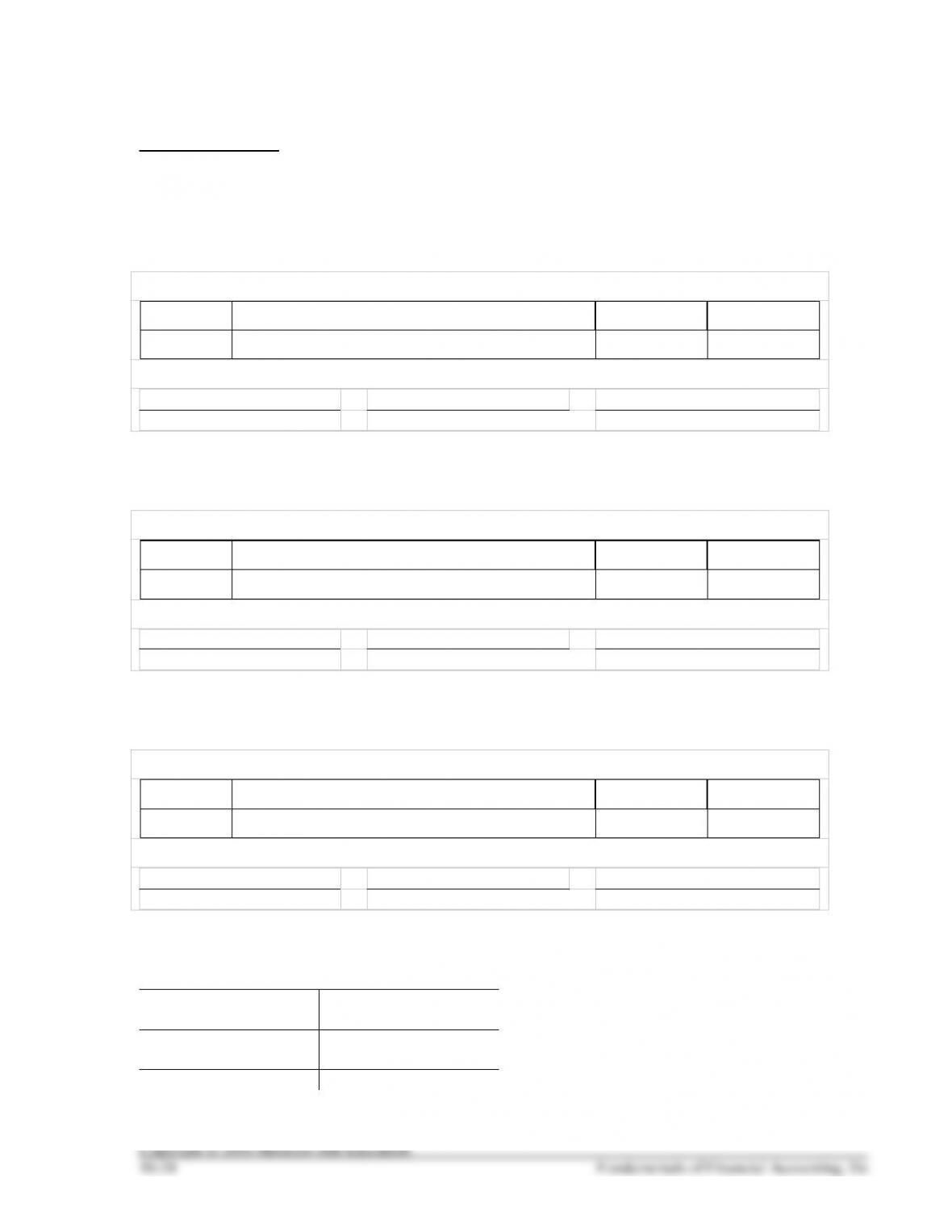
UNEARNED REVENUE
On January 1, 2017, Charlie Rangel paid $2,000 for a two–year membership to the Beam Gym.
Prepare the journal entry to record the receipt of cash on January 1, 2017.
Debit and credit the accounts affected
Ensure the equation still balances and debits = credits
Assets
=
Liabilities
+
Stockholders’ Equity
By December 31, 2017, one half of Rangel’s membership expired. Prepare the required adjusting journal
entry on that date.
Debit and credit the accounts affected
Ensure the equation still balances and debits = credits
Assets
=
Liabilities
+
Stockholders’ Equity
By December 31, 2018, the remainder of Rangel’s membership expired. Prepare the required adjusting
journal entry on that date.
Debit and credit the accounts affected
Ensure the equation still balances and debits = credits
Assets
=
Liabilities
+
Stockholders’ Equity
Post the entries above to the Unearned Revenue account:
– Unearned Revenue (L) +
1/1/17
12/31/17
End Bal.
12/31/18
End Bal.
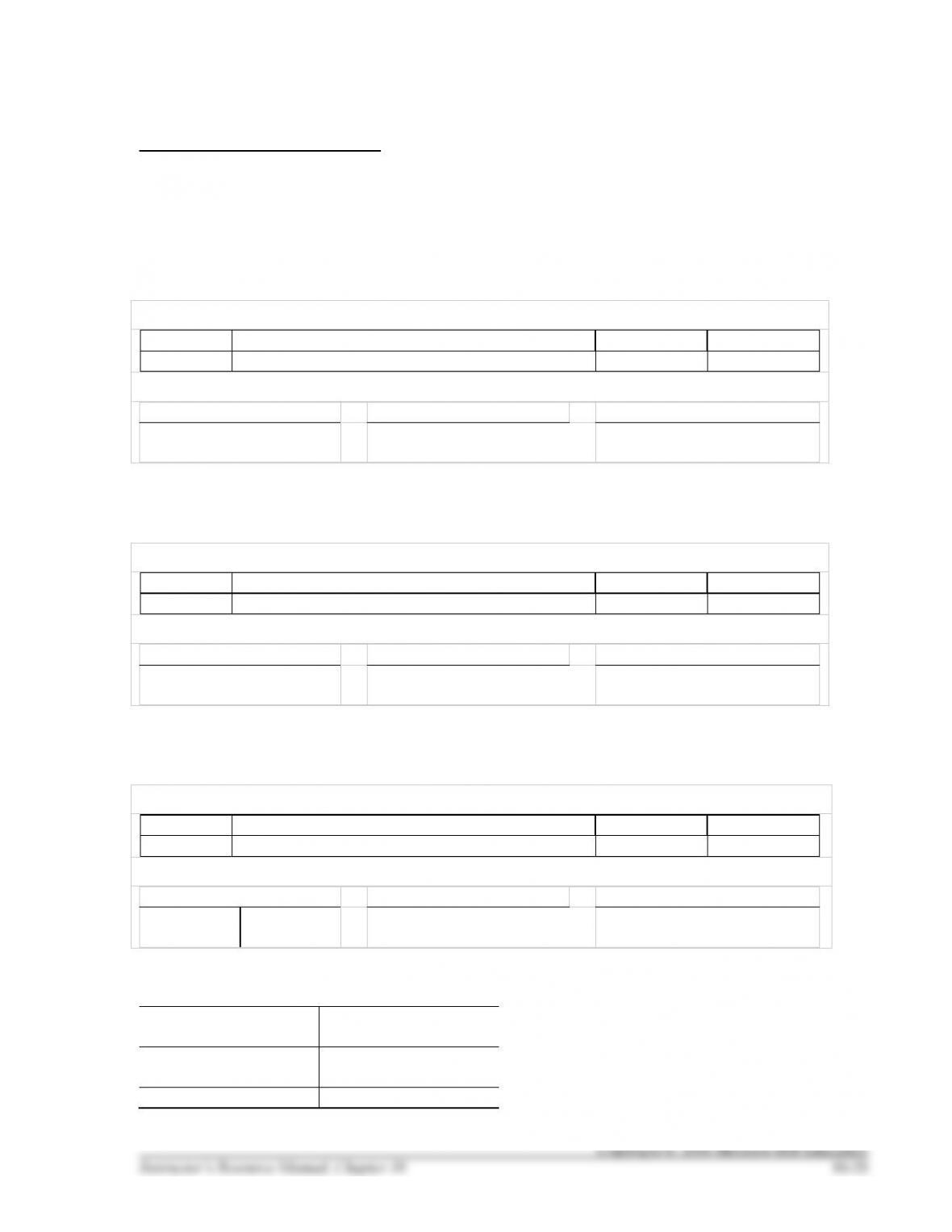
HANDOUT 10–3 SOLUTION
UNEARNED REVENUE
On January 1, 2017, Charlie Rangel paid $2,000 for a two–year membership to the Beam Gym.
Prepare the journal entry to record the receipt of cash on January 1, 2017.
Debit and credit the accounts affected
Jan. 1
Cash
2,000
2017
Unearned Revenue
2,000
Ensure the equation still balances and debits = credits
Assets
=
Liabilities
+
Stockholders’ Equity
Cash
+2,000
Unearned
Revenue
+2,000
By December 31, 2017, one half of Rangel’s membership expired. Prepare the required adjusting journal
entry on that date.
Debit and credit the accounts affected
Dec. 31
Unearned Revenue
1,000
2017
Service Revenue
1,000
Ensure the equation still balances and debits = credits
Assets
=
Liabilities
+
Stockholders’ Equity
Unearned
Revenue
–1,000
Service
Revenue
+1,000
By December 31, 2018, the remainder of Rangel’s membership expired. Prepare the required adjusting
journal entry on that date.
Debit and credit the accounts affected
Dec. 31
Unearned Revenue
1,000
2018
Service Revenue
1,000
Ensure the equation still balances and debits = credits
Assets
=
Liabilities
+
Stockholders’ Equity
Unearned
Revenue
–1,000
Service
Revenue
+1,000
Post the entries above to the Unearned Revenue account:
– Unearned Revenue (L) +
2,000
1/1/17
12/31/17
1,000
1,000
End Bal
12/31/18
1,000
0
End Bal
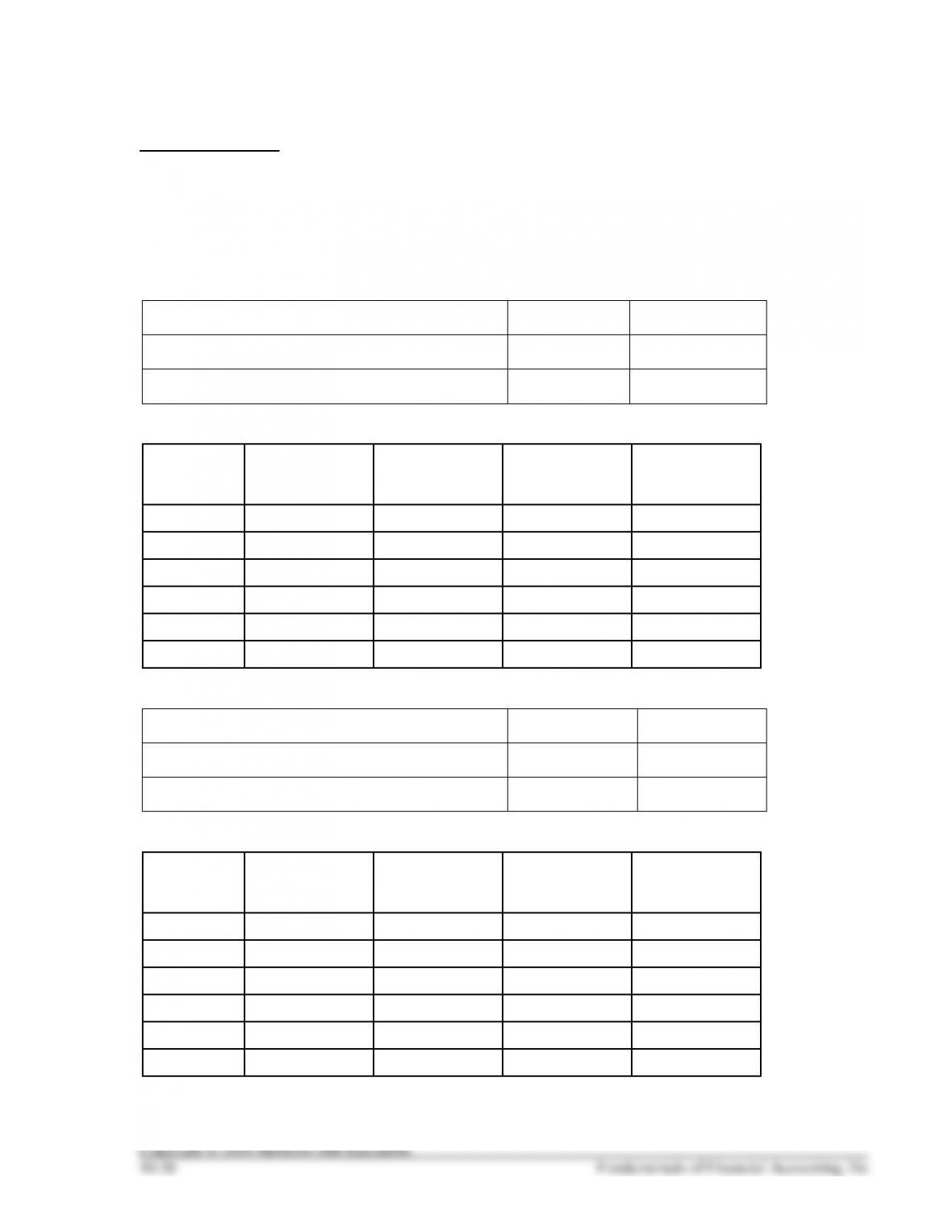
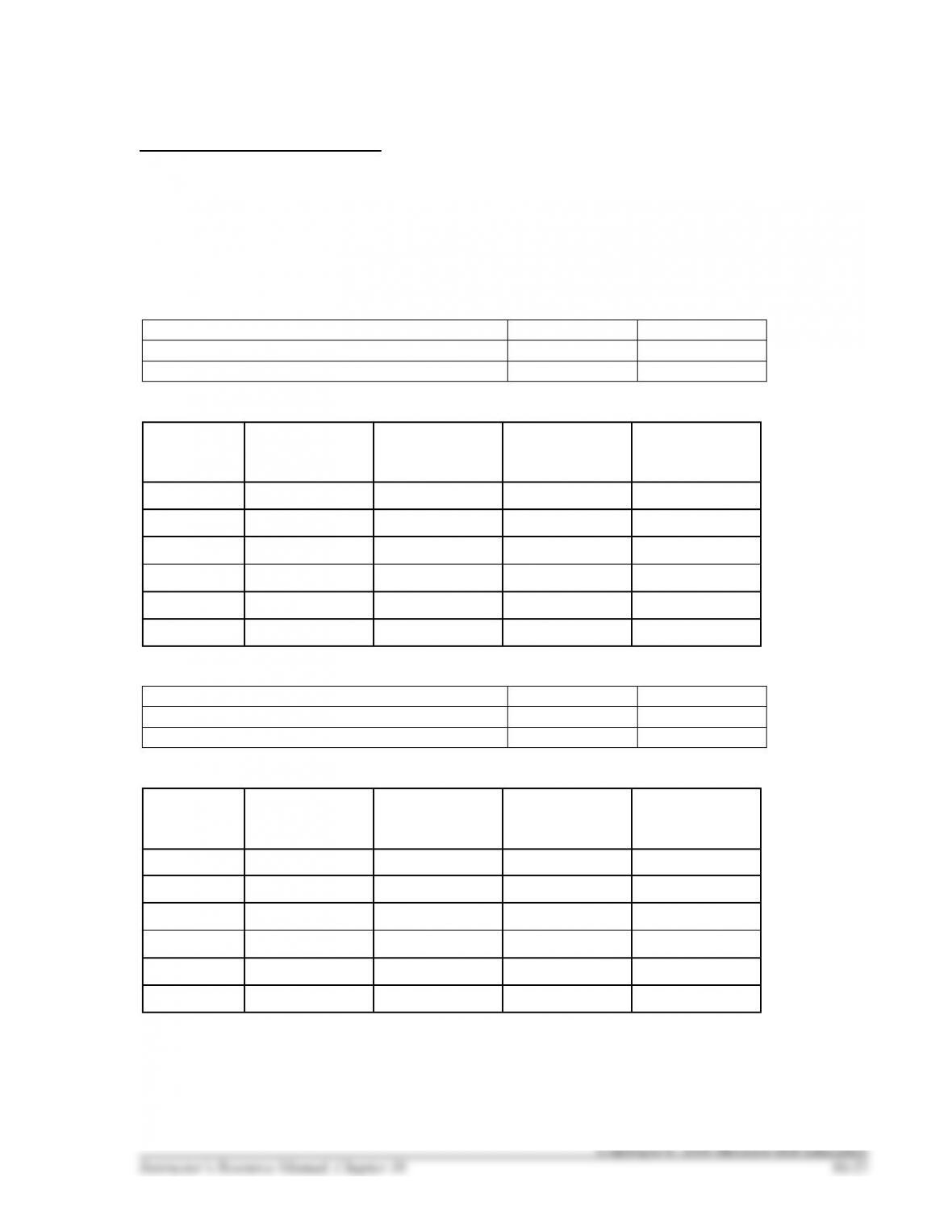
HANDOUT 10–4
ISSUING BONDS
Consider the issuance of $800,000, 5-year, 8% payable annually (market rate 12%) for cash of $684,627
on January 1, 2016. Were these bonds issued at a discount or at a premium? Why?
Prepare the journal entry to record the issuance (sale) of the bonds:
Complete the following interest schedule (assuming straight-line amortization):
Date
Cash
Payment of
Interest
Interest
Expense
Amortization of
Discount
Carrying Value
(Net Liability)
1/1/2016
None
None
None
12/31/2016
12/31/2017
12/31/2018
12/31/2019
12/31/2020
Prepare the journal entry to record the first payment of interest on December 31, 2016:
Complete the following interest schedule (assuming effective-interest amortization):
Date
Cash
Payment of
Interest
Interest
Expense
Amortization of
Discount
Carrying Value
(Net Liability)
1/1/2016
None
None
None
12/31/2016
12/31/2017
12/31/2018
12/31/2019
12/31/2020
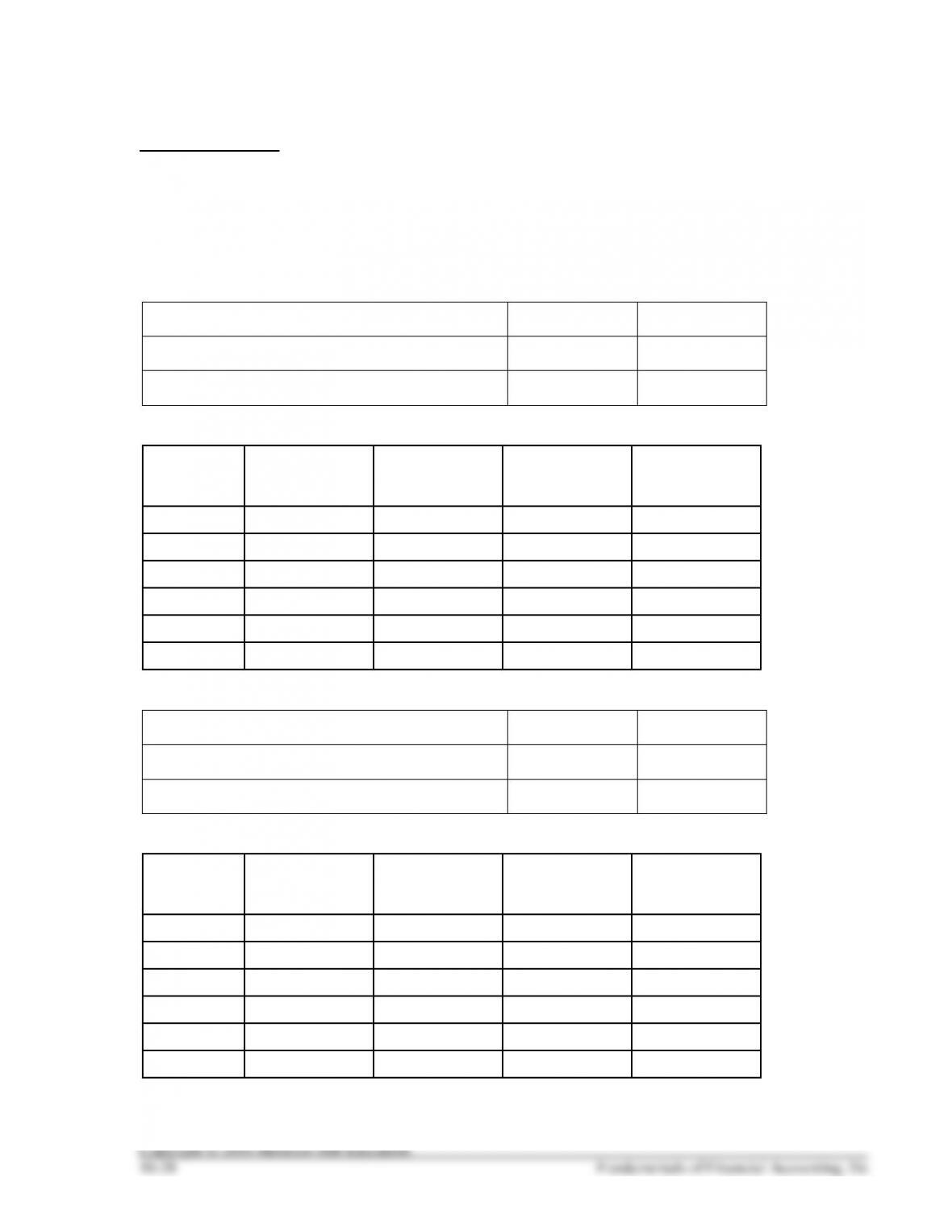
HANDOUT 10–4 SOLUTION
ISSUING BONDS
Consider the issuance of $800,000, 5-year, 8% payable annually (market rate 12%) for cash of $684,627
on January 1, 2016. Were these bonds issued at a discount or at a premium? Why?
The bonds were issued at a discount since the contract rate is less than the market rate.
Prepare the journal entry to record the issuance (sale) of the bonds:
Cash
684,627
Discount on Bonds Payable
115,373
Bonds Payable
800,000
Complete the following interest schedule (assuming straight-line amortization):
Date
Cash
Payment of
Interest
Interest
Expense
Amortization of
Discount
Carrying Value
(Net Liability)
1/1/2016
None
None
None
684,627
12/31/2016
64,000
87,075
23,075
707,702
12/31/2017
64,000
87,075
23,075
730,776
12/31/2018
64,000
87,075
23,075
753,851
12/31/2019
64,000
87,075
23,075
776,925
12/31/2020
64,000
87,075
23,075
800,000
Prepare the journal entry to record the first payment of interest on December 31, 2016:
Interest Expense
87,075
Discount on Bonds Payable
23,075
Cash
64,000
Complete the following interest schedule (assuming effective-interest amortization):
Date
Cash
Payment of
Interest
Interest
Expense
Amortization of
Discount
Carrying Value
(Net Liability)
1/1/2016
None
None
None
684,627
12/31/2016
64,000
82155
18155
702,782
12/31/2017
64,000
84334
20334
723,116
12/31/2018
64,000
86774
22774
745,890
12/31/2019
64,000
89507
25507
771,397
12/31/2020
64,000
92568
28568
799,965
Difference due
to rounding
HANDOUT 10–5
ISSUING BONDS
Consider the issuance of $1,200,000, 5-year, 10% payable annually (market rate 8%) for cash of
$1,295,844 on January 1, 2016. Were these bonds issued at a discount or at a premium? Why?
Prepare the journal entry to record the issuance (sale) of the bonds:
Complete the following interest schedule (assuming straight-line amortization):
Date
Cash
Payment of
Interest
Interest
Expense
Amortization of
Premium
Carrying Value
(Net Liability)
1/1/2016
None
None
None
12/31/2016
12/31/2017
12/31/2018
12/31/2019
12/31/2020
Prepare the journal entry to record the first payment of interest on December 31, 2016:
Complete the following interest schedule (assuming effective-interest amortization):
Date
Cash
Payment of
Interest
Interest
Expense
Amortization of
Premium
Carrying Value
(Net Liability)
1/1/2016
None
None
None
12/31/2016
12/31/2017
12/31/2018
12/31/2019
12/31/2020
HANDOUT 10–5 SOLUTION
ISSUING BONDS
Consider the issuance of $1,200,000, 5-year, 10% payable annually (market rate 8%) for cash of
$1,295,844 on January 1, 2016. Were these bonds issued at a discount or at a premium? Why?
The bonds were issued at a premium since the contract rate is more than the market rate.
Prepare the journal entry to record the issuance (sale) of the bonds:
Cash
1,295,844
Premium on Bonds Payable
95,844
Bonds Payable
1,200,000
Complete the following interest schedule (assuming straight-line amortization):
Date
Cash
Payment of
Interest
Interest
Expense
Amortization of
Premium
Carrying Value
(Net Liability)
1/1/2016
None
None
None
1,295,844
12/31/2016
120,000
100,831
19,169
1,276,675
12/31/2017
120,000
100,831
19,169
1,257,506
12/31/2018
120,000
100,831
19,169
1,238,338
12/31/2019
120,000
100,831
19,169
1,219,169
12/31/2020
120,000
100,831
19,169
1,200,000
Prepare the journal entry to record the first payment of interest on December 31, 2016:
Interest Expense
100,831
Premium on Bonds Payable
19,169
Cash
120,000
Complete the following interest schedule (assuming effective-interest amortization):
Date
Cash
Payment of
Interest
Interest
Expense
Amortization of
Premium
Carrying Value
(Net Liability)
1/1/2016
None
None
None
1,295,844
12/31/2016
120,000
103,668
16,332
1,279,512
12/31/2017
120,000
102,361
17,639
1,261,872
12/31/2018
120,000
100,950
19,050
1,242,822
12/31/2019
120,000
99,426
20,574
1,222,248
12/31/2020
120,000
97,780
22,220
1,200,028
Difference due
to rounding