
Supplemental Enrichment Activities
Note: These activities would be suitable for individual or group activities.
1. Handout 1–1
Use this handout for an in-class activity designed to review the classification of various accounts,
elements, or transactions on the financial statements. The solution follows the handout master.
2. Handout 1–2
Use this handout for an in-class activity designed to review the classification of various account
names on the balance sheet. The solution follows the handout master.
3. Handout 1–3
Use this handout for an in-class activity designed to review the classification of various transactions
on the statement of cash flows. The solution follows the handout master.
4. Handout 1–4
Use this handout for an in-class activity designed to review the individual financial statements and the
relationships among the financial statements. The solution follows the handout master.
5. Consider showing the first segment of the following video in class; most students will be able to
identify with the “fraudster.” Lively discussion of the manner in which the fraud was perpetrated will
follow.
The Association of Certified Fraud Examiners produced a video in 1991 called “Cooking the Books:
What Every Accountant Should Know about Fraud.” It can be ordered by calling 1-800-245-3321 or
visiting the ACFE web site at www.cfenet.com. (Consider joining as an educator to obtain a
discounted rate.)
Three frauds are overviewed: ZZZZ Best Carpet, Regina Vacuum Cleaner Company, and ESM
Group, Inc. (ESM Government Securities). ZZZZ Best Carpet might be the best one to use. Barry
Minkow, the CEO and major stockholder, is interviewed in prison. The video segment discusses
revenue overstatements, deferred costs, asset valuations, inadequate disclosures, and horizontal and
vertical analysis. It is very well done. (Note that the discussion of ratio analysis and trends would
also be appropriate for Chapter 13—Measuring and Evaluating Financial Performance.).

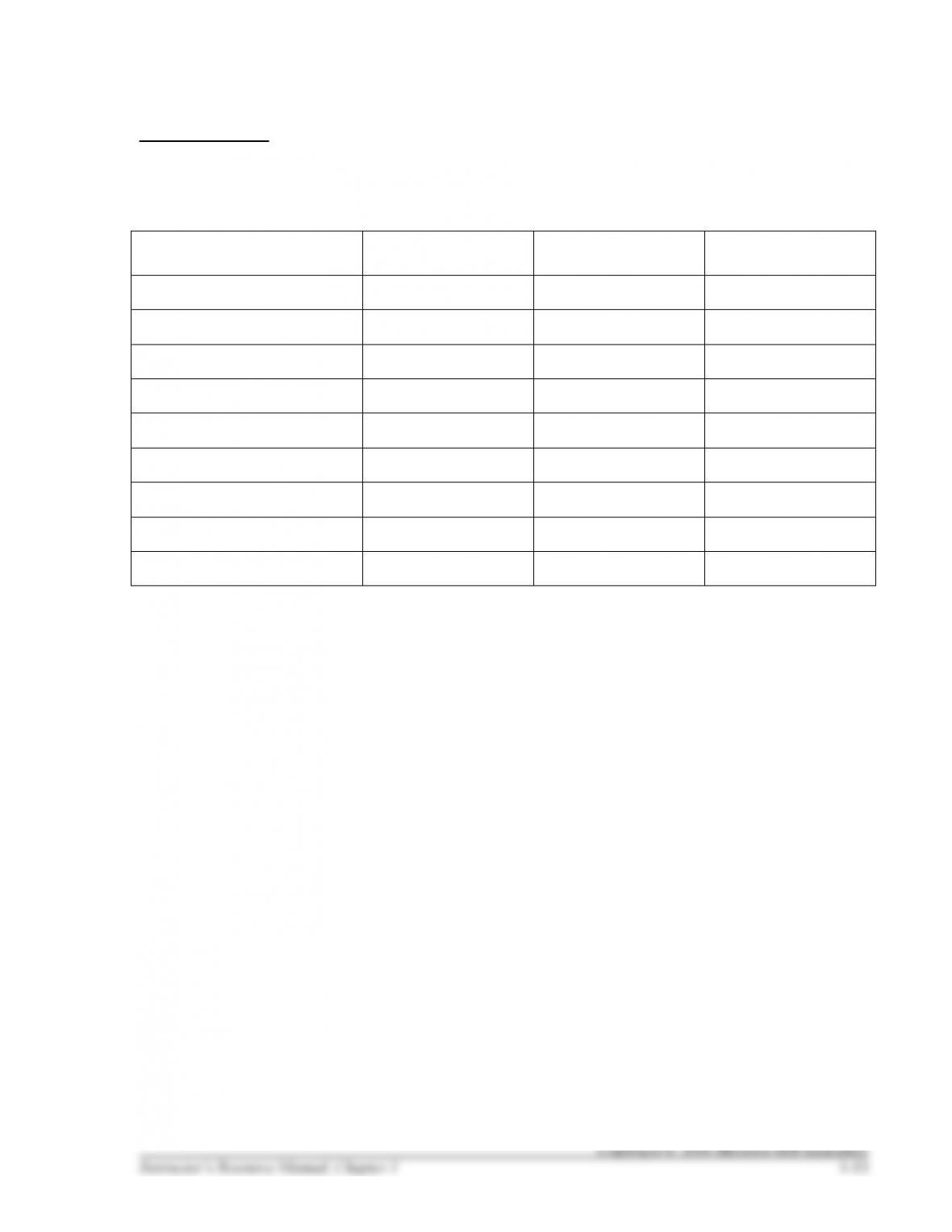
HANDOUT 1–1
COMPONENTS OF FINANCIAL STATEMENTS
Match each account, element, or transaction to the financial statement(s) on which it would be reported.
Account or Element
Income
Statement
Statement of
Retained
Earnings
Balance Sheet
Statement of
Cash Flows
a. The amount of cash
paid for equipment
b. Cash
c. Notes Payable
d. Common Stock
e. Supplies
f. The amount of cash
collected from
customers
g. Accounts
Receivable
h. Notes Payable
i. Salaries and Wages
Expense
j. Equipment
k. Dividends paid to
stockholders
l. Net Income

HANDOUT 1–1 SOLUTION
COMPONENTS OF FINANCIAL STATEMENTS
Match each account, element, or transaction to the financial statement(s) on which it would be reported.
Account or Element
Income
Statement
Statement of
Retained
Earnings
Balance Sheet
Statement of
Cash Flows
a. The amount of cash
paid for equipment
X
b. Cash
X
c. Notes Payable
X
d. Common Stock
X
e. Supplies
X
f. The amount of cash
collected from
customers
X
g. Accounts
Receivable
X
h. Notes Payable
X
i. Salaries and Wages
Expense
X
j. Equipment
X
k. Dividends paid to
stockholders
X
X
l. Net Income
X
X
HANDOUT 1–2
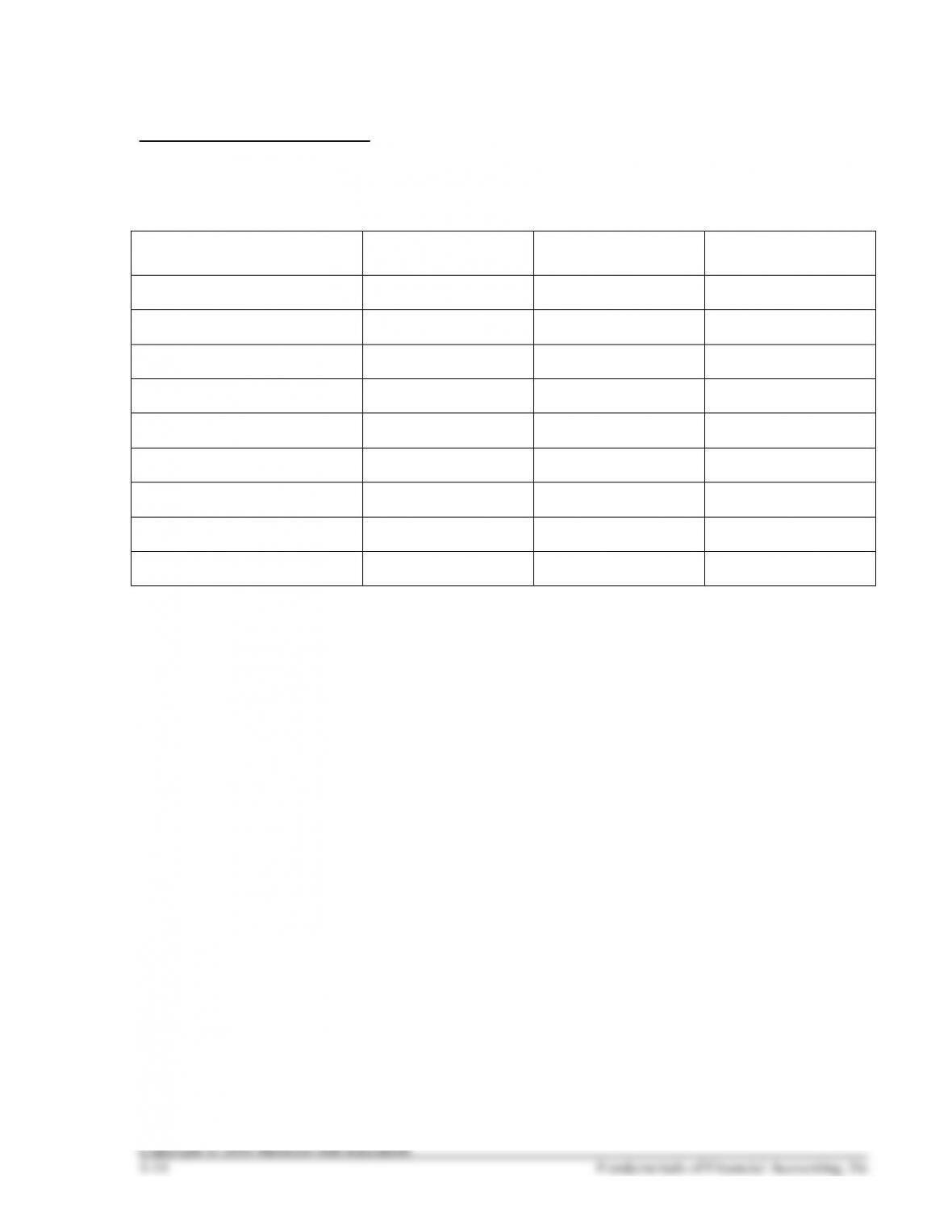
BASIC BALANCE SHEET ELEMENTS
Match each account to its classification on the balance sheet.
Account
Asset
Liability
Stockholders’
Equity
a. Notes Payable
b. Cash
c. Common Stock
d. Supplies
e. Accounts Receivable
f. Accounts Payable
g. Equipment
h. Notes Payable
i. Retained Earnings
HANDOUT 1–2 SOLUTION
BASIC BALANCE SHEET ELEMENTS
Match each account to its classification on the balance sheet.
Account
Asset
Liability
Stockholders’
Equity
a. Notes Payable
X
b. Cash
X
c. Common Stock
X
d. Supplies
X
e. Accounts Receivable
X
f. Accounts Payable
X
g. Equipment
X
h. Notes Payable
X
i. Retained Earnings
X
HANDOUT 1–3
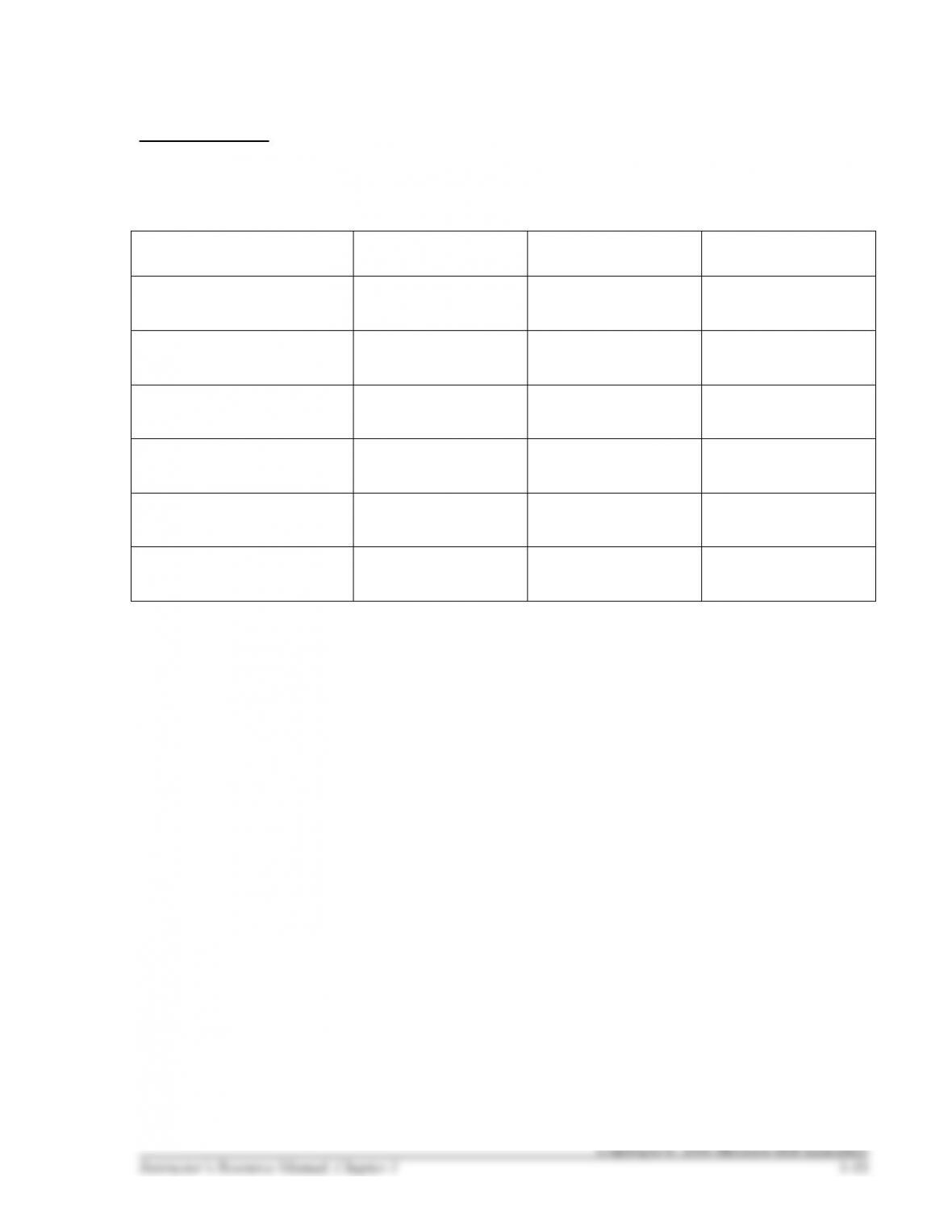
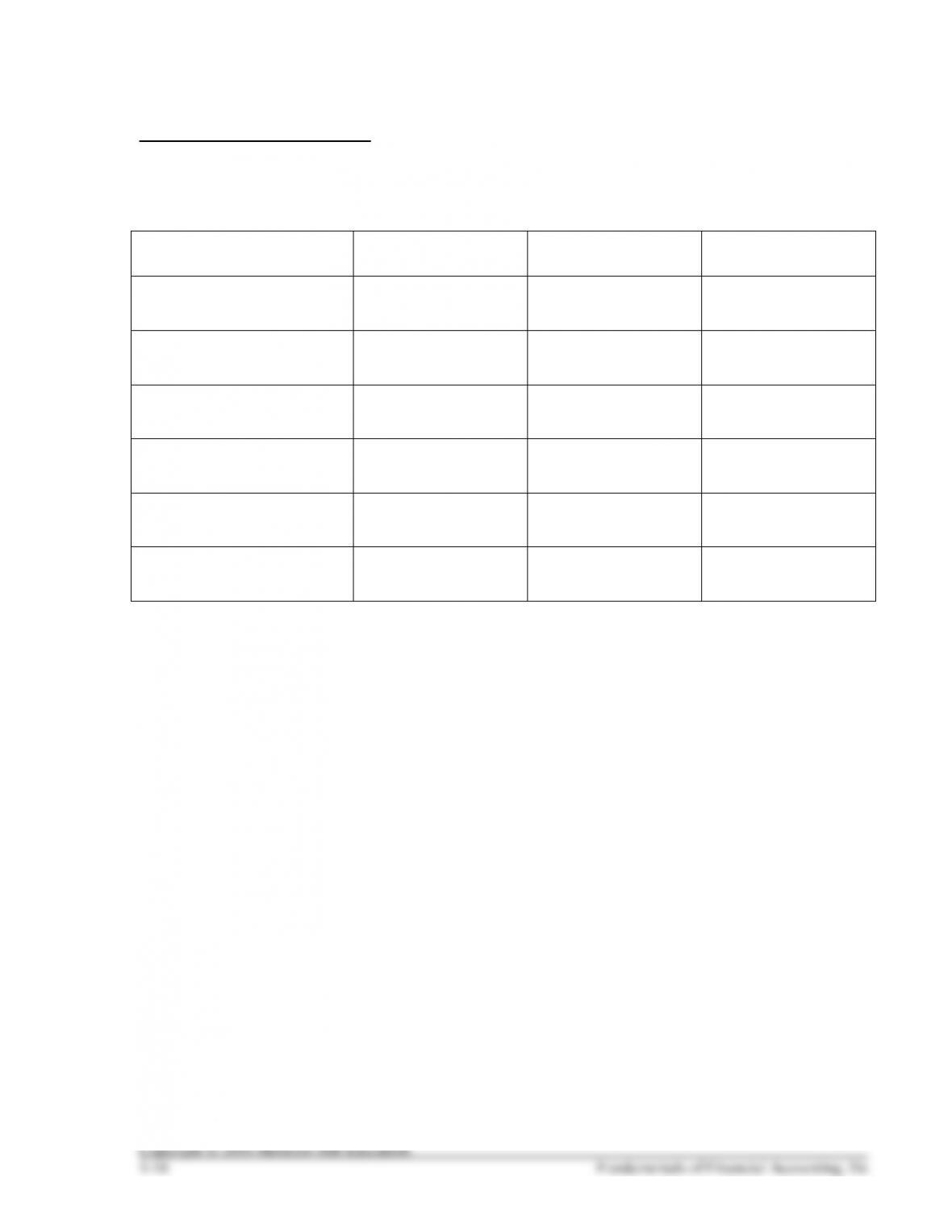
STATEMENT OF CASH FLOWS
Match each activity to its classification on the statement of cash flows.
Activity
Operating
Investing
Financing
a. Cash paid to employees
and suppliers
b. Cash used to buy
equipment and software
c. Cash dividends paid to
stockholders
d. Cash received from
customers
e. Cash received from
selling equipment
f. Cash borrowed from the
bank
HANDOUT 1–3 SOLUTION
STATEMENT OF CASH FLOWS
Match each activity to its classification on the statement of cash flows.
Activity
Operating
Investing
Financing
a. Cash paid to employees
and suppliers
X
b. Cash used to buy
equipment and software
X
c. Cash dividends paid to
stockholders
X
d. Cash received from
customers
X
e. Cash received from
selling equipment
X
f. Cash borrowed from the
bank
X

HANDOUT 1–4
TEAM PROJECT—OVERVIEW OF FINANCIAL STATMENTS
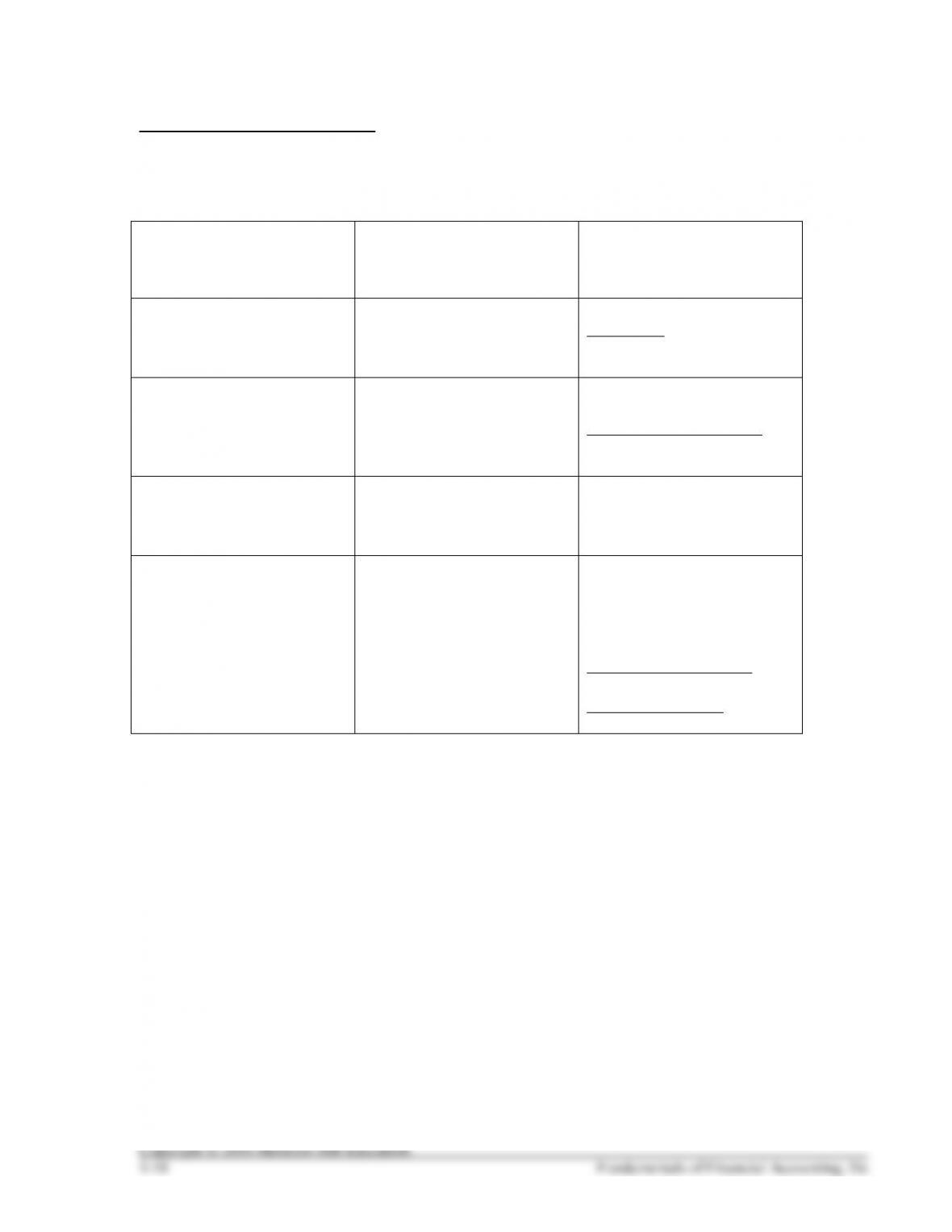
Complete the following table.
Financial Statement
Purpose
Equation
Income Statement
Statement of Retained
Earnings
Balance Sheet
Statement of Cash Flows
RELATIONSHIPS AMONG FINANCIAL STATEMENTS
Then, answer the following questions.
1. How does the income statement tie to the statement of retained earnings?
2. How does the statement of retained earnings tie to the balance sheet?
3. How does the balance sheet tie to the statement of cash flows?
HANDOUT 1–4 SOLUTION
TEAM PROJECT—OVERVIEW OF FINANCIAL STATEMENTS
Complete the following table.
Financial Statement
Purpose
Equation
Income Statement
The financial performance of
the business during the
current accounting period.
Revenues
– Expenses
= Net Income
Statement of Retained
Earnings
The accumulation of earnings
retained in the business
during the current accounting
period with that of prior
periods.
Beginning Retained Earnings
+ Net Income (this period)
– Dividends (this period)
= Ending Retained Earnings
Balance Sheet
The financial position of a
business at a point in time.
Assets = Liabilities +
Stockholders’ Equity
Statement of Cash Flows
Inflows (receipts) and
outflows (payments) of cash
during the current accounting
period.
+/– Cash Flows from
Operating Activities
+/– Cash Flows from
Investing Activities
+/– Cash Flows from
Financing Activities
= Change in Cash
+ Beginning Cash
= Ending Cash
RELATIONSHIPS AMONG FINANCIAL STATEMENTS
Then, answer the following questions.
1. How does the income statement tie to the statement of retained earnings?
Net income, from the income statement, is a component in determining ending retained earnings on
the statement of Retained Earnings.
2. How does the statement of retained earnings tie to the balance sheet?
Ending retained earnings on the statement of retained earnings is reported in the stockholders’ equity
section of the balance sheet.
3. How does the balance sheet tie to the statement of cash flows?
Cash on the balance sheet is equal to the ending Cash reported on the statement of cash flows.