Chapter 05 – Reporting and Analyzing Inventories
Problem 5-1B (40 minutes)
1. Compute cost of goods available for sale and units available for sale
Beginning inventory ……………………...
20 units @ $3,000
$ 60,000
April 6 …………………………………………..
30 units @ $3,500
105,000
April 17 ………………………………………….
5 units @ $4,500
22,500
April 25 ………………………………………….
10 units @ $4,800
48,000
Units available ……………………………….
65 units
Cost of goods available for sale ……..
$235,500
2. Units in ending inventory
Units available (from part 1) …………..…………..
65 units
Less: Units sold (35 + 25) …………………………..
60 units
Ending Inventory (units) ………………..…………
5 units
Problem 5-1B (Continued)
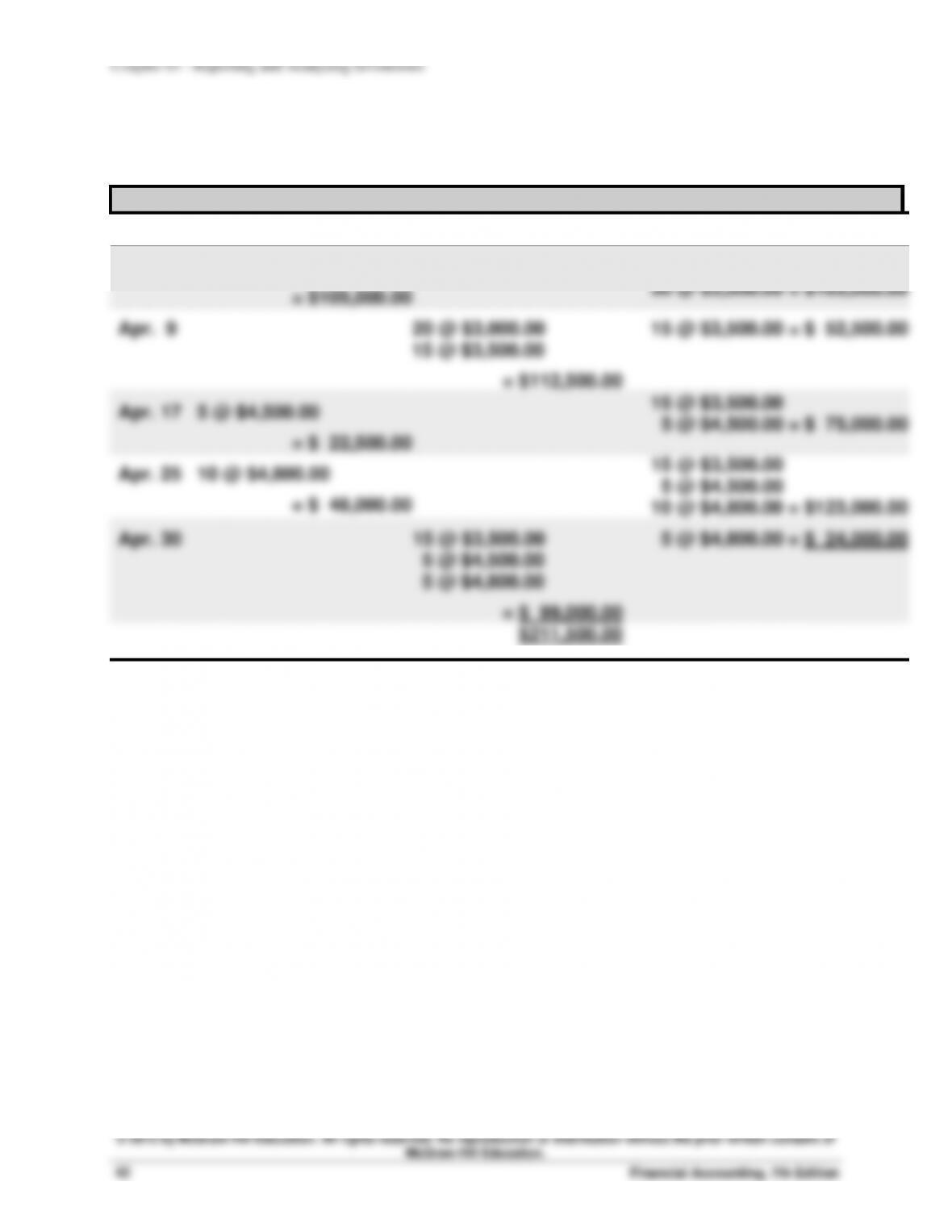
3a. FIFO perpetual
Date
Goods Purchased
Cost of Goods Sold
Inventory Balance
Apr. 1
20 @ $3,000.00 = $ 60,000.00
Apr. 6
30 @ $3,500.00
= $105,000.00
20 @ $3,000.00
30 @ $3,500.00 = $165,000.00
Apr. 9
20 @ $3,000.00
15 @ $3,500.00
= $112,500.00
15 @ $3,500.00 = $ 52,500.00
Apr. 17
5 @ $4,500.00
= $ 22,500.00
15 @ $3,500.00
5 @ $4,500.00 = $ 75,000.00
Apr. 25
10 @ $4,800.00
= $ 48,000.00
15 @ $3,500.00
5 @ $4,500.00
10 @ $4,800.00 = $123,000.00
Apr. 30
15 @ $3,500.00
5 @ $4,500.00
5 @ $4,800.00
= $ 99,000.00
5 @ $4,800.00 = $ 24,000.00
$211,500.00
Problem 5-1B (Continued)
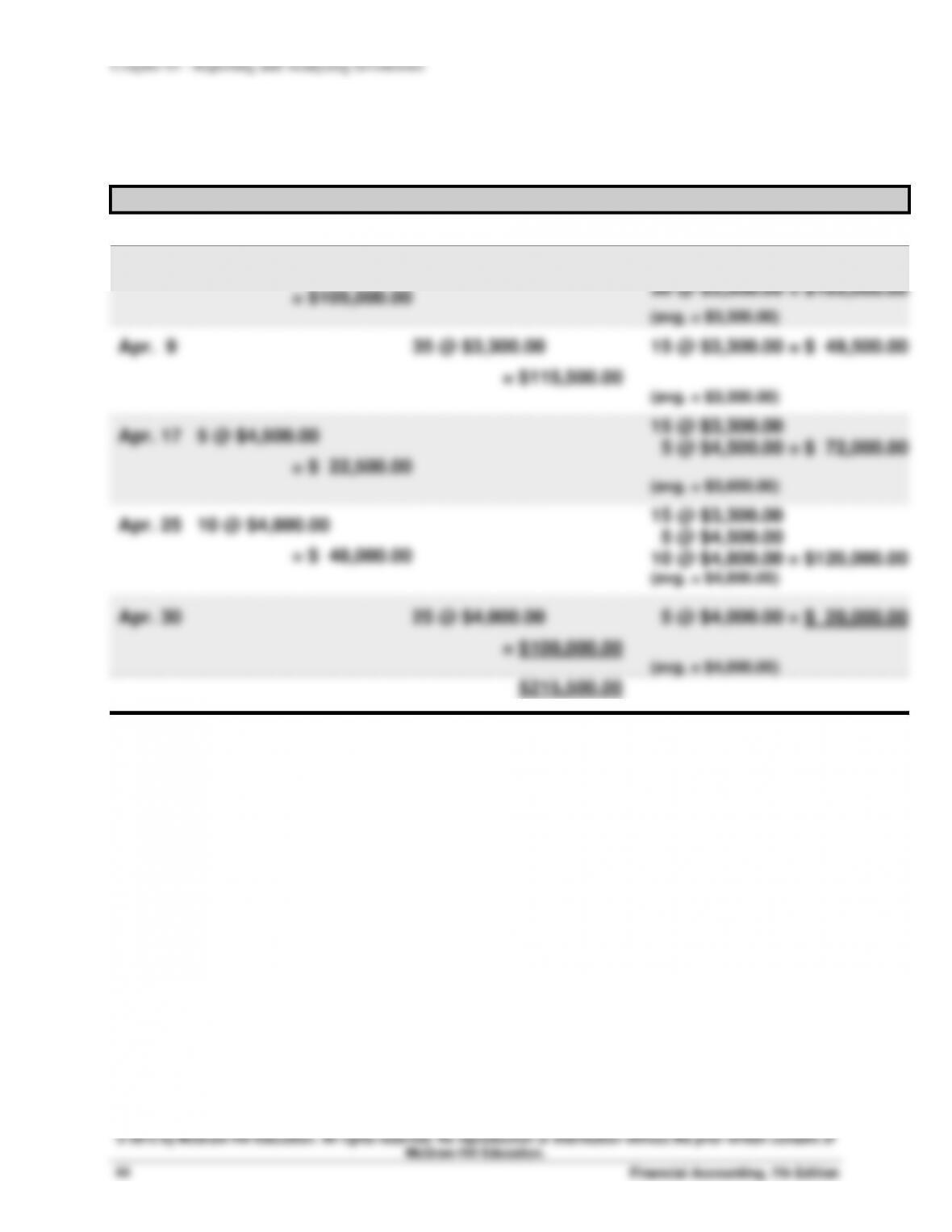
3c. Weighted Average perpetual
Date
Goods Purchased
Cost of Goods Sold
Inventory Balance
Apr. 1
20 @ $3,000.00 = $ 60,000.00
Apr. 6
30 @ $3,500.00
= $105,000.00
20 @ $3,000.00
30 @ $3,500.00 = $165,000.00
(avg. = $3,300.00)
Apr. 9
35 @ $3,300.00
= $115,500.00
15 @ $3,300.00 = $ 49,500.00
(avg. = $3,300.00)
Apr. 17
5 @ $4,500.00
= $ 22,500.00
15 @ $3,300.00
5 @ $4,500.00 = $ 72,000.00
(avg. = $3,600.00)
Apr. 25
10 @ $4,800.00
= $ 48,000.00
15 @ $3,300.00
5 @ $4,500.00
10 @ $4,800.00 = $120,000.00
(avg. = $4,000.00)
Apr. 30
25 @ $4,000.00
= $100,000.00
5 @ $4,000.00 = $ 20,000.00
(avg. = $4,000.00)
$215,500.00
Problem 5-2B (40 minutes)
1. Compute cost of goods available for sale and units available for sale
Beginning inventory ……………………...
20 units @ $3,000
$ 60,000
April 6 …………………………………………..
30 units @ $3,500
105,000
April 17 ………………………………………….
5 units @ $4,500
22,500
April 25 ………………………………………….
10 units @ $4,800
48,000
Units available ……………………………….
65 units
Cost of goods available for sale ……..
$235,500
2. Units in ending inventory
Units available (from part 1) …………..…………..
65 units
Less: Units sold (35 + 25) …………………………..
60 units
Ending Inventory (units) ………………..…………
5 units
3.
Periodic Inventory
Ending
Inventory
Cost of
Goods Sold
a. FIFO
(5 x $4,800)……………………………………………………….
$24,000.00
(20x$3,000)+(30x$3,500)+(5x$4,500)+(5x$4,800) …
$211,500.00
b. LIFO
(5 x $3,000)………………………………………………………
$15,000.00
(15x$3,000)+(30x$3,500)+(5x$4,500)+(10x$4,800)
$220,500.00
c. Weighted average ($235,500/65=$3,623.08 [rounded])
(5 x $3,623.08)…………………………………………………..
$18,115.40
$235,500 [Goods Available] – $18,115.40 [Ending Inventory] ……
$217,384.60
d. Specific identification
(5 x $4,500)……………………………………………………….
$22,500.00
$235,500 [Goods Available] – $22,500 [Ending Inventory] ………..
$213,000.00
Problem 5-3B (40 minutes)
1. Compute cost of goods available for sale and units available for sale
Beginning inventory ……………………...
150 units @ $300
$ 45,000
May 6 …………………………………………...
350 units @ $350
122,500
May 17 …………………………………………..
80 units @ $450
36,000
May 25 …………………………………………..
100 units @ $458
45,800
Units available ……………………………….
680 units
Cost of goods available for sale ……..
$249,300
2. Units in ending inventory
Units available (from part 1) …………..…………..
680 units
Less: Units sold (180 + 300) …………..…………..
480 units
Ending Inventory (units) ………………..…………
200 units
3a. FIFO perpetual
Date
Goods Purchased
Cost of Goods Sold
Inventory Balance
May 1
150 @ $300 = $ 45,000
May 6
350 @ $350 = $122,500
150 @ $300
350 @ $350 = $167,500
May 9
150 @ $300 = $ 45,000
30 @ $350 = $ 10,500
320 @ $350 = $112,000
May 17
80 @ $450 = $ 36,000
320 @ $350
80 @ $450 = $148,000
May 25
100 @ $458 = $ 45,800
320 @ $350
80 @ $450
100 @ $458 = $193,800
May 30
300 @ $350 = $105,000
20 @ $350
80 @ $450
100 @ $458 = $ 88,800
$160,500
Problem 5-3B (Continued)
3d. Specific Identification
Date
Goods Purchased
Cost of Goods Sold
Inventory Balance
May 1
150 @ $300 = $ 45,000
May 6
350 @ $350 = $122,500
150 @ $300
350 @ $350 = $167,500
May 9
80 @ $300 = $ 24,000
100 @ $350 = $ 35,000
70 @ $300
250 @ $350 = $108,500
May 17
80 @ $450 = $ 36,000
70 @ $300
250 @ $350
80 @ $450 = $144,500
May 25
100 @ $458 = $ 45,800
70 @ $300
250 @ $350
80 @ $450
100 @ $458 = $190,300
May 30
200 @ $350 = $ 70,000
100 @ $458 = $ 45,800
70 @ $300
50 @ $350
80 @ $450 = $ 74,500
$174,800
Specific identification—Alternative Computation
Cost of goods sold—80 units from beginning inventory, 300 [100+200] units from May
6 purchase, and 100 units from May 25 purchase
Ending Cost of
Specific Identification Inventory Goods Sold
(80 x $300) + (300 x $350) + (100 x $458) …………….. $174,800
$249,300 [Total Goods Available] – $174,800 [Cost of Goods Sold] .. $74,500