
Chapter 19 – Costing and The Value Chain
Financial and Managerial Accounting, 17/e 19-1
19 COSTING AND THE VALUE CHAIN
Chapter Summary
The value chain is used to organize the discussion of several aspects of strategic
cost management. These include activity-based management, target costing, just–in-time
inventory procedures, and total quality management.
Activity based management utilizes cost information from ABC systems to
identify and eliminate non-value-added activities. While Chapter 17 focused on activity-
based product costs, this chapter develops an extensive illustration to demonstrate the
management of activities associated with period costs. This is done to emphasize the
application of activity-based management across all phases of the value chain.
Target costing begins with planning and market analysis of customer needs, then
proceeds to product development to generate a target price. Value engineering leads to
the most economically efficient combination of resources to create the product. Finally,
the target cost is attained through production and continuous improvement. A
straightforward example illustrates the execution of the four phases of the target costing
process.
The development of just–in-time inventory and production systems was one of the
earliest efforts of management to identify non-value-adding activities. The realization
that investment of resources in inventory added no value to the customer initiated the
development of the just-in-time philosophy. This philosophy emphasizes that all
production is driven by customer demand. The chapter centers on the importance of
supplier relationships, product quality, and flexible manufacturing in achieving the JIT
objective of controlling product costs.
The chapter concludes with a discussion of the components of quality costs and
the tradeoffs between prevention and appraisal costs on one hand and the costs of internal
and external failure on the other.
Learning Objectives
1. Define the value chain and describe its basic components.
2. Distinguish between non-value-added and value-added activities.
3. Explain how activity-based management is related to activity-based costing (ABC).
4. Describe the target costing process and list its components.
5. Identify the relationship between target costing and the value chain.
6. Explain the nature and goals of a just-in-time (JIT) manufacturing system.
7. Identify the components of the cost of quality.
8. Describe the characteristics of quality measures.
Chapter 19 – Costing and The Value Chain
Brief Topical Outline
A The value chain
1 International financial reporting standards and the value chain
2 Value- and non-value-added activities – see Your Turn (page 845)
B Activity-based management
1 Activity-based management across the value chain
a Managing activities: an illustration (pages 846 – 848) – see Case in
Point (page 849)
2 ABC: A subset of activity-based management
C The target costing process
1 Components of the target costing process
2 Target costing: an illustration – see Your Turn (page 852)
3 Characteristics of the target costing process
D Just-in-time inventory procedures
1 JIT, supplier relationships, and product quality
2 Measures of efficiency in a JIT system
a Measuring quality
E Total quality management and the value chain
1 Components of the cost of quality – see Case in Point (page 857)
2 Measuring the cost of quality
3 Productivity and quality – see Ethics, Fraud & Corporate Governance
(page 858)
F Concluding remarks
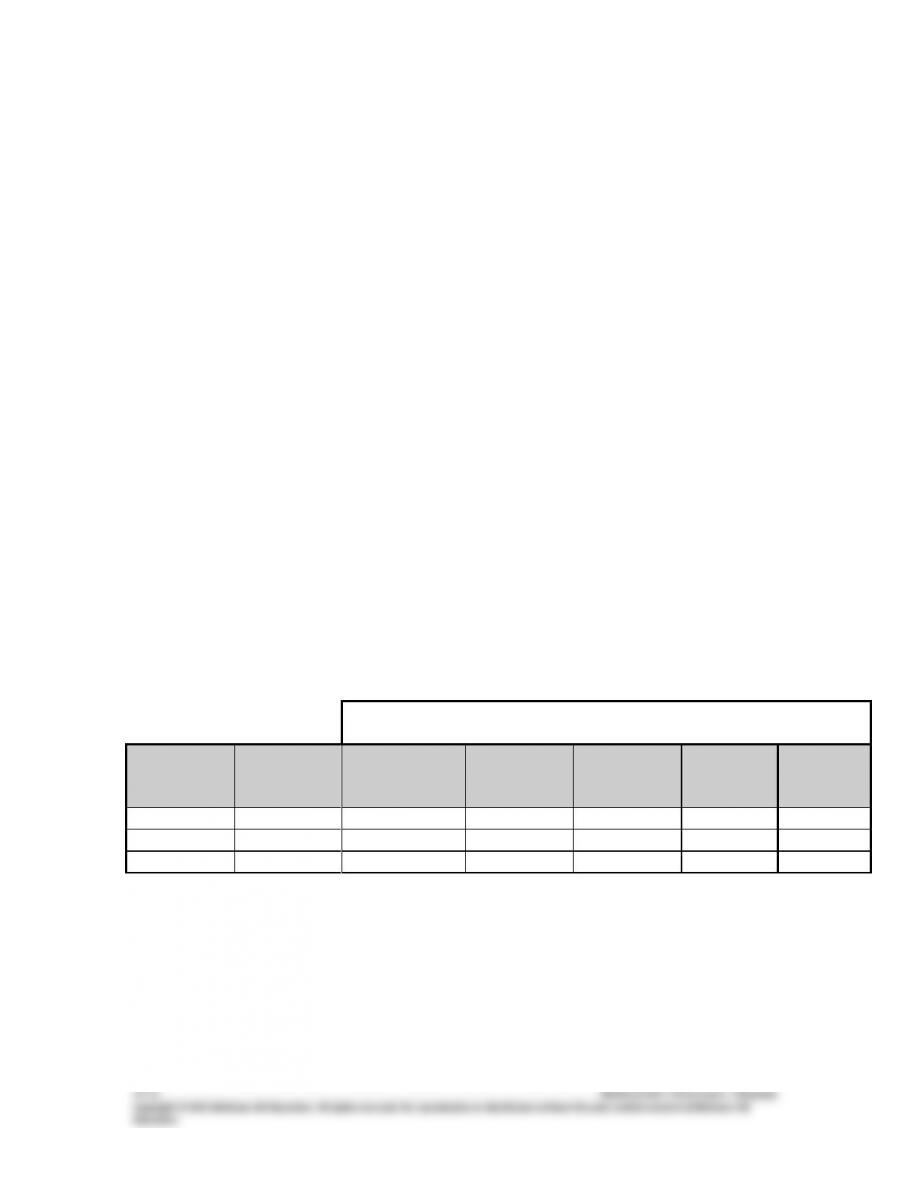
Topical coverage and suggested assignment
Homework Assignment
(To Be Completed Prior to Class)
Class
Meetings on
Chapter
Topical
Outline
Coverage
Discussion
Questions
Brief
Exercises
Exercises
Problems
Critical
Thinking
Cases
1
A – B
1, 2, 3
1, 4
1, 2
2
2
C – D
6, 7, 8
2, 7, 8
8, 9
3
1
3
E – F
10, 11, 13
6, 9
13, 14
4

Chapter 19 – Costing and The Value Chain
Financial and Managerial Accounting, 17/e 19-3
Comments and observations
Teaching objectives for Chapter 19
Our goal in presenting this material is to help students to begin to think strategically about the
development and use of cost information. In so doing our objectives are to:
1 Introduce the value chain as a structure for strategic cost management.
2 Explain the distinction between value-added and non-value-added activities across the
value chain.
3 Show that activity-based costs are important to reducing and eliminating non-value-added
activities.
4 Explain how activity-based costs can be used to manage not only production, but also
activities across all components of the value chain.
5 Introduce target costing and its components.
6 Explain the JIT approach to identifying and reducing non-value-added activities.
7 Present measures of efficiency in a JIT manufacturing system.
8 Explain the trade-offs that exist among components of quality costs, and how those
trade-offs change with technical progress.
General comments
Managing activities across the value chain represents a comprehensive integrated approach to
the traditional management functions of planning and control. Eliminating non-value-added
activities from the chain is central to this strategic approach to cost management. Exercise 3 is
designed to acquaint students with the value chain and the identification of non-value-added
activities in the chain.
We have emphasized that the ABC model developed in a previous chapter can be
usefully extended beyond product costing to a wide variety of period costs. Doing so provides
an opportunity to use ABC information to manage across the entire value chain. This can be
illustrated using Exercise 4. Although Problem 2 requires the calculation of target costs, it
provides a comprehensive opportunity for students to use cost information to address activity-
based management issues. We highly recommend reviewing this problem in class. Case 1 is a
more extensive alternative.
Target costing illustrates the use of cost information in planning and designing new
products as well as reengineering existing ones. Problem 3 captures the use of cost estimates
and budgets in the planning process. It also addresses the issue of process design to minimize
production costs.

Chapter 19 – Costing and The Value Chain
Quality costing, like ABM, emphasizes activity management across the value chain.
Prevention costs apply to the research and design phase, as well as in working with suppliers
and vendors. Appraisal costs and internal failures are most closely identified with the suppliers
and production component. Finally, external failure costs exert a significant impact on
customer service. Managing quality activities across the value chain highlights the tradeoffs
among these costs.
Supplemental Exercises
Internet Exercise
Did you ever stop to notice that all the credit, debit, and ATM cards that you carry have
exactly the same thickness. This is true worldwide and is crucial to transactions processing.
How did this worldwide coordination come to be? Explore the website of the International
Organization for Standardization at www.iso.org What are the goals of this organization?
Write a brief report describing the information you are able to obtain from this site.

Chapter 19 – Costing and The Value Chain
Financial and Managerial Accounting, 17/e 19-5
CHAPTER 19 NAME #
10-MINUTE QUIZ A SECTION
Indicate the best answer for each question in the space provided.
1 Examples of value-added activities include all of the following except:
a Product design.
b Material movement.
c Assembly activities.
d Establish an effective distribution network.
2 Of the following components of total quality cost, which is most damaging to a
company attempting to achieve a reputation as a world-class manufacturer?
a Prevention costs.
b Appraisal costs.
c Internal failure costs.
d External failure costs
3 Of the following processes, which is chiefly concerned with products and services
that have not yet been developed?
a Just–in–time manufacturing.
b Activity-based management.
c Target costing.
d Total quality management.
4 For a furniture manufacturer, which of the following activities could not be
eliminated without changing the customer’s perception of the product’s
desirability?
a Inspection of incoming shipments of wood and fabrics.
b Movement of work–in–process from one work station to another.
c Set-up of machinery to produce different pieces of furniture.
d Reducing the product’s distribution network.
5 The cost borne by the customer of disposing of nickel-cadmium batteries is a
component of the batteries’:
a Life–cycle cost.
b Overhead cost.
c Cost of quality.
d Direct production cost.

Chapter 19 – Costing and The Value Chain
CHAPTER 19 NAME #
10-MINUTE QUIZ B SECTION
Listed below are eight technical accounting terms introduced or emphasized in this chapter:
Activity-based management Life-cycle costing
Value-added activity Non-value-added activity
Target costing Total quality management
Just–in-time manufacturing system Cycle time
Each of the following statements may (or may not) describe one of these technical terms. In
the space provided below each statement, indicate the accounting term described, or answer
“None” if the statement does not correctly describe any of the terms.
a The process of using activity-based costs to help reduce or eliminate non-value–added
activities.
______________________________
b Can be eliminated without affecting the desirability of the product from the perspective
of the customer.
______________________________
c The length of time for a product to pass completely through a specific manufacturing
process.
______________________________
d If eliminated, the desirability of the product to consumers is decreased.
______________________________
e Consideration of all potential resources that will be consumed by a product from
development through disposal.
______________________________
f A method in which a product’s selling price is determined by adding a fixed profit
margin to its production cost.
______________________________
g An approach that explicitly monitors quality costs and rewards quality enhancing
behavior.
______________________________

Chapter 19 – Costing and The Value Chain
Financial and Managerial Accounting, 17/e 19-7
CHAPTER 19 NAME # ______
10-MINUTE QUIZ C SECTION
Listed below are eight components of the total cost of quality. In the space provided identify
each as a cost of prevention, appraisal, internal failure, or external failure.
1. Product design
2. Product returns due to defects
3. Inspection of raw materials shipments
4. Employee training
5. Rework of defective units prior to shipment
6. Estimated lost sales due to poor quality
7. Warranty expense
8. Inspection of finished goods
9. Scrap

Chapter 19 – Costing and The Value Chain
CHAPTER 19 NAME #
10-MINUTE QUIZ D SECTION
Resourceful Corporation is considering the implementation of a JIT inventory system. The
company recently analyzed its cycle time to determine the average number of days spent in
each activity of its production process. A summary of the analysis is shown below:
Production Activity Number of Days
Receiving materials 1
Inspecting materials 4
Storing materials 9
Moving materials into production 6
Setting-up production equipment 7
Cutting materials 6
Assembling materials 7
Painting finished products 4
Packaging finished products 1
a Resourceful’s value–adding production activities include:
b Resourceful’s total cycle time is __________ days.
c Resourceful’s manufacturing efficiency ratio is __________%.
d Which activities might be reduced or eliminated should Efficient implement a JIT
system?
Chapter 19 – Costing and The Value Chain
Financial and Managerial Accounting, 17/e 19-9
SOLUTIONS TO CHAPTER 19 10-MINUTE QUIZZES
QUIZ A
Learning Objective: 2, 3, 4. 6, 7
QUIZ B
a Activity based management
Learning Objective: 1 – 8
QUIZ C
Prevention
Learning Objective: 7, 8
QUIZ D
a Cutting materials, Assembling materials, Painting finished products, Packaging finished
products.
Learning Objective: 6
Chapter 19 – Costing and The Value Chain
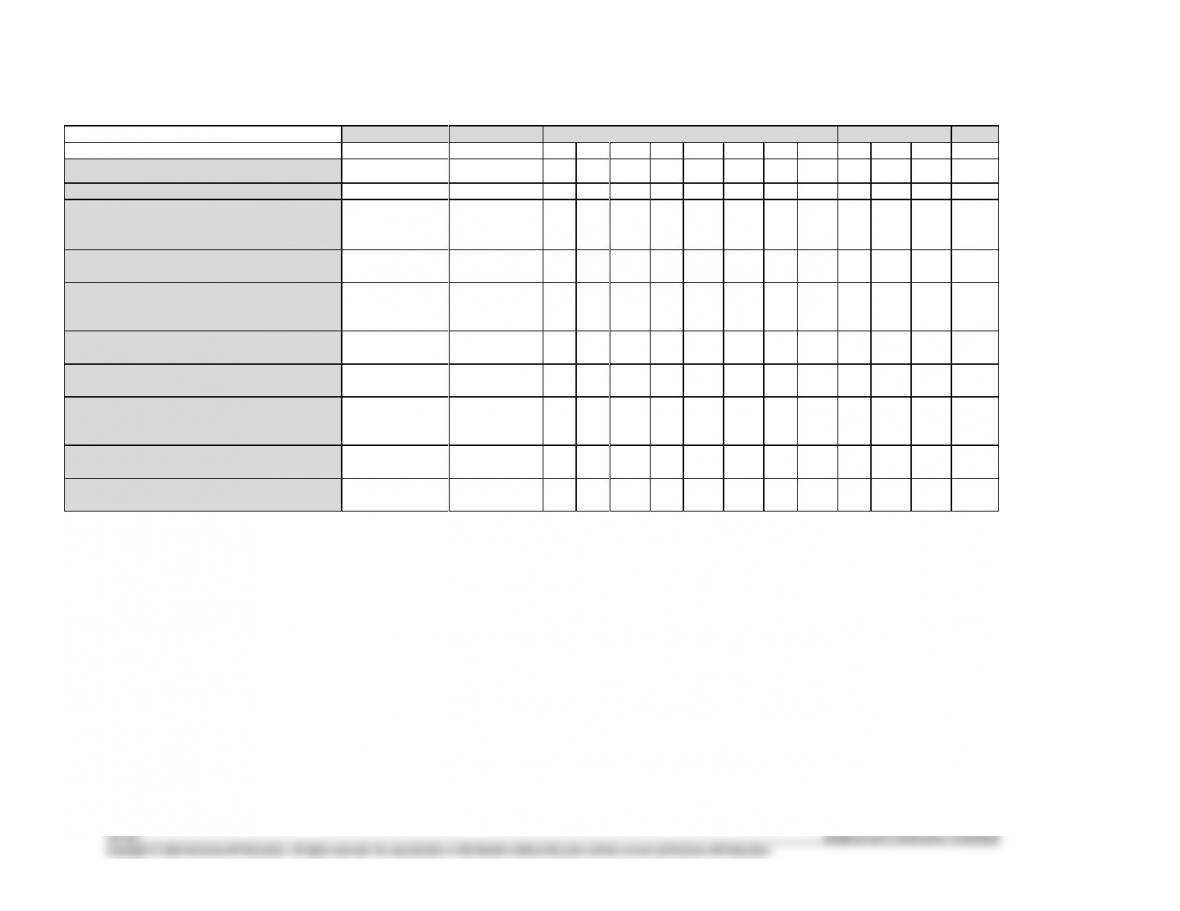
Assignment Guide to Chapter 19
Brief Exercises
Exercises
Problems
Cases
Net
1 – 10
1 – 15
1
2
3
4
5
6
7
8
1
2
4
3
Time estimate (in minutes)
< 15
< 15
30
40
25
30
25
40
30
30
30
25
40
30
Difficulty rating
E
E
M
S
M
M
E
M
M
M
M
M
M
M
Learning Objectives:
1
2, 10
√
√
√
√
√
1. Define the value chain and describe
its basic components.
2. Distinguish between non-value-
added and value-added activities.
4, 6
1, 3, 8, 10, 13
√
√
√
√
√
3. Explain how activity-based
management is related to activity-
based costing (ABC).
6
1, 3, 4, 9, 15
√
√
√
4. Describe the target costing process
and list its components.
2, 7
1, 5, 12
√
5. Identify the relationship between
target costing and the value chain.
10
1, 5, 12
√
√
√
√
6. Explain the nature and goals of a
just-in-time (JIT) manufacturing
system.
5
1, 6, 11
√
√
√
√
7. Identify the components of the cost
of quality.
3, 6, 8
7, 8, 10, 13,
14
√
√
√
√
√
8. Describe the characteristics of
quality measures.
9
7
√
√