
Chapter 01 – Accounting: Information for Decision Making
Financial and Managerial Accounting, 17e 1-7
Copyright © 2015 McGraw-Hill Education. All rights reserved. No reproduction or distribution without the prior written consent of McGraw-Hill Education.
CHAPTER 1 NAME #
10-MINUTE QUIZ A SECTION
Indicate the best answer for each question in the space provided.
1 The best definition of an accounting system is:
a Journals, ledgers, and worksheets.
b Manual or computer-based records used in developing information about an
entity for use by managers and also persons outside the organization.
c The personnel, procedures, devices, and records used by an entity to develop
accounting information and communicate this information to decision makers.
d The concepts, principles, and standards specifying the information which should
be included in financial statements, and how that information should be
presented.
2 Suppose a number of your friends have organized a company to develop and sell a new
software product. They have asked you to loan them $7,000 to help get the company
started, and have promised to repay your $7,000 plus 10% interest in one year. Of the
following, which amount may be described as the return on your investment?
a $7,000.
b $ 700.
c $7,700.
d Some other amount.
3 Which of the following is generally not considered one of the general purpose financial
statements issued by a corporation?
a Income statement forecast for the coming year.
b Balance sheet.
c Statement of financial position.
d Statement of cash flows.
4 All of the following are characteristics of management accounting, except:
a Reports are used primarily by insiders rather than by persons outside of the
business entity.
b Its purpose is to assist managers in planning and controlling business operations.
c Information must be developed in conformity with generally accepted
accounting principles or with income tax regulations.
d Information may be tailored to assist in specific management decisions.
5 Which of the following is not an objective of financial reporting?
a Provide information useful in assessing amount, timing, and uncertainty of future
cash flows.
b Provide information useful in making investment and credit decisions.
c Provide information about economic resources, claims to resources, and changes
in resources and claims.
d Provide information to guarantee the enterprise achieves its goals, objectives,
and mission.

Chapter 01 – Accounting: Information for Decision Making
CHAPTER 1 NAME #
10-MINUTE QUIZ B SECTION
Match the organizations on the left with the descriptions on the right. Each description should be used
only once.
Organization Description
Financial Accounting Standards Board a. Government agency that regulates
financial reporting by publicly-
held companies.
Securities and Exchange Commission b. International organization dedicated
to the advancement of internal
auditing.
American Accounting Association c. Private organization most directly
involved in the development and
issuance of accounting standards.
Institute of Internal Auditors d. Organization dedicated to the
advancement of accounting education
and research.
American Institute of CPAs e Organization most involved with the
ethical conduct of the accountants
working within a company.
Institute of Management Accountants f. Organization which develops formal
standards for auditing private companies in
the United States.
Internal Revenue Service g. A government agency that handles
income tax returns of individuals and
businesses and performs an audit
function to verify the data presented.
International Accounting h. An organization which develops
Standards Board international accounting
standards.
_______Committee of Sponsoring Organizations i. An organization dedicated to improving
financial reporting through ethics, internal
controls, and corporate governance.

Chapter 01 – Accounting: Information for Decision Making
Financial and Managerial Accounting, 17e 1-9
CHAPTER 1 NAME #
10-MINUTE QUIZ C SECTION
The following is a list of various characteristics of accounting information. In the space provided
identify each as a characteristic of either financial or management accounting information.
1. The information is summarized in a set of statements distributed to the public.
2. The information is historical in nature. It reports the results of events and transactions that have
already occurred.
3. The timeliness of the information is more critical than its completeness.
4. To increase its usefulness to investors and creditors, the information is usually accompanied by
explanations from management.
5. The information is intended to be used for planning and control decisions.

Chapter 01 – Accounting: Information for Decision Making
CHAPTER 1 NAME #
10-MINUTE QUIZ D SECTION
Provide concise written answers to the following:
1. Investors and creditors are interested in a company’s “cash flow prospects.” What two specific
concerns of investors and creditors are summarized by the term “cash flow prospects?”
2. List three financial statements that are used to communicate financial accounting information to
interested external parties.
3. Provide a brief example to illustrate that externally reported financial accounting information must
be based in part on estimates, judgments, and assumptions.
4. Briefly explain how generally accepted accounting principles enhance the integrity of financial
accounting information.
Chapter 01 – Accounting: Information for Decision Making
Financial and Managerial Accounting, 17e 1-11
SOLUTIONS TO 10 MINUTE QUIZZES
QUIZ A
Learning Objective: 01–02, 01–03, 01–04
QUIZ B
QUIZ C
QUIZ D
Chapter 01 – Accounting: Information for Decision Making
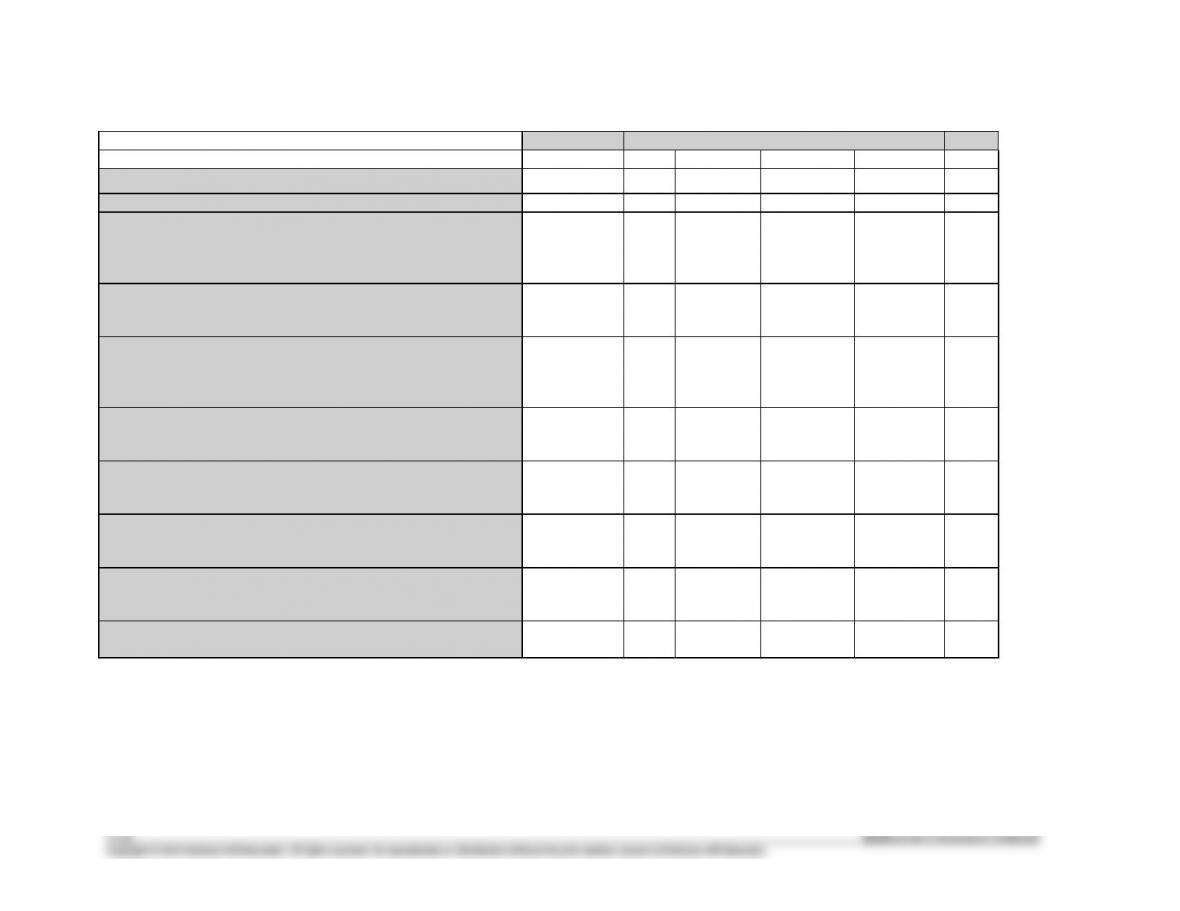
Assignment Guide to Chapter 1
Exercises
Cases
Net
1 – 16
1
2
3
4
5
Time estimate (in minutes)
< 15
15
15
15
30
30
Difficulty rating
E
E
M
E
M
M
Learning objective:
1, 16
1. Discuss accounting as the language of business and the
role of accounting information in making economic
decisions.
2. Discuss the significance of accounting systems in
generating reliable accounting information and
understand the five components of internal control.
3. Explain the importance of financial accounting
information for external parties–primarily investors
and creditors–in terms of the objectives and the
characteristics of that information.
2, 3, 6, 7, 9,
16
4. Explain the importance of accounting information for
internal parties–primarily management–in terms of the
objectives and the characteristics of that information.
2, 6, 7, 9, 10
5. Discuss elements of the system of external and internal
financial reporting that create integrity in the reported
information.
6, 7, 12, 13,
16
6. Identify and discuss several professional organizations
that play important roles in preparing and
communicating accounting information.
3, 5, 8, 11
7. Discuss the importance of personal competence,
professional judgment, and ethical behavior on the part
of accounting professionals.
7, 14
8. Describe various career opportunities in
accounting.
15