4-42
Financial Reporting and Analysis (6th Ed.)
Chapter 4 Solutions
Structure of the Balance Sheet and Cash Flow Statement
Cases
Cases
C4–1. Subsequent events
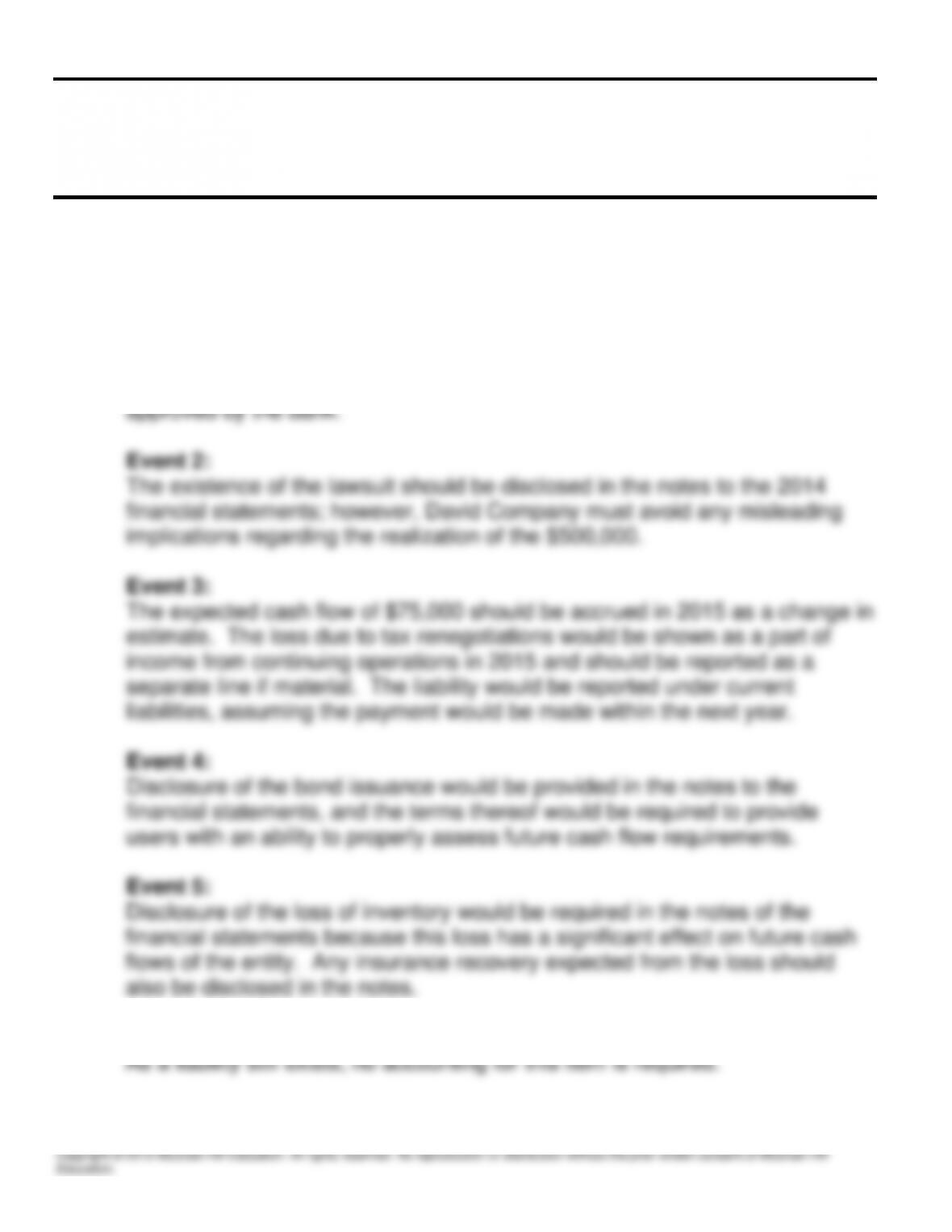
Event 1:
The loan, and the nature of the collateral, should be disclosed in the notes to
the financial statements. The loan would not be reflected in the balance
sheet at December 31, 2014, because it did not occur until 2015 when it was
Event 6:
4-43
C4-2. Related party matters
13. Related Party Transactions
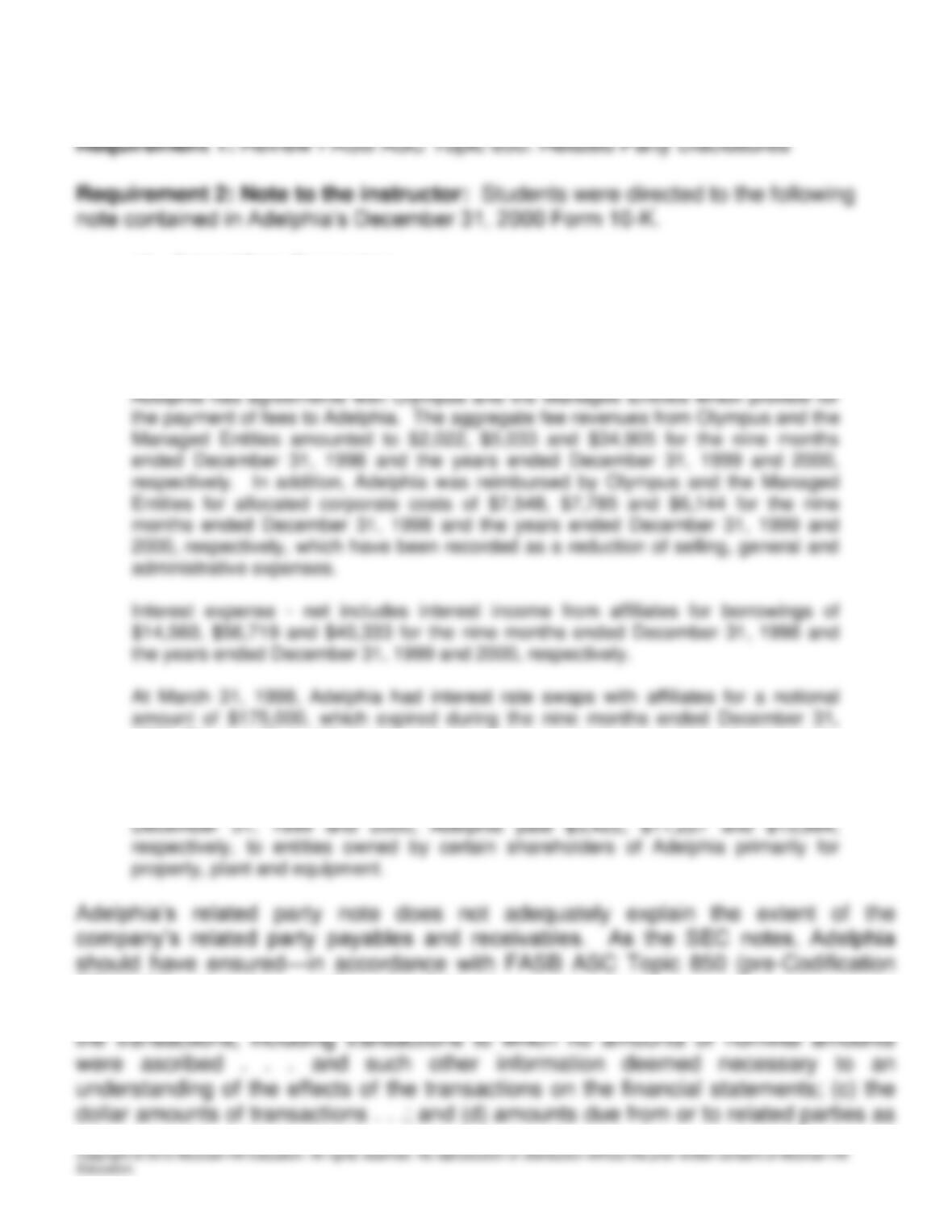
Adelphia currently manages cable television systems which are principally owned by
limited partnerships in which certain of Adelphia’s principal shareholders who are
executive officers have equity interests.
1998. The net effect of these interest rate swaps was to increase interest expense by
$2,049 for the nine months ended December 31, 1998.
During the nine months ended December 31, 1998 and the years ended
SFAS 57) – that the specifics of individual material related party transactions were
disclosed to include (a) the nature of the relationship(s) involved; (b) a description of
4-44
of the date of each balance sheet presented and, if not otherwise apparent, the
terms and manner of settlement.
Requirement 3:
Adelphia’s practice of offsetting related party payables and receivables—besides
being a GAAP violation—was significant in that it obscured the extent and
Requirement 4:
There is a general presumption that transactions reflected in financial statements
were negotiated on an arm’s-length basis between independent parties, both of
whom are looking out for their own interests. However, that presumption is not
justified when related party transactions exist because the requisite conditions of
C4–3. International reporting case
Requirement 1:
4-45
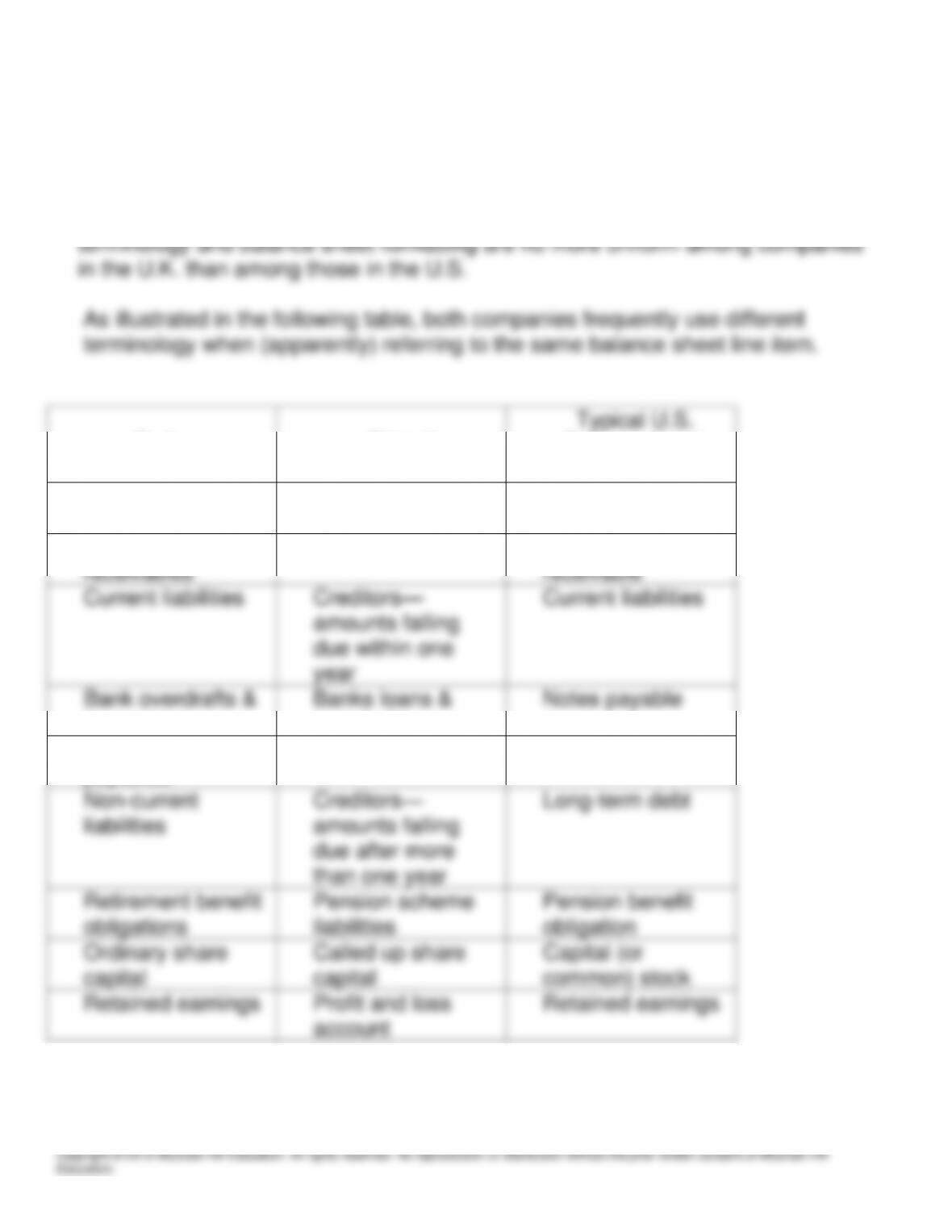
Some of the differences between Pittards’ balance sheet and those prepared in
accordance with U.S. GAAP are:
1. Pittards reports all amounts in pounds sterling.
2. Pittards uses a modified report form with liabilities deducted from assets to
3. Fixed assets are presented before current assets. Accounts in both categories
are presented in order of increasing liquidity.
5. “Stocks” and “debtors” would be labeled as “inventory” and “accounts
receivable,” respectively, in the U.S.
10. Pittards presents a subtotal for “net current assets (liabilities)” and lists “total
assets less current liabilities”; neither caption appears on typical U.S. balance
sheets.
12. Pittards presents both company and group balance sheets in comparative
format. In the U.S., companies having subsidiaries present just one
consolidated balance sheet for the consolidated entity.
Requirement 2:
Note to the instructor: This balance sheet comparison exercise illustrates that
4-47
1. Unlike Burberry, Pittards presents no “total assets” subtotal.
Requirement 3:
C4–4. Bertha’s Bridal Boutique: Determining cash flow amounts from
comparative balance sheets and income statement
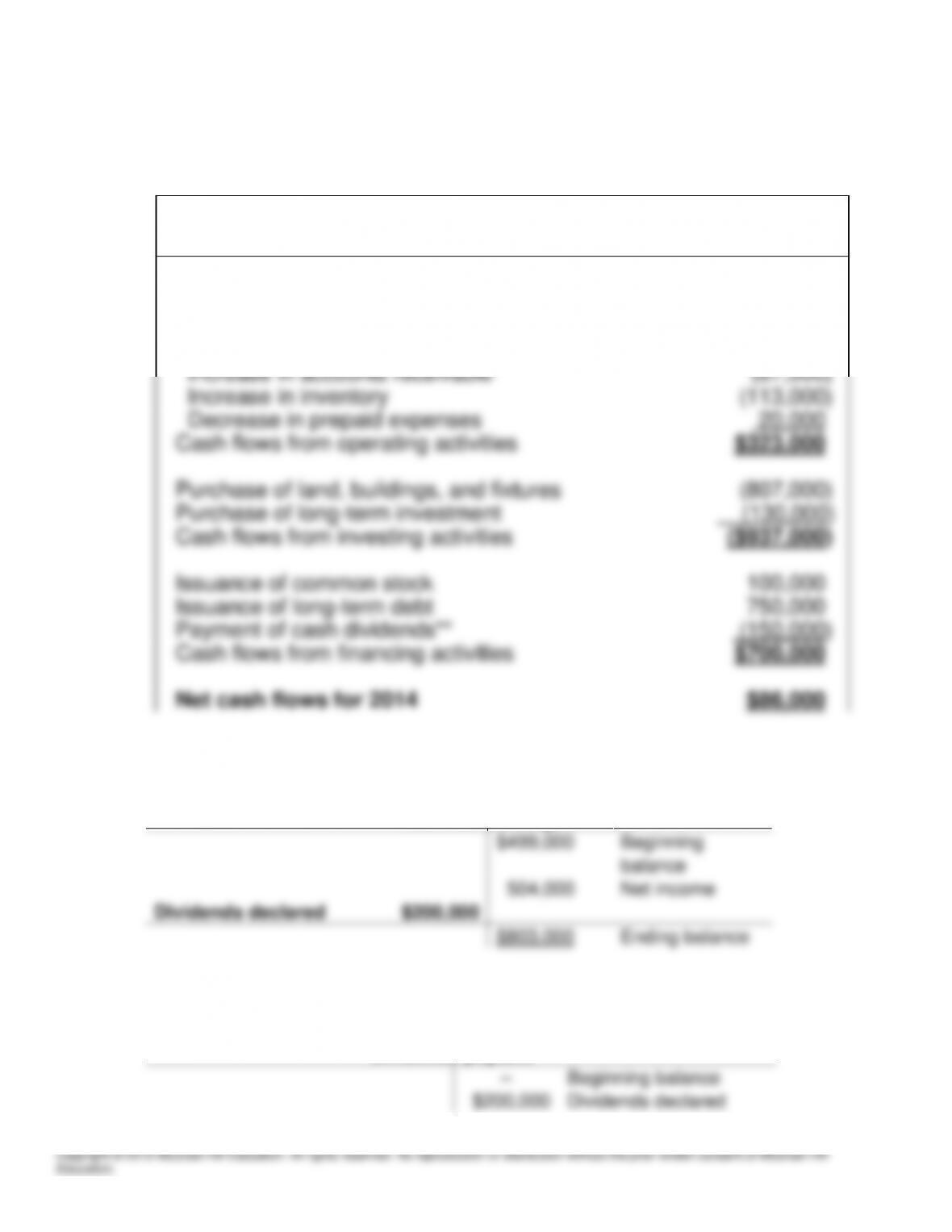
Requirement 1:
Cash collected during 2014 from accounts receivable is calculated below.
4-48
Requirement 3:
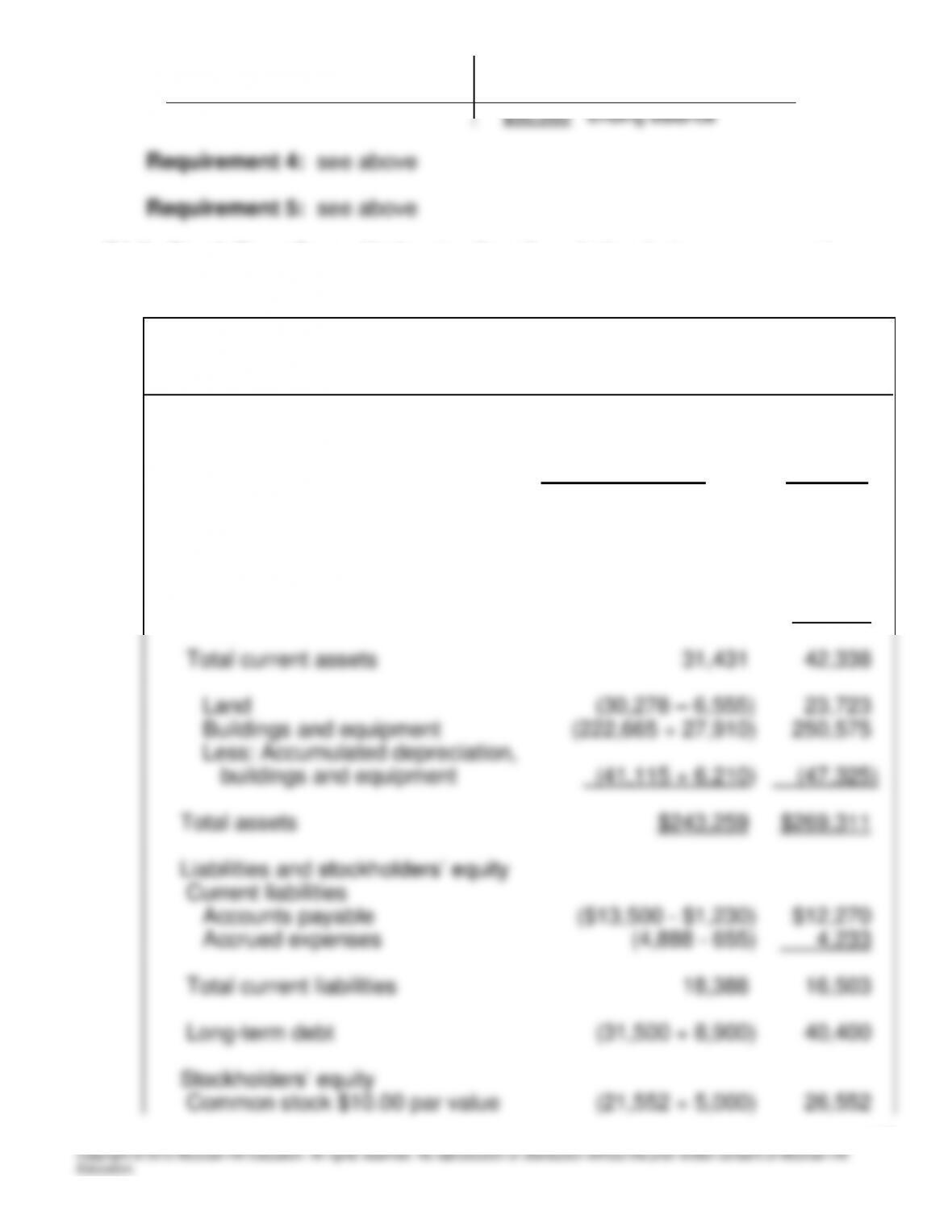
Cash provided by operations can be seen by looking at the 2014 statement of
cash flows for Bertha’s Bridal Boutique.
Bertha’s Bridal Boutique
Statement of Cash Flows
Net income
$504,000
Depreciation ($100,000 – $75,000)
25,000
Decrease in accounts payable
(52,000)
Increase in accrued expenses
6,000
Increase in accounts receivable
(67,000)
Increase in inventory
(113,000)
Decrease in prepaid expenses
20,000
Cash flows from operating activities
$323,000
Purchase of land, buildings, and fixtures
(807,000)
Purchase of long-term investment
(130,000)
Cash flows from investing activities
($937,000)
Issuance of common stock
100,000
Issuance of long-term debt
750,000
Payment of cash dividends**
(150,000)
Cash flows from financing activities
$700,000
Net cash flows for 2014
$86,000
**The amount listed for payment of cash dividends can be computed using T-account
analysis as follows:
Retained Earnings
$499,000
Beginning
balance
504,000
Net income
Dividends declared
$200,000
$803,000
Ending balance
Using the dividends declared amount we found above, we can find the actual
cash paid out for dividends by looking at the dividends payable account.
Dividends payable
–
Beginning balance
$200,000
Dividends declared
4-49
Cash paid out in
dividends
$150,000
$50,000
Ending balance
Requirement 4: see above
Requirement 5: see above
C4–5. Crash Zone Corp.: Understanding the relation between successive
balance sheets and cash flow statement
Crash Zone Corporation
Balance Sheet
For the Year Ended December 31, 2014
2013 Amount
Plus/Minus 2014
__ Change_ _ Amount
Assets
Current assets
Cash ($8,250 + $7,481) $15,731
Accounts receivable, net (7,110 + 3,178) 10,288
Inventory (14,221 + 350) 14,571
Prepaid assets (1,850 – 102) __1,748
4-50
Copyright © 2015 McGraw-Hill Education. All rights reserved. No reproduction or distribution without the prior written consent of McGraw-Hill
Education.
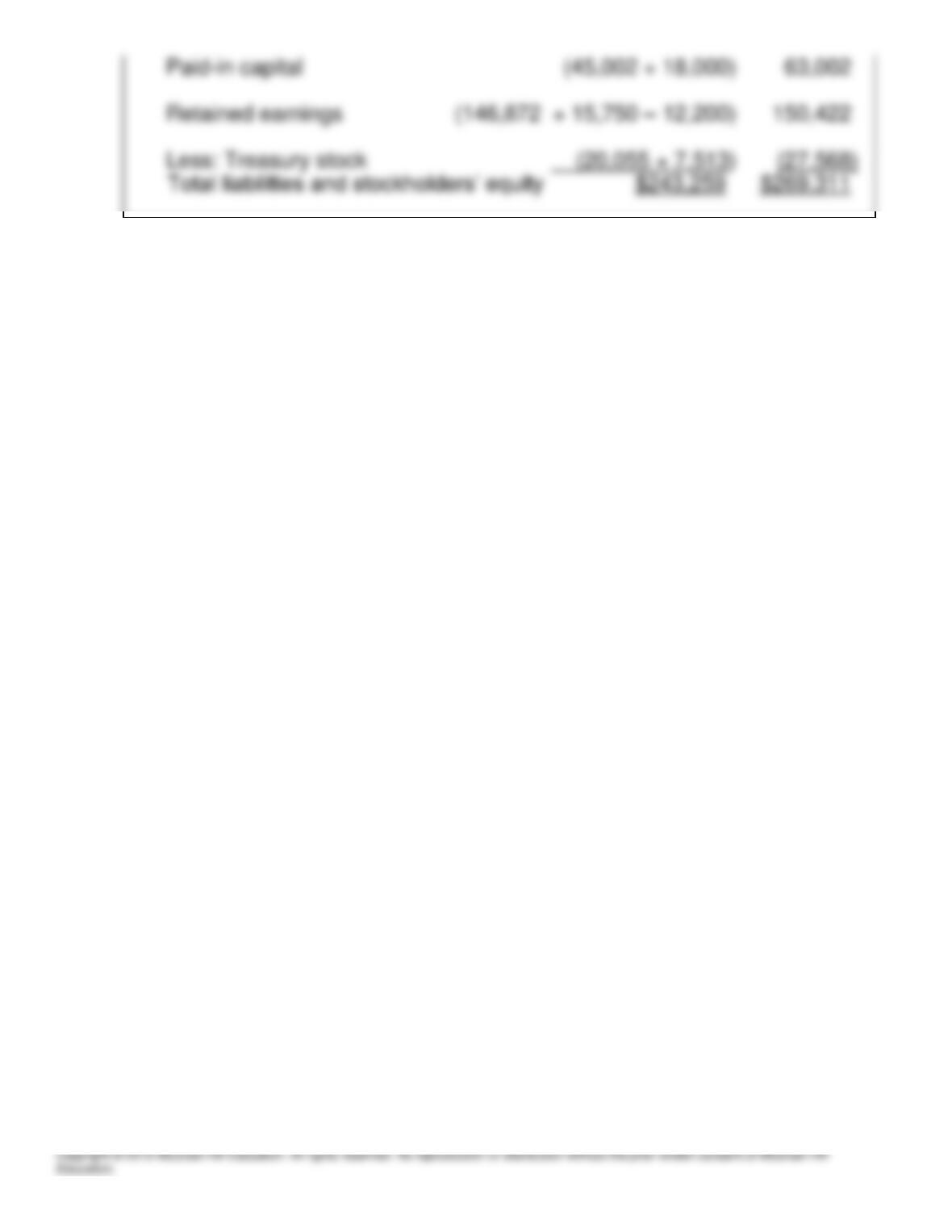
Paid-in capital (45,002 + 18,000) 63,002
Retained earnings (146,872 + 15,750 – 12,200) 150,422
Less: Treasury stock __(20,055 + 7,513) (27,568)
Total liabilities and stockholders’ equity $243,259 $269,311
4-51
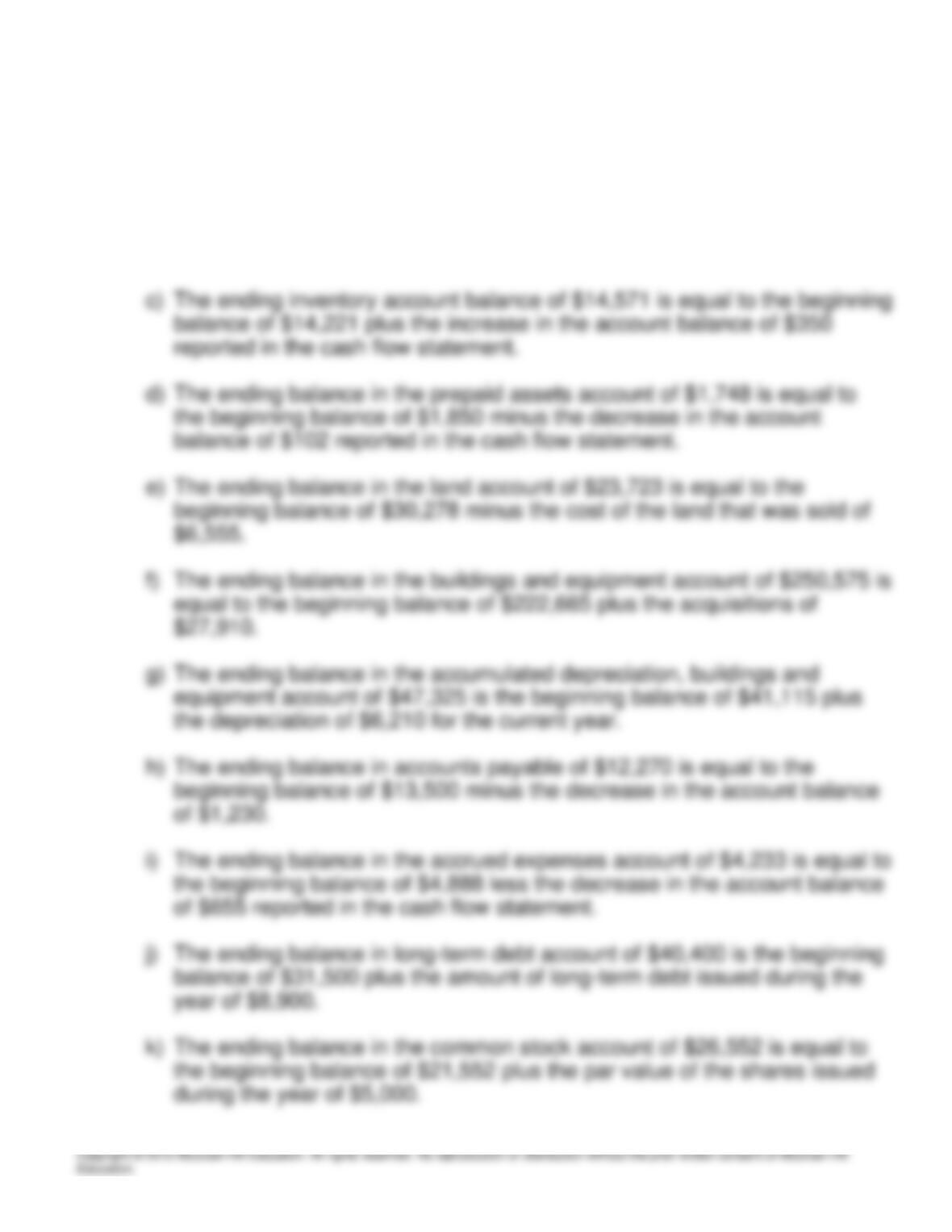
The details underlying the calculation of the 2014 amounts are as follows:
a) The ending cash account balance of $15,731 is equal to the beginning
balance of $8,250 plus the increase in cash of $7,481 reported in the cash
flow statement.
b) The ending balance in accounts receivable, net, of $10,288 is equal to
beginning balance of $7,110 plus the increase in the account’s balance of
$3,178 reported in the cash flow statement.
4-52
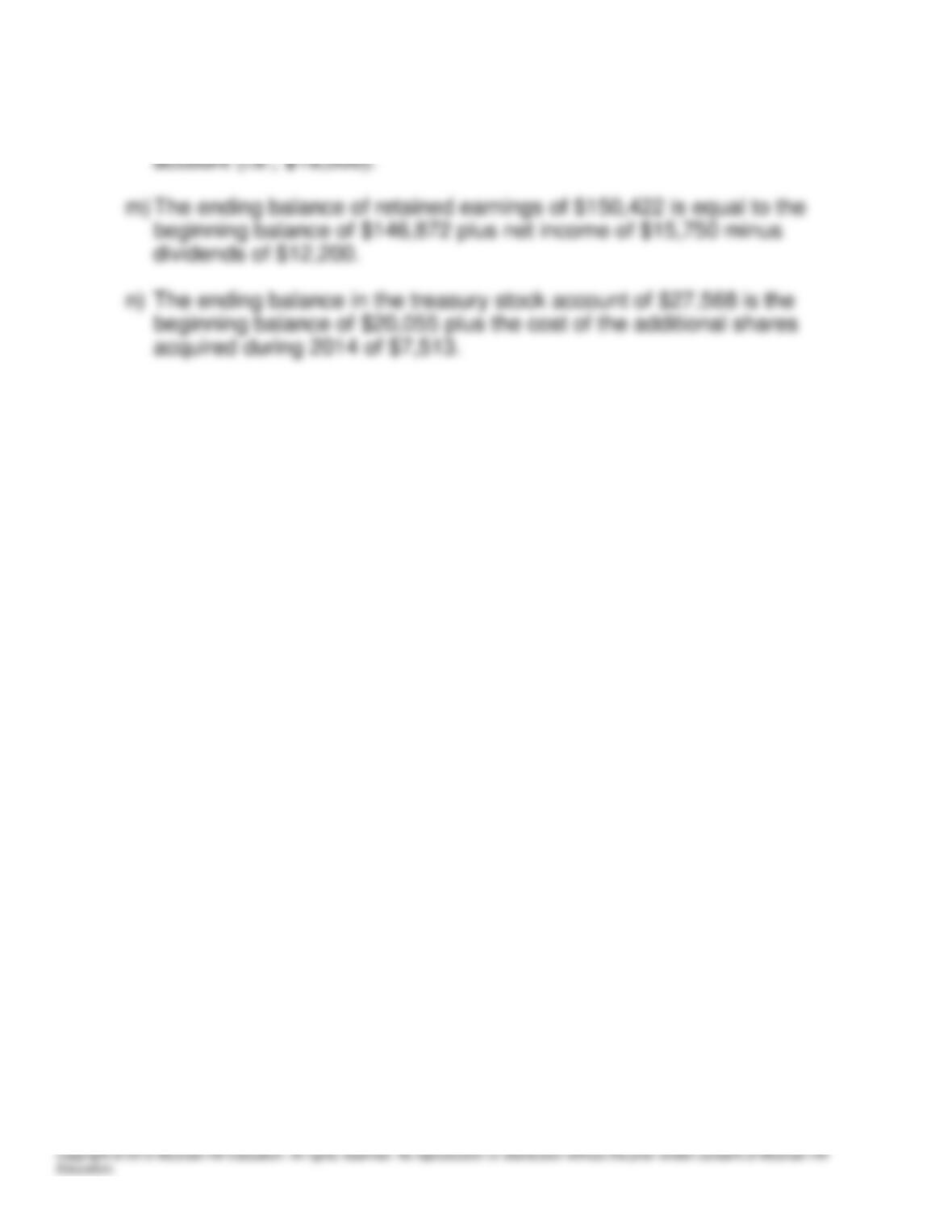
l) The ending balance in the paid-in capital account of $63,002 is equal to
the beginning balance of $45,002 plus the proceeds from the common
stock issue of $23,000, net of the $5,000 that went to the common stock