4-1
Financial Reporting and Analysis (6th Ed.)
Chapter 4 Solutions
Structure of the Balance Sheet and Statement of Cash Flows
Exercises
Exercises
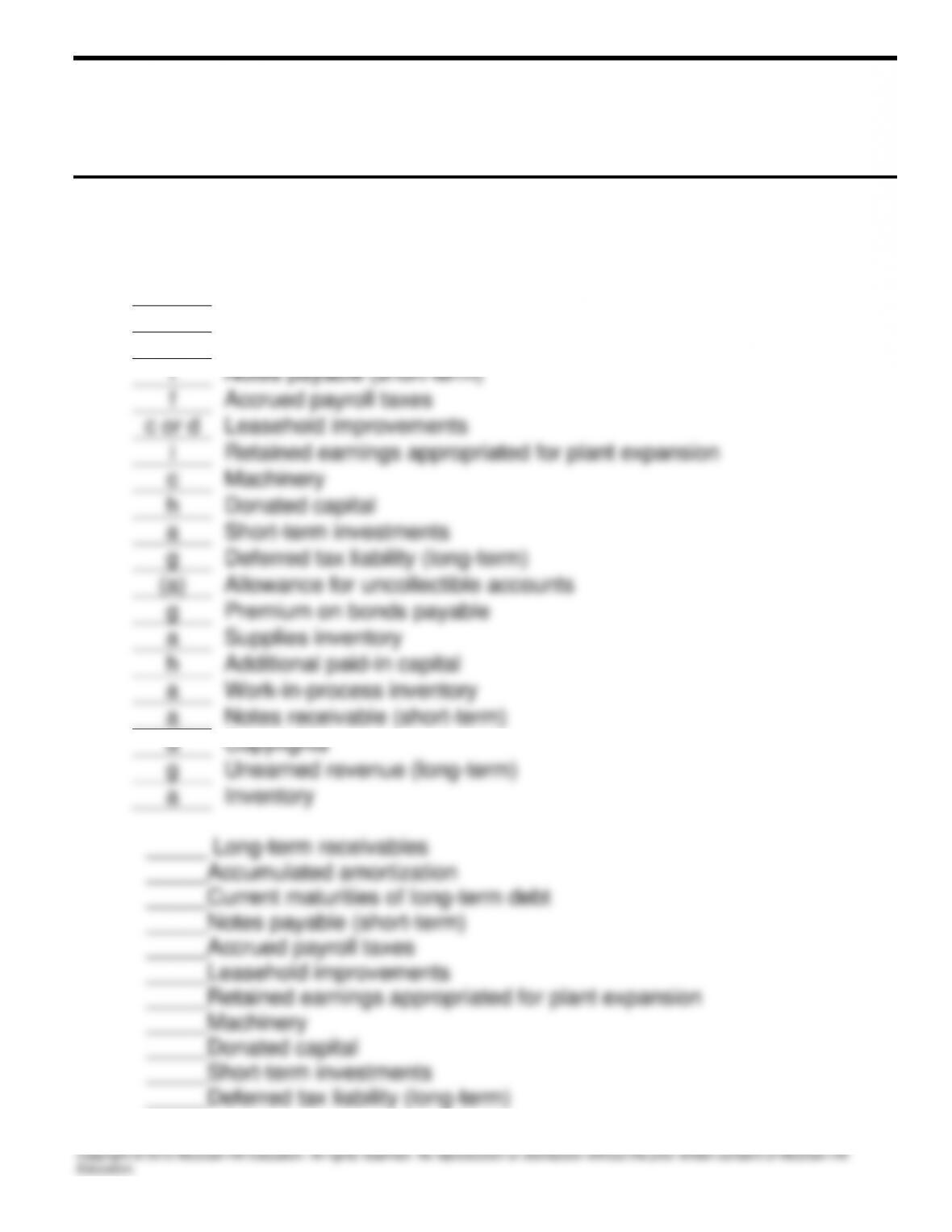
E4–1. Balance sheet classification
b
Long-term receivables
(d)
Accumulated amortization
f
Current maturities of long-term debt
f
Notes payable (short-term)
f
Accrued payroll taxes
c or d
Leasehold improvements
i
Retained earnings appropriated for plant expansion
c
Machinery
h
Donated capital
a
Short-term investments
g
Deferred tax liability (long-term)
(a)
Allowance for uncollectible accounts
g
Premium on bonds payable
a
Supplies inventory
h
Additional paid-in capital
a
Work-in-process inventory
a
Notes receivable (short-term)
d
Copyrights
g
Unearned revenue (long-term)
a
Inventory
4-2
_____Allowance for uncollectible accounts
_____Premium on bonds payable
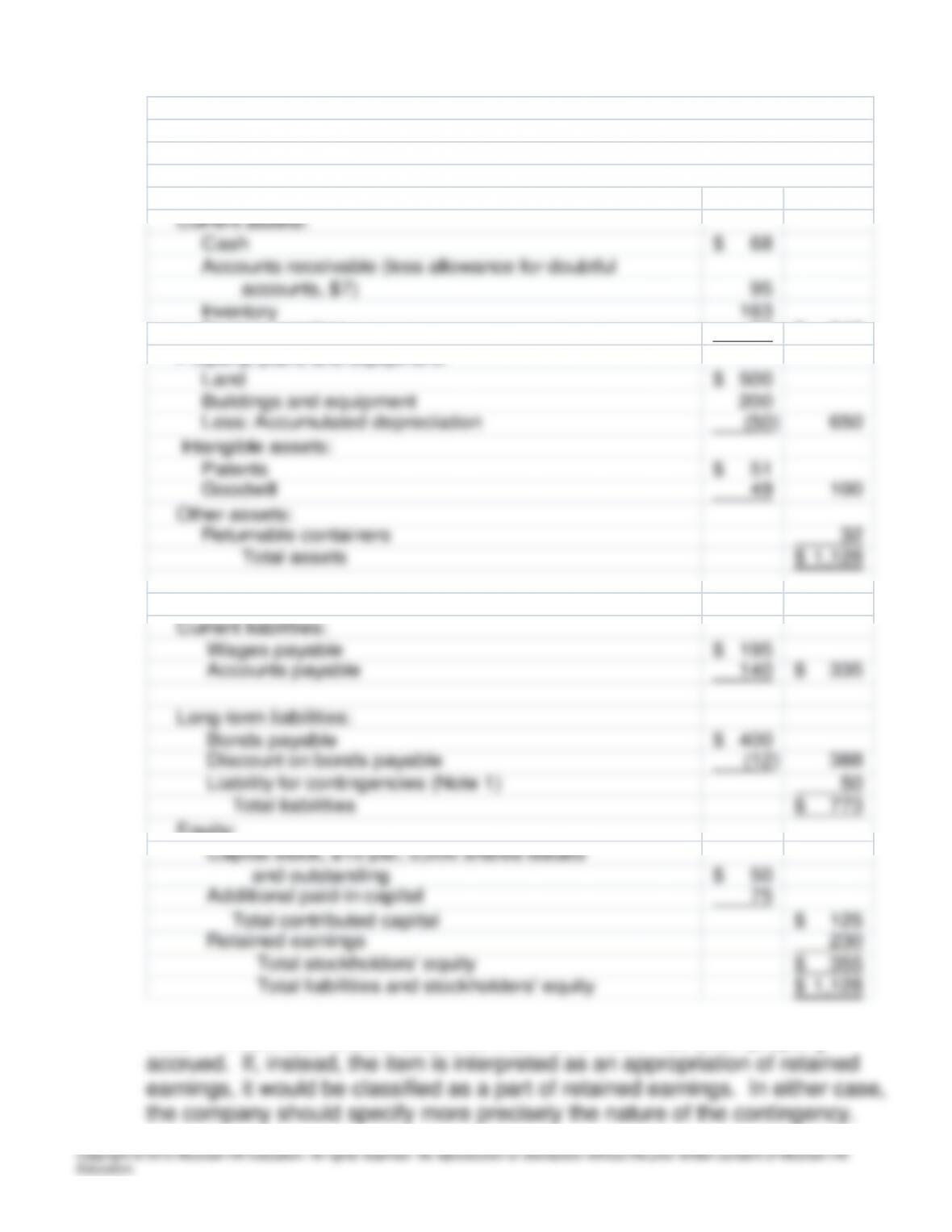
E4–2. Balance sheet preparation
Assets:
Current assets:
Cash 68$
Accounts receivable (less allowance for doubtful
accounts, $7) 95
Inventory 163
Factory supplies 20 346$
Property, plant, and equipment:
Land 500$
Buildings and equipment 200
Less: Accumulated depreciation (50) 650
Intangible assets:
Total assets 1,128$
Liabilities:
Mikeska Company
Balance Sheet
As of 12/31/2014
(in thousands)
4-4
E4–3. Making financial disclosures
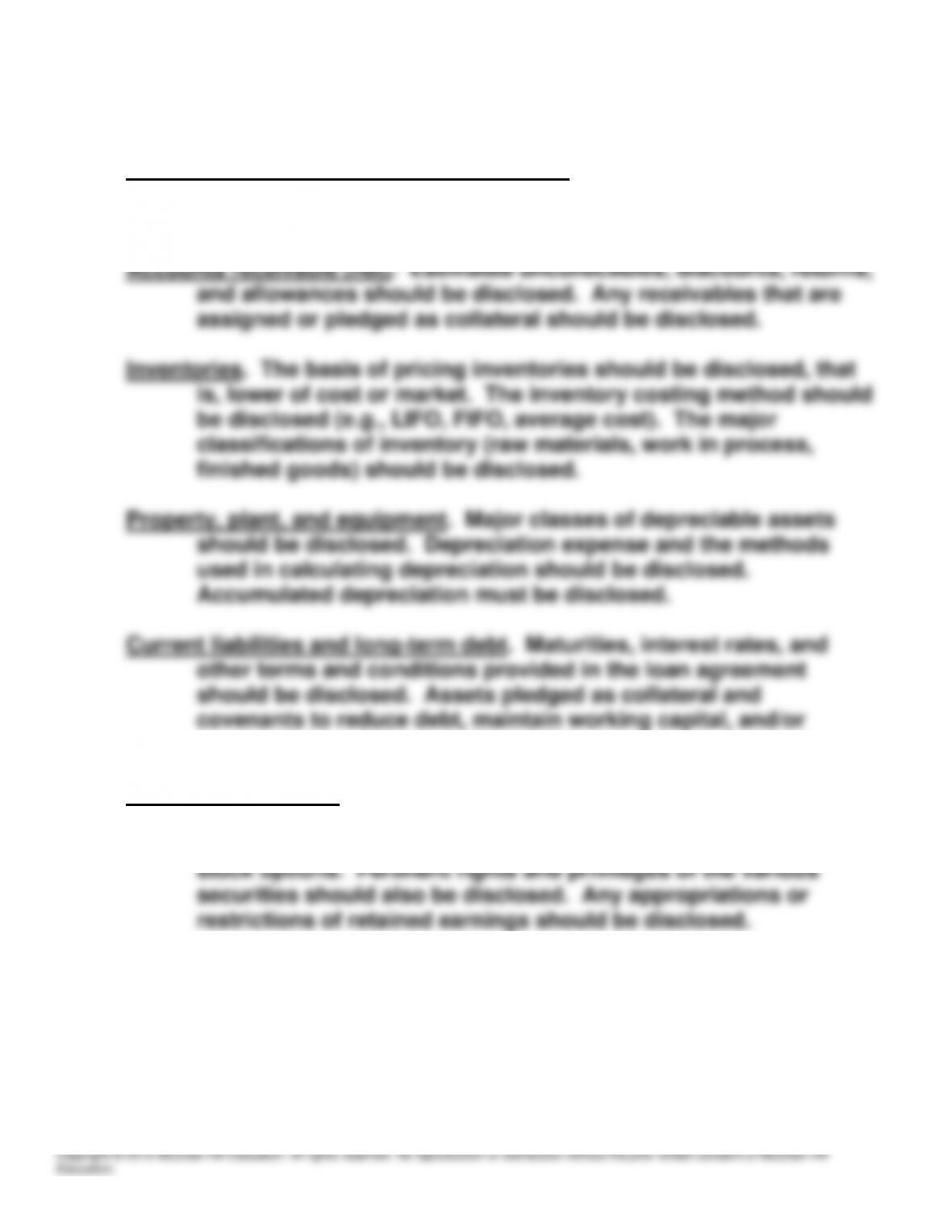
Investments in available-for-sale securities. Eagle must disclose
aggregate fair value, gross unrealized holding gains, and gross
unrealized holding losses by major security type.
restrict dividends for specific liabilities should be disclosed.
Stockholders’ equity. For each class of stock, disclosure should be
made regarding the par or stated value and the total number of
shares authorized, issued, and outstanding, and reserved for
4-5
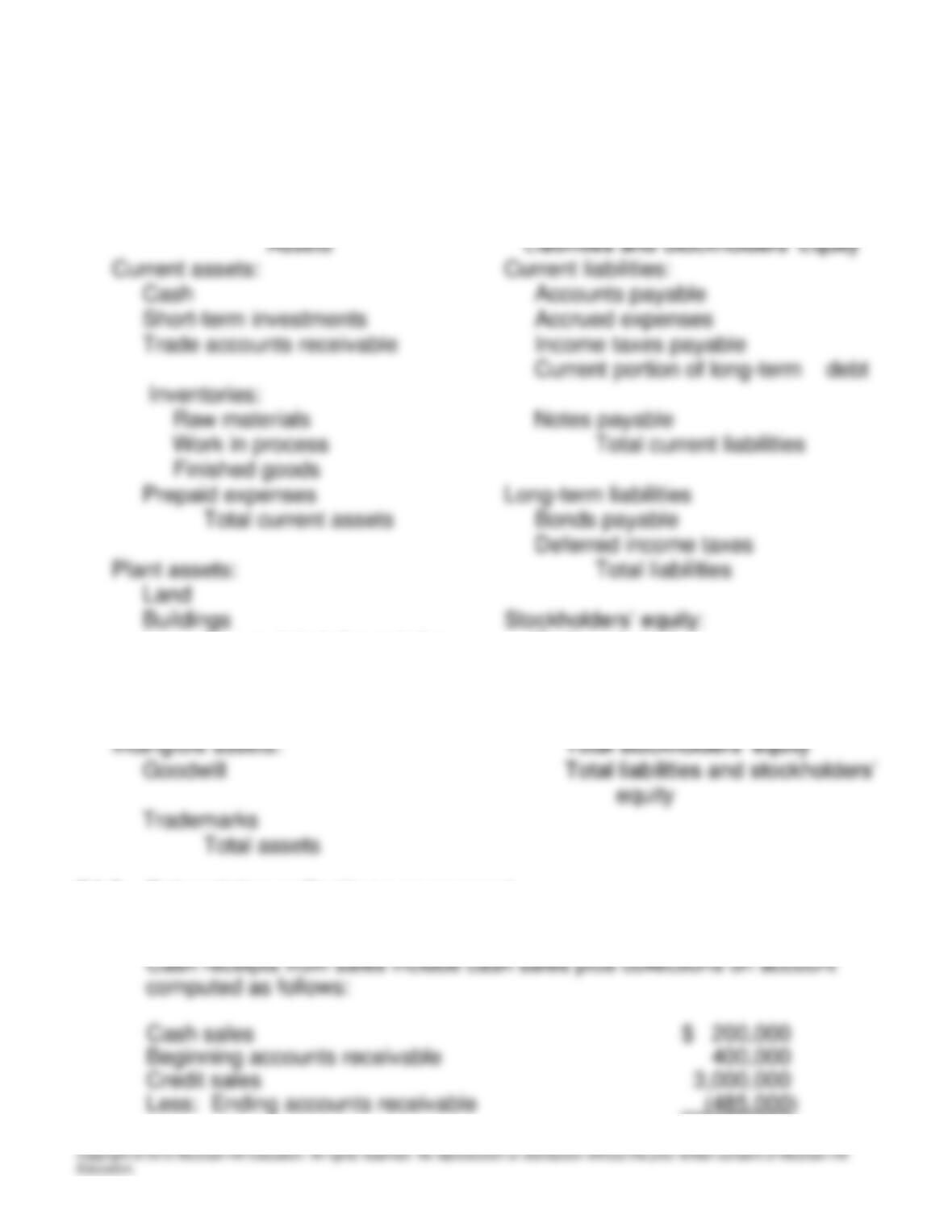
E4-4. Balance sheet classifications
Reagan Company
Balance Sheet
As of December 31, 2014
Assets
Liabilities and Stockholders’ Equity
Current assets:
Current liabilities:
Cash
Accounts payable
Short-term investments
Accrued expenses
Trade accounts receivable
Income taxes payable
Inventories:
Current portion of long-term debt
Raw materials
Notes payable
Work in process
Total current liabilities
Finished goods
Prepaid expenses
Long-term liabilities
Total current assets
Bonds payable
Deferred income taxes
Plant assets:
Total liabilities
Land
Buildings
Stockholders’ equity:
Less: Accumulated depreciation
Preferred stock
Machinery and equipment
Common stock
Less: Accumulated depreciation
Contributed capital in excess of par
Retained earnings
Intangible assets:
Total stockholders’ equity
Goodwill
Total liabilities and stockholders’
equity
Trademarks
Total assets
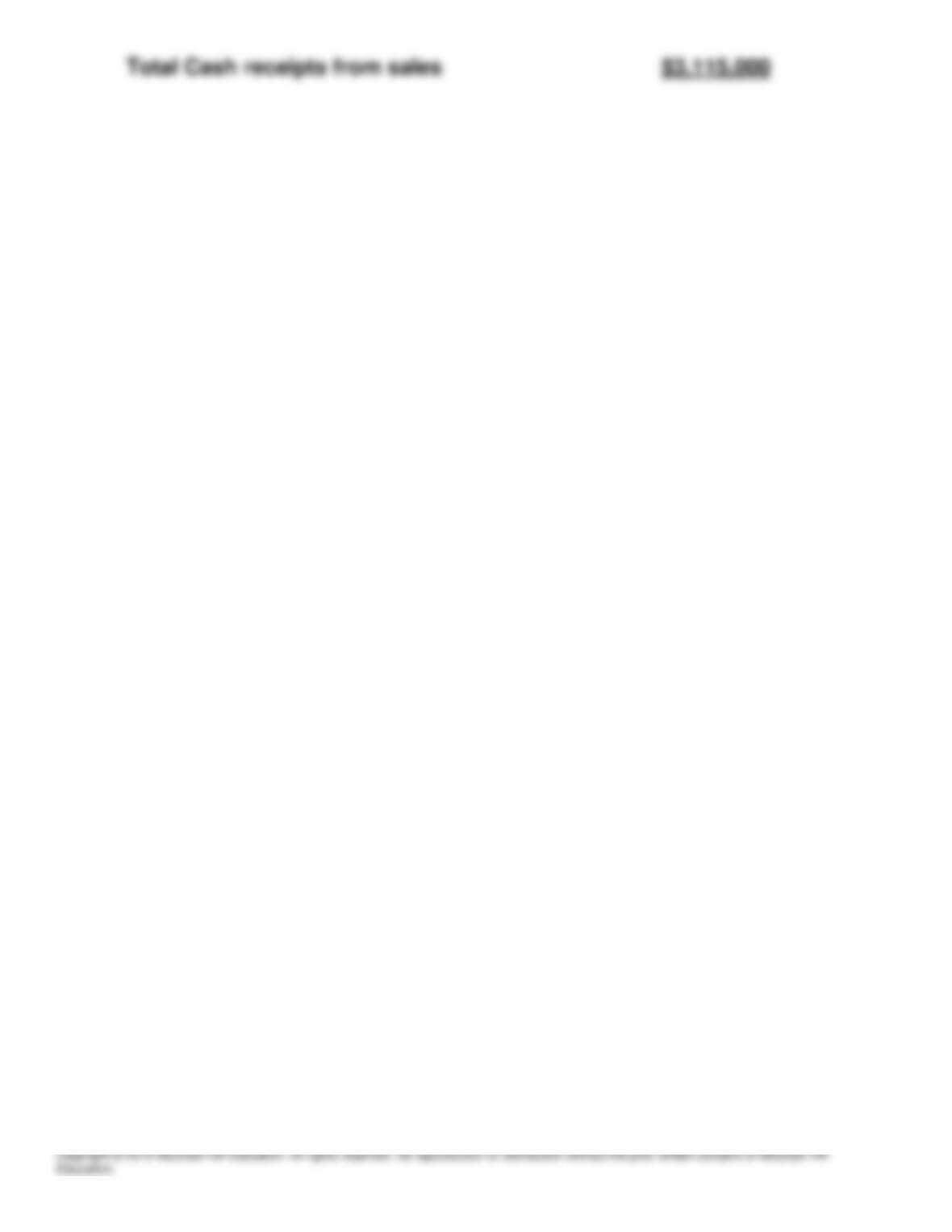
E4-5. Determining collections on account
(AICPA adapted)
4-6
Copyright © 2015 McGraw-Hill Education. All rights reserved. No reproduction or distribution without the prior written consent of McGraw-Hill
Education.
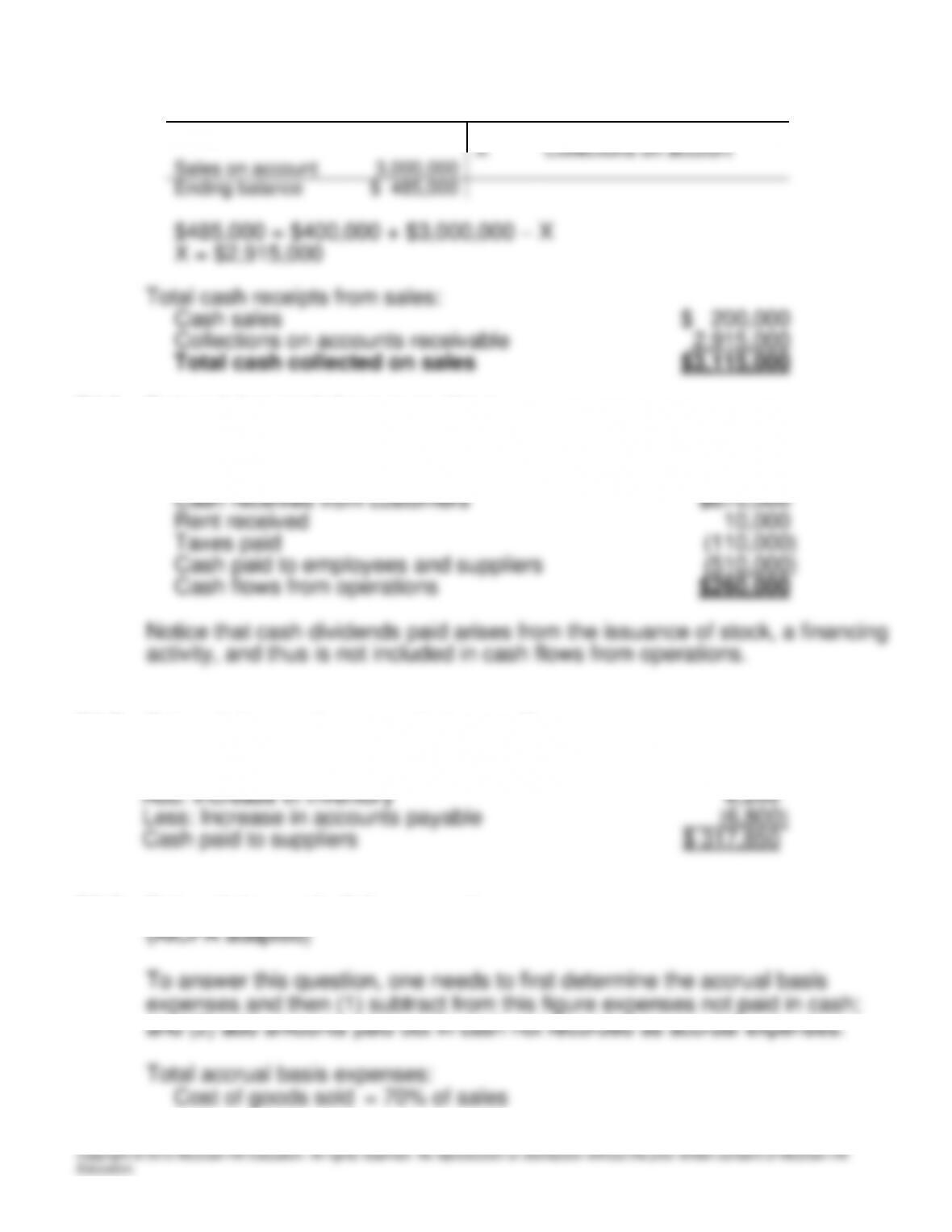
Total Cash receipts from sales $3,115,000
4-7
Alternative Solution: T-account analysis of accounts receivable
Accounts Receivable
Beginning balance
$ 400,000
X
Collections on account
Sales on account
3,000,000
Ending balance
$ 485,000
E4-6. Determining cash from operations
(AICPA adapted)
Cash flows from operations:
E4-7. Determining cash payments to suppliers
Cost of goods sold
$ 318,450
Add: Increase in inventory
6,200
Less: Increase in accounts payable
(6,800)
Cash paid to suppliers
$ 317,850
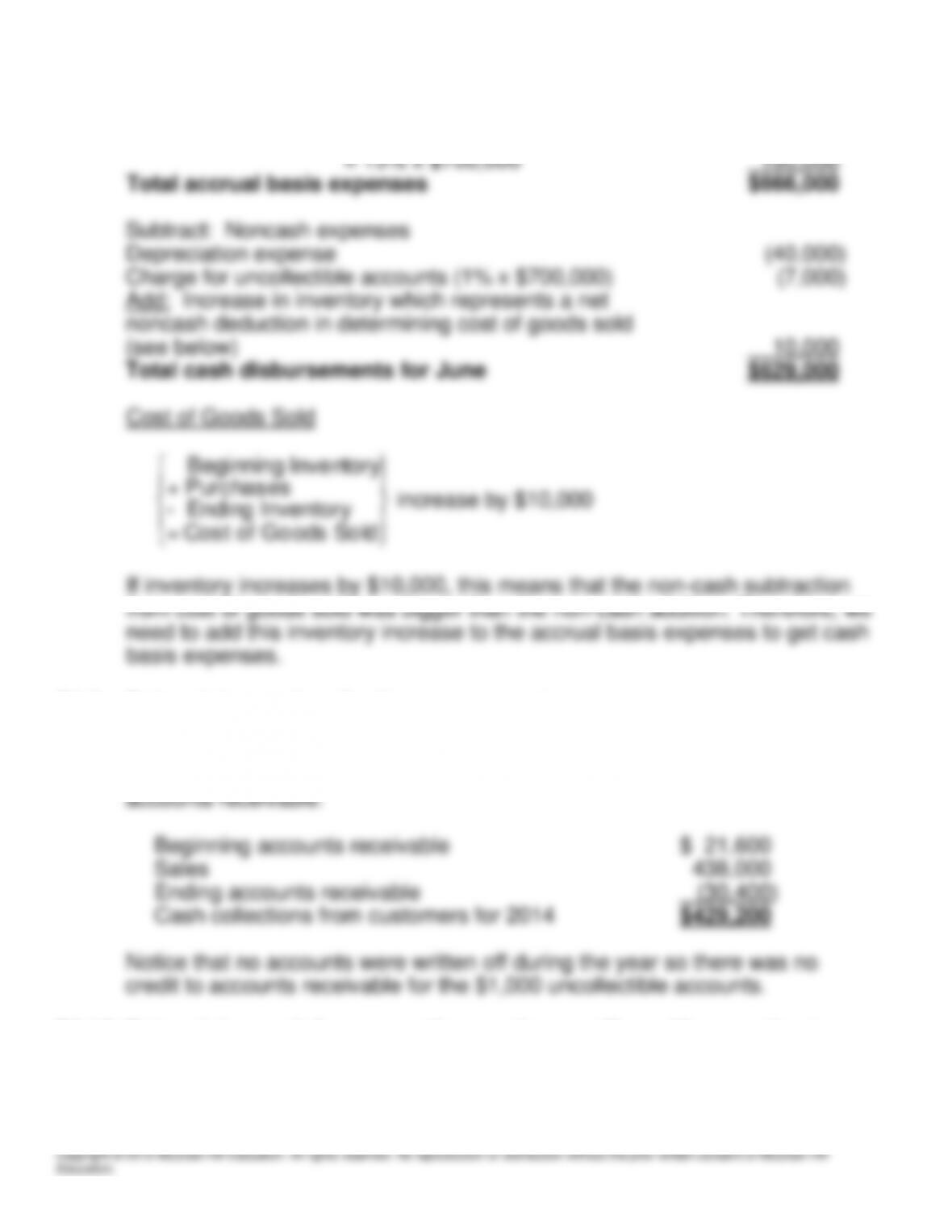
E4-8. Determining cash disbursements
4-8
= 70% x $700,000 $490,000
Selling, general, & administrative expense
Fixed portion 71,000
Variable portion = 15% of sales
E4-9. Determining cash collections on account
(AICPA adapted)
Cash collected from customers can be determined by finding the change in
E4-10. Determining cash from operations and reconciling with accrual net
income
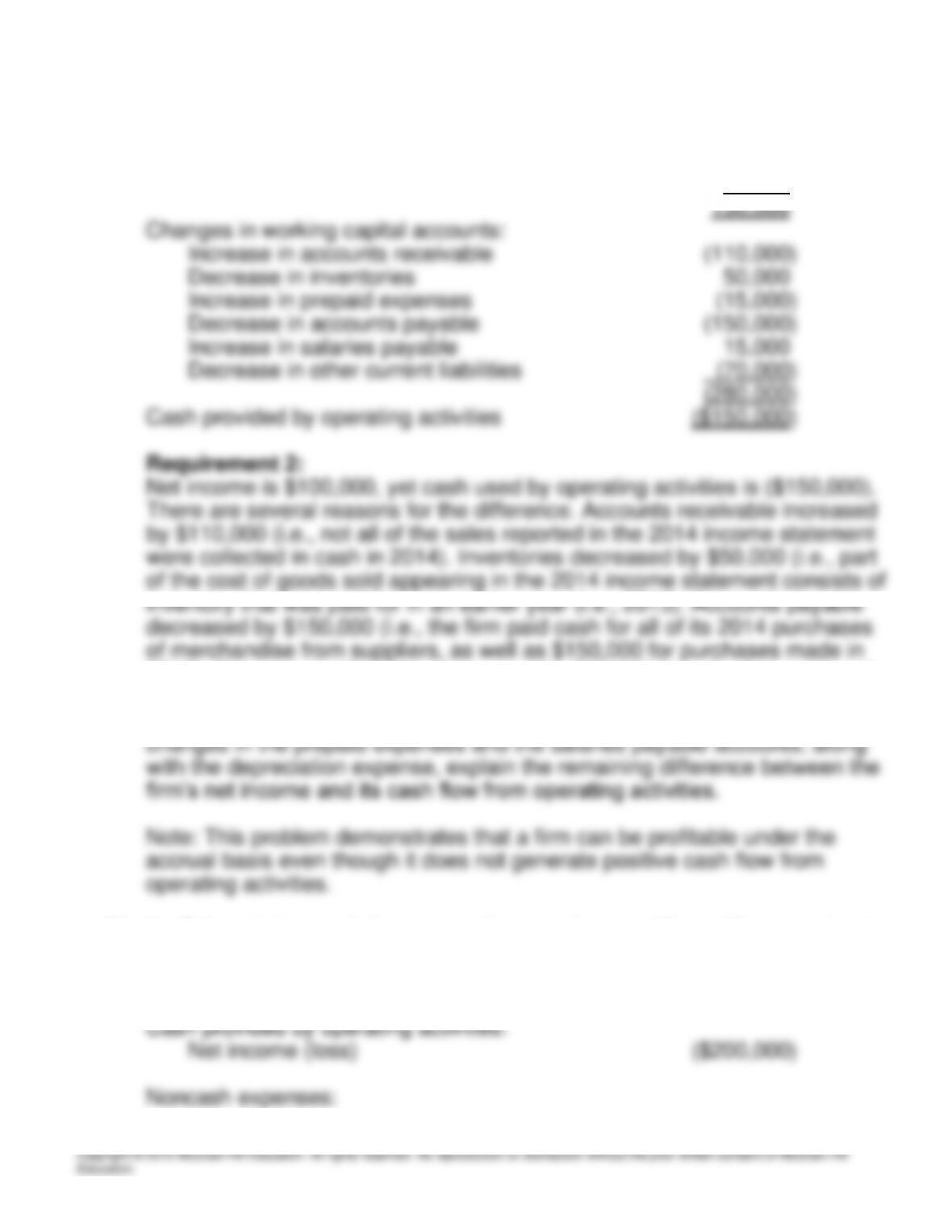
Requirement 1:
4-9
Cash provided by operating activities:
Net income $100,000
Noncash expenses:
Depreciation _30,000
2013). Other current liabilities decreased by $70,000 (i.e., the firm paid cash
for the various operating expenses it incurred in 2014 as well as $70,000 of
operating expenses that were incurred, but not paid in cash in 2013). The
E4-11. Determining cash from operations and reconciling with accrual net
income
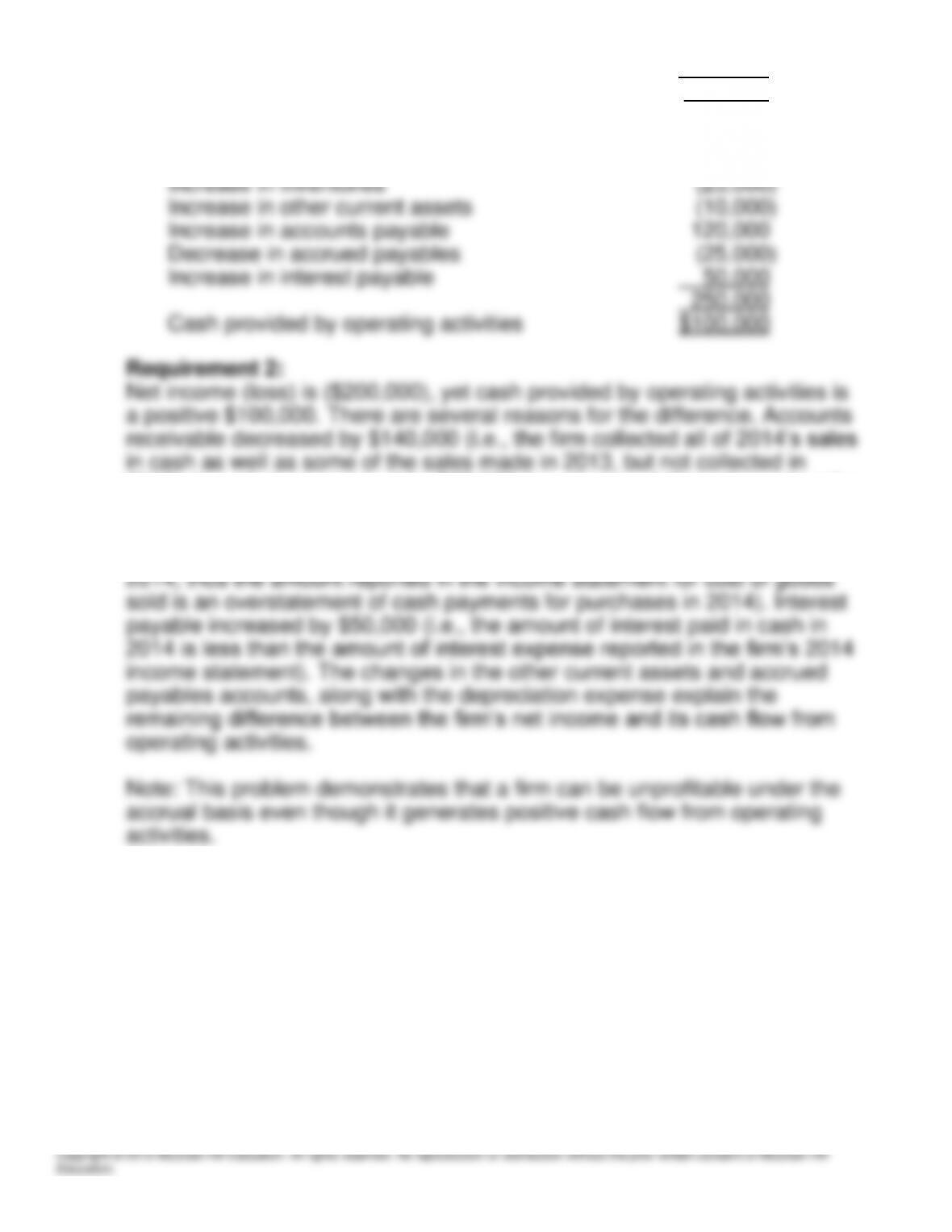
Requirement 1:
4-10
Depreciation 50,000
(150,000)
Changes in working capital accounts:
Decrease in accounts receivable 140,000
2013). Inventories increased by $25,000 (i.e., the acquisition of merchandise
inventory in 2014 exceeded the amount reported in the income statement for
cost of goods sold). Accounts payable increased by $120,000 (i.e., the firm
did not pay for all of the merchandise purchases made from suppliers during
4-11
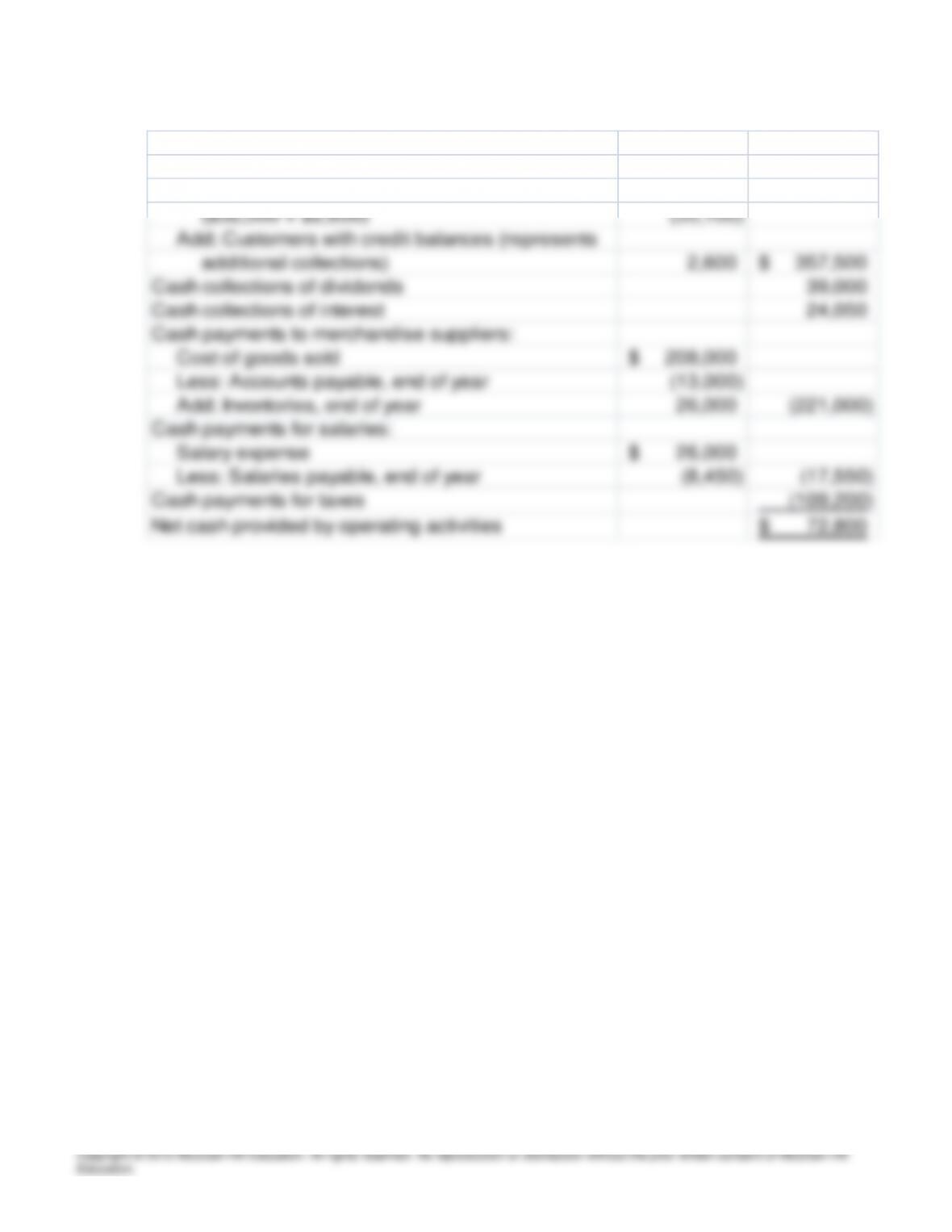
E4-12. Determining amounts shown on statement of cash flows
Cash collections from customers:
Sales 390,000$
Less: Accounts receivable, end of year
($32,500 + $2,600) (35,100)
Add: Customers with credit balances (represents
additional collections) 2,600 357,500$
Cash collections of dividends 39,000
Cash collections of interest 24,050
Cash payments to merchandise suppliers:
Cost of goods sold 208,000$
Less: Accounts payable, end of year (13,000)
Add: Inventories, end of year 26,000 (221,000)
Cash payments for salaries:
Salary expense 26,000$
Less: Salaries payable, end of year (8,450) (17,550)
Cash payments for taxes (109,200)
Net cash provided by operating activities 72,800$

4-12
Financial Reporting and Analysis (6th Ed.)
Chapter 4 Solutions
Structure of the Balance Sheet and Statement of Cash Flows
Problems
Problems
P4-1. Preparing a balance sheet
Balance sheet preparation
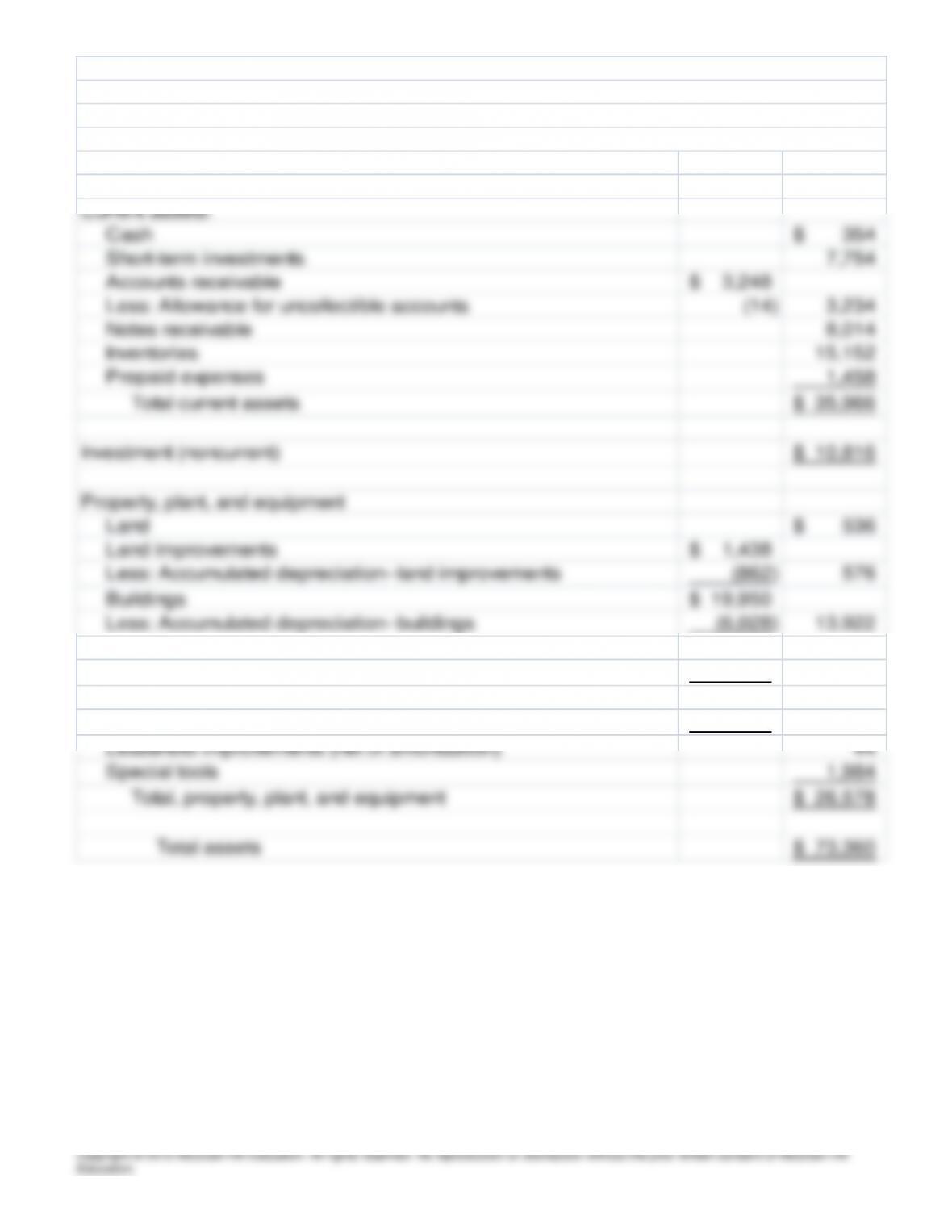
Assets
Current assets:
Cash 354$
Short-term investments 7,754
Accounts receivable 3,248$
Less: Allowance for uncollectible accounts (14) 3,234
Notes receivable 8,014
Inventories 15,152
Prepaid expenses 1,458
Total current assets 35,966$
Investment (noncurrent) 10,816$
Property, plant, and equipment
Land 536$
Land improvements 1,438$
Less: Accumulated depreciation–-land improvements (862) 576
Ricky Corporation
Balance Sheet
As of December 31, 2014
(in thousands)
4-14
Liabilities and Stockholders’ Equity
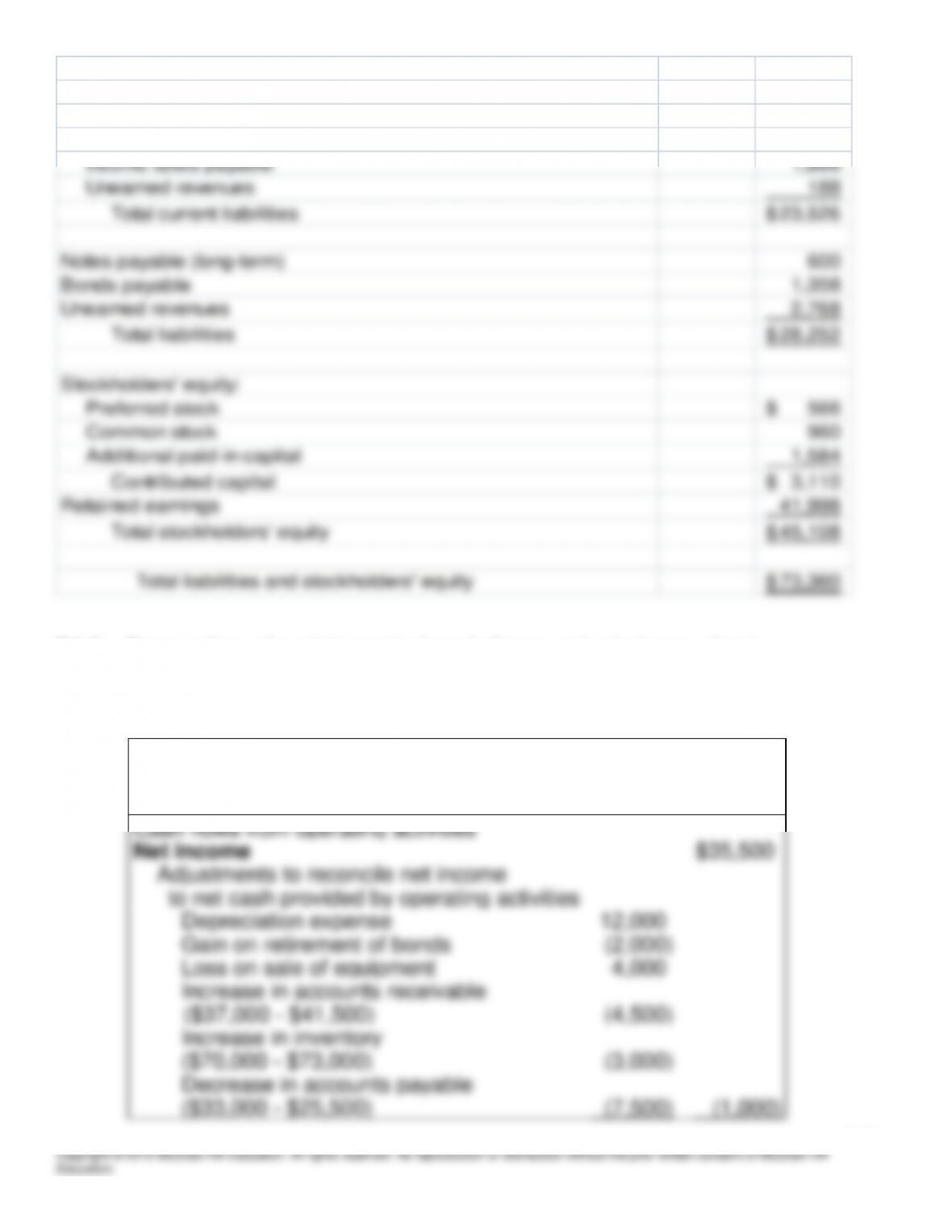
Current liabilities:
Accounts payable 9,224$
Accrued liabilities 12,226
Income taxes payable 1,888
Unearned revenues 188
Total current liabilities 23,526$
Notes payable (long-term) 600
Bonds payable 1,358
Unearned revenues 2,768
Total liabilities 28,252$
Stockholders’ equity:
Preferred stock 566$
Common stock 960
Additional paid-in capital 1,584
Contributed capital 3,110$
Retained earnings 41,998
Total stockholders‘ equity 45,108$
Total liabilities and stockholders‘ equity 73,360$
P4–2. Preparation of a statement of cash flows and a balance sheet
Requirement 1:
Kay Wing, Inc.
Statement of Cash Flows
For the Year Ended 12/31/2014
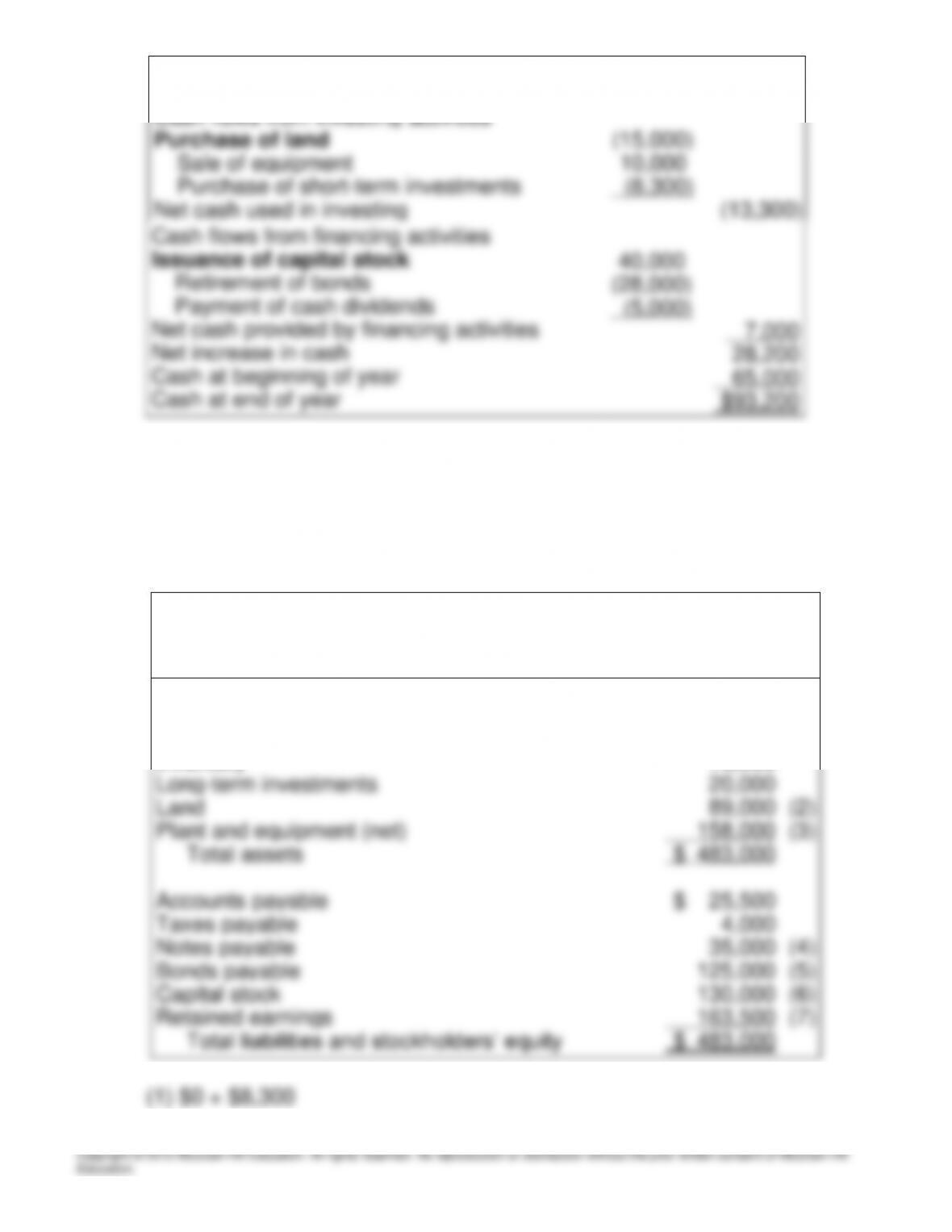
Cash flows from operating activities
Net income
$35,500
Adjustments to reconcile net income
to net cash provided by operating activities
Depreciation expense
12,000
Gain on retirement of bonds
(2,000)
Loss on sale of equipment
4,000
Increase in accounts receivable
($37,000 – $41,500)
(4,500)
Increase in inventory
($70,000 – $73,000)
(3,000)
Decrease in accounts payable
($33,000 – $25,500)
(7,500)
(1,000)
4-15
Cash flow provided by operating activities
34,500
Cash flows from investing activities
Purchase of land
(15,000)
Sale of equipment
10,000
Purchase of short-term investments
(8,300)
Net cash used in investing
(13,300)
Cash flows from financing activities
Issuance of capital stock
40,000
Retirement of bonds
(28,000)
Payment of cash dividends
(5,000)
Net cash provided by financing activities
7,000
Net increase in cash
28,200
Cash at beginning of year
65,000
Cash at end of year
$93,200
Note to the instructor: The purchase of the building for $75,000 through the
issuance of bonds is a significant non-cash financing transaction that would
be disclosed in the notes to the financial statements.
Requirement 2:
Kay Wing, Inc.
Balance Sheet
December 31, 2014
Cash
$ 93,200
Accounts receivable
41,500
Short-term investments
8,300
(1)
Inventory
73,000
Long-term investments
20,000
Land
89,000
(2)
Plant and equipment (net)
158,000
(3)
Total assets
$ 483,000
Accounts payable
$ 25,500
Taxes payable
4,000
Notes payable
35,000
(4)
Bonds payable
125,000
(5)
Capital stock
130,000
(6)
Retained earnings
163,500
(7)
Total liabilities and stockholders’ equity
$ 483,000