Chapter 7 Solutions Manual Content
7-1
Chapter 7: Applying Excel
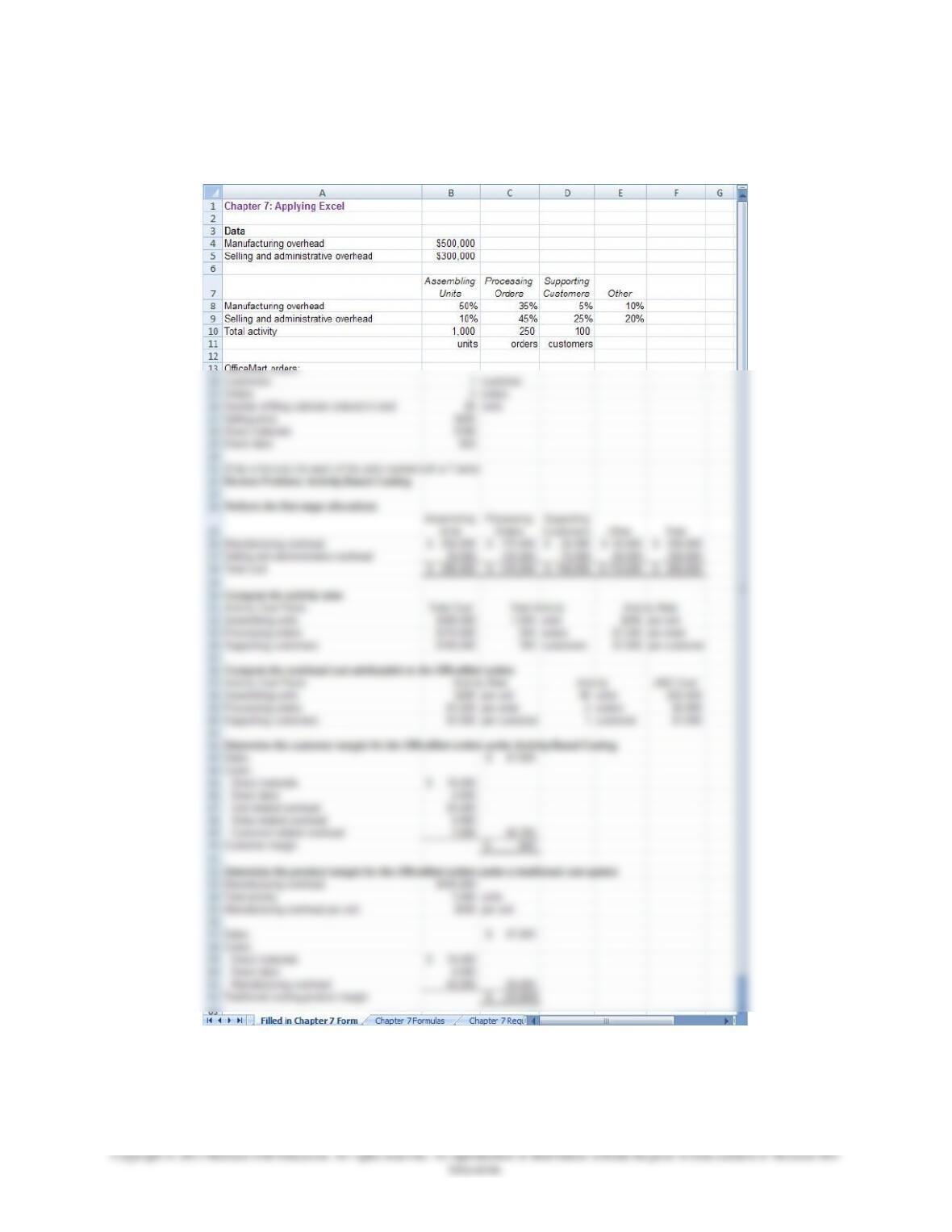
The completed worksheet is shown below.
Chapter 7 Solutions Manual Content
7-2
Chapter 7: Applying Excel (continued)
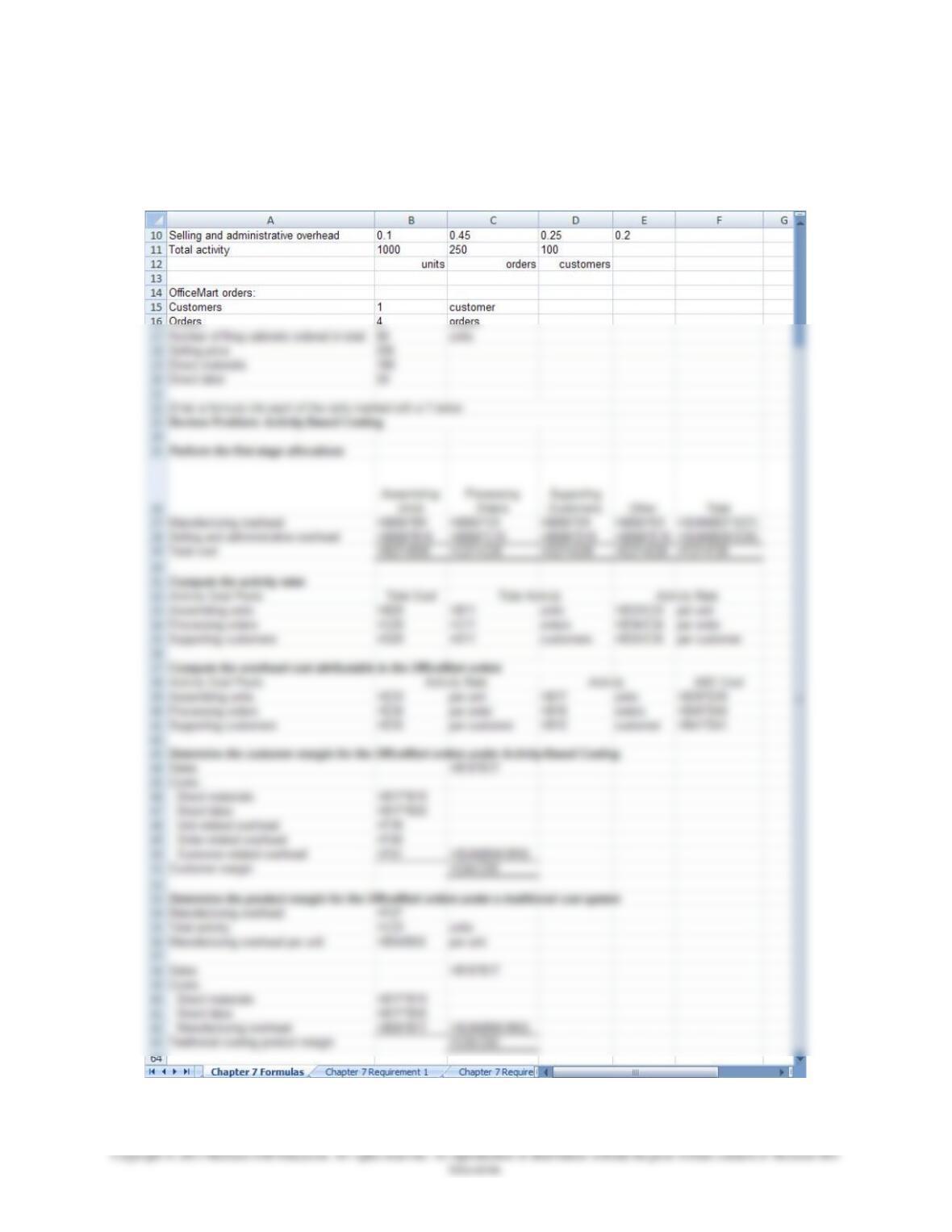
The completed worksheet, with formulas displayed, is shown below.
Chapter 7 Solutions Manual Content
7-3
Chapter 7: Applying Excel (continued)
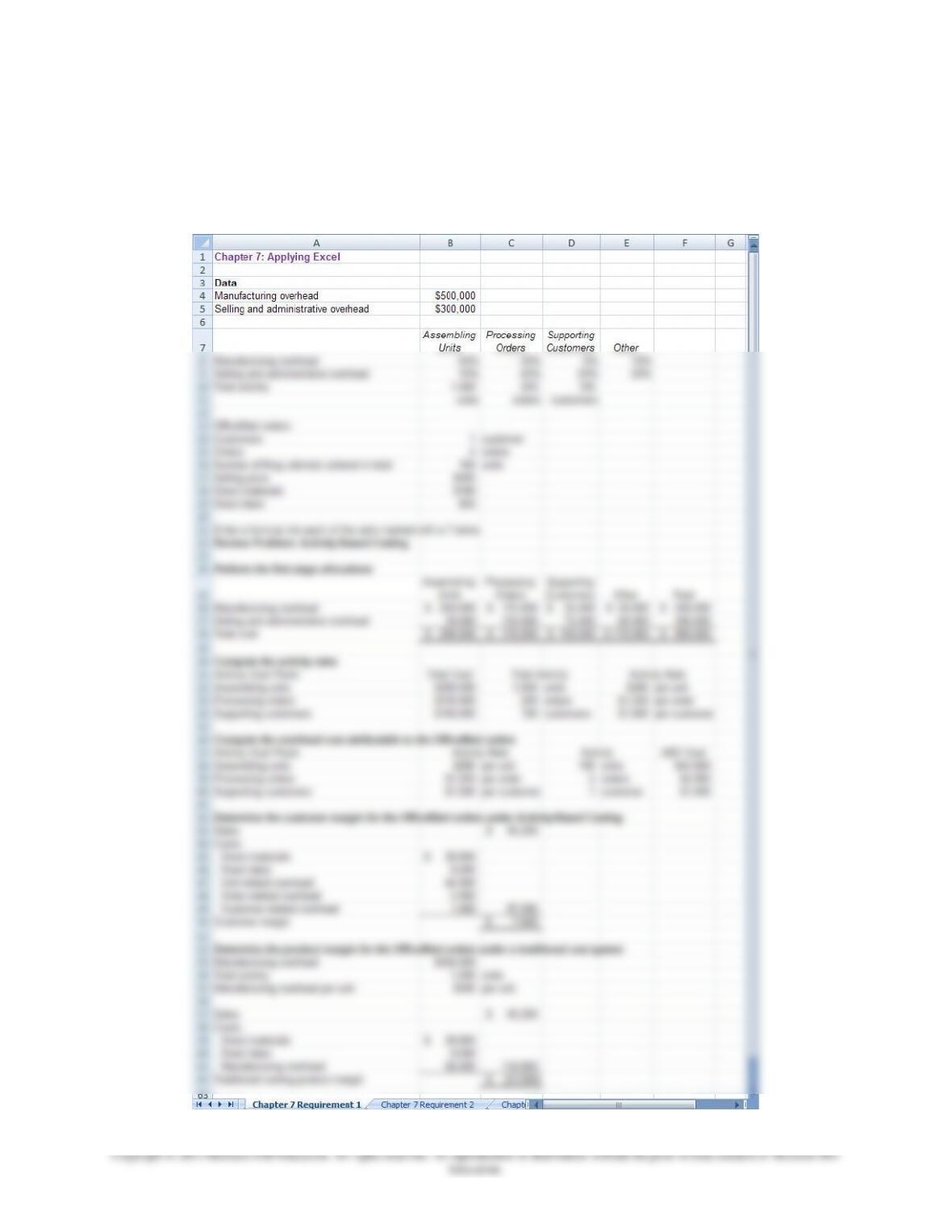
1. When the number of units ordered by OfficeMart is doubled to 160
units, the result is:
Chapter 7 Solutions Manual Content
7-4
Chapter 7: Applying Excel (continued)
a. The customer margin under activity-based costing at 80 units was
only $840, whereas the customer margin at 160 units is $7,640. The
particular orders or customers at all, then allocating all of the
manufacturing overhead costs based on the number of units as in
traditional costing will seriously distort costs. Moreover, if some of the
selling and administrative costs are caused by the number of units
Chapter 7 Solutions Manual Content
7-5
Chapter 7: Applying Excel (continued)
2. With the changes in the data, the worksheet should look like this:
Chapter 7 Solutions Manual Content
Chapter 7: Applying Excel (continued)
a. The customer margin under activity-based costing is now $(6,600).
b. The product margin under traditional costing is now $1,600.
c. Even though the number of units ordered is exactly the same, the
Chapter 7 Solutions Manual Content
7-7
Chapter 7: Applying Excel (continued)
3. With the change in the selling and administrative percentages, the result
is:
Chapter 7 Solutions Manual Content
7-8
Chapter 7: Applying Excel (continued)
a. The customer margin under activity-based costing has improved from
$(6,600) to $(3,450) because costs have shifted from the order-