Problem 14-8 (20 minutes)
Transaction
Operating
Investing
Financing
Cash
Inflow
Cash
Outflow
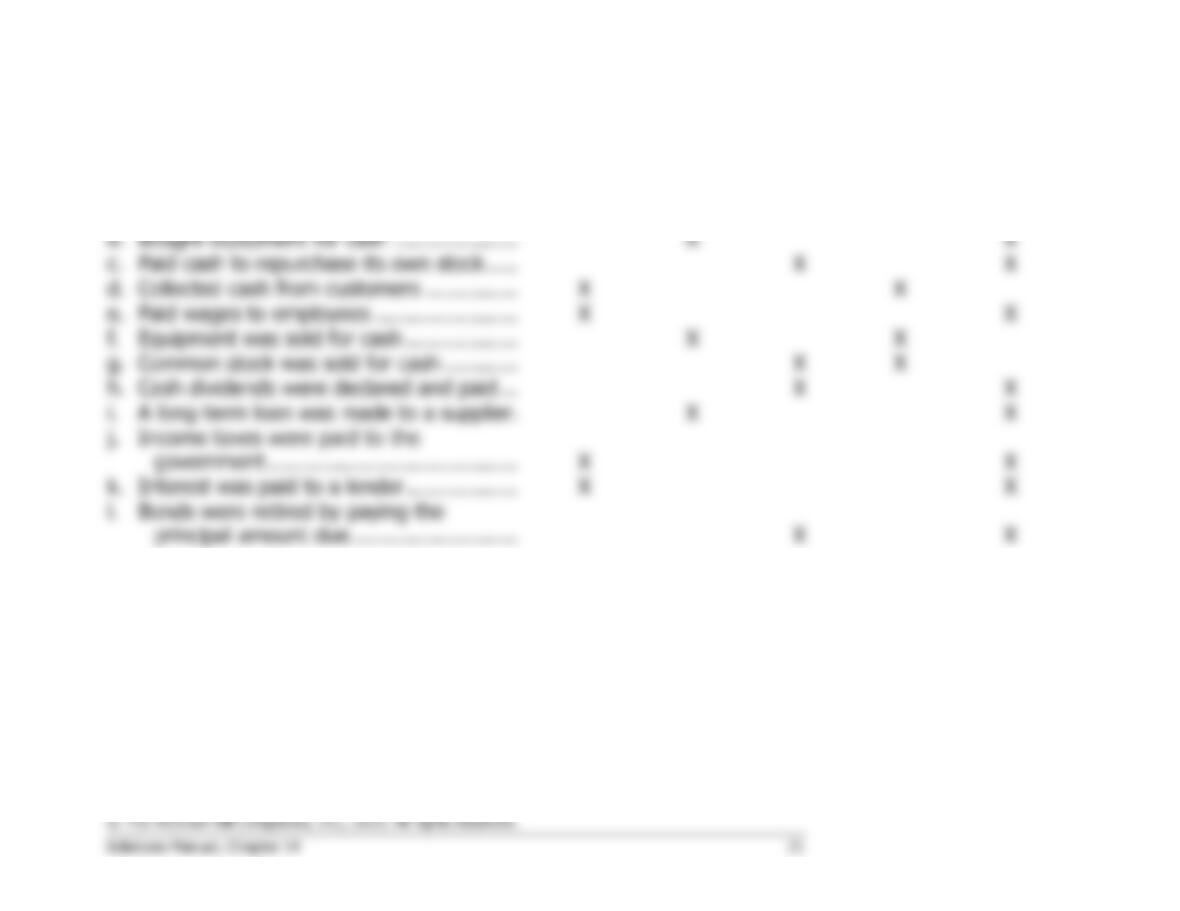
a.
Paid suppliers for inventory purchases …..
X
X
b.
Bought equipment for cash ………………..
X
X
c.
Paid cash to repurchase its own stock …..
X
X
d.
Collected cash from customers ……………
X
X
e.
Paid wages to employees …………………..
X
X
f.
Equipment was sold for cash ………………
X
X
g.
Common stock was sold for cash …………
X
X
h.
Cash dividends were declared and paid …
X
X
i.
A long-term loan was made to a supplier.
X
X
j.
Income taxes were paid to the
government …………………………..……..
X
X
k.
Interest was paid to a lender ………………
X
X
l.
Bonds were retired by paying the
principal amount due ………………………
X
X
Problem 14–9 (continued)
The inventory balance decreased by $39. This means that Brock’s
inventory purchases were less than its cost of goods sold by $39.
Brock’s cost of goods sold was $2,980; therefore, its inventory
5. The third step of the indirect method is to adjust for gains/losses
included in the income statement. This adjustment is necessary because
Problem 14-10 (45 minutes)
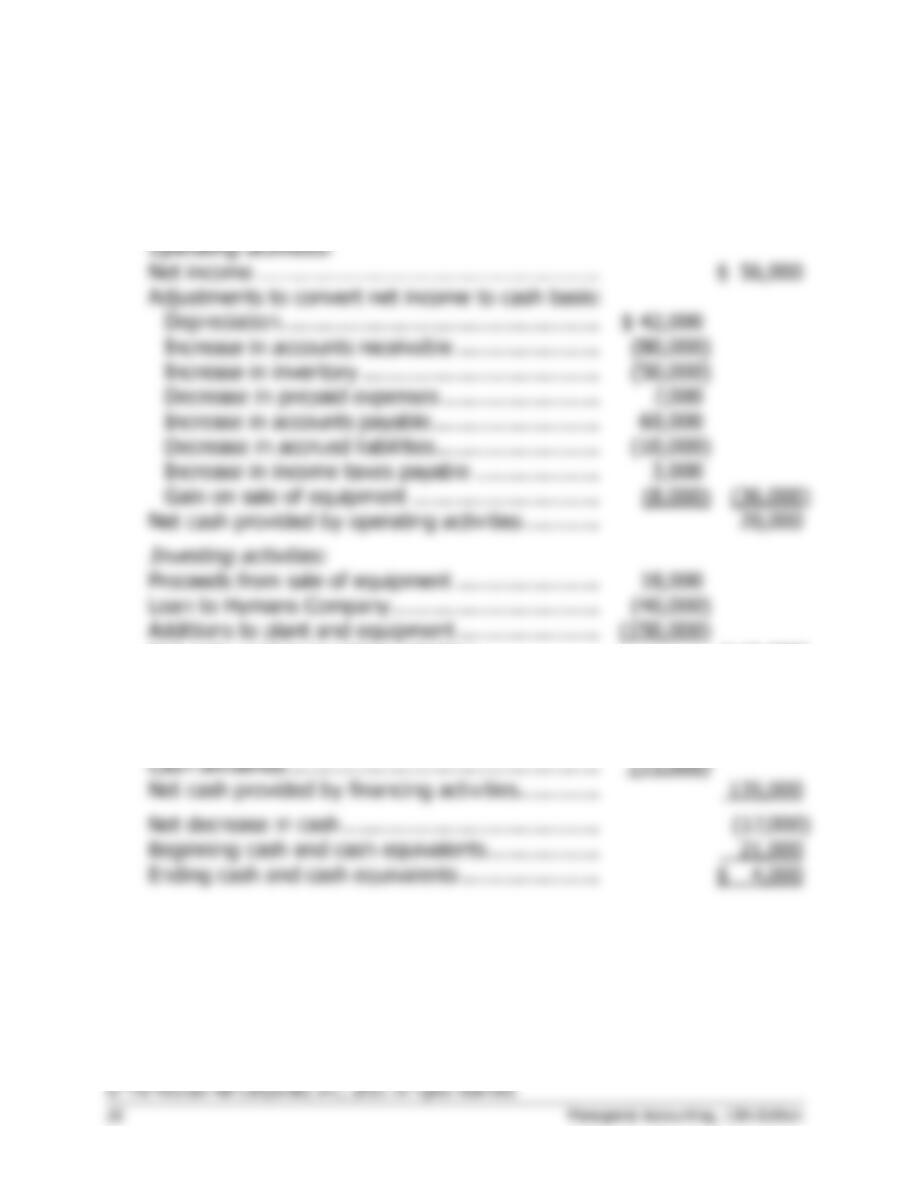
1. Net cash provided by operating activities:
Step 1: The following equation can be applied to the Accumulated
Depreciation account to compute the depreciation to add back to net
income:
Beginning balance – Debits + Credits = Ending balance
Problem 14-10 (continued)
The loan to Hymans ($40,000) is recorded as a cash outflow in the
investing activities section of the statement. Because Joyner did not
retire any bonds during the year, the corresponding amount in the table
$139,000 = $124,000 + Debits
Problem 14-10 (continued)
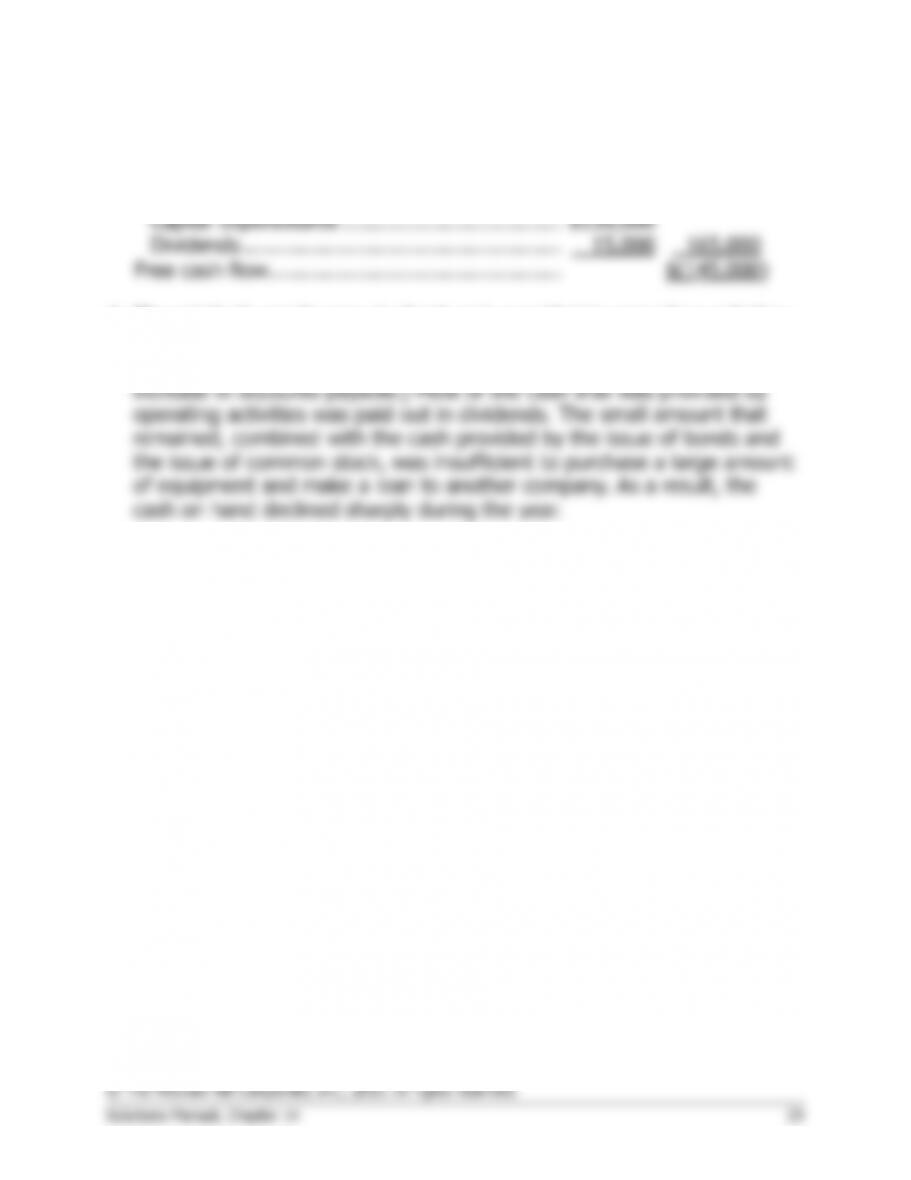
3. Free cash flow computation:
Net cash provided by operating activities ……..………
$ 20,000
Capital expenditures ……………………………..………
$150,000
Dividends ……………………………………………………
15,000
165,000
Free cash flow ………………………………………..………
$(145,000)
4. The relatively small amount of net cash provided by operating activities
during the year was largely the result of a large increase in accounts
receivable. (The large increase in inventory was offset by a large