Problem 12-18 (continued)
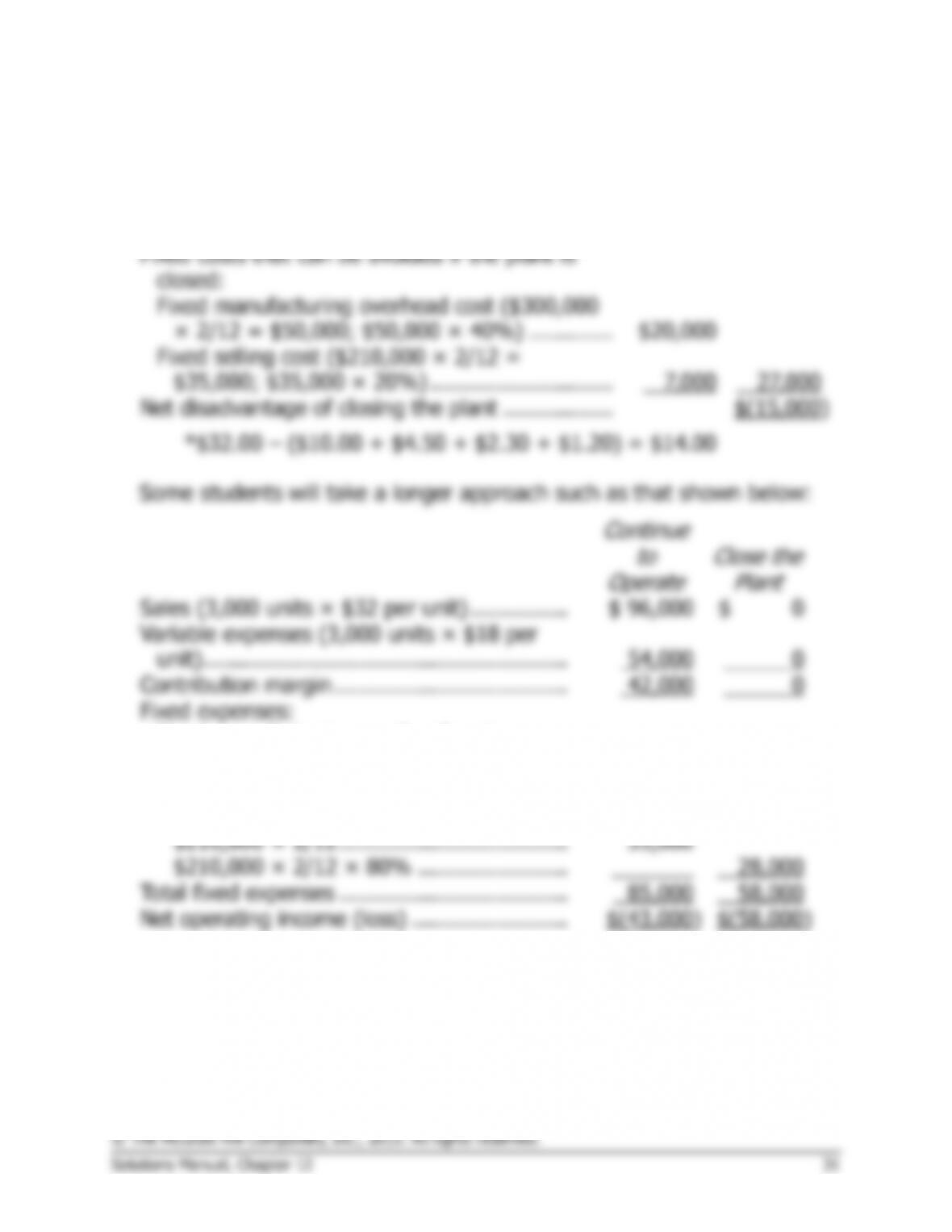
Given this information, the simplest approach to the solution is:
Contribution margin lost if the plant is closed
(3,000 units × $14 per unit*) ……………………..
$(42,000)
Fixed costs that can be avoided if the plant is
closed:
Fixed manufacturing overhead cost ($300,000
× 2/12 = $50,000; $50,000 × 40%) ………….
$20,000
Fixed selling cost ($210,000 × 2/12 =
$35,000; $35,000 × 20%) ……………………….
7,000
27,000
Net disadvantage of closing the plant ……………..
$(15,000)
*$32.00 – ($10.00 + $4.50 + $2.30 + $1.20) = $14.00
Some students will take a longer approach such as that shown below:
Continue
to
Operate
Close the
Plant
Sales (3,000 units × $32 per unit) ……………
$ 96,000
$ 0
Variable expenses (3,000 units × $18 per
unit) ………………………………………………..
54,000
0
Contribution margin ………………………………
42,000
0
Fixed expenses:
Fixed manufacturing overhead cost:
$300,000 × 2/12 ……………………………..
50,000
$300,000 × 2/12 × 60% …………………..
30,000
Fixed selling expense:
$210,000 × 2/12 ……………………………..
35,000
$210,000 × 2/12 × 80% …………………..
28,000
Total fixed expenses ……………………………..
85,000
58,000
Net operating income (loss) ……………………
$(43,000)
$(58,000)
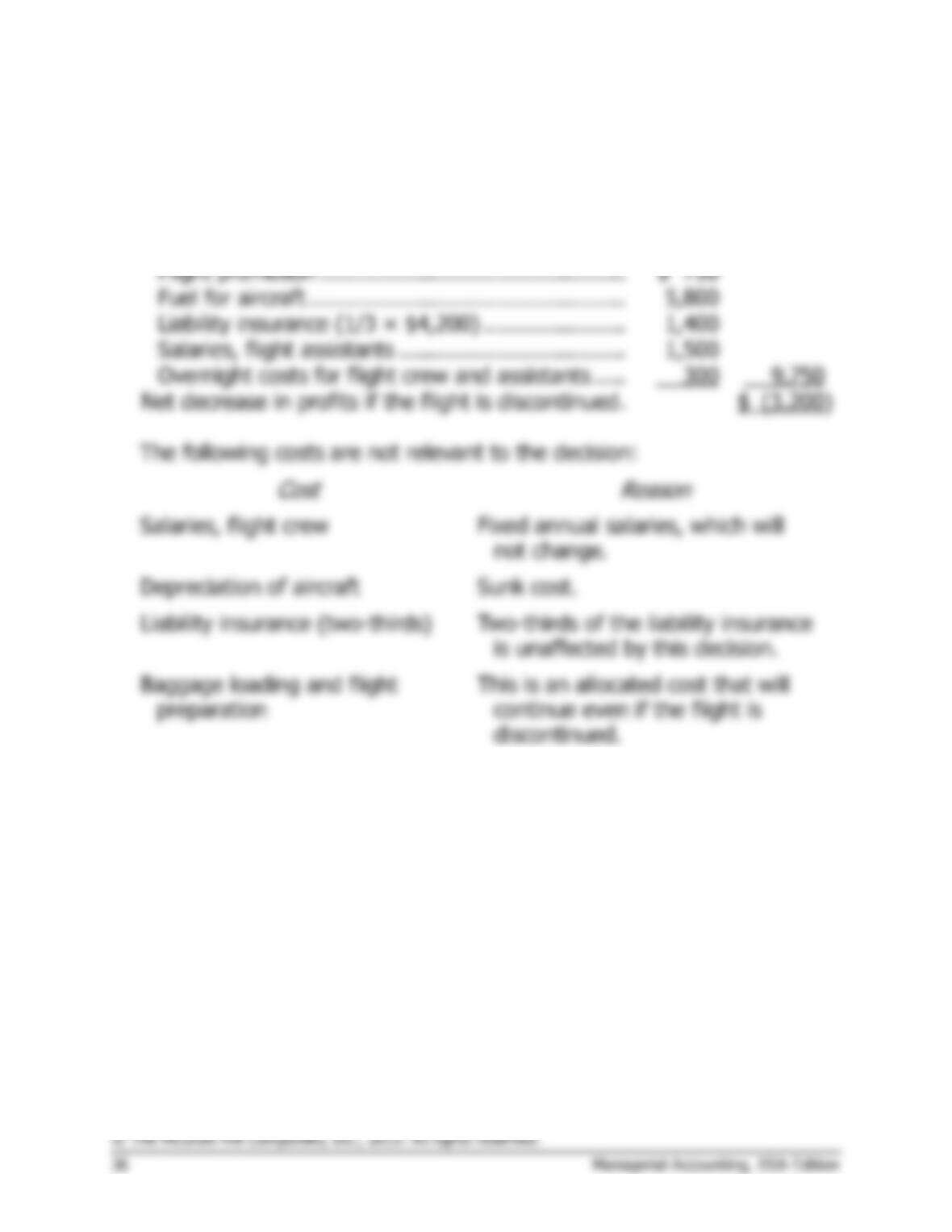
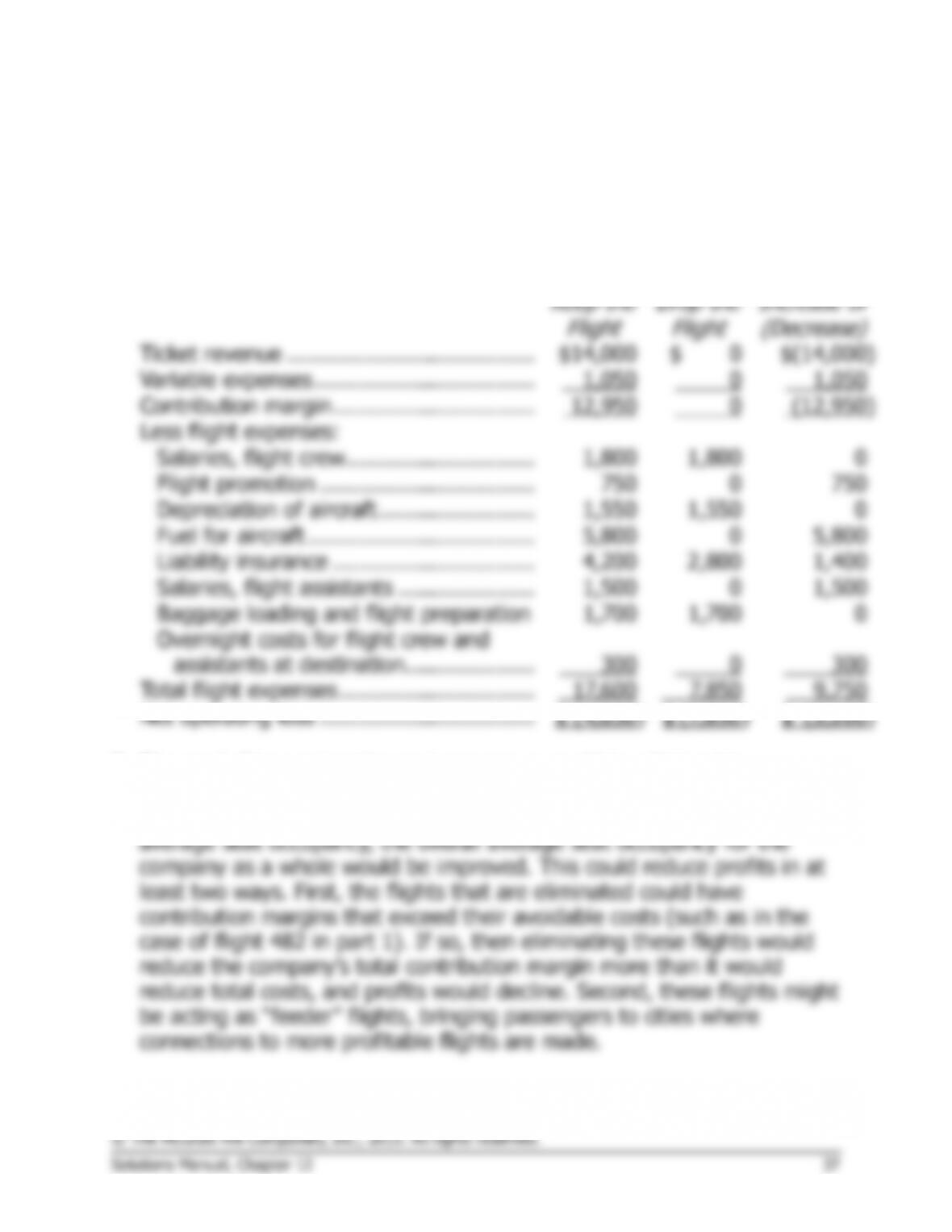
Problem 12-21 (continued)
Alternative Solution:
Keep the
Flight
Drop the
Flight
Difference:
Net
Operating
Income
Increase or
(Decrease)
Ticket revenue ………………………………..
$14,000
$ 0
$(14,000)
Variable expenses …………………………….
1,050
0
1,050
Contribution margin ………………………….
12,950
0
(12,950)
Less flight expenses:
Salaries, flight crew ………………………..
1,800
1,800
0
Flight promotion …………………………...
750
0
750
Depreciation of aircraft ……………………
1,550
1,550
0
Fuel for aircraft ……………………………..
5,800
0
5,800
Liability insurance ………………………….
4,200
2,800
1,400
Salaries, flight assistants …………………
1,500
0
1,500
Baggage loading and flight preparation
1,700
1,700
0
Overnight costs for flight crew and
assistants at destination………………..
300
0
300
Total flight expenses …………………………
17,600
7,850
9,750
Net operating loss …………………………...
$ (4,650)
$ (7,850)
$ (3,200)
2. The goal of increasing the seat occupancy could be obtained by
eliminating flights with a lower-than-average seat occupancy. By
eliminating these flights and keeping the flights with a higher-than-