Student Name:
Class:
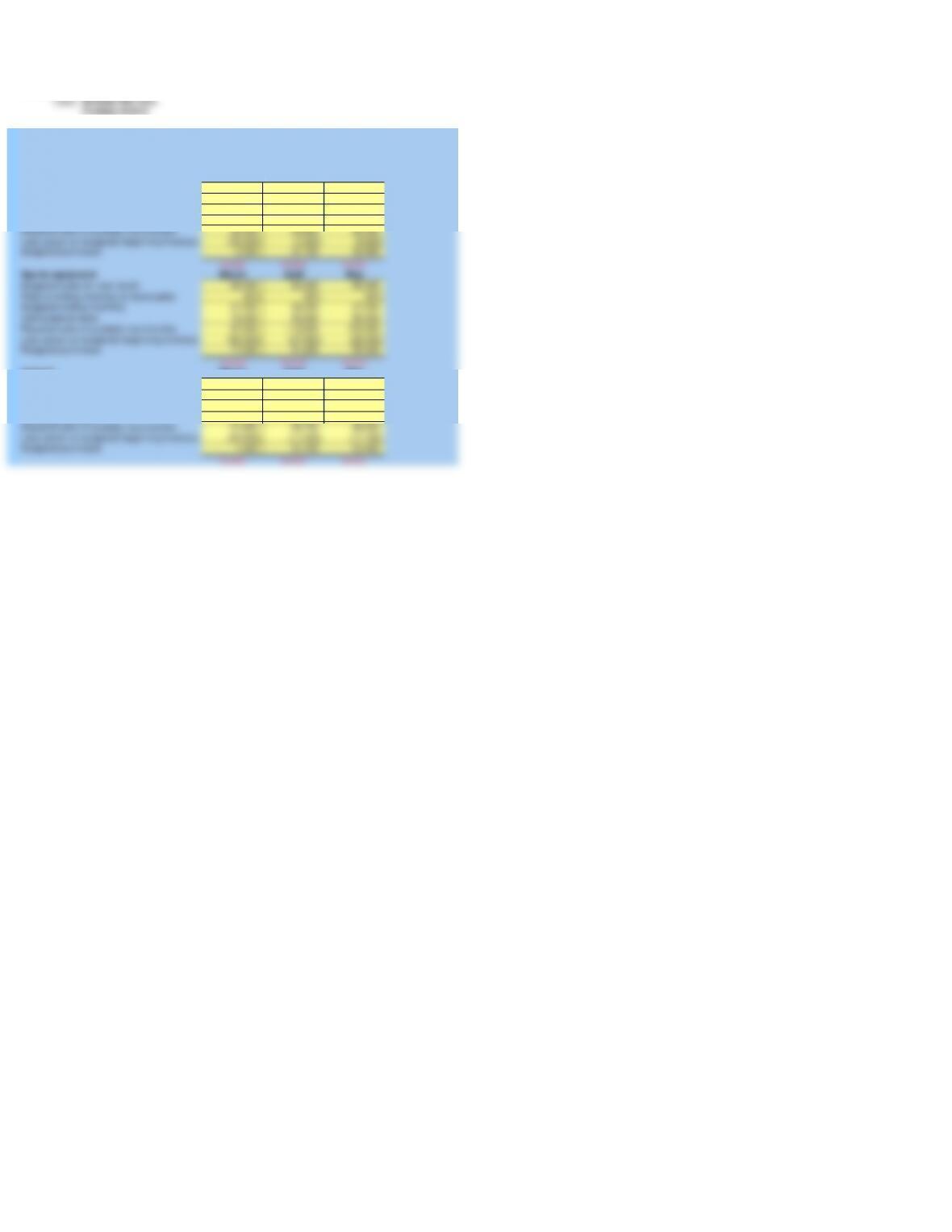
March April May
25,000 32,000 35,000
30% 30% 30%
7,500 9,600 10,500
15,000 25,000 32,000
22,500 34,600 42,500
(20,000) (7,500) (9,600)
2,500 27,100 32,900
Correct! Correct! Correct!
March April May
90,000 95,000 90,000
30% 30% 30%
27,000 28,500 27,000
70,000 90,000 95,000
97,000 118,500 122,000
(80,000) (27,000) (28,500)
17,000 91,500 93,500
Correct! Correct! Correct!
March April May
38,000 37,000 25,000
30% 30% 30%
11,400 11,100 7,500
40,000 38,000 37,000
51,400 49,100 44,500
(50,000) (11,400) (11,100)
1,400 37,700 33,400
Correct! Correct! Correct!
Less actual (or budgeted) beginning inventory
Required units of available merchandise
Less actual (or budgeted) beginning inventory
Budgeted purchases
Budgeted purchases
Budgeted sales for next month
Ratio of ending inventory to future sales
Budgeted ending inventory
Add budgeted sales
Budgeted sales for next month
Ratio of ending inventory to future sales
Budgeted ending inventory
Add budgeted sales
Required units of available merchandise
Footwear
Ratio of ending inventory to future sales
Merchandise Purchases Budgets (in units)
For March, April and May
Apparel
Budgeted ending inventory
Add budgeted sales
Required units of available merchandise
Less actual (or budgeted) beginning inventory
Budgeted purchases
McGraw-Hill/Irwin
Instructor
KEGGLER’S SUPPLY
Problem 20-01A
Sports equipment
Budgeted sales for next month

Student Name:
Class:
McGraw-Hill/Irwin
Instructor
Problem 20-01A
Part 2: The purchases budgets in part 1 should reflect fewer purchases of all three products
in March compared to those in April and May. What factor caused fewer purchases to be
planned? Suggest business conditions that would cause this factor to both occur and impact
the company in this way.
The factor that causes the first month’s purchases to be so much smaller is the excess inventory that
accumulated just prior to the budgeting period. For example, 20,000 units of footwear are in March’s
beginning inventory; however, March sales are budgeted at only 15,000 units. Accordingly, budgeted
purchases are smaller because it is management’s goal to reduce the inventory to only 30% of the next
month’s sales. This overstocking factor could exist for a number of reasons, including: 1) Management may
have simply lost sight of inventory levels, thereby allowing them to reach inappropriately high levels. 2)
There may have been some potentially disruptive factor (such as a strike, bad weather, or political
uncertainty) that would have temporarily interrupted the smooth delivery of products from the supplier. Thus,
management would have found it prudent to accumulate an excess as a temporary safety stock against an
interrupted supply. 3) The company’s suppliers may have only recently become more dependable than they
were in the past. 4) A supplier may have recently located a new distribution facility nearby, with the result
that the merchandise can be delivered more promptly. 5) Competition among suppliers may have caused
them to become more customer oriented, with the result that they will deliver products in smaller lots more
quickly.
20,000
80,000
50,000
30%
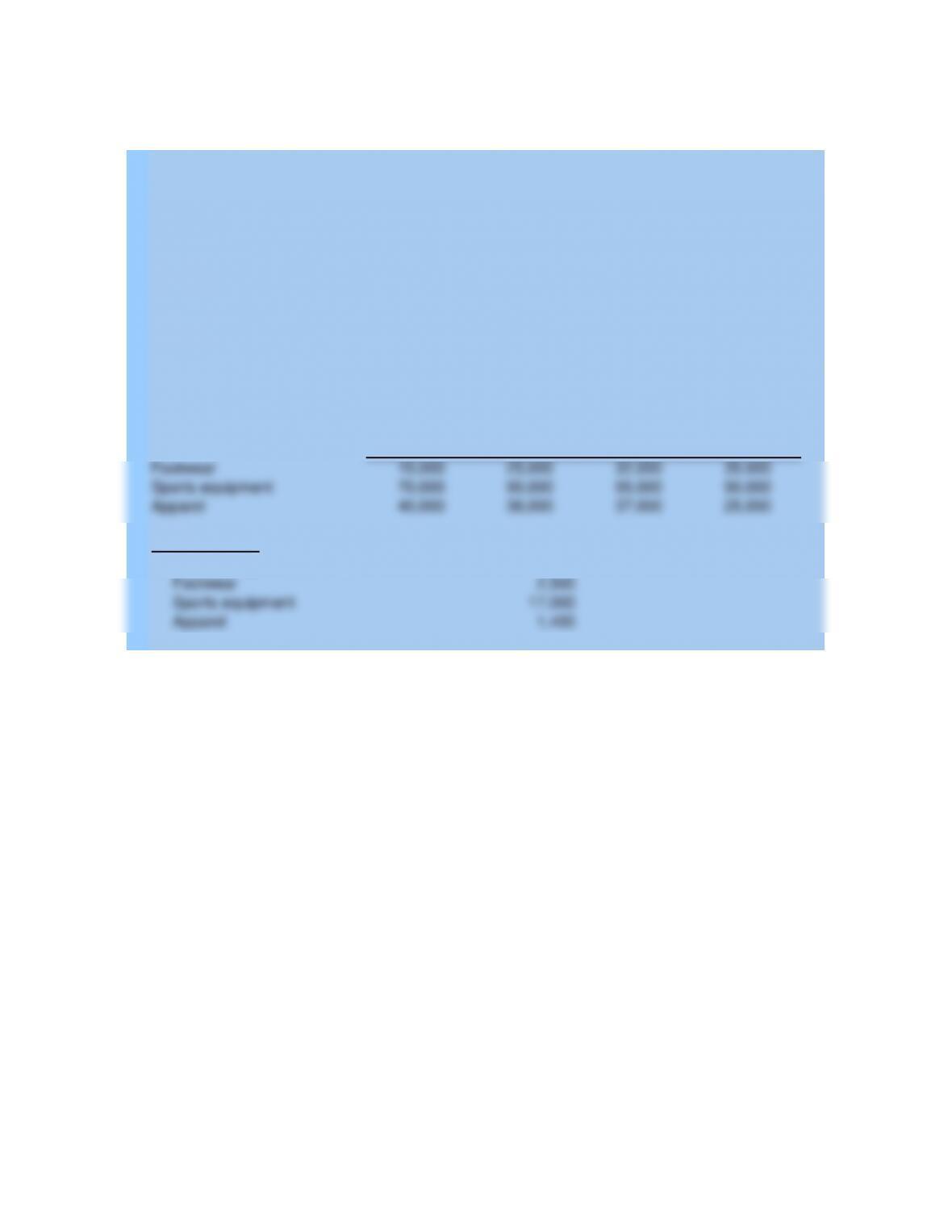
March April May June
15,000 25,000 32,000 35,000
70,000 90,000 95,000 90,000
40,000 38,000 37,000 25,000
2,500
17,000
1,400
Apparel
Sports equipment
Footwear
(1) March budgeted purchases:
Check figures:
Given Data P20-01A:
Apparel
Sports equipment
KEGGLER’S SUPPLY
Footwear
Budgeted Sales in Units
KEGGLER’S SUPPLY
February 28
Units in Inventory
of expected sales for following month
Footwear
Sports equipment
Apparel
Desired ending inventory as percentage
Student Name:
Class:
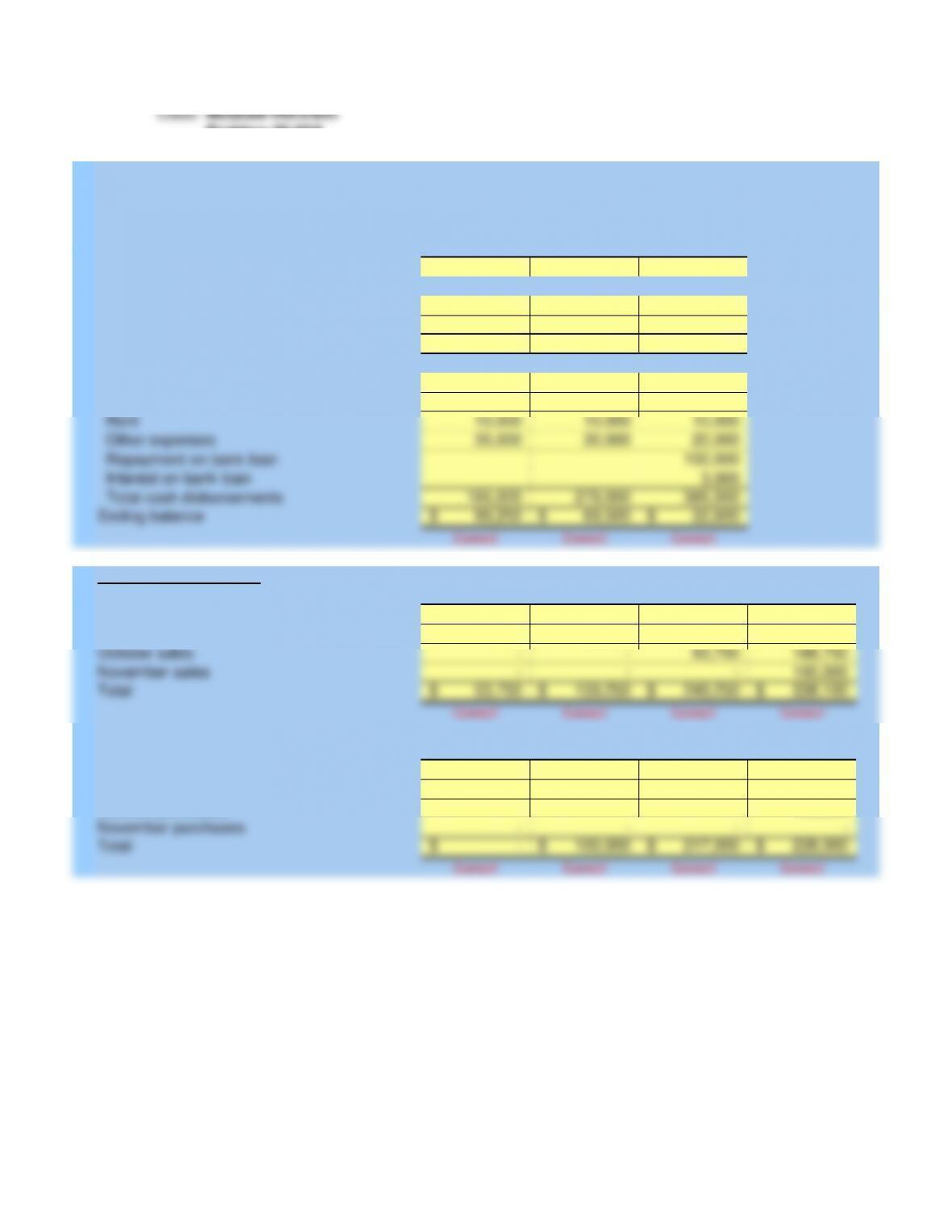
September October November
5,000$ 99,250$ 69,500$
159,250 249,250 338,100
100,000
264,250 348,500 407,600
100,000 217,000 228,000
20,000 22,000 24,000
10,000 10,000 10,000
35,000 30,000 20,000
100,000
3,000
165,000 279,000 385,000
99,250$ 69,500$ 22,600$
Correct! Correct! Correct!
August September October November
53,750$ 96,750$ 43,000$ 19,350$
– 62,500 112,500 50,000
– – 93,750 168,750
– – – 100,000
53,750$ 159,250$ 249,250$ 338,100$
Correct! Correct! Correct! Correct!
August September October November
–$ 100,000$ 25,000$ –$
November purchases
Total
September purchases
October purchases
Collections of credit sales:
Supporting schedules
Payments on credit purchases:
Total
August purchases
Total cash disbursements
Ending balance
August sales
September sales
October sales
November sales
Payments on accounts payable
Payroll
Rent
Other expenses
Repayment on bank loan
Interest on bank loan
Beginning balance
Cash receipts:
Collection on accounts receivable
Receipts from bank loan
Total cash available
Cash disbursements:
Problem 20-02A
McGraw-Hill/Irwin
Instructor
For September, October and November
Cash Budget
ONEIDA COMPANY
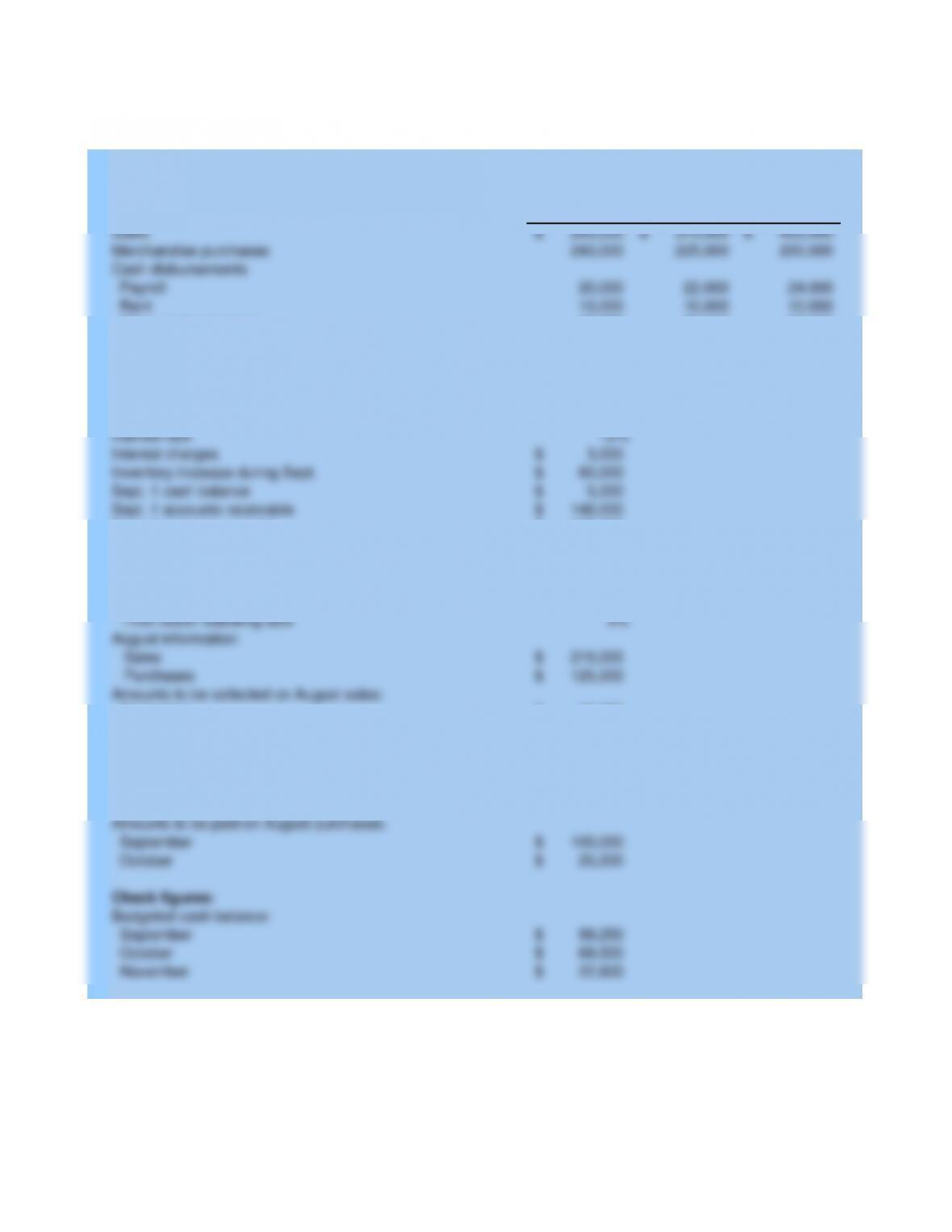
September October November
250,000$ 375,000$ 400,000$
240,000 225,000 200,000
20,000 22,000 24,000
10,000 10,000 10,000
35,000 30,000 20,000
100,000
3,000
100,000$
12%
3,000$
80,000$
5,000$
148,000$
125,000$
25%
45%
20%
9%
215,000$
125,000$
96,750$
43,000$
19,350$
80%
20%
100,000$
25,000$
99,250$
69,500$
22,600$
Given Data P20-02A:
October
November
September
October
Check figures:
Budgeted cash balance:
September
October
Amounts to be paid on August purchases:
Third month following sale
August information:
Sales
Purchases
Amounts to be collected on August sales:
Month following sale
Second month following sale
November
Amounts paid on purchases (as percentage):
Month following purchase
Second month following purchase
Bank loan requested
Interest rate
Interest charges
Inventory increase during Sept.
Sept. 1 cash balance
September
Sept. 1 accounts receivable
Sept. 1 accounts payable
Amounts collected on credit sales (as percentage):
Month of sale
Rent
Other cash expenses
Repayment of bank loan
Interest on the bank loan
Additional information:
Selected Budgets for Three Months
ONEIDA COMPANY
Sales
Merchandise purchases
Cash disbursements
Payroll