
Chapter 07 – Reporting and Interpreting Cost of Goods Sold and Inventory
7-13
VI. Chapter Supplement A: LIFO Liquidations
A. LIFO Liquidations
1. When a LIFO company sells more inventory than it
purchases or manufactures, items from beginning
inventory become part of cost of goods sold
2. LIFO liquidation – a sale of a lower-cost inventory item
from beginning LIFO inventory
3. When inventory costs are rising, these lower cost items in
beginning inventory produce a higher gross profit, higher
taxable income, and higher taxes when they are sold
B. Financial Statement Effects of LIFO Liquidations
1. In practice, LIFO liquidations and extra tax payments can
be avoided even if purchases of additional inventory take
place after the sale of the item it replaces
2. Tax law allows LIFO to be applied as if all purchases
during an accounting period took place before any sales
and cost of goods sold were recorded
3. Thus, temporary LIFO liquidations can be eliminated by
purchasing additional inventory before yearend
VII. Chapter Supplement B: FIFO and LIFO Cost of Goods Sold
Under Periodic versus Perpetual Inventory Systems
A. Overview
1. Calculations of FIFO cost of goods sold will always be
the same under both systems
2. Calculations of LIFO cost of goods sold will usually
differ in a manner that causes the company to pay higher
income taxes when inventory costs are rising if it uses the
perpetual computation
B. FIFO (First-in, First-out)
1. Using a periodic inventory calculation, the oldest goods
available during the month would include the units in
beginning inventory and the units purchased during the
period
2. Using a perpetual inventory calculation, we would
compute the cost of goods sold for each sale separately
using the oldest goods available at the time of each sale
3. Cost of goods sold is the same using both computations
C. LIFO (Last-in, First-out)
1. LIFO assumes that the newest goods are the first ones sold
2. Using a periodic inventory calculation, the newest goods
available during the month would include the units
purchased during the period
3. Using a perpetual inventory calculation, we would
compute the cost of goods sold for each sale separately
using the newest goods available at the time of each sale
4. When costs are rising, the periodic calculation will
always produce the same or a higher value for cost of
goods sold than the perpetual calculation

Chapter 07 – Reporting and Interpreting Cost of Goods Sold and Inventory
7-14
D. Why You Won’t See LIFO Perpetual Calculations in
Practice
1. The added tax savings from the periodic calculation
illustrated above is one of the two reasons you will rarely
if ever see LIFO perpetual calculations in practice in
medium- to large-sized companies
2. The other reason relates to the complexity and cost of the
calculations
3. As a result:
a. This makes it very costly or impossible for most
companies to apply LIFO using a perpetual calculation
b. Instead, companies keep perpetual inventory records
on a FIFO basis and then make an end-of-period
adjusting entry using the periodic calculation to
convert both inventory on the balance sheet and cost
of goods sold on the income statement to a LIFO basis
VII. Chapter Supplement B: Additional Issues in Measuring
Purchases
Use Supplemental
Enrichment Activity #3
A. Purchase Returns and Allowances
Harley-Davidson returned to a supplier damaged harness
boots that cost $1,000
dr Accounts payable (−L)
1,000
cr Inventory (–A)
1,000
Assets = Liabilities + Stockholders’ Equity
Inventory (A) – 1,000 = Accounts Payable (L) – 1,000
B. Purchase Discounts
On January 17, Harley-Davidson bought goods that had a
$1,000 invoice price with terms 2/10, n/30
dr Inventory (+A)
1,000
cr Accounts payable (+L)
1,000
Assets = Liabilities + Stockholders’ Equity
Inventory (A) + 1,000 = Accounts Payable (L) + 1,000
Assuming payment on January 26 within discount period
dr Accounts Payable (−L)
1,000
cr Inventory (–A )
20
cr Cash (–A)
980
Assets = Liabilities + Stockholders’ Equity
Cash (A) – 980 + Inventory (A) – 20 = Accounts Payable
(L) – 1,000
Assuming, instead, paid after discount period
dr Accounts Payable (−L)
1,000
cr Cash (–A)
1,000
Assets = Liabilities + Stockholders’ Equity
Cash (A) – 1,000 = Accounts Payable (L) – 1,000

Chapter 07 – Reporting and Interpreting Cost of Goods Sold and Inventory
7-15
Supplemental Enrichment Activities
Note: These activities would be suitable for individual or group activities.
1. Handout 7-1
Use Handout 7-1 for an in-class activity designed to review the calculation of costs using all four
inventory costing methods. The solution follows the handout master.
2. Handout 7-2
Use Handout 7-2 for an in-class activity designed to review the application of the lower of cost or
market rule. The solution follows the handout master.
3. Handout 7-3
Use Handout 7-3 for an in-class activity designed to review the preparation of journal entries for
purchase transactions (including purchase discounts). The solution follows the handout master.

Chapter 07 – Reporting and Interpreting Cost of Goods Sold and Inventory
7-16
HANDOUT 7 – 1
INVENTORY COSTING METHODS
Quickie Grocery acquired the following five bottles of Corporate-Cola soft drink:
Date
Jan. 2
Jan. 10
Jan. 12
Jan. 16
Jan. 25
Cost
$1.00
$2.00
$3.00
$4.00
$5.00
A January 31 inventory count revealed that two bottles remained on the shelf. How many bottles were
sold in January?
Specific Identification
The Quickie Grocery keeps track of each individual bottle. Suppose the Grocery knows that it sold the
bottles acquired on Jan. 2, 12, and 16.
Date
Jan. 2
Jan. 10
Jan. 12
Jan. 16
Jan. 25
Total
Cost
$1.00
$2.00
$3.00
$4.00
$5.00
$15.00
COGS
Inventory
What was the value of inventory on January 31?
What was the cost of goods sold for January?
First-in, First-out (FIFO)
Date
Jan. 2
Jan. 10
Jan. 12
Jan. 16
Jan. 25
Total
Cost
$1.00
$2.00
$3.00
$4.00
$5.00
$15.00
COGS
Inventory
What was the value of inventory on January 31?
What was the cost of goods sold for January?

Chapter 07 – Reporting and Interpreting Cost of Goods Sold and Inventory
7-17
HANDOUT 7 – 1, CONTINUED
Last-in, First-out (LIFO)
Date
Jan. 2
Jan. 10
Jan. 12
Jan. 16
Jan. 25
Total
Cost
$1.00
$2.00
$3.00
$4.00
$5.00
$15.00
COGS
Inventory
What was the value of inventory on January 31?
What was the cost of goods sold for January?
Average Cost
Date
Jan. 2
Jan. 10
Jan. 12
Jan. 16
Jan. 25
Cost
$1.00
$2.00
$3.00
$4.00
$5.00
$15.00
What was the value of inventory on January 31?
What was the cost of goods sold for January?
Complete the following table:
Specific
Identification
FIFO
LIFO
Average Cost
Cost of Goods Sold
Inventory

Chapter 07 – Reporting and Interpreting Cost of Goods Sold and Inventory
7-18
HANDOUT 7 – 1 SOLUTION
INVENTORY COSTING METHODS
Quickie Grocery acquired the following five bottles of Corporate-Cola soft drink:
Date
Jan. 2
Jan. 10
Jan. 12
Jan. 16
Jan. 25
Cost
$1.00
$2.00
$3.00
$4.00
$5.00
A January 31 inventory count revealed that two bottles remained on the shelf.
How many bottles were sold in January?
5 – 2 = 3 bottles
Specific Identification
The Quickie Grocery keeps track of each individual bottle. Suppose the Grocery knows that it sold the
bottles acquired on Jan. 2, 12, and 16.
Date
Jan. 2
Jan. 10
Jan. 12
Jan. 16
Jan. 25
Cost
$1.00
$2.00
$3.00
$4.00
$5.00
$15.00
COGS
$1.00
$3.00
$4.00
$ 8.00
Inventory
$2.00
$5.00
$ 7.00
What was the cost of goods sold for January?
$8.00
What was the value of inventory on January 31?
$7.00
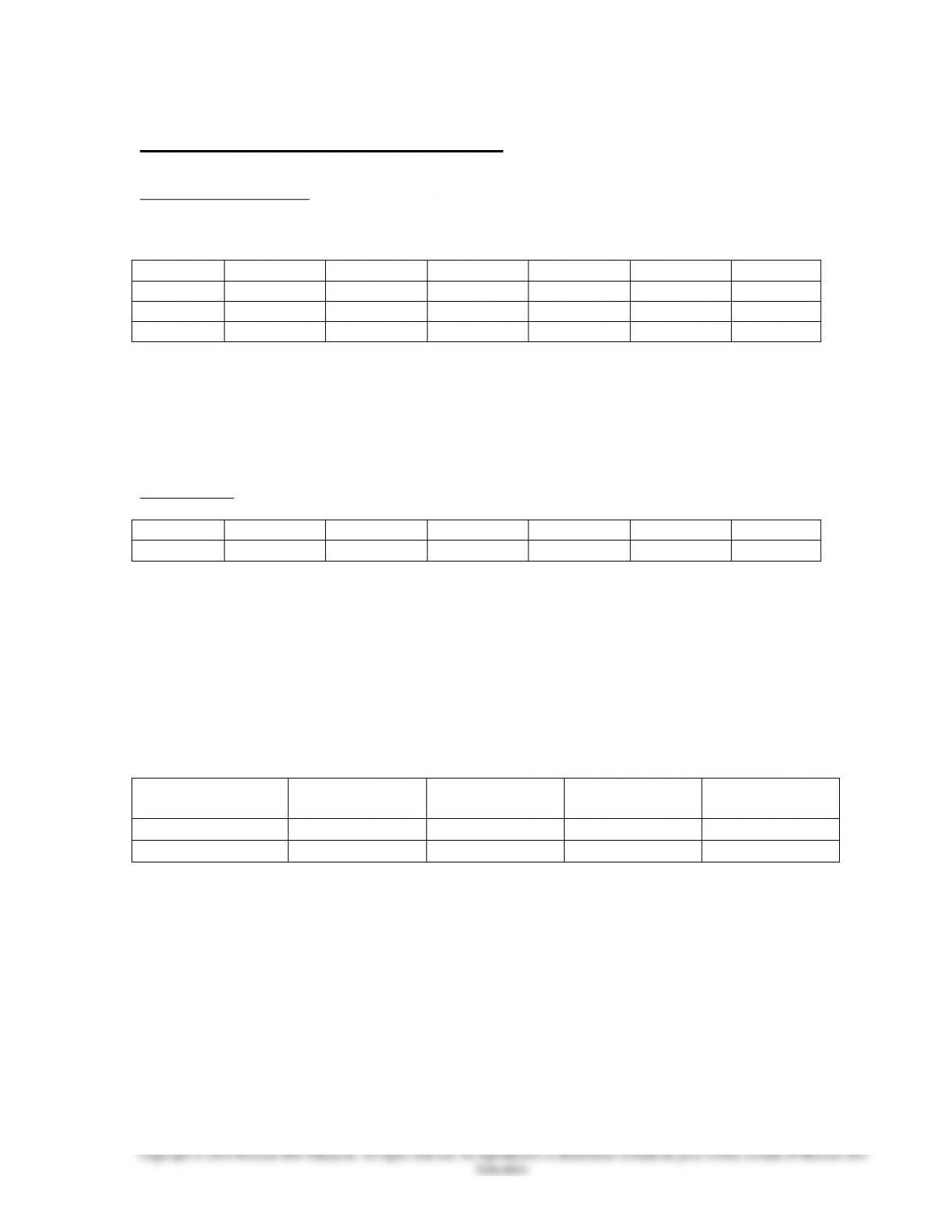
First-in, First-out (FIFO)
Date
Jan. 2
Jan. 10
Jan. 12
Jan. 16
Jan. 25
Cost
$1.00
$2.00
$3.00
$4.00
$5.00
$15.00
COGS
$1.00
$2.00
$3.00
$ 6.00
Inventory
$4.00
$5.00
$ 9.00
What was the cost of goods sold for January?
$6.00
What was the value of inventory on January 31?
$9.00
Chapter 07 – Reporting and Interpreting Cost of Goods Sold and Inventory
7-19
HANDOUT 7 – 1 SOLUTION, CONTINUED
Last-in, First-out (LIFO)
Assume that the last bottles purchased were the first to be sold. First bottles are still here.
Date
Jan. 2
Jan. 10
Jan. 12
Jan. 16
Jan. 25
Cost
$1.00
$2.00
$3.00
$4.00
$5.00
$15.00
COGS
$3.00
$4.00
$5.00
$12.00
Inventory
$1.00
$2.00
$ 3.00
What was the cost of goods sold for January?
$12.00
What was the value of inventory on January 31?
$3.00
Average Cost
Date
Jan. 2
Jan. 10
Jan. 12
Jan. 16
Jan. 25
Cost
$1.00
$2.00
$3.00
$4.00
$5.00
$15.00
What was the cost of goods sold for January?
$15.00 / 5 = $3.00 average cost per unit
$3 x 3 units = $9.00
What was the value of inventory on January 31?
$15.00 / 5 = $3.00 average cost per unit
$3 x 2 units= $6.00
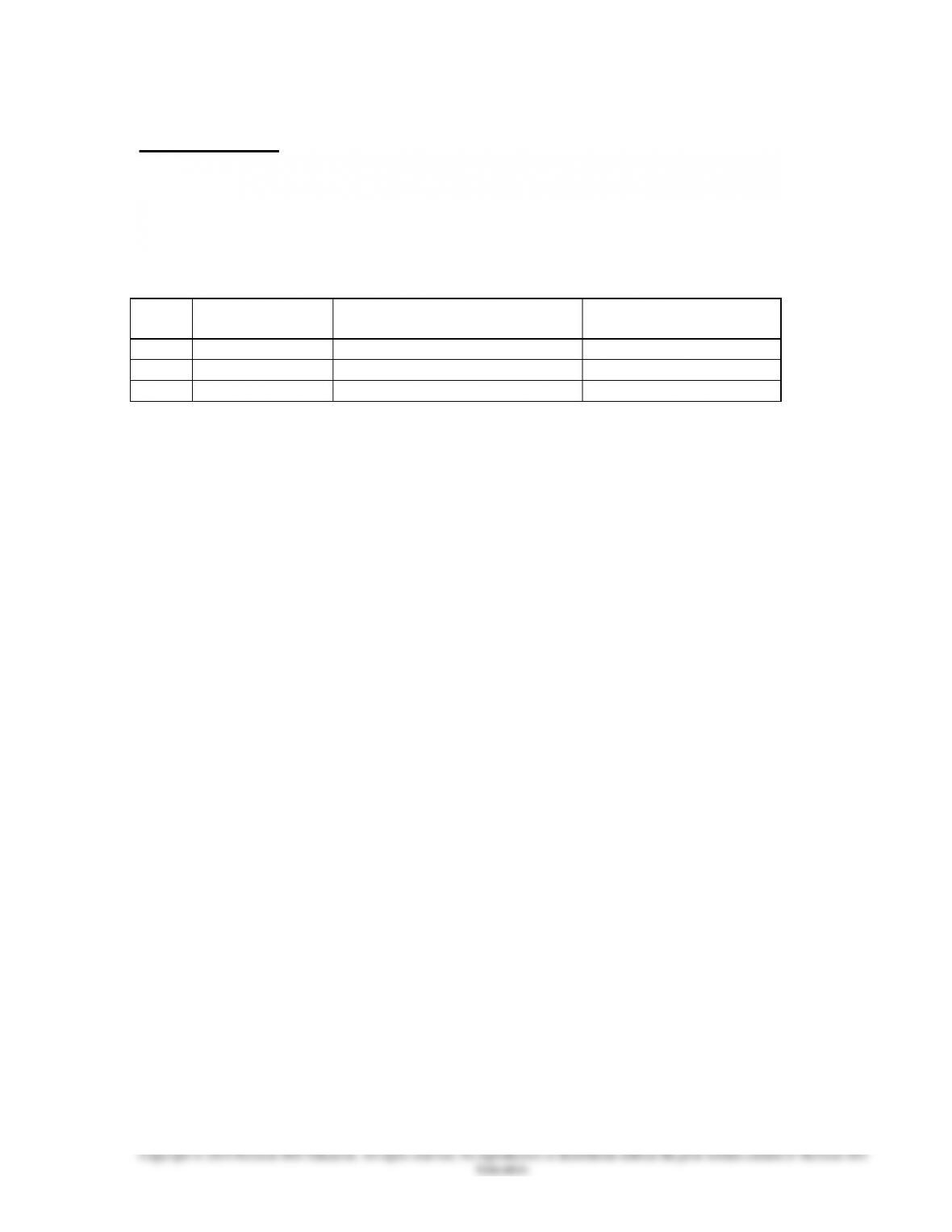
Complete the following table:
Specific
Identification
FIFO
LIFO
Average Cost
Cost of Goods Sold
$8
$6
$12
$9
Inventory
$7
$9
$ 3
$6
Chapter 07 – Reporting and Interpreting Cost of Goods Sold and Inventory
7-20
HANDOUT 7 – 2
LOWER OF COST OR MARKET (LCM)
Amanda Corporation is preparing its financial statements for the year ending December 31, 2014. Ending
inventory information about the three major items stocked for regular sale follows:
Item
Quantity on Hand
Unit Cost When Acquired (FIFO)
Replacement Cost
(Market) at Year-End
AA
100
$ 30
$ 26
BB
150
80
80
CC
200
100
104
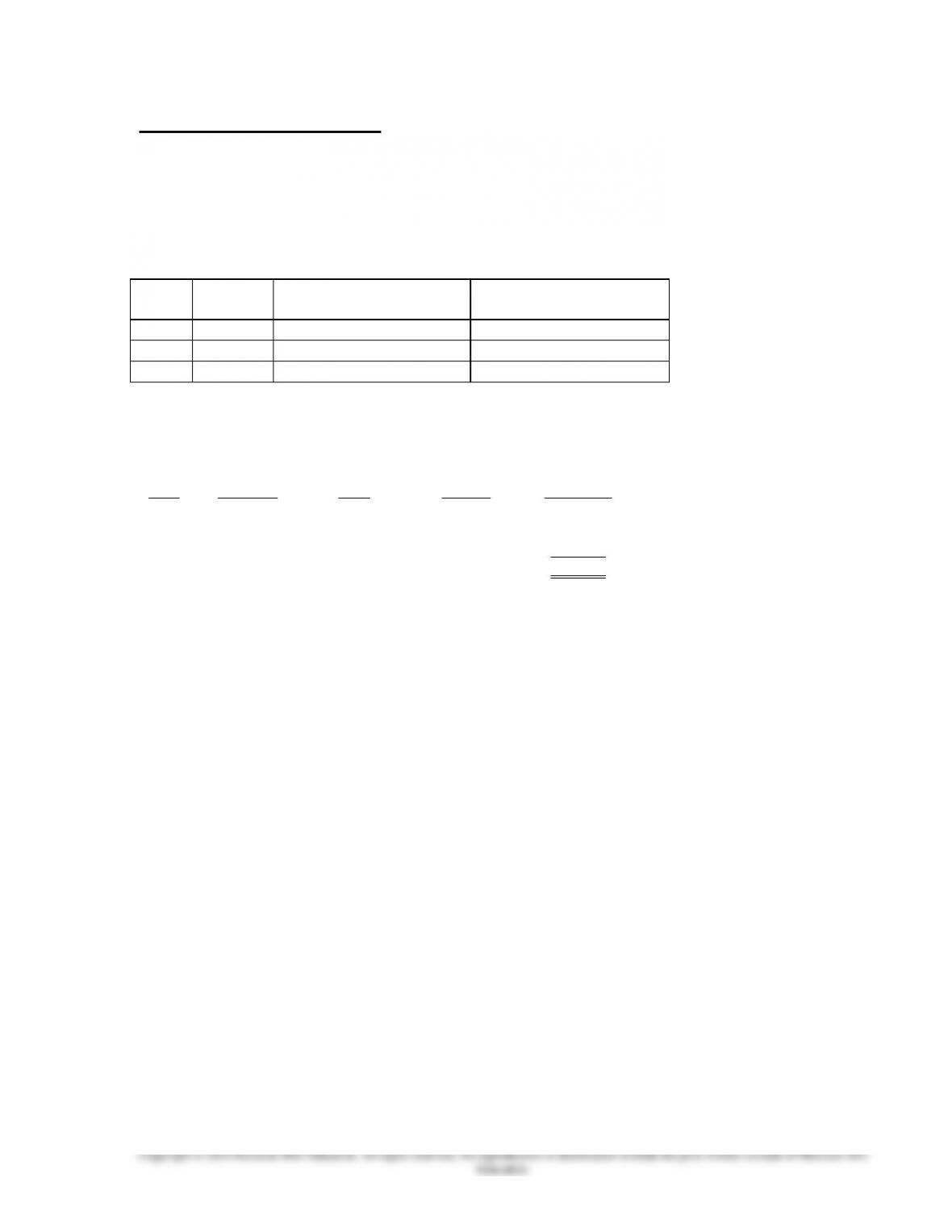
Compute the valuation that should be used for the ending inventory using the LCM rule applied on an
item-by-item basis.
Chapter 07 – Reporting and Interpreting Cost of Goods Sold and Inventory
7-21
HANDOUT 7 – 2 SOLUTION
LOWER OF COST OR MARKET (LCM)
Amanda Corporation is preparing its financial statements for the year ending December 31, 2014. Ending
inventory information about the three major items stocked for regular sale follows:
Item
Quantity
on Hand
Unit Cost When Acquired
(FIFO)
Replacement Cost
(Market) at Year-End
AA
100
$ 30
$ 26
BB
150
80
80
CC
200
100
104
Compute the valuation that should be used for the ending inventory using the LCM rule applied on an
item-by-item basis.
Item
Quantity
Total
Cost
Total
Market
LCM
Valuation
AA
100
$ 3,000 (1)
$ 2,600 (2)
$ 2,600
BB
150
12,000 (3)
12,000 (3)
12,000
CC
200
20,000 (4)
20,800 (5)
20,000
$34,600
Calculations:
(1) 100 units @ $30 per unit = $3,000
(2) 100 units @ $26 per unit = $2,600
(3) 150 units @ $80 per unit = $12,000
(4) 200 units @ $100 per unit = $20,000
(5) 200 units @ $104 per unit = $20,800

Chapter 07 – Reporting and Interpreting Cost of Goods Sold and Inventory
7-22
HANDOUT 7 – 3
PURCHASE TRANSACTIONS
On February 2, Hamm Manufacturing Corp. purchased $40,000 worth of inventory, on credit terms 3/10
n/30. On February 10, Hamm paid for the inventory, taking advantage of all available discounts.
Prepare the required journal entries.
Debit and credit the accounts affected
Ensure the equation still balances and debits = credits
Assets
=
Liabilities
+
Stockholders’ Equity
Debit and credit the accounts affected
Ensure the equation still balances and debits = credits
Assets
=
Liabilities
+
Stockholders’ Equity

Chapter 07 – Reporting and Interpreting Cost of Goods Sold and Inventory
7-23
HANDOUT 7 – 3 SOLUTION
PURCHASE TRANSACTIONS
On February 2, Hamm Manufacturing Corp. purchased $40,000 worth of inventory, on credit terms 3/10
n/30. On February 10, Hamm paid for the inventory, taking advantage of all available discounts.
Prepare the required journal entries.
Debit and credit the accounts affected
Feb. 2
Inventory (+A)
40,000
Accounts Payable (+L)
40,000
Ensure the equation still balances and debits = credits
Assets
=
Liabilities
+
Stockholders’ Equity
Acct. Rec.
+40,000
Acct Pay.
+40,000
Debit and credit the accounts affected
Feb. 10
Accounts Payable (–L)
40,000
Cash (–A)
38,800
Inventory (–A)
1,200
Ensure the equation still balances and debits = credits
Assets
=
Liabilities
+
Stockholders’ Equity
Cash
–38,800
Acct Pay.
–40,000
Inventory
–1,200