Chapter 06 – Reporting and Interpreting Sales Revenue, Receivables, and Cash
6-1
CHAPTER 6
REPORTING AND INTERPRETING
SALES REVENUE, RECEIVABLES, AND CASH
Learning Objectives and Related Assignment Materials
Learning Objectives
Mini-
Exercises
Exercises
Problems
Alternate
Problems
Cases and
Projects
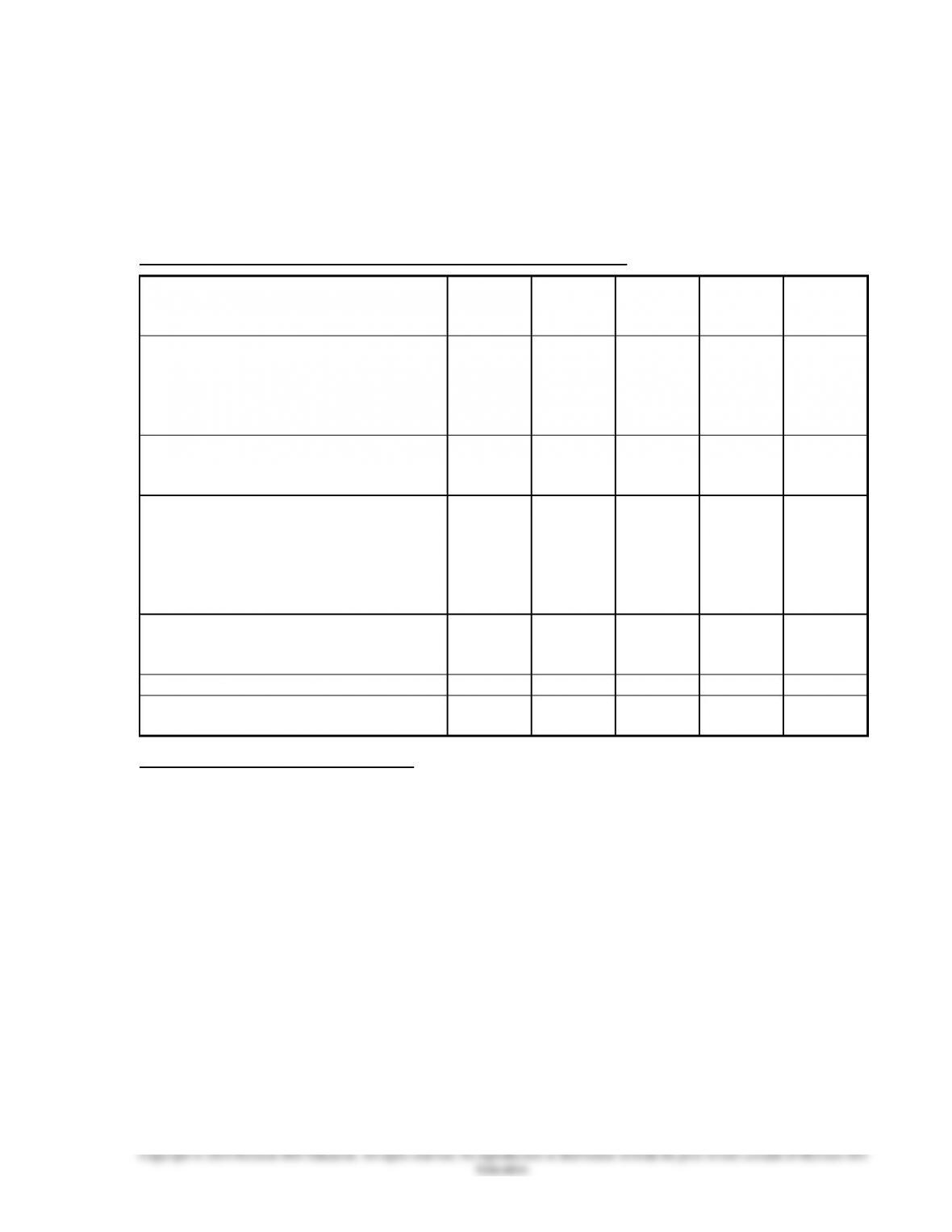
1. Apply the revenue realization
principle to determine the accepted
time to record sales revenue for typical
retailers, wholesalers, manufacturers,
and service companies.
1
1
2, 4, 5
2. Analyze the impact of credit card
sales, sales discounts, and sales returns
on the amounts reported as net sales.
2, 3
1, 2, 3, 4,
5
2, 5
1, 4
3. Estimate, report, and evaluate the
effects of uncollectible accounts
receivable (bad debts) on financial
statements.
4, 5
6, 7, 8, 9,
10, 11,
12, 13,
14, 15,
16, 17,
18
2, 3, 4, 5
1, 2, 3, 4
1, 2, 3, 7
4. Analyze and interpret the receivable
turnover ratio and the effects of
accounts receivable on cash flows.
6
19, 20,
21
5
4
1
5. Report, control, and safeguard cash.
7
22, 23
6, 7
5
1, 2, 3, 6
Chapter Supplement: Recording discounts
and returns
8
24
9
Synopsis of Chapter Revisions
Focus Company: Deckers Outdoor Corporation
▪ Focus and contrast company data updated.
▪ Content narrowed to three related topics: computing and reporting net sales, receivables valuation, and
control of cash.
▪ Coverage of gross profit percentage moved to Chapter 5.
▪ Exhibits reorganized to better reflect the chapter flow.
▪ Coverage of bad debt recoveries increased.
▪ Coverage of electronic banking increased.
▪ New GUIDED HELP feature provides free access to step-by-step video instruction on preparing entries
related to bad debts and determining their financial statement effects.
▪ New CONTINUING CASE added to the end-of-chapter problems. Students are asked to make summary
entries for bad debts and compute the amount to be reported as net sales for Pool Corporation, a public
company.
▪ New and updated real companies, as well as modified accounts, names, and amounts for fictional
companies in end-of-chapter exercises, problems, and cases.
Chapter 06 – Reporting and Interpreting Sales Revenue, Receivables, and Cash
PowerPoint Slides
Learning Objectives
PowerPoint® Slides
1. Apply the revenue realization principle to determine the accepted time to
record sales revenue for typical retailers, wholesalers, manufacturers, and
service companies.
6-1 through 6-2
2. Analyze the impact of credit card sales, sales discounts, and sales returns on
the amounts reported as net sales.
6-3 through 6-7
3. Estimate, report, and evaluate the effects of uncollectible accounts
receivable (bad debts) on financial statements.
6-8 through 6-18
4. Analyze and interpret the receivable turnover ratio and the effects of
accounts receivable on cash flows.
6-19 through 6-22
5. Report, control, and safeguard cash.
6-23 through 6-29
Chapter Supplement: Recording discounts and returns
6-30 through 6-32
Related Video Programs

Chapter 06 – Reporting and Interpreting Sales Revenue, Receivables, and Cash
6-3
Summary of Related Video Programs, continued
Program #8 – Internal Control and Cash (10:09)
A variety of companies are featured. Scenes with an old-fashioned private investigator provide transition.
Casio Queen is a real world example of the need for internal controls when the handling of cash is
prevalent. Related regulatory requirements in this industry are explored. The benefits of, and need for,
separation of duties are overviewed. Radio Shack is a real world example of the special requirements of
retailers with numerous locations. The importance of ongoing enforcement of internal control policies and
procedures and required follow-up procedures are addressed. The use of periodic physical inventories for
reconciliation purposes is briefly addressed. The consequences of lack of compliance with internal control
policy and procedures are explored. The need to accept internal control risk in given circumstances is
addressed. The video concludes with an overview of common internal control policies and procedures.
Chapter Take-Aways
1. Apply the revenue realization principle to determine the accepted time to record sales revenue
for typical retailers, wholesalers, manufacturers, and service companies.
Revenue recognition policies are widely recognized as one of the most important determinants of the
fair presentation of financial statements. For most merchandisers and manufacturers, the required
revenue recognition point is the time of shipment or delivery of goods. For service companies, it is
the time that services are provided.
2. Analyze the impact of credit card sales, sales discounts, and sales returns on the amounts
reported as net sales.
Both credit card discounts and sales or cash discounts can be recorded either as contra-revenues or
as expenses. When recorded as contra-revenues, they reduce net sales. Sales returns and allowances,
which should always be treated as a contra-revenue, also reduce net sales.
3. Estimate, report, and evaluate the effects of uncollectible accounts receivable (bad debts) on
financial statements.
When receivables are material, companies must employ the allowance method to account for
uncollectibles. These are the steps in the process:
a. The end-of-period adjusting entry to record bad debt expense estimates.
b. Writing off specific accounts determined to be uncollectible during the period.
The adjusting entry reduces net income as well as net accounts receivable. The write-off affects
neither.
4. Analyze and interpret the receivable turnover ratio and the effects of accounts receivable on
cash flows.
a. Receivable turnover ratio—Measures the effectiveness of credit granting and collection
activities. It reflects how many times average trade receivables were recorded and collected
during the period. Analysts and creditors watch this ratio because a sudden decline in it may
mean that a company is extending payment deadlines in an attempt to prop up lagging sales or
even is recording sales that later will be returned by customers.
b. Effects on cash flows—When a net decrease in accounts receivable for the period occurs, cash
collected from customers is always more than revenue, and cash flows from operations increases.
When a net increase in accounts receivable occurs, cash collected from customers is always less
than revenue. Thus, cash flows from operations declines.

Chapter 06 – Reporting and Interpreting Sales Revenue, Receivables, and Cash
6-4
Chapter Take-Aways, continued
5. Report, control, and safeguard cash.
Cash is the most liquid of all assets, flowing continually into and out of a business. As a result, a
number of critical control procedures, including the reconciliation of bank accounts, should be
applied. Also, management of cash may be critically important to decision makers who must have
cash available to meet current needs yet must avoid excess amounts of idle cash that produce no
revenue.
Key Ratio
Receivables turnover ratio measures the effectiveness of credit-granting and collection activities. It is
computed as follows:
Receivables Turnover = Net Sales Average Net Trade Accounts Receivable
Finding Financial Information
BALANCE SHEET
Under Current Assets
Accounts receivable (net of allowance for
doubtful accounts)
INCOME STATEMENT
Revenues
Net sales (sales revenue less discounts and
sales returns and allowances)
Expenses
Selling expenses (including bad debt expense)
STATEMENT OF CASH FLOWS
Under Operating Activities (indirect
method)
Net income
+ decreases in accounts receivable (net)
− increases in accounts receivable (net)
NOTES
Under Summary of Significant
Accounting Policies
Revenue recognition policy
Under a Separate Note on Form 10-K
Bad debt expense and write-offs of bad debts
Chapter 06 – Reporting and Interpreting Sales Revenue, Receivables, and Cash
6-5
Chapter Outline
Teaching Notes
LO 1 – Apply the revenue realization principle to determine the accepted time to record sales revenue
for typical retailers, wholesalers, manufacturers, and service companies.
I. Understanding the Business
A. Net Sales (Revenue) is reported first on the income statement
Illustrated in Exhibit 6.1
B. Coordinating sales and cash collections from customers also
involves managing bad debts
II. Accounting for Sales Revenue
Show Video Program #6
A. Revenue realization principle
As discussed in chapter 3
1. Requires that revenues be recorded when they are earned
a. Delivery has occurred or services have been rendered
b. There is persuasive evidence of an arrangement for
customer payment
c. The price is fixed or determinable, and collection is
reasonably assured)
2. For sellers of goods, these criteria are most often met and
sales revenue is recorded when title and risks of
ownership transfer to the buyer
a. The point at which title (ownership) changes hands is
determined by the shipping terms in the sales contract
b. When goods are shipped FOB (free on board) shipping
point:
i. Title changes hands at shipment, and the buyer
normally pays for shipping
ii. Revenues are normally recognized at shipment
c. When they are shipped FOB destination:
i. Title changes hands on delivery, and the seller
normally pays for shipping
ii. Revenues are normally recognized at delivery
3. Service companies most often record sales revenue when
they have provided services to the buyer
4. Revenue recognition rule is disclosed in a footnote to the
financial statements entitled Summary of Significant
Accounting Policies
5. Appropriate amount of revenue to record is the cash
equivalent sales price
B. Motivating Sales and Collection
1. Sales practices differ depending on whether sales are
made to businesses or customers
2. Methods to motivate customers to buy products and make
payments include:
a. Allowing customers to use credit cards to pay for
purchases.
b. Providing business customers direct credit and
discounts for early payment
c. Allowing returns from all customers under certain
conditions

Chapter 06 – Reporting and Interpreting Sales Revenue, Receivables, and Cash
6-6
LO 2 – Analyze the impact of credit card sales, sales discounts, and sales returns on the amounts
reported as net sales.
C. Credit Card Sales to Consumers
1. Managers decided to accept credit cards to:
a. Increase customer traffic
b. Avoid the costs of providing credit directly to
consumers, including recordkeeping and bad debts
c. Lower losses due to bad checks
d. Avoid losses from fraudulent credit card sales
e. Receive money faster (credit card receipts are directly
deposited in its bank account)
2. Credit card discount – Fee charged by the credit card
company for the service it provides
3. Sales revenue – Credit card discounts = Net sales
D. Sales Discounts to Businesses
1. Most sales to businesses are credit sales on open account
(there is no formal written promissory note or credit card)
2. Credit terms of n/30 – The full price is due within 30 days
of the invoice date; the n means the sales amount net of,
or less, any sales returns
3. Sales discount – Granted to purchaser to encourage early
payment
Accounting discussed in more
detail in Chapter Supplement
a. Terms of 2/10, n/30:
i. The customer may deduct 2% from the invoice
price if cash payment is made within 10 days of
date of sale
ii. If cash payment is not made within the 10-day
discount period, the full sales price (less any
returns) is due within a maximum of 30 days
b. Sales discounts provide two benefits:
i. Prompt receipt of cash from customers reduces the
necessity to borrow money to meet operating needs
See Financial Analysis
ii. Customers tend to pay bills proving discounts first;
a sales discount also decreases the chances that the
customer will run out of funds before the
company’s bill is paid
feature “To Take or Not to
Take the Discount, That is the
Question”
E. Sales Returns and Allowances
1. Sales returns and allowances – Reduction of sales
revenues for return of or allowances for unsatisfactory
goods
Accounting discussed in more
detail in Chapter Supplement
a. Returns are often accumulated in a separate account
called Sales Returns and Allowances
b. Sales Returns and Allowances are deducted from
gross sales revenue in determining net sales
2. Cost of goods sold (related to the goods returned) is also
reduced

Chapter 06 – Reporting and Interpreting Sales Revenue, Receivables, and Cash
6-7
F. Reporting Net Sales
1. Credit Card Discounts, Sales Discounts, and Sales
Returns and Allowances are accounted for separately to
allow managers to monitor the costs of credit card use,
sales discounts, and returns
2. Sales revenue
Less: Credit Card Discounts (a contra-revenue)
Sales Discounts (a contra-revenue)
Sales Returns and Allowances (a contra-revenue)
Net Sales (reported on the income statement)
Illustrated in Exhibit 6.1
Refer students to Pause for
3. Net Sales – Cost of Goods Sold = Gross Profit
Feedback – Self-Study Quiz
III. Measuring and Reporting Receivables
A. Classifying Receivables
1. Accounts receivable – Created by a credit sale on open
account
2. Notes receivable – Written promises that require another
party to pay the business under specified conditions
(principal, maturity date, and specified amount of
interest)
3. Classifications
a. Trade receivable – Created in the normal course of
business when a sale of merchandise or services on
credit occurs
b. Nontrade receivable – arises from transactions other
than the normal sale of merchandise or services
c. In a classified balance sheet, receivables are classified
as either current or noncurrent (short term or long
term), depending on when the cash is expected to be
collected
See International Perspective
feature “Foreign Currency
Receivables”
LO 3 – Estimate, report, and evaluate the effects of uncollectible accounts receivable (bad debts) on
financial statements.
B. Accounting for Bad Debts
Show Video Program #9
1. Subsidiary account:
a. A separate accounts receivable account maintained for
each customer
b. The accounts receivable amount on the balance sheet
represents the total of these individual customer
accounts
2. When a company sells on credit, it knows that some of
these customers will not pay their debts
a. Expense matching principle requires recording of bad
debt expense in the same accounting period in which
the related sales are made
b. Company may not learn know which customers will
not pay until the next accounting period

Chapter 06 – Reporting and Interpreting Sales Revenue, Receivables, and Cash
6-8
3. Allowance method – bases bad debt expense on an
estimate of uncollectible accounts; two primary steps:
a. Making the end-of-period adjusting entry to record
estimated bad debt expense
b. Writing off specific accounts determined to be
uncollectible during the period
C. Recording Bad Debt Expense Estimates
1. Bad Debt Expense (Doubtful Accounts Expense,
Uncollectible Accounts Expense, Provision for
Uncollectible Accounts) – Expense associated with
estimated uncollectible accounts receivable
2. An adjusting journal entry at the end of the accounting
period records the bad debt estimate
3. Deckers estimated bad debt expense to be $75,995
dr Bad Debt Expense (+E, –SE)
75,995
cr Allowance for Doubtful
Accounts (+XA, –A)
75,995
Assets = Liabilities + Stockholders’ Equity
Allowance for Doubtful Accounts (XA) – 75,995 = Bad
Debt Expense (E) – 75,995
4. Bad Debt Expense is included in Selling Expenses on the
income statement; decreases net income and
stockholders’ equity
5. Accounts Receivable is not credited because the company
does not know which customers will not pay
6. Credit is made instead to the Allowance for Doubtful
Accounts (Allowance for Bad Debts, Allowance for
Uncollectible Accounts) – Contra-asset account
containing the estimated uncollectible accounts receivable
7. As a contra-asset, the balance in Allowance for Doubtful
Accounts is always subtracted from the balance in
Accounts Receivable
8. This adjusting entry decreases the net book value of
Accounts Receivable and total assets
D. Writing Off Specific Uncollectible Accounts
1. When it is determined that a customer will not pay its
debts, a write-off is recorded in a journal entry
2. The specific uncollectible customer account receivable,
now identified, is removed with a credit
3. The related estimate is no longer needed in the contra-
asset Allowance for Doubtful Accounts and is removed
by a debit
4. Deckers’ total write-offs were $68,075
dr Allowance for Doubtful
Accounts (–XA, +A)
68,075
cr Accounts Receivable (–A)
68,075
Assets = Liabilities + Stockholders’ Equity
Allowance for Doubtful Accounts (XA) + 68,075 +
Accounts Receivable (A) – 68,075 = 0

Chapter 06 – Reporting and Interpreting Sales Revenue, Receivables, and Cash
6-9
5. This journal entry did not:
a. Affect any income statement accounts
b. Record a bad debt expense because the estimated
expense was recorded with an adjusting entry in the
period of sale
c. Change the net book value of accounts receivable,
since the decrease in the asset account (Accounts
Receivable) was offset by the decrease in the contra-
asset account (Allowance for Doubtful Accounts).
d. Affect total assets
6. When a customer makes a payment on an account that
has already been written off:
Use Supplemental
Enrichment Activity #1
a. The journal entry to write off the account is reversed
to put the receivable back on the books
b. The collection of cash is recorded
dr Accounts Receivable (+A)
677
cr Allowance for Doubtful
Accounts (+XA, –A)
677
dr Cash (+A)
677
cr Accounts Receivable (–A)
677
Assets = Liabilities + Stockholders’ Equity
Cash (A) +677 + Allowance for Doubtful Accounts (XA)
–677 = 0
E. Reporting Accounts Receivable and Bad Debts
1. Reporting of accounts receivable, net of allowance for
doubtful accounts (the net book value)
Illustrated in Exhibit 6.2
a. Balance in the Allowance for Doubtful Accounts is
reported within the account title on the balance sheet
or in a note
b. Accounts Receivable (Gross), the total accounts
receivable, can be computed by adding the two
amounts together
2. The amounts of bad debt expense and accounts receivable
written off for the period are reported on a schedule that
publicly traded companies include in their Annual Report
Form 10-K filed with the SEC
Illustrated in Exhibit 6.3
Refer students to Pause for
Feedback – Self-Study Quiz
F. Estimating Bad Debts
1. Bad debt expense is often estimated based on either a
percentage of total credit sales for the period or an aging
of accounts receivable
a. Both methods are acceptable under GAAP and are
widely used
b. The percentage of credit sales method is simpler to
apply, but the aging method is generally more accurate

Chapter 06 – Reporting and Interpreting Sales Revenue, Receivables, and Cash
6-10
2. Percentage of Credit Sales Method
a. Bases bad debt expense on the historical percentage of
credit sales that result in bad debts
b. Average percentage of credit sales that result in bad
debts can be computed by dividing total bad debt
losses by total credit sales
c. Amount is directly recorded as Bad Debt Expense
(and an increase in Allowance for Doubtful Accounts)
in the current year
Use Supplemental
Enrichment Activity #2
d. Beginning balance of Allowance for Doubtful
Accounts account + Bad debt expense − Write-offs =
Ending balance
3. Aging of Accounts Receivable
a. Estimates uncollectible accounts based on the age of
each account receivable
b. Relies on the fact that, as accounts receivable become
older and more overdue, it is less likely that they will
be collectible
c. Steps:
i. The individual customer accounts receivable are
sorted into aging categories
ii. Based on experience, the probable bad debt loss
rates for each category is estimated (e.g., not yet
due, 2%; 1 to 90 days past due, 10%; over 90 days,
30%)
iii. The total accounts receivable in each age category
is multiplied by its probable bad debt loss rate
iv. The estimated amount uncollectible for each of the
age categories is totaled; this total equals the
estimate of total uncollectible amounts
v. This total is the desired ending balance in the
Allowance for Doubtful Accounts; an adjustment is
made to bring that account balance to this estimate
Use Supplemental
Enrichment Activity #3
vi. The desired ending balance in Allowance for
Doubtful Accounts minus the unadjusted credit
balance in Allowance for Doubtful Accounts
equals the Bad Debt Expense for the year
4. Comparison of Two Methods
a. The approach to recording bad debt expense using the
percentage of credit sales method is different from that
for the aging method
b. Percentage of credit sales – Directly compute the
amount to be recorded as Bad Debt Expense on the
income statement for the period in the adjusting
journal entry

Chapter 06 – Reporting and Interpreting Sales Revenue, Receivables, and Cash
6-11
c. Aging
i. Compute the estimated ending balance we would
like to have in the Allowance for Doubtful
Accounts on the balance sheet after we make the
necessary adjusting entry
ii. The difference between the current balance in the
account and the estimated balance is recorded as
the adjusting entry for Bad Debt Expense for the
period
d. In either case, the balance sheet presentation would
show Accounts Receivable, less Allowance for
Doubtful Accounts
5. Actual Write-Offs Compared with Estimates
a. If uncollectible accounts actually written off differ
from the estimated amount previously recorded, a
higher or lower amount is recorded in the next period
to make up for the previous period’s error in estimate
b. When estimates are found to be incorrect, financial
statement values for prior annual accounting periods
are not corrected
G. Control over Accounts Receivable
1. Companies that emphasize sales without monitoring the
collection of credit sales soon find much of their current
assets tied up in accounts receivable
2. The following practices can help minimize bad debts:
a. Require approval of customers’ credit history by a
person independent of the sales and collections
functions
b. Age accounts receivable periodically and contact
customers with overdue payments
c. Reward both sales and collections personnel for
speedy collections so that they work as a team
LO 4 – Analyze and interpret the receivable turnover ratio and the effects of accounts receivable on
cash flows.
F. Key Ratio Analysis – Receivables Turnover Ratio
1. Receivables Turnover = Net Sales ÷ Average Net Trade
Accounts Receivable
2. Ratio reflects how many times average trade receivables
are recorded and collected during the period
3. The higher the ratio, the faster the collection of
receivables
Refer students to Pause for
Feedback – Self-Study Quiz
G. Effect on Statement of Cash Flows
1. If net decrease in accounts receivable, cash collected from
customers is more than revenue; decrease must be added
in computing cash flows from operations
Illustrated in Exhibit 6.4
2. If net increase in accounts receivable, cash collected from
customers is less than revenue; increase must be
subtracted in computing cash flows from operations
Refer students to Pause for
Feedback – Self-Study Quiz

Chapter 06 – Reporting and Interpreting Sales Revenue, Receivables, and Cash
6-12
LO 5 – Report, control, and safeguard cash.
IV. Reporting and Safeguarding Cash
Show Video Program #8
A. Cash and Cash Equivalents Defined
1. Cash – money or any instrument that banks will accept
for deposit and immediate credit to a company’s account,
such as a check, money order, or bank draft
2. Cash equivalents are investments that meet two criteria:
a. Original maturities of three months or less
b. Readily convertible to cash and whose value is
unlikely to change (that is, they are not sensitive to
interest rate changes)
3. All bank accounts and cash equivalents are combined into
one amount, Cash and Equivalents, on the balance sheet
4. The book values of cash equivalents on the balance sheet
equal their fair market values
B. Cash Management – responsibilities include:
1. Accurate accounting so that reports of cash flows and
balances may be prepared
2. Controls to ensure that enough cash is available to meet
(a) current operating needs, (b) maturing liabilities, and
(c) unexpected emergencies
3. Prevention of the accumulation of excess amounts of idle
cash; idle cash earns no revenue
C. Internal Control of Cash
1. Internal controls – Pprocesses by which a company
safeguards its assets and provides reasonable assurance
regarding the reliability of the company’s financial
reporting, the effectiveness and efficiency of its
operations, and its compliance with applicable laws and
regulations
2. Cash is most vulnerable to theft and fraud; a significant
number of internal control procedures focus on cash
a. Separation of duties:
i. Complete separation of the jobs of receiving cash
and disbursing cash
ii. Complete separation of the procedures of
accounting for cash receipts and cash
disbursements
iii. Complete separation of the physical handling of
cash and all phases of the accounting function
b. Prescribed policies and procedures:
i. Require that all cash receipts be deposited in a
bank daily; keep any cash on hand under strict
control

Chapter 06 – Reporting and Interpreting Sales Revenue, Receivables, and Cash
6-13
ii. Require separate approval of the purchases and the
actual cash payments; prenumbered checks should
be used and special care must be taken with
payments by electronic funds transfers since they
involve no controlled documents (checks)
iii. Assign the responsibilities for cash payment
approval and check-signing or electronic funds
transfer transmittal to different individuals
See A Question of Ethics
iv. Require monthly reconciliation of bank accounts
with the cash accounts on the company’s books
feature “Ethics and the Need
for Internal Control”
D. Reconciliation of Cash Accounts and the Bank Statements
1. Content of a Bank Statement
a. Bank statement – monthly report from a bank that
shows deposits recorded, checks cleared, other debits
and credits, and a running bank balance
Illustrated in Exhibit 6.5
b. EFT – code for electronic funds transfers
c. NSF (not sufficient funds) – signifies that the bank
processed a check through banking channels to the
customer’s bank, but the account did not have
sufficient funds to cover the check
i. The customer’s bank therefore returned it to the
company’s bank, which then charged it back to
company’s account
ii. The NSF check is now a receivable; consequently,
the company must make an entry to debit
Receivables and credit Cash
d. SC – code for bank service charges
e. INT – code for interest earned
2. Need for Reconciliation
a. Bank reconciliation – Process of verifying the
accuracy of both the bank statement and the cash
accounts of a business
i. Should be completed at the end of each month
ii. Usually, the ending cash balance on the bank
statement does not agree with the ending cash
balance in the company’s Cash account
b. The most common causes of differences:
i. Outstanding checks – Checks written by the
company and recorded in the company’s ledger as
credits to the Cash account that have not cleared
the bank; identified by comparing the list of
canceled checks on the bank statement with the
record of checks (such as check stubs or a journal)
maintained by the company

Chapter 06 – Reporting and Interpreting Sales Revenue, Receivables, and Cash
6-14
ii. Deposits in transit – Deposits sent to the bank by
the company and recorded in the company’s Cash
account) but not yet by the bank; determined by
comparing the deposits listed on the bank statement
with the company deposit records
iii. Bank service charges – Expenses for bank services
listed on the bank statement but not recorded on the
company’s books
iv. NSF checks – “Bad checks” or “bounced checks”
that have been deposited but must be deducted
from the company’s cash account and rerecorded
as accounts receivable
v. Interest – Paid by the bank to the company on its
bank balance
iv. Errors – Both the bank and the company may make
errors
3. Bank Reconciliation Illustrated
Illustrated in Exhibit 6.6
a. Steps:
i. Identify the outstanding checks
ii. Identify the deposits in transit.
iii. Record bank charges and credits
iv. Determine the impact of errors
4. Bank reconciliation accomplishes two major objectives:
a. It checks the accuracy of the bank balance and the
company cash records
Use Supplemental
Enrichment Activity #4
b. It identified any transactions or changes on the
company’s books side of the bank reconciliation need
journal entries
Use Supplemental
Enrichment Activity #5
i. All of the additions and deductions on the
company’s books side of the reconciliation need
journal entries to update the Cash account
ii. The additions and deductions on the bank
statement side do not need journal entries
Refer students to Pause for
Feedback – Self-Study Quiz

Chapter 06 – Reporting and Interpreting Sales Revenue, Receivables, and Cash
6-15
V. Chapter Supplement: Recording Discounts and Returns
A. The credit card company is charging a 3 percent fee for its
service and Deckers’ Internet credit card sales are $3,000,
dr Cash (+A)
2,910
dr Credit Card Discounts (+XR, –R,
–SE)
90
cr Sales Revenue (+R, +SE)
3,000
Assets = Liabilities + Stockholders’ Equity
Cash (A) + 2,190 = Credit Card Discounts (XR) – 90 +
Sales Revenue (R) + 3,000
B. Credit sales of $1,000 are recorded with terms 2/10, n/30
($1,000 × 0.98 = $980), and payment is made within the
discount period
dr Accounts Receivable (+A)
1,000
cr Sales Revenue (+R, +SE)
1,000
Assets = Liabilities + Stockholders’ Equity
Accounts Receivable (A) + 1,000 = Sales Revenue (R)
+ 1,000
dr Cash (+A)
980
dr Sales Discount (+XR, –R, –SE)
20
cr Accounts Receivable (–A)
1,000
Assets = Liabilities + Stockholders’ Equity
Cash (A) + 980 + Accounts Receivable (A) – 1,000 = Sales
Discount (XR) – 20
C. Fontana Shoes of Ithaca, New York, buys 40 pairs of sandals
from Deckers for $2,000 on account
dr Accounts Receivable (+A)
2,000
cr Sales Revenue (+R, +SE)
2,000
Assets = Liabilities + Stockholders’ Equity
Accounts Receivable (A) + 2,000 = Sales Revenue (R)
+ 2,000
D. Before paying for the sandals, however, Fontana discovers
that 10 pairs of sandals are not the color ordered and returns
them to Deckers
dr Sales Returns and Allowances
(+XR, –R, –SE)
500
cr Accounts Receivable (–A)
500
Assets = Liabilities + Stockholders’ Equity
Accounts Receivable (A) – 500 = Sales Returns and
Allowances (XR) – 500
Use Supplemental
Enrichment Activity #6

Chapter 06 – Reporting and Interpreting Sales Revenue, Receivables, and Cash
6-16
Supplemental Enrichment Activities
Note: These activities would be suitable for individual or group activities.
1. Handout 6-1
Use Handout 6-1 for an in-class activity designed to review the preparation of journal entries relating
to accounts receivable (sales, collections on account, write-off, and recoveries). The solution follows
the handout master.
2. Handout 6-2
Use Handout 6-2 for an in-class activity designed to review the estimation of uncollectible accounts
using the percentage of credit sales method. The solution follows the handout master.
3. Handout 6-3
Use Handout 6-3 for an in-class activity designed to review the estimation of uncollectible accounts
using the aging of accounts receivable method. The solution follows the handout master.
4. Handout 6-4
Use Handout 6-4 for an in-class activity designed to review the preparation of a bank reconciliation
and the related journal entries. The solution follows the handout master.
5. Handout 6-5
Use Handout 6-5 for an in-class activity designed to review the preparation of a bank reconciliation
and the related journal entries. The solution follows the handout master.
6. Handout 6-6
Use Handout 6-6 for an in-class activity designed to review the preparation of journal entries relating
to sales (sales, sales discounts, and sales returns and allowances). The solution follows the handout
master.

Chapter 06 – Reporting and Interpreting Sales Revenue, Receivables, and Cash
6-17
HANDOUT 6 – 1
ACCOUNTS RECEIVABLE JOURNAL ENTRIES
Prepare journal entries to record the following transactions:
(1) On December 15, 2014, the company recorded $150,000 sales on credit.
Dec. 15
Ensure the equation still balances and debits = credits
Assets
=
Liabilities
+
Stockholders’ Equity
(2) On December 31, 2014, the company estimated bad debt expenses of $15,000.
Dec. 31
Ensure the equation still balances and debits = credits
Assets
=
Liabilities
+
Stockholders’ Equity
(3) On January 12, 2015, collect $100,000 worth of accounts receivable.
Jan. 12
2015
Ensure the equation still balances and debits = credits
Assets
=
Liabilities
+
Stockholders’ Equity