Chapter 10 – Reporting and Interpreting Bonds
10-1
CHAPTER 10
REPORTING AND INTERPRETING BONDS
Learning Objectives and Related Assignment Materials
Learning Objectives
Mini-
Exercises
Exercises
Problems
Alternate
Problems
Cases and
Projects
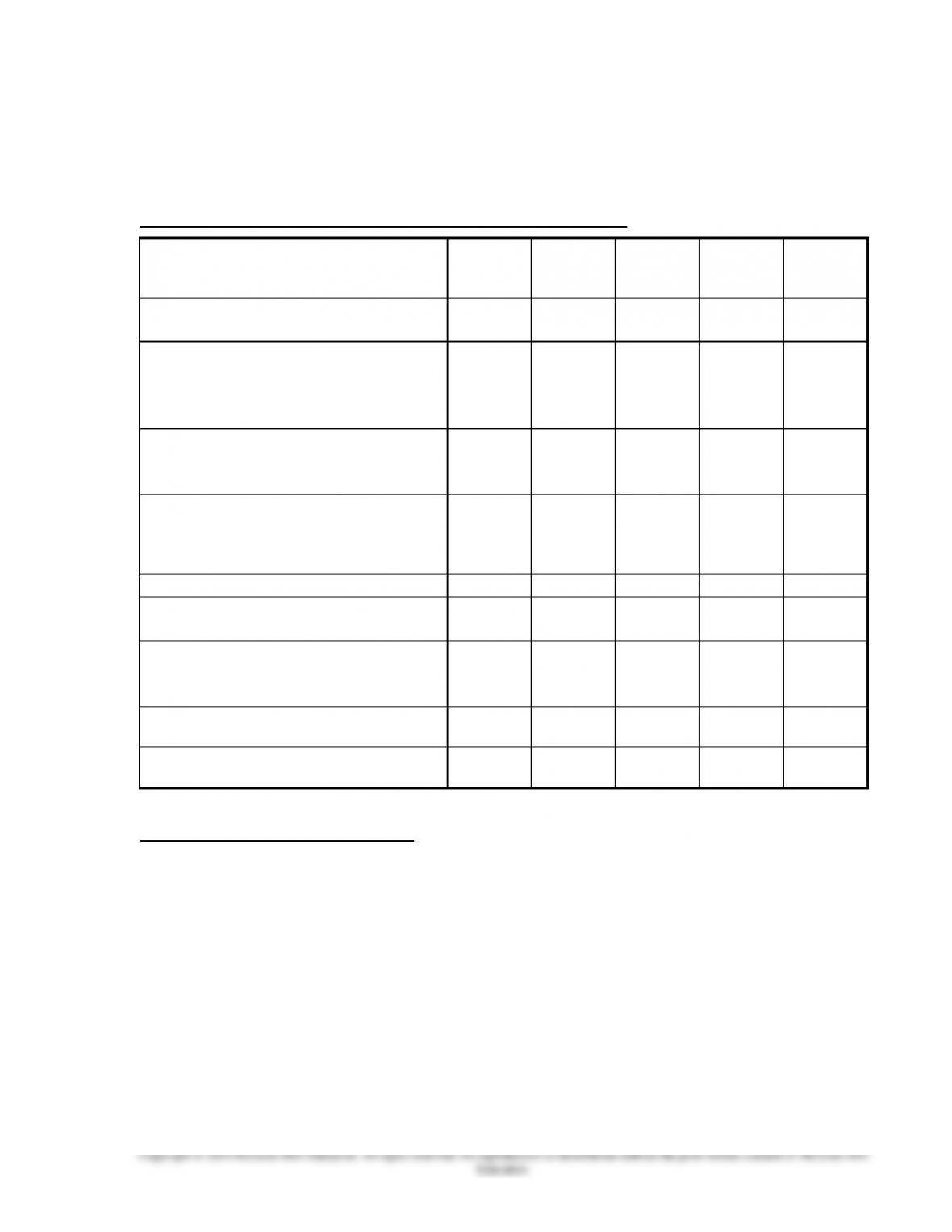
1. Describe the characteristics of
bonds.
1
1, 2, 13
1
1, 2, 5, 6,
7
2. Report bonds payable and interest
expense for bonds sold at par and
analyze the times interest earned
ratio.
1, 2, 9
3, 4, 5,
18
2, 3, 4, 5
1, 2
1, 2, 3, 7
3. Report bonds payable and interest
expense for bonds sold at a
discount.
3, 4, 5
3, 4, 6, 7,
8, 10, 11,
12, 13
3, 4, 5, 6,
7, 8
2, 3, 4
4, 7
4. Report bonds payable and interest
expense for bonds sold at a
premium.
6, 7, 8
3, 4, 14,
15, 16,
17, 18,
19
3, 4, 9,
10, 11,
12, 13
2, 5, 6
7
5. Analyze the debt-to-equity ratio.
9
5, 6, 18
5, 8
3, 7
6. Report the early retirement of
bonds.
10
20, 21
7
7. Explain how financing activities
are reported on the statement of
cash flows.
11, 12
18, 19,
22
14
3, 7
Chapter Supplement A: Bond calculations
using Excel
Chapter Supplement B: Bonds issued at a
discount (without discount account)
9, 16
Synopsis of Chapter Revisions
Focus Company: AT&T
▪ New focus company AT&T and revised coverage related to reporting and interpreting the bonds of
AT&T.
▪ New GUIDED HELP feature provides free access to step-by-step video instruction on calculating the
issue price of a bond.
▪ New CONTINUING CASE added to the end-of-chapter problems. Students are asked to compute the
issue price, interest expense, interest paid, and book value of the bonds for Pool Corporation, a public
company.
▪ New and updated real companies, as well as modified accounts, names, and amounts for fictional
companies in end-of-chapter exercises, problems, and cases.
Chapter 10 – Reporting and Interpreting Bonds
PowerPoint Slides
Learning Objectives
PowerPoint® Slides
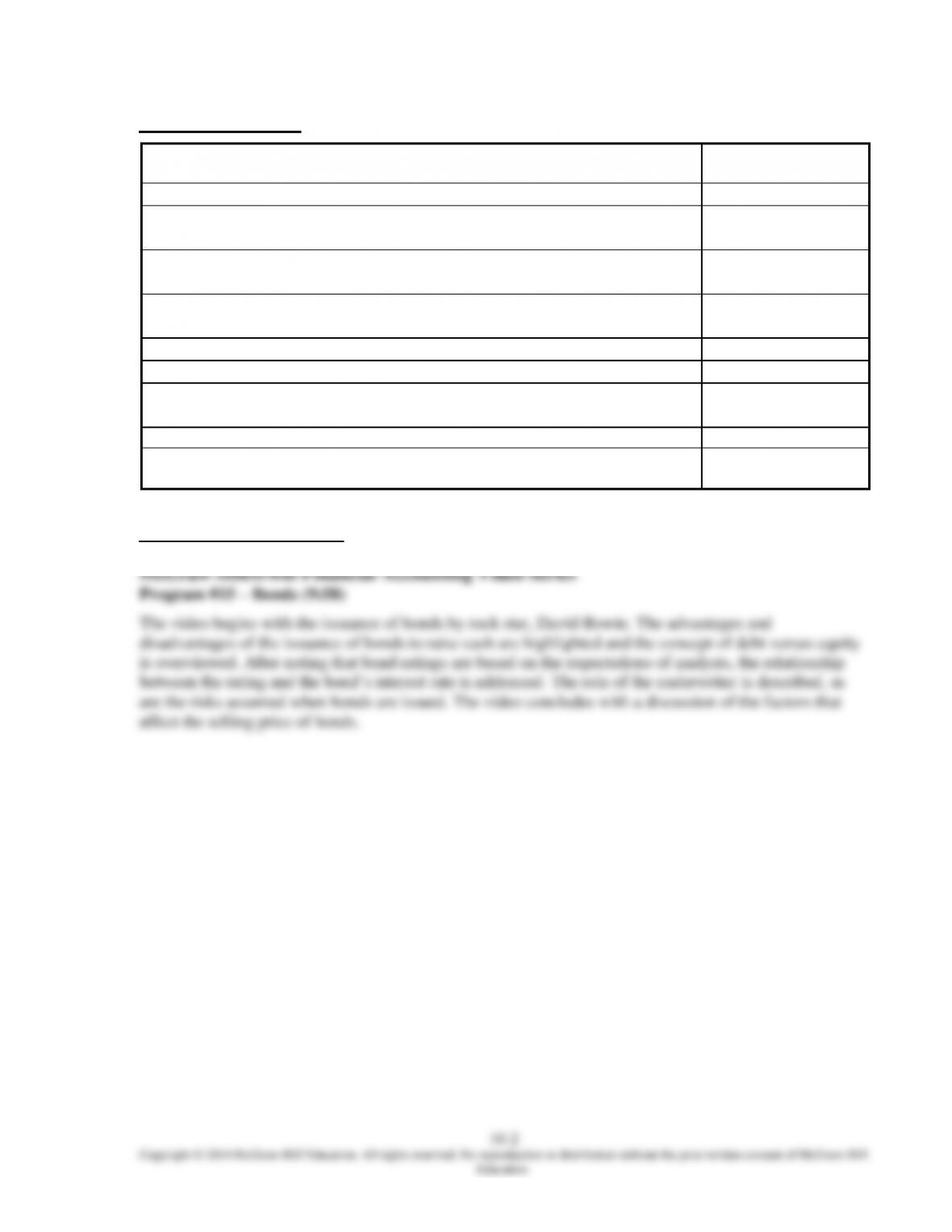
1. Describe the characteristics of bonds.
10-1 through 10-6
2. Report bonds payable and interest expense for bonds sold at par and
analyze the times interest earned ratio.
10-7 through 10-10
3. Report bonds payable and interest expense for bonds sold at a
discount.
10-11 through 10-25
4. Report bonds payable and interest expense for bonds sold at a
premium.
10-26 through 10-34
5. Analyze the debt-to-equity ratio.
10-35
6. Report the early retirement of bonds.
10-36
7. Explain how financing activities are reported on the statement of
cash flows.
10-37
Chapter Supplement A: Bond calculations using Excel
10-38
Chapter Supplement B: Bonds issued at a discount (without discount account)
or at a premium (without premium account)
10-39
Related Video Program

Chapter 10 – Reporting and Interpreting Bonds
10-3
Chapter Take-Aways
1. Describe the characteristics of bonds.
Bonds have a number of characteristics designed to meet the needs of both the issuing corporation
and the creditor. A complete listing of bond characteristics is discussed in the chapter.
Corporations use bonds to raise long-term capital. Bonds offer a number of advantages compared to
stock, including the ability to earn a higher return for stockholders, the tax deductibility of interest,
and the fact that control of the company is not diluted. Bonds do carry additional risk, however,
because interest and principal payments are not discretionary.
2. Report bonds payable and interest expense for bonds sold at par and analyze the times interest
earned ratio.
Three types of events must be recorded over the life of a typical bond: (1) the receipt of cash when
the bond is first sold, (2) the periodic payment of cash interest, and (3) the repayment of principal
upon the maturity of the bond. Bonds are reported at the present value of the future cash flows
specified in the bond contract. When the market interest rate and the coupon interest rate are the
same, the bond will sell at par which is the same as the maturity value of the bond.
The times interest earned ratio measures a company’s ability to meet its interest obligations with
resources from its profit-making activities. It is computed by comparing interest expense to earnings
(including net income, interest expense, and income tax expense).
3. Report bonds payable and interest expense for bonds sold at a discount.
Bonds are sold at a discount whenever the coupon interest rate is less than the market rate of interest.
A discount is the dollar amount of the difference between the par value of the bond and its selling
price. The discount is recorded as a contra-liability when the bond is sold and is amortized over the
life of the bond as an adjustment to interest expense.
4. Report bonds payable and interest expense for bonds sold at a premium.
Bonds are sold at a premium whenever the coupon interest rate is more than the market rate of
interest. A premium is the dollar amount of the difference between the selling price of the bond and
its par value. The premium is recorded as a liability when the bond is sold and is amortized over the
life of the bond as an adjustment to interest expense.
5. Analyze the debt-to-equity ratio.
The debt-to–equity ratio compares the amount of capital supplied by creditors to the amount supplied
by owners. It is a measure of a company’s debt capacity. It is an important ratio because of the high
risk associated with debt capital that requires obligatory interest and principal payments.
6. Report the early retirement of bonds.
A corporation may retire bonds before their maturity date. The difference between the book value and
the amount paid to retire the bonds is reported as a gain or loss, depending on the circumstances.
7. Explain how financing activities are reported on the statement of cash flows.
Cash flows associated with transactions involving long-term creditors are reported in the Financing
Activities section of the statement of cash flows. Interest expense is reported in the Operating
Activities section.

Chapter 10 – Reporting and Interpreting Bonds
10-4
Key Ratios
Times interest earned ratio measures a company’s ability to generate resources from current operations
to meet its interest obligations. The ratio is computed as follows:
Times Interest Earned =
(Net Income + Interest Expense + Income Tax Expense) ÷ Interest Expense
Debt-to-equity ratio measures the balance between debt and equity. Debt funds are viewed as being
riskier than equity funds. The ratio is computed as follows:
Debt-to-Equity = Total Liabilities ÷ Stockholders’ Equity
Finding Financial Information
Balance Sheet
Under Current Liabilities
Bonds are normally listed as long-term
liabilities. An exception occurs when the
bonds are within one year of maturity.
Such bonds are reported as current
liabilities with the following title: Current
portion of long-term debt
Income Statement
Bonds are shown only on the balance sheet,
never on the income statement. Interest
expense associated with bonds is reported on
the income statement. Most companies report
interest expense in a separate category on the
income statement.
Under Noncurrent Liabilities
Bonds are listed under a variety of titles,
depending on the characteristics of the
bond. Titles include:
Bonds payable
Debentures
Convertible bonds
Notes
Under Summary of Significant Accounting
Policies
Description of pertinent information
concerning accounting treatment of liabilities.
Normally, there is minimal information. Some
companies report the method used to
amortize bond discounts and premiums.
Under a Separate Note
Statement of Cash Flows
Under Financing Activities
+ Cash inflows from long-term creditors
– Cash outflows to long-term creditors
Under Operating Activities
The cash outflow associated with interest
expense is reported as an operating
activity.
Most companies include a separate note called
“Long–Term Debt” that reports information
about each major debt issue, including amount
and interest rate. The note also provides detail
concerning debt covenants.

Chapter 10 – Reporting and Interpreting Bonds
10-5
Chapter Outline
Teaching Notes
LO 1 – Describe the characteristics of bonds.
I. Characteristics of Bonds Payable
Illustrated in Exhibit 10.1
A. Issued to raise money for long-term purposes
1. Advantages:
Show Video Program #15
a. Stockholders maintain control; bondholders do not
vote or share in the company’s earnings
b. Interest expense is tax-deductible; dividends paid on
stock are not tax deductible
c. Impact on earnings is positive; money can often be
borrowed at a low interest rate and invested at a higher
rate
2. Disadvantages:
a. Risk of bankruptcy; interest payments to bondholders
are fixed charges that must be paid each period
b Negative impact on cash flows; debt must be repaid at
a specified time in the future
B. Terminology
1. Bond principal – Amount (a) payable at the maturity of
the bond and (b) on which the periodic cash interest
payments are computed
2. Par value – Another name for bond principal, or the
maturity amount of a bond
3. Face amount – Another name for bond principal, or the
maturity amount of the bond
4. Stated rate – Rate of cash interest per period stated in the
bond contract
5. Indenture – Bond contract that specifies the legal
provisions of a bond issue’ provisions include:
a. Maturity date
b. Rate of interest to be paid
c. Date of each interest payment, and any conversion
privileges
d. Covenants designed to protect the creditors; typical
indentures include:
i. Limitations on new debt that the company might
issue in the future
ii. Limitations on the payment of dividends
iii. Requirements for minimums of certain accounting
ratios
6. Covenants are reported in notes to financial statements
7. Types of bonds:
a. Debenture – Unsecured bond; no assets are
specifically pledged to guarantee repayment
b. Secured bond – Specific assets are pledged as a
guarantee of repayment at maturity
c. Callable bond – May be called for early retirement at
the option of the issuer

Chapter 10 – Reporting and Interpreting Bonds
10-6
d. Convertible bond – May be converted to other
securities of the issuer (usually common stock)
8. Bond certificate – Bond document that each bondholder
receives
9. Trustee – Independent party appointed to represent the
bondholders
C. Risk
1. Default risk – the probability that a bond issuer will not
be able to meet the requirements specified in the
indenture
2. Moody’s and Standard & Poor’s (agencies that evaluate
default risk) use letter ratings to specify the quality of a
bond
See Financial Analysis
feature “Bond Information
from the Business Press”
a. Investment grade – bonds with ratings above
Baa/BBB are investment grade
b. Junk bonds – bonds with ratings below that level are
speculative
LO 2 – Report bonds payable and interest expense for bonds sold at par and analyze the times
interest earned ratio.
II. Reporting Bond Transactions
A. Cash Payments in Bond Contract
1. Principal is payable at the maturity of the bond
2. Cash Interest Payments:
a. Contract, stated, or coupon rate of interest – Interest
rate stated in bond contract; used to compute cash
interest payments
b. Cash interest payments are computed by multiplying
the principal amount times the interest rate stated in
the bond contract
c. Bond contract specifies whether the interest payments
are made quarterly, semiannually, or annually
B. Issue Price
1. Market interest rate (or yield or effective-interest rate) –
the rate of interest currently being demanded by creditors
interest to compensate them for the risks related to bonds
a. The interest rate on debt when it is incurred
b. The rate that should be used in computing the present
value of a bond
2. Impact of interest rates on issuance price:
a. If the stated and the market interest rates are the same,
a bond sells at par – issuer receives cash equal to its
par value
b. If the market rate is higher than the stated rate, a bond
sells at a discount – issuer receives less cash than the
par value
c. If the market rate is lower than the stated rate, the
bond sells at a premium – issuer receives more cash
than the par value
Refer students to Pause for
Feedback – Self-Study Quiz

Chapter 10 – Reporting and Interpreting Bonds
10-7
C. Bonds Issued at Par
1. On 1/1/14, BNSF issued 10% bonds with a par value of
$100,000 and received $100,000 in cash; the market rate
of interest was also 10%, and the bonds will pay interest
each 6/30 and 12/31 and mature on 12/31/15
Present value factor based on
t = 4 (two interest payments
per year x 2 years) and i =
5% (market rate of 10% ÷ 2)
a. Present value:
Single payment: $100,000 × 0.8227
$ 82,270
Annuity: $5,000 × 3.5460
17,730
Issue price
$100,000
b. Journal entry:
dr Cash (+A)
100,000
cr Bonds Payable (+L)
100,000
Assets = Liabilities + Stockholders’ Equity
Cash (A) + 100,000 = Bond Payable (L) + 100,000
Refer students to Pause for
Feedback – Self-Study Quiz
2. Reporting Interest on Bonds Issued at Par
a. The amount of interest each period will be $5,000
(10% × $100,000 × 1/2)
b. Journal entry:
dr Interest Expense (+E, –SE)
5,000
cr Cash (–A)
5,000
Assets = Liabilities + Stockholders’ Equity
Cash (A) – 5,000 = Interest Expense (E) – 5,000
c. Interest expense is reported as a deduction from
operating income on the income statement
d. Under the matching concept, interest expense incurred
but not paid must be accrued with an adjusting entry
C. Key Ratio Analysis: Times Interest Earned Ratio
1. Times Interest Earned Ratio = (Net Income Sales +
Interest Expense + Income Tax Expense) ÷ Interest
Expense
2. Ratio measures whether the company generating
sufficient resources from its profit-making activities to
meet its current interest obligations
3. A high ratio is viewed more favorably; indicates an extra
margin of protection in case profitability deteriorates
4. Ratio is often misleading for new or rapidly growing
companies, which tend to invest considerable resources to
build their capacity for future operations

Chapter 10 – Reporting and Interpreting Bonds
10-8
LO 3 – Report bonds payable and interest expense for bonds sold at a discount.
E. Bonds Issued at a Discount
1. Bonds sell at a discount when the market rate of interest
is higher than the stated interest rate
2. On 1/1/14, BNSF issued 10% bonds with a par value of
$100,000 and received $100,000 in cash; the market rate
of interest was 12%, and the bonds will pay interest each
6/30 and 12/31 and mature on 12/31/15
Present value factor based on
t = 4 (two interest payments
per year x 2 years) and i =
6% (market rate of 12% ÷ 2)
a. Present value:
Single payment: $100,000 × 0.7921
$79,210
Annuity: $5,000 × 3.4651
34,651
Issue price
$96,536
b. Journal entry:
dr Cash (+A)
96,536
dr Discounts on Bonds
(+XL, –L)
3,464
cr Bonds Payable (+L)
100,000
Assets = Liabilities + Stockholders’ Equity
Cash (A) + 96,536 = Bond Payable (L) + 100,000 +
Discounts on Bonds (XL) – 3,464
c. Discount is recorded in a separate contra-liability
account (Discount on Bonds Payable) as a debit
d. Balance sheet reports the bonds payable at their book
value, which is their maturity amount less any
unamortized discount
3. BNSF received only $96,536 when it sold the bonds, but
must repay $100,000 at maturity; the extra cash that must
be paid is an adjustment of interest expense
a. To adjust interest expense, the borrower amortizes the
bond discount to each interest period as an increase in
interest expense (that is, the amortization of bond
discount results in an increase in interest expense)
b. Two amortization methods:
i. Straight-line – many companies use; easy
ii. Effective interest – required by GAAP
4. Part A: Straight-line Amortization
a. Straight-line amortization – simplified method of
amortizing a bond discount or premium that allocates
an equal dollar amount to each interest period
b. The amortization of discount each period is: $3,464 ÷
4 periods = $866
dr Interest Expense (+E, –SE)
5,866
cr Discounts on Bonds
(–XL, +L)
866
cr Cash (–A)
5,000
Assets = Liabilities + Stockholders’ Equity
Cash (A) – 5,000 = Discounts on Bonds (XL) + 866 +
Interest Expense (E) – 5,866

Chapter 10 – Reporting and Interpreting Bonds
10-9
c. Impact on Discount on Bonds account:
i. In each interest period, book value of bonds
increases by $866 because the unamortized
discount decreases by $866
ii. At the maturity date of the bonds:
▪ The unamortized discount (i.e., balance in
the Discount on Bonds Payable account) is
zero
Refer students to Pause for
Feedback – Self-Study Quiz
▪ The maturity amount of the bonds and the
book value are the same (i.e., $100,000)
Use Supplemental
Enrichment Activity #1
5. Part B: Effective-interest Amortization
a. Effective-interest amortization – method of amortizing
a bond discount or premium on the basis of the
effective-interest rate; theoretically preferred method
b. Two steps:
i. Compute interest expense:
Beginning Book Value × Market Interest Rate ×
n/15; n = # of months in each interest period
ii. Compute amortization amount:
Interest Expense – Cash Interest
c. First interest payment on BNSF bonds is on 6/30/14:
Interest expense = $96,536 × 12% × 1/2 = $5,792
Amortization amount = $5,792 – $5,000 = $792
dr Interest Expense (+E, –SE)
5,792
cr Discounts on Bonds
(–XL, +L)
792
cr Cash (–A)
5,000
Assets = Liabilities + Stockholders’ Equity
Cash (A) – 5,000 = Discounts on Bonds (XL) + 792 +
Interest Expense (E) – 5,792
d. Second interest payment on BNSF bonds is on
12/31/14:
Beginning book value = $96,536 + $792= $97,328
Interest expense = $97,328 × 12% × 1/2 = $5,840
Amortization amount = $5,840 – $5,000 = $840
dr Interest Expense (+E, –SE)
5, 840
cr Discounts on Bonds
(–XL, +L)
840
cr Cash (–A)
5,000
Refer students to Pause for
Feedback – Self-Study Quiz
Assets = Liabilities + Stockholders’ Equity
Cash (A) – 5,000 = Discounts on Bonds (XL) + 840 +
Interest Expense (E) – 5,840
See Financial Analysis
feature “Zero Coupon
Bonds”
e. Because of amortization of the bond discount, interest
expense increases each year during life of bond
Use Supplemental
Enrichment Activity #1

Chapter 10 – Reporting and Interpreting Bonds
10–10
LO 4 – Report bonds payable and interest expense for bonds sold at a premium.
F. Bonds Issued at a Premium
1. Bonds sell at a premium when the market rate of interest
is lower than the stated interest rate
2. On 1/1/14, BNSF issued 10% bonds with a par value of
$100,000 and received $100,000 in cash; the market rate
of interest was 8%, and the bonds will pay interest each
6/30 and 12/31 and mature on 12/31/15
Present value factor based on
t = 4 (two interest payments
per year x 2 years) and i =
4% (market rate of 10% ÷ 2)
a. Present value:
Single payment: $100,000 × 0.8548
$ 85,480
Annuity: $5,000 × 3.6299
18,150
Issue price
$103,630
b. Journal entry:
dr Cash (+A)
103,630
dr Premium on Bonds
Payable (+L)
3,630
cr Bonds Payable (+L)
100,000
Assets = Liabilities + Stockholders’ Equity
Cash (A) + 103,630 = Bond Payable (L) + 100,000 +
Premium on Bonds Payable (L) + 3,630
c. Premium is recorded in a separate liability account
(Premium on Bonds Payable) as a credit
d. Balance sheet reports the bonds payable at their book
value, which is their maturity amount plus any
unamortized premium
3. BNSF received $103,630 when it sold the bonds, but
must repay only $100,000 at maturity; the difference is an
adjustment of interest expense
4. Part A: Straight-line Amortization
b. The amortization of premium each period is: $3,630 ÷
4 periods = $908
dr Interest Expense (+E, –SE)
4,092
cr Premium on Bonds
Payable (–L)
908
cr Cash (–A)
5,000
Refer students to Pause for
Feedback – Self-Study Quiz
Assets = Liabilities + Stockholders’ Equity
Cash (A) – 5,000 = Premium on Bonds (L) – 908 +
Interest Expense (E) – 4,092
c. Impact on Premium on Bonds account:
i. In each interest period, book value of bonds
decreases by $908 because the unamortized
discount decreases by $908
ii. At the maturity date of the bonds:
▪ The unamortized discount (i.e., balance in
the Premium on Bonds Payable account) is
zero
▪ The maturity amount of the bonds and the
book value are the same (i.e., $100,000)
Use Supplemental
Enrichment Activity #2
Chapter 10 – Reporting and Interpreting Bonds
10–11
5. Part B: Effective-interest Amortization
a. First interest payment on BNSF bonds is on 6/30/14:
Interest expense = $103,630 × 8% × 1/2 = $4,145
Amortization amount = $5,000 – $4,145 = $855
Amortization of Bond
Discount and Premium
Compared in Exhibit 10.2
dr Interest Expense (+E, –SE)
4,145
dr Premium on Bonds
Payable (–L)
855
cr Cash (–A)
5,000
Assets = Liabilities + Stockholders’ Equity
Cash (A) – 5,000 = Premium on Bonds (L) + 855 +
Interest Expense (E) – 4,145
b. Second interest payment on BNSF bonds is on
12/31/14:
Beginning book value = $103,630 + $855 = $102,775
Interest expense = $102,775 × 8% × 1/2 = $4,111
Amortization amount = $5,000 – $4,111 = $889
dr Interest Expense (+E, –SE)
4,111
dr Premium on Bonds
Payable (–L)
889
cr Cash (–A)
5,000
Assets = Liabilities + Stockholders’ Equity
Cash (A) – 5,000 = Premium on Bonds Payable (L) +
889 + Interest Expense (E) – 4,111
Refer students to Pause for
Feedback – Self-Study Quiz
c. Because of amortization of the bond premium, interest
expense decreases each year during life of bond
Use Supplemental
Enrichment Activity #2
LO 5 – Analyze the debt-to-equity ratio.
G. Key Ratio Analysis: Debt-to-Equity Ratio
1. Debt-to-Equity Ratio = Total Liabilities ÷ Stockholders’
Equity
2. Ratio measures the relationship between the amount of
capital provided by owners and the amount provided by
creditors
3. A high ratio suggests that a company relies heavily on
funds provided by creditors; heavy reliance on creditors
increases risk that a company may not be able to meet its
contractual financial obligations during a business
downturn
LO 6 – Report the early retirement of bonds.
H. Early Retirement of Debt
1. Bondholders can sell the bonds to investors; transaction
does not affect the books of the issuer of the bonds
2. A corporation may retire bonds before maturity
a. Bond with a call feature may be called in for early
retirement at the issuer’s option
b. Bond indenture includes a call premium for bonds
retired before the maturity date

Chapter 10 – Reporting and Interpreting Bonds
10–12
3. Several years ago, BNSF issued bonds in the amount of
$1 million at par; BNSF called the bonds at102% of par
dr Bonds Payable (–L)
1,000,000
cr Loss on Bond Call
(+E, –SE)
20,000
cr Cash (–A)
1,020,000
Assets = Liabilities + Stockholders’ Equity
Cash (A) – 1,020,000 = Bonds Payable (L) – 1,000,000 +
Loss on Bond Call – 20,000
Refer students to Pause for
Feedback – Self-Study Quiz
4. A company may elect to retire debt early by purchasing it
on the open market
a. Necessary when the bonds do not have a call feature
b. This might also be an attractive approach if the price
of the bonds were to fall after the date of issue
LO 7 – Explain how financing activities are reported on the statement of cash flows.
H. Focus on Cash Flows: Bonds Payable
1. The cash proceeds from the issuance of bonds is added in
computing cash flows from financing activities
2. The cash used to repay bond principal upon maturity (or
retire bonds) is subtracted in computing cash flows from
financing activities
4. The payment of interest is not reported in the financing
activities section
a. Reported in the cash flows from operating activities
section
b. GAAP also requires that companies report the amount
of cash paid for interest expense during the period
IV. Chapter Supplement A: Bond Calculations Using Excel
A. Because a bond involves two types of payments, you can
compute the present value of each type of payment and add
them together
B. Alternatively, you can use a Excel to compute the present
value of a bond
1. Use the present value function programmed in Excel by
selecting the function button (fx)
2. In drop down box, type description “present value” and
click “Go” button
3. On next screen, highlight PV, click “OK“; enter specific
information for problem, and click “OK”

Chapter 10 – Reporting and Interpreting Bonds
10–13
V. Chapter Supplement B: Bonds Issued at a Discount (Without
Discount Account)
A. Bonds Issued at a Discount (Without Discount Account)
1. Issuance
a. On 1/1/14, BNSF issued 10% bonds with a par value
of $100,000 and received $100,000 in cash; the market
rate of interest was 12%, and the bonds will pay
interest each 6/30 and 12/31 and mature on 12/31/15
b. Present value:
Single payment: $100,000 × 0.7921
$79,210
Annuity: $5,000 × 3.4651
34,651
Issue price
$96,536
c. Journal entry:
dr Cash (+A)
96,536
cr Bonds Payable (+L)
96,536
Assets = Liabilities + Stockholders’ Equity
Cash (A) + 96,536 = Bond Payable (L) + 96,536
2. Reporting Interest Expense on Bonds Issued at a Discount
Using Effective-Interest Amortization
a. First interest payment on BNSF bonds is on 6/30/14:
Interest expense = $96,536 × 12% × 1/2 = $5,792
Amortization amount = $5,792 – $5,000 = $792
dr Interest Expense (+E, –SE)
5,792
cr Bonds Payable (+L)
792
cr Cash (–A)
5,000
Assets = Liabilities + Stockholders’ Equity
Cash (A) – 5,000 = Bonds Payable (L) + 792 +
Interest Expense (E) – 5,792
b. Second interest payment is on 12/31/14:
Beginning book value = $96,536 + $792= $97,328
Interest expense = $97,328 × 12% × 1/2 = $5,840
Amortization amount = $5,840 – $5,000 = $840
dr Interest Expense (+E, –SE)
5, 840
cr Bonds Payable (+L)
840
cr Cash (–A)
5,000
Refer students to Pause for
Feedback – Self-Study Quiz
Assets = Liabilities + Stockholders’ Equity
Cash (A) – 5,000 = Bonds Payable (L) + 840 +
Interest Expense (E) – 5,840
See Financial Analysis
feature: “Zero Coupon
Bonds”
B. Bonds Issued at a Premium (Without Premium Account)
1. Issuance
a. On 1/1/14, BNSF issued 10% bonds with a par value
of $100,000 and received $100,000 in cash; the market
rate of interest was 8%, and the bonds will pay interest
each 6/30 and 12/31 and mature on 12/31/15
b. Present value:
Single payment: $100,000 × 0.8548
$ 85,480
Annuity: $5,000 × 3.6299
18,150
Issue price
$103,630

Chapter 10 – Reporting and Interpreting Bonds
10–14
c. Journal entry:
dr Cash (+A)
103,630
cr Bonds Payable (+L)
103,630
Assets = Liabilities + Stockholders’ Equity
Cash (A) + 103,630 = Bond Payable (L) + 103,630
2. Reporting Interest Expense on Bonds Issued at a
Premium Using Effective-Interest Amortization
a. First interest payment on BNSF bonds is on 6/30/14:
Interest expense = $103,630 × 8% × 1/2 = $4,145
Amortization amount = $5,000 – $4,145 = $855
dr Interest Expense (+E, –SE)
4,145
dr Premium on Bonds
Payable (–L)
855
cr Cash (–A)
5,000
Assets = Liabilities + Stockholders’ Equity
Cash (A) – 5,000 = Premium on Bonds (L) + 855 +
Interest Expense (E) – 4,145
b. Second interest payment on BNSF bonds is on
12/31/14:
Beginning book value = $103,630 + $855 = $102,775
Interest expense = $102,775 × 8% × 1/2 = $4,111
Amortization amount = $5,000 – $4,111 = $889
dr Interest Expense (+E, –SE)
4,111
dr Bonds Payable (–L)
889
cr Cash (–A)
5,000
Assets = Liabilities + Stockholders’ Equity
Cash (A) – 5,000 = Premium on Bonds Payable (L) +
889 + Interest Expense (E) – 4,111
Refer students to Pause for
Feedback – Self-Study Quiz
Supplemental Enrichment Activities
Note: These activities would be suitable for individual or group activities.
1. Handout 10-1
Use Handout 10-1 for an in-class activity to review the issuance of bonds at a discount using both
straight-line and effective-interest amortization. The solution follows the handout master.
2. Handout 10-2
Use Handout 10-2 for an in-class activity to review the issuance of bonds at a premium using both
straight-line and effective-interest amortization. The solution follows the handout master.
Chapter 10 – Reporting and Interpreting Bonds
10–15
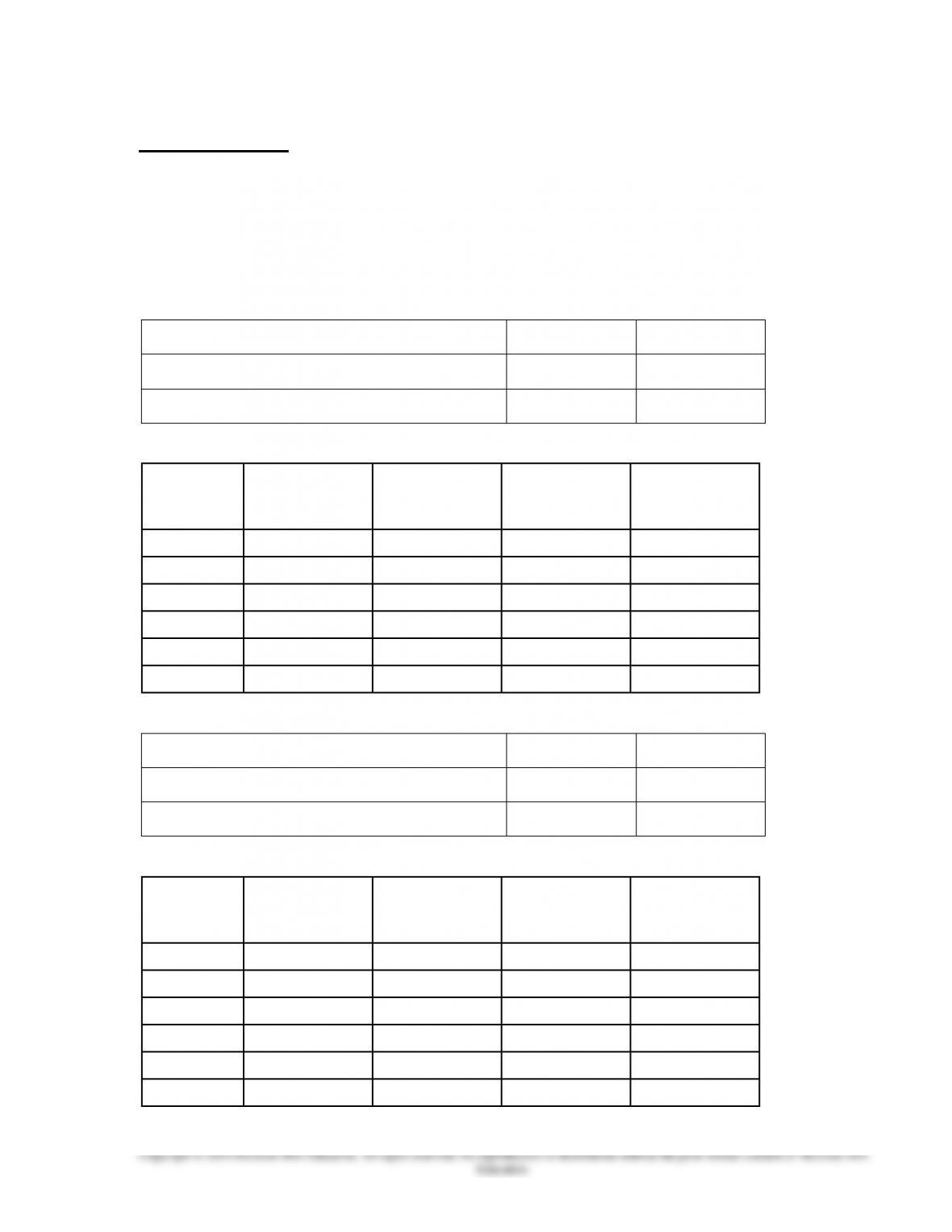
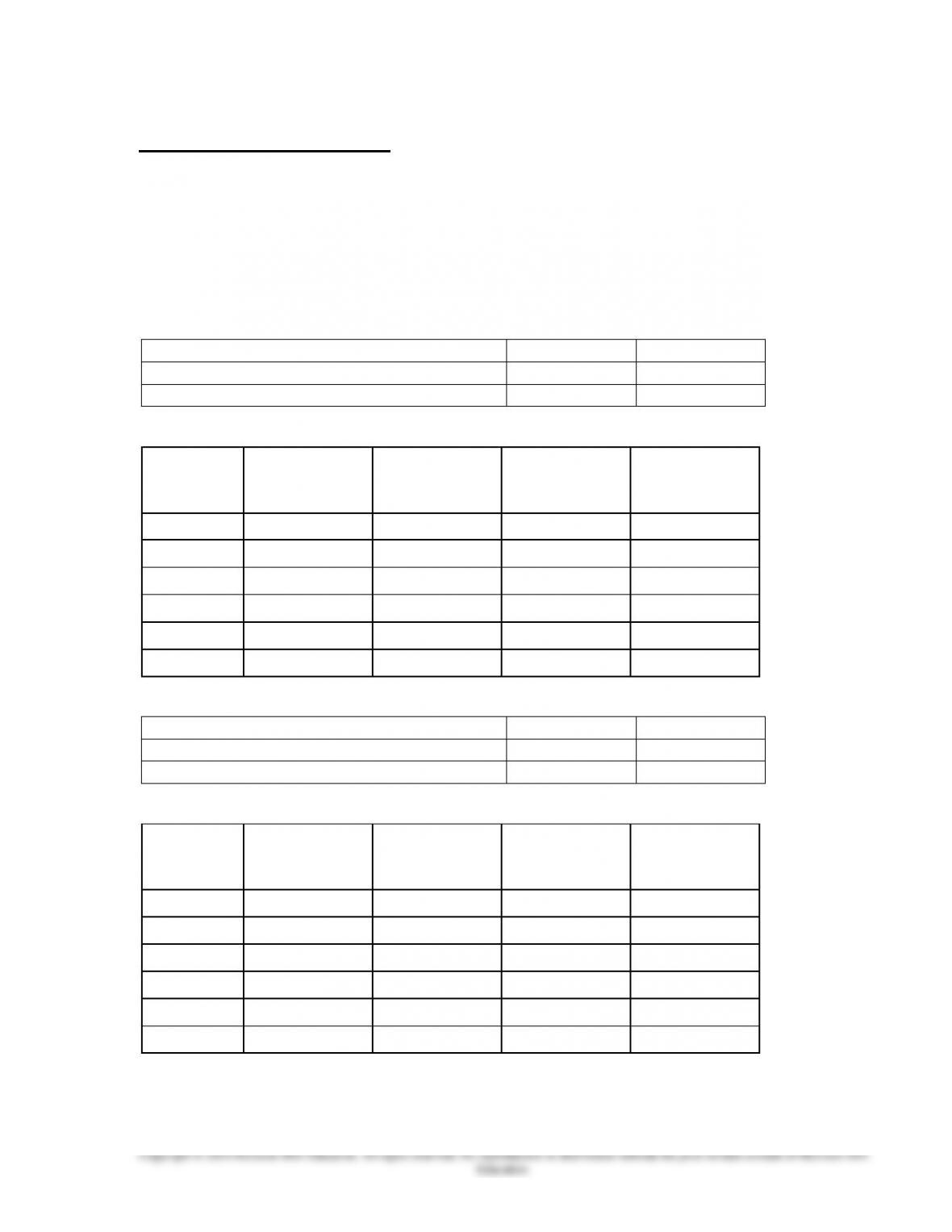
HANDOUT 10 – 1
ISSUING BONDS
On January 1, 2013, $800,000, 5-year, bonds with a contract rate of 8% payable annually were issued for
cash of $684,627 when the market rate of interest was 12%. Were these bonds issued at a discount or at a
premium? Why?
Prepare the journal entry to record the issuance (sale) of the bonds:
Complete the following interest schedule (assuming straight-line amortization):
Date
Cash
Payment of
Interest
Interest
Expense
Amortization
of Discount
Carrying
Value (Net
Liability)
1/1/2013
None
None
None
12/31/2013
12/31/2014
12/31/2015
12/31/2016
12/31/2017
Prepare the journal entry to record the first payment of interest on 12/31/2013:
Complete the following interest schedule (assuming effective-interest amortization):
Date
Cash
Payment of
Interest
Interest
Expense
Amortization
of Discount
Carrying
Value (Net
Liability)
1/1/2013
None
None
None
12/31/2013
12/31/2014
12/31/2015
12/31/2016
12/31/2017
Chapter 10 – Reporting and Interpreting Bonds
10–16
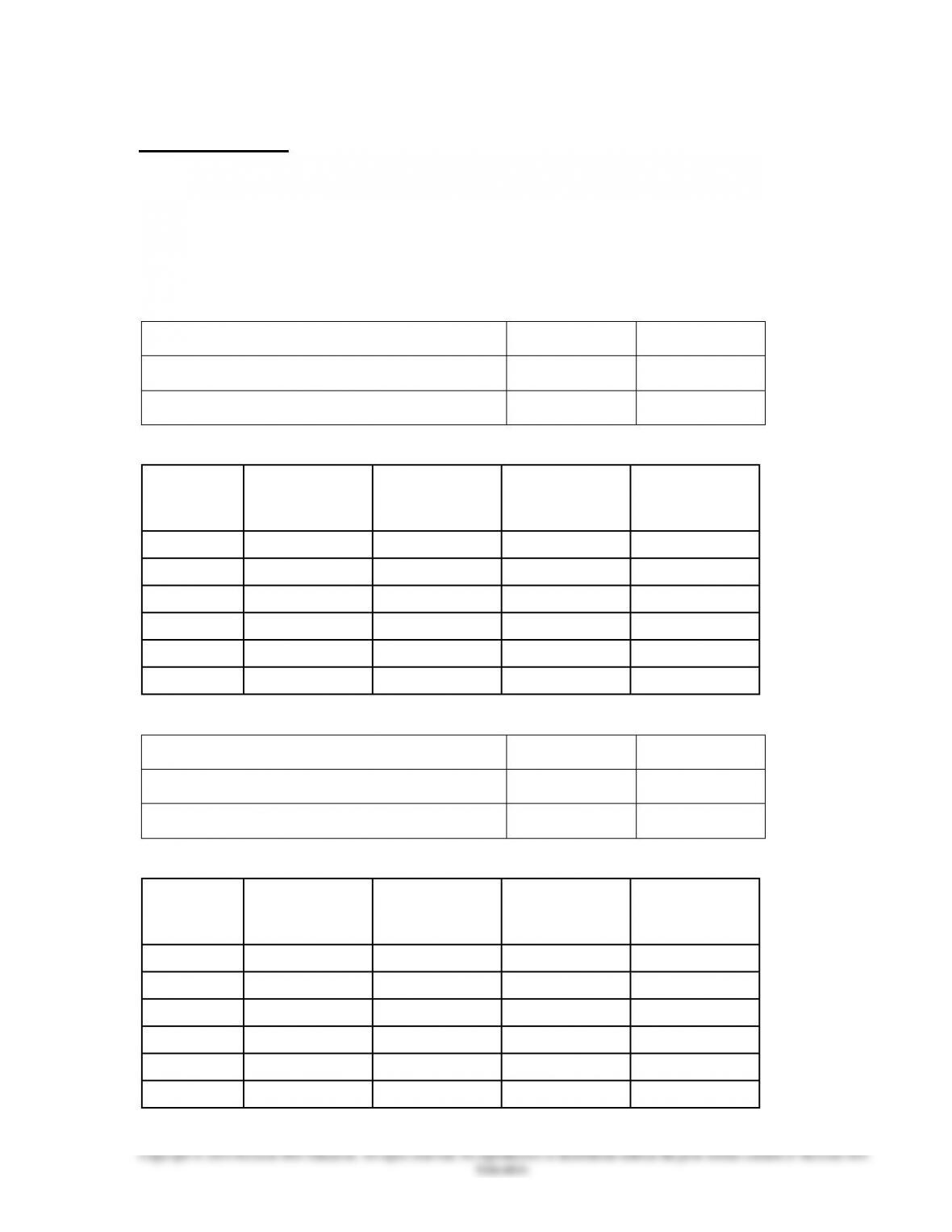
HANDOUT 10 – 1 SOLUTION
ISSUING BONDS
On January 1, 2013, $800,000, 5-year, bonds with a contract rate of 8% payable annually were issued for
cash of $684,627 when the market rate of interest was 12%. Were these bonds issued at a discount or at a
premium? Why?
The bonds were issued at a discount since the stated rate is lower than the market rate.
Prepare the journal entry to record the issuance (sale) of the bonds:
Cash (+A)
684,627
Discount on Bonds Payable (+xL, –L)
115,373
Bonds Payable (+L)
800,000
Complete the following interest schedule (assuming straight-line amortization):
Date
Cash
Payment of
Interest
Interest
Expense
Amortization
of Discount
Carrying
Value (Net
Liability)
1/1/2013
None
None
None
684,627
12/31/2013
64,000
87,075
23,075
707,702
12/31/2014
64,000
87,075
23,075
730,776
12/31/2015
64,000
87,075
23,075
753,851
12/31/2016
64,000
87,075
23,075
776,925
12/31/2017
64,000
87,075
23,075
800,000
Prepare the journal entry to record the first payment of interest on 12/31/2013:
Interest Expense (+E, –SE)
87,075
Discount on Bonds Payable (–xL, +L)
23,075
Cash (–A)
64,000
Complete the following interest schedule (assuming effective-interest amortization):
Date
Cash
Payment of
Interest
Interest
Expense
Amortization
of Discount
Carrying
Value (Net
Liability)
1/1/2013
None
None
None
684,627
12/31/2013
64,000
82155
18155
702,782
12/31/2014
64,000
84334
20334
723,116
12/31/2015
64,000
86774
22774
745,890
12/31/2016
64,000
89507
25507
771,397
12/31/2017
64,000
92568
28568
799,965
Difference due
to rounding
Chapter 10 – Reporting and Interpreting Bonds
10–17
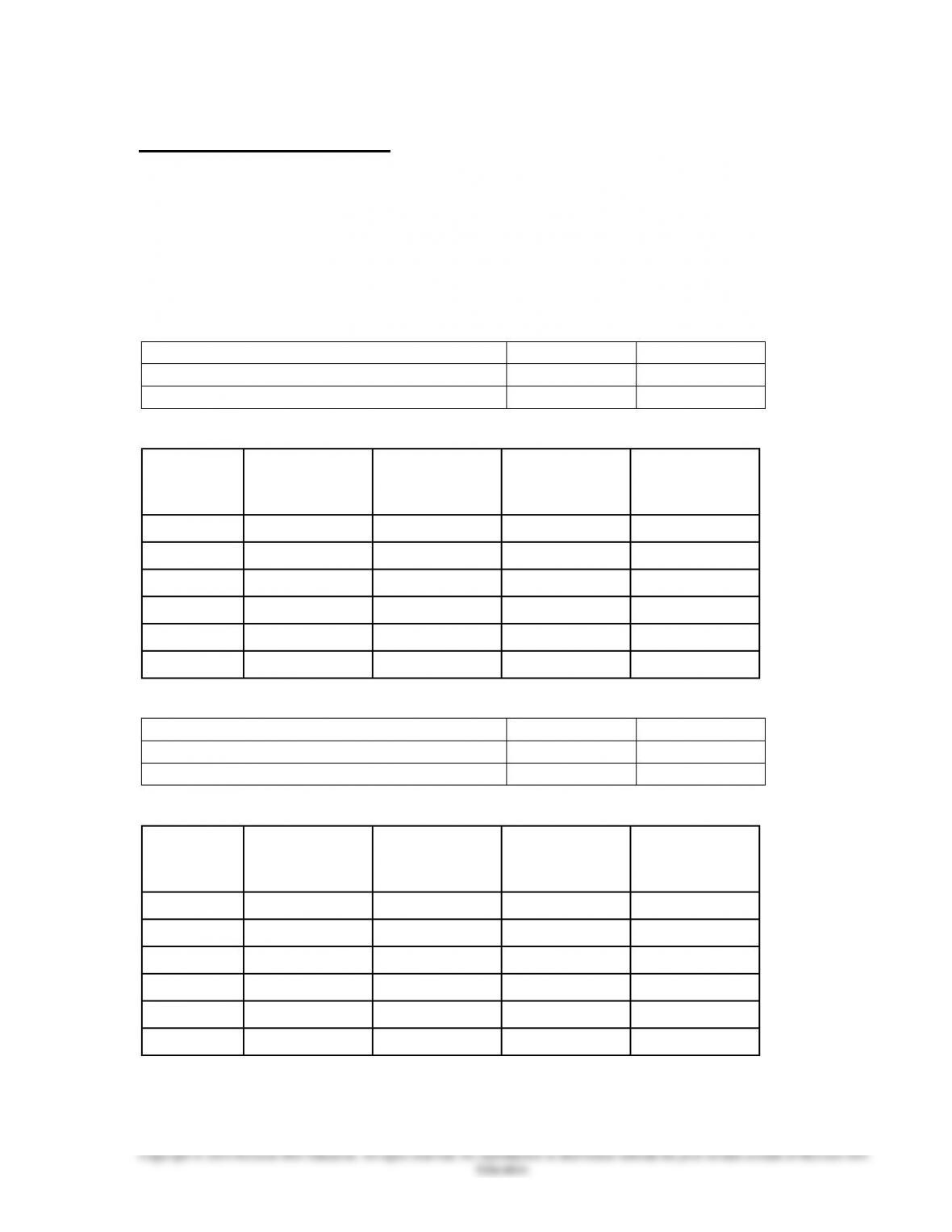
HANDOUT 10 – 2
ISSUING BONDS
On January 1, 2013, $1,200,000, 5-year, bonds with a stated rate of 10% payable annually were issued for
cash of $1,295,844 when the market rate of interest was 8%. Were these bonds issued at a discount or at a
premium? Why?
Prepare the journal entry to record the issuance (sale) of the bonds:
Complete the following interest schedule (assuming straight-line amortization):
Date
Cash
Payment of
Interest
Interest
Expense
Amortization
of Premium
Carrying
Value (Net
Liability)
1/1/2013
None
None
None
12/31/2013
12/31/2014
12/31/2015
12/31/2016
12/31/2017
Prepare the journal entry to record the first payment of interest on 12/31/2013:
Complete the following interest schedule (assuming effective-interest amortization):
Date
Cash
Payment of
Interest
Interest
Expense
Amortization
of Premium
Carrying
Value (Net
Liability)
1/1/2013
None
None
None
12/31/2013
12/31/2014
12/31/2015
12/31/2016
12/31/2017
Chapter 10 – Reporting and Interpreting Bonds
10–18
HANDOUT 10 – 2 SOLUTION
ISSUING BONDS
On January 1, 2013, $1,200,000, 5-year, bonds with a stated rate of 10% payable annually were issued for
cash of $1,295,844 when the market rate of interest was 8%. Were these bonds issued at a discount or at a
premium? Why?
The bonds were issued at a premium since the stated rate is higher than the market rate.
Prepare the journal entry to record the issuance (sale) of the bonds:
Cash (+A)
1,295,844
Premium on Bonds Payable (+L)
95,844
Bonds Payable (+L)
1,200,000
Complete the following interest schedule (assuming straight-line amortization):
Date
Cash
Payment of
Interest
Interest
Expense
Amortization
of Premium
Carrying
Value (Net
Liability)
1/1/2013
None
None
None
1,295,844
12/31/2013
120,000
100,831
19,169
1,276,675
12/31/2014
120,000
100,831
19,169
1,257,506
12/31/2015
120,000
100,831
19,169
1,238,338
12/31/2016
120,000
100,831
19,169
1,219,169
12/31/2017
120,000
100,831
19,169
1,200,000
Prepare the journal entry to record the first payment of interest on 12/31/2013:
Interest Expense (+E, –SE)
100,831
Premium on Bonds Payable (–L)
19,169
Cash (–A)
120,000
Complete the following interest schedule (assuming effective-interest amortization):
Date
Cash
Payment of
Interest
Interest
Expense
Amortization
of Premium
Carrying
Value (Net
Liability)
1/1/2013
None
None
None
1,295,844
12/31/2013
120,000
103,668
16,332
1,279,512
12/31/2014
120,000
102,361
17,639
1,261,872
12/31/2015
120,000
100,950
19,050
1,242,822
12/31/2016
120,000
99,426
20,574
1,222,248
12/31/2017
120,000
97,780
22,220
1,200,028
Difference due to rounding