Student Name:
Class:
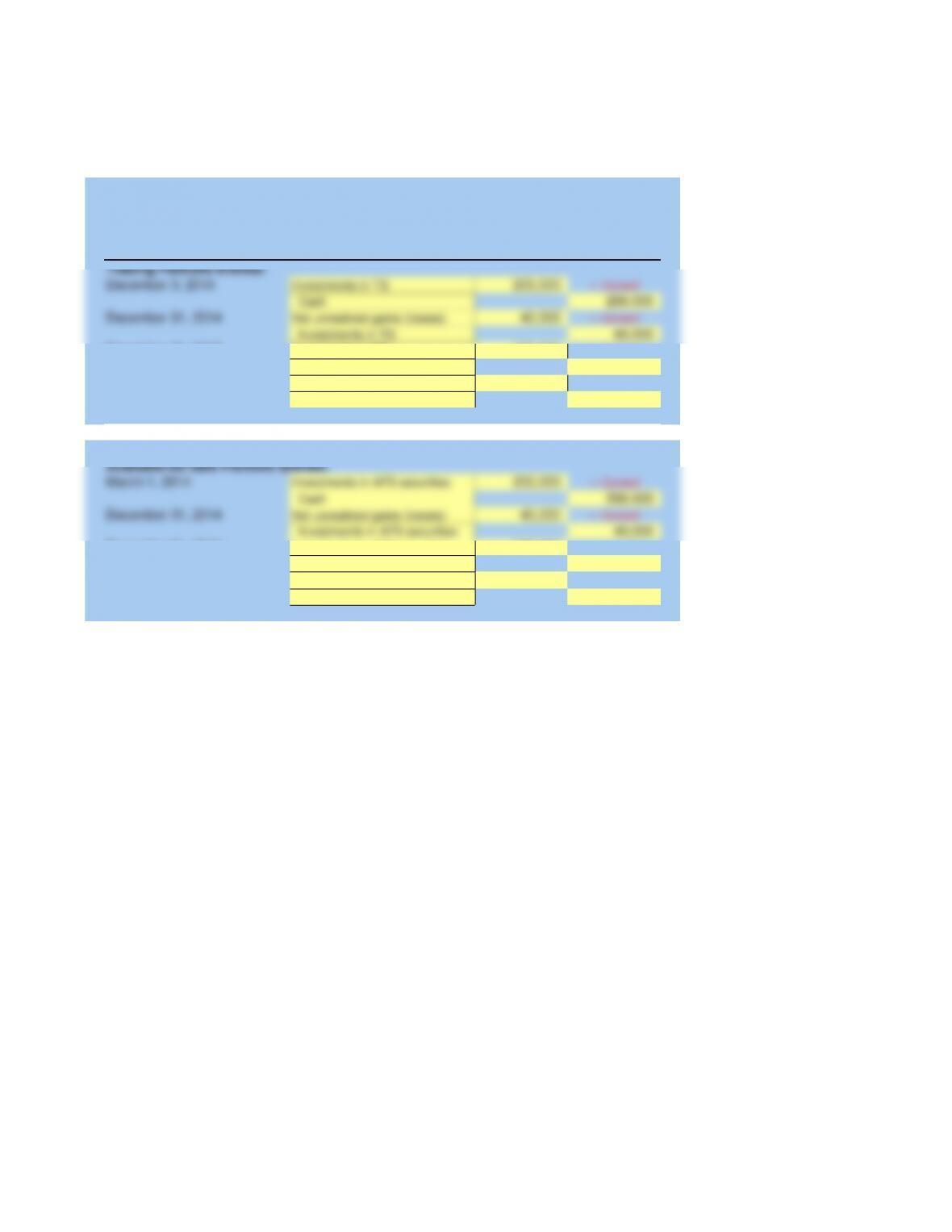
Date Account Debit Credit
200,000 «- Correct!
200,000
40,000 «- Correct!
40,000
120,000 «- Correct!
120,000 `
60,000 «- Correct!
60,000
200,000 «- Correct!
200,000
40,000 «- Correct!
40,000
120,000 «- Correct!
120,000
60,000 «- Correct!
60,000
Net unrealized gains (losses)
Investments in AFS securities
December 31, 2016
Investments in TS
Cash
Net unrealized gains (losses)
Investments in TS
Investments in TS
Net unrealized gains (losses)
Investments in TS
Net unrealized gains (losses)
Investments in AFS securities
Net unrealized gains (losses)
Cash
Net unrealized gains (losses)
Investments in AFS securities
Investments in AFS securities
December 31, 2014
December 31, 2015
March 1, 2014
December 3, 2014
December 31, 2014
December 31, 2016
Requirement 1:
Requirement 2:
Available-for-Sale Portfolio Entries:
December 31, 2015
Trading Portfolio Entries:
Problem E-02
McGraw-Hill/Irwin
Instructor
General Journal
RAIN TECHNOLOGY

3/1/2014
20,000
10$
Date Stock Price
8$
14$
17$
Stock Purchase:
RAIN TECHNOLOGY
Given PE-02:
Price per share
Shares purchased
Date of purchase
12/31/2016
12/31/2015
12/31/2014
Lightyear Services Company Stock
Computing Services Company
Student Name:
Class:
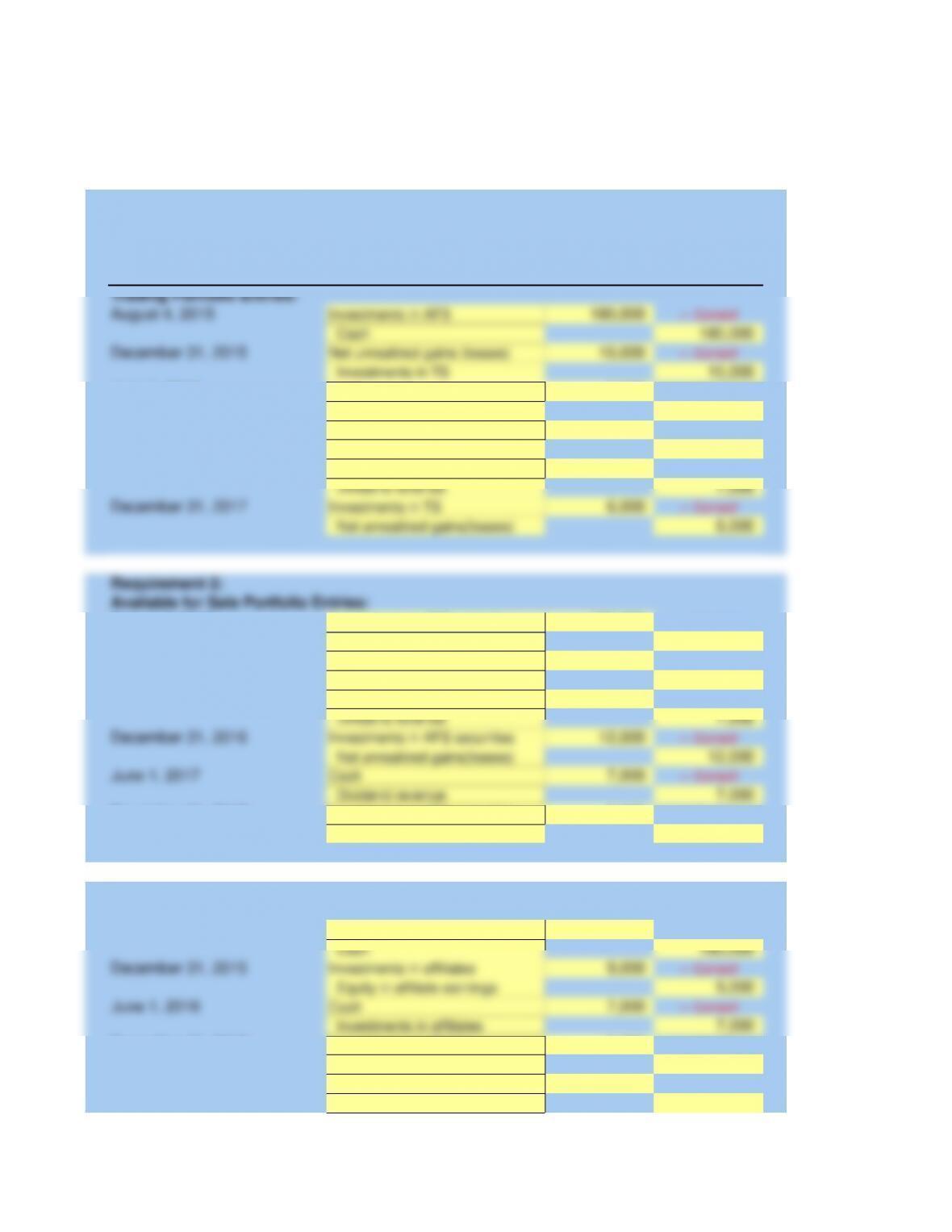
Account Debit Credit
180,000 «- Correct!
180,000
10,000 «- Correct!
10,000
7,000 «- Correct!
7,000
6,000 «- Correct!
6,000
Investments in AFS securities
Cash
August 4, 2015
Available for Sale Portfolio Entries:
10,000 «- Correct!
10,000
7,000 «- Correct!
7,000
12,000 «- Correct!
12,000
7,000 «- Correct!
7,000
6,000 «- Correct!
Net unrealized gains(losses)
Requirement 3:
Equity Method
180,000 «- Correct!
180,000
9,000 «- Correct!
9,000
7,000 «- Correct!
7,000
9,000 «- Correct!
Equity in affiliate earnings
Cash
Investments in affiliates
June 1, 2017
Net unrealized gains(losses)
Cash
Dividend revenue
June 1, 2017
December 31, 2016
Investments in TS
Investments in affiliates
Net unrealized gains(losses)
Cash
Dividend revenue
Investments in AFS securities
Investments in affiliates
Cash
Investments in affiliates
Equity in affiliate earnings
Cash
Investments in affiliates
Net unrealized gains (losses)
Investments in AFS securities
Cash
Dividend revenue
Investments in AFS securities
McGraw-Hill/Irwin
Instructor
Investments in AFS
Cash
Net unrealized gains (losses)
December 31, 2015
Problem E-05
December 31, 2016
December 31, 2016
June 1, 2017
December 31, 2017
August 4, 2015
December 31, 2015
June 1, 2016
December 31, 2015
June 1, 2016
Requirement 2:
Investments in TS
Net unrealized gains(losses)
December 31, 2017
June 1, 2016
General Journal
JEFFREY CORPORATION
August 4, 2015
Trading Portfolio Entries:
Date
Requirement 1:
Cash
Investments in TS
Dividend revenue

9,000 «- Correct!
9,000
Investments in affiliates
Equity in affiliate earnings
December 31, 2017

8/4/2015
2,000
180,000$
Date Stock Price
85$
91$
94$
3.50$
Given PE-05:
12/31/2017
12/31/2016
12/31/2015
Price
Shares purchased
Date of purchase
Cash dividends/share
Kevin Company Stock
Riley Company
Stock Purchase:
JEFFREY CORPORATION
Student Name:
Class:
Case B :
Requirement 2:
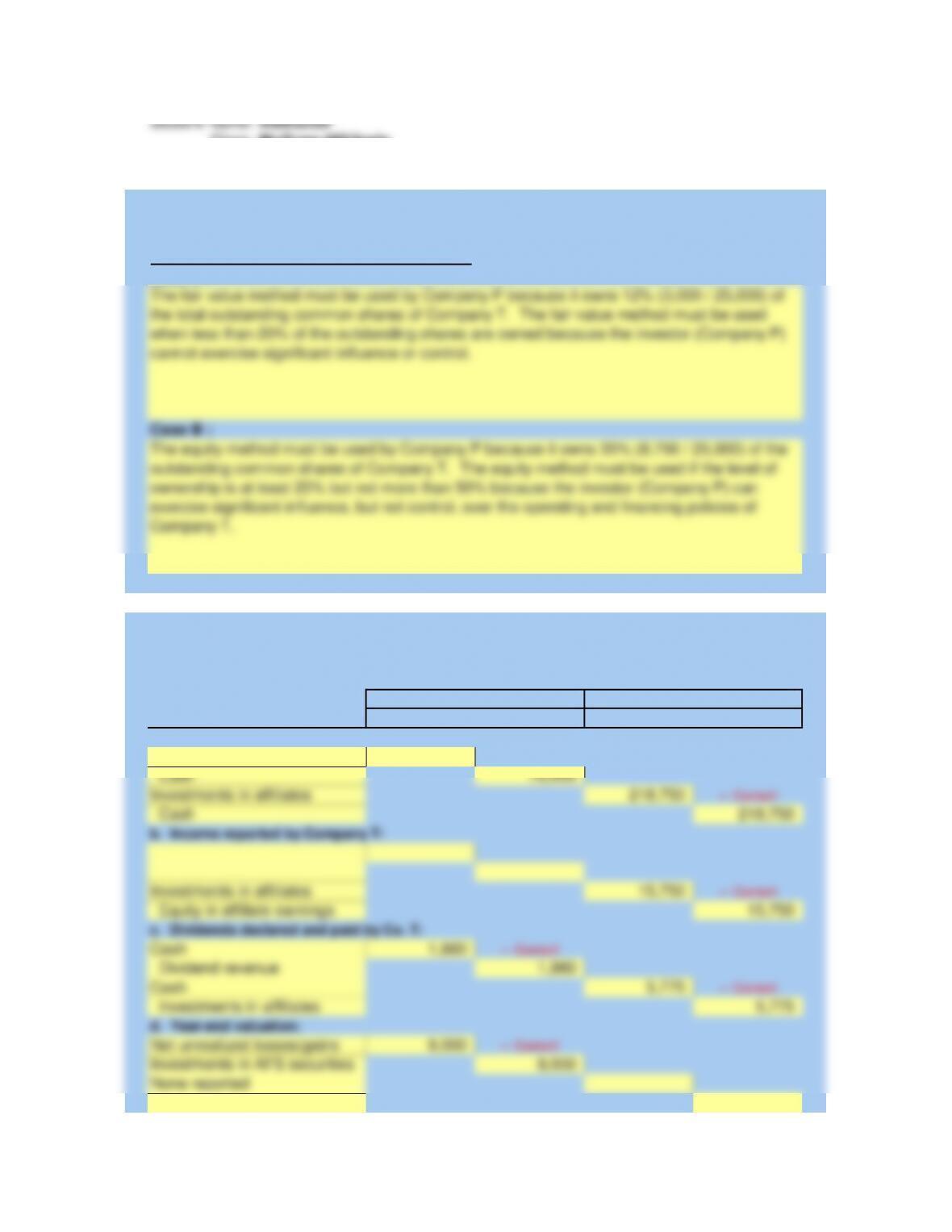
Debit Credit Debit Credit
75,000 «- Correct!
75,000
218,750 «- Correct!
218,750
Investments in affiliates
Net unrealized losses/gains
Investments in AFS securities
None reported
Investments in affiliates
Equity in affiliate earnings
Dividend revenue
d. Year-end valuation:
c. Dividends declared and paid by Co. T:
Cash
Investments in affiliates
Cash
Problem E-06
McGraw-Hill/Irwin
Instructor
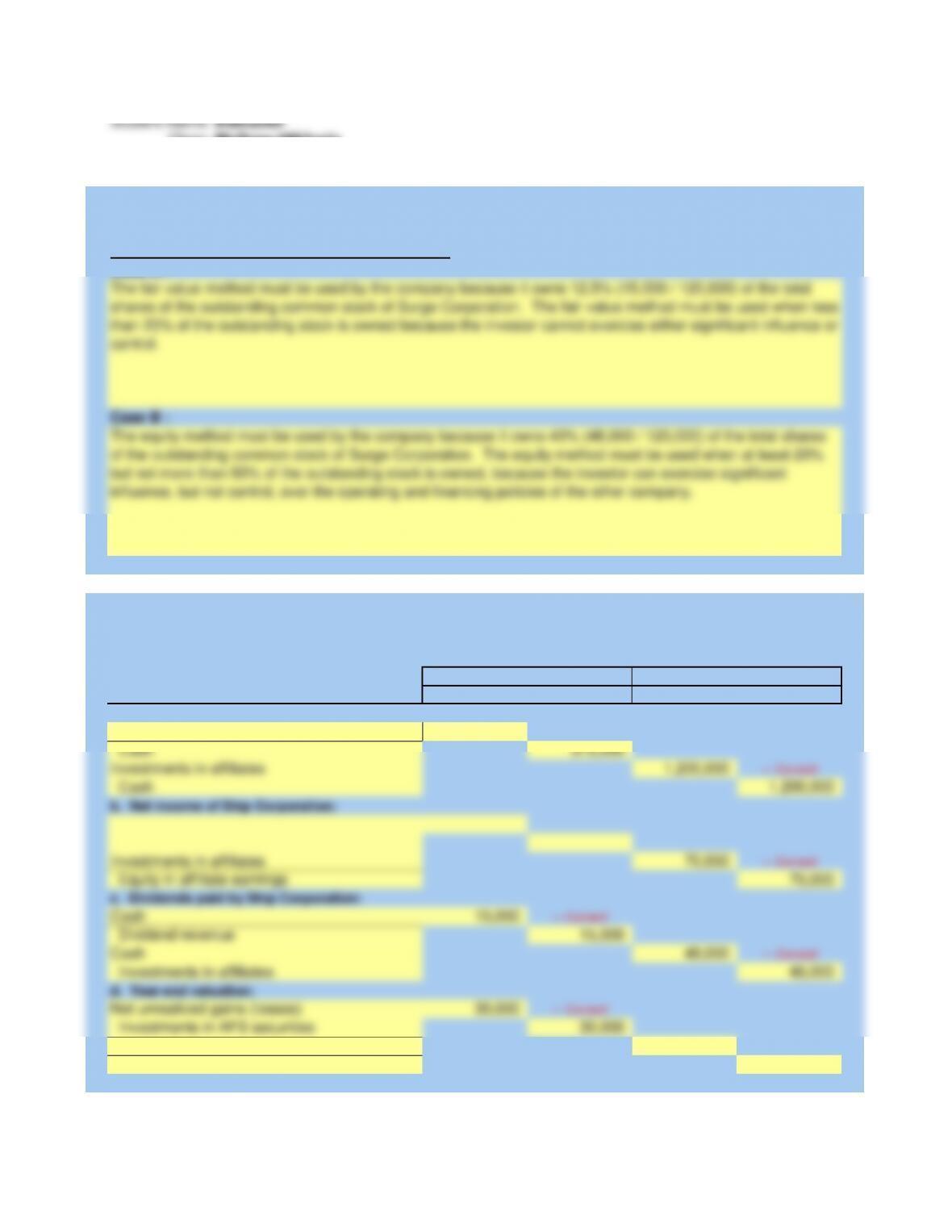
The fair value method must be used by Company P because it owns 12% (3,000 / 25,000) of
the total outstanding common shares of Company T. The fair value method must be used
when less than 20% of the outstanding shares are owned because the investor (Company P)
cannot exercise significant influence or control.
The equity method must be used by Company P because it owns 35% (8,750 / 25,000) of the
outstanding common shares of Company T. The equity method must be used if the level of
ownership is at least 20% but not more than 50% because the investor (Company P) can
exercise significant influence, but not control, over the operating and financing policies of
Company T.
COMPANY P
General Journal
COMPANY P
Case A-12%
b. Income reported by Company T:
a. January 1, 2014 purchase:
Account
Investments in AFS securities
Case A :
Accounting method Company P should use
Requirement 1:
Case B-35%

Student Name:
Class:
Problem E-06
McGraw-Hill/Irwin
Instructor
Student Name:
Class:
Problem E-06
McGraw-Hill/Irwin
Instructor
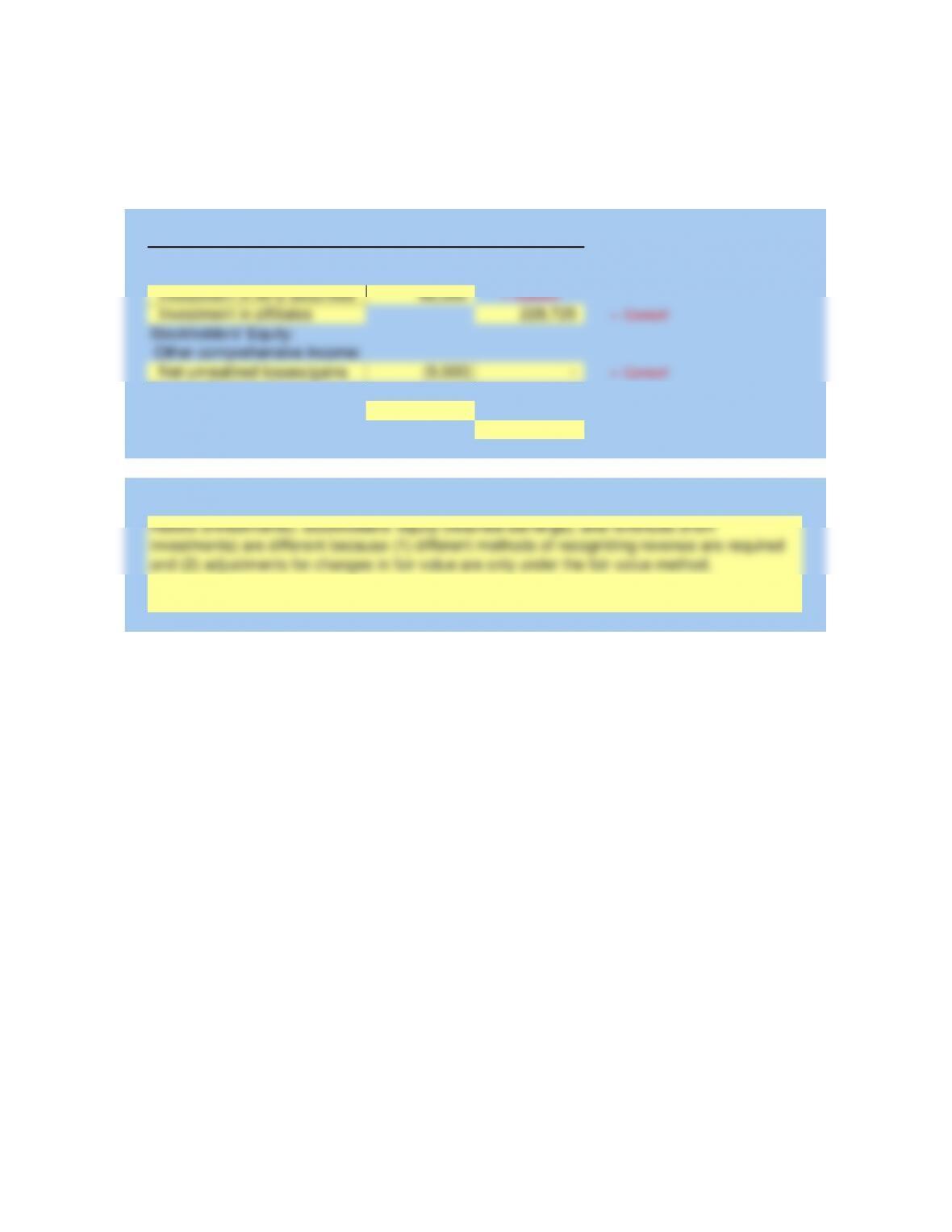
Case A Case B
66,000 «- Correct!
228,725 «- Correct!
(9,000) – «- Correct!
1,980 «- Correct!
15,750 «- Correct!
Requirement 4:
Explanation
Schedule
Requirement 3:
Stockholders’ Equity:
Investment in affiliates
Investment in AFS securities
Investments:
Balance Sheet:
Equity in earnings of affiliate
Dividend revenue
Income Statement:
Net unrealized losses/gains
Other comprehensive income:
Assets (investments), stockholders’ equity (retained earnings), and revenues (from
investments) are different because (1) different methods of recognizing revenue are required
and (2) adjustments for changes in fair value are only under the fair value method.
25,000
10$
1/1/2014
25$
10$
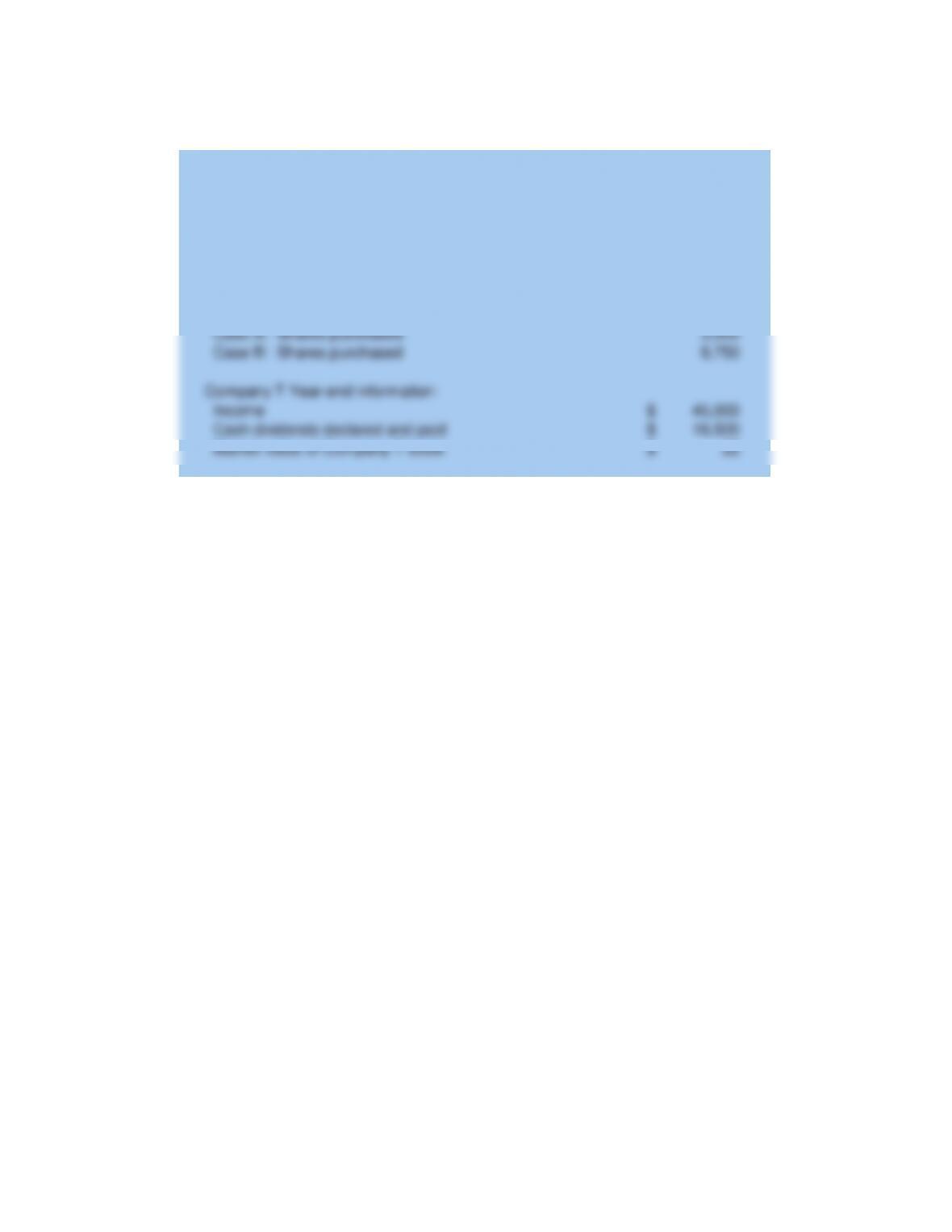
3,000
8,750
45,000$
16,500$
22$
Case B: Shares purchased
COMPANY P
Given PE-06:
Shares of Company T common stock outstanding
Par value
Case A: Shares purchased
Par value per share
Company P purchased Company T stock:
Date of purchase
Price per share
Company T Year-end information:
Income
Cash dividends declared and paid
Market value of Company T stock
Student Name:
Class:
Requirement 1:
Debit Credit Debit Credit
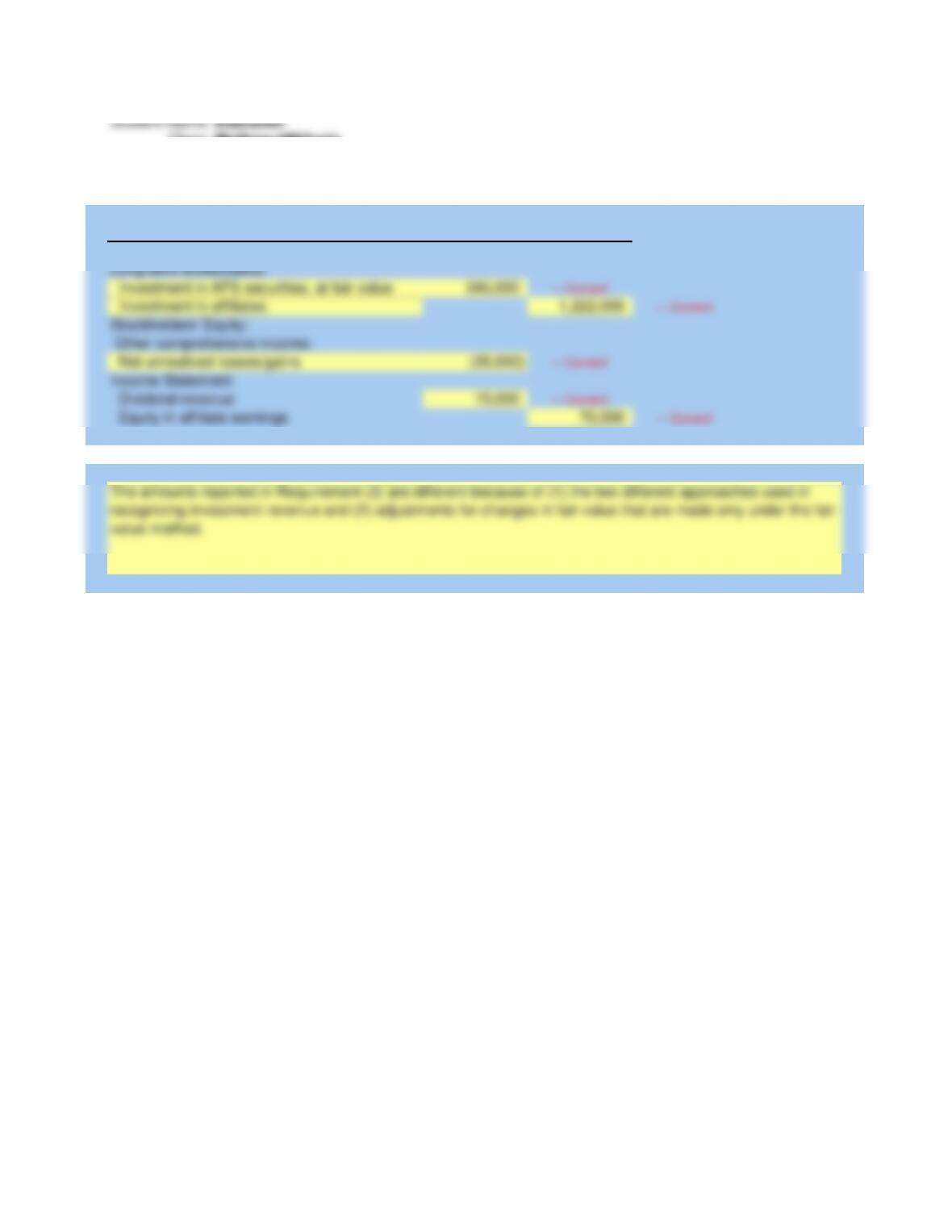
375,000 «- Correct!
375,000
1,200,000 «- Correct!
1,200,000
70,000 «- Correct!
70,000
Net unrealized gains (losses)
Dividend revenue
Investments in affiliates
Investments in AFS securities
d. Year-end valuation:
Cash
Investments in affiliates
Instructor
The equity method must be used by the company because it owns 40% (48,000 / 120,000) of the total shares
of the outstanding common stock of Surge Corporation. The equity method must be used when at least 20%
but not more than 50% of the outstanding stock is owned, because the investor can exercise significant
influence, but not control, over the operating and financing policies of the other company.
Equity in affiliate earnings
Case B-40%
Case B :
Case A :
Accounting method Crash Company should use
Investments in AFS securities
Investments in affiliates
Cash
Problem E-07
The fair value method must be used by the company because it owns 12.5% (15,000 / 120,000) of the total
shares of the outstanding common stock of Surge Corporation. The fair value method must be used when less
than 20% of the outstanding stock is owned because the investor cannot exercise either significant influence or
control.
CRASH COMPANY
General Journal
CRASH COMPANY
Requirement 2:
Case A-12.5%
a. January 1, 2014 purchase:
Account
McGraw-Hill/Irwin
b. Net income of Ship Corporation:
Student Name:
Class:
Instructor
Problem E-07
McGraw-Hill/Irwin
Case A Case B
345,000 «- Correct!
1,222,000 «- Correct!
(30,000) «- Correct!
15,000 «- Correct!
70,000 «- Correct!
Requirement 3:
Investment in AFS securities, at fair value
4. Explanation
Equity in affiliate earnings
Dividend revenue
Net unrealized losses/gains
Other comprehensive income:
Stockholders’ Equity:
Investment in affiliates
Income Statement:
The amounts reported in Requirement (3) are different because of (1) the two different approaches used in
recognizing investment revenue and (2) adjustments for changes in fair value that are made only under the fair
value method.
Long-term Investments:
Balance Sheet:
Schedule
120,000
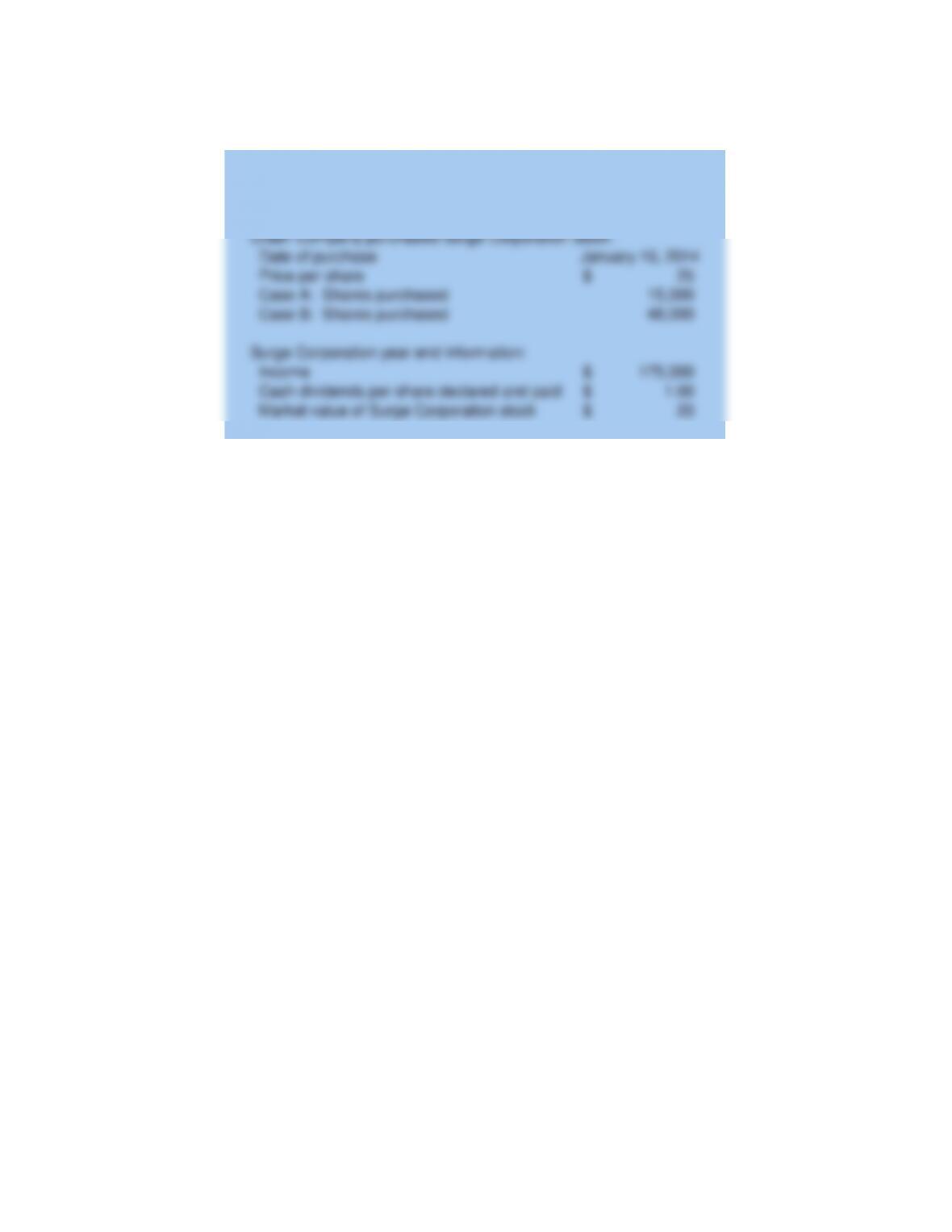
January 10, 2014
25$
15,000
48,000
175,000$
1.00$
23$
Cash dividends per share declared and paid
Market value of Surge Corporation stock
Date of purchase
Price per share
Case A: Shares purchased
Case B: Shares purchased
Surge Corporation year end information:
CRASH COMPANY
Given Data PE-07:
Surge Corporation outstanding no-par shares
Income
Crash Company purchased Surge Corporation stock: