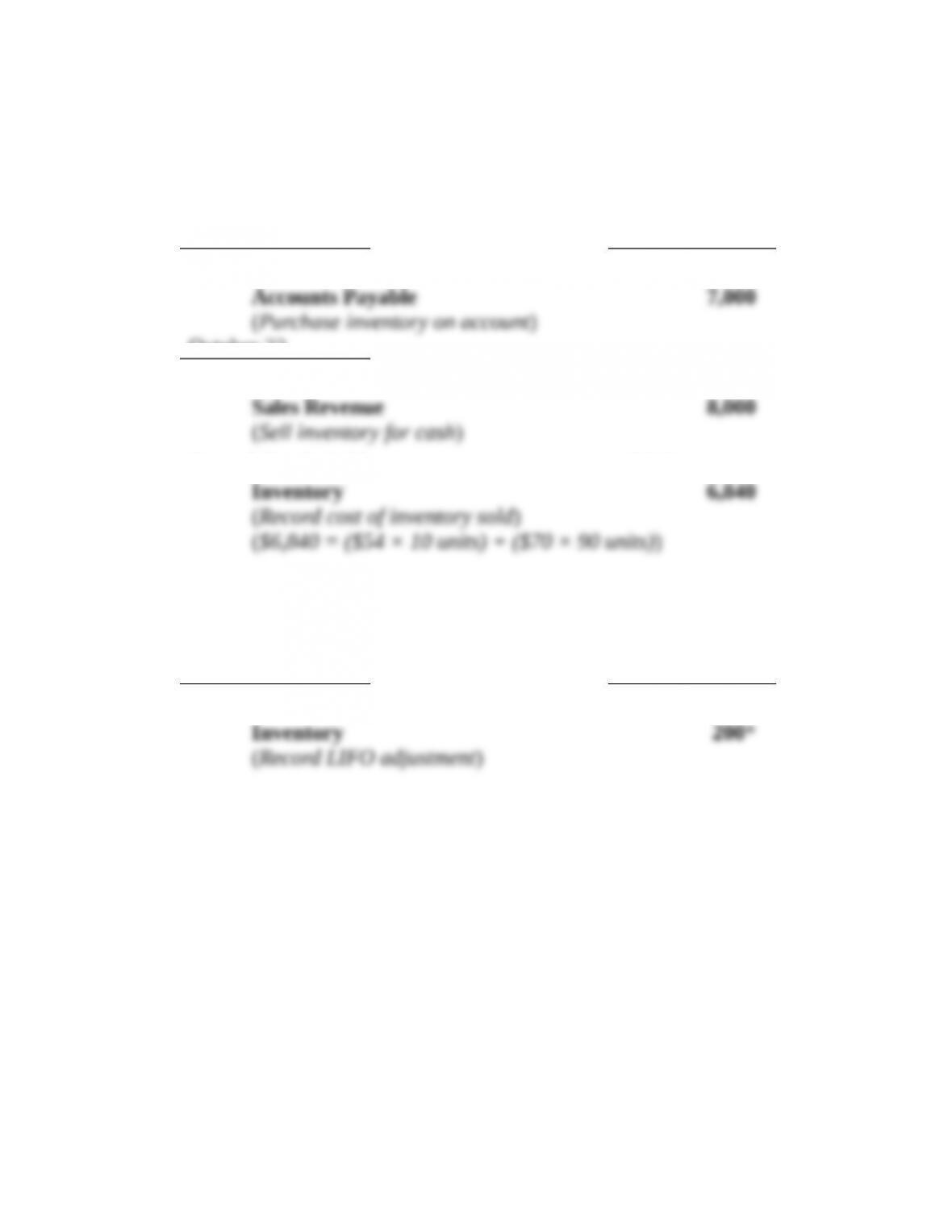
Problem 6-6A (continued)
Requirement 1 (continued)
October 20 Debit Credit
Inventory 7,000
October 22
Cash 8,000
Cost of Goods Sold 6,840
Requirement 2
October 31 Debit Credit
Cost of Goods Sold 200
* Ending inventory using LIFO ($500 = $50 × 10 units) is $200 less than ending
inventory using FIFO ($700 = $70 × 10 units).
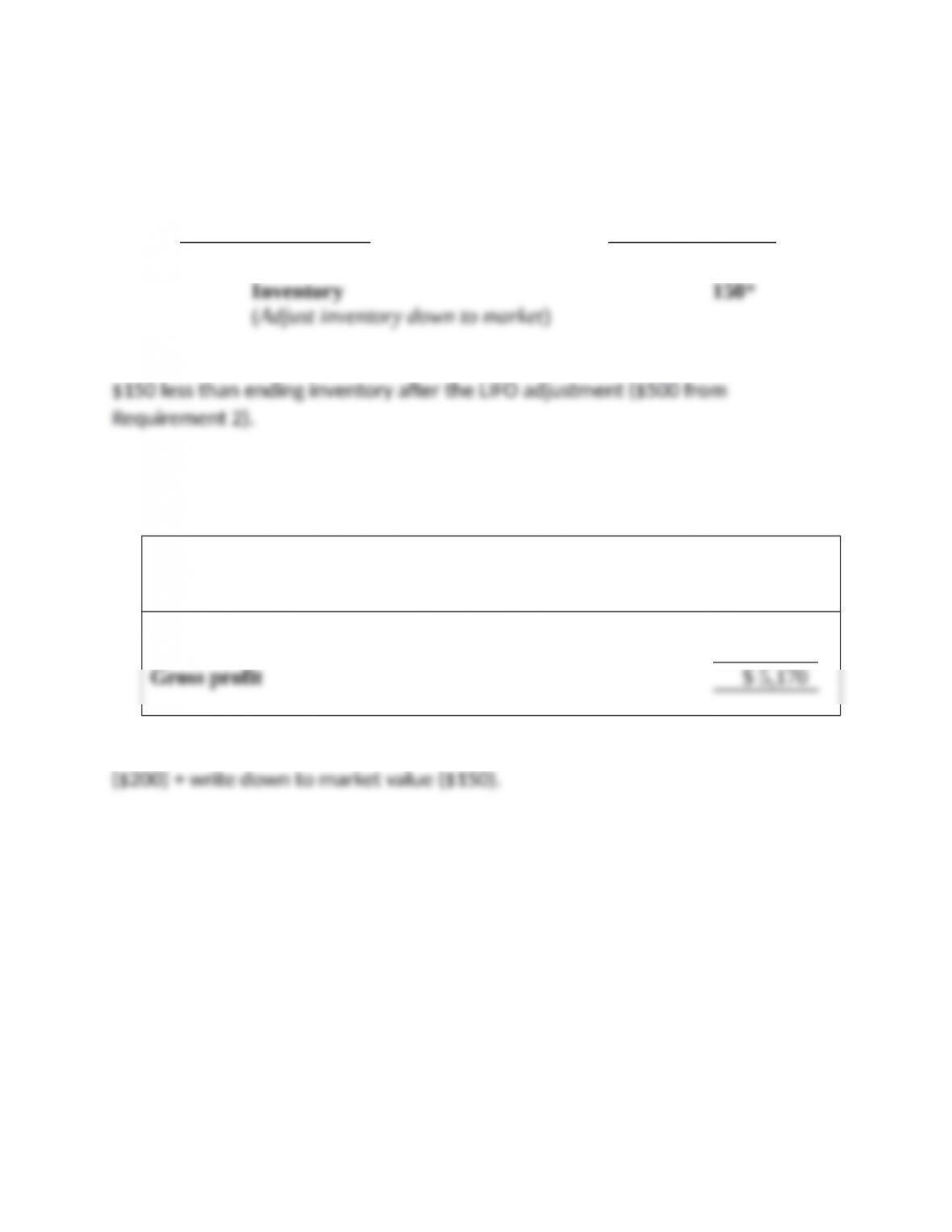
Problem 6-6A (concluded)
Requirement 3
October 31 Debit Credit
Cost of Goods Sold 150
* The market value of ending inventory ($350 = $35 market value × 10 units) is
Requirement 4
Bowser Co.
Multiple-step Income Statement (partial)
For the month of October
Net sales $20,800
Cost of goods sold* 15,630
* Cost of goods sold equals the cost of the units sold ($15,280) + LIFO adjustment
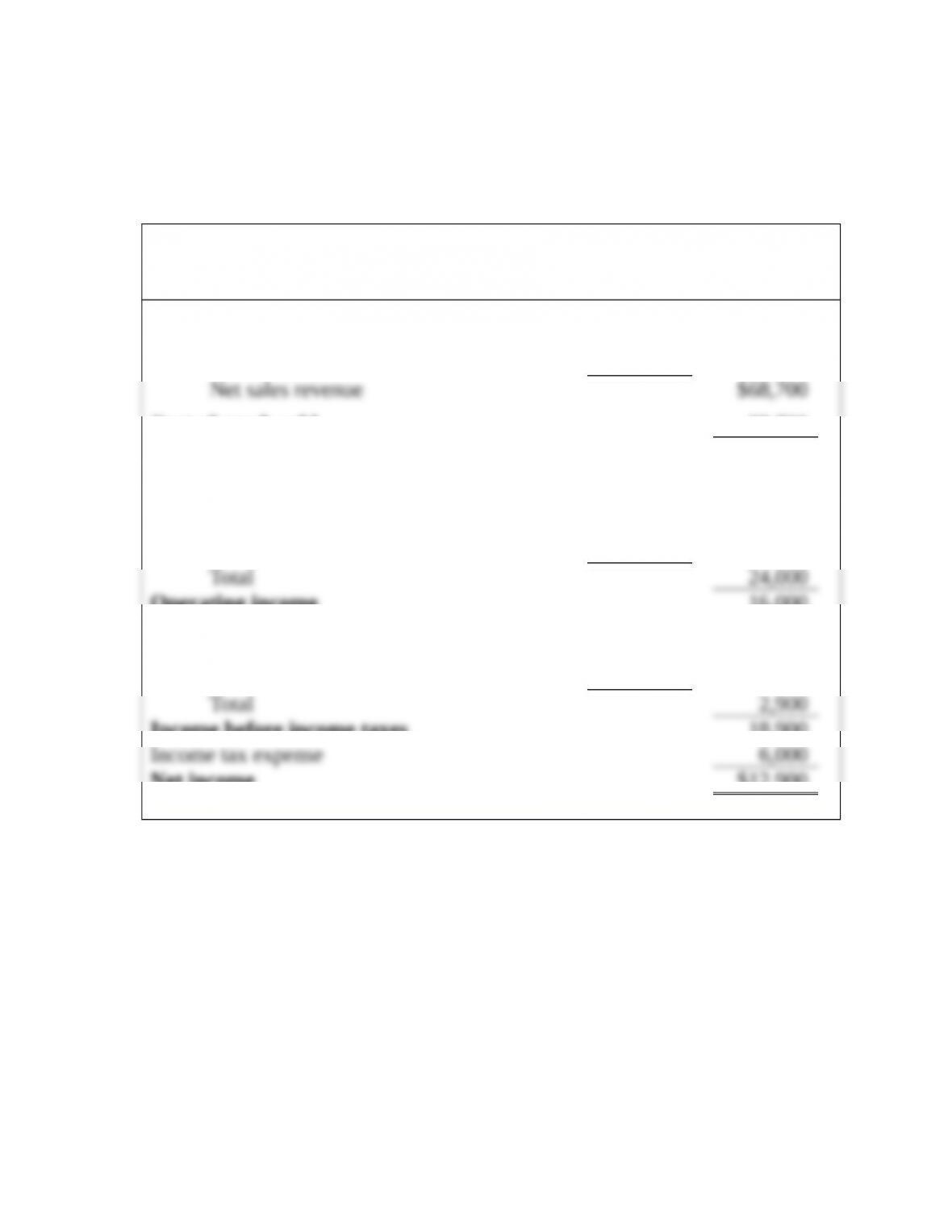
Problem 6-7A (LO 6-2, 6-7)
Requirement 1
Baskin-Robbins
Multiple-step Income Statement
For the month of July, 2015
Net sales:
Total sales revenue $69,800
Less: Sales returns (1,100)
Cost of goods sold 28,700
Gross profit 40,000
Operating expenses:
Salaries 13,700
Utilities 3,600
Rent 6,700
Operating income 16,000
Non-operating items:
Interest income 3,300
Interest expense (400)
Income before income taxes 18,900
Net income $12,900
Problem 6-7A (concluded)
Requirement 2
Inventory
turnover
ratio
=Cost of goods sold =$28,700
Average inventory ($1,100 + $2,300) /2
This ratio will likely be lower in December when inventory is being sold at a much
slower pace due to ice cream sales being less popular in colder months.
Requirement 3
Gross
profit
ratio
=Gross profit =$40,000
Net sales $68,700
Problem 6-8A (LO 6-7)
Requirement 1
Company 1 Company 2
Inventory
turnover
ratio
=Cost of goods sold =$180,000 $330,000
Average inventory $40,000 $30,000
Requirement 2
Company 1 Company 2
Gross
profit
ratio
=Gross profit =$220,000 $70,000
Net sales $400,000 $400,000
Requirement 3
Company 1 is likely St. Jude and Company 2 is likely Wawa. The reason is that
convenient stores are likely to sell their inventory quickly, resulting in a higher
inventory turnover ratio. In addition, competition among common goods (such as
grocery-related items) reduces gross pro<t. Selling highly specialized medical
equipment is likely to result in a higher gross pro<t ratio but lower inventory
turnover.
Problem 6-9A (LO 6-8)
Requirement 1
July 3 Debit Credit
Purchases 2,300
July 4
Freight-In 110
July 9
Accounts Payable 200
July 11
Accounts Payable 2,100
Purchase Discounts 21
July 12
Accounts Receivable 5,800
July 15
Cash 5,800
July 18
Purchases 3,100
Problem 6-9A (continued)
Requirement 1 (concluded)
July 22 Debit Credit
Cash 4,200
July 28
Accounts Payable 300
July 30
Accounts Payable 2,800
Requirement 2
July 31 Debit Credit
Inventory (ending) 2,889
Cost of Goods Sold 5,500
Purchase Returns 500
Purchase Discounts 21
Purchases 5,400
Freight-In 110
Problem 6-9A (concluded)
Requirement 3
CD City
Multiple-step Income Statement (partial)
For the month of July
Net sales $10,000
Cost of goods sold:
Beginning inventory 3,400
Add: Purchases
5,400
Less: Purchase returns
Purchase discounts
(500)
(21)
Less: Ending inventory (2,889)
Problem 6-10A (LO 6-7. 6-9)
Requirement 1
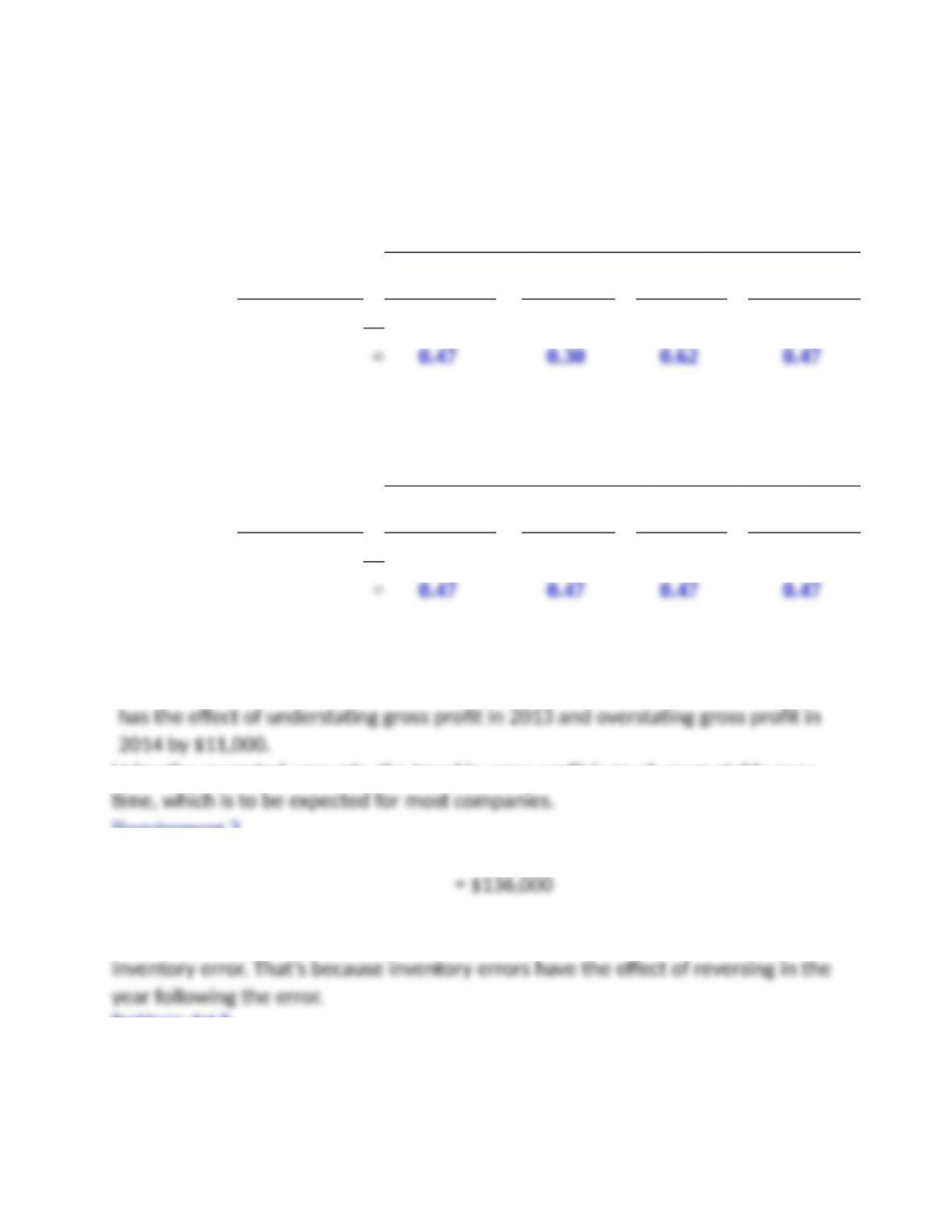
2012 2013 2014 2015
Gross
profit
ratio
=Gross profit =$28,000 $20,000 $46,000 $42,000
Net sales $60,000 $66,000 $74,000 $90,000
Requirement 2
2012 2013 2014 2015
Gross
profit
ratio
=Gross profit =$28,000 $31,000a$35,000a$42,000
Net sales $60,000 $66,000 $74,000 $90,000
a These amounts represent amounts that would have been reported had the
$11,000 inventory error not occurred. The understatement of inventory in 2013
Using the corrected amounts, the trend in gross pro<t is much more stable over
Requirement 3
Corrected gross pro<t from 2012-2015 = $28,000 + $31,000 + $35,000 + $42,000
The cumulative gross pro<t over the four-year period is una?ected by the
Problem 6-1B (LO 6-3)
Requirement 1 Specific identification
Problems: Set B
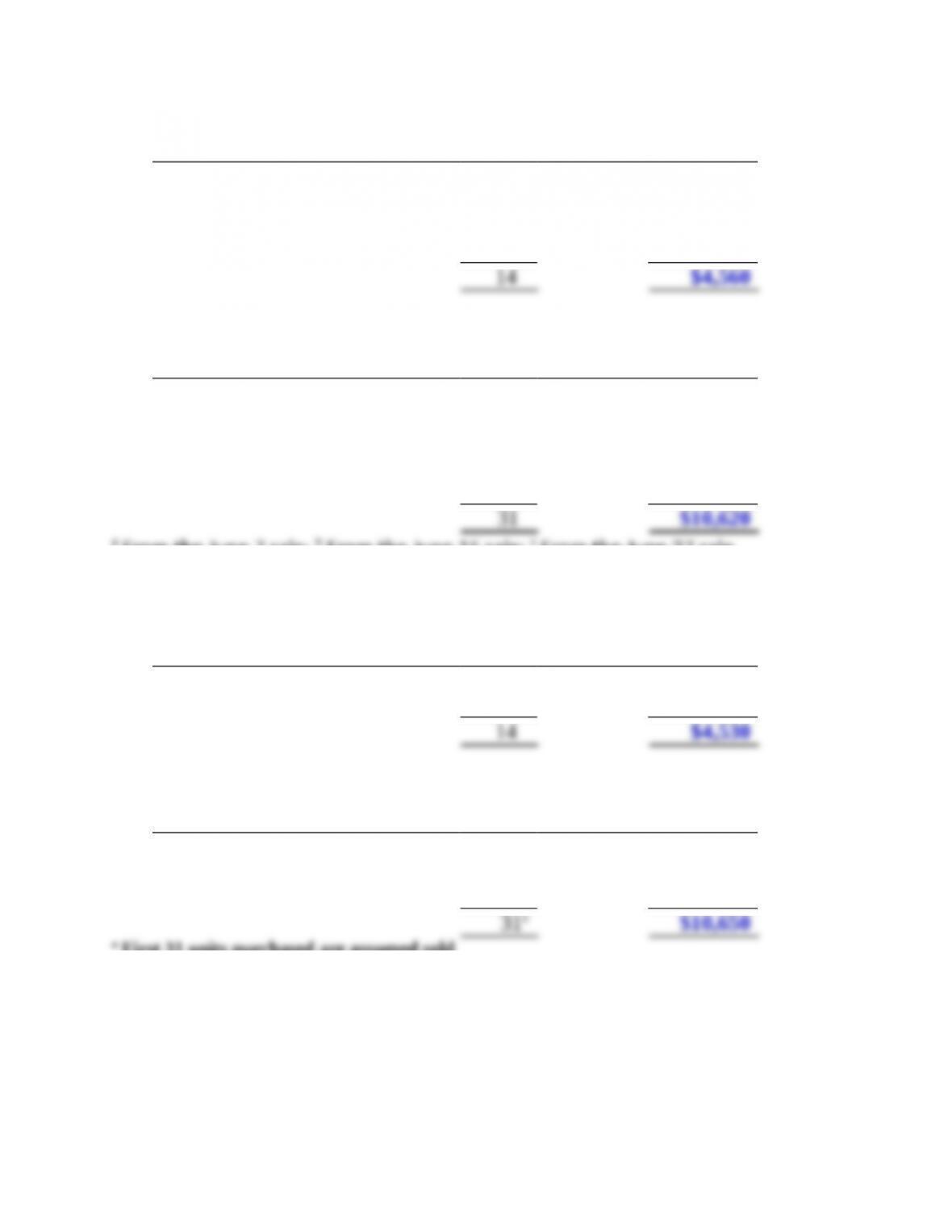
Date Transaction
Number
of units
Unit
cost
Ending
Inventory
Jun. 1 Beginning inventory 1 $ 350 $ 350
Jun. 12 Purchase 1 340 340
Jun. 24 Purchase 3 330 990
Jun. 29 Purchase 9 320 2,880
Date Transaction
Number
of units
Unit
cost
Cost of
Goods Sold
Jun. 1 Beginning inventory 11a$350 $ 3,850
Jun. 1 Beginning inventory 3b350 1,050
Jun. 12 Purchase 9b340 3,060
Jun. 1 Beginning inventory 1c350 350
Jun. 24 Purchase 7c 330 2,310
a From the June 7 sale; b From the June 15 sale; c From the June 27 sale.
Requirement 2 FIFO
Date Transaction
Number
of units
Unit
cost
Ending
Inventory
Jun. 24 Purchase 5 $330 $1,650
Jun. 29 Purchase 9 320 2,880
Date Transaction
Number
of units
Unit
cost
Cost of
Goods Sold
Jun. 1 Beginning inventory 16 $350 $ 5,600
Jun. 12 Purchase 10 340 3,400
Jun. 24 Purchase 5 330 1,650
a First 31 units purchased are assumed sold