
Exercise 6-1
Beginning inventory $ 63,800
Add: Purchases 925,500
Cost of goods available for sale 989,300
Less: Ending inventory (41,500)
Chapter 6
Inventory and Cost of Goods SoldEXERCISES
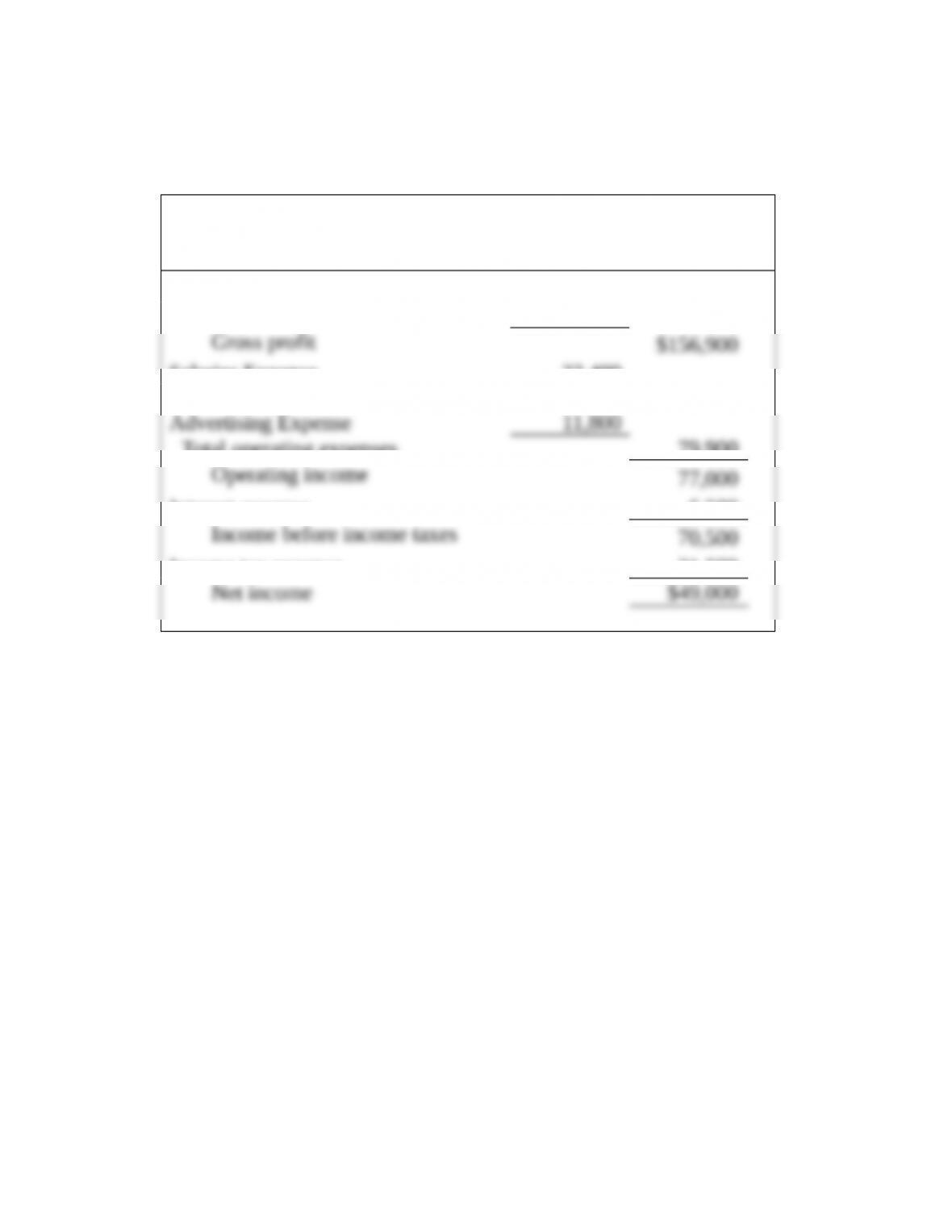
Exercise 6-2
Wayman Corporation
Multiple-step Income Statement
For the year ended December 31, 2012
Net sales $250,100
Cost of goods sold 93,200
Salaries Expense 22,400
Utilities Expense 45,700
Total operating expenses 79,900
Interest expense 6,500
Income tax expense 21,500
Exercise 6-3
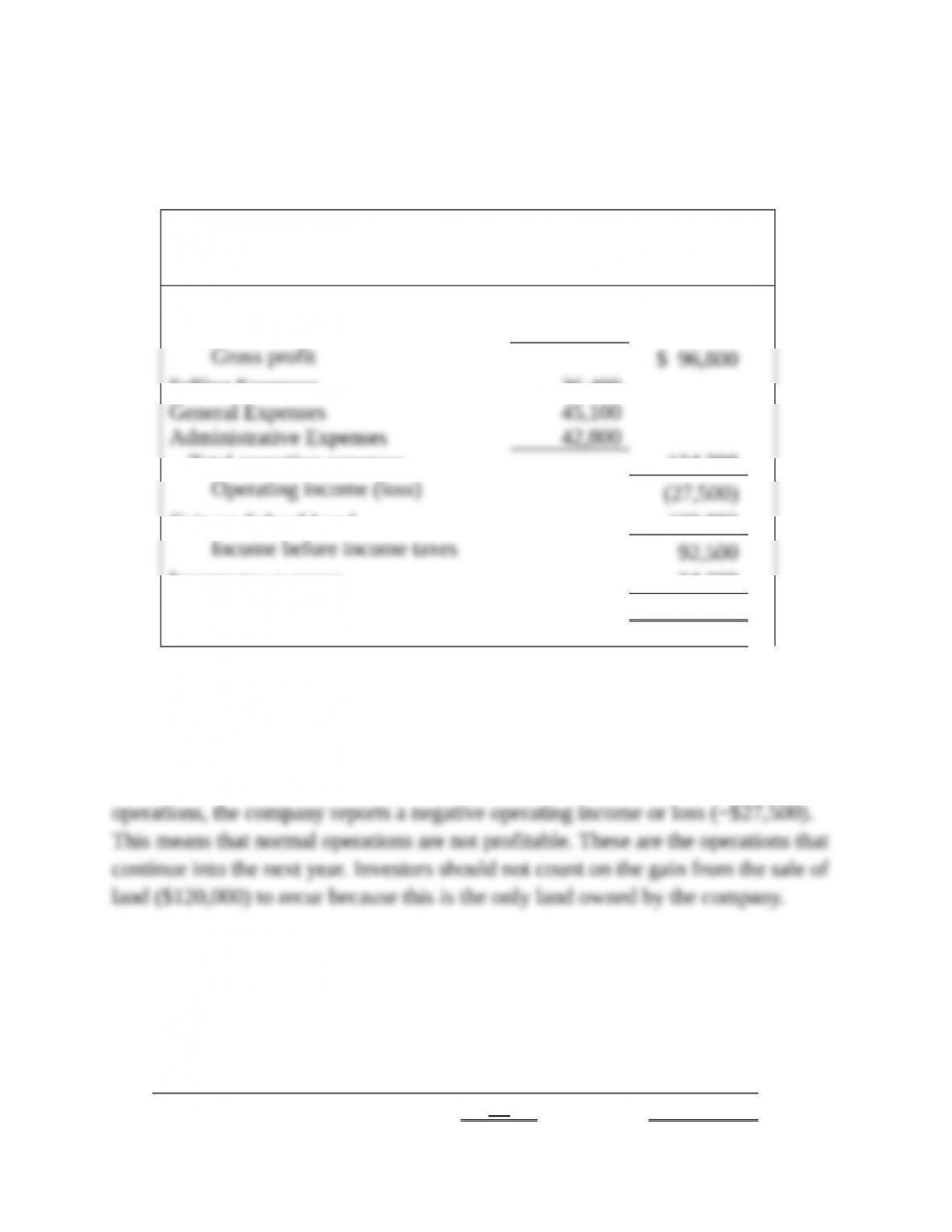
Requirement 1
Tisdale Incorporated
Multiple-step Income Statement
For the year ended December 31, 2012
Net sales $320,500
Cost of goods sold 223,700
Selling Expenses 36,400
Total operating expenses 124,300
Gain on Sale of Land 120,000
Income tax expense 24,200
Net income $ 68,300
Requirement 2
While Tisdale Incorporated is able to report positive net income ($68,300), the
company does not appear to have much profit-generating potential. For its core
Exercise 6-4
Requirement 1
(a)
Date Transaction
Number
of units
Unit
cost
Ending
Inventory
Oct. 6 Purchase 51 $56 $2,856
(b)
Date Transaction
Number
of units
Unit
cost
Cost of
Goods Sold
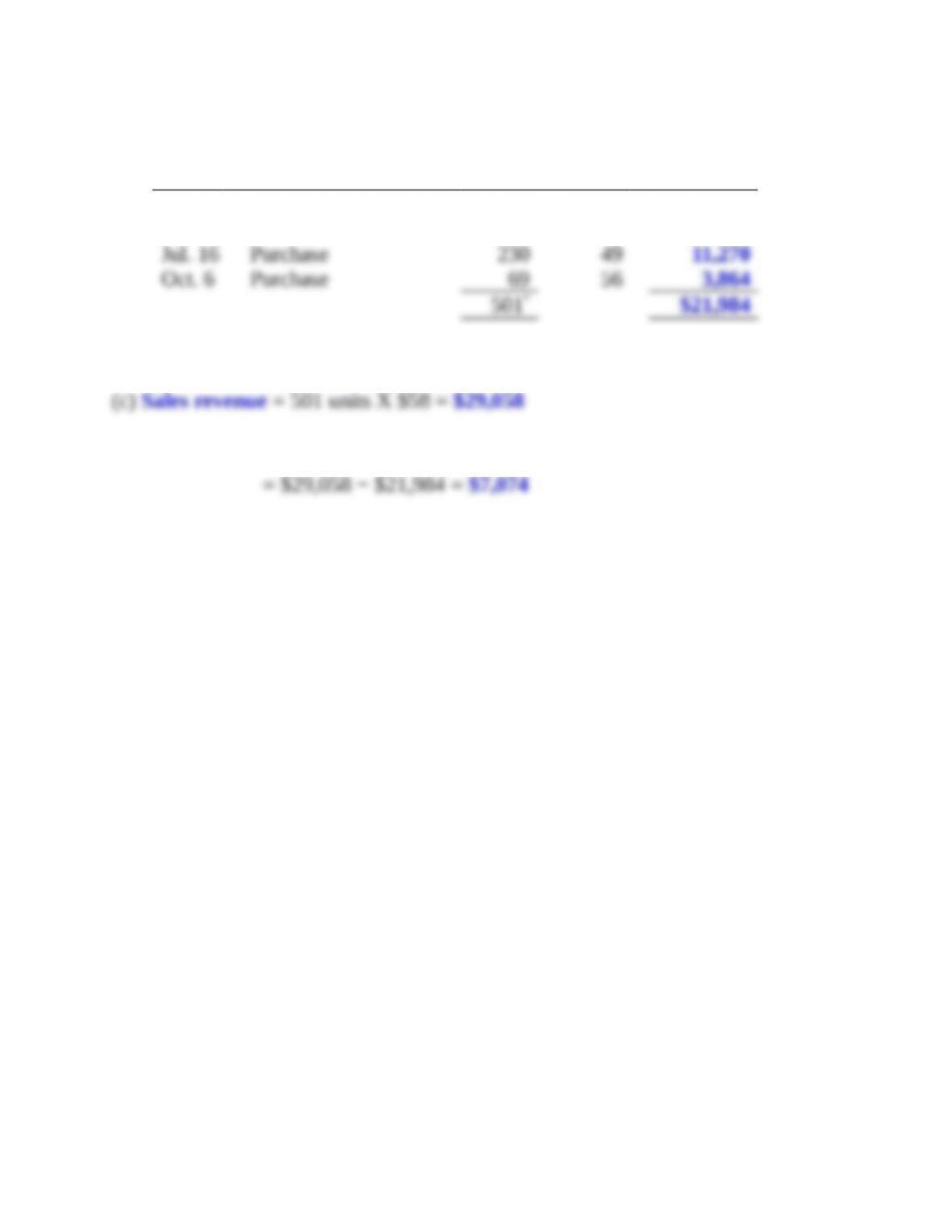
Jan. 1 Beginning inventory 55 $31 $ 1,705
Apr. 7 Purchase 147 35 5,145
* First 501 units purchased are assumed sold
(d) Gross profit = Sales revenue − Cost of goods sold
Exercise 6-4 (continued)
Requirement 2
(a)
Date Transaction
Number
of units
Unit
cost
Ending
Inventory
Jan. 1 Beginning Inventory 51 $31 $1,581
(b)
Date Transaction
Number
of units
Unit
cost
Cost of
Goods Sold
Jan. 1 Beginning Inventory 4 $31 $ 124
Apr. 7 Purchase 147 35 5,145
Jul. 16 Purchase 230 49 11,270
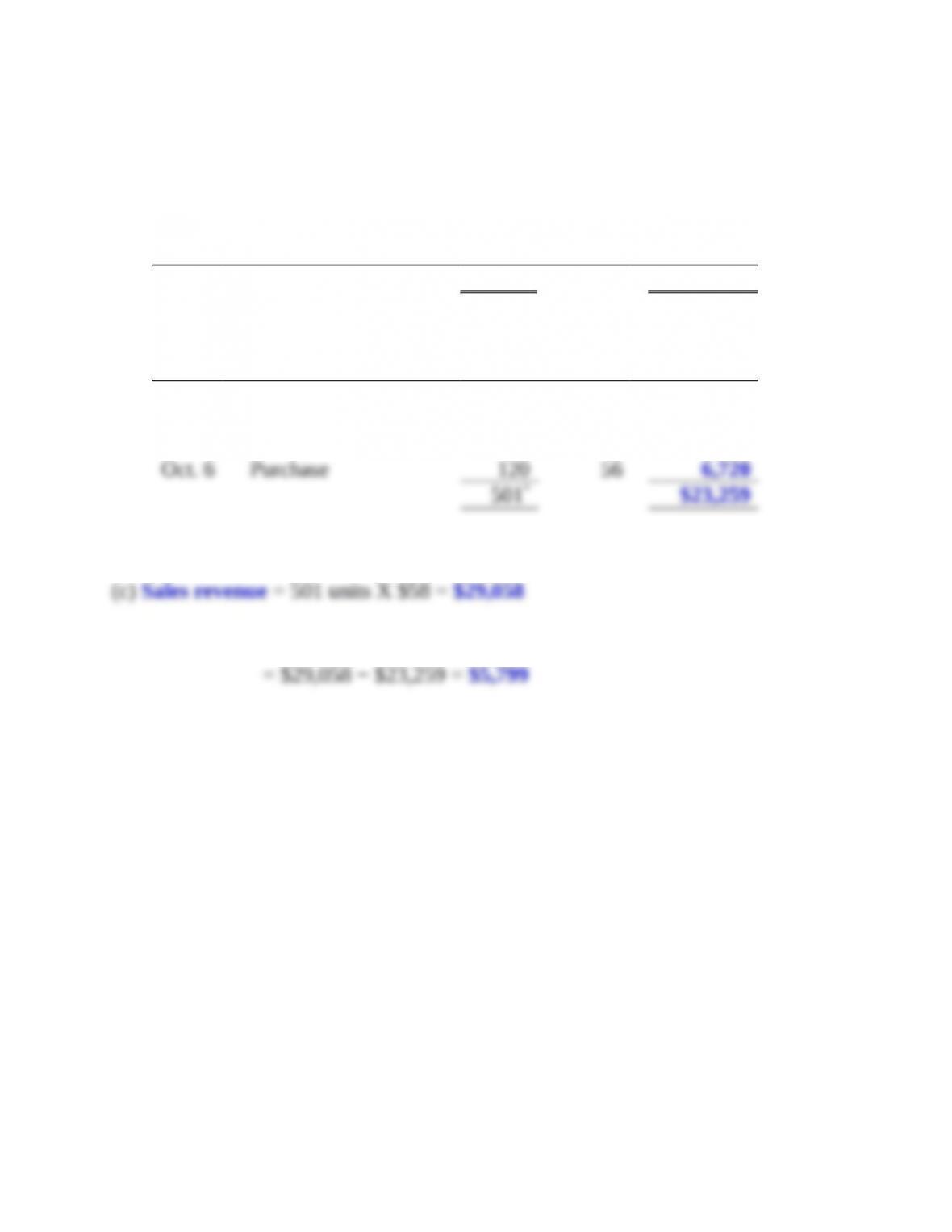
* Last 501 units purchased are assumed sold
(d) Gross profit = Sales revenue − Cost of goods sold
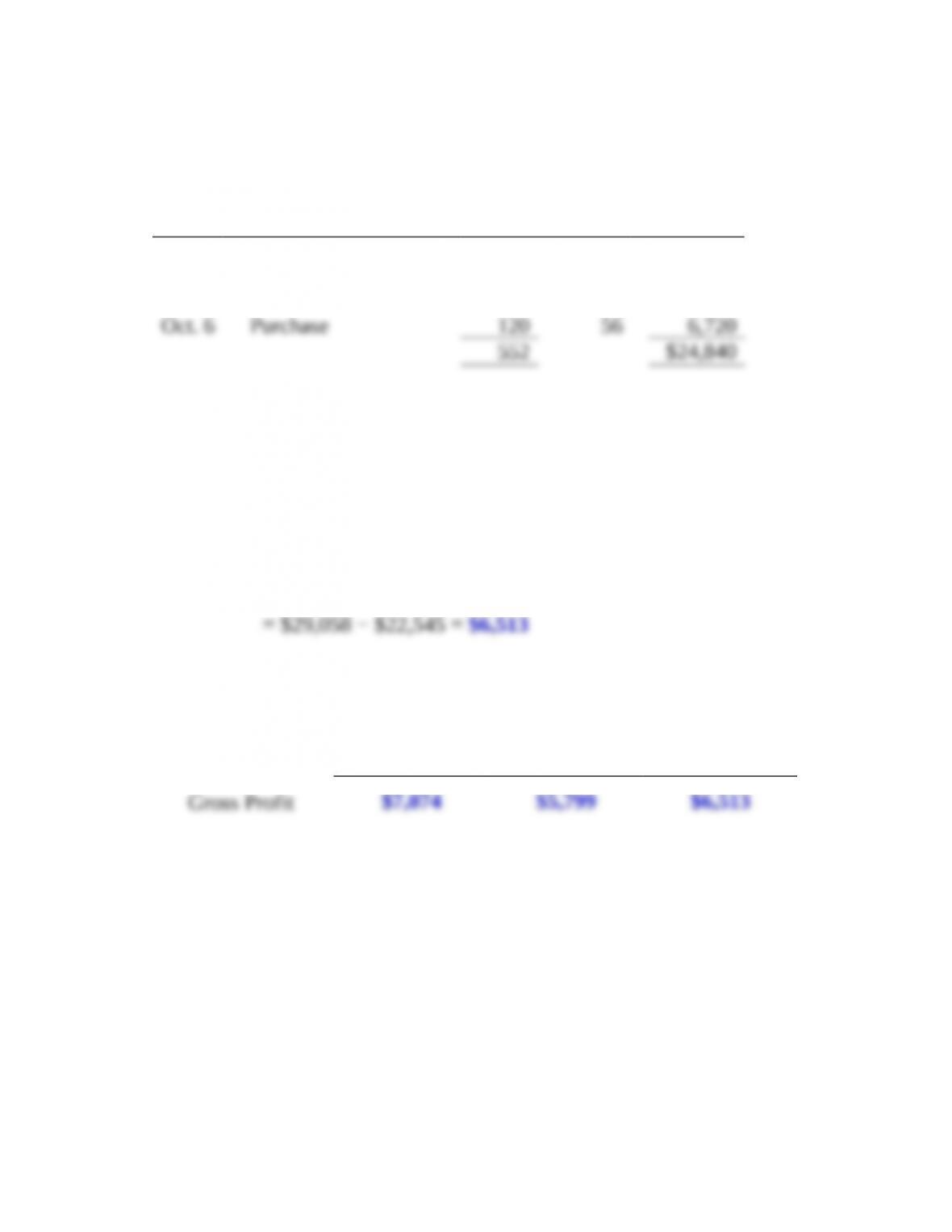
Exercise 6-4 (concluded)
Requirement 3
Date Transaction
Number
of units
Unit
Cost
Total
cost
Jan. 1 Beginning Inventory 55 $31 $ 1,705
Apr. 7 Purchase 147 35 5,145
Jul. 16 Purchase 230 49 11,270
Weighted-average cost = $24,840 / 552 units = $45.
(a) Ending inventory = 51 units X $45 = $2,295
(b) Cost of goods sold = 501 units X $45 = 22,545
(c) Sales revenue = 501 units X $58 = $29,058
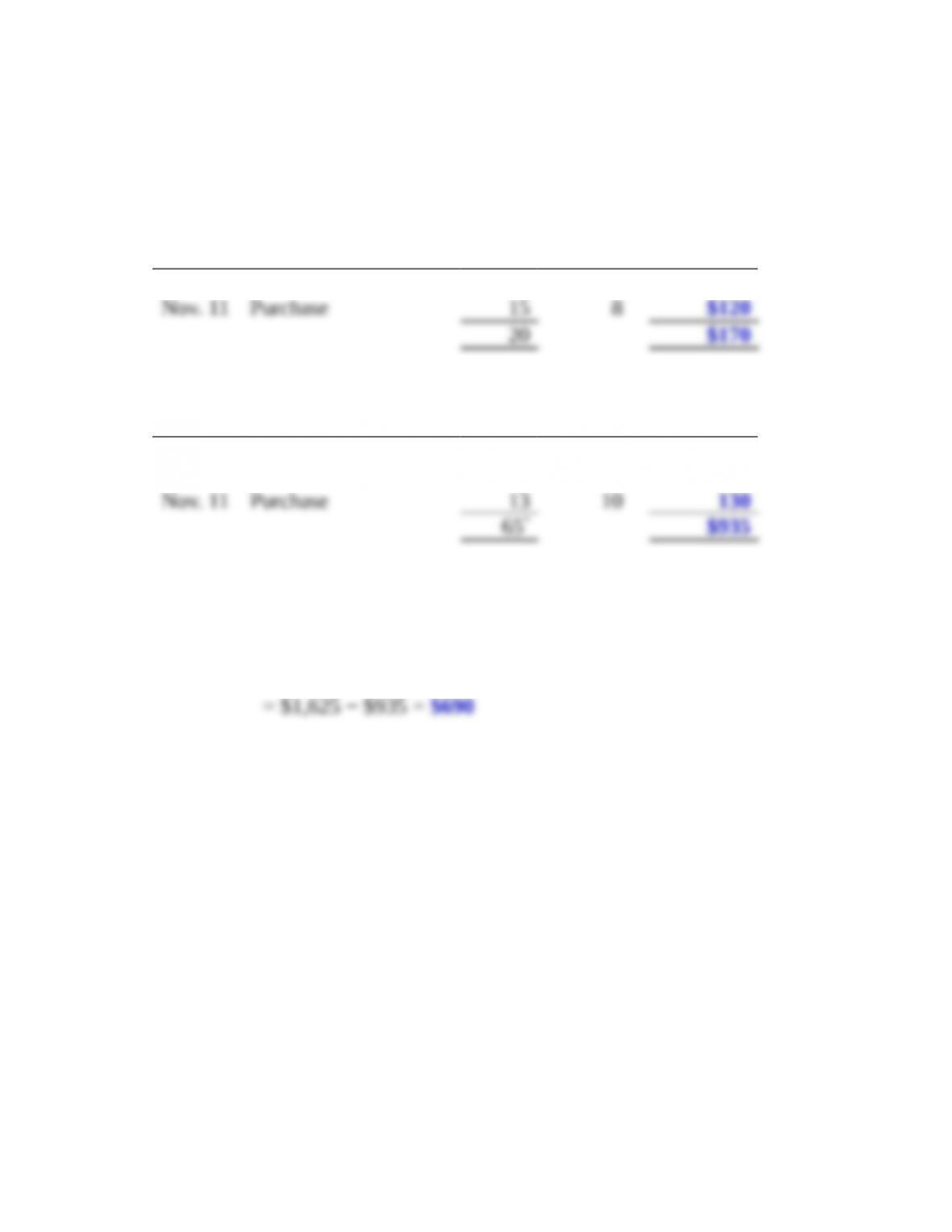
(d) Gross profit = Sales revenue − Cost of goods sold
Requirement 4
FIFO LIFO Weighted-aver
age
FIFO results in higher profitability when inventory costs are rising.
Exercise 6-5
Requirement 1
(a)
Date Transaction
Number
of units
Unit
cost
Ending
Inventory
Jun. 9 Purchase 5 $10 50
(b)
Date Transaction
Number
of units
Unit
cost
Cost of
Goods Sold
Jan. 1 Beginning inventory 11 $21 $231
Mar. 4 Purchase 41 14 574
* First 65 units purchased are assumed sold
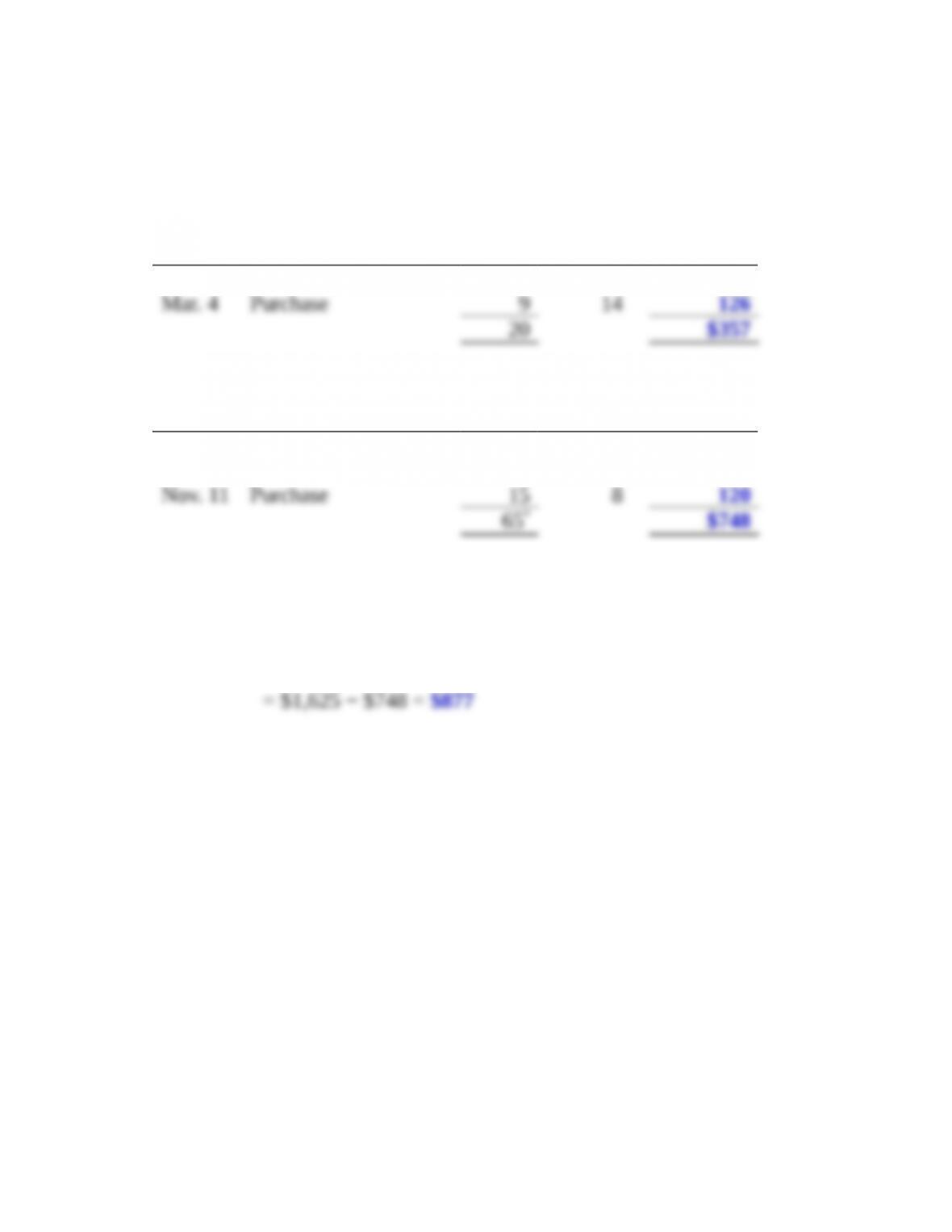
(c) Sales revenue = 65 units X $25 = $1,625
(d) Gross profit = Sales revenue − Cost of goods sold
Exercise 6-5 (continued)
Requirement 2
(a)
Date Transaction
Number
of units
Unit
cost
Ending
Inventory
Jan. 1 Beginning Inventory 11 $21 $231
(b)
Date Transaction
Number
of units
Unit
cost
Cost of
Goods Sold
Mar. 4 Purchase 32 $14 $448
Jun. 9 Purchase 18 10 180
* Last 65 units purchased are assumed sold
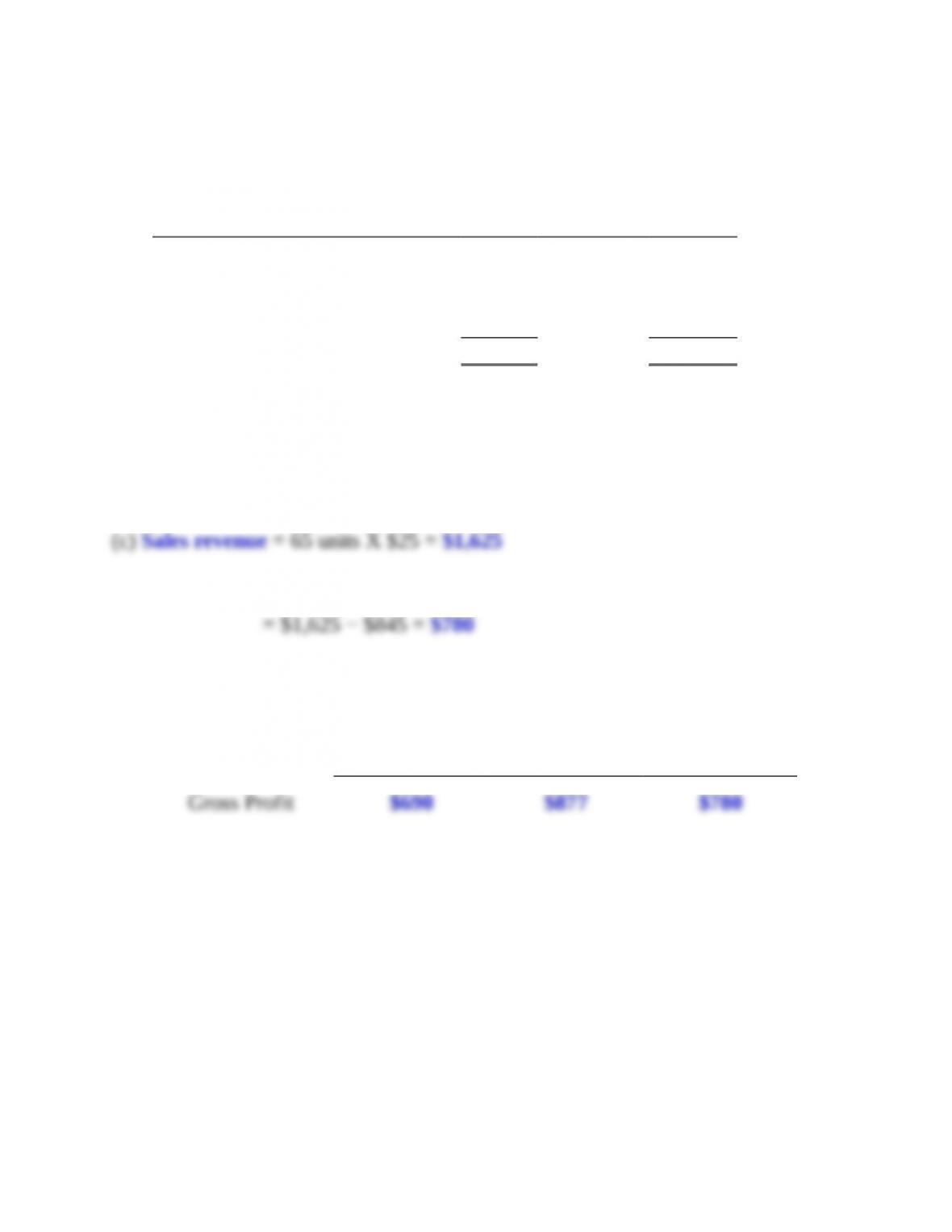
(c) Sales revenue = 65 units X $25 = $1,625
(d) Gross profit = Sales revenue − Cost of goods sold
Exercise 6-5 (concluded)
Requirement 3
Date Transaction
Number
of units
Unit
cost
Total
Cost
Jan. 1 Beginning Inventory 11 $21 $ 231
Mar. 4 Purchase 41 14 574
Jun. 9 Purchase 18 10 180
Nov. 11 Purchase 15 8 120
85 $1,105
Weighted-average cost = $1,105 / 85 units = $13
(a) Ending inventory = 20 units X $13 = $260
(b) Cost of goods sold = 65 units X $13 = $845
(d) Gross profit = Sales revenue − Cost of goods sold
Requirement 4
FIFO LIFO Weighted-aver
age
LIFO results in higher profitability when inventory costs are declining.