Revenue recognized in 2015
Scenario 1: $100,000
Scenario 2: $60 (= $75 x 80%)
Scenario 3: $15,000
Scenario 4: $125,000
June 10 Debit Credit
No entry
June 12
No entry
June 13
No entry
June 16
Accounts Receivable 1,440
June 19
No entry
June 20
Sales Allowances 360
PROBLEMS: SET C
Problem 5-1C
Problem 5-2C
Requirement 1
June 30
Cash 1,080
Total Service Revenue $1,440
Less: Sales Allowances 360
Net Revenues $1,080
Recovery Experts
Partial Income Statement
Total Service Revenue $1,440
Less: Sales Allowances (360)
Net Revenues $1,080
June 25
Cash 1026
Sales Discounts 54
Total Service Revenue $1,440
Less: Sales Allowances 360
Sales Discounts 54
Net Revenues $1,026
Requirement 2
Problem 5-2C (concluded)
Requirement 3
Requirement 4
February 2, 2015 Debit Credit
Accounts Receivable 26,000
July 23, 2015
Cash 20,000
December 31, 2015
Bad Debt Expense 600
April 12, 2016
Accounts Receivable 40,000
June 28, 2016
Cash 5,000
September 13, 2016
Allowance for Uncollectible Accounts 1,000
October 5, 2016
Cash 33,000
December 31, 2016
Bad Debt Expense 1,100
Problem 5-3C
Requirement 1
Cash Accounts Receivable
20,000 26,000 20,000
Dec. 31, 2015 20,000 Dec. 31, 2015 6,000
Dec. 31, 2016 58,000 33,000
Dec. 31, 2016 7,000
Allow. for Uncol. Accts.
600 Dec. 31, 2015
700 Dec. 31, 2016
2015 2016
Total accounts receivable $6,000 $7,000
Less: Allowance for uncollectible accounts 600 700
Age group
Amount
receivable
Estimated
percent
uncollectible
Estimated
amount
uncollectible
Not yet due $40,000 5% $ 2,000
0-90 days past due 19,000 10% 1,900
91-180 days past due 9,000 20% 1,800
Problem 5-3C (concluded)
Requirement 2
Requirement 3
Problem 5-4C
Requirement 1
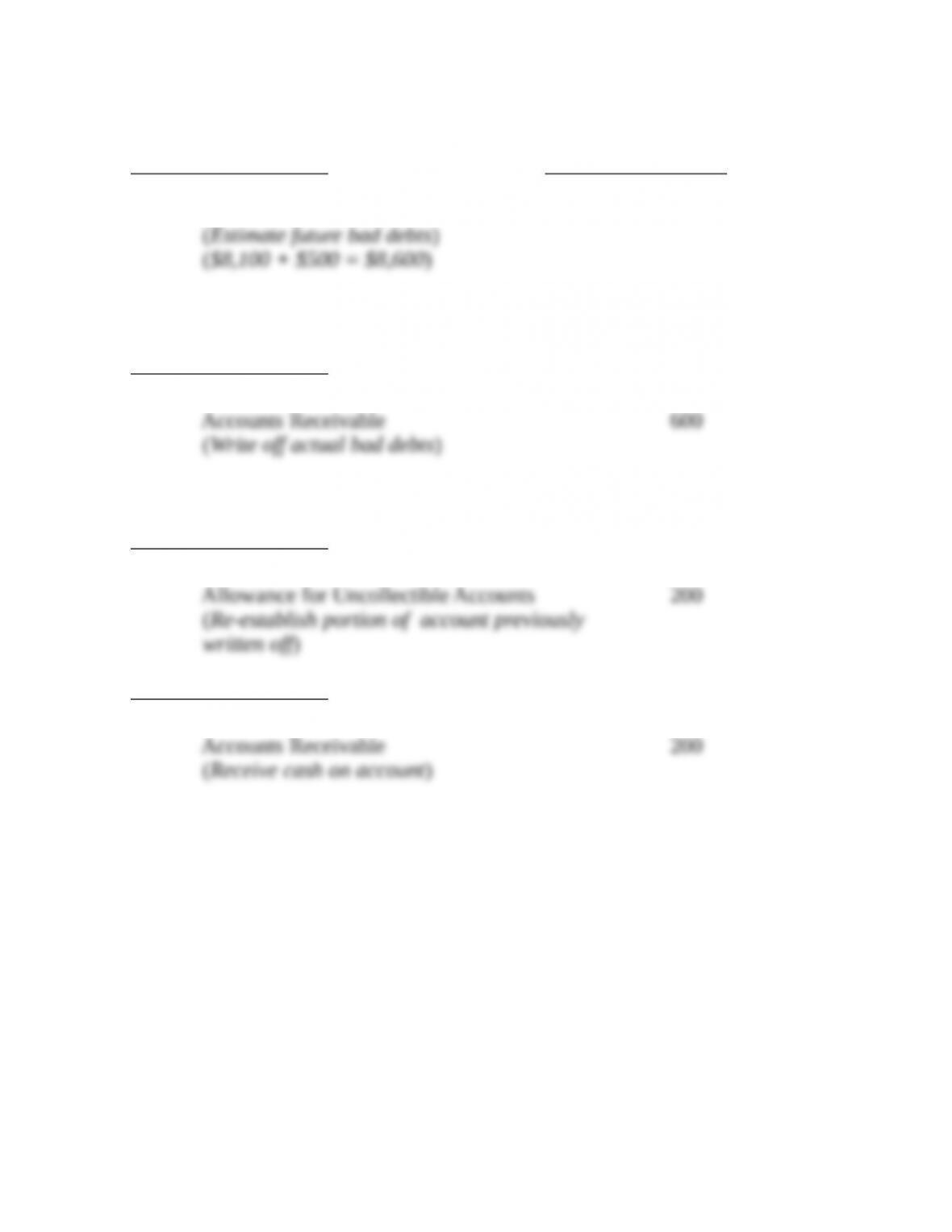
December 31, 2015 Debit Credit
Bad Debt Expense 8,600
Allowance for Uncollectible Accounts 8,600
April 3, 2016
Allowance for Uncollectible Accounts 600
Requirement 4
July 17, 2016
Accounts Receivable 200
July 17, 2016
Cash 200
Requirement 2
Requirement 3
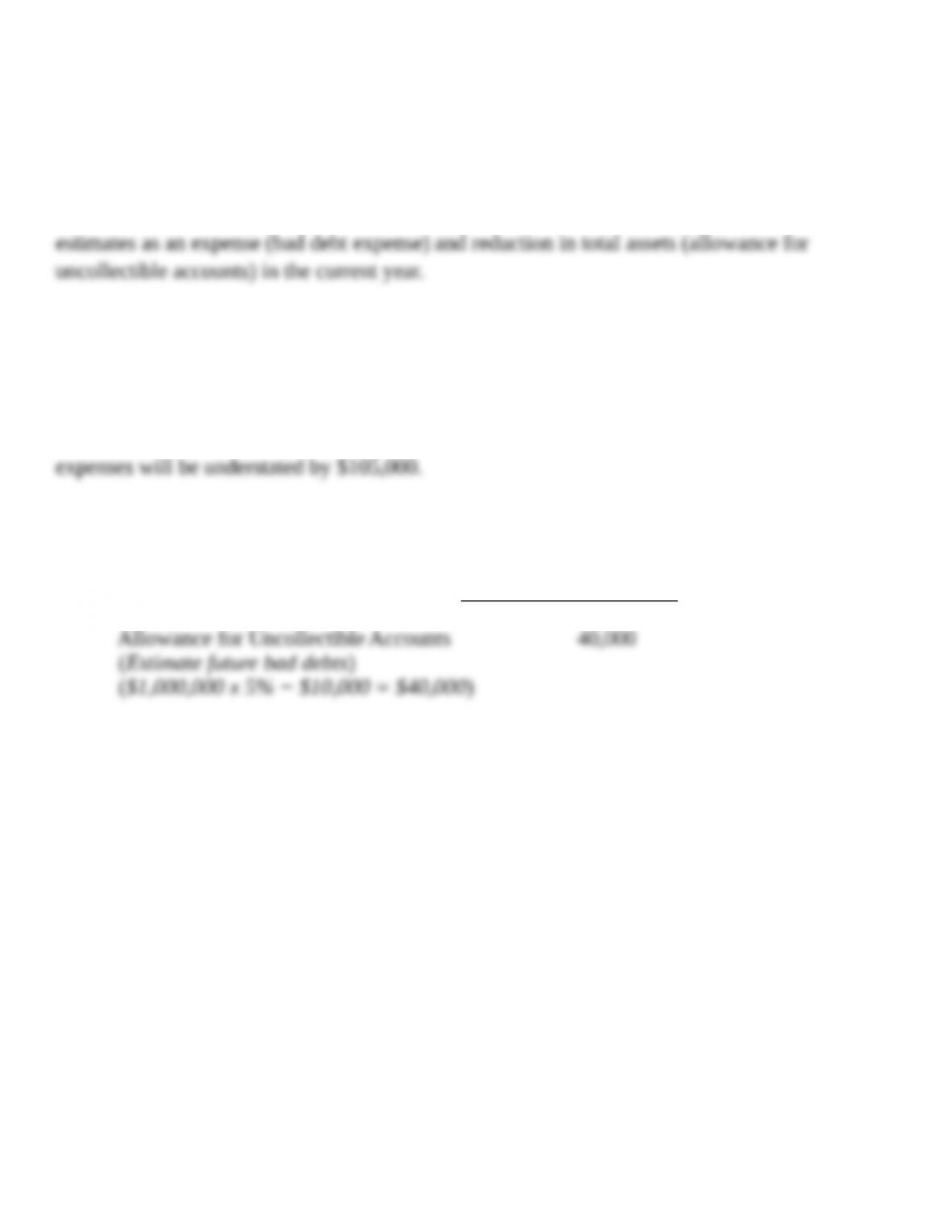
Debit Credit
Bad Debt Expense 40,000
Problem 5-5C
Requirement 1
Power should not use the direct write-off method. Even if no accounts are known to be
uncollectible at the time, Peter should estimate future bad debts and record those
Requirement 2
Allowance for uncollectible accounts = $350,000 x 30% = $105,000.
Requirement 3
If Power uses the direct write-off method, total assets will be overstated and total
Problem 5-6C
Requirement 1
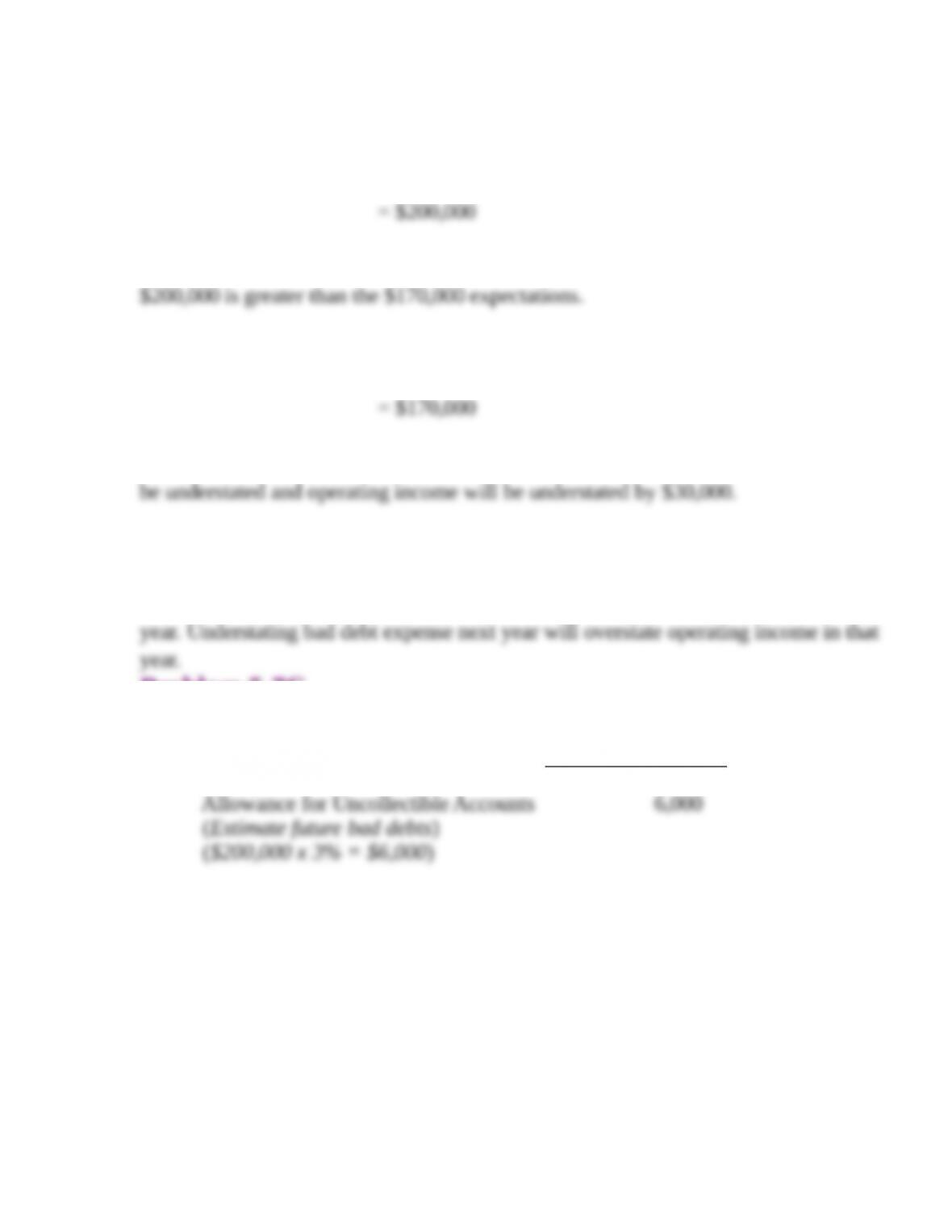
Debit Credit
Bad Debt Expense 6,000
Requirement 2
Revised operating income = $240,000 − $40,000 (bad debt expense)
Ginjo Gallery will meet analysts’ expectations because the revised operating income of
Requirement 3
Revised operating income = $240,000 − $70,000 (bad debt expense)
If Ginjo Gallery records bad debt expense for $70,000 instead of $40,000, assets will
Requirement 4
By managing operating income downward, Tatsuo is “saving” reported income for the
future. If bad debt expense is overestimated this year, then it can be understated next
Problem 5-7C
Requirement 1
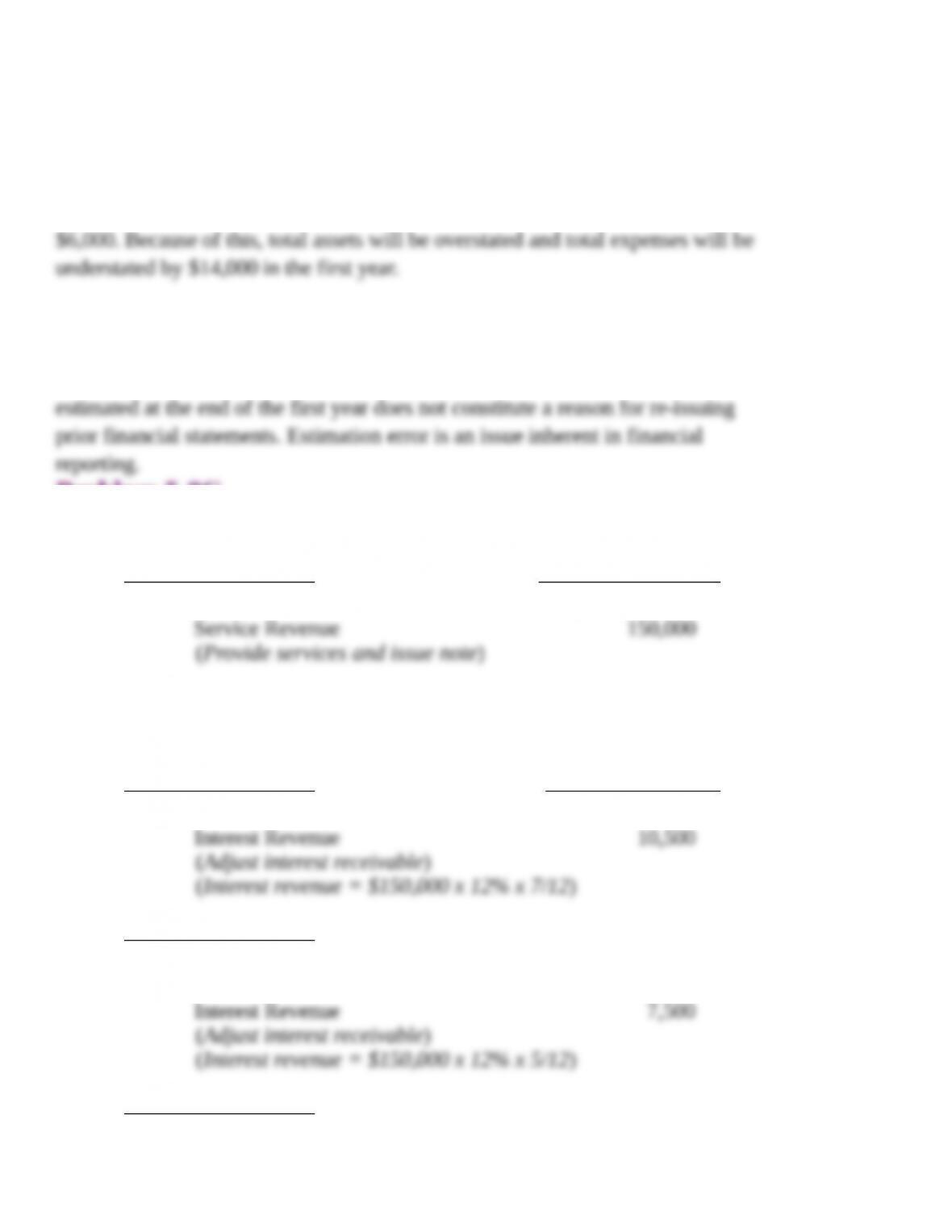
June 1, 2015 Debit Credit
Notes Receivable 150,000
December 31, 2015 Debit Credit
Interest Receivable 10,500
June 1, 2016
Cash 18,000
Interest Receivable 10,500
December 31, 2016
Requirement 2
Gallen underestimated uncollectible accounts by $14,000. Actual bad debts in the
second year were $20,000 and the company estimated bad debts to be only
Requirement 3
Gallen should not prepare new financial statements for the first year. The fact that
actual bad debts in the second year turned out to be different than the amount
Problem 5-8C
Requirement 1
Problem 5-8C (continued)
Requirement 2
Interest Receivable 10,500
Interest Revenue 10,500
June 1, 2017
Cash 18,000
Interest Receivable 10,500
Interest Revenue 7,500
December 31, 2017
Interest Receivable 10,500
Interest Revenue 10,500
June 1, 2018 Debit Credit
Cash 168,000
Notes Receivable 150,000
Interest Receivable 10,500
Interest Revenue 7,500
Problem 5-8C (concluded)
Requirement 3