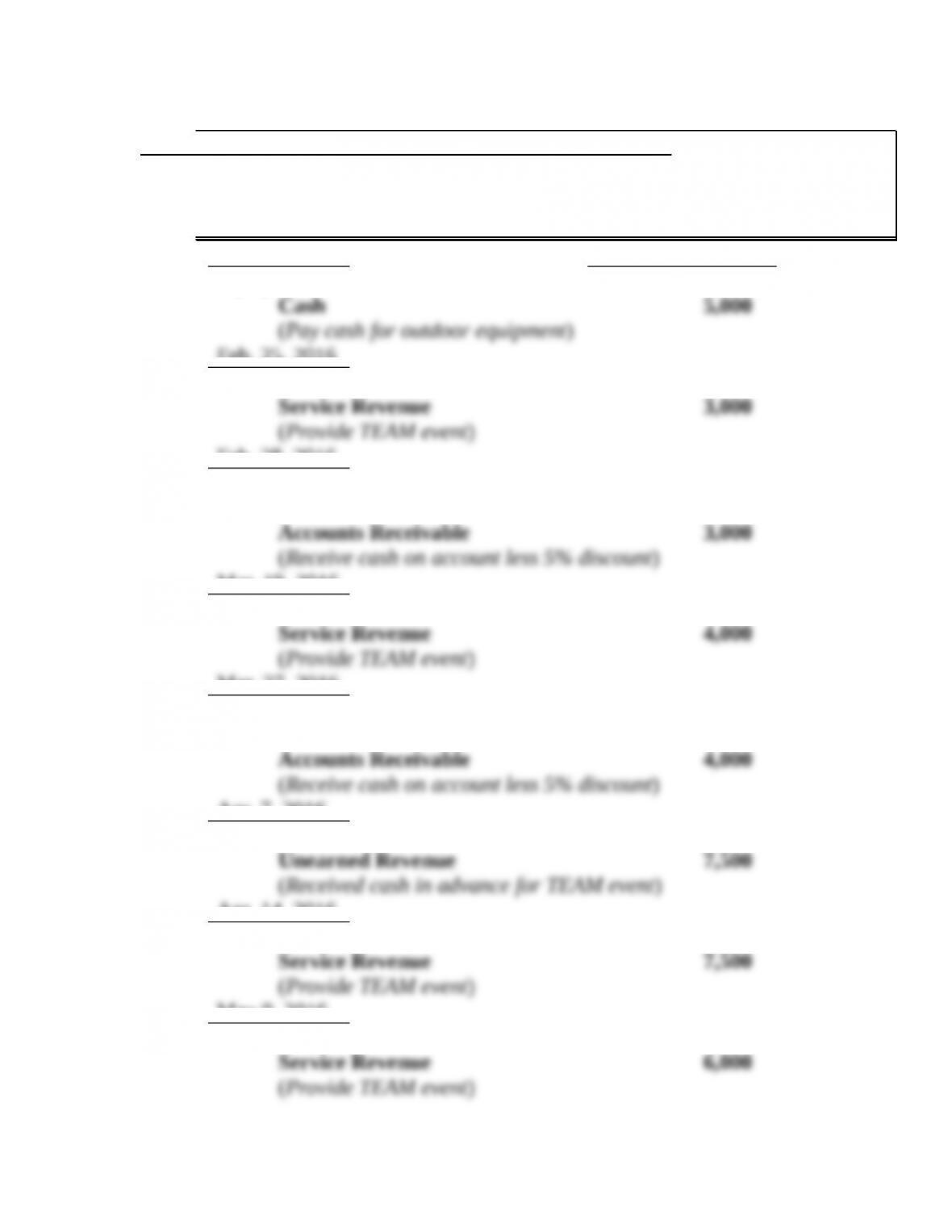
Jan. 24, 2016 Debit Credit
Equipment 5,000
Feb. 25, 2016
Accounts Receivable 3,000
Feb. 28, 2016
Cash 2,850
Sales Discounts 150
Mar. 19, 2016
Accounts Receivable 4,000
Mar. 27, 2016
Cash 3,800
Sales Discounts 200
Apr. 7, 2016
Cash 7,500
Apr. 14, 2016
Unearned Revenue 7,500
May 9, 2016
Accounts Receivable 6,000
ADDITIONAL PERSPECTIVES
Additional Perspective 5-1
Requirement 1
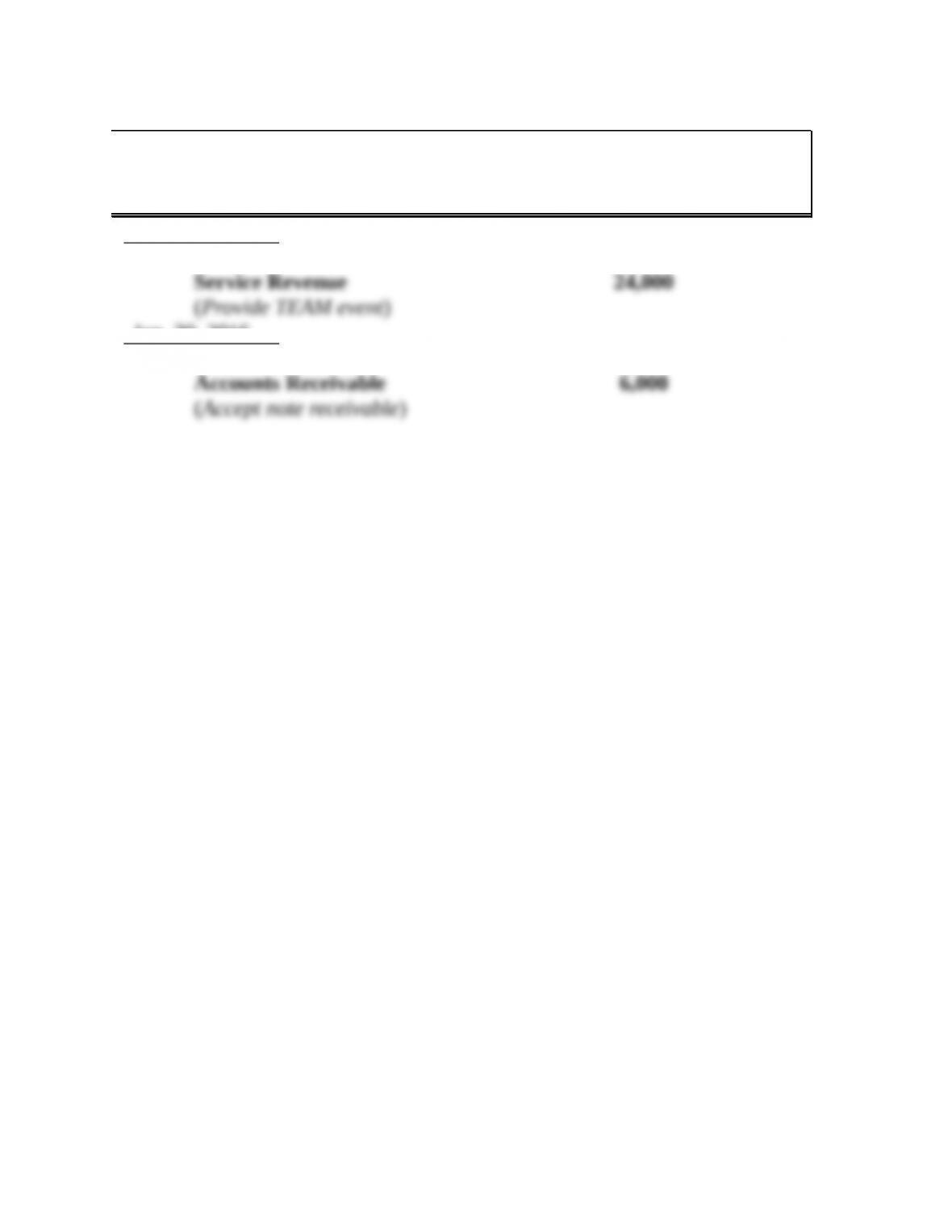
Jun. 1-30, 2016
Accounts Receivable 24,000
Jun. 30, 2016
Notes Receivable 6,000
AP5-1 (concluded)
Requirement 1 (concluded)
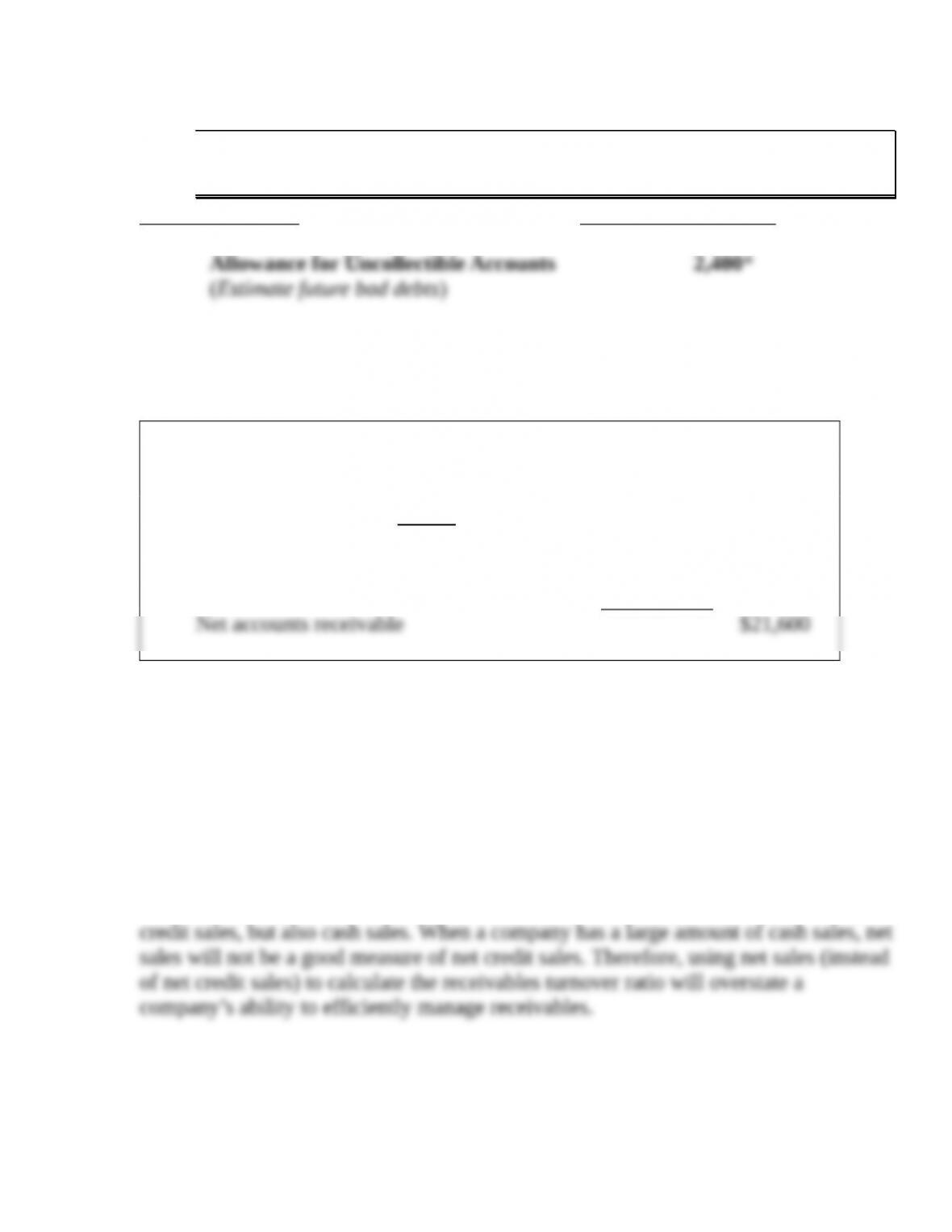
Jun. 30, 2016 Debit Credit
Bad Debt Expense 2,400
Great Adventures, Inc.
Partial Balance Sheet
June 30, 2016
Assets
Current assets:
Accounts receivable $24,000
Less: Allowance for uncollectible accounts (2,400)
American Eagle shows an increasing trend in net sales for the past three years.
Accounts receivable are reported in the balance sheet in the current asset section. The
receivables turnover ratio equals net credit sales divided by average accounts
receivable. The net sales amount reported in the income statement includes not only
Requirement 2 (a)
* Accounts Receivable x 10% = $24,000 x 10% = $2,400
Requirement 2 (b)
Additional Perspective 5-2
Requirement 1
Requirement 2
Requirement 3
American Eagle does not report an allowance for uncollectible accounts in the balance
sheet.
Additional Perspective 5-3
Buckle shows an increasing trend in net sales for the past three years.
Accounts receivable are reported in the balance sheet in the current asset section. The
receivables turnover ratio equals net credit sales divided by average accounts
receivable. The net sales amount reported in the income statement includes not only
Buckle does not report an allowance for uncollectible accounts in the balance sheet.
American Eagle’s ratio of total current receivables to current assets is 4.1%. Buckle’s
ratio of total current receivables to current assets is 1.3%. Neither company has a
Additional Perspective 5-5
Requirement 1
If the balance of the allowance for uncollectible accounts before adjustment is
$20,000 and the year-end estimate of future uncollectible accounts is $180,000, then
an adjustment of $160,000 is needed. This adjustment has the effect of increasing the
allowance for uncollectible accounts, which reduces total assets, and increasing bad
Requirement 2
Requirement 1
Requirement 2
Requirement 3
Additional Perspective 5-4
You are new to the position. You might not be sure that it’s right for you to question
any decision of your superior. It is clear that the superior is asking you to engage in
Upsetting your superior may reduce your compensation, reduce the likelihood of
promotion, and increase your chance of being fired. You may feel that as long as your
boss told you to do it, then your agreement to go along is technically the superior’s
Additional Perspective 5-6
Requirement 1
The balance of net accounts receivable is $751.9 million. By adding back the
Requirement 2
Bad debt expense is reported on the statement of cash flows under provisions for
Requirement 3
What is the issue?
By making the change requested, net income and total assets will increase by $45,000.
Overstating these amounts will make the company appear more profitable and less
Who are the parties involved?
What factors should you consider in making your decision?
(Note to instructors: Answers are based on Avon’s annual report for the year ended
December 31, 2012)
The ending balance of the allowance account equals the beginning balance plus bad
debt expense less actual write-offs. Using this formula, we calculate actual write-offs
to be:
($ in millions)
Beginning
allowance +Bad debt
expense −Actual
write-offs =Ending
allowance
$174.5 +$251.1 −$X =$161.4
The estimate of bad debts at the beginning of the year was $174.5 million. Actual bad
debts were $264.2 million, so the company underestimated.
Requirement 4
Receivables
turnover ratio =
Net sales
=
$10,546.1
= 11.4
Average accounts
Average
collection
=
365
=
365
= 32.0
Receivables
Avon’s receivables turnover ratio and average collection period are better than the
industry average.
Additional Perspective 5-7
Students should communicate the following ideas.
Under the allowance method,
– Future bad debts are estimated.
– The reductions to total assets and net income as a result of bad debts are
– The adjustment involves a debit to bad debt expense and a credit to the
Under the direct write-off method,
– Future bad debts are not estimated.
– The reductions to total assets and net income as a result of bad debts are
– No adjustment is made.
The difference between the two methods is in the timing of recording the bad debt
(time of estimation vs. when actually occurring). Over an extended period of time, the
Additional Perspective 5-8
Requirement 1
Debit Credit
Bad Debt Expense 65,000
Requirement 2
Revised operating income is $255,000 (= $320,000 − $65,000). Operating income
Requirement 3
Using 4% instead of 9% of accounts receivable to estimate uncollectible accounts
results in an adjustment of $40,000 [= ($500,000 x 4%) + $20,000] to bad debt
Requirement 4
Total assets would be overstated and total expenses would be understated by $25,000
(= $65,000 − $40,000).
* ($500,000 x 9%) + $20,000 = $65,000