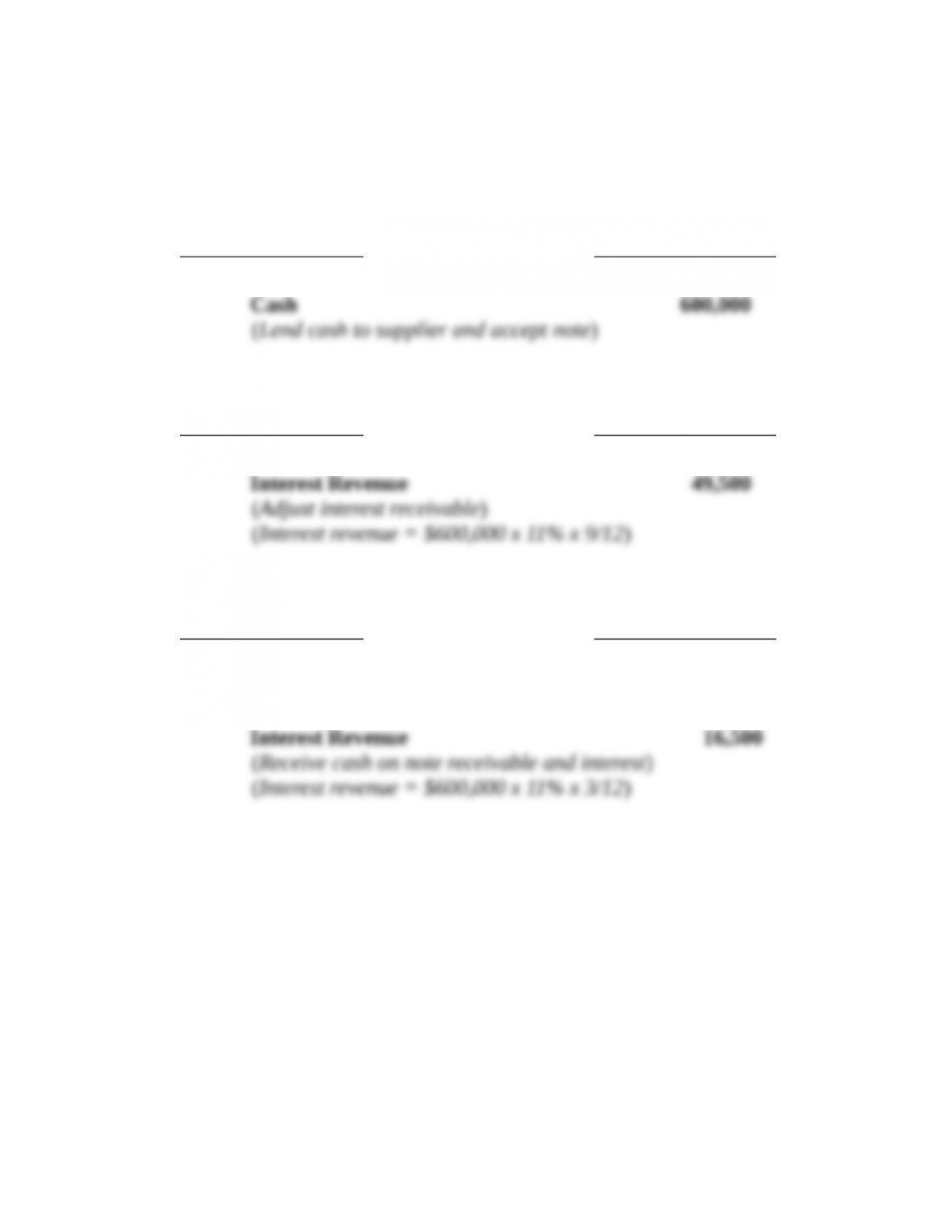
Exercise 5-17 (LO 5-7)
Requirement 1
April 1, 2015 Debit Credit
Notes Receivable 600,000
Requirement 2
December 31, 2015 Debit Credit
Interest Receivable 49,500
Requirement 3
April 1, 2016 Debit Credit
Cash 666,000
Notes Receivable 600,000
Interest Receivable 49,500
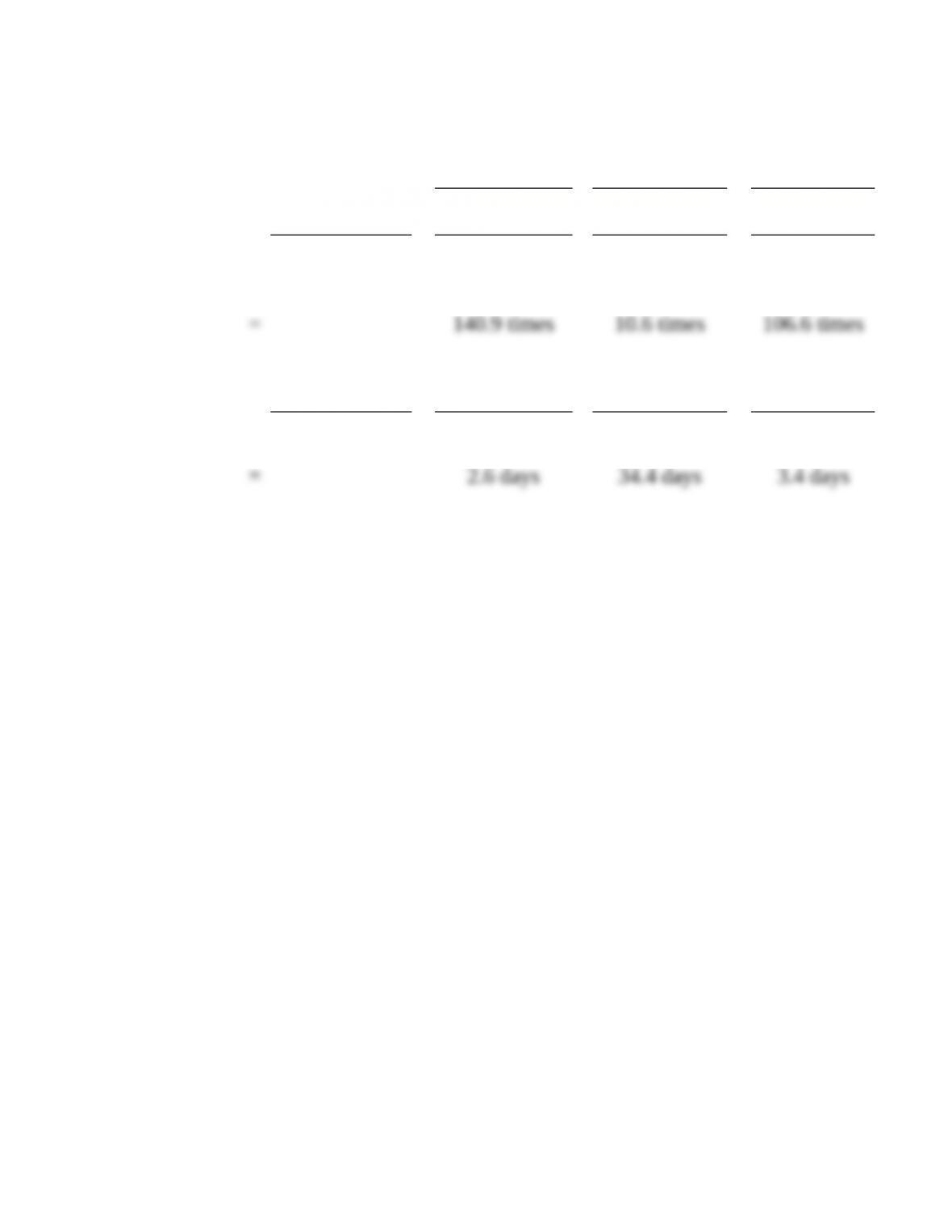
Exercise 5-18 (LO 5-8)
WalCo TarMart CostGet
Receivables
turnover ratio =
Net sales $322,427 $67,878 $68,963
Average
accounts
receivable
($1,815 +
$2,762) /2
($6,166 +
$6,694) /2
($629 +
$665) /2
Average
collection
period
=365 365 365 365
Receivables
turnover ratio
140.9 10.6 106.6
Of these three companies, WalCo appears to be collecting cash most efficiently
from sales.
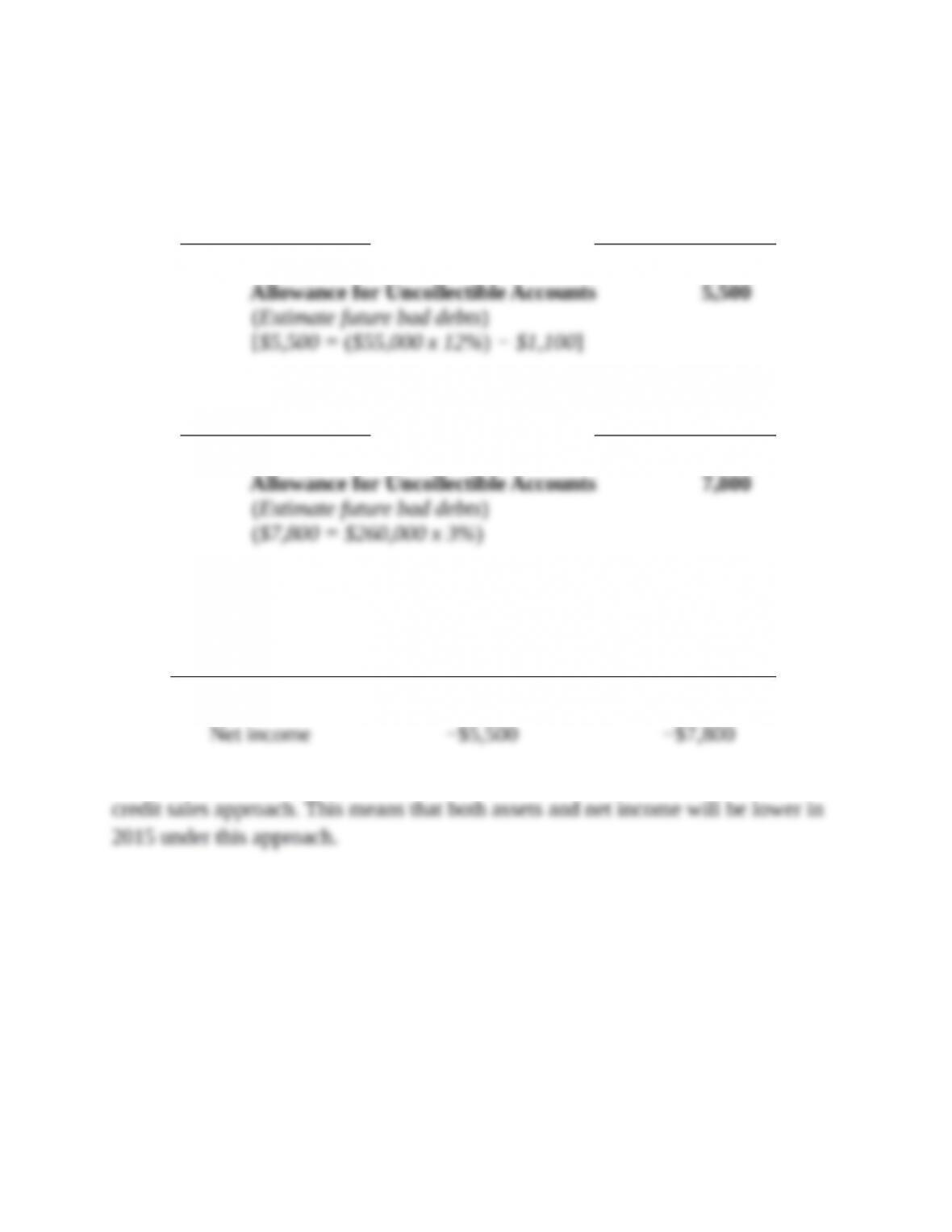
Exercise 5-19 (LO 5-9)
Requirement 1
December 31, 2015 Debit Credit
Bad Debt Expense 5,500
Requirement 2
December 31, 2015 Debit Credit
Bad Debt Expense 7,800
Requirement 3
Percentage of
receivables
method
Percentage of
credit sales
method
Total assets −$5,500 −$7,800
In this example, the amount of the adjustment is greater under the percentage of
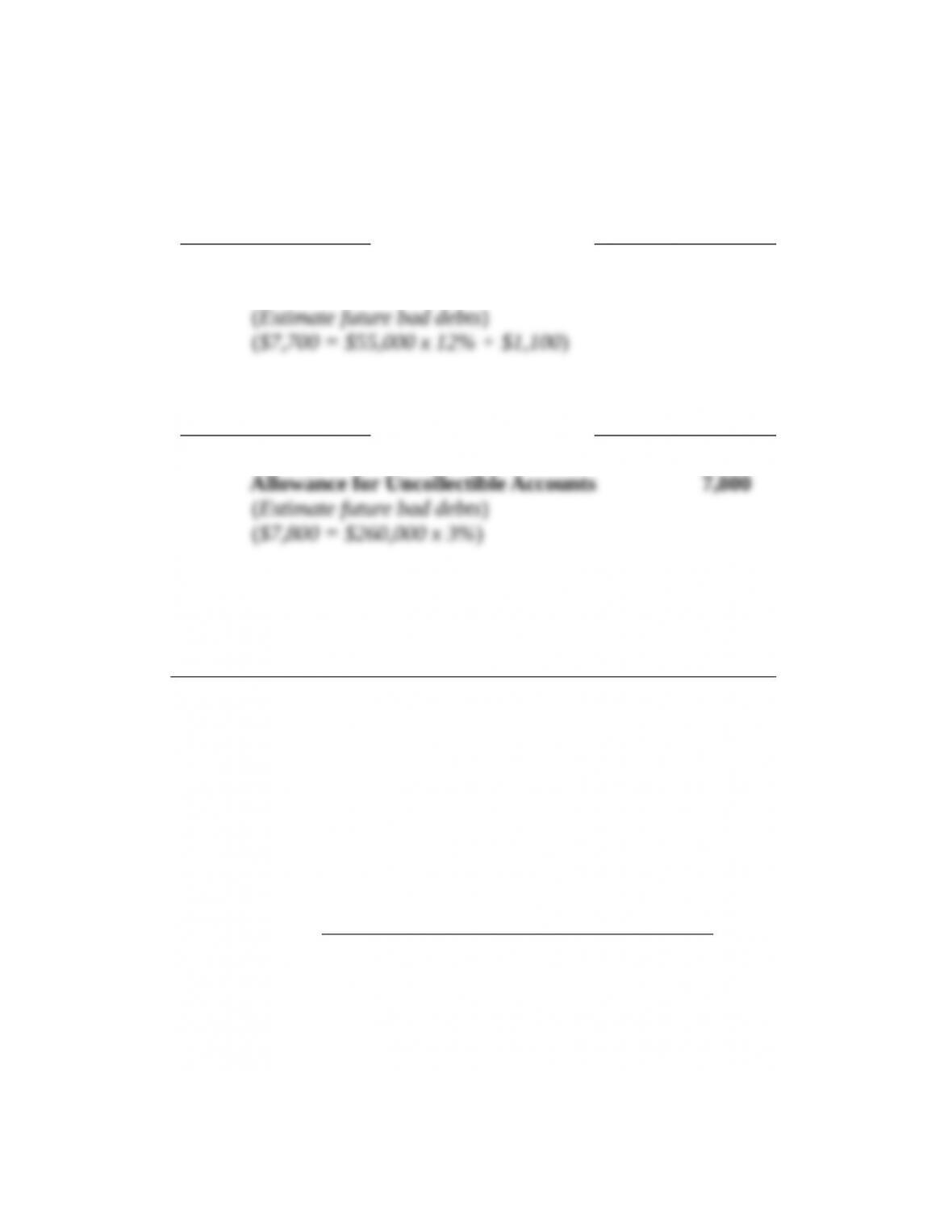
Exercise 5-20 (LO 5-9)
Requirement 1
December 31, 2015 Debit Credit
Bad Debt Expense 7,700
Allowance for Uncollectible Accounts 7,700
Requirement 2
December 31, 2015 Debit Credit
Bad Debt Expense 7,800
Requirement 3
Percentage of
receivables
method
Percentage of
credit sales
method
Total assets −$7,700 −$7,800
Net income −$7,700 −$7,800
In this example, the amount of the adjustment is greater under the percentage of
receivables approach. This means that both assets and net income will be lower in
2015 under this approach.
Problem 5-1A (LO 5-1)
Revenue recognized in 2015
Scenario 1: $11,000
Scenario 2: $1,200 (= $1,600 x 75%)
Scenario 3: $450,000
Scenario 4: $35,000
PROBLEMS: SET A
Problem 5-2A (LO 5-1, 5-2)
Requirement 1
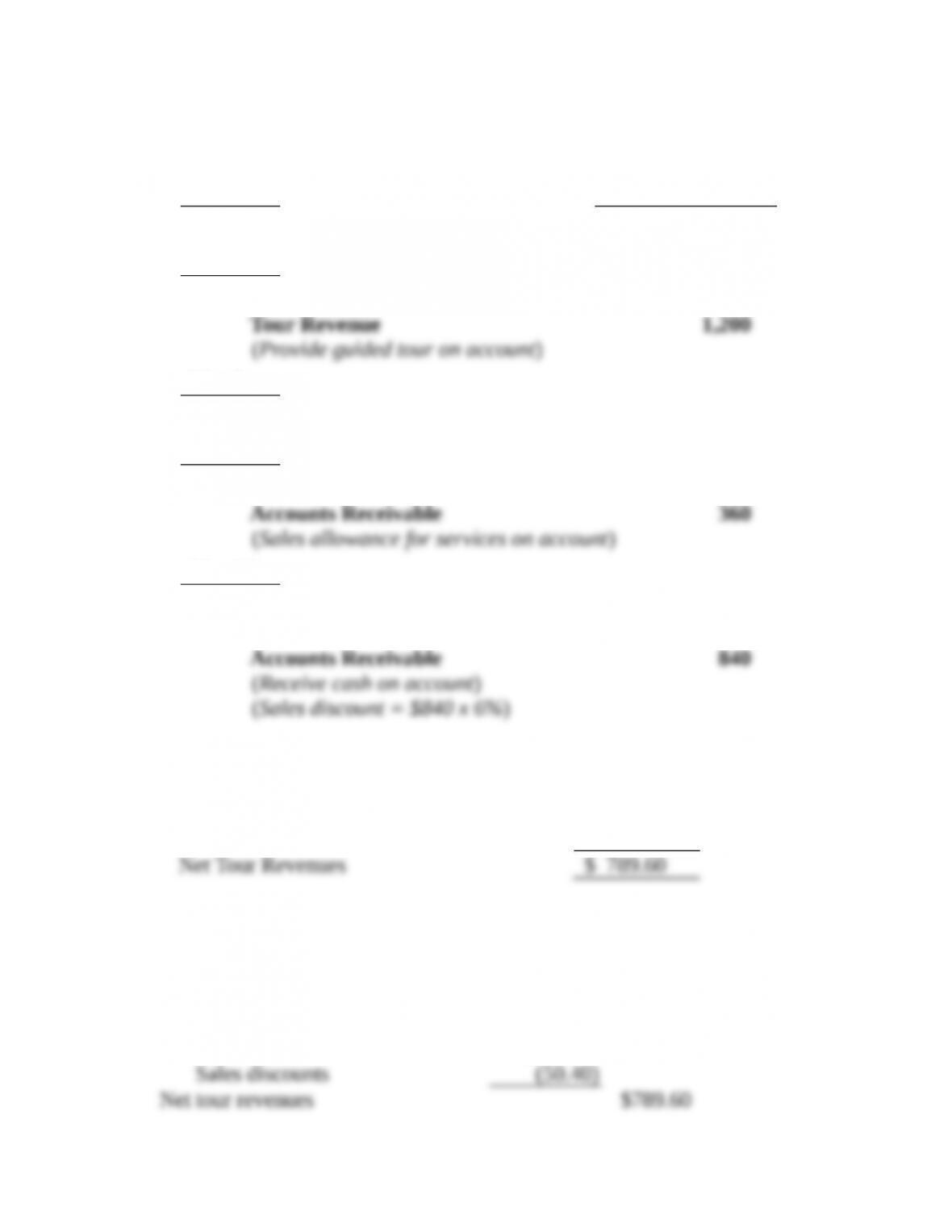
May 2 Debit Credit
No entry
May 7
Accounts Receivable 1,200
May 9
No entry
May 15
Sales Allowances 360
May 20
Cash 789.60
Sales Discounts 50.40
Requirement 2
Total Tour Revenues $1,200.00
Less: Sales Allowances 360.00
Sales Discounts 50.40
Requirement 3
Outdoor Expo
Partial Income Statement
Total tour revenues $1,200.00
Less: Sales allowances (360.00)
Problem 5-3A (LO 5-3, 5-5)
Requirement 1
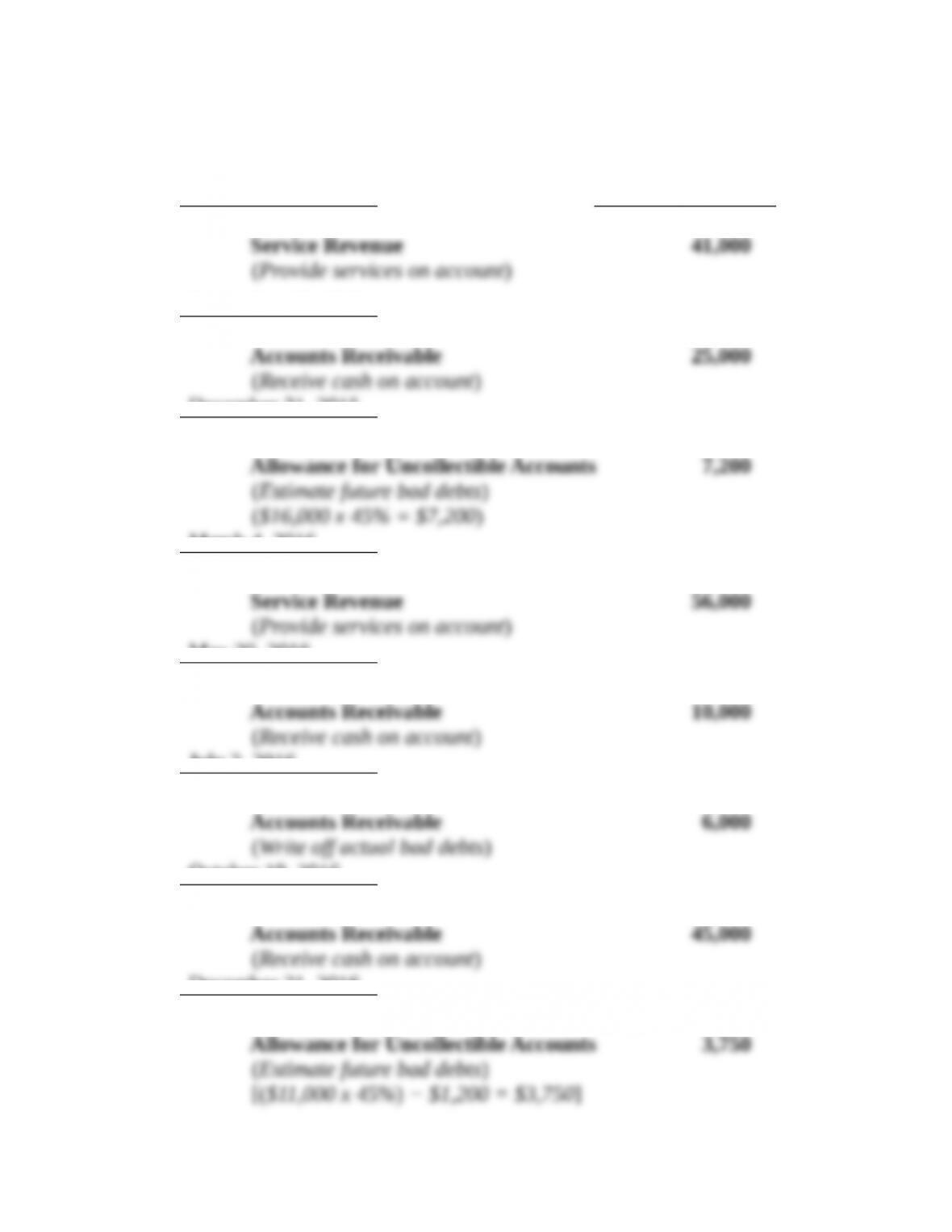
June 12, 2015 Debit Credit
Accounts Receivable 41,000
September 17, 2015
Cash 25,000
December 31, 2015
Bad Debt Expense 7,200
March 4, 2016
Accounts Receivable 56,000
May 20, 2016
Cash 10,000
July 2, 2016
Allowance for Uncollectible Accounts 6,000
October 19, 2016
Cash 45,000
December 31, 2016
Bad Debt Expense 3,750
Problem 5-3A (concluded)
Requirement 2
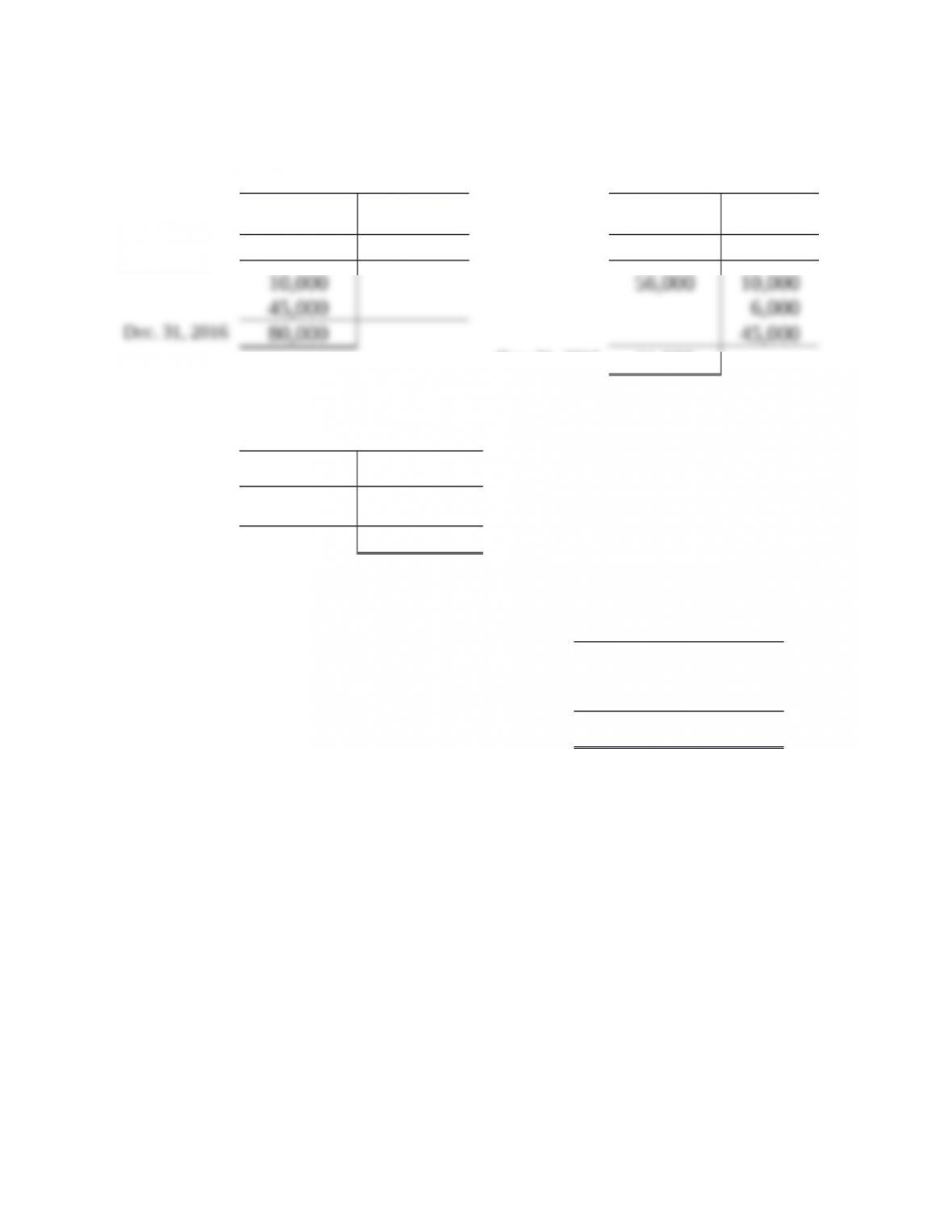
Cash Accounts Receivable
25,000 41,000 25,000
Dec. 31, 2015 25,000 Dec. 31, 2015 16,000
Dec. 31, 2016 11,000
Allow. for Uncol. Accts.
7,200 Dec. 31, 2015
6,000 3,750
4,950 Dec. 31, 2016
Requirement 3
2015 2016
Total accounts receivable $16,000 $11,000
Less: Allowance for uncollectible accounts 7,200 4,950
Net realizable value $ 8,800 $ 6,050
Problem 5-4A (LO 5-4, 5-5)
Requirement 1
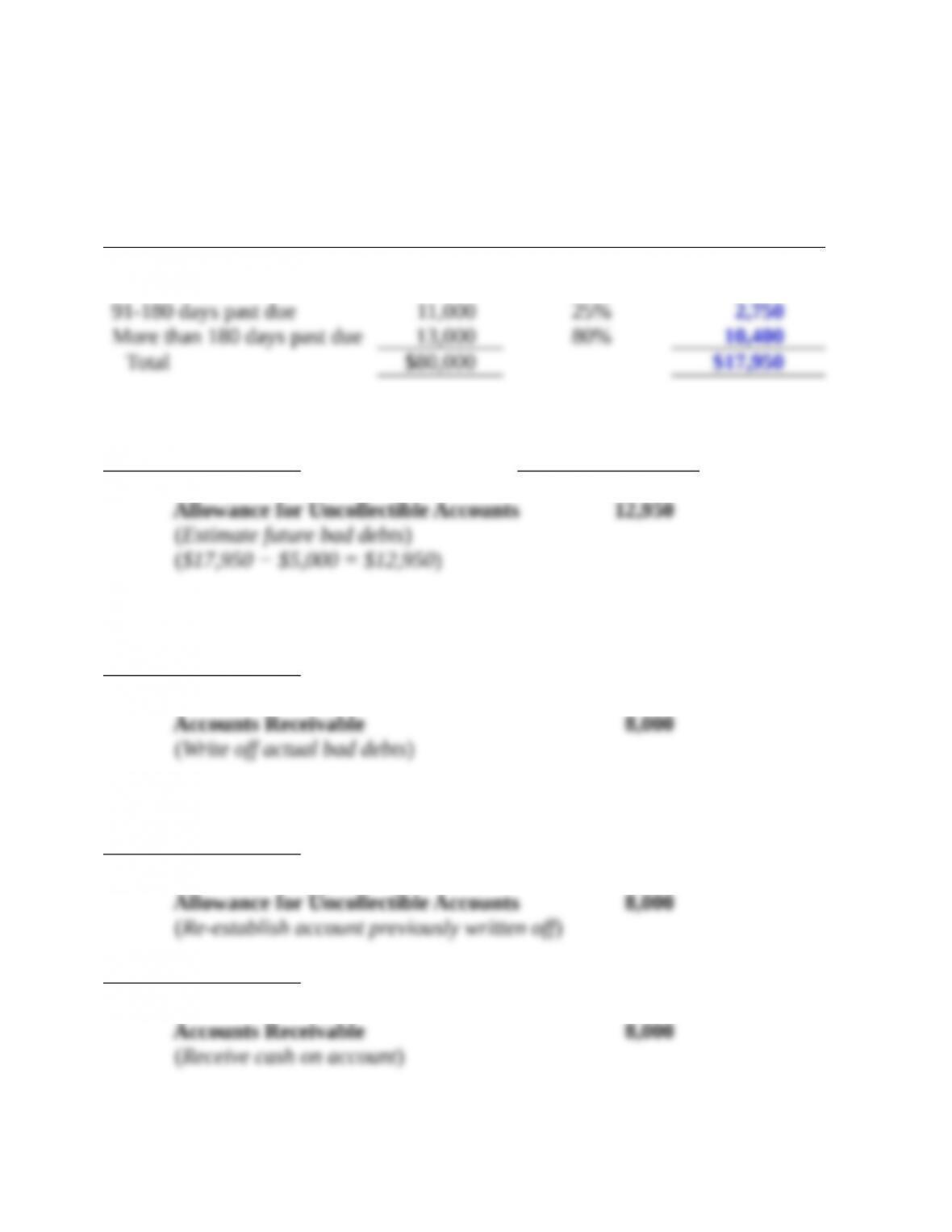
Age group
Amount
receivable
Estimated
percent
uncollectible
Estimated
amount
uncollectible
Not yet due $40,000 4% $ 1,600
0-90 days past due 16,000 20% 3,200
Requirement 2
December 31, 2015 Debit Credit
Bad Debt Expense 12,950
Requirement 3
July 19, 2016
Allowance for Uncollectible Accounts 8,000
Requirement 4
September 30, 2016
Accounts Receivable 8,000
September 30, 2016
Cash 8,000
Problem 5-5A (LO 5-3, 5-6)
Requirement 1
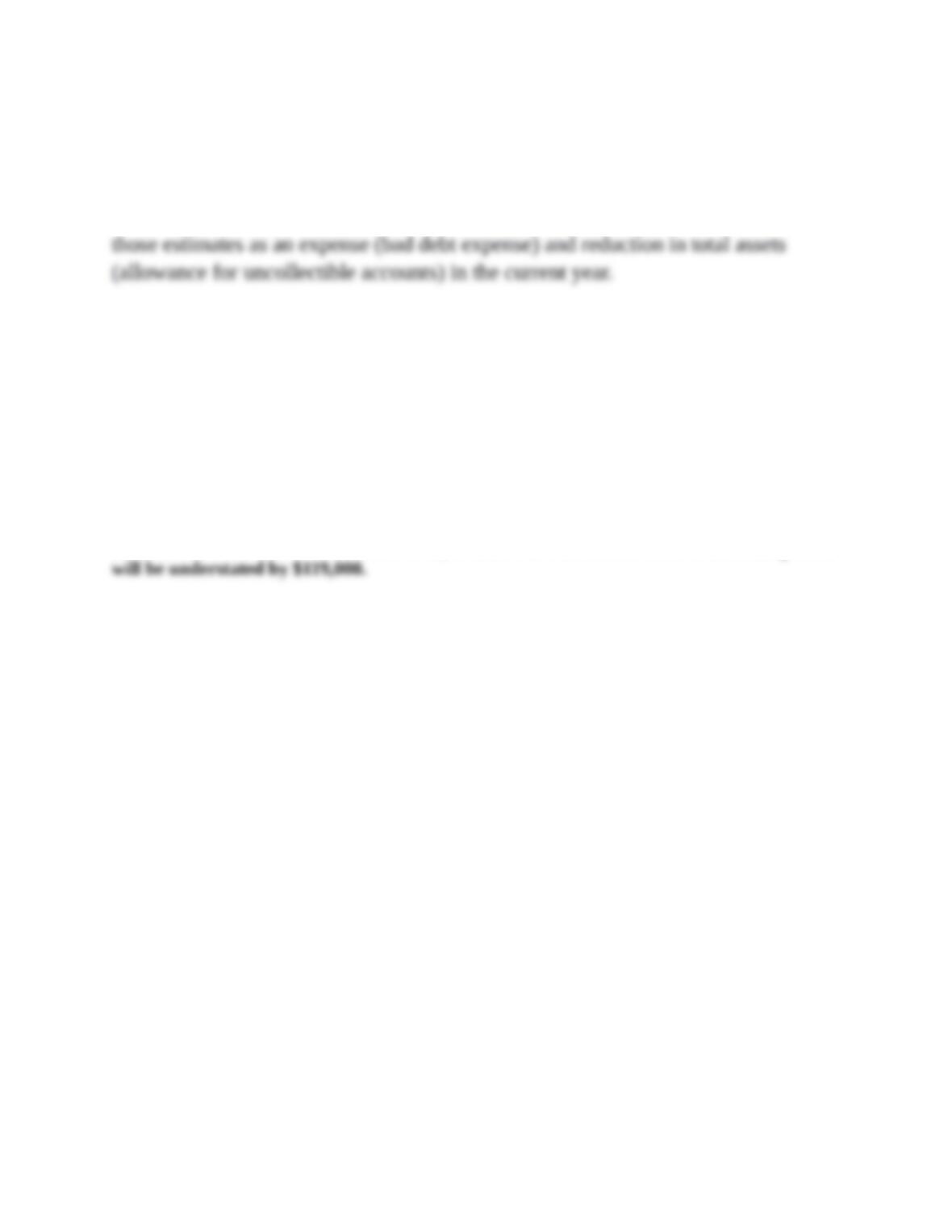
Arnold should not use the direct write-off method. Even if no accounts are known
to be uncollectible at the time, Arnold should estimate future bad debts and record
Requirement 2
Allowance for uncollectible accounts = $170,000 x 70% = $119,000.
Requirement 3
If Arnold uses the direct write-off method, total assets will be overstated and total expenses