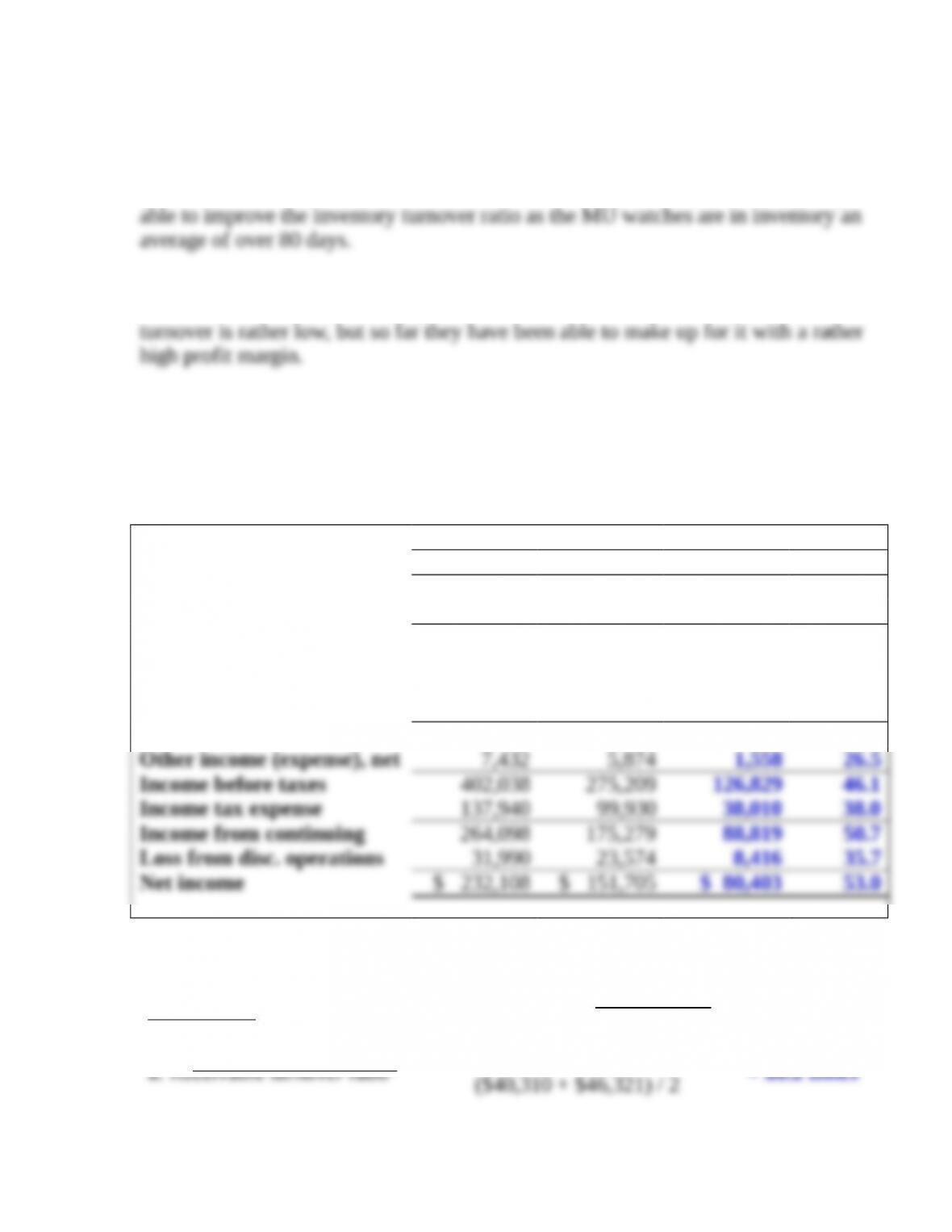
($ in thousands) Increase (Decrease)
2013 2012 Amount %
Net sales $ 3,475,802 $ 3,120,065 $ 355,737 11.4
Cost of sales 2,085,480 1,975,471 110,009 5.6
Gross profit 1,390,322 1,144,594 245,728 21.5
Selling, general, and admin. 834,601 718,123 116,478 16.2
Loss on impairment 34,869 19,178 15,691 81.8
Depreciation 126,246 137,958 (11,712) (8.5)
Operating income 394,606 269,335 125,271 46.5
Risk Ratios Calculations
a. Receivable turnover ratio $3,475,802
Requirement 3
Regarding risk, Great Adventures appears to be in great shape. Liquidity is strong
based on the receivable turnover ratio, current ratio, and acid-test ratio. They may be
Profitability also looks good. The MU watches have a 40.7% gross profit. The return
on assets and the return on equity are both respectable at 14.1% and 20.2%. Asset
Financial Analysis: American Eagle
AP12-2
Requirement 1
Requirement 2
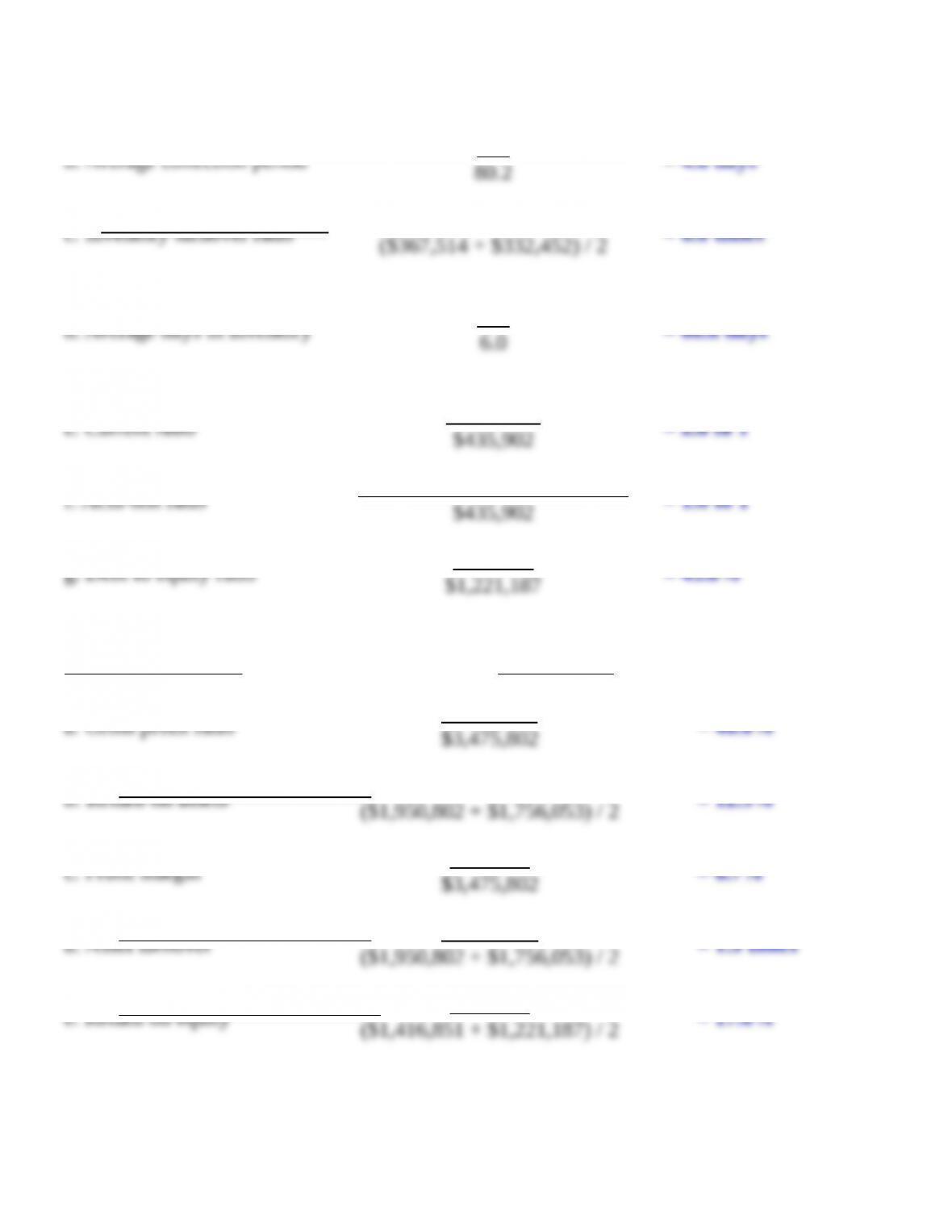
b. Average collection period 365
c. Inventory turnover ratio $2,085,480
d. Average days in inventory 365
e. Current ratio $1,141,800
f. Acid-test ratio $509,119 + $121,873 +$46,321
g. Debt to equity ratio $534,866
Profitability Ratios Calculations
a. Gross profit ratio $1,390,322
b. Return on assets $232,108
c. Profit margin $232,108
d. Asset turnover $3,475,802
e. Return on equity $232,108
Requirement 3
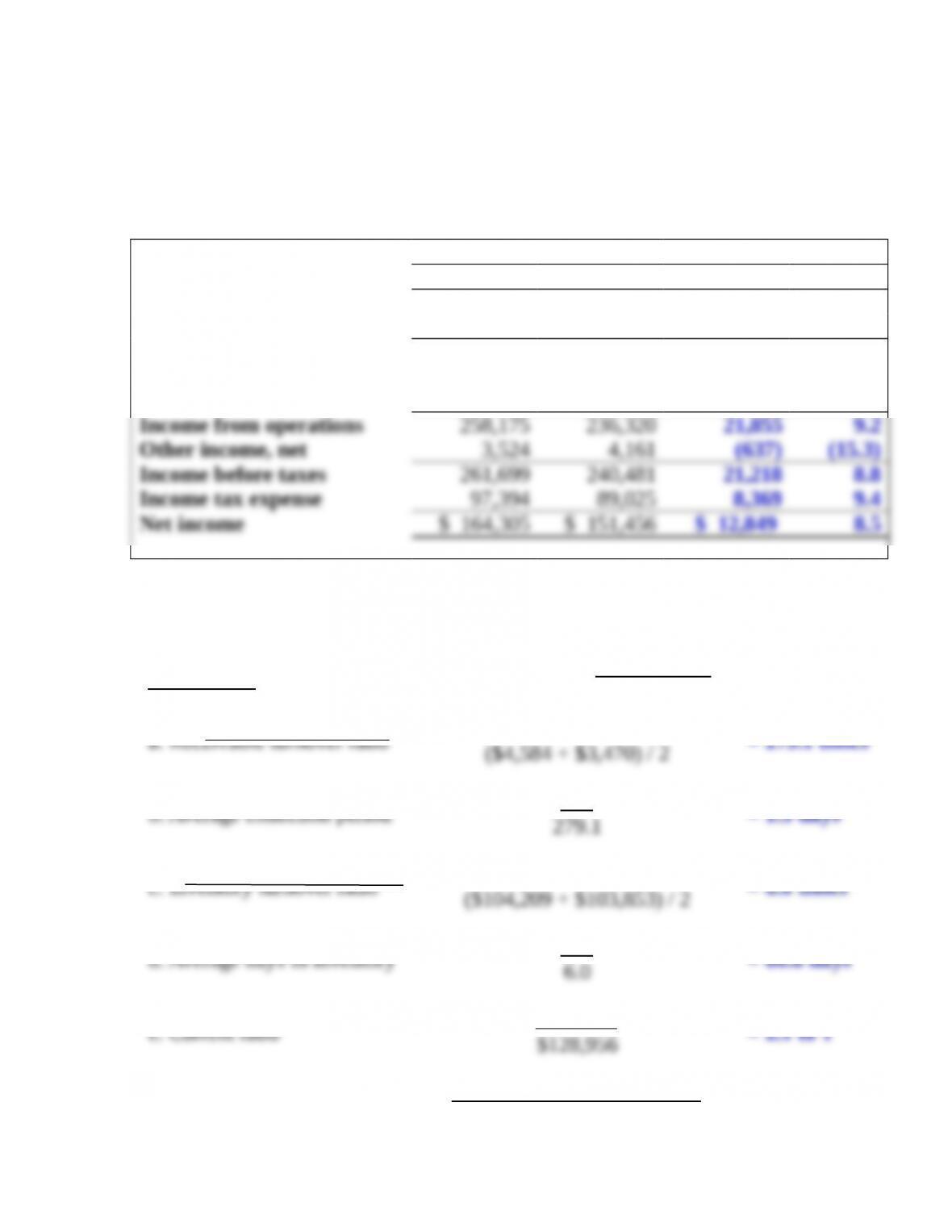
($ in thousands) Increase (Decrease)
2013 2012 Amount %
Net sales $ 1,124,007 $ 1,062,946 $ 61,061 5.7
Cost of sales 624,692 594,291 30,401 5.1
Gross profit 499,315 468,655 30,660 6.5
Selling 201,963 195,294 6,669 3.4
General and administrative 39,177 37,041 2,136 5.8
Risk Ratios Calculations
a. Receivable turnover ratio $1,124,007
b. Average collection period 365
c. Inventory turnover ratio $624,692
d. Average days in inventory 365
e. Current ratio $276,873
f. Acid-test ratio $117,608 + $26,414 +$3,470 = 1.1 to 1
Financial Analysis: The Buckle
AP12-3
Requirement 1
Requirement 2
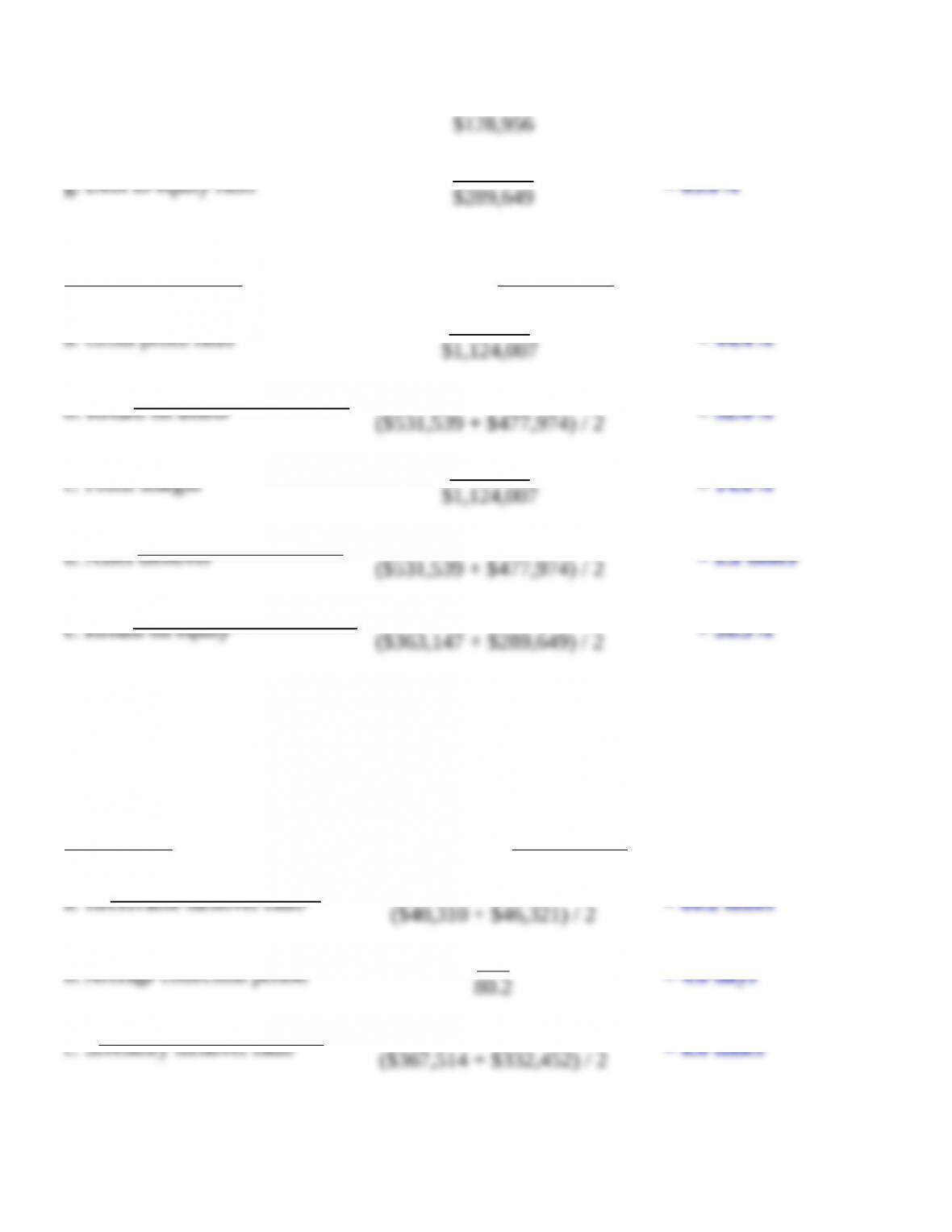
g. Debt to equity ratio $188,325
Profitability Ratios Calculations
a. Gross profit ratio $499,315
b. Return on assets $164,305
c. Profit margin $164,305
d. Asset turnover $1,124,007
e. Return on equity $164,305
American Eagle
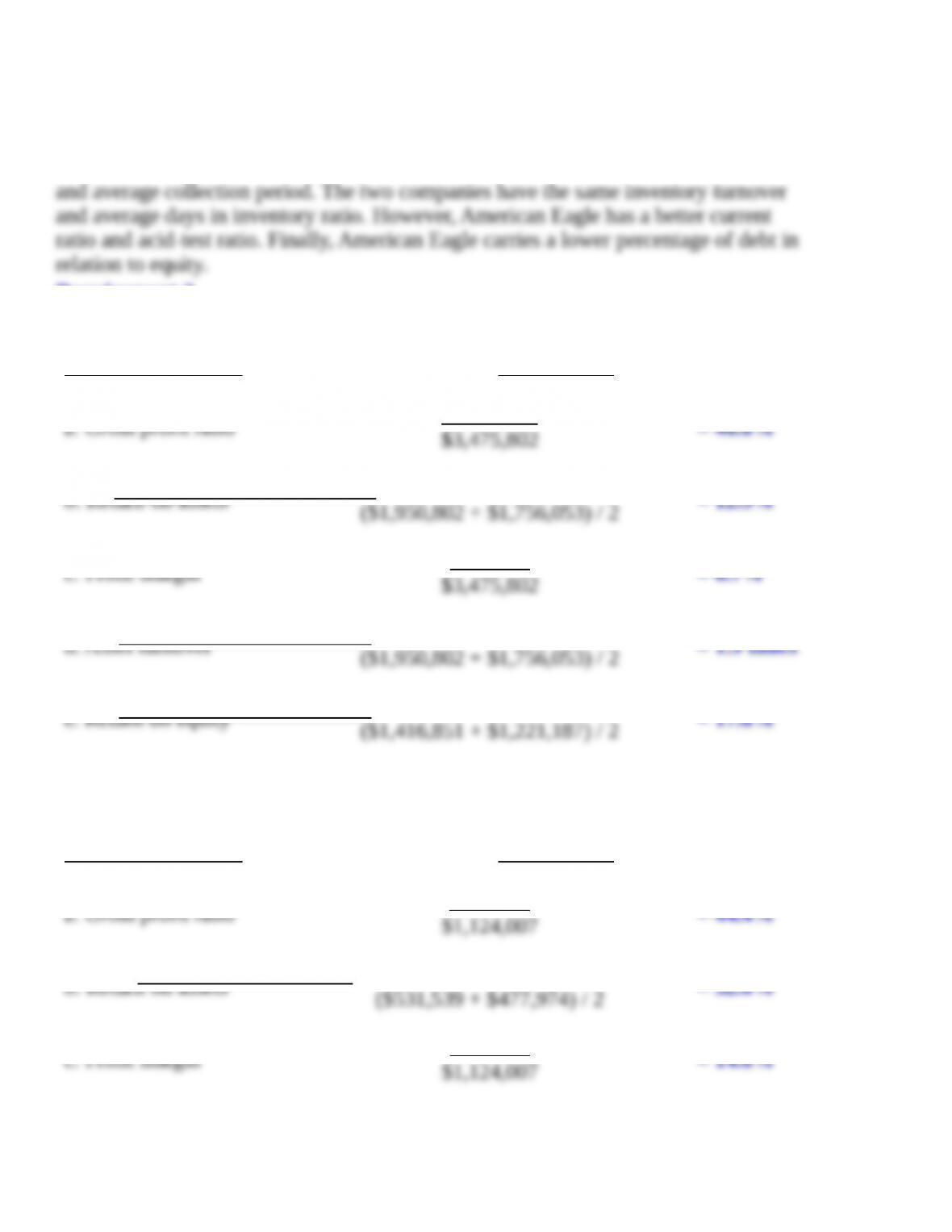
Risk Ratios Calculations
a. Receivable turnover ratio $3,475,802
b. Average collection period 365
c. Inventory turnover ratio $2,085,480
Requirement 3
Comparative Analysis: American Eagle vs. The Buckle
AP12-4
Requirement 1

d. Average days in inventory 365
e. Current ratio $1,141,800
f. Acid-test ratio $509,119 + $121,873 +$46,321
g. Debt to equity ratio $534,866
The Buckle
Risk Ratios Calculations
a. Receivable turnover ratio $1,124,007
b. Average collection period 365
c. Inventory turnover ratio $624,692
d. Average days in inventory 365
e. Current ratio $276,873
f. Acid-test ratio $117,608 + $26,414 +$3,470
g. Debt to equity ratio $188,325
American Eagle
Profitability Ratios Calculations
a. Gross profit ratio $1,390,322
b. Return on assets $232,108
c. Profit margin $232,108
d. Asset turnover $3,475,802
e. Return on equity $232,108
The Buckle
Profitability Ratios Calculations
a. Gross profit ratio $499,315
b. Return on assets $164,305
c. Profit margin $164,305
American Eagle and Buckle both appear to be low risk. However, Buckle does appear
a bit more risky than American Eagle. Buckle has a better receivable turnover ratio
Requirement 2

d. Asset turnover $1,124,007
e. Return on equity $164,305
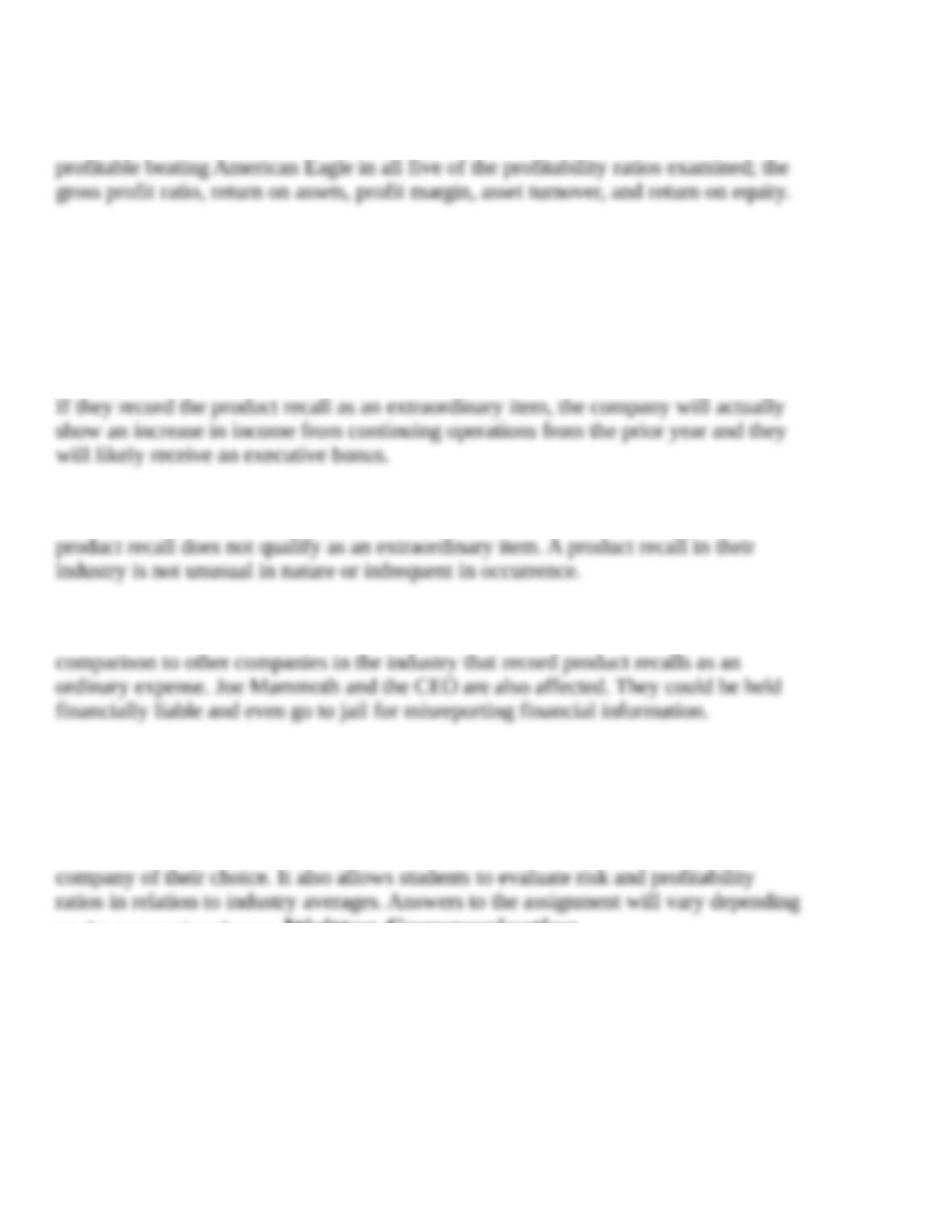
American Eagle and Buckle are both very profitable. However, Buckle appears more
Ethics
AP12-5
Joe Mammoth and the CEO must decide how to report $5 million in expenses due to a
product recall. If they record the product recall as an ordinary expense, the company
will report a $1.6 million loss for the year and likely not receive an executive bonus.
An extraordinary item must meet two conditions: (1) unusual in nature and (2)
infrequent in occurrence. Based on the information provided, it appears that the
The primary stakeholders affected are investors and creditors. Reporting the product
recall as extraordinary may be misleading to these stakeholders especially in
Internet Research
AP12-6
This case provides an opportunity for students to examine ratios calculated for a
on the companies chosen. Written Communication
AP12-7
Roseburg Corporation sells timber tracts for $30 million in 2015 that were purchased
for $20 million in 2011. The $10 million gain on sale is recorded as:

Debit Credit
Cash 30,000,000
Timber tracts 20,000,000
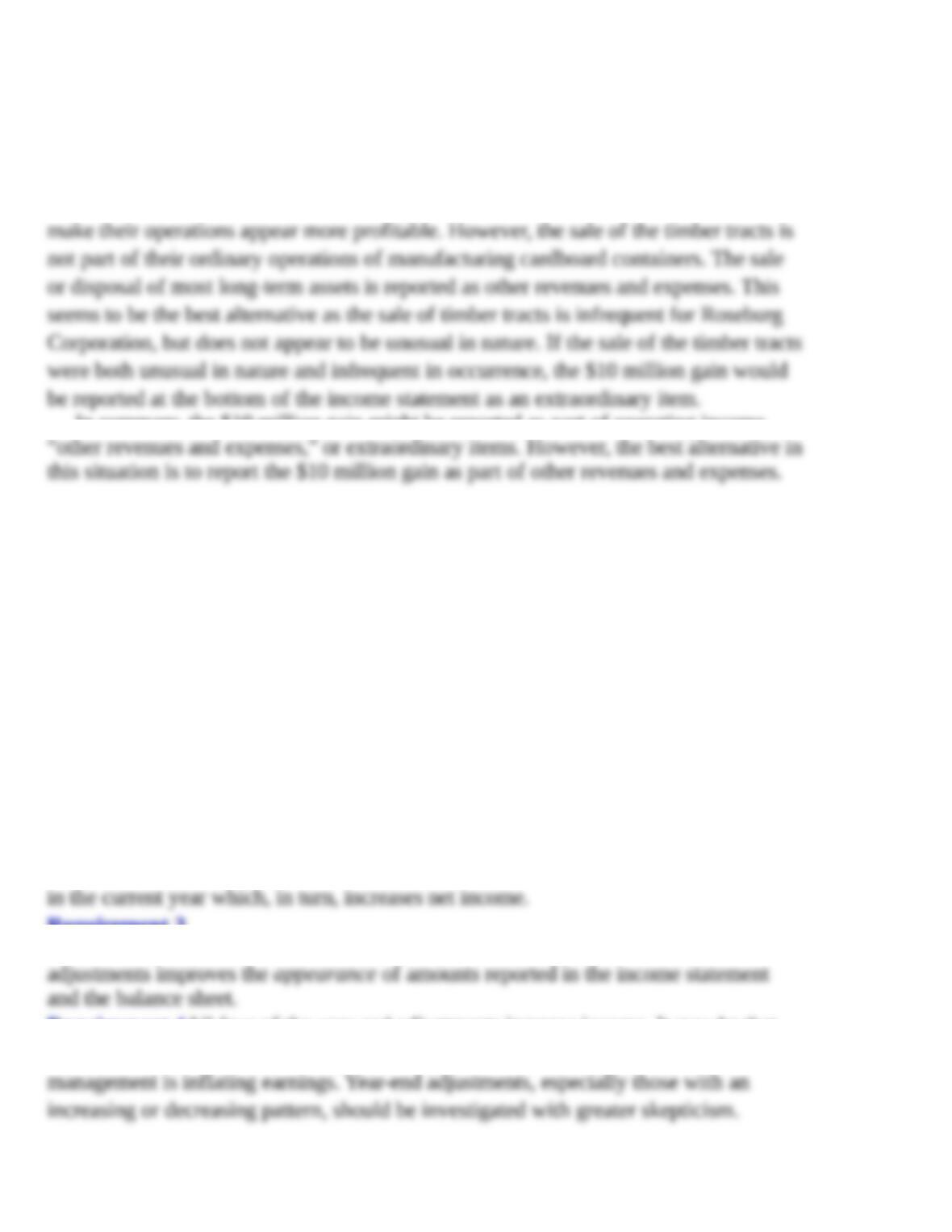
The issue is whether to record the $10 million gain on sale in the income statement
as part of operating income, “other revenues and expenses,” or extraordinary items.
Roseburg might prefer to report the large gain as part of operating income as it would
In summary, the $10 million gain might be reported as part of operating income,
Earnings Management
AP 12-8
Requirement 1
(a) Aggressive
(b) Aggressive
(c) Aggressive
(d) Aggressive
Requirement 2
All four adjustments are classified as aggressive. All four adjustments reduce expenses
Requirement 3
None of these adjustments affect the company’s cash balance. Rather, each of the four
Requirement 4All four of the year-end adjustments increase income. It may be that
all four adjustments are perfectly legitimate, but it also may be an indication