Problem 10-6A (LO 10-2, 10-3, 10-4, 10-5, 10-7)
Requirement 1
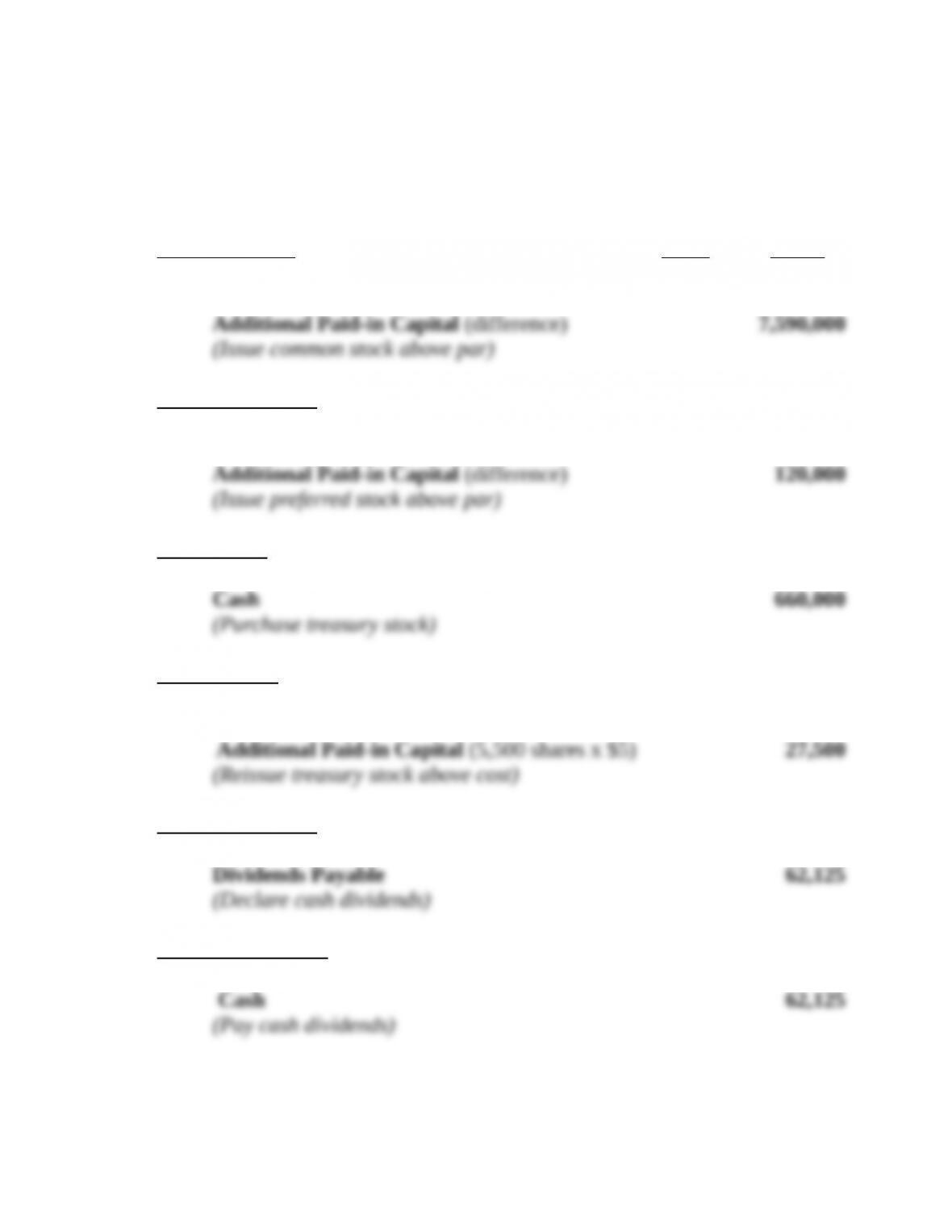
January 2, 2015 Debit Credit
Cash (110,000 x $70) 7,700,000
Common Stock (110,000 x $1) 110,000
February 14, 2015
Cash (60,000 x $12) 720,000
Preferred Stock (60,000 x $10) 600,000
May 8, 2015
Treasury Stock (11,000 shares x $60) 660,000
May 31, 2015
Cash (5,500 shares x $65) 357,500
Treasury Stock (5,500 shares x $60) 330,000
December 1, 2015
Dividends [(104,500 shares x $0.25) + $36,000] 62,125
December 30, 2015
Dividends Payable 62,125
Requirement 2
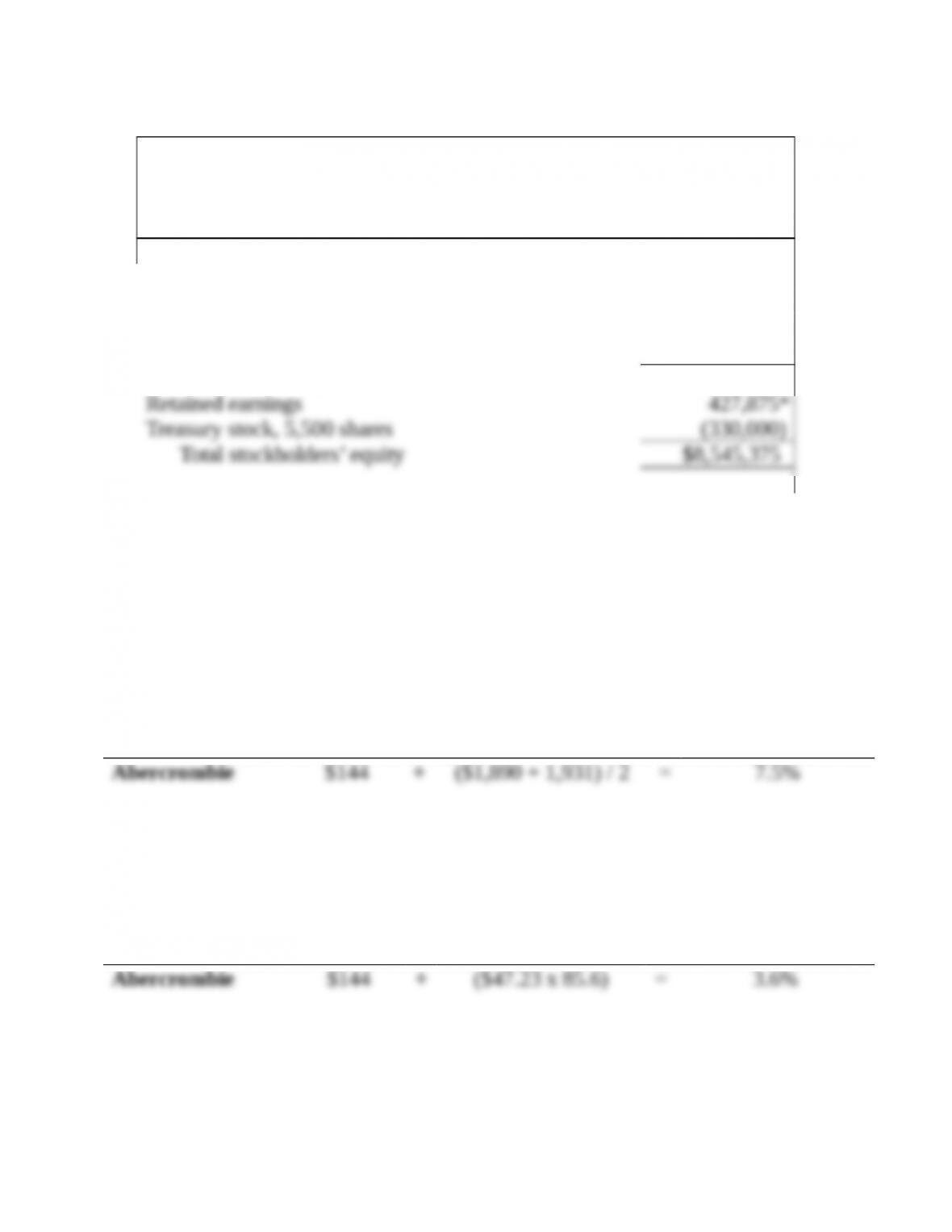
Major League Apparel
Balance Sheet
(Stockholders’ Equity Section)
December 31, 2015
Stockholders’ equity:
Preferred stock, $10 par value $ 600,000
Common stock, $1 par value 110,000
Additional paid-in capital 7,737,500
Total paid-in capital 8,447,500
*$490,000 net income – $62,125 in dividends
Problem 10-7A (LO 10-8)
Requirement 1
($ in millions)
Net
Income ÷Average
Stockholders’ Equity =Return on
Equity
Abercrombie has a lower return on equity than Deckers Outdoor or Wolverine.
Requirement 2
($ in millions)
Net
Income ÷Market Value
of Equity =
Return on the
Market Value
of Equity
Abercrombie also has a lower return on the market value of equity than either
Deckers Outdoor (6.8%) or Wolverine (7.2%).
Requirement 3
The return on the market value of equity is much lower than the return on equity
for these companies because the market value of equity is much higher than
average stockholders’ equity recorded on the balance sheet. For some companies
Requirement 4
($ in millions) Stock
Price ÷ Earnings Per Share =
Price-Earnings
Ratio
Abercrombie has a much higher price-earnings ratio than Deckers Outdoor and
Wolverine. Abercrombie is trading at a higher price per dollar of earnings.
Problems: Set B
Problem 10-1B (LO 10-1 to 10-8)
Terms
__e___ 1. PE ratio.
__i___ 2. Stockholders’ equity section of the balance sheet.
__a___ 3. Accumulated deficit.
__b___ 4. Growth stocks.
__c___ 5. 100% stock dividend.
__f___ 6. Statement of stockholders’ equity.
__j___ 7. Treasury stock.
__g___ 8. Value stocks.
__h___ 9. Return on equity.
__d___ 10. Retained earnings,
Definitions
a. A debit balance in retained earnings.
b. Priced high in relation to current earnings as investors expect future
earnings to be higher.
c. Effectively the same as a 2-for-1 stock split.
d. The earnings not paid out in dividends.
Problem 10-2B (LO 10-2, 10-3, 10-4, 10-5)
Requirement 1
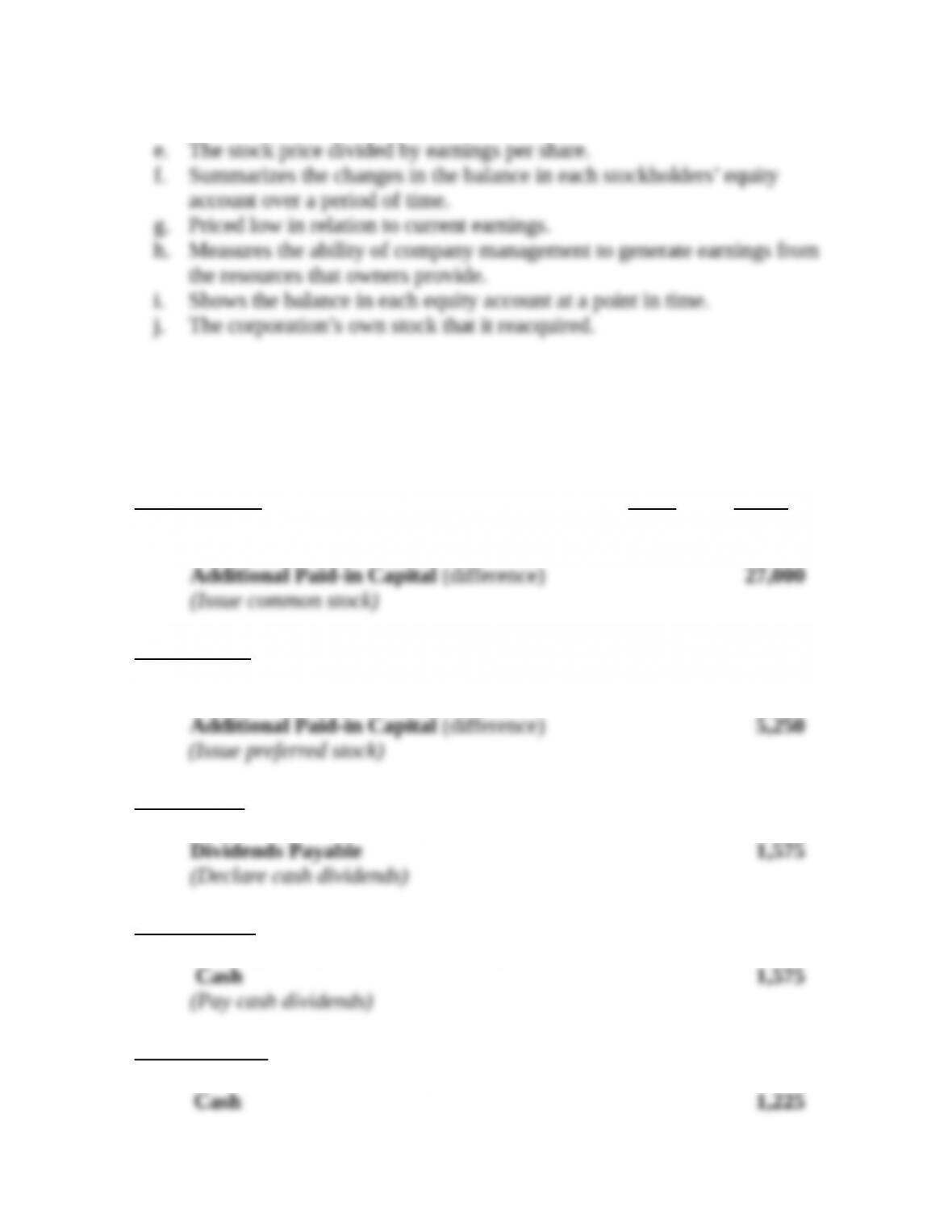
March 1, 2015 Debit Credit
Cash (3,000 x $10) 30,000
Common Stock (3,000 x $1.00) 3,000
April 1, 2015
Cash (175 shares x $40) 7,000
Preferred Stock (175 shares x $10) 1,750
June 1, 2015
Dividends (6,300 shares x $0.25) 1,575
June 30, 2015
Dividends Payable (6,300 shares x $0.25) 1,575
August 1, 2015
Treasury Stock (175 shares x $7) 1,225
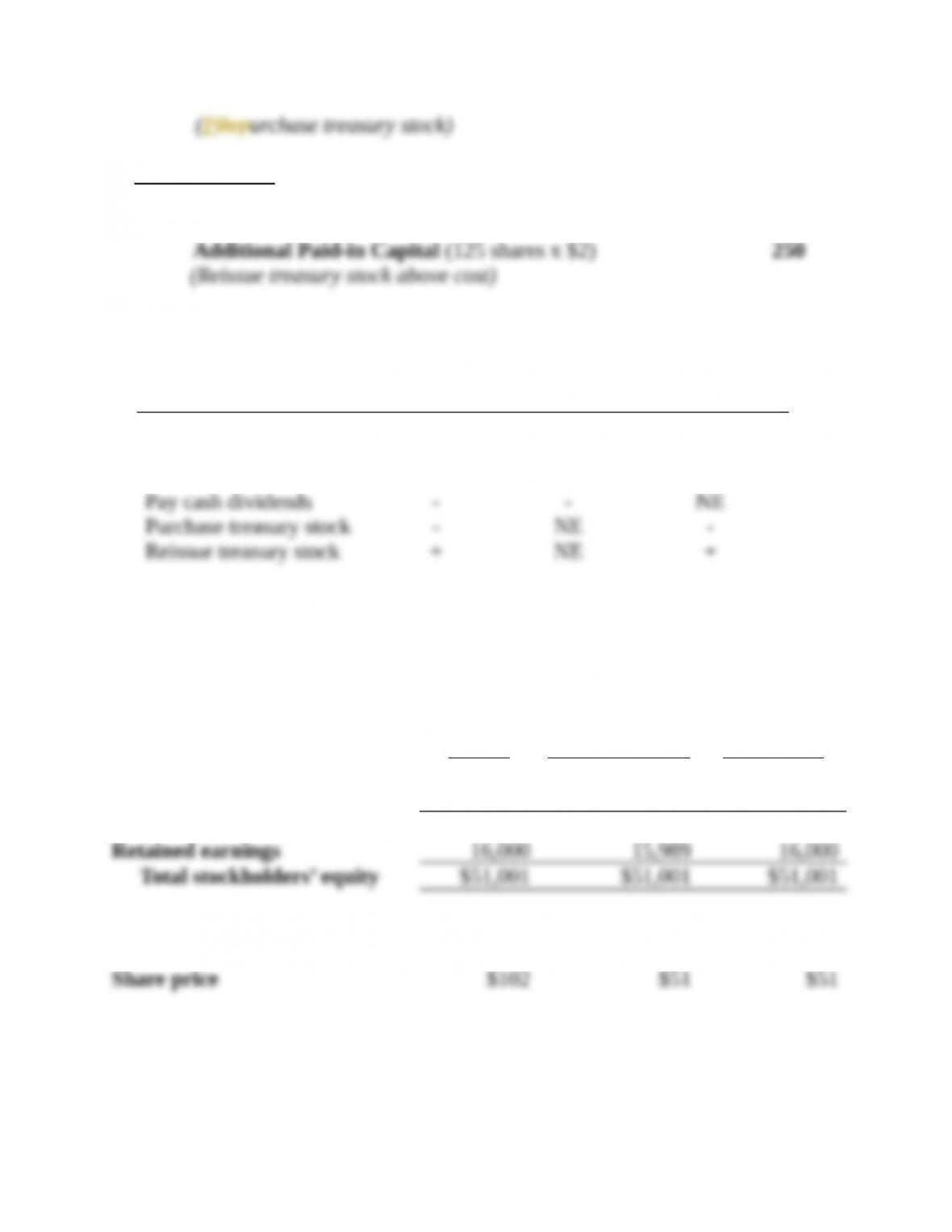
October 1, 2015
Cash (125 shares x $9) 1,125
Treasury Stock (125 shares x $7) 875
Requirement 2
Transaction
Total
Assets
Total
Liabilities
Total
Stockholders’
Equity
Issue common stock + NE +
Issue preferred stock + NE +
Declare cash dividends NE + –
Problem 10-3B (LO 10-6)
Before
After 100%
Stock Dividend
After 2-for-1
Stock Split
Common stock, $0.01 par value $ 11 $ 22 $ 11
Additional paid-in capital 34,990 34,990 34,990
Total paid-in capital 35,001 35,012 35,001
Shares outstanding 1,100 2,200 2,200
Par value per share $0.01 $0.01 $0.005
Problem 10-4B (LO 10-7)
Requirement 1
No preferred stock has been issued.
Requirement 2
4,000,000 shares = ($20,000 / $5 par value per share) in thousands (x 1,000).
Requirement 3
$30 per share. The total paid-in capital for common stock is $120 million.
Requirement 4
Retained earnings, beginning $45,000,000
+ Net income 9,907,500
– Dividends ?
Requirement 5
185,000 shares = ($3,700 / $20 per share) in thousands (x 1,000).
Requirement 6
$1,907,500 / (4,000,000 – 185,000) = $0.50 dividend per share.
Problem 10-5B (LO 10-7)
Requirement 1
Nautical
Balance Sheet
(Stockholders’ Equity Section)
December 31, 2015
Stockholders’ equity:
Preferred stock, $10 par value $ 3,000
Common stock, $1.00 par value 6,000
Additional paid-in capital 52,000
Total paid-in capital 61,000
Requirement 2
Nautical
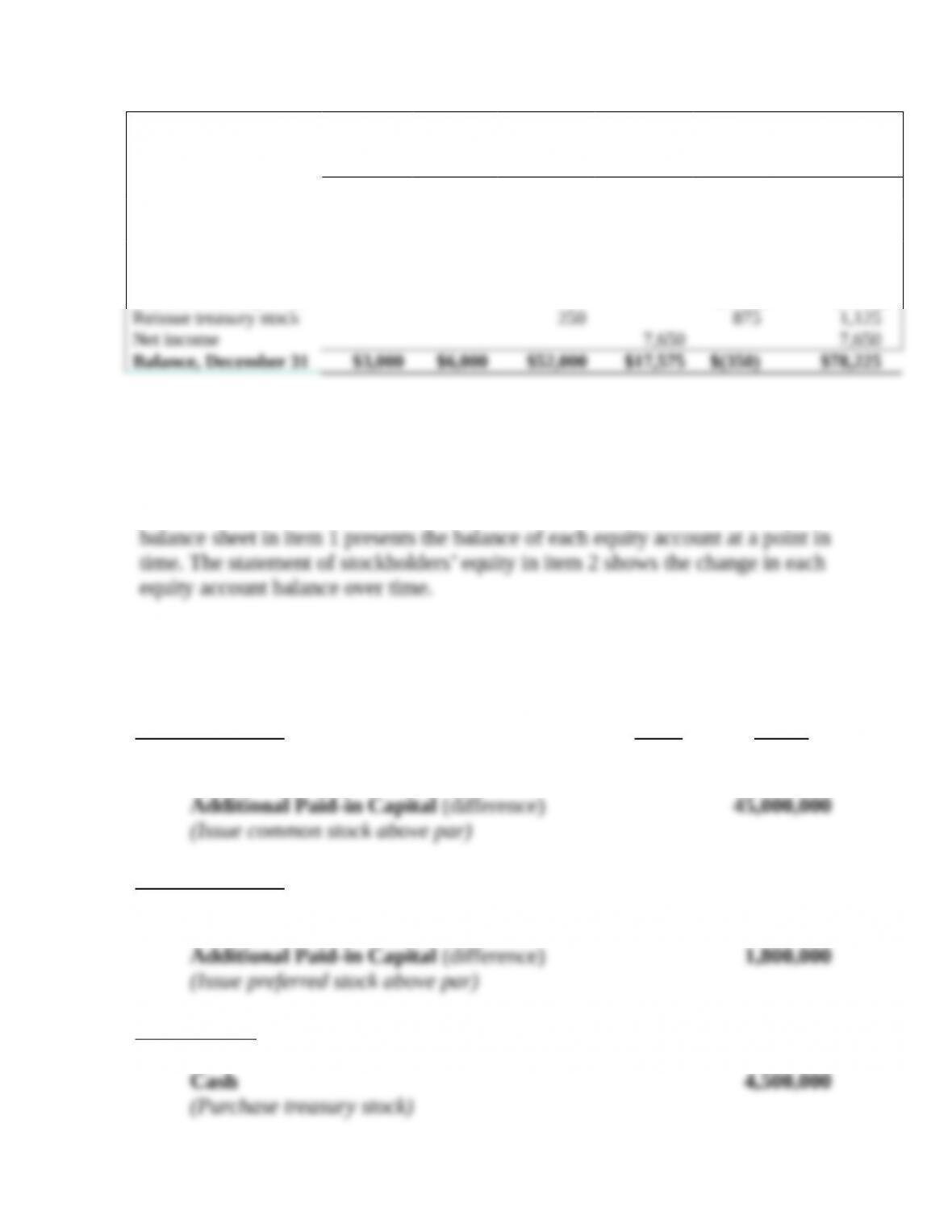
Statement of Stockholders’ Equity
For the Year Ended December 31, 2015
Preferred
Stock
Common
Stock
Additional
Paid-in
Capital
Retained
Earnings
Treasury
Stock
Total
Stockholders’
Equity
Balance, January 1 $1,250 $3,000 $19,500 $11,500 $ -0- $35,250
Issue common stock 3,000 27,000 30,000
Issue preferred stock 1,750 5,250 7,000
Cash dividends (1,575) (1,575)
Purchase treasury stock (1,225) (1,225)
Requirement 3
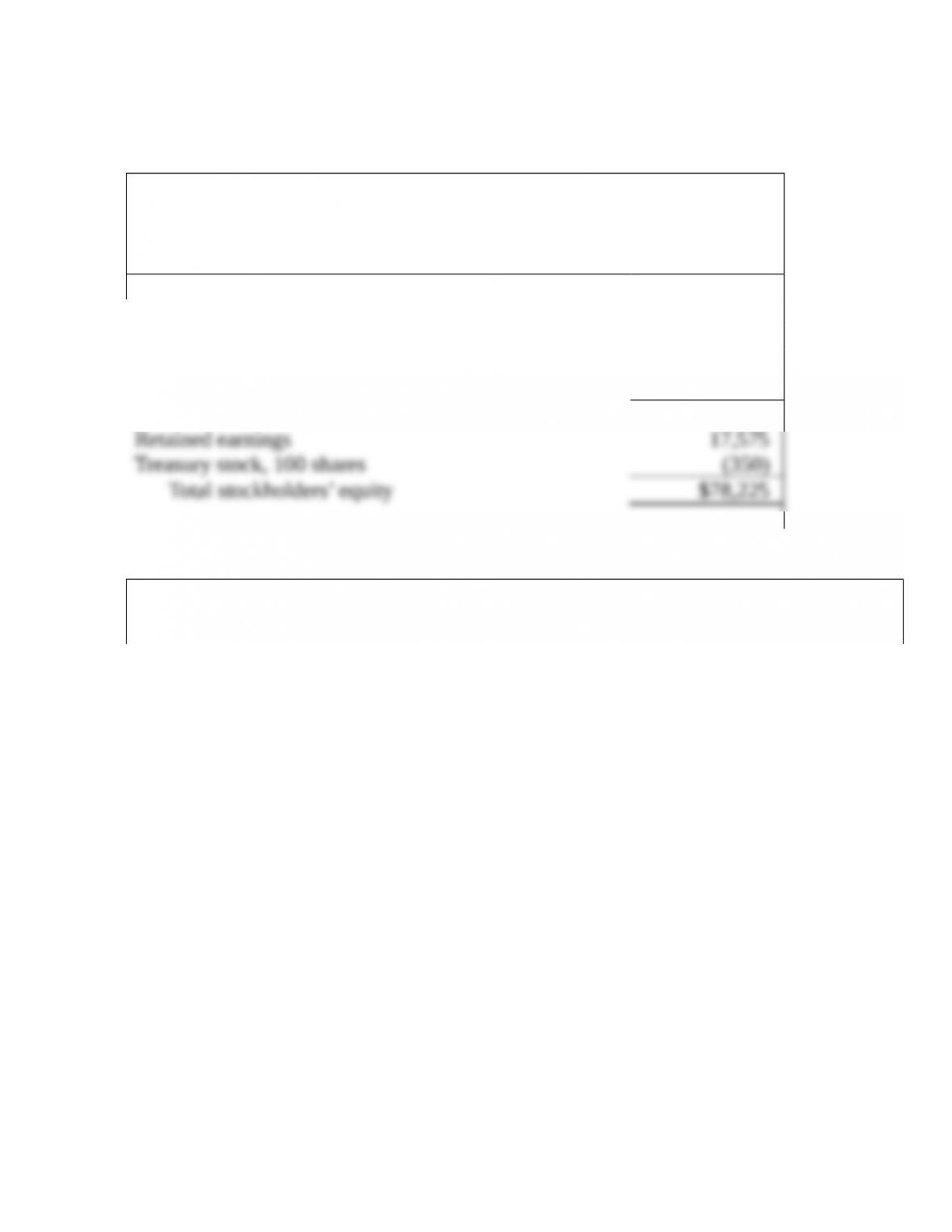
Items 1 and 2 are similar in that item 1 shows the equity balances in a column
format and item 2 shows these same balances across the bottom row. However,
items 1 and 2 serve different purposes. The stockholders’ equity section of the
Problem 10-6B (LO 10-2, 10-3, 10-4, 10-5, 10-7)
Requirement 1
February 2, 2015 Debit Credit
Cash (1,500,000 x $35) 52,500,000
Common Stock (1,500,000 x $5) 7,500,000
February 4, 2015
Cash (600,000 x $23) 13,800,000
Preferred Stock (600,000 x $20) 12,000,000
June 15, 2015
Treasury Stock (150,000 shares x $30) 4,500,000
August 15, 2015
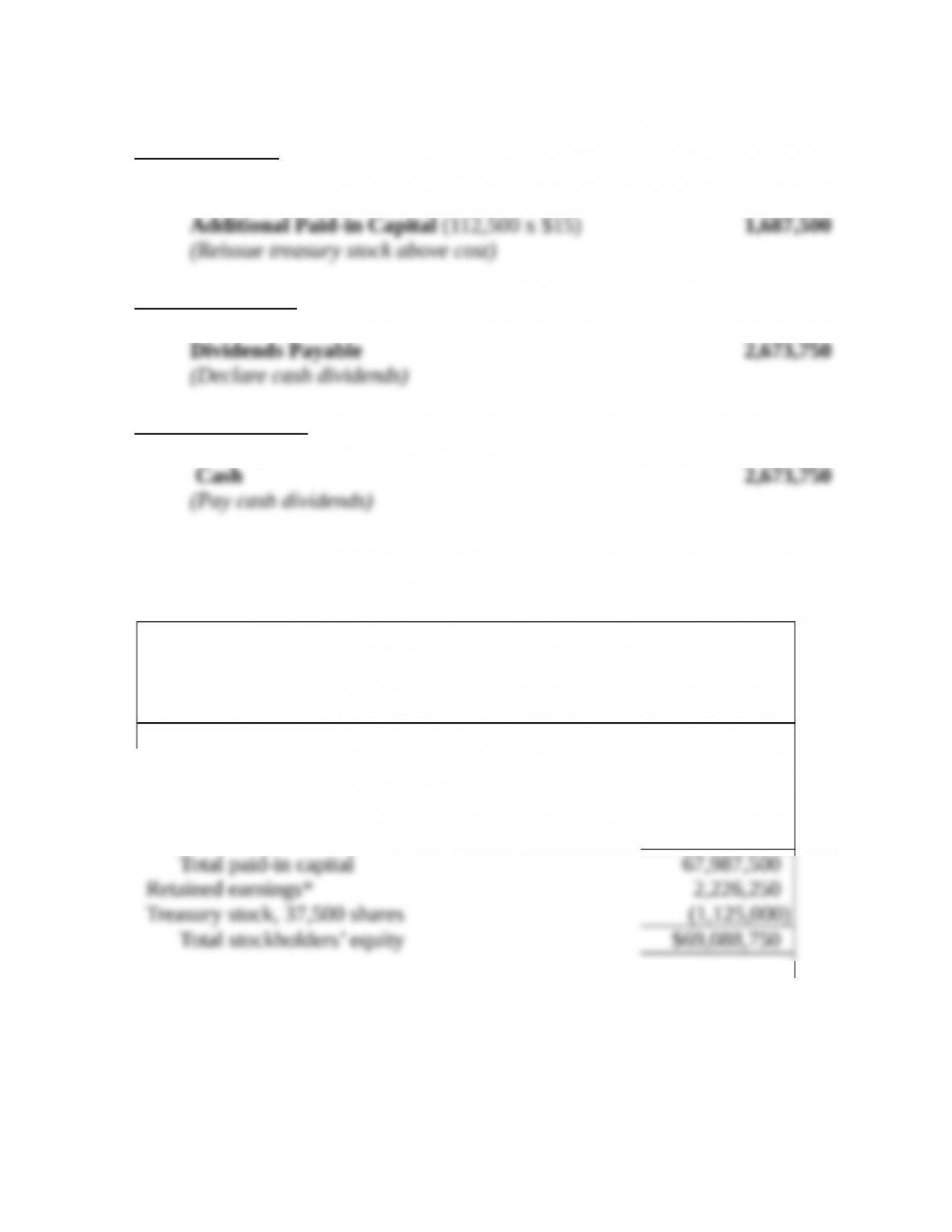
Cash (112,500 shares x $45) 5,062,500
Treasury Stock (112,500 shares x $30) 3,375,000
November 1, 2015
Dividends (1,462,500 shares x $1.50 + $480,000) 2,673,750
November 30, 2015
Dividends Payable 2,673,750
Problem 10-6B (Connued)
Requirement 2
National League Gear
Balance Sheet
(Stockholders’ Equity Section)
December 31, 2015
Stockholders’ equity:
Preferred stock, $20 par value $12,000,000
Common stock, $5 par value 7,500,000
Additional paid-in capital 48,487,500
* $4,900,000 net income – $2,673,750 in dividends
Problem 10-7B (LO 10-8)
Requirement 1
($ in millions)
Net
Income ÷
Average
Stockholders’ Equity =
Return on
Equity
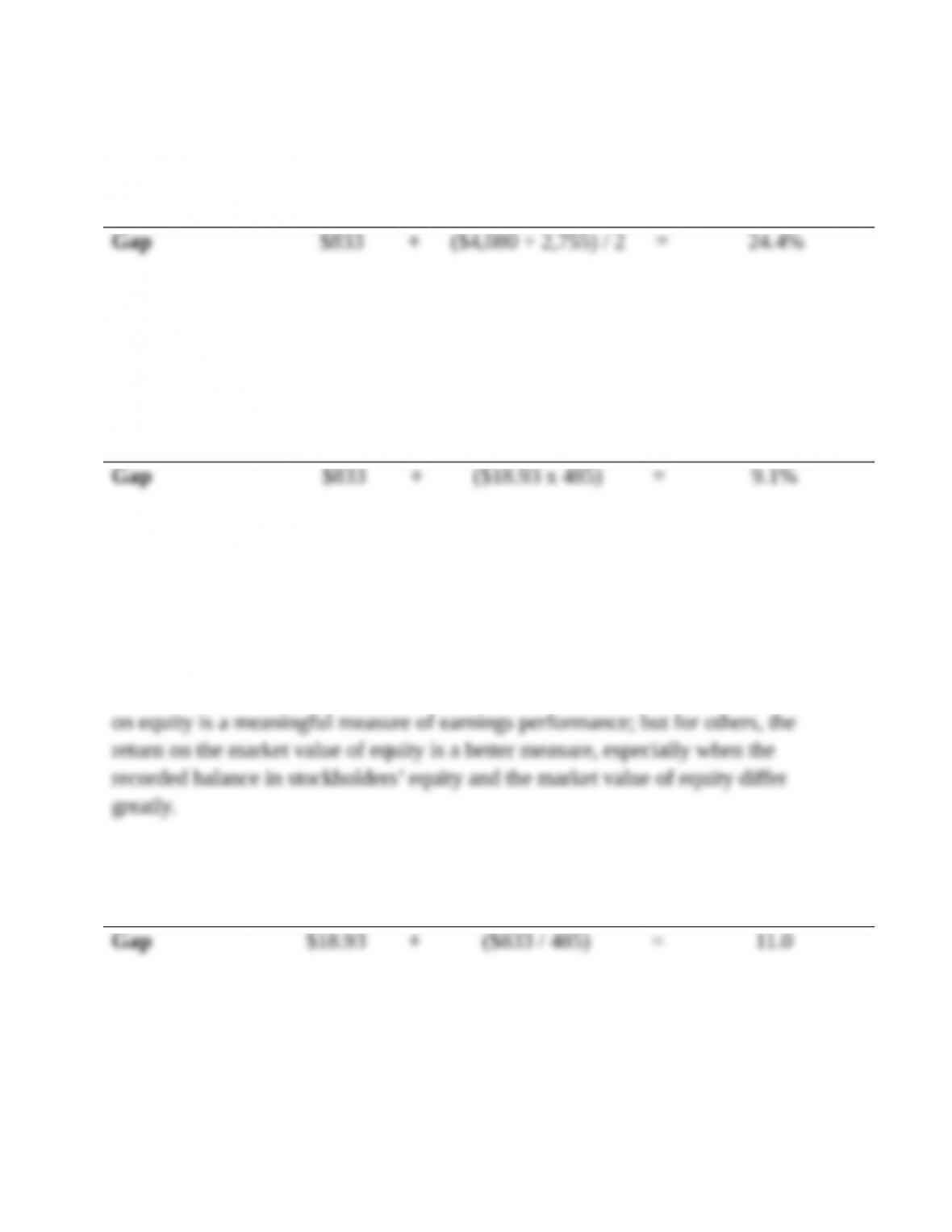
Gap has a lower return on equity than Deckers Outdoor, but a higher return on
equity than Wolverine.
Requirement 2
($ in millions)
Net
Income ÷Market Value
of Equity =
Return on the
Market Value
of Equity
Gap has a higher return on the market value of equity than either Deckers Outdoor
(6.8%) or Wolverine (7.2%).
Requirement 3
The return on the market value of equity is lower than the return on equity for
these companies because the market value of equity is much higher than average
stockholders’ equity recorded on the balance sheet. For some companies the return
Requirement 4
($ in millions) Stock Price ÷ Earnings Per Share =
Price-Earnings
Ratio
Gap has a lower price-earnings ratio than Deckers Outdoor or Wolverine. In other
words, Gap is trading at a lower price per dollar of earnings.
ADDITIONAL Perspec:veS
continuing Problem: Great Adventures
AP10-1
Requirement 1
July 2, 2017 Debit Credit
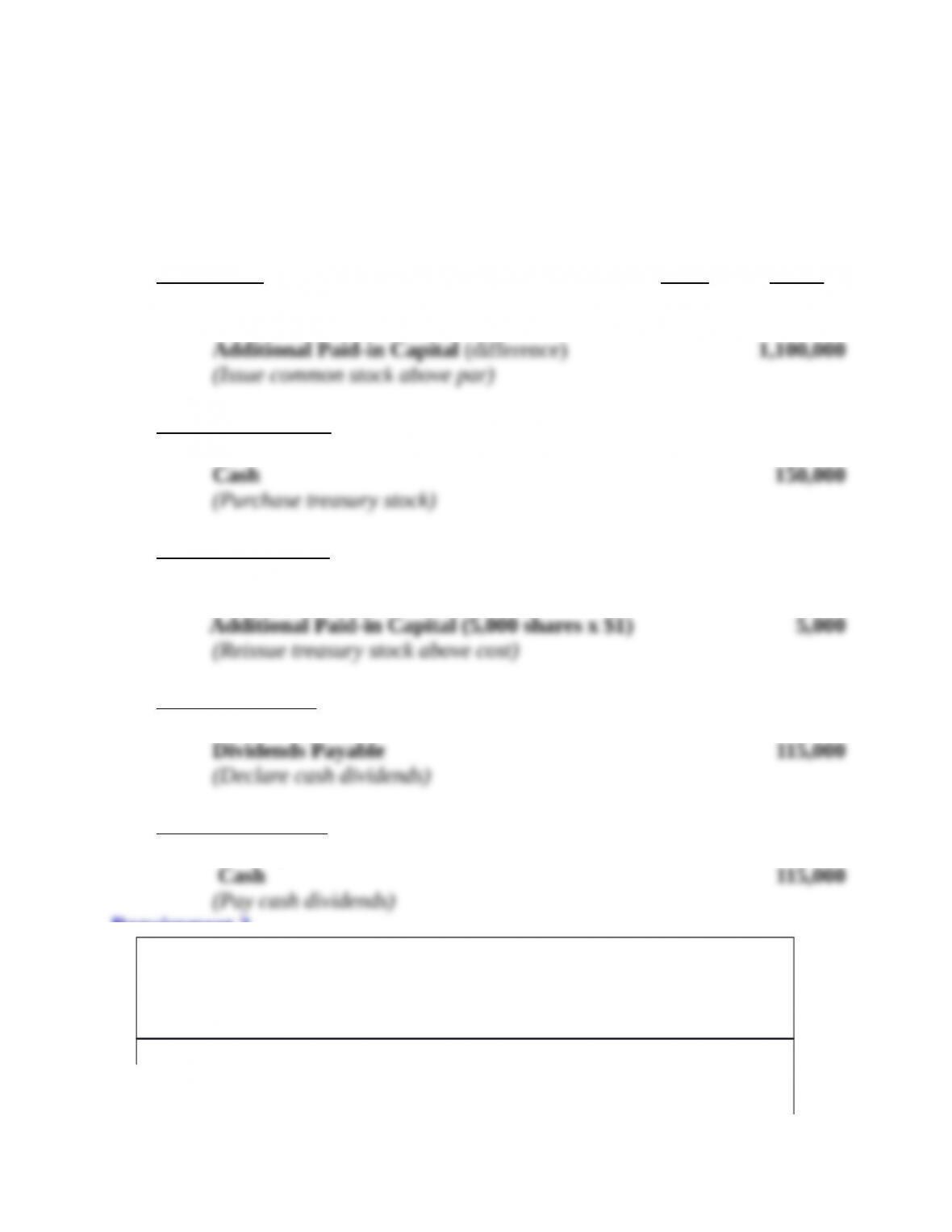
Cash (100,000 x $12) 1,200,000
Common Stock (100,000 x $1) 100,000
September 10, 2017
Treasury Stock (10,000 shares x $15) 150,000
November 15, 2017
Cash (5,000 shares x $16) 80,000
Treasury Stock (5,000 shares x $15) 75,000
December 1, 2017
Dividends 115,000
December 31, 2017
Dividends Payable 115,000
Requirement 2
Great Adventures, Inc.
Balance Sheet
(Stockholders’ Equity Section)
December 31, 2017
Stockholders’ equity:
Common stock, $1 par value $120,000
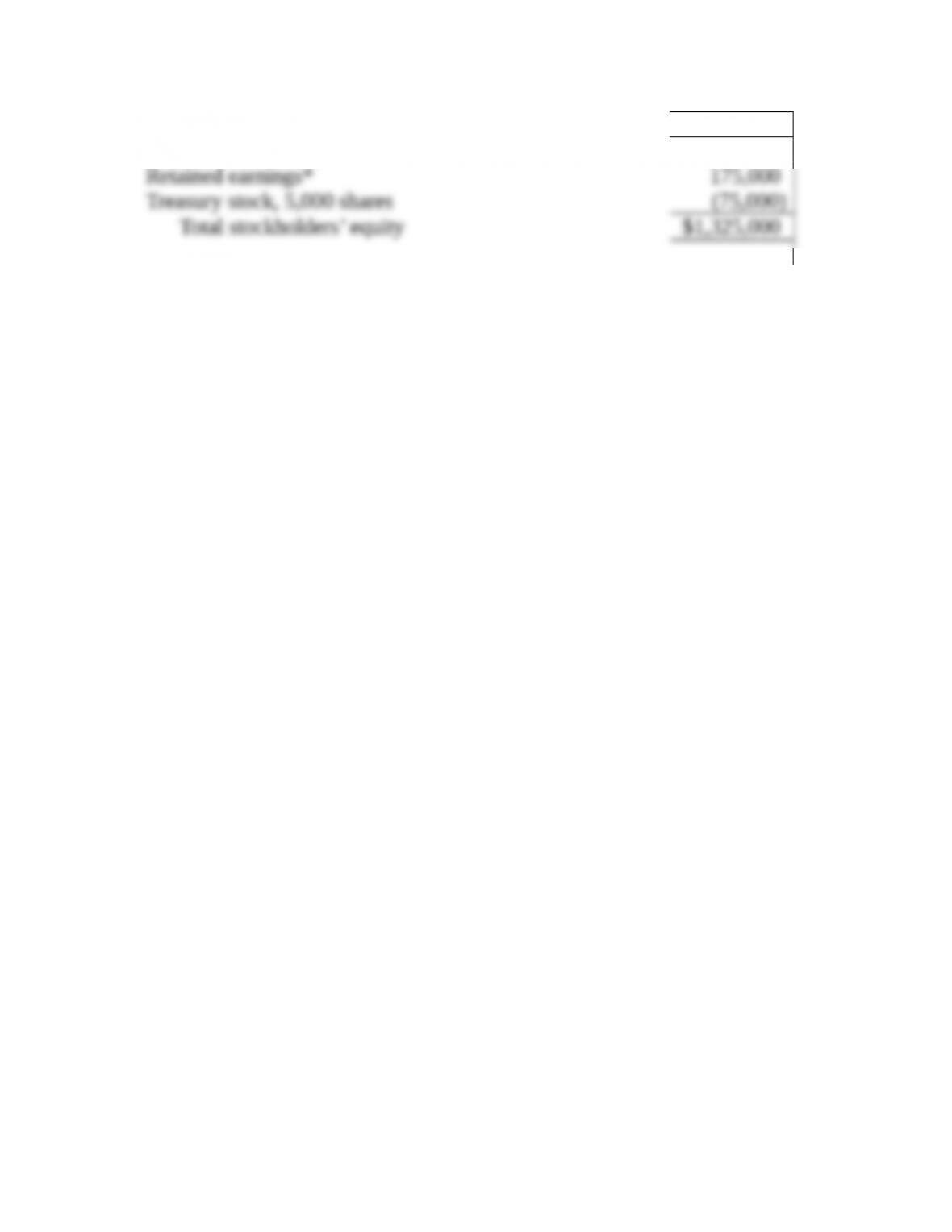
Additional paid-in capital 1,105,000
Total paid-in capital 1,225,000