Chapter 07 – Job Costing
7-1
© 2014 by McGraw-Hill Education. This is proprietary material solely for authorized instructor use. Not authorized for sale or distribution in
any manner. This document may not be copied, scanned, duplicated, forwarded, distributed, or posted on a website, in whole or part.
Chapter 7
Job Costing
Solutions to Review Questions
7-1.
Companies using a job order cost system are likely to be performing services or
7-2.
There are two primary reasons that cost allocation bases using direct labor are common.
7-3.
The Manufacturing Overhead account is used to accumulate the actual manufacturing
7-4.
A materials requisition is used to document the authorization for issuances of materials
7-5.
The job costing procedure is basically the same in both types of organizations, except that
Chapter 07 – Job Costing
7-2
7-6.
The costs of a product using normal costing are:
Actual direct materials cost.
7-7.
Mega has choices to make about the allocation base and the cost pools used to
accumulate the overhead. This does not mean Mega can choose to do whatever it wants.
7-8.
Actual costing requires knowing the actual costs of overhead as well as the actual direct
7-9.
If materials costs are not properly assigned to jobs, management may later be misled in
estimating the actual costs to complete future, similar jobs. Thus, profit planning may be in
7-10.
The allocation of overhead matters because decisions are made about individual
products. Different allocations result in different reported product costs.
7-11.
Answers will vary. Expect the managers in small construction firms to base their estimates
on their own experience, not a formal model.
Chapter 07 – Job Costing
7-3
7-12.
Answers will vary.
7-13.
They would most likely use job costing since their jobs are typically easily identifiable and
relatively unique.
7-14.
Yes, a trial is a job for costing purposes.
7-15.
Answers will vary. The steps might include:
a. Measure the area of the walls;
b. Multiply the area by the amount (fractions of a gallon) of paint required per square foot;
c. Determine the number of coats of paint required;
7-16.
Answers will vary. Common responses are (labor) time, materials cost, wall area, and so
on.
7-17.
Chapter 07 – Job Costing
7-4
on jobs for the larger company or that the larger company, being more complex, requires
7-18. (30 min.) Assigning Costs to Jobs: Pawnee Workshops.
a.
1.
Materials Inventory …………………………………………………..
16,000
Accounts Payable …………………………………………………
16,000
2.
Manufacturing Overhead Control ……………………………….
800
Materials Inventory ……………………………………………….
800
3.
Materials Inventory …………………………………………………..
11,200
Accounts Payable …………………………………………………
11,200
4.
Accounts Payable …………………………………………………….
16,000
Cash …………………………………………………………………..
16,000
5.
Work-in-Process—Direct Materials …………………………….
13,600
Materials Inventory ……………………………………………….
13,600
6.
Work-in-Process—Direct Labor ………………………………….
20,000
Wages Payable …………………………………………………….
20,000
7.
Manufacturing Overhead Control ……………………………….
21,200
Cash …………………………………………………………………..
21,200
8.
Work-In–Process— Overhead ($20,000 x 125%) ………….
25,000
Applied Manufacturing Overhead …………………………
25,000
9.
Manufacturing Overhead Control ……………………………….
10,000
Accumulated Depreciation—Property, Plant, and
Equipment ……………………………………………………….
10,000
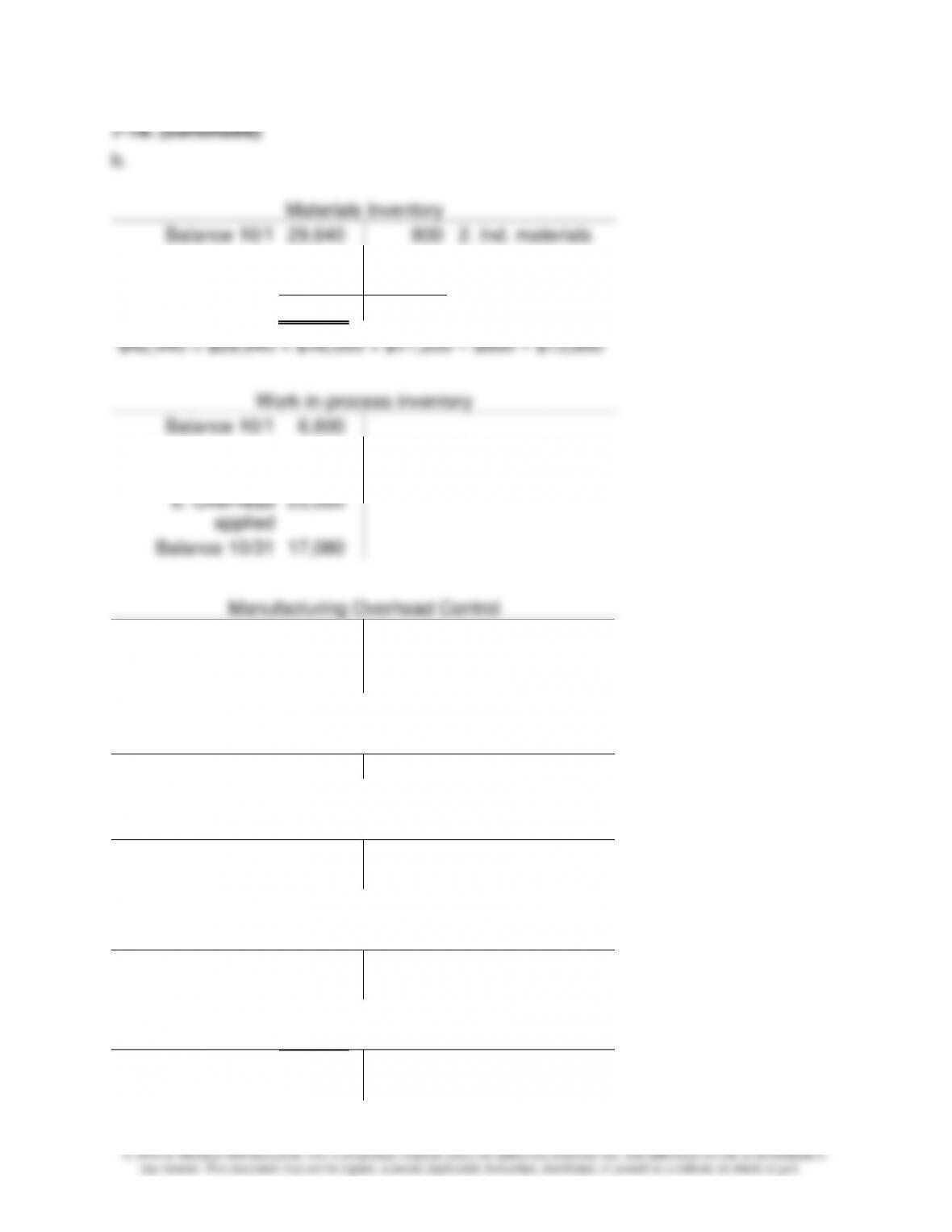
Chapter 07 – Job Costing
7-18. (continued)
b.
Materials Inventory
Balance 10/1
29,640
800
2. Ind. materials
1.
16,000
13,600
5. Direct materials
3.
11,200
Balance 10/31
42,440
*
Balance 10/1
13,600
Per Finished
17,080
7.
9.
10,000
4.
16,000
16,000
Chapter 07 – Job Costing
7-6
7-18. (continued)
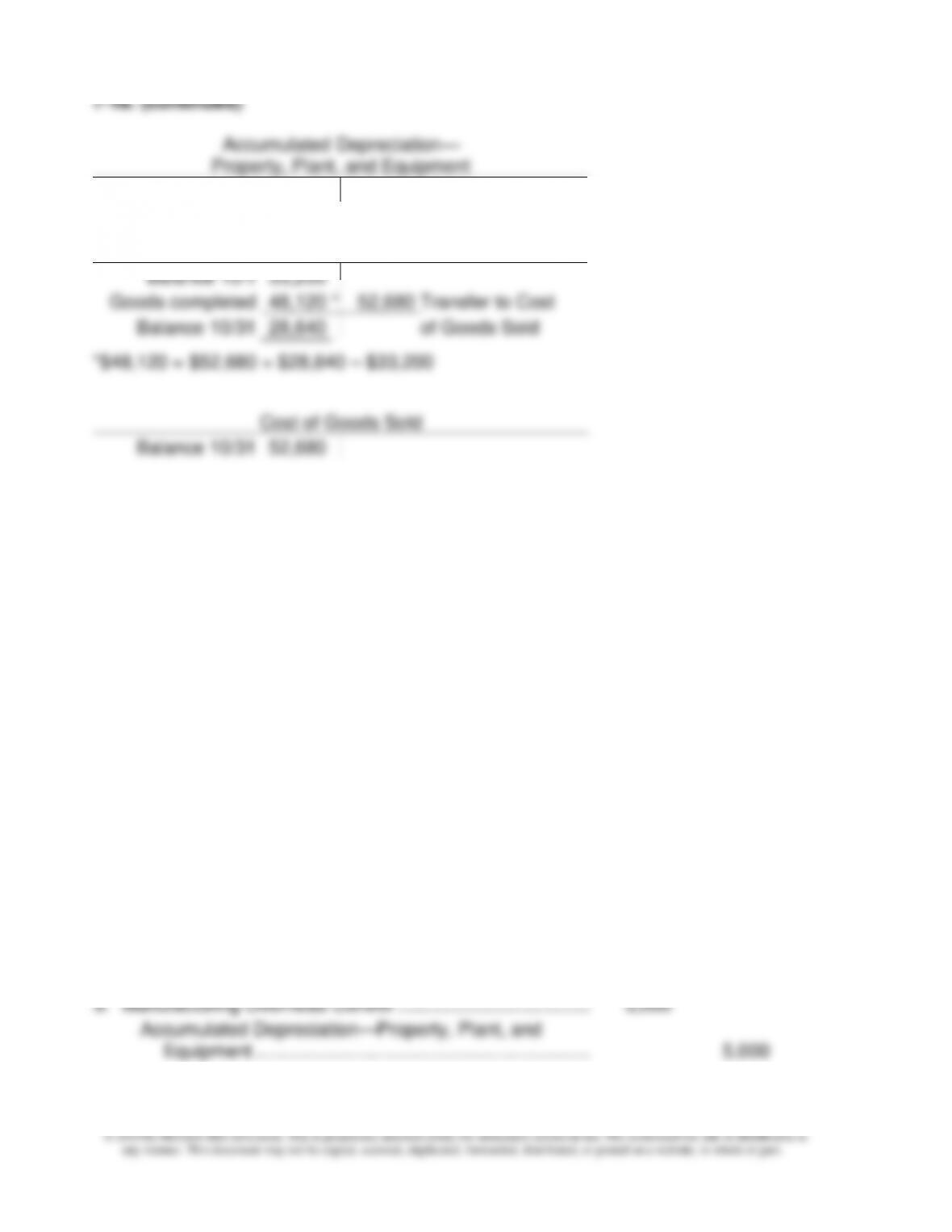
Accumulated Depreciation—
Property, Plant, and Equipment
10,000
9.
Finished Goods Inventory
Balance 10/1
33,200
Goods completed
48,120
*
52,680
Transfer to Cost
Balance 10/31
28,640
of Goods Sold
Cost of Goods Sold
Balance 10/31
52,680
7-19. (20 min.) Assigning Costs to Jobs: Fast Wheels, Inc.
a.
1.
Materials Inventory …………………………………………………..
20,000
Accounts Payable …………………………………………………
20,000
2.
Manufacturing Overhead Control ……………………………….
1,000
Materials Inventory ……………………………………………….
1,000
3.
Materials Inventory …………………………………………………..
25,000
Accounts Payable …………………………………………………
25,000
4.
Accounts Payable …………………………………………………….
20,000
Cash …………………………………………………………………..
20,000
5.
Work-in-Process—Direct Materials …………………………….
30,000
Materials Inventory ……………………………………………….
30,000
6.
Work-in-Process—Direct Labor ………………………………….
25,000
Wages Payable …………………………………………………….
25,000
7.
Manufacturing Overhead Control ……………………………….
21,500
Cash …………………………………………………………………..
21,500
8.
Work-In–Process—Overhead ($25,000 x 125%) …………..
31,250
Applied Manufacturing Overhead …………………………..
31,250
9.
Manufacturing Overhead Control ……………………………….
5,000
Accumulated Depreciation—Property, Plant, and
Equipment ……………………………………………………….
5,000
Chapter 07 – Job Costing
7-19. (continued)
b.
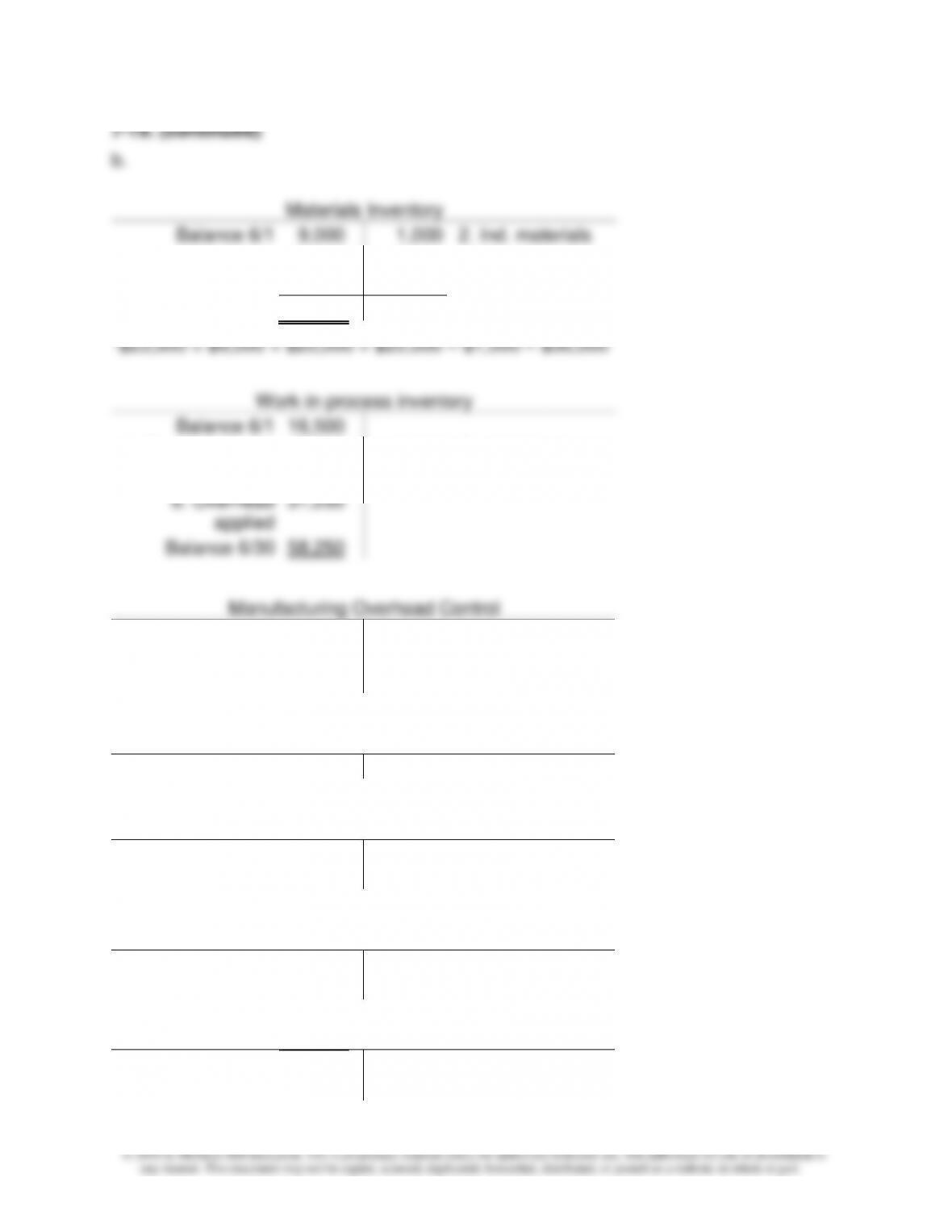
Materials Inventory
Balance 6/1
9,000
1,000
2. Ind. materials
1.
20,000
30,000
5. Direct materials
3.
25,000
Balance 6/30
23,000
*
Balance 6/1
30,000
Per Finished
7.
9.
31,250
4.
20,000
20,000
25,000
Chapter 07 – Job Costing
7-8
7-19. (continued)
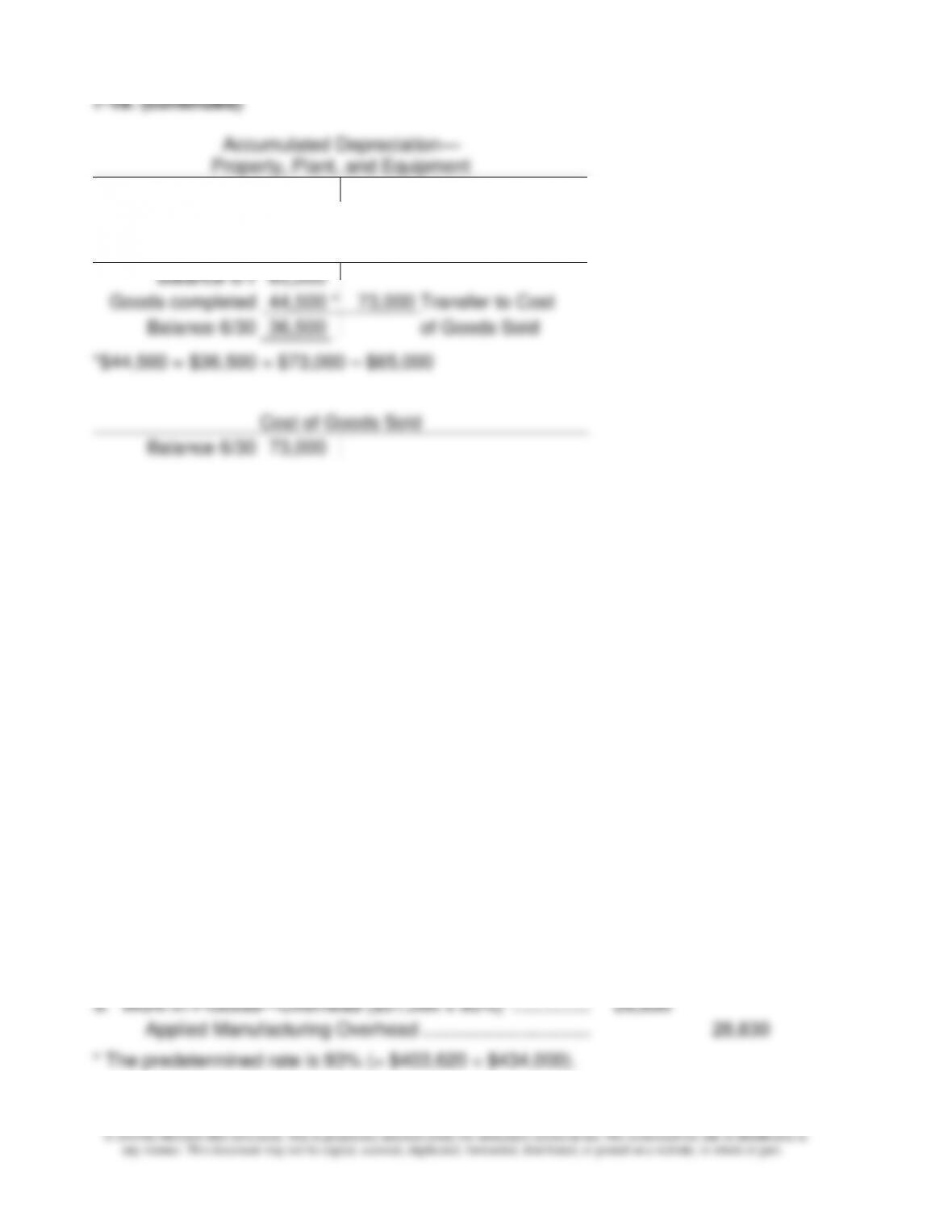
Accumulated Depreciation—
Property, Plant, and Equipment
5,000
9.
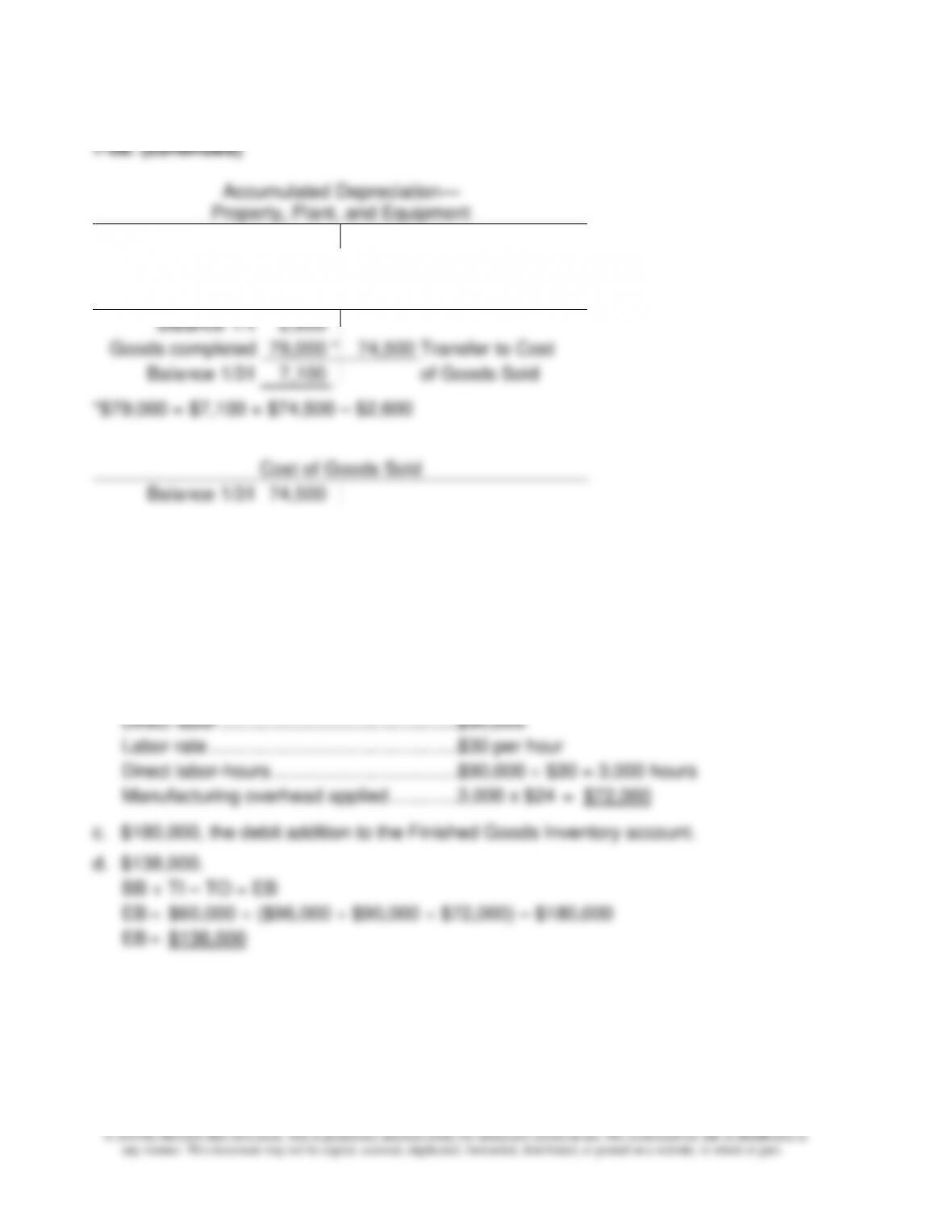
Finished Goods Inventory
Balance 6/1
65,000
Goods completed
44,500
*
73,000
Transfer to Cost
Balance 6/30
36,500
of Goods Sold
Cost of Goods Sold
Balance 6/30
73,000
7-20. (20 min.) Assigning Costs to Jobs: Tarnsdale Fabricators.
a.
1.
Materials Inventory …………………………………………………..
17,000
Accounts Payable …………………………………………………
17,000
2.
Work-in-Process—Direct Materials …………………………….
16,800
Materials Inventory ……………………………………………….
16,800
3.
Manufacturing Overhead Control ……………………………….
1,200
Materials Inventory ……………………………………………….
1,200
4.
Accounts Payable …………………………………………………….
17,000
Cash …………………………………………………………………..
17,000
5.
Materials Inventory …………………………………………………..
2,200
Work-in-Process—Direct Materials …………………………
2,200
6.
Work-in-Process—Direct Labor ………………………………….
31,000
Cash …………………………………………………………………..
31,000
7.
Manufacturing Overhead Control ……………………………….
17,200
Accounts Payable …………………………………………………
17,200
8.
Manufacturing Overhead Control ……………………………….
35,000
Accumulated Depreciation—Plant …………………………..
35,000
9.
Work-In–Process—Overhead ($31,000 x 93%)* ……………
28,830
Applied Manufacturing Overhead …………………………..
28,830
Chapter 07 – Job Costing
7-20. (continued)
b.
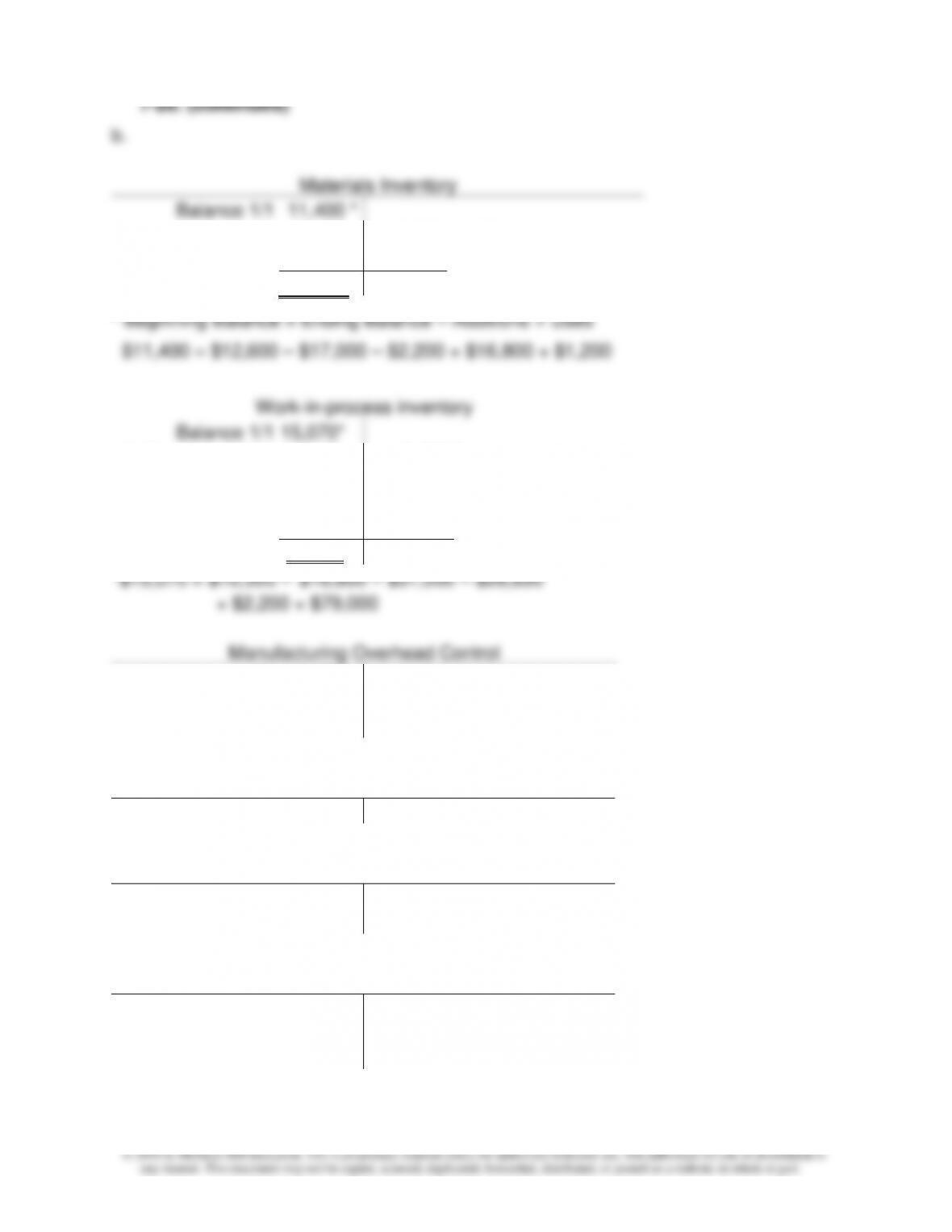
Materials Inventory
Balance 1/1
11,400
*
1.
17,000
16,800
2. Direct materials
5.
2,200
1,200
3. Indirect materials
Balance 1/31
12,600
Balance 1/1
15,070*
31,000
Transferred to
7.
17,200
28,830
9.
Chapter 07 – Job Costing