
Chapter 08 – Process Costing
8-1
Chapter 8
Process Costing
Learning Objectives
1. Explain the concept and purpose of equivalent units.
2. Assign costs to products using a five-step process.
3. Assign costs to products using weighted-average costing.
4. Prepare and analyze a production cost report.
5. Assign costs to products using first-in, first-out (FIFO) costing.
6. Analyze the accounting choice between FIFO and weighted-average costing.
7. Know when to use process or job costing.
8. Compare and contrast operation costing with job costing and process costing.
Chapter Outline
I. DETERMINING EQUIVALENT UNITS
II. USING PRODUCT COSTING IN A PROCESS INDUSTRY
A. Step 1: Measure the physical flow of resources
B. Step 2: Compute the equivalent units of production
C. Step 3: Identify the product costs for which to account
D. Time out! We need to make an assumption about costs and the work-in-process
inventory
E. Step 4: Compute the costs per equivalent unit: Weighted average
F. Step 5: Assign product cost to batches of work: Weighted-average process costing
• Recording the cost flows in T-accounts
III. REPORTING THIS INFORMATION TO MANAGERS: THE PRODUCTION
COST REPORT
A. Sections 1 and 2: Managing the physical flow of units
B. Sections 3, 4, and 5: Managing costs
IV. ASSIGNING COSTS USING FIRST-IN, FIRST-OUT (FIFO) PROCESS COSTING
A. Step 1: Measure the physical flow of resources
B. Step 2: Compute the equivalent units of production
C. Step 3: Identify the product costs for which to account
D. Step 4: Compute the costs per equivalent unit: FIFO

Chapter 08 – Process Costing
8-2
E. Step 5: Assign product cost: FIFO
F. How this looks in T-accounts
V. DETERMINING WHICH IS BETTER: FIFO OR WEIGHTED AVERAGE?
VI. COMPUTING PRODUCT COSTS: SUMMARY OF THE STEPS
VII. USING COSTS TRANSFERRED IN FROM PRIOR DEPARTMENTS
♦ Who is responsible for costs transferred in from prior departments?
VIII. CHOOSING BETWEEN JOB AND PROCESS COSTING
IX. OPERATION COSTING
A. Product costing in operations
B. Operation costing illustration
X. COMPARING JOB, PROCESS, AND OPERATION COSTING
XI. SUMMARY
Key Concepts
LO 8-1 Explain the concept and purpose of equivalent units.
♦ In job costing, each job is considered unique and can (but might not) follow the same path
through the production as other jobs. Processing costing assumes that all units are homogeneous
and follow the same path through the production processes.
• Exhibit 8.1 provides a graphical comparison of typical cost flows in a job costing and a
process costing system.
• The difference between job order and process costing is the level at which costs are
aggregated before they are assigned to the individual units of product.
♦ Equivalent units (EU) represent the number of complete physical units to which units in
inventories are equal in terms of work done to date.
• Equivalent units = Number of physical units × Estimated (average) percentage of
completion with respect to the individual resource.
• Exhibit 8.2 shows the equivalent unit concept.
Example 1: The Blending Department’s total output during the current period consists
of 6,000 physical units of ending Work-in-process inventory which are 100 percent, 60
percent, and 75 percent complete as to materials, labor, and overhead, respectively.
The equivalent units of production for the Blending Department are
(1) 6,000 units (= 6,000 units × 100%) with respect to materials,
(2) 3,600 units (= 6,000 units × 60%) with respect to labor, and
(3) 4,500 units (= 6,000 units × 75%) with respect to overhead.

Chapter 08 – Process Costing
8-3
LO 8-2 Assign costs to products using a five-step process.
♦ Five-step process of assigning costs to products:
(1) Measure the physical flow of resources.
(2) Compute the equivalent units of production.
(3) Identify the product costs for which to account.
(4) Compute the costs per equivalent unit.
(5) Assign product cost to batches of work.
• The inventory equation (see Chapter 6) can be adapted to ensure that the work done has
been properly accounted for. That is,
Beginning work-in–
process inventory
+
Unit
started
=
Units
transferred out
+
Ending work-in–
process inventory
• Another way to look at the inventory equation is via the following statement format:
Beginning work-in-process inventory
xx
Plus: Units started
xx
Total units to account for
xx
Units transferred out
xx
Plus: Ending work-in-process inventory
xx
Total units accounted for
xx
• A third way to study the inventory equation is through the T-account:
Work-in-process inventory account
Beginning balance
Plus: Units started
Less: Units transferred out
Ending balance
• In cases where materials are added at the beginning of the production process, while
labor and overhead (conversion resources) are added continuously throughout the process,
the calculation of equivalent units has to be done separately for each resource (materials
and conversion) introduced during the process.
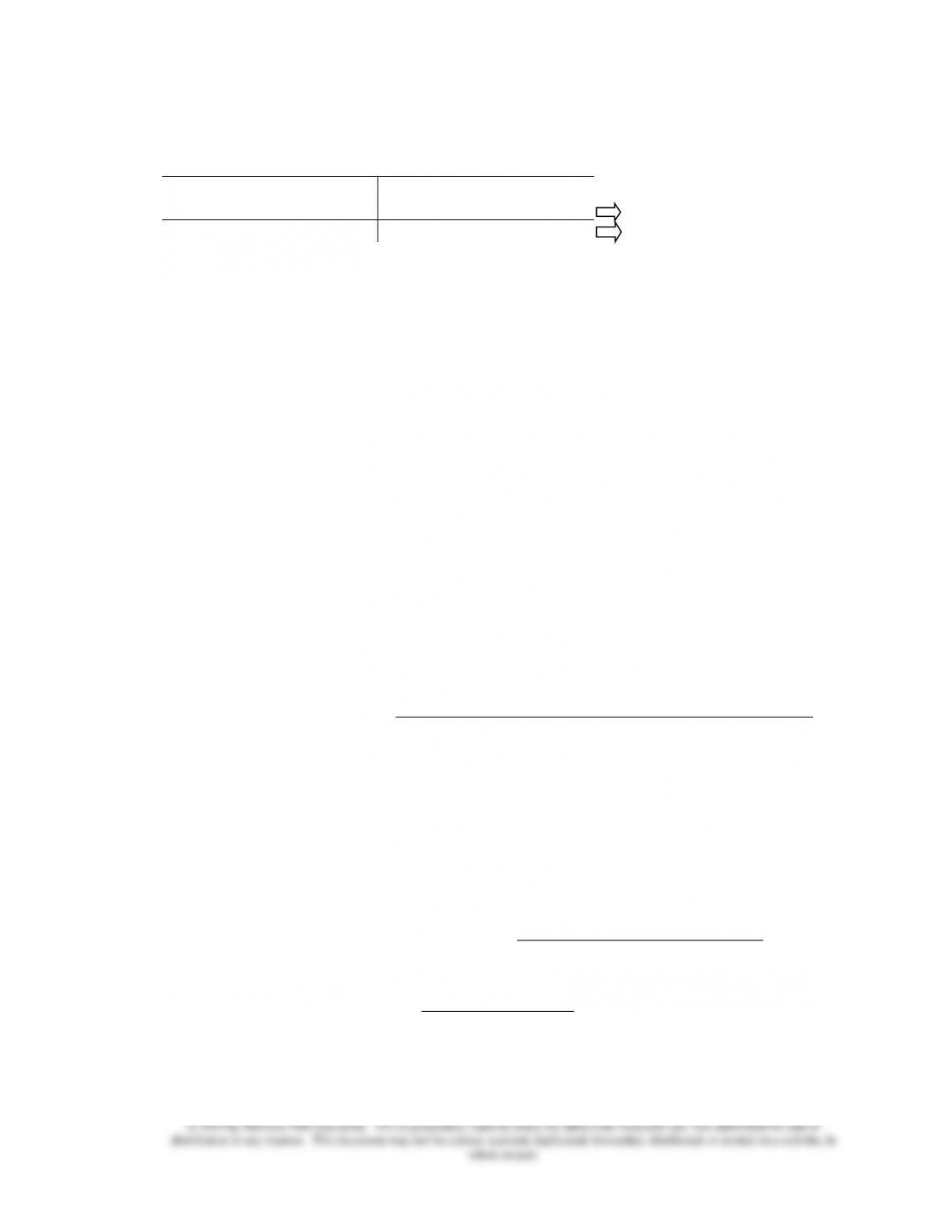
• Managers often have incentives to manipulate income numbers. As mentioned in the In-
Action box, managers in process industries can do so by overstating the stage of
completion of ending inventory. Since more costs are assigned to ending inventory and
less to goods transferred out, cost of goods sold will be understated, leading to higher
gross margin and net income than they actually are. That is,
Chapter 08 – Process Costing
8-4
Work-in-process inventory account
Beginning balance
Less: Costs of units
transferred out↓
Plus: Current period costs
Cost of goods sold↓
Ending balance↑
Gross margin and Income↑
• Once the work done has been accounted for, the next step is to collect data on the costs
incurred during the period.
• Consistent with the pace at which the resources are consumed during the process, these
costs must be collected separately.
• The costs collected include not only those incurred for production but also those in the
beginning work-in-process inventory.
• The work that has been done comes from two sources:
(1) Work done in current period, and
(2) Beginning work-in-process inventory (i.e., work done in previous period).
• Weighted-average process costing is an inventory costing method that combines costs
and equivalent units of a period with the costs and the equivalent units in beginning
inventory from the last period. That is, the costs of the current work and the work in the
beginning inventory are averaged, with the weight being the number of equivalent units
in each batch.
Weighted-average unit cost =
Beginning work–in-process costs + Current period costs
Beginning work–in-process EU + Current period EU
.
• First-in, first-out (FIFO) process costing is another inventory costing method
whereby the first goods received are the first ones charged out when sold or transferred.
FIFO method separates the costs of the current work and the work in the beginning work-
in-process inventory, assuming that all beginning work-in-process units are transferred
out first. This means that the ending work-in-process inventory comes from the units
started during the current period.
FIFO (beginning work-in-process) unit cost =
Beginning work–in–process costs
Beginning work–in–process EU
.
FIFO (current period) unit cost =
Current period costs
Current period EU
.
Chapter 08 – Process Costing
8-5
• Exhibit 8.7 shows the difference between weighted-average and FIFO process costing
unit cost computations by demonstrating the differences in aggregation.
LO 8-3 Assign costs to products using weighted-average costing.
♦ Exhibit 8.8 illustrates the calculation of the equivalent unit cost for each of the resources.
• Once the costs per equivalent unit are computed using either the weighted average or
FIFO method, the final step is to assign the total costs to the two batches of work: units
transferred out and units which are not yet completed (i.e., ending work-in-process
inventory).
Costs in Beginning work-in-process inventory
$xx
Plus: Current period costs
xx
Total costs to account for
$xx
Costs assigned to units transferred out
$xx
Plus: Costs assigned to ending work-in-process inventory
xx
Total costs accounted for
$xx
• Exhibit 8.9 shows the assignment of product cost to batches of work.
• Exhibit 8.10 shows the flow of costs through the T-accounts. A general format for the
work-in-process inventory account follows.
Work-in-process inventory account
Beginning balance
Plus: Current period costs
Less: Cost of units transferred out
Ending balance
======================
Demonstration Problem 1
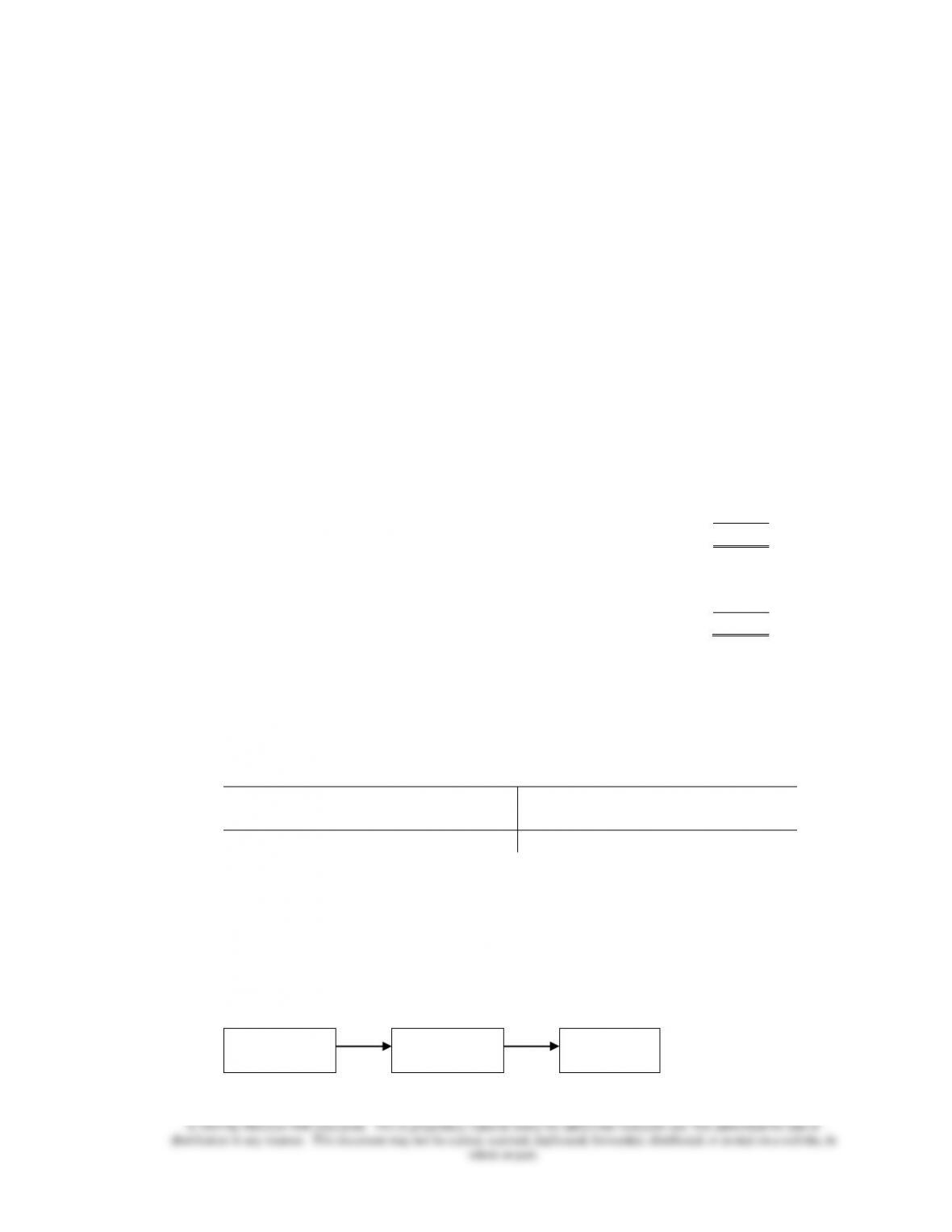
Process Excellence (PE), Inc. has two production departments: Mixing and Packaging.
Mixing
Department
Packaging
Department
Warehouse

Chapter 08 – Process Costing
8-6
At Mixing Department, all materials are added at the beginning of the process. Labor and
overhead (conversion resources) are added evenly throughout the process. The following
information pertains to the Mixing Department for the month of July.
Physical units
Materials
Conversion
Beginning work-in–
process inventory
1,000 units
(40% complete)
$8,500
$7,552
Units started in July
5,000 units
Ending work-in–
process inventory
400 units
(30% complete)
Costs added in July
60,500
130,872
Required:
1. Determine the number of units completed and transferred to the Packaging Department in
July.
2. Compute the equivalent units using the weighted-average method.
3. Compute the costs per equivalent unit using the weighted-average method.
4. Compute the costs of goods transferred out and the ending work-in-process inventory
using the weighted-average method.
Solution:
1.
Work-in-process inventory account
Beginning balance 1,000
Plus: Units started 5,000
Less: Units transferred out ?
Ending balance 400
1,000 + 5,000 = Units transferred out (?) + 400.
The number of units completed and transferred to the Packaging Department in July was
5,600 units.
2. Since materials and conversion (labor and overhead) were added at different pace during
the production process, separate equivalent units have to be calculated, one for materials
and the other for conversion.
Equivalent Units
Physical units
Materials
Conversion
Units transferred out
5,600
5,600
5,600
Ending WIP inventorya
400
400
120
Total work
6,000
5,720
a 30% complete with respect to conversion.

Chapter 08 – Process Costing
8-7
3. Under the weighted-average method, the costs for current work and work in beginning
work-in-process inventory are combined. This total cost is then divided by the total
equivalent units of production for July.
Total
costs
Materials
costs
Conversion
costs
Beginning work-in-process inventory
$16,052
$8,500
$7,552
Current costs
191,372
60,500
130,872
Total costs
$207,424
$69,000
$138,424
Total equivalent units
6,000
5,720
Cost per equivalent unit
$11.50
$24.20
4.
Total
Materials
Conversion
Transferred out:
Equivalent units
5,600
5,600
Cost per equivalent unit
$11.50
$24.20
Cost assigned
$199,920
$64,400
$135,520
Ending WIP inventory:
Equivalent units
400
120
Cost per equivalent unit
$11.50
$24.20
Cost assigned
7,504
$4,600
$2,904
Total costs assigned
$207,424
$69,000
$138,424
As a final check, the following T-account summarizes the flow of costs for the Mixing
Department for the month of July.
Work-in-process inventory account
16,052
191,372
199,920
7,504
======================
LO 8-4 Prepare and analyze a production cost report.
♦ Production cost report summarizes production and cost results for a period and is generally
used by managers to monitor production and cost flows.

Chapter 08 – Process Costing
8-8
• As illustrated in Exhibit 8.11, the report is presented in five sections, each of which
corresponds to a step for assigning costs to goods transferred out and to ending work-in–
process inventory.
(1) Section 1 summarizes the flow of physical units.
(2) Section 2 shows the equivalent unit calculation.
(3) Section 3 shows the costs to be accounted for.
(4) Section 4 shows how to compute the cost per equivalent unit for each resource.
(5) Section 5 shows the cost assignment.
LO 8-5 Assign costs to products using first-in, first-out (FIFO) costing.
♦ A disadvantage of the weighted-average method is that it mixes current period costs with the
costs of products from the last period in the beginning inventory, making it impossible for
managers to know how much it cost to make a product this period.
• First-in, first-out (FIFO) method assumes that the first units worked on are the first units
transferred out of a production department.
• FIFO method separates current period costs from those in the beginning inventory.
• FIFO method gives managers better information about the work done in the current
period.
• If the production process is a FIFO process, the inventory numbers are more likely to
reflect reality under FIFO costing than under weighted-average costing because the units
in ending work-in-process inventory are likely to have been produced in the current
period.
♦ Computing product costs using a FIFO process costing system requires the same five-step
procedure as the weighted-average approach.
(1) Measure the physical flow of resources.
(2) Compute the equivalent units of production.
(3) Identify the product costs for which to account.
(4) Compute the costs per equivalent unit.
(5) Assign product cost to batches of work.
• The choice of accounting for production costs does not change the physical flow of
production. But the number of units completed and transferred out can be separated into
two groups: those that came from the beginning work-in-process inventory and those that
were started and completed in the current period. That is,

Chapter 08 – Process Costing
8-9
Units completed and transferred out = Units from the beginning work-in-process inventory
+ Units started and completed in current period.
• The FIFO equivalent unit computation is confined only to what was produced this
period.
• Under FIFO, equivalent units are computed in three parts for each distinct resource:
(1) Equivalent units to complete the beginning work-in-process inventory.
(2) Equivalent units of goods started and completed during the current period.
(3) Equivalent units of goods still in ending work-in-process inventory.
Example 2: There are 200 units in the beginning work-in-process inventory, 40 percent
complete with respect to materials, labor, and overhead. In the current period,
additional 4,800 units are started. After transferring out 4,500 completed units, the
factory is left with 500 units in the ending work-in-process inventory, 25 percent
complete with respect to materials, labor, and overhead.
If the FIFO method is adopted, it can be determined that 4,300 units (= 4,500 units –
200 units) are started and completed during the current period.
The equivalent units can be calculated as follows:
Equivalent units
Physical units
Materials, Labor, Overhead
To complete beginning inventory
(1 – 40%)
200
120
(= 200 × 60%)
Units started and completed
(100%)
4,300
4,300
(= 4,300 × 100%)
Work in ending inventory
(25%)
500
125
(= 500 × 25%)
Current work
4,545
• The equivalent units under FIFO are less than or equal to those under the weighted-
average method because the FIFO computations refer to the current period’s production
only; weighted-average equivalent units consider all units in the department, whether
produced this period or in the previous period.
• If the department has no beginning inventory, then the weighted-average and FIFO
equivalent units are equal.

Chapter 08 – Process Costing
8-10
• The total costs to be accounted for under FIFO costing are the same as in weighted–
average costing, which are the sum of those in beginning inventory and those incurred
during the current period.
• Under FIFO, the costs per equivalent unit are confined to the costs incurred this period
and the equivalent units produced this period. That is,
Cost per equivalent unit =
Current period costs
Equivalent units of production this period
.
• The costs to be accounted for must equal the costs accounted for.
• Exhibit 8.12 illustrates a production cost report using FIFO process costing.
• Exhibit 8.13 shows the flow of costs through the work-in-process T-account using the
FIFO method. The purpose is to provide an overview of the cost flows associated with
the process costing computations.
======================
Demonstration Problem 2
(Continued from Demonstration Problem 1)
The information that pertains to the Mixing Department for the month of July is reproduced here.
All materials are added at the beginning of the process. Labor and overhead (conversion
resources) are added evenly throughout the process.
Physical units
Materials
Conversion
Beginning work-in–
process inventory
1,000 units
(40% complete)
$8,500
$7,552
Units started in July
5,000 units
Ending work-in–
process inventory
400 units
(30% complete)
Costs added in July
60,500
130,872
Required:
1. Determine the number of units completed and transferred to the Packaging Department in
July.
2. Compute the equivalent units using the FIFO method.
3. Compute the cost per equivalent unit using the FIFO method.
4. Compute the costs of goods transferred out and the ending work-in-process inventory
using the FIFO method.