Chapter 02 – Cost Concepts and Behavior
2-11
The inventory amounts at the end of an accounting period (i.e., Ending inventory) for
direct materials, work in process, and finished goods will appear on the balance sheet as
part of the current assets.
• Inventoriable costs are costs added (debited) to inventory accounts.
• Cost flows in the inventory accounts can be traced with physical flows to determine the
use of resources in the factory to produce the finished goods.
• Exhibit 2.6 illustrates a simplified version of a production process.
• The adoption of just-in-time (JIT) inventory methods will streamline the production
process by sending direct materials from the receiving department to the assembly line
immediately with minimal inspection and storage.
♦ Exhibit 2.7 shows an income statement and Exhibit 2.8 a cost of goods manufactured and sold
statement for a manufacturing company.
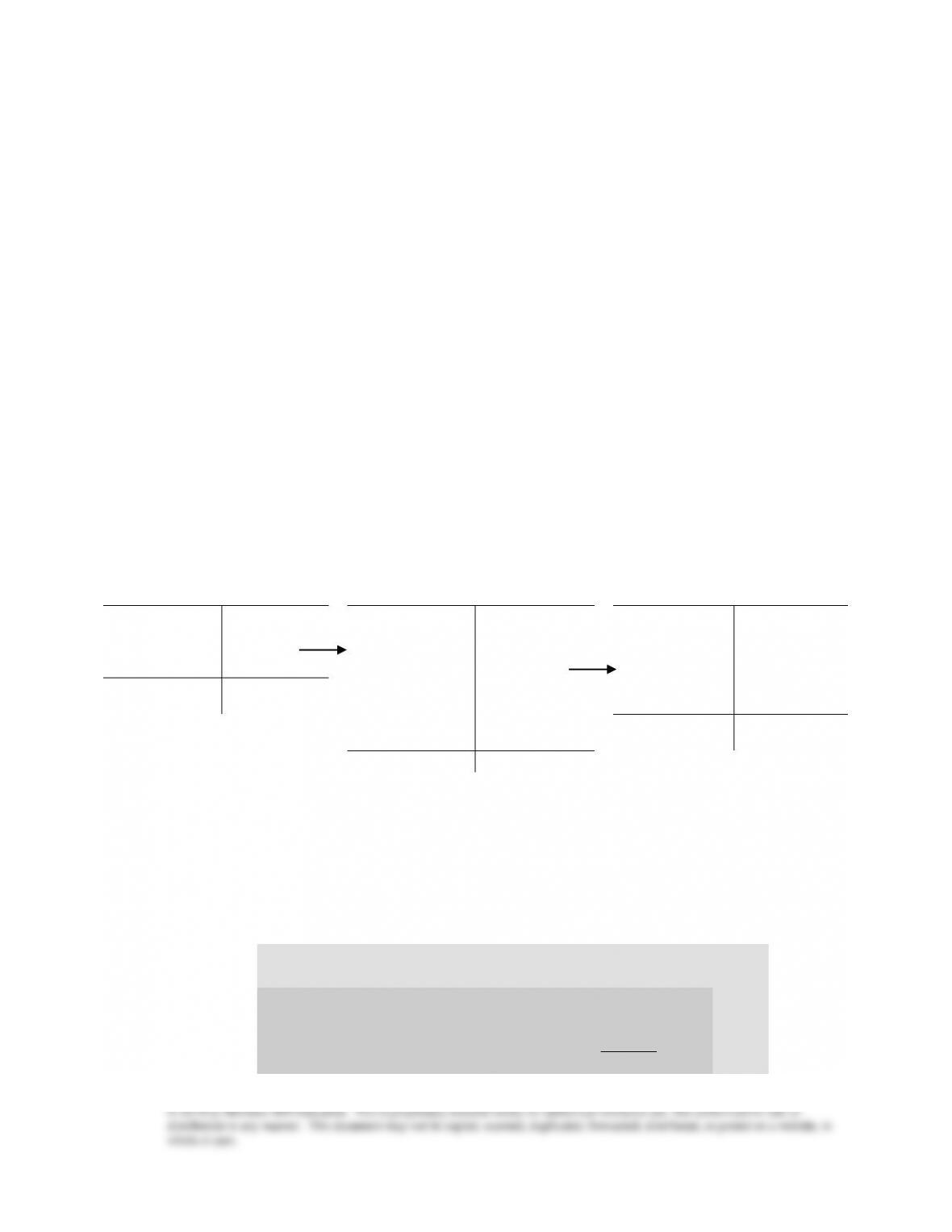
• One way to track cost flows among inventory accounts is by looking at the information
through a series of T-accounts. The cost flows coincide with the physical flows of goods
in and out of their respective storage areas.
Direct materials inventory
Work-in-process inventory
Finished goods inventory
Beginning
inventory
Less: Direct
materials put
into
production
Beginning
inventory
Less: Cost of
goods
manufactured
Beginning
inventory
Less: Cost of
goods sold
Add: Purchases
Add: Direct
materials
Add: Direct labor
Add:
Manufacturing
overhead
Add: Cost of
goods
manufactured
Ending
inventory
Ending
inventory
Ending inventory
• A typical cost of goods sold statement for a manufacturing company is more
complicated than that of a merchandising firm and has the following structure:
Company name
Cost of goods manufactured and sold statement
The period of time covered
Beginning work-in-process inventory
xx
Manufacturing costs
Direct materials
Beginning direct materials inventory
xx
Add: Purchase of direct materials
xx
Direct materials available
xx
Chapter 02 – Cost Concepts and Behavior
2-12
Less: Ending direct materials inventory
(xx)
Direct materials put into production
xx
Direct labor
xx
Manufacturing overhead
xx
Total manufacturing costs
xx
Total cost of work-in-process
xx
Less: Ending work-in-process inventory
(xx)
Cost of goods manufactured
xx
Add: Beginning finished goods inventory
xx
Finished goods available for sale
xx
Less: Ending finished goods inventory
(xx)
Cost of goods sold
xx
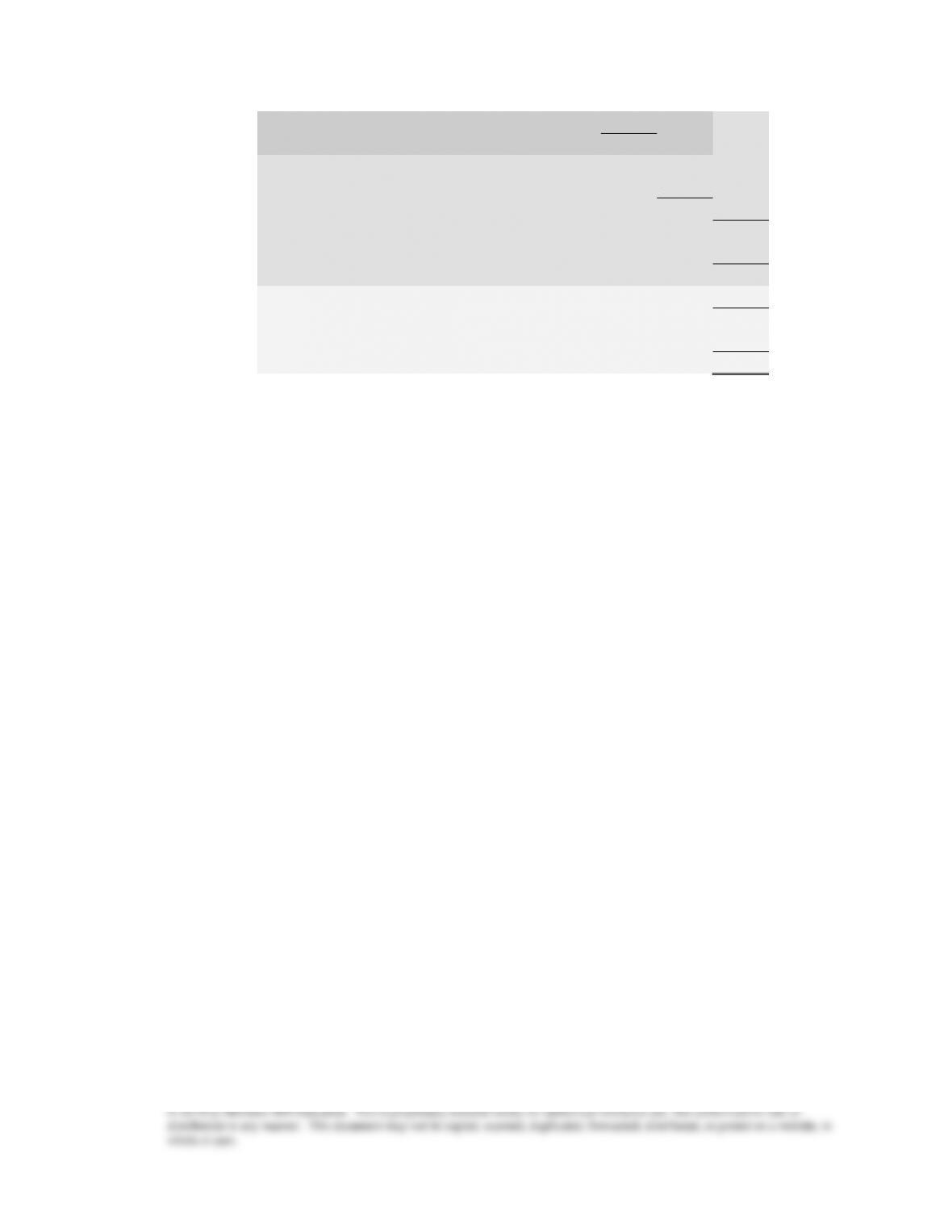
The three shaded areas deal with direct materials, work in process, and finished goods,
respectively, and conclude with cost of goods sold.
• Cost of goods manufactured and sold statement is prepared through the internal
reporting system and is for managerial use only.
• Total manufacturing costs are the sum of direct materials, direct labor, and
manufacturing overhead incurred during the period. Managers in production and
operations give careful attention to these costs.
• Total cost of work in process (i.e., the sum of beginning work-in-process inventory and
total manufacturing costs) provides a measure of the resources that have gone into
production.
• Cost of goods manufactured represents the cost of goods finished during the period and
transferred out of the work-in-process inventory account. Managers usually compare cost
of goods manufactured with a target number to see whether production departments are
successful in meeting it.
• Beginning finished goods inventory and cost of goods manufactured together determine
the cost of finished goods available for sale. The available finished goods either are sold
and become cost of goods sold, or remain in warehouse as part of the ending finished
goods inventory.
• The actual formats of financial statements vary a lot in practice. For managerial
purposes, it is important that the format be tailored to what users want.
• The level of detail and frequency of the reporting also shape how the information
should be presented.
======================
Chapter 02 – Cost Concepts and Behavior
2-13
Demonstration Problem 2
The account balances are listed below for Eagle Manufacturing Company for the month of
March.
Finished goods inventory, March 31
$29,000
Direct materials purchases
70,000
Indirect labor
21,000
Direct labor
48,000
Work-in-process inventory, March 31
73,000
Factory supervisory salaries
12,000
Direct materials inventory, March 1
12,000
Factory utilities expense
4,000
Direct materials inventory, March 31
21,000
Work-in-process inventory, March 1
54,000
Factory depreciation expense
5,000
Finished goods inventory, March 1
33,000
Required:
Prepare a cost of goods manufactured and sold statement for Eagle Manufacturing Company
for the month ended March 31.
Solution:
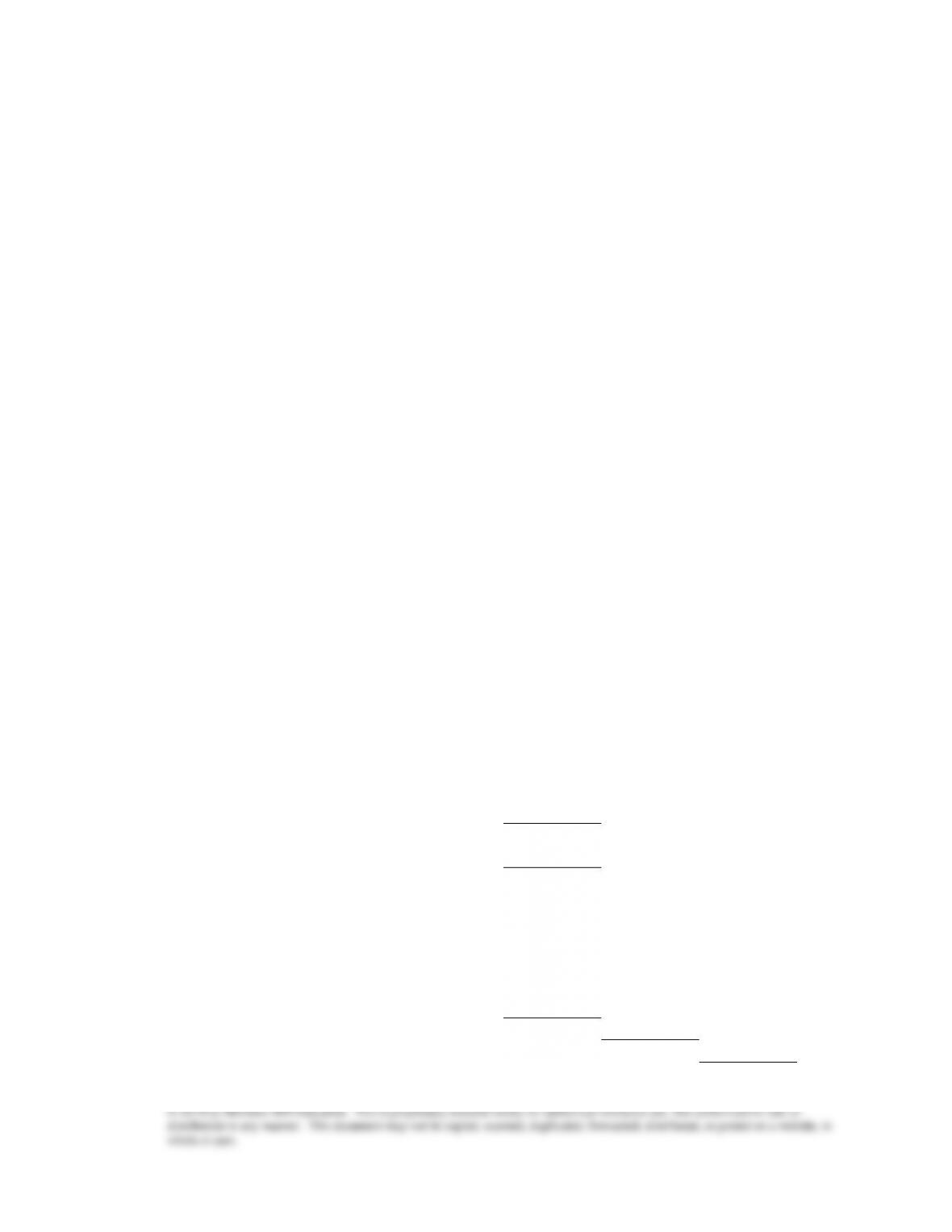
Eagle Manufacturing Company
Cost of goods manufactured and sold statement
For the month of March
Beginning work-in-process inventory
$54,000
Manufacturing costs
Direct materials
Beginning direct materials inventory
$12,000
Add: Purchase of direct materials
70,000
Direct materials available
$82,000
Less: Ending direct materials inventory
(21,000)
Direct materials put into production
$61,000
Direct labor
48,000
Manufacturing overhead
Indirect labor
$21,000
Factory supervisory salaries
12,000
Factory utilities expense
4,000
Factory depreciation expense
5,000
Total manufacturing overhead
42,000
Total manufacturing costs
151,000
Total cost of work-in-process
$205,000
Chapter 02 – Cost Concepts and Behavior
2-14
Less: Ending work-in-process inventory
(73,000)
Cost of goods manufactured
$132,000
Add: Beginning finished goods inventory
33,000
Finished goods available for sale
$165,000
Less: Ending finished goods inventory
(29,000)
Cost of goods sold
$136,000
======================
LO5 Define basic cost behaviors, including fixed, variable, semivariable, and
step costs.
♦ Cost behavior deals with the way costs respond to changes in activity levels, which in Chapter
1 were referred to as cost drivers (i.e., factors that “drive” costs).
• Managers need to know how costs behave to make informed decisions about products,
to plan, and to evaluate performance.
• Exhibit 2.9 illustrates the four cost behavior patterns to be discussed: fixed costs,
variable costs, semivariable costs, and step costs.
• Fixed costs are costs that are unchanged as volume changes within the relevant range of
activity. Examples: much of manufacturing overhead, many nonmanufacturing costs.
• Variable costs are costs that change in direct proportion with a change in volume
within the relevant range of activity. Examples: for manufacturing companies, direct
materials, certain manufacturing overhead, direct labor in some cases; for merchandising
businesses, cost of the product, some marketing and administrative costs; for service
organizations, certain types of labor, supplies, copying and printing costs.
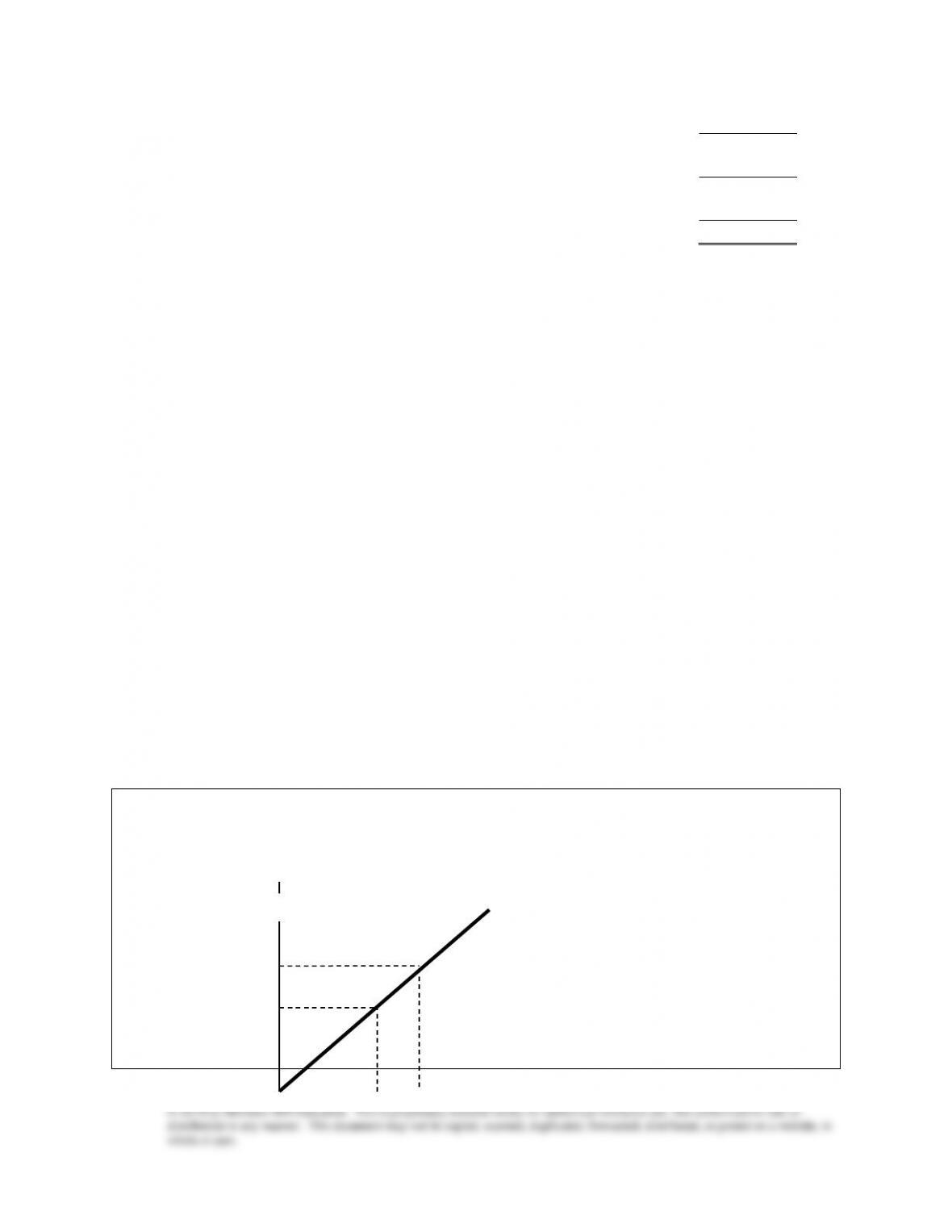
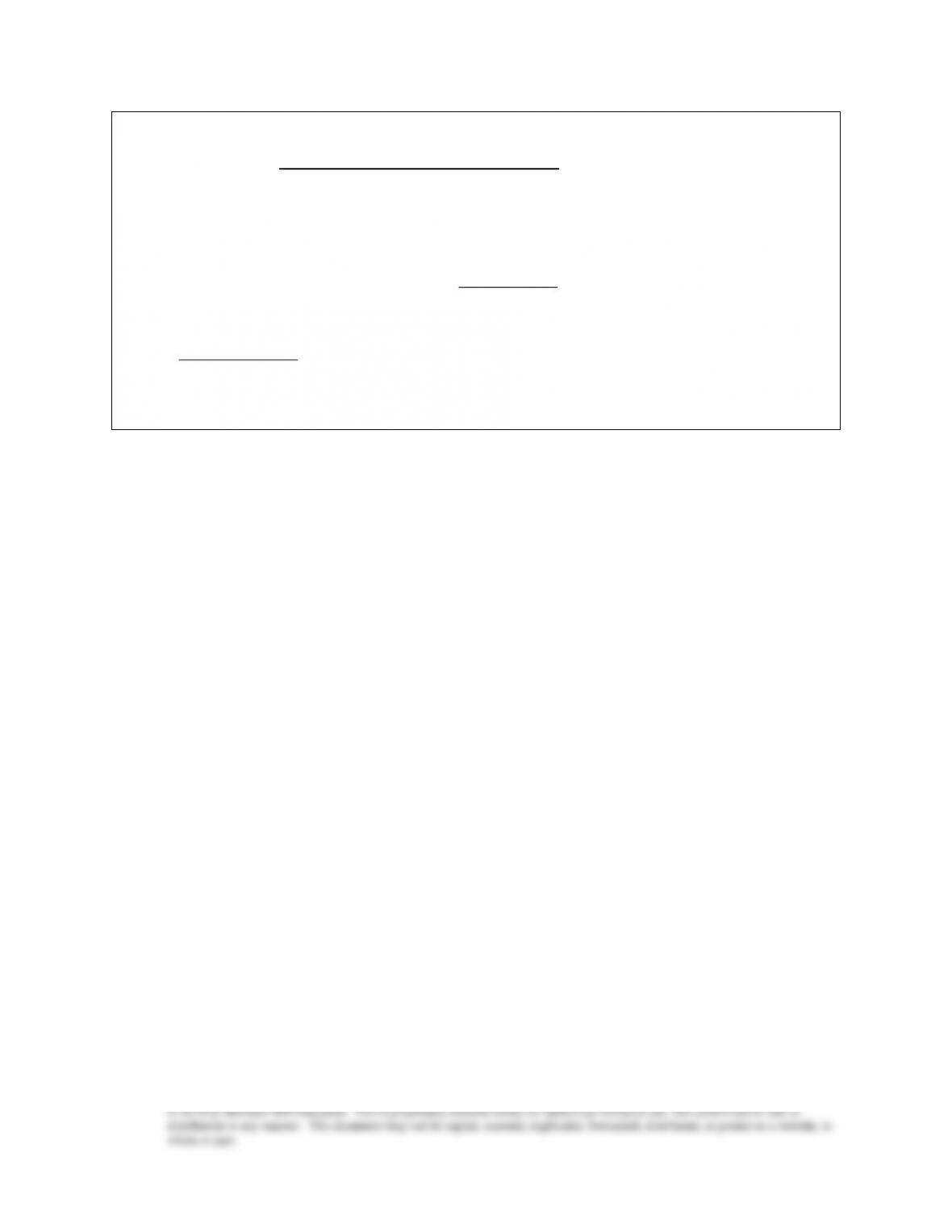
Example 2: The following graph shows a variable cost relationship between activity
(units of production) and the resulting cost of direct materials used.
Cost of Direct Materials
$3,000
$4,500
Chapter 02 – Cost Concepts and Behavior
2-15
When the production volume is increased from 1,000 units to 1,500 units, it represents
a 50 percent increase in activity (i.e.,
1,500 1,000
1,000
× 100% = 50%). There is a
corresponding 50 percent increase in direct materials costs as well (i.e.,
$4,500 – $3,000
$3,000
× 100% = 50%). This example demonstrates the direct and
proportionate relationship between activity and variable costs.
• Relevant range refers to the activity levels within which a given total fixed costs or
unit variable cost will be unchanged.
• A semivariable cost is a cost that has both fixed and variable components; also called
mixed cost. Examples: electric utility costs, phone charges.
• A step cost is a cost that increases with volume in steps; also called semifixed cost.
Examples: supervisors’ salaries as each supervisor has a limited span of control,
maintenance costs for a fleet of delivery trucks as the volume of business increases.
• Four aspects of cost behavior complicate the task of classifying costs into fixed or
variable categories.
(1) Not all costs are strictly fixed or variable.
(2) Some costs increase with volume in “steps.”
(3) The cost relations are valid only within a relevant range of activity.
(4) The classification also depends on the measure of activity used.
LO6 Identify the components of a product’s costs.
♦ Some cost concepts are determined by the rules of financial accounting. Some are more useful
for managerial decision making.
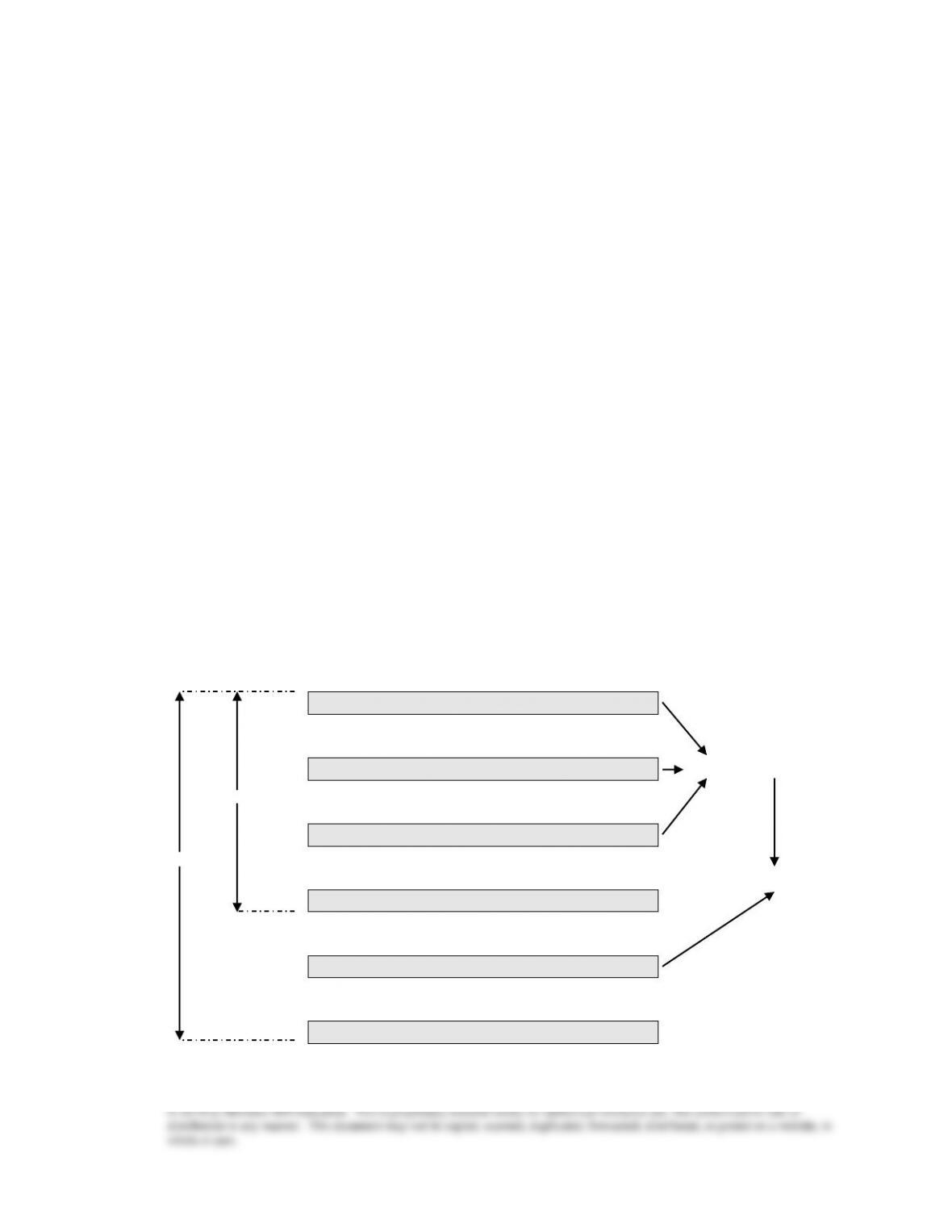
• Full cost is the sum of all costs of manufacturing and selling a unit of product
(including both fixed and variable costs).
Units
1,000
1,500
Chapter 02 – Cost Concepts and Behavior
2-16
Full absorption cost
• Full absorption cost is the sum of all variable and fixed manufacturing costs. Full
absorption cost is used to compute a product’s inventory value under GAAP.
• Exhibit 2.11 illustrates the product cost components for a company.
• On a per-unit basis,
Full absorption cost = Direct materials + Direct labor + Variable and fixed manufacturing
overhead.
Full cost = Full absorption cost + Variable and fixed marketing and administrative costs.
Variable manufacturing cost = Direct materials + Direct labor + Variable manufacturing
overhead.
Variable cost = Variable manufacturing cost + Variable marketing and administrative
cost.
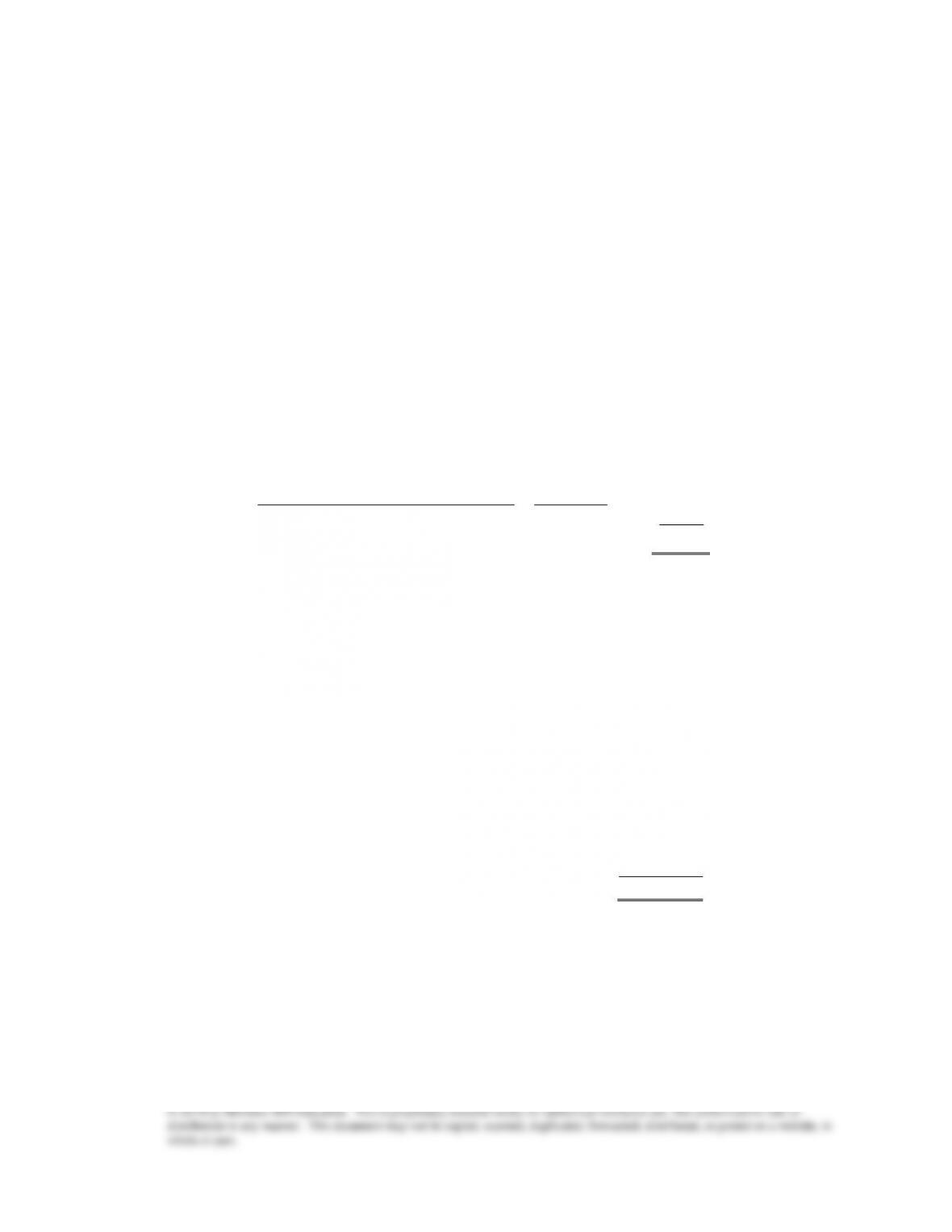
• The diagram below demonstrates the relationship among various product cost
components.
Direct materials
Direct labor
Variable manufacturing overhead
Fixed manufacturing overhead
Variable marketing and administrative costs
Fixed marketing and administrative costs
Full cost
Variable manufacturing cost
Variable cost
Chapter 02 – Cost Concepts and Behavior
2-17
♦ Unit fixed costs can be misleading for decision making.
• Unit fixed costs are valid only at one volume of operation.
• When fixed costs are allocated to each unit, accounting records often make the costs
appear as though they are variable.
• It is easy to interpret unit costs incorrectly and make incorrect decisions.
======================
Demonstration Problem 3
Gourmet Industry manufactures pasta machines. The accountant of the company provides the
cost structure for each pasta machine produced as follows:
Variable manufacturing cost
$85
Fixed manufacturing cost
(=
Fixed manufacturing cost per year $120,000
Units produced per year 2,000
)
60
$145
The regular price for each pasta machine is $200. A regional restaurant chain wants to buy 150
pasta machines for $120 each. Gourmet Industry is also responsible for a one-time shipping cost
of $850. Marketing, administrative, total fixed costs, and regular sales are not affected by the
decision. Gourmet Industry has enough idle capacity to handle the order.
Required:
Determine if Gourmet Industry should accept the special order.
Solution:
By accepting the special order, Gourmet Industry will increase its operating profit by $4,400.
Revenues from special order ($120 × 150)
$18,000
Variable manufacturing cost ($85 × 150)
(12,750)
One-time shipping cost
(850)
Contribution of special order to operating profit
$4,400
The fixed manufacturing cost of $60 per unit will not affect the decision as the total fixed
cost remains unchanged. Based on the analysis, Gourmet Industry should accept the special
order.
======================
Chapter 02 – Cost Concepts and Behavior
2-18
♦ Gross margin as reported in the external financial statements is the difference between
revenue and cost of goods sold, or
Gross margin = Revenue – Cost of goods sold.
• Gross margin per unit = Sales price – Full absorption cost per unit.
• Cost of goods sold = Full absorption cost per unit × Number of units sold.
• The income statement format that emphasizes gross margin is referred to as the
traditional income statement.
• Contribution margin per unit = Sales price – Variable costs per unit.
Contribution margin is the amount available to cover fixed costs and earn a profit.
• The income statement format that emphasizes contribution margin is referred to as the
contribution margin income statement.
• Exhibit 2.12 highlights gross margin information while Exhibit 2.13 showcases
contribution margin information. In both cases, the operating profit per unit remains the
same.
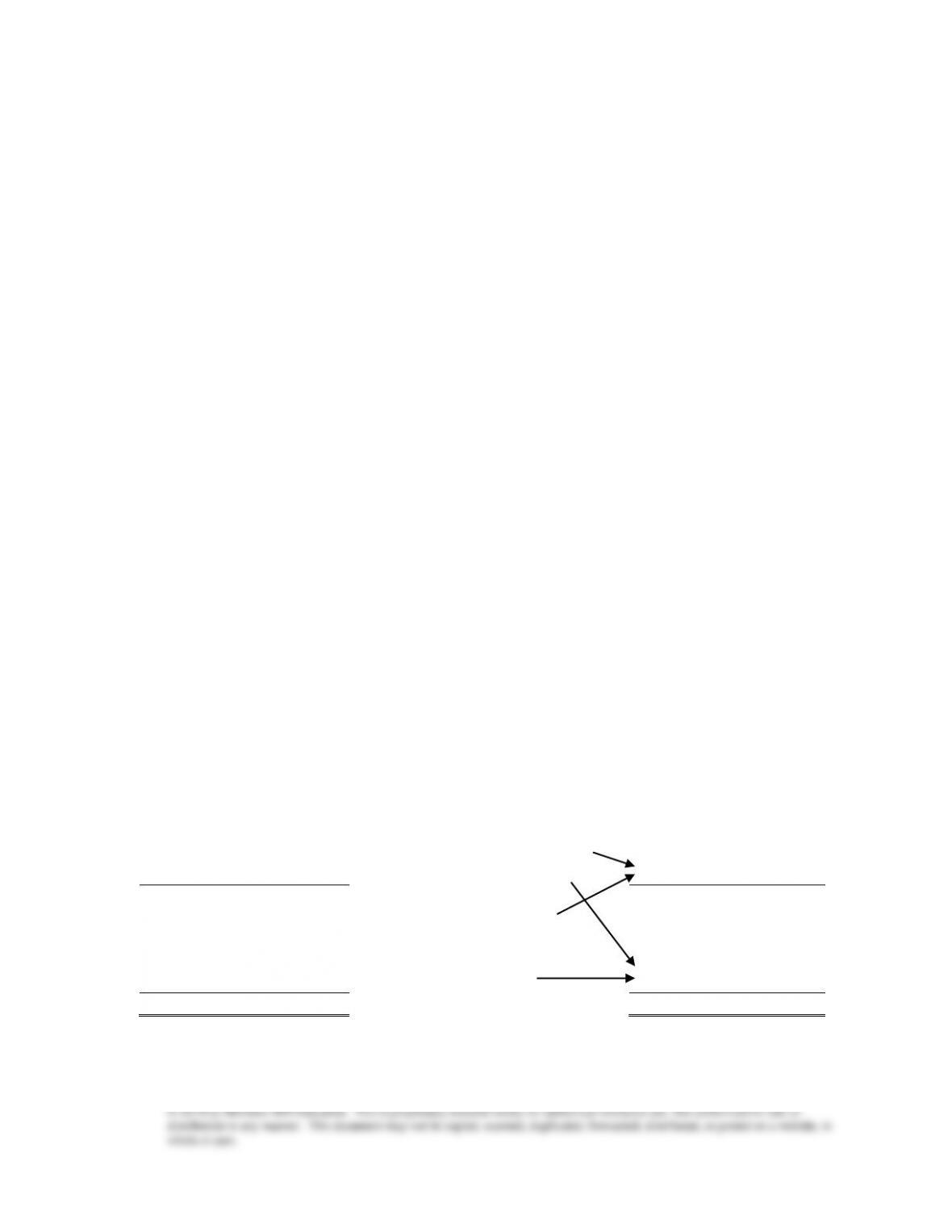
• The interaction behind the calculations of gross margin per unit and contribution margin
per unit is presented below.
Traditional
Income Statement
Components
Contribution margin
Income Statement
Sales price
Sales price
Less: Full absorption cost
= Variable manufacturing cost
+ Fixed manufacturing costs
Less: Variable cost
Gross margin
Contribution margin
Less: Marketing and
administrative costs
= Variable marketing and
administrative cost
+ Fixed marketing and
administrative cost
Less: Fixed costs
Operating profit
Operating profit
======================